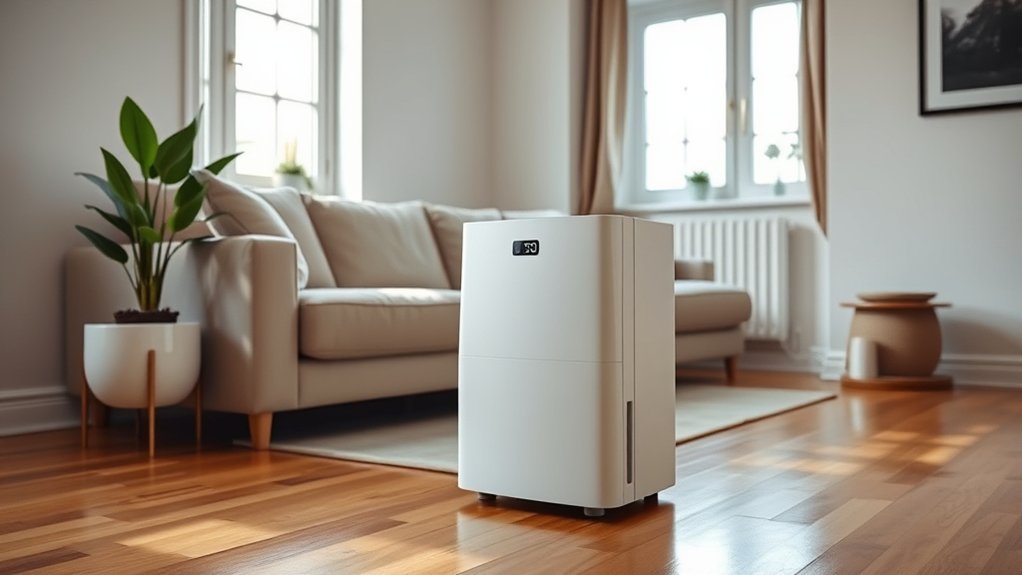
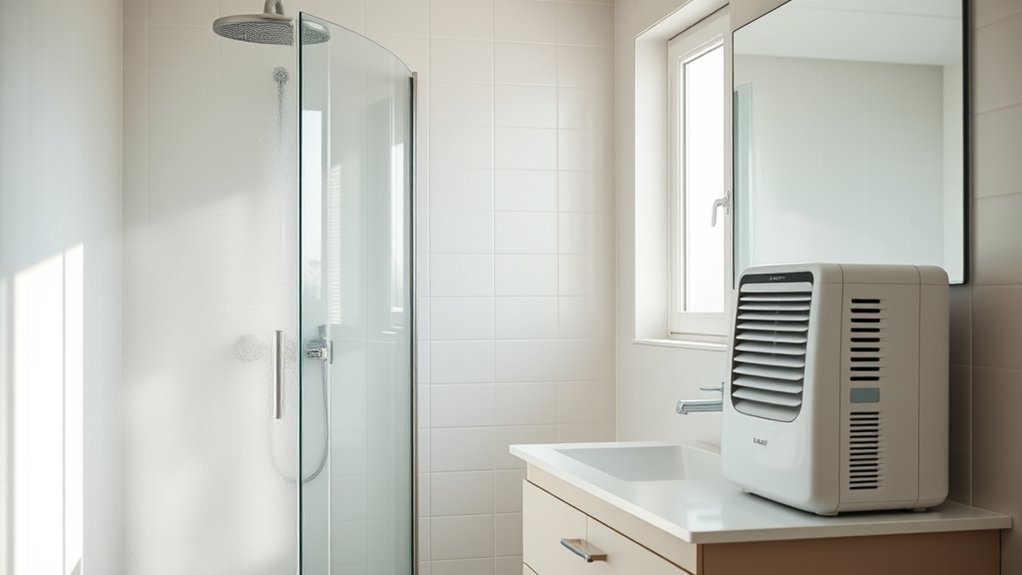
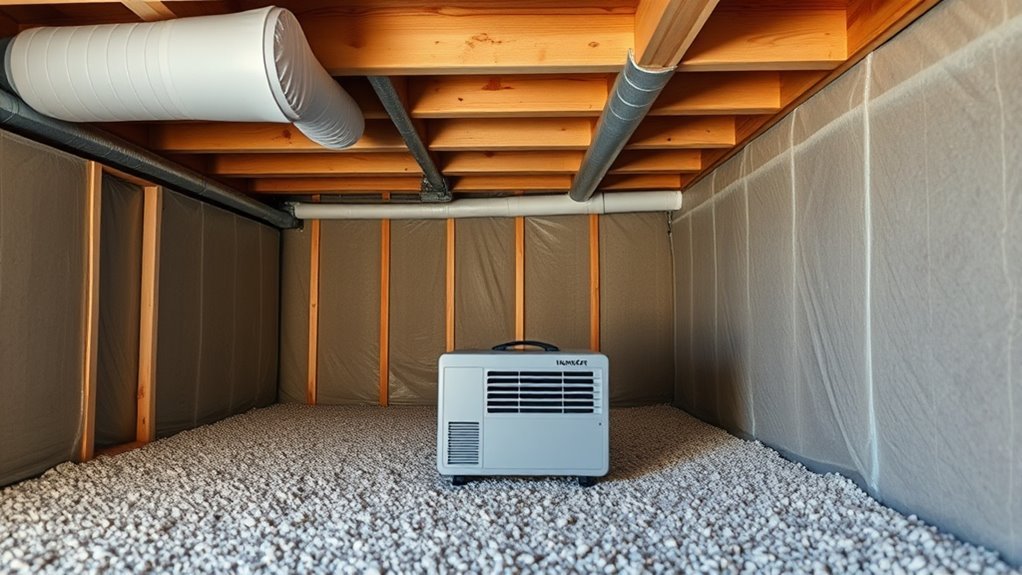
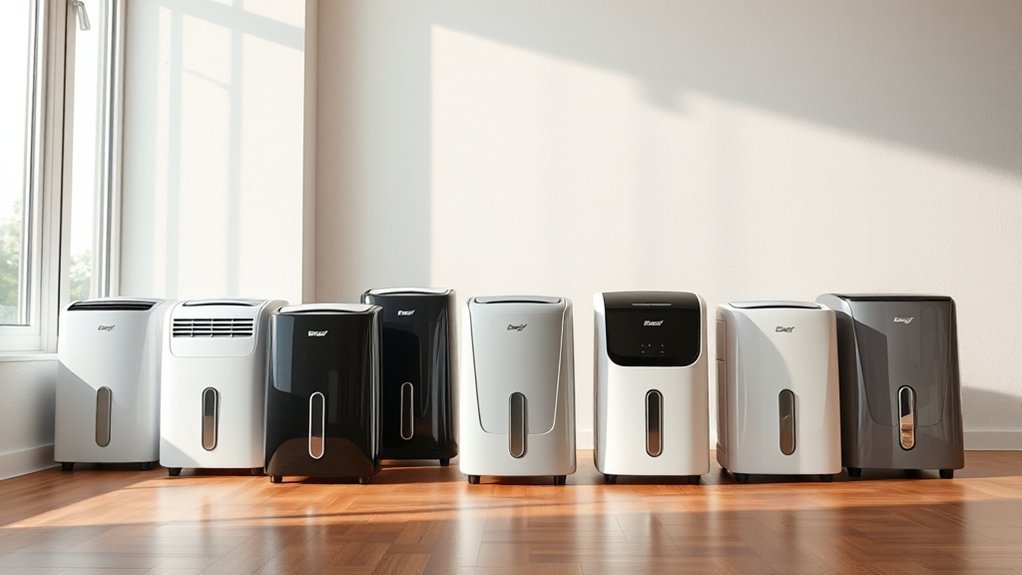
If you are comparing the best dehumidifiers for a basement, bedroom, bathroom, or other damp space in 2026, start with the moisture load rather than the advertised square footage alone. Large compressor models such as the Vellgoo and AEOCKY are better suited to persistent basement humidity, while the Midea adds a built-in pump for locations where gravity drainage is difficult. The Aiusevo and Glowells offer smaller compressor-based options for moderate spaces, and the Eva-Dry E-333 is designed only for tiny enclosed areas such as closets, cabinets, and vehicles.
Disclosure: As an Amazon Associate, we may earn from qualifying purchases. Product specifications, included accessories, warranty terms, and availability can change, so confirm the current Amazon listing before ordering.
Choose Vellgoo or AEOCKY for a large damp basement, Midea when you need pumped drainage, Aiusevo or Glowells for moderate rooms, and Eva-Dry E-333 only for small enclosed spaces. Compare the current DOE-rated pint capacity, drainage setup, operating temperature, and warranty before you buy.
Quick Comparison
| Product | Best For | Type | Drainage | Important Buyer Note | Amazon |
|---|---|---|---|---|---|
| Vellgoo Large-Space Dehumidifier | Large basements and garages | Compressor | Tank and hose options | Check the current DOE-rated capacity because marketing capacity may use hotter test conditions. | Check on Amazon |
| AEOCKY 74-Pint Dehumidifier | Energy-conscious large-space use | Compressor | Tank and drain hose | The 74-pint figure is a high-temperature, high-humidity rating; compare the standardized rating too. | Check on Amazon |
| Midea 50-Pint with Pump (Renewed) | Basements needing pumped drainage | Compressor | Built-in pump and tank | This linked ASIN is a renewed product; review the renewed warranty and return terms. | Check on Amazon |
| Aiusevo AS280 | Moderate rooms and apartments | Compact compressor | 2L tank and drain hose | Better for moderate moisture than severe whole-basement water intrusion. | Check on Amazon |
| Glowells PD20A | Bedrooms, laundry rooms, and medium spaces | Compact compressor | 2L tank and drain hose | Confirm the current noise specification and warranty on the listing. | Check on Amazon |
| Eva-Dry E-333 | Closets, cabinets, cars, and safes | Rechargeable desiccant | No tank or drain | Not a substitute for a powered room or basement dehumidifier. | Check on Amazon |
How We Compared These Dehumidifiers
We prioritized daily moisture-removal capacity, compressor or desiccant technology, drainage method, operating temperature, tank size, portability, noise information, energy certification, and the clarity of the linked product listing. Advertised coverage is useful as a starting point, but daily pint capacity and real room conditions are more important when comparing units.
Vellgoo Large-Space ENERGY STAR Dehumidifier
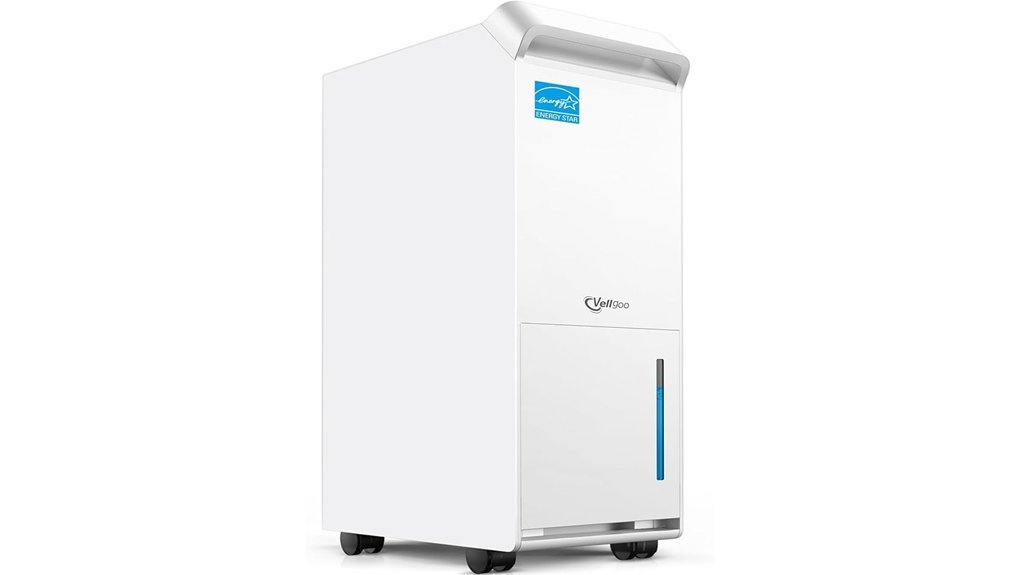
The linked Vellgoo is the strongest all-around option in this list for a large basement, garage, or other persistently damp area. It uses compressor-based dehumidification, includes hose-drain support, and offers automatic humidity control for less hands-on operation. The listing has used different capacity and coverage descriptions over time, so compare the current standardized pint rating rather than relying only on the largest marketing number.
Why You’ll Like It: It combines large-space moisture control, automatic operation, mobility features, and multiple drainage choices in one unit.
Best For: Homeowners who need steady humidity control in a large basement, garage, storage area, or open living space.
Who Should Avoid It: Buyers treating only a small bedroom or closet, where a large compressor unit may add unnecessary cost, heat, and noise.
Pros:
- Compressor design is suitable for heavier moisture loads.
- Drain-hose support reduces the need to empty the bucket manually.
- Automatic humidity control and mobility features support everyday use.
Cons:
- Capacity descriptions can vary by test condition, so the current standardized rating needs checking.
- A large compressor unit will be heavier and more noticeable than a mini model.
- It may be excessive for a small, mildly humid room.
AEOCKY 74-Pint Smart Dehumidifier with Drain Hose
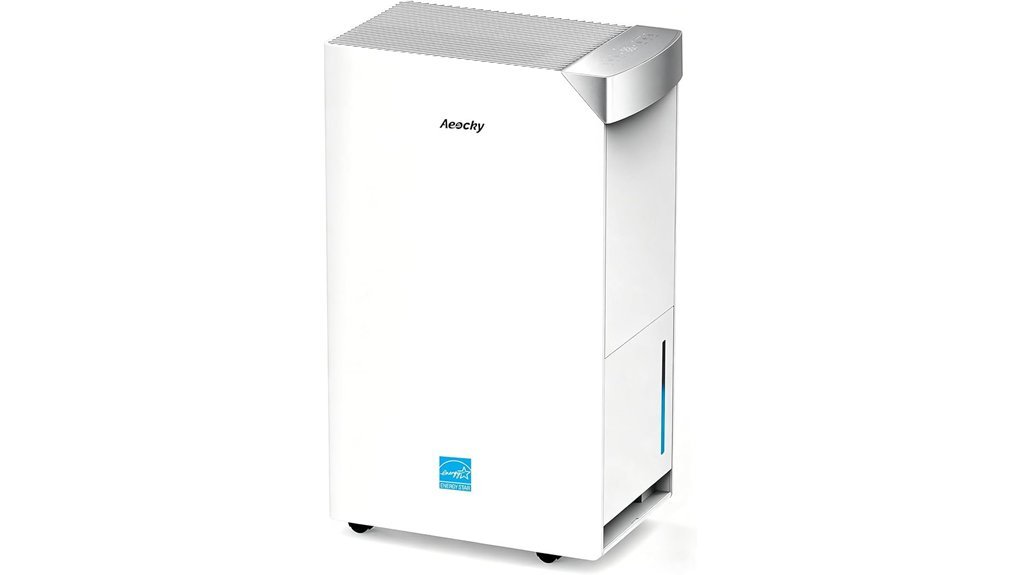
The AEOCKY is designed for buyers who want a large compressor dehumidifier with automatic humidity sensing, hose drainage, and low-temperature protection. Its headline 74-pint figure is based on hot, very humid conditions; the standardized basement-style rating can be lower. That distinction matters when you compare it with other products that use different test conditions.
Why You’ll Like It: It focuses on efficient continuous operation and includes practical features such as auto-defrost, a humidistat, and drain-hose support.
Best For: Large basements, living areas, and storage rooms where the unit may run for long periods.
Who Should Avoid It: Anyone who needs an integrated pump to move water upward or across a long distance.
Pros:
- The linked listing markets the unit as an ENERGY STAR Version 6.0 model.
- Automatic humidity sensing and auto-defrost support hands-off use.
- Included hose drainage can reduce bucket emptying.
Cons:
- The maximum advertised capacity is not the same as the standardized DOE rating.
- It is heavier and larger than compact room units.
- Gravity drainage requires a suitable lower drain point.
Midea 50-Pint Dehumidifier with Pump Included (Renewed)
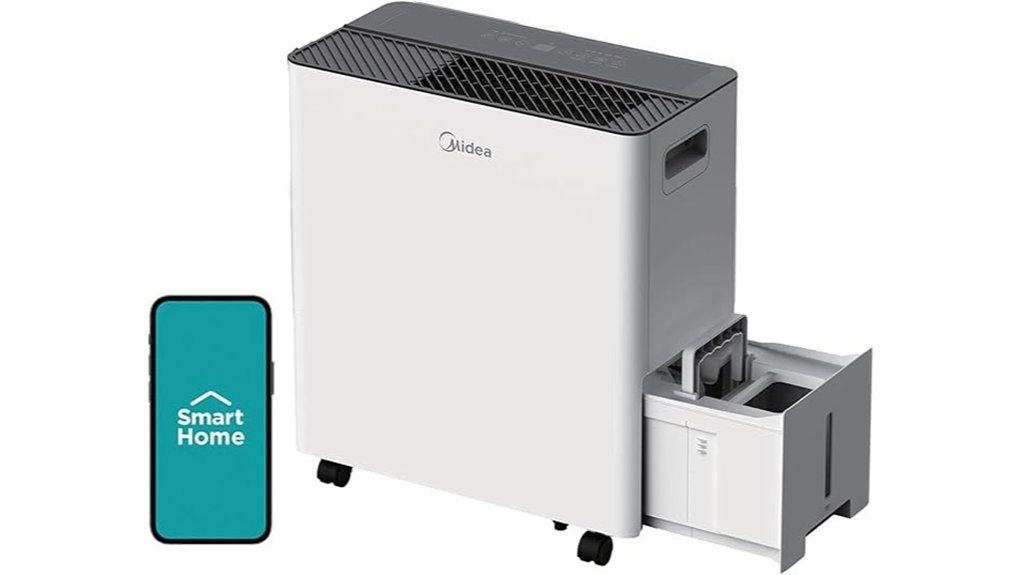
This linked Midea ASIN is a renewed 50-pint compressor dehumidifier with a built-in pump. That pump is the main reason to choose it: water can be moved to a sink, drain, or other outlet that is not directly below the unit. The linked renewed model is not consistently listed as smart-home compatible, so do not assume app, Alexa, or Google Assistant control unless the current listing confirms it.
Why You’ll Like It: Pumped drainage can solve installation problems that a basic gravity hose cannot.
Best For: Basements and crawlspace-adjacent rooms where the drain point is higher or farther away.
Who Should Avoid It: Buyers who only want a new, factory-sealed product or who do not need a pump.
Pros:
- Built-in pump supports more flexible water removal.
- 50-pint class is appropriate for substantial room moisture.
- Wheels, timer controls, and a large bucket improve convenience.
Cons:
- The linked product is renewed, so condition and warranty terms require careful review.
- Smart-app and voice-control compatibility should not be assumed.
- A pump adds mechanical complexity compared with gravity drainage.
Aiusevo AS280 21-Pint Dehumidifier with Drain Hose
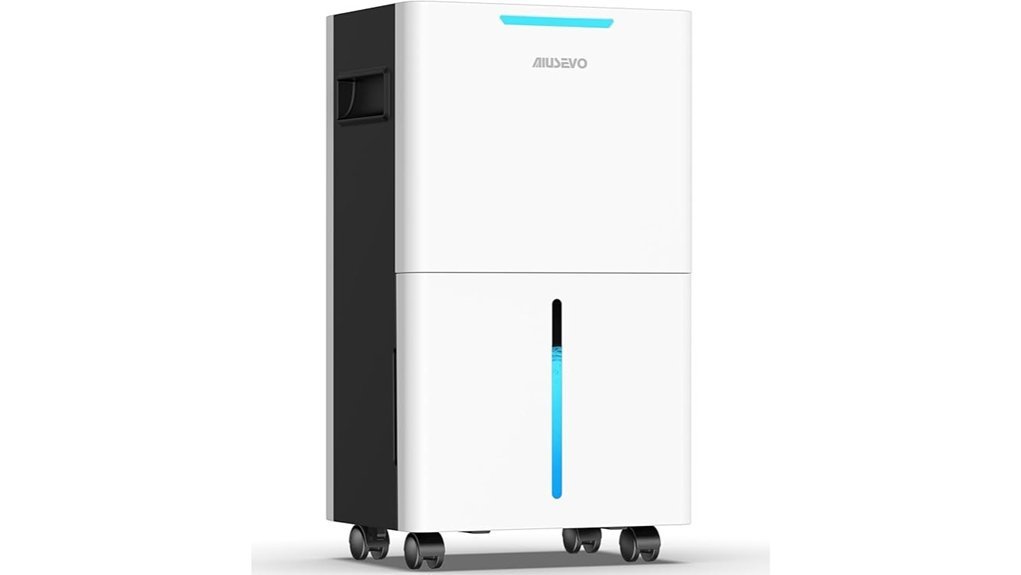
The Aiusevo AS280 is a compact compressor dehumidifier advertised to remove up to 21 pints per day in warm, humid conditions. It offers a 2L bucket, a drain hose, selectable operating modes, a timer, and a target-humidity control. It offers more useful room-scale output than typical tabletop thermoelectric units.
Why You’ll Like It: It gives you real compressor-based moisture removal without the footprint of a full-size basement model.
Best For: Apartments, bedrooms, laundry rooms, RVs, and moderate basement zones where a compact unit is easier to place.
Who Should Avoid It: Owners of very wet, large, unfinished basements that need higher standardized capacity.
Pros:
- Compressor technology offers stronger output than most tabletop thermoelectric models.
- Tank and hose drainage provide flexible setup choices.
- Humidity control, timer, wheels, and child lock add convenience.
Cons:
- The small bucket can fill quickly when the hose is not used.
- Advertised square footage should not be treated as a guarantee in a very damp room.
- It has less capacity than the large Vellgoo, AEOCKY, and Midea units.
Glowells 21-Pint Dehumidifier for Basement and Home
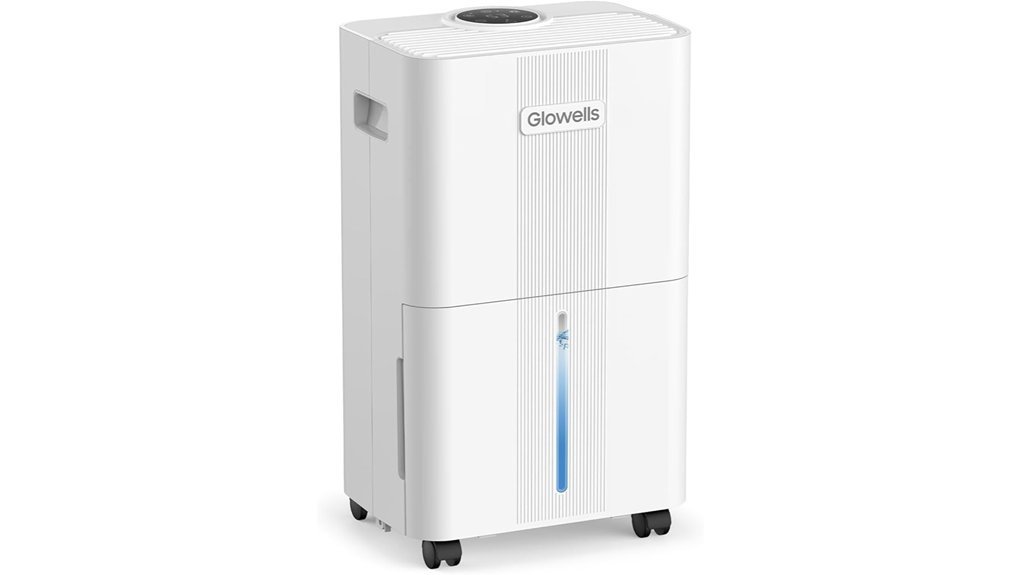
The Glowells PD20A is another compact 21-pint compressor option for moderate rooms. Its listing describes adjustable humidity control, a laundry-drying mode, continuous operation, a 2L bucket, hose drainage, wheels, and a carry handle. The listing also promotes quiet operation, but buyers should confirm the current noise specification because seller-provided decibel claims are not always measured the same way.
Why You’ll Like It: The mix of adjustable humidity, laundry mode, portability, and hose drainage suits everyday home use.
Best For: Bedrooms, laundry rooms, bathrooms with adequate ventilation, RVs, and medium-size living spaces.
Who Should Avoid It: Buyers who need high-capacity moisture removal for a large or severely damp basement.
Pros:
- Compressor-based 21-pint class offers useful output in moderate spaces.
- Dedicated modes make it easier to switch between humidity control and laundry drying.
- Hose drainage, casters, and a handle improve day-to-day usability.
Cons:
- The 2L bucket can require frequent emptying in damp weather.
- Noise and warranty details should be verified on the current listing.
- It is not intended to replace a large-capacity basement unit.
Eva-Dry Wireless Mini Dehumidifier, White (E-333)
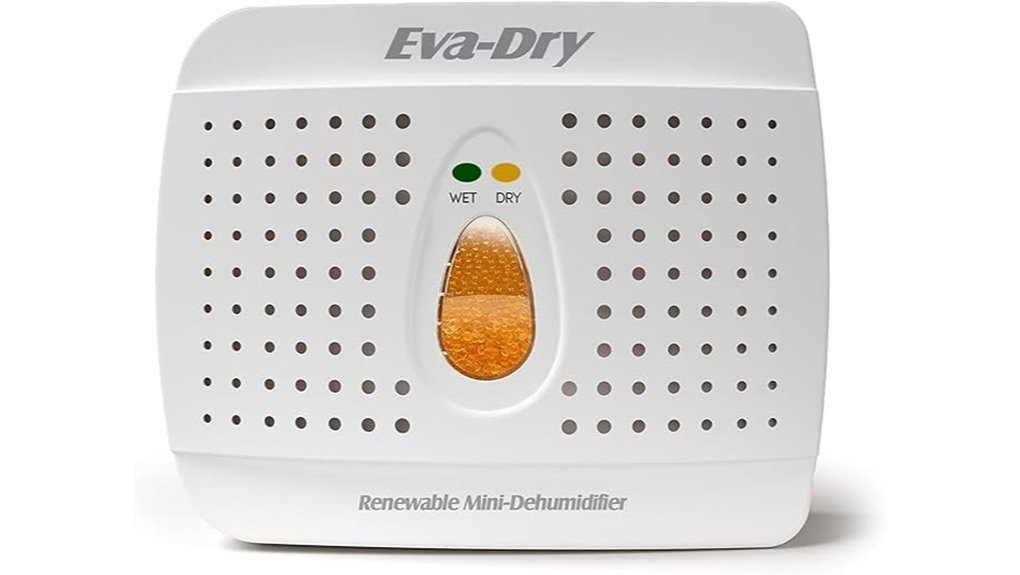
The Eva-Dry E-333 is a rechargeable desiccant moisture absorber rather than a powered room dehumidifier. It is designed for spaces up to 333 cubic feet and can absorb a small amount of moisture before the silica-gel beads need recharging. It works well where outlets, drain hoses, and compressor noise are impractical, but it should not be used as a substitute for a powered unit in a room or basement.
Why You’ll Like It: It is cordless during use, compact, silent, and easy to hang in a small enclosed space.
Best For: Closets, cabinets, cars, boats, gym lockers, storage bins, and safes.
Who Should Avoid It: Anyone trying to control humidity in a bedroom, bathroom, living room, or basement.
Pros:
- No cord or battery is needed while it is absorbing moisture.
- Reusable beads reduce the need for disposable moisture tubs.
- Small size fits locations where a powered appliance cannot.
Cons:
- Limited to very small enclosed spaces.
- Requires periodic plug-in recharging.
- Moisture capacity is far below a compressor dehumidifier.
Factors to Consider When Choosing a Dehumidifier
The right dehumidifier depends on how wet the space is, how quickly new moisture enters, the room temperature, and where the collected water can go. Use the following checks before relying on a coverage number printed in a product title.
Daily Capacity and Test Conditions
Compare the rated pints removed per 24 hours and note the test conditions. A product can display a larger “maximum” number measured in hotter, wetter air while also having a lower DOE-style capacity under cooler, more realistic conditions. That does not automatically make the product misleading, but the ratings should not be mixed in one comparison without explanation.
Compressor vs. Thermoelectric vs. Desiccant
Compressor dehumidifiers are the normal choice for bedrooms, basements, garages, and other rooms with a meaningful moisture load. Thermoelectric models are generally quieter and smaller but collect much less water, so they fit light-duty enclosed areas rather than wet basements. Rechargeable desiccant units such as the Eva-Dry are for tiny spaces, not full rooms.
Drainage Method Options
A bucket is simple but needs regular emptying. A gravity hose can run continuously when the drain is below the outlet and the hose slopes downward without kinks. A built-in pump is useful when water must travel upward or to a more distant sink or drain. Confirm whether the necessary hose is included.
Room Temperature and Defrost
Cool basements can reduce extraction performance and cause frost on the coils. Look for an operating-temperature range and automatic defrost, but do not assume “low-temperature operation” means full rated output in a cold room.
Humidity Target
The U.S. Environmental Protection Agency recommends keeping indoor relative humidity below 60%, ideally between 30% and 50%. Use a separate hygrometer to compare readings, fix leaks and drainage problems, and treat a dehumidifier as part of moisture control rather than a repair for water intrusion. See the EPA moisture and mold guidance.
Energy Efficiency Features
For a unit that may run many hours per day, check the exact model in the ENERGY STAR certified product finder. Certification applies to specific model numbers, not automatically to every product sold under a brand name.
- Measure the room and identify whether the moisture is mild, persistent, or caused by a leak.
- Compare standardized pint capacity, not only square-foot coverage.
- Confirm tank size, hose inclusion, pump capability, and drain location.
- Check the lowest operating temperature for a basement or garage.
- Verify the exact model’s ENERGY STAR status, warranty, and return policy.
- Allow clearance around the air intake and follow the manufacturer’s placement instructions.
Frequently Asked Questions
What Size Dehumidifier Do I Need for a Basement?
Choose by moisture load and standardized pint capacity, not square footage alone. A mildly damp finished room may need less capacity than a smaller unfinished basement with wet walls, air leaks, or recurring water entry. For serious dampness, prioritize a larger compressor unit and continuous drainage.
Is a “1,000 Square Foot” Mini Dehumidifier Enough?
Usually not for a genuinely damp 1,000-square-foot room. Many mini thermoelectric models collect only a small fraction of the water removed by compressor units. They may help in a warm, enclosed bedroom, closet, or bathroom between showers, but they should not be treated as heavy-duty basement equipment.
What Humidity Level Should I Set?
A target near 45% to 50% is a practical starting point for many homes. Adjust for comfort and conditions, while aiming to remain below 60%. Extremely low settings can make the unit run longer without solving the underlying moisture source.
Do I Need a Pump or a Drain Hose?
Use a gravity hose when a floor drain is nearby and lower than the dehumidifier outlet. Choose a pump when water must move upward or across a longer path. If neither setup is available, select a bucket size you can safely lift and empty.
Can a Dehumidifier Fix a Wet Basement?
It can reduce airborne humidity, but it cannot repair a plumbing leak, foundation seepage, poor exterior drainage, or flooding. Correct the water source first. Seek professional help for major water intrusion, electrical hazards, or extensive mold.
How Often Should I Clean the Filter?
Follow the manual for the exact model. Inspect the filter regularly, clean it when dusty, keep the air intake clear, check the hose for blockages, and make sure the bucket and drain outlet remain clean.
Conclusion
For a large damp basement, the Vellgoo and AEOCKY offer the best balance of compressor capacity, automatic control, and hose drainage in this roundup. Choose the renewed Midea when a built-in pump solves a difficult drain setup. The Aiusevo and Glowells are more practical for moderate rooms where a compact compressor unit is enough. Use the Eva-Dry E-333 only in a tiny enclosed space. Whichever model you choose, verify the exact pint rating, drainage accessories, operating-temperature range, ENERGY STAR listing, warranty, and current product condition before purchasing.