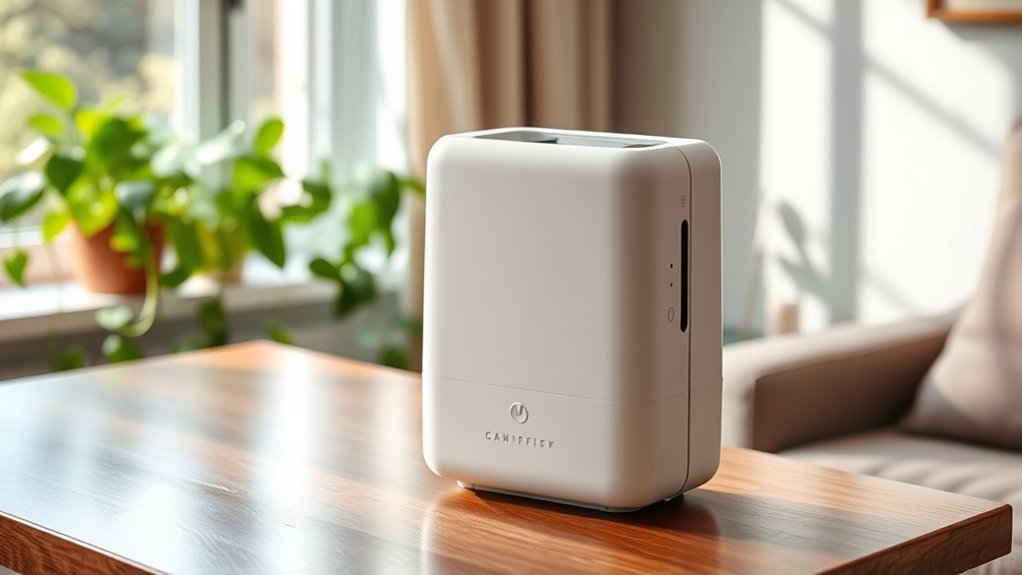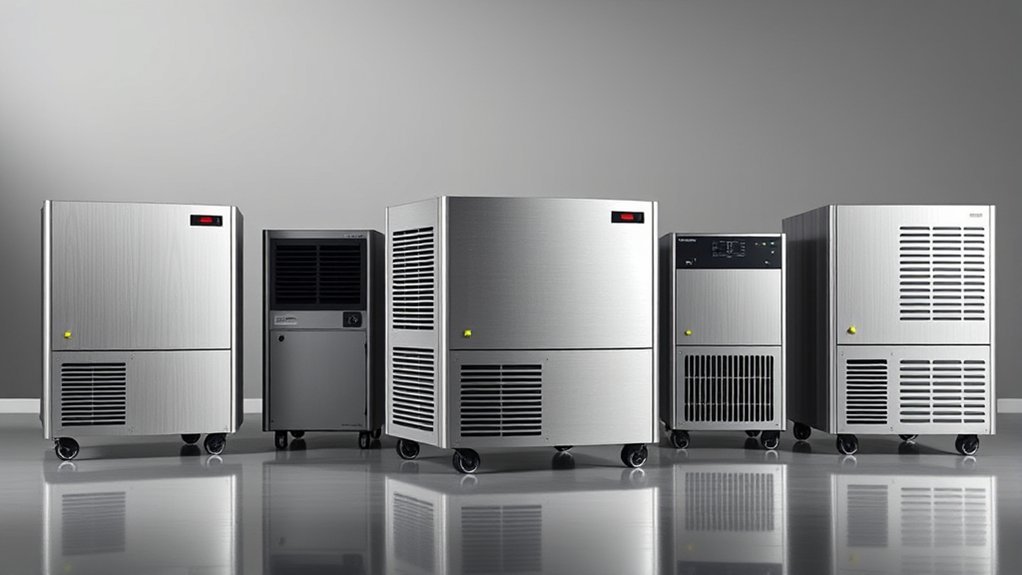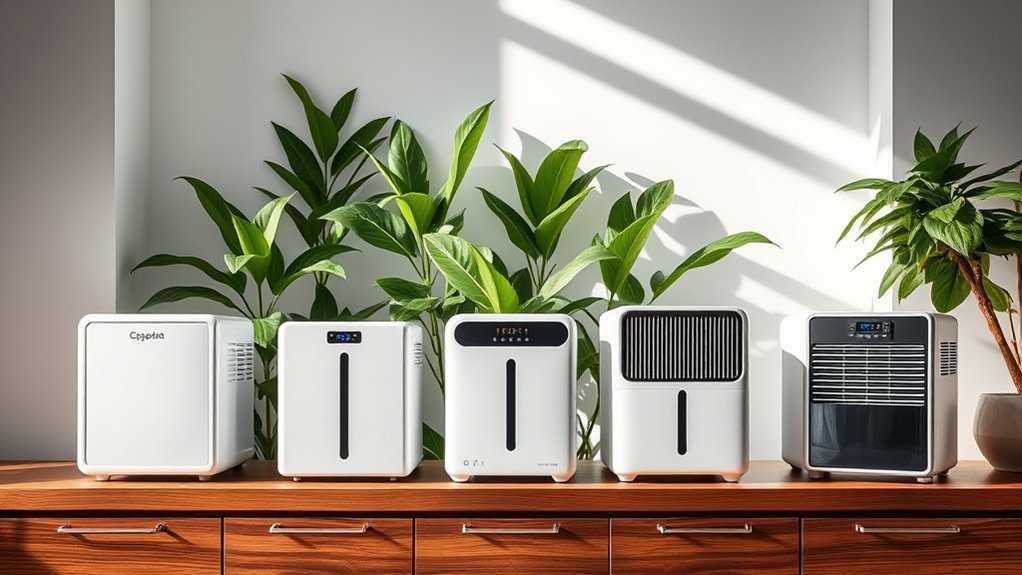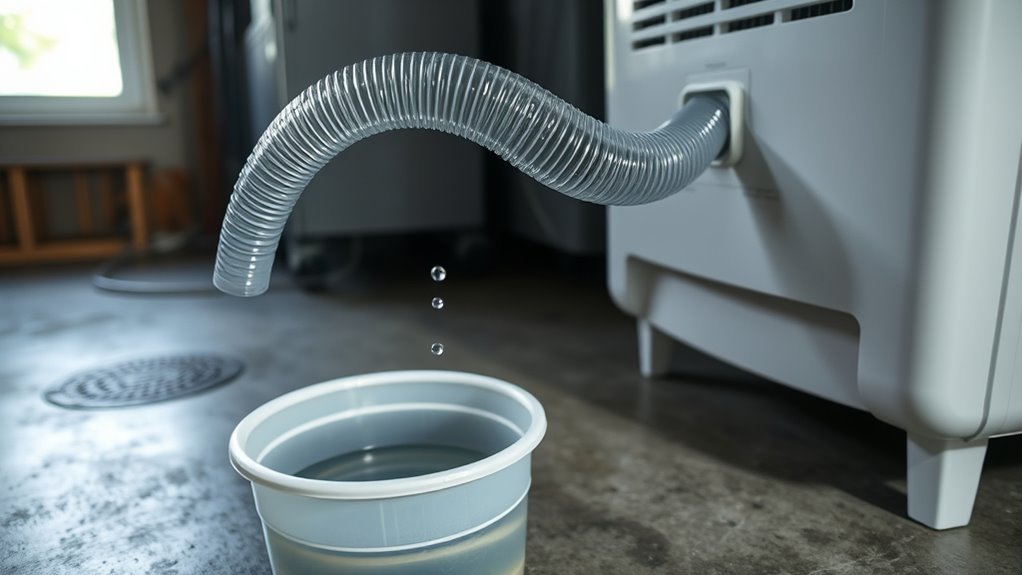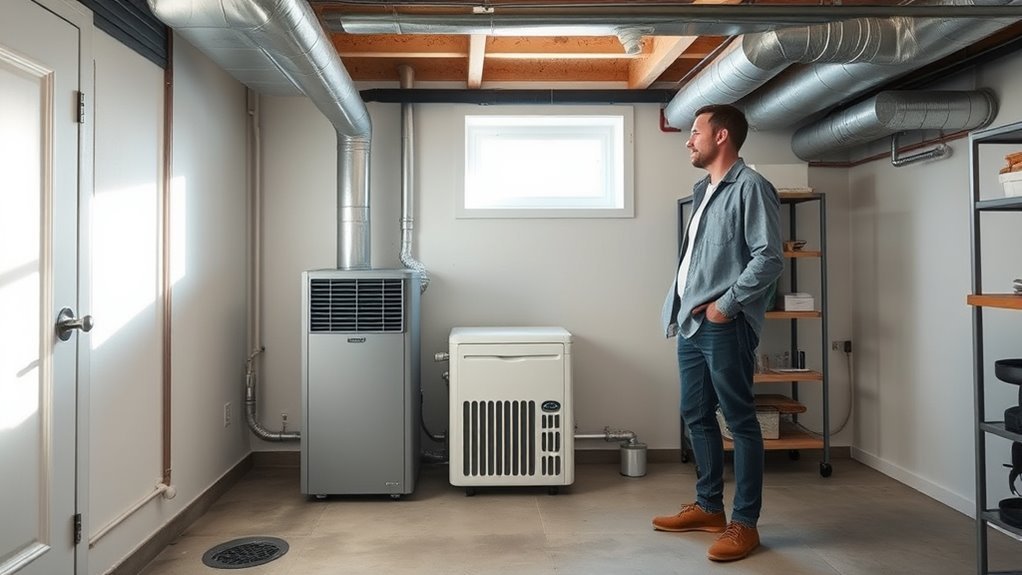
Yes, whole-house dehumidifiers work when excess moisture is a whole-home problem, not just a single damp room. A properly sized system uses ductwork to remove moisture from circulating air, drains automatically, and helps keep indoor relative humidity in a recommended moisture-control range. The EPA advises keeping indoor humidity below 60% and ideally around 30% to 50%; a practical dehumidifier starting point for many homes is about 45% to 50% RH.
Last updated: August 19, 2026 · Reviewed against EPA, CDC, ENERGY STAR, federal whole-home dehumidifier definitions, and current 2026 installation-cost data.
Quick Answer
Whole-house dehumidifiers work best when humidity is persistently high across several rooms, especially in homes with central air and ductwork. ENERGY STAR specifically points to relatively well-sealed homes that consistently see humidity above 55% throughout the house. Compared with portable units, a ducted system offers automatic drainage, centralized control, and less equipment in occupied rooms.
Key Takeaways
- A whole-house dehumidifier is most useful when high humidity affects several rooms or your entire home.
- Aim for indoor humidity near 30% to 50%; keep it below 60% to reduce mold-friendly conditions.
- Portable dehumidifiers are cheaper and better for one room, while whole-home systems offer automatic drainage and ducted coverage.
- Fix leaks, drainage issues, poor ventilation, and dryer vent problems before relying on any dehumidifier.
- Professional sizing and installation matter because poor duct connections, bad drainage, or wrong capacity can waste energy and leave damp spots.
Quick Decision Guide: Whole-House or Portable?
Use this table before you ask for quotes. A whole-house system makes the most sense when humidity is measured, repeated, and spread across connected rooms. A portable unit or source repair is usually better when the dampness is isolated or caused by an obvious water problem.
| Your situation | Best first move | Why |
|---|---|---|
| Several rooms stay near or above 55% RH consistently | Get whole-house dehumidifier quotes | The moisture problem is not limited to one room. |
| One basement corner or bathroom feels damp | Try ventilation, source repair, or a portable unit | A central system may be more equipment than you need. |
| AC cools quickly but leaves the home clammy | Have an HVAC pro check AC sizing and humidity control | Short cycling can reduce moisture removal. |
| You see leaks, standing water, or wet crawl-space soil | Fix the water source first | A dehumidifier cannot solve active water entry. |
Do Whole-House Dehumidifiers Work?
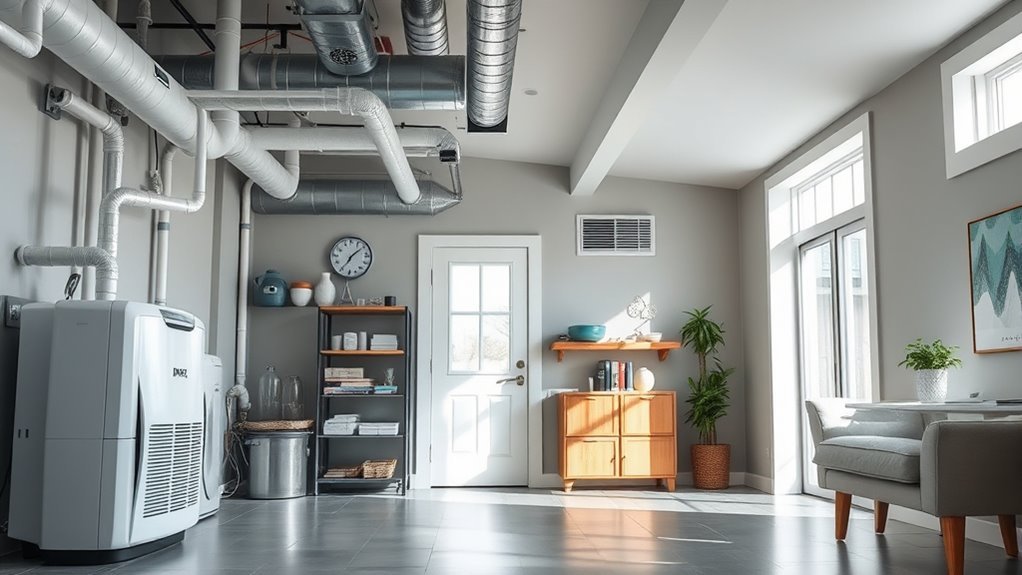
Yes, whole-house dehumidifiers work when they are sized correctly, installed correctly, and used for the right problem. Instead of treating one room at a time, they connect to your HVAC system and remove moisture from air that moves through the ductwork. That helps stabilize humidity in bedrooms, living areas, basements, and other connected spaces.
They are especially helpful in humid climates, tightly sealed homes, finished basements, and shoulder seasons when the air conditioner does not run long enough to remove much moisture. ENERGY STAR notes that whole-home dehumidifiers are typically installed to use a home’s air ducts and, when sized and installed properly, can improve comfort and help prevent mildew and bacterial growth.
The main limit is simple: a dehumidifier controls air moisture, but it does not fix the source of a water problem. If your home has a roof leak, plumbing leak, wet crawl space, clogged gutter, or poor grading around the foundation, fix that first. Otherwise, the system may run constantly while the real moisture source keeps feeding the problem.
Note: Before buying a central dehumidifier, place a hygrometer in the dampest rooms for several days. If several rooms remain near or above 55% RH after obvious moisture sources are addressed, a whole-home unit may make more sense than another portable dehumidifier.
How Do You Know If You Need a Whole-House Dehumidifier?
Start with a simple humidity log. Put one hygrometer in the dampest room, one near the main living area, and one near the return air path if your HVAC system has central returns. Check readings in the morning, late afternoon, and after showers, cooking, laundry, or rainy weather.
- Track at least three days: A single reading can be misleading if the weather just changed.
- Compare rooms: Whole-home equipment makes more sense when several connected rooms stay damp.
- Note the trigger: If humidity spikes only after showers or laundry, ventilation may solve more than new equipment.
- Check after AC cycles: If the home is cool but several rooms remain near or above 55% RH, ask the contractor to evaluate AC runtime, airflow, and sizing.
A practical decision rule: 30% to 50% RH is generally within the target range cited by EPA and ENERGY STAR. Repeated whole-home readings near or above 55% deserve closer HVAC and moisture-source evaluation, while a short spike in one bathroom or laundry room points first to local ventilation or source control. This is a decision aid, not a building-code threshold.
How Whole-House Dehumidifiers Remove Moisture
A whole-house dehumidifier pulls warm, moist air through your return ductwork or a dedicated return. Inside the unit, that air passes over a cold coil. Moisture condenses into liquid water, collects in the unit, and leaves through a drain line or condensate pump. The system then sends drier air back into the HVAC airflow.
This process is similar to the way an air conditioner removes some moisture while cooling, but a dehumidifier is controlled by humidity, not just temperature. That difference matters during mild, damp weather. Your thermostat may not call for much cooling, but your indoor humidity can still remain high.
Most systems use a humidistat so you can set a target relative humidity. ENERGY STAR says the optimum relative humidity level for a building is generally considered to be between 30% and 50%, and levels above that range may promote mold growth. In colder climates during heating season, a lower range around 30% to 40% may help reduce window condensation.
What Humidity Should You Set a Whole-House Dehumidifier To?
For most homes, a practical setting is 45% to 50% relative humidity. That is dry enough to reduce clammy air, musty smells, and mold-friendly conditions without making the home feel overly dry.
- Hot, humid climates: Try 45% to 50% for comfort and moisture control.
- Cold winter climates: Try 30% to 40% if windows sweat or condensation appears on cold surfaces.
- Homes with asthma, allergies, COPD, or chronic lung disease concerns: Avoid damp/moldy conditions, but ask a healthcare professional what humidity range is best for your situation.
The CDC advises keeping humidity as low as you can, no higher than 50% all day long, to help prevent mold. The EPA also advises keeping indoor humidity below 60%, ideally between 30% and 50%.
When a Whole-House Dehumidifier Is Worth It
A whole-house dehumidifier is worth considering when moisture problems keep coming back even after normal HVAC use, bathroom fan use, and basic ventilation fixes. It is most useful when humidity is not isolated to one room.
You may benefit from one if:
- Several rooms feel sticky, clammy, or musty.
- Indoor humidity repeatedly stays near or above 55% across several rooms.
- Your AC cools the house but leaves the air damp.
- You notice condensation on windows, walls, supply vents, or cold pipes.
- A finished basement smells musty even without standing water.
- You are tired of emptying portable dehumidifier buckets.
- Your home is well sealed, but moisture has trouble escaping.
In those situations, a central system can give you steadier moisture control, less noise in occupied rooms, and less hands-on maintenance than several portable units.
When a Whole-House Dehumidifier Is Not Worth It
A whole-house unit is not always the smart buy. If only one room is damp, a portable unit may solve the problem for far less money. If the problem is an active leak, bad drainage, wet crawl space, or unvented dryer, fix that source before adding equipment.
It may not be worth it if:
- Your humidity is already stable between 30% and 50%.
- The issue is limited to one small bathroom, laundry room, or basement corner.
- You do not have central ductwork and would need major modifications.
- Your home has unresolved water intrusion.
- You rent and cannot modify the HVAC system.
- Your current AC is oversized and short-cycling, which may need HVAC correction first.
Warning: Do not use a dehumidifier as a substitute for fixing leaks, flooding, sewage water, or visible mold. If mold covers a large area, if water damage is extensive, or if you have health concerns, follow EPA/CDC cleanup guidance and consider a qualified professional.
How Do Whole-House Dehumidifiers Compare to Portable Units?
Whole-house dehumidifiers and portable units both remove moisture, but they solve different problems. A portable unit is best for one room or a temporary damp spot. A whole-house system is best for consistent moisture control across connected rooms.
Coverage and Capacity
Coverage is the biggest difference. A portable dehumidifier treats the room where it sits. A whole-home system works with ductwork, so it can treat air moving through much of the home.
Capacity is usually measured in pints per 24 hours. ENERGY STAR notes that the right capacity depends on the size of the space and how damp it is. Whole-home systems are selected by the home’s moisture load, airflow, duct design, and climate, not just by square footage.
| Feature | Whole-house dehumidifier | Portable dehumidifier |
|---|---|---|
| Best use | Persistent humidity in several rooms | One damp room or short-term use |
| Installation | Professional HVAC installation | Plug in and position correctly |
| Drainage | Usually permanent drain or condensate pump | Bucket or optional hose drain |
| Noise | Usually less noticeable in living areas | Audible in the room where it runs |
| Upfront cost | Higher quote-based HVAC project | Lower small-appliance purchase |
Cost and Convenience
A whole-house dehumidifier costs more because you are paying for the unit, duct integration, controls, drainage, labor, and sometimes a condensate pump or electrical work. The benefit is convenience. You do not move the unit from room to room, empty buckets, or listen to a portable appliance in your bedroom.
Portable units are easier to buy and replace. They are also better when you only need to dry one area. But if you are running multiple portable units every day, a central system may be easier to live with.
Noise and Maintenance
Whole-house dehumidifiers are usually installed away from main living areas, so they are often less distracting than a portable unit in the room with you. Noise still depends on the model, duct design, vibration isolation, and where the unit is mounted.
Maintenance is usually simpler than several portable units, but it is not zero. Filters, coils, drain lines, and controls still need inspection. A clogged drain can cause water problems, so include the dehumidifier in your regular HVAC maintenance plan.
What Size Whole-House Dehumidifier Do You Need?
The right size depends on your home’s square footage, air leakage, ductwork, climate, basement or crawl-space conditions, and actual humidity readings. Do not choose capacity from square footage alone. Pacific Northwest National Laboratory’s Building America guidance ties sizing to the home’s latent moisture load and HVAC design, while ENERGY STAR recommends contractor sizing for whole-home systems. An undersized unit may struggle to reach the target RH; simply buying the largest unit does not correct duct, airflow, drainage, or moisture-source problems.
Ask an HVAC contractor these questions before you approve the job:
- What indoor humidity readings did you measure, and where?
- What capacity do you recommend in pints per day, and why?
- Will the unit use the existing return duct or a dedicated return?
- Where will the condensate drain go?
- Is a condensate pump needed?
- Will duct sealing improve performance?
- How will the humidistat be controlled?
- What filter or maintenance schedule does the model require?
- What happens if the drain clogs?
Pro Tip: Get at least two HVAC quotes and ask each contractor to explain the moisture load, duct connection, drain route, and humidity setpoint. A cheaper quote can cost more later if the system is poorly sized or poorly drained.
Recommended Products

【The Undisputed Champion — Industry-Leading Dehumidifier Brand】When you choose AEOCKY, you get double market validation. According to data independently verified by Stackline, a leading third-party data analytics company, AEOCKY was an industry‑leading dehumidifier brand on Amazon U.S. in 2025. This means you’re not just choosing a flagship product from a market leader, but a top-performing brand backed by independent market data and trusted by millions of real users, delivering the ultimate combination of performance, quality and trust.

2500 Sq. Ft Dehumidifier - SEMKAP dehumidifier for basement features a quiet, high-performance compressor that removes up to 32 pints of moisture per day (at 95°F, 90% RH). Ideal for basements, offices, bathrooms, bedrooms, kitchens, stockrooms, living rooms, laundry rooms, garages, crawlspaces, or RVs. It helps maintain optimal humidity between 40%–60%RH for healthier, more comfortable living

POWERFUL 2,500 SQ. FT. COVERAGE - Stop letting sticky, heavy air dictate your comfort. The BANABIE dehumidifier utilizes a high-efficiency rotary compressor to deliver heavy-duty moisture removal, extracting 32 pints daily (at 95°F, 90%RH). Engineered with a smart integrated airflow system, this unit effectively covers up to 2,500 Sq. Ft., ensuring that your basement, crawl space, or large open floor plans stay bone-dry
How Much Does a Whole-House Dehumidifier Cost?
A whole-house dehumidifier is usually a quote-based HVAC project, not a small plug-in appliance purchase. As of mid-2026, Angi and HomeAdvisor both report a typical installed range of about $1,300 to $2,800, and HomeAdvisor lists an average near $1,500. Local labor, capacity, duct changes, controls, drainage, electrical access, and condensate-pump needs can move a quote above or below that range.
Costs tend to rise when:
- The unit needs a dedicated return duct.
- The drain line must run far from the equipment.
- A condensate pump is required.
- Ductwork is leaky, undersized, or hard to access.
- The system needs electrical upgrades or a new control setup.
- The home has a large moisture load from a basement, crawl space, or humid climate.
Compared with a portable dehumidifier, the upfront cost is much higher. The trade-off is whole-home coverage, automatic drainage, and less daily attention. ENERGY STAR says certified dehumidifiers use about 20% less energy than similarly sized conventional models, so checking the certification and efficiency rating can matter when comparing quotes.
Recommended Products

Semiconductor dehumidifiers use thermoelectric cooling to remove moisture from the air. They create a drier, more comfortable environment by reducing humidity and improving air quality.

[Commercial Grade Dehumidifier] This Airzentti crawl space dehumidifier with large capacity removes moisture from basement, attic, large room and small rooms efficiently up to 155 pints per day under nearly saturated condition (70 PPD in AHAM), with 220 CFM airflow, it is ideal for space up to 7,500 square feet.
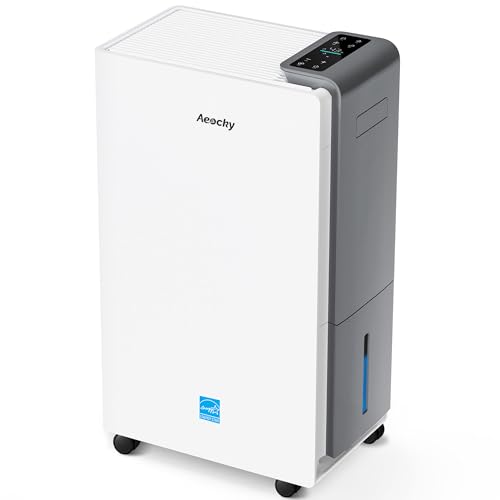
【ENERGY STAR 25 ≠ ENERGY STAR Most Efficient 2025】Don't fall for competitors' word games. With only 2.6% of ENERGY STAR models earning "Most Efficient 2025" title, these options are exceptionally rare on the market. RHEA-001 is one of the few to truly hold this top-tier certification. Many brands use misleading phrases like "Energy Star Efficient 25" or "Energy Star 25" to imply a standard they haven't met. Choosing them is a risk.With AEOCKY, you get verified performance and the peace of mind of authentic, top-tier efficiency.
How Can You Tell Your AC Isn’t Controlling Humidity?
Your air conditioner removes some moisture as it cools, but it may not control humidity well in every situation. If the AC cools the room quickly and shuts off, it may not run long enough to pull much water from the air.
Common signs include:
- Indoor humidity often stays above 50% and may remain near or above 55% across several rooms.
- Rooms feel cool but sticky.
- Windows, walls, or ducts collect condensation.
- Musty odors return after cleaning.
- Mildew or mold problems keep coming back.
- The AC short-cycles or runs unevenly.
- You lower the thermostat just to feel less clammy.
If these signs show up in several rooms, a whole-house dehumidifier may reduce the moisture load. If they show up in one room, improve ventilation or try a portable unit first.
Why Shoulder-Season Humidity Feels Worse
Shoulder seasons can feel clammy because the weather is mild enough that your AC does not run much, but the outdoor air can still carry a lot of moisture. Without enough cooling runtime, the house may stay damp even when the thermostat looks comfortable.
Reduced AC Run Time
Air conditioners remove humidity when they run long enough for moisture to condense on the coil and drain away. During spring and fall, the thermostat may be satisfied before enough moisture is removed. A dehumidifier can run based on humidity instead of temperature, so it can dry the air without forcing you to overcool the house.
Cool Air, High Moisture
Cool, damp air can feel uncomfortable because sweat evaporates more slowly when humidity is high. That is why a room can feel sticky even when it is not hot. Lowering humidity often improves comfort without lowering the thermostat as much.
Indoor Humidity Stagnation
Humidity can stagnate indoors when windows stay closed, showers and cooking add moisture, a dryer is not vented fully outdoors, or outdoor humidity remains high. Fabrics, carpets, and drywall can also hold moisture and release it slowly. A dehumidifier helps, but source control still matters.
What Should You Fix Before Installing a Whole-House Dehumidifier?
Before you invest in a whole-house dehumidifier, reduce avoidable moisture. This can lower runtime and may even solve the problem without new equipment.
- Repair plumbing, roof, wall, and window leaks.
- Clean gutters and extend downspouts away from the foundation.
- Make sure soil slopes away from the home.
- Vent clothes dryers outdoors.
- Use bathroom and kitchen exhaust fans that vent outdoors.
- Insulate cold pipes or surfaces that collect condensation.
- Seal major duct leaks and air leaks where practical.
- Check crawl spaces and basements for water intrusion.
The EPA’s mold guidance stresses that moisture control is the key to mold control. If you clean mold but do not fix the water problem, the mold problem will likely return.
How Are Whole-House Dehumidifiers Installed?
Whole-house dehumidifiers are usually installed inline with the HVAC system, either using existing return ductwork or a dedicated return. The unit pulls in humid air, removes moisture, and sends drier air back into the duct system. The collected water drains to a floor drain, plumbing drain, or condensate pump.
A proper installation should include:
- Correct unit capacity for the home’s moisture load.
- A duct layout that does not restrict airflow.
- A reliable drain line with proper slope or pump support.
- Accessible filter and service panels.
- A humidistat or integrated control.
- Duct sealing if leakage would reduce performance.
- Electrical work that follows local code.
ENERGY STAR recommends using an HVAC professional for whole-home dehumidifier sizing and installation. Poor installation can reduce efficiency, increase noise, and leave damp rooms untreated.
Recommended Products

Energy Efficient Whole House Dehumidifier: 90 pints per day at AHAM condition, 70 Pint at DOE, up to 2300 sq. ft, widely used in short buildings, crawlspace, Basement, multi-bedroom, commercial ,storage area, home, garage, large room, large-area housing, etc. quickly and effectively removes moisture with less energy than conventional dehumidifiers without racking up the energy bill, saving money, It will be the best crawl space dehumidifiers you will ever use

【Reduce humidity - Enhance comfort】:Massive Capacity + Wide Coverage. This dehumidifier has dehumidification capacity ranging 45- 80 pints—outperforming standard units while covering 4,500 sq. ft. of living space. Great dehumidifier for basements, large house, garages, bedroom, bathroom and gyms where excess humidity triggers cause unpleasant odors and discomfort. The result? A noticeably drier, fresher, and more comfortable environment for your entire family.
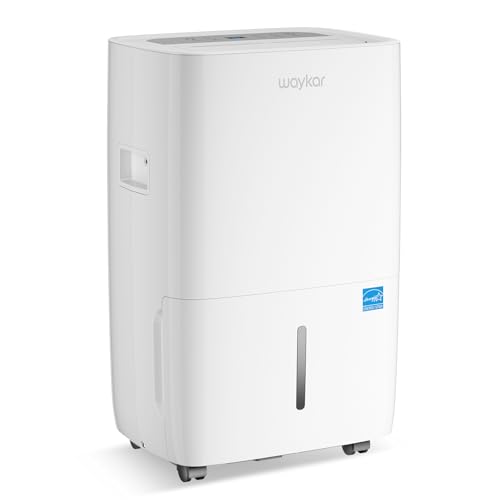
【80 Pint Capacity for Up to 5,000 Sq.Ft Spaces】Quickly removes excess moisture from basements, bathrooms, bedrooms, RVs, and other large living areas, delivering 80 pints per day (95°F, 90% RH).conditions. Designed as a powerful dehumidifier for basement, home, and large spaces, it helps eliminate damp air, condensation—and pet-related odors caused by excess humidity. Even during humid seasons, it works continuously to maintain a dry, comfortable, and healthier indoor environment.
What Maintenance and Noise Should You Expect?
Once installed, a whole-house dehumidifier usually needs less day-to-day work than portable units, but it still needs routine care. Follow the manufacturer’s maintenance schedule and include the system in regular HVAC service.
- Inspect or replace filters as recommended.
- Keep the drain line clear.
- Check the condensate pump if one is installed.
- Confirm the humidistat is reading accurately.
- Clean coils and service internal parts as directed by the manufacturer.
- Watch for new noise, vibration, water leaks, or unexplained humidity changes.
Noise depends on the model and installation location. A well-installed central unit is often less noticeable than a portable dehumidifier in a bedroom or living room, but poor mounting or duct design can create vibration or airflow noise.
Is a Whole-House Dehumidifier Worth It?
A whole-house dehumidifier is worth it if your home has persistent, measured humidity problems across multiple rooms and you want automatic, ducted moisture control. It can make the home feel less clammy, reduce musty odors, support better indoor air quality, and reduce the daily hassle of portable units.
It is not worth it if your humidity is already in range, if one portable unit solves the issue, or if the real problem is a leak or drainage issue. The best decision starts with measurements. Use a hygrometer, track humidity in several rooms, fix moisture sources, then compare the cost of a central unit with the cost and hassle of portable dehumidifiers.
Frequently Asked Questions
What is the average cost of a whole-house dehumidifier?
As of mid-2026, Angi and HomeAdvisor both report a typical installed range of about $1,300 to $2,800, and HomeAdvisor lists an average near $1,500. Your actual quote can be higher or lower depending on capacity, ductwork, drainage, controls, electrical work, labor rates, and location.
What is the downside of a whole-house dehumidifier?
The main downsides are higher upfront cost, professional installation, added maintenance, possible drain problems, and the risk of poor performance if the unit is mis-sized or poorly connected to ductwork. It also will not fix active leaks, flooding, or foundation water problems.
Should you use a dehumidifier if you have COPD?
A dehumidifier may help if your home has high humidity, mold, or musty dampness, because damp and moldy environments can bother people with chronic lung disease. However, it is not COPD treatment. Ask your healthcare professional what indoor humidity target is best for you, and avoid making the air uncomfortably dry.
How much will my electric bill go up with a dehumidifier?
It depends on wattage, runtime, humidity load, energy rate, and setpoint. Estimate it this way: watts ÷ 1,000 × hours used × your electric rate. A properly set humidistat, clean filter, sealed ducts, and fixed moisture sources can reduce unnecessary runtime.
Can a whole-house dehumidifier replace air conditioning?
No. A dehumidifier removes moisture, while an air conditioner removes heat and some moisture. In humid weather, the two can work together: the dehumidifier handles moisture control, and the AC handles cooling.
What humidity should I set my whole-house dehumidifier to?
A good starting point is 45% to 50% relative humidity. ENERGY STAR describes 30% to 50% as a generally optimum building range and suggests 30% to 40% in colder climates during heating season to reduce window condensation. CDC mold guidance says to keep home humidity no higher than 50% all day when possible.
Does a whole-house dehumidifier need ductwork?
Yes. Under the federal definition in 10 CFR 430.2, a whole-home dehumidifier operates with ducting that carries return air to the unit and supplies dehumidified air to one or more locations. The exact return-and-supply layout varies by equipment and home, so have the duct design, airflow, drainage, controls, and service access checked during installation.
Should a whole-house dehumidifier run all the time?
Not necessarily. A humidistat is designed to cycle the dehumidifier on and off as needed to maintain the selected relative humidity. Long runtimes can happen during very humid weather or after a moisture event, but if the system rarely reaches its setpoint, check for active moisture sources, dirty filters, drain or airflow problems, and incorrect sizing.
Conclusion
So, do whole-house dehumidifiers work? Yes, but they work best when the problem is real, measured, and spread across more than one room. If your indoor humidity repeatedly stays near or above 55% across several rooms, your AC leaves the house cool but damp, or portable units cannot keep up, a properly sized central dehumidifier can make the home feel drier and easier to manage.
If one room is damp, start with a portable unit and better ventilation. If there is a leak, drainage problem, or wet crawl space, fix that first. The best result comes from three steps: measure humidity, remove moisture sources, then choose the right dehumidifier for the actual load.
Sources
- U.S. EPA: A Brief Guide to Mold, Moisture and Your Home — indoor humidity targets, mold prevention, moisture control, and cleanup cautions.
- ENERGY STAR: Dehumidifiers — dehumidifier capacity, humidistats, whole-home dehumidifier guidance, energy efficiency, drainage, and best practices.
- CDC: Mold — mold health effects, chronic lung disease cautions, and humidity prevention guidance.
- PNNL Building America Solution Center: Whole-House Dehumidification — HVAC load, sizing, duct, and moisture-control guidance.
- Angi: Whole-House Dehumidifier Cost in 2026 — current installed-cost range and cost factors.
- HomeAdvisor: Whole-House Dehumidifier Cost in 2026 — current average installed cost and typical range.
- eCFR 10 CFR 430.2 — federal definitions for portable and whole-home dehumidifiers.