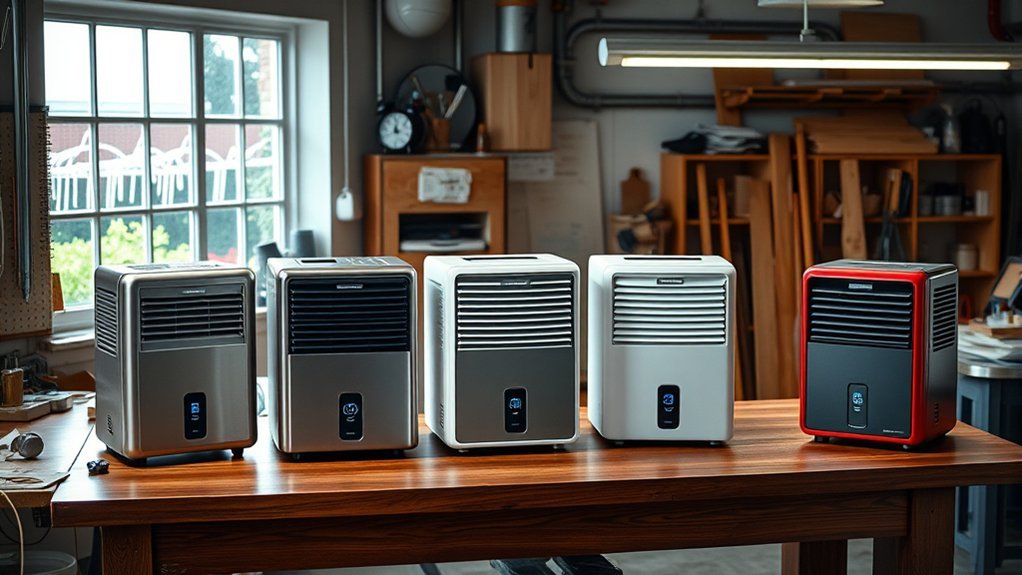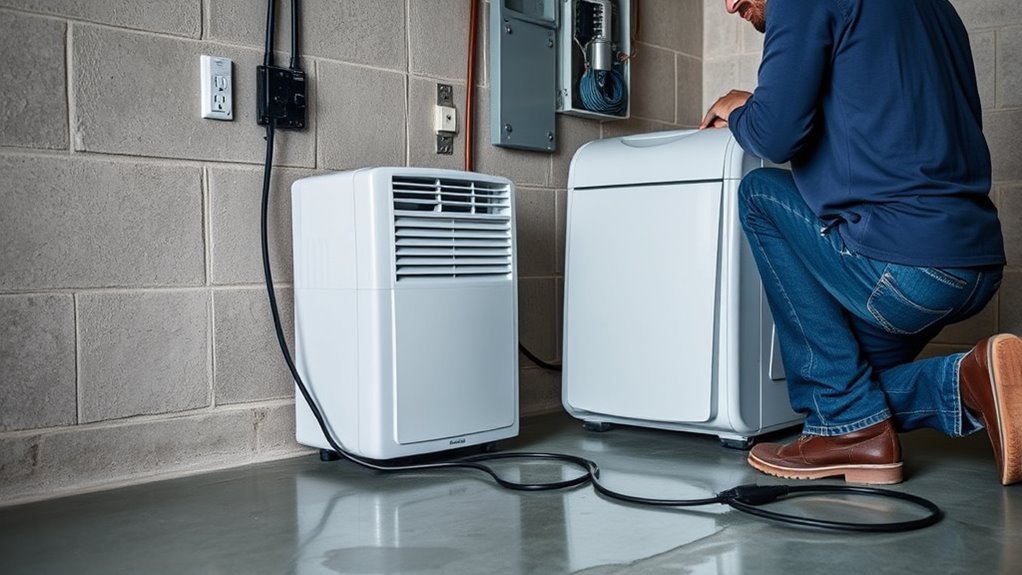
Dehumidifier repair is often worth it when the fault is minor, the unit has been dependable, and the full repair cost is comfortably below the cost of a suitable replacement. A machine that runs constantly, makes new noises, leaks, or barely collects water does not automatically need to be replaced. Start by separating maintenance, airflow, drainage, bucket-switch, fan, sensor, and control problems from expensive compressor or sealed-system failures, then compare safety, condition, repair history, parts availability, warranty, and moisture-removal performance.
Quick Answer
Dehumidifier repair is usually worth considering when the fault is minor, the unit has been reliable, and the complete repair cost is well below replacement cost. Replacement usually makes more sense after repeated major failures, extensive corrosion, weak moisture removal after troubleshooting, unavailable parts, an expensive compressor or sealed-system problem, or a recall whose official remedy requires stop-use, refund, or replacement.
Key Takeaways
- Troubleshoot airflow, settings, drainage, bucket seating, room humidity, and fan operation before assuming the compressor has failed.
- Check the model number, date code, and serial number when applicable against current recall notices before paying for repair or continuing to operate a suspicious unit.
- Minor fan, drain, switch, sensor, or maintenance problems can favor repair when the rest of the machine is sound.
- Repeated electrical or refrigeration failures, extensive corrosion, poor performance, or scarce parts strengthen the case for replacement.
- Treat the often-used 50% repair-cost rule only as a guideline; age, warranty, condition, reliability, and replacement quality matter too.
| Decision Factor | Repair Is More Reasonable When | Replacement Is More Reasonable When |
|---|---|---|
| Fault | Filter, drain, bucket switch, accessible sensor, control, or fan problem | Repeated compressor, sealed-system, major electrical, or overheating problem |
| Repair history | Few previous problems | Breakdowns continue after previous service |
| Condition | Cabinet, coils, cord, controls, and drainage system remain sound | Rust, damaged wiring, leaks, heat damage, or several worn components are present |
| Performance | Normal moisture removal returns after maintenance or a limited repair | Room humidity remains high despite correct sizing, setup, maintenance, and diagnosis |
| Cost | Repair is clearly cheaper than a properly sized replacement | Repair approaches replacement cost and the existing unit has other signs of wear |
| Safety | No recall, overheating, damaged wiring, smoke, or burning odor is present | The model is recalled with stop-use instructions or shows a serious electrical or fire-related symptom |
Note: Long runtime by itself does not prove a dehumidifier is defective. A dirty filter, restricted airflow, an undersized unit, a very damp room, low room temperature, drainage trouble, or an aggressive humidity setting can keep an otherwise working machine running for long periods.
Is Dehumidifier Repair Worth It?
Dehumidifier repair can be worth it when the fault is limited, the machine has been dependable, and fixing it costs substantially less than buying a correctly sized replacement. Problems involving a clogged drain, dirty filter, loose connection, accessible sensor, bucket switch, or fan assembly may be reasonable to correct when the rest of the unit is in good condition.
Age matters, but it should not be the only rule. A heavily used dehumidifier operating for long periods in a damp basement can accumulate more wear than a similar unit used only during part of the year. Consider condition, repair history, parts availability, operating performance, warranty coverage, safety, and the complete repair quote together.
You may hear advice to replace an appliance when a repair reaches about half the price of a new one. Treat that as a decision aid rather than an official cutoff. A repair near that level may still make sense on an otherwise excellent machine, while even a cheaper repair may be difficult to justify if corrosion and repeated failures are already developing.
Portable vs Whole-Home Dehumidifier Repair
Unit type changes the cost comparison. For a portable dehumidifier, compare the complete repair quote with the price of a current unit that matches the same room size and moisture load. For a whole-home dehumidifier, compare the repair with the installed replacement cost, including duct, drain, control, and labor work. ENERGY STAR treats portable and whole-home dehumidifiers as separate product categories and notes that whole-home units need correct sizing and professional installation.
Pro Tip: Before approving a repair, record the model number, serial number, approximate age, previous repairs, room humidity, symptoms, and technician’s diagnosis. Compare the full repair total with a replacement that actually matches the room size and moisture load.
Check for a Dehumidifier Recall First
Before opening the cabinet, ordering parts, or paying for a major repair, check the U.S. Consumer Product Safety Commission dehumidifier recall listings. Match the brand, model number, date code, and serial number when the recall notice calls for it. Dehumidifiers have been recalled because some affected models could overheat, smoke, melt, or catch fire.
CPSC reports that one major Gree-related dehumidifier recall has been associated with more than 2,000 overheating incidents, about 450 fires, and more than $19 million in property damage. That history is why recall status belongs at the start of the repair-or-replace decision, not at the end.
A recall changes the normal repair calculation. If your exact model is covered, follow the recall instructions rather than assuming that an ordinary repair is the correct solution. The manufacturer or recall administrator may specify a refund, replacement, repair program, or immediate stop-use instruction.
Warning: Stop using a dehumidifier if you see smoke, melting, severe overheating, damaged insulation, a burning odor, repeated breaker trips, or water reaching electrical components. Do not keep resetting a breaker or safety device without finding the cause.
Signs Your Dehumidifier Needs a Repair
A dehumidifier that runs but does not lower humidity needs troubleshooting, but the compressor is not automatically the problem. Airflow restrictions, an incorrect setting, a blocked drain, fan trouble, frost buildup, a poorly seated bucket, room conditions, or a sensor problem can all reduce moisture removal.
A dehumidifier that runs nonstop but cannot lower measured room humidity needs diagnosis before you decide that the entire machine has failed.
Watch for signs such as:
- Little or no water collected despite high measured room humidity
- Grinding, scraping, buzzing, or repeated clicking
- A fan that starts slowly, stops unexpectedly, or moves very little air
- Water leaking around the tank, hose, drain connection, or cabinet
- Visible corrosion on the cabinet, coils, wiring, or electrical connections
- Controls that do not respond normally to humidity-setting changes
- Repeated icing that returns after airflow problems are corrected
- Unusual heat, burning odors, discoloration, or breaker trips
Start with maintenance items before assuming a major component has failed. Clean the filter according to the manufacturer’s instructions, clear the intake and exhaust areas, reseat the water bucket, and inspect the drain hose for kinks, poor slope, or blockage. If the unit collects water in the bucket but will not send it through a hose, use the separate dehumidifier hose-drain troubleshooting guide rather than treating that symptom as a sealed-system failure.
Why Your Dehumidifier Runs but Won’t Dry
If your dehumidifier runs but the room stays damp, work from the easiest causes to the more expensive ones. Check actual room humidity with a separate hygrometer when possible. Then confirm the humidity setting, airflow, drainage, fan operation, room temperature, room size, and moisture load before suspecting a control-board or refrigeration-system failure. If you are judging performance by the bucket alone, see our guide to how much water a dehumidifier should collect per day.
Fan and Airflow Checks
Restricted airflow reduces the amount of humid room air that can move across the dehumidifier’s coils. Inspect the filter, intake grille, exhaust area, and the space around the machine. Follow the model’s placement instructions because required clearance varies with discharge design.
- Remove dust and lint from the filter as the owner’s manual directs.
- Clear furniture, boxes, curtains, or other objects blocking the intake or discharge.
- Listen for scraping, rattling, grinding, or an unusually weak fan sound.
- Check whether the fan operates when the machine is actively calling for dehumidification.
- Look for heavy frost or ice that may be restricting airflow.
If airflow improves after cleaning and normal moisture collection returns, you may have solved the problem without a repair. If the fan remains stalled, noisy, or intermittent, diagnosis of the fan motor, wiring, or control circuit may be worthwhile.
Sensor and Humidistat Issues
A humidity sensor or humidistat helps the machine decide when to run. If its reading is inaccurate, the dehumidifier may cycle too early, run too long, or display a room humidity level that does not match actual conditions.
Place a separate hygrometer near the dehumidifier but not directly in its hot exhaust airflow. Allow the reading to stabilize and compare it with the unit’s display. A small difference does not automatically prove the sensor has failed, but a large persistent difference can justify further investigation.
Dust around accessible control areas can sometimes interfere with normal operation, but do not spray liquid cleaners into electronic controls. Internal sensor testing differs by model, so use model-specific service information rather than applying a generic multimeter procedure to an unknown circuit.
Room Temperature and Frost
Low room temperatures can reduce the amount of water a refrigerant-type dehumidifier collects and can encourage frost formation on the cold coil. Some units include automatic defrost control, but operating-temperature limits differ by model.
If the machine repeatedly freezes, first check the filter, airflow, room temperature, and placement. Persistent icing after those issues are corrected can point to a fan, sensor, control, or refrigeration problem.
Repair or Replace?
Once you know the likely fault, judge the repair against the condition of the entire unit. A small fan, drain, switch, or control repair may make sense on an otherwise dependable machine. A major repair is harder to justify when corrosion, recurring breakdowns, weak moisture removal, heat damage, and difficult-to-find parts are already present.
- Check safety and recall status. Do not proceed with normal repair if the exact model is subject to stop-use recall instructions.
- Rule out maintenance problems. Check the filter, vents, bucket, drain path, settings, and room conditions.
- Confirm the symptom. Measure room humidity and note sounds, leaks, icing, error codes, and cycling behavior. Check the owner’s manual for the exact meaning of any code before replacing a part.
- Identify the likely repair. Separate a minor accessible fault from a compressor, refrigerant, or major electrical problem.
- Compare total value. Weigh the complete repair cost, remaining warranty, reliability, efficiency, parts availability, and cost of a correctly sized replacement.
How to Check the Fan, Fuse, and Sensors Safely
Begin with checks that do not require working on energized equipment. Verify that the outlet works, inspect the cord and plug for visible damage, confirm the water bucket is seated correctly, check the filter, and make sure the controls respond normally.
Unplug the dehumidifier before removing any service panel that the owner’s manual permits the user to remove. You can visually inspect accessible wiring for obvious damage, loose connectors, corrosion, melted areas, or burned insulation.
If the manual identifies a user-serviceable fuse, use only the specified fuse type and rating and replace it only with the unit unplugged. If the replacement fuse opens again, stop troubleshooting and diagnose the underlying fault instead of installing a larger fuse or bypassing protection. Many models do not expose a fuse as an owner-serviceable part, so model-specific instructions take priority.
Do not bypass fuses, thermal protection, bucket switches, interlocks, or other safety devices. If a fuse has opened or a protection device keeps operating, the underlying fault needs to be identified rather than repeatedly bypassed or reset.
Capacitors and refrigeration components require additional caution. Capacitors can retain electrical energy after an appliance is disconnected, while opening or servicing a refrigerant circuit requires appropriate tools, procedures, and qualifications. Under U.S. EPA Section 608 definitions, a dehumidifier that is factory manufactured, factory charged, hermetically sealed, and contains five pounds or less of refrigerant fits the definition of a small appliance. EPA also states that technicians who service equipment in a way that could release refrigerant must be Section 608 certified; Type I certification covers servicing small appliances.
Warning: DIY troubleshooting should stop before high-voltage diagnosis, capacitor handling, compressor work, or opening the sealed refrigerant circuit unless you have the required training and equipment.
Common Dehumidifier Parts That Stop Working
Portable dehumidifiers combine airflow, refrigeration, drainage, sensors, switches, and electronic controls. A problem in any one of those areas can reduce performance, stop operation, cause leaks, or produce misleading symptoms.
| Part or Area | Possible Symptom | First Check |
|---|---|---|
| Air filter | Weak airflow, longer runtime, or icing | Clean or replace as directed by the manual |
| Fan | Low airflow, scraping, slow starting, or no air movement | Check for obstruction and abnormal noise |
| Humidity control | Incorrect cycling or misleading RH display | Compare with a separate hygrometer |
| Bucket switch | Machine reports a full or missing bucket | Reseat the bucket and inspect accessible switch movement |
| Drain system | Leaks, full-tank shutdown, or poor continuous drainage | Check bucket position, hose slope, kinks, and blockage |
| Control board | Erratic controls, incorrect cycling, or failure to start components | Rule out power, bucket, sensor, and wiring issues first |
| Compressor or sealed system | Fan runs but little moisture is removed after simpler causes are eliminated | Professional diagnosis |
Recommended Products

Universal Compatibility This dehumidifier drain adapter is specifically designed to fit a wide range of popular dehumidifier models, ensuring seamless integration with your dehumidifier hose. It works perfectly with for AeonAir, for Whirlpool, for Idylis Dehumidifiers, and for RPD-702WP units, and is also compatible with for friedrich dehumidifier systems. No matter which brand you own, this adapter provides a secure and reliable connection for your dehumidifier drain hose.

COMPATIBILITY: Specifically designed as a replacement humidity sensor module board for HIS06 model for dehumidifiers and humidifiers

Multi-Purpose Hose, 6ft Cut-to-Fit:This 6-foot hose is designed for various applications, including dehumidifier drainage and gardening tasks. It can be easily cut to the desired length for flexible use. Please confirm the required length before purchase.
When to Replace a Dehumidifier
Replacement becomes the stronger choice when one repair no longer solves the larger reliability problem. A machine with spreading corrosion, repeated electrical faults, major refrigeration trouble, unavailable parts, a serious safety issue, or poor dehumidification after proper maintenance can become expensive or impractical to keep.
Age and Wear
There is no single service-life number that applies to every portable or whole-home dehumidifier. Usage hours, humidity load, room temperature, dust, drainage conditions, corrosion, storage conditions, maintenance, build quality, and parts availability all affect how long a machine remains practical to operate.
Age becomes more important when it appears together with warning signs such as:
- Rust on coils, cabinet seams, fasteners, or electrical areas
- Repeated fan, control, or compressor problems
- Brittle wiring or damaged insulation
- Controls that have already required repeated repair
- Poor water removal despite correct setup and maintenance
- Increasing noise, overheating, or electrical symptoms
Frequent Repair Calls
Several service calls in a short period can signal that the machine is moving from one isolated fault to broader wear. Do not use a fixed number of repairs per year as an automatic replacement rule. Instead, total what you have spent and ask whether each repair has restored dependable performance.
If the latest repair will cost a large share of replacement price, ask how long the repair is warranted and whether the technician sees other aging parts that may fail soon. That information gives the repair quote important context.
Weak Moisture Removal
A dehumidifier’s core job is to reduce excess indoor humidity. If its fan runs and the controls appear normal but the room remains damp, verify the humidity reading, airflow, filter, drainage, room temperature, moisture sources, and capacity before deciding that the appliance is worn out.
If moisture removal remains poor after those checks and professional diagnosis identifies an expensive compressor, sealed-system, or major electrical failure, replacement may provide better long-term value.
5-Step Repair-or-Replace Checklist
- Is it safe to keep using? Stop for burning odors, overheating, smoke, damaged wiring, water on electrical parts, or recall instructions requiring discontinued use.
- Have you ruled out simple causes? Clean the filter, clear vents, check the bucket, inspect drainage, and verify the humidity setting.
- Does it actually fail to lower humidity? Use a separate hygrometer and give the machine adequate time under realistic room conditions.
- Is the fault minor or major? A fan or drain problem differs greatly from a compressor or sealed-system problem.
- What gives better value? Compare the final repair price with a correctly sized, efficient replacement while accounting for warranty, age, previous failures, and condition.
How the Decision Plays Out in Real Situations
A Relatively New Unit With a Blocked Drain
If the machine still removes moisture but shuts off because water is not draining correctly, cleaning the bucket, drain port, or hose may restore normal operation at little cost. This is a strong maintenance or repair case.
An Older Unit With Repeated Major Repairs
If you have already paid for several significant component replacements and another major repair is required, compare the latest quote with the price and warranty of a new unit. Repeated major failures make another expensive repair less attractive.
A Unit That Runs Constantly in a Very Damp Basement
Constant operation does not always mean failure. The basement may have seepage, plumbing leakage, open exterior-air paths, an undersized dehumidifier, or a humidity setting that is difficult to reach. Address the moisture source and confirm sizing before condemning the appliance.
A Dehumidifier That Suddenly Becomes Noisy
New scraping, grinding, buzzing, or repeated clicking deserves attention. Turn the unit off if the sound is severe, especially when accompanied by overheating, a burning smell, smoke, or repeated electrical problems. A technician can determine whether the cause is an economical fan repair or a more serious failure.
How Age Changes Repair Costs
Older equipment can become more expensive to repair because several parts may be worn at the same time and compatible components may be harder to obtain. Labor can also increase when diagnosis is complicated by corrosion, prior repairs, damaged fasteners, or model-specific parts.
Age alone does not prove that a repair is a bad investment. A well-maintained older machine with an inexpensive, clearly identified fault can still be worth fixing. The concern is the combination of age with expensive repairs, weak performance, deteriorating condition, limited parts availability, and recurring failures.
Repair Costs vs New Dehumidifier Prices
Repair and replacement costs vary widely according to dehumidifier type, capacity, failed component, local labor rates, parts availability, and whether you have a portable appliance or a whole-home system. For that reason, an actual diagnosis and quote are more useful than a broad national price estimate.
When comparing costs, include:
- Diagnostic and labor charges
- Replacement parts
- Shipping or special-order costs
- Warranty coverage on the repair
- Cost of a properly sized replacement
- Installation or drainage work required for the replacement
- Energy efficiency differences
- Any remaining manufacturer warranty on the existing unit
Simple comparison: Repair ratio = complete repair cost ÷ like-for-like replacement cost × 100. Use that percentage as context, not as an automatic cutoff. A lower ratio can still be poor value on a corroded, unreliable unit, while a higher ratio can make sense when the existing machine is otherwise sound and the replacement has substantial installation costs.
A repair can provide strong value when it restores dependable operation for a modest cost. Replacement becomes more attractive when the required repair is expensive and the machine already shows other signs of deterioration.
Recommended Products

Product Specifications: Input voltage: 220V-50/60Hz 1.2A; Output Voltage: 12V - 4000mA; Connection port size: 5.5*2.1-11 MM, Make sure the product matches your device's charging port

Compatibility: There are 2 types of hose connector size design, the larger one is suitable for tubes ranging from 0.79in to 0.98in, and it can also cut to smaller one is suitable for tubes ranging from 0.59in to 0.79in. Beyond dehumidifiers, this versatile hose is ideal for draining portable air conditioners, dishwashers, and washing machines, making it a complete drainage solution

Premium Quality Material:This dehumidifier hose is made of durable and thick PVC, which has moderate flexibility and is easy to bend without breaking; Ripple design can prevent tangling, ensure smooth water flow, and make it easy to move in small spaces
Repair vs Replace: Pros and Cons
Repair Pros
- Can cost less when the fault is minor and well defined
- Avoids replacing an otherwise functional appliance
- May be quick when parts are readily available
- Can restore full performance after a fan, drain, switch, sensor, or control issue
Repair Cons
- Another aging component may fail later
- Diagnosis and labor can make some repairs uneconomical
- Sealed-system work requires specialized handling
- Older or uncommon models may have limited parts availability
Replacement Pros
- Provides a fresh warranty when applicable
- Ends a cycle of repeated repairs
- Lets you choose capacity that better matches the current space
- Allows comparison of current efficiency, drainage, noise, and control features
Replacement Cons
- Higher upfront cost than many minor repairs
- Incorrect sizing can produce disappointing results even with a new machine
- Whole-home systems may require professional installation
- Replacing an easily repairable unit can create unnecessary waste
Maintenance That Extends Dehumidifier Life
Simple maintenance can reduce unnecessary strain and help reveal problems before they become expensive. Filter and cleaning intervals vary by model and environment, so follow the manufacturer’s schedule instead of assuming every dehumidifier needs service at the same interval.
- Check and clean the air filter as directed by the manual.
- Keep the air intake and exhaust clear.
- Keep the space around the unit consistent with the manufacturer’s airflow requirements.
- Clean the bucket and inspect it for cracks or poor seating.
- Keep continuous-drain hoses free of kinks, blockage, and improper uphill runs.
- Check the room with a separate hygrometer occasionally.
- Inspect the cord and plug for heat damage or worn insulation.
- Address plumbing leaks, seepage, and other moisture sources instead of forcing the dehumidifier to handle the entire moisture load.
For general residential moisture control, indoor relative humidity of roughly 30-50% is a useful target. U.S. EPA moisture guidance recommends keeping indoor relative humidity below 60% when possible and ideally within the 30-50% range.
Note: Setting the humidistat much lower than the space requires can increase runtime and energy use without providing a useful moisture-control benefit. A hygrometer can help you judge actual room conditions instead of relying only on how the room feels.
How to Choose a Replacement Dehumidifier
If replacement makes more sense, choose the new unit based on the actual moisture load rather than simply buying the same pint number printed on an older machine. Dehumidifier capacity is expressed in pints of water removed per 24 hours under specified test conditions, and larger or wetter areas generally require more capacity.
Recommended Products

Room Size & Humidity Guidance:Performance varies with temperature, humidity, airflow, and moisture sources. Use continuous drainage in enclosed spaces for 40–50% RH; open areas reach 50–55% RH. For lower targets, choose a higher-capacity model. Readings may vary by location with air circulation—not a defect.

【Powerful 30-Pint Dehumidifier for Basement, Bedroom & Whole Home】This high-capacity dehumidifier removes up to 30 pints per day (95°F, 90% RH) and 25 pints under normal conditions (86°F, 80% RH).conditions, making it the go-to dehumidifier for basement spaces with sweating walls, a musty dehumidifier for bedroom comfort, and a versatile choice among dehumidifiers for home use. Covers up to 2,000 sq. ft., eliminating condensation, odors, and damp air for a fresher living environment.(Dehumidification capacity≠Water Tank Volume)

Efficient Water Collection Dehumidifier for 2,000 sq ft Large Space: Featuring a high-performance extraction system, this dehumidifiers for home collects up to 30 Pints of liquid daily under 95°F and 90% RH conditions. 30 Pints Dehumidifier for Basement is specifically engineered to maintain a dry atmosphere in spacious basements, bathrooms, or damp storage rooms where air circulation is limited.
Do Not Compare Old and New Pint Ratings Blindly
DOE’s revised dehumidifier test procedure took effect in June 2019, and consumers began seeing the revised capacity labels widely in early 2020. ENERGY STAR explains that portable units are tested at 65°F under the newer procedure instead of 80°F under the older one, so otherwise comparable products can show lower pint-per-day capacities.
There is no universal old-to-new pint-rating conversion that should be applied to every model. Compare current capacity and sizing guidance directly instead of assuming that one fixed multiplier converts an older label into a newer rating.
Current ENERGY STAR sizing guidance recommends roughly 20-30 pints per day for a slightly to moderately damp space under 2,000 square feet, with higher capacity ranges as room size and dampness increase. Use those ranges as a starting point, then follow the specific manufacturer’s coverage and operating-temperature guidance.
When comparing replacements, focus on:
- Capacity: Match pint-per-day performance to the room’s size and dampness level.
- Efficiency: Compare current efficiency information and consider ENERGY STAR-certified products.
- Drainage: Decide whether you need a removable bucket, gravity drain, or pump-assisted drainage.
- Humidity control: Look for an adjustable humidistat suited to how you plan to use the room.
- Operating temperature: Confirm that the model is designed for the temperatures expected in the basement, garage, or other location.
- Airflow clearance: Follow the manufacturer’s required intake and discharge clearance.
- Noise: Consider where the unit will operate and whether fan or compressor noise matters.
- Warranty and service: Check coverage, exclusions, replacement-part availability, and service options before buying.
Current ENERGY STAR guidance also allows shoppers to compare certified dehumidifiers using standardized capacity and energy-efficiency information. The ENERGY STAR Version 6.0 dehumidifier requirements took effect on October 1, 2025.
Pro Tip: If you are replacing a much older dehumidifier, do not assume you need the same printed pint rating. Measure the space, judge how damp it is, and use current sizing information before choosing the replacement.
If replacement is the better value, compare options by the actual use case. See our guides to dehumidifiers for damp rooms and dehumidifiers for small spaces rather than choosing only by the biggest pint number on the box.
Frequently Asked Questions
What is the typical lifespan of a dehumidifier?
There is no single lifespan that applies to every dehumidifier. Usage hours, humidity load, temperature, maintenance, corrosion, storage, build quality, and parts availability all affect how long a unit remains dependable and economical to repair.
Is it cheaper to repair or replace a dehumidifier?
It depends on the fault and the unit type. A limited fan, drain, switch, sensor, or control repair can be cheaper than replacement when the rest of the machine is sound. Replacement becomes more attractive when the repair involves a compressor or sealed system, major electrical damage, recurring failures, extensive corrosion, or a total repair cost close to a suitable replacement.
When should you replace a dehumidifier instead of repairing it?
Replacement deserves serious consideration when major repairs repeat, corrosion is extensive, important parts are unavailable, the unit has a serious safety problem, or moisture removal remains weak after proper troubleshooting. Compare the complete repair quote with a correctly sized replacement instead of using age alone.
What is a common reason a dehumidifier runs but does not collect much water?
Restricted airflow is one common cause. A dirty filter, blocked intake, icing, low room humidity, low temperature, incorrect setting, fan problem, poor sizing, or refrigeration fault can also reduce water collection.
Why does my dehumidifier run all the time?
Long runtime can be normal in a very damp space, but it can also result from a low humidity setting, dirty filter, blocked airflow, undersized capacity, open doors or windows, low room temperature, icing, a sensor problem, or ongoing moisture entering the room. Judge the unit by measured room humidity and troubleshooting results, not runtime alone.
Is the 50% repair-cost rule reliable?
It is a rule of thumb rather than an official cutoff. A repair near half the cost of replacement may be reasonable on an otherwise dependable unit, but less attractive when corrosion, repeated failures, poor performance, limited parts availability, or an expired warranty are also factors.
Can a clogged filter make a dehumidifier look broken?
Yes. A heavily clogged filter can restrict airflow, increase icing risk, lengthen runtime, and reduce moisture removal. Cleaning or replacing the filter according to the owner’s manual should be one of the first troubleshooting steps.
Can you repair a dehumidifier yourself?
Basic cleaning, filter service, bucket checks, placement checks, and drain-hose inspection are reasonable owner tasks when the manual permits them. High-voltage diagnosis, capacitor handling, compressor work, and service that opens the refrigerant circuit should be left to appropriately qualified professionals.
Should you check for recalls before repairing a dehumidifier?
Yes. Check the exact brand, model number, date code, and serial number when applicable against current recall information before investing in a repair. If the appliance is recalled, follow the official remedy and any stop-use instructions instead of assuming a normal repair is appropriate.
What should you check before buying a replacement?
Confirm room size, dampness level, capacity, efficiency, drainage method, operating-temperature range, airflow requirements, noise needs, warranty, and service availability. Also remember that older and newer pint-per-day ratings may use different test procedures.
The Bottom Line
Repair is usually the better first option when your dehumidifier has a clear, limited fault and has otherwise been safe and dependable. Replacement becomes more sensible when major failures repeat, corrosion spreads, moisture removal stays weak after proper troubleshooting, parts are difficult to obtain, a recall requires stop-use, refund, or replacement, or the repair cost is approaching the price of a suitable new machine.
Start with recall status, airflow, drainage, bucket seating, settings, actual room humidity, temperature, and other simple checks before condemning the unit. When troubleshooting reaches high-voltage parts, capacitors, a compressor, or the sealed refrigerant circuit, use an appropriately qualified technician rather than taking unnecessary electrical or refrigerant risks.
Sources
- U.S. Environmental Protection Agency — Mold Course, Chapter 9 — supports keeping indoor relative humidity below 60% when possible and ideally around 30-50%.
- ENERGY STAR — Dehumidifiers — supports sizing by room conditions, current capacity ranges, drainage options, and differences between portable and whole-home units.
- ENERGY STAR — Dehumidifier Testing and Capacity — explains the June 2019 DOE test-procedure change, the shift from 80°F to 65°F testing for portable units, and why newer capacity labels can be lower.
- ENERGY STAR — Dehumidifiers Key Efficiency Criteria — confirms Version 6.0 requirements became effective October 1, 2025.
- U.S. Consumer Product Safety Commission — Dehumidifier Recalls — supports checking recalled models and following official stop-use or remedy instructions.
- U.S. Environmental Protection Agency — Section 608 Definitions — defines qualifying dehumidifiers as small appliances under federal refrigerant rules.
- U.S. Environmental Protection Agency — Section 608 Technician Certification Requirements — supports certification requirements for service that could release refrigerant and identifies Type I for small appliances.