Last updated: August 2026
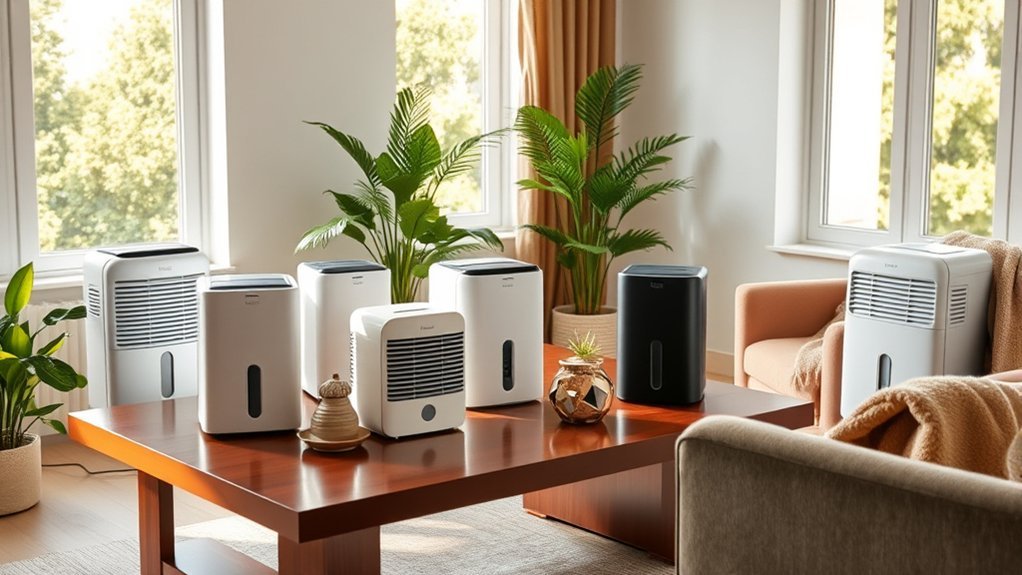
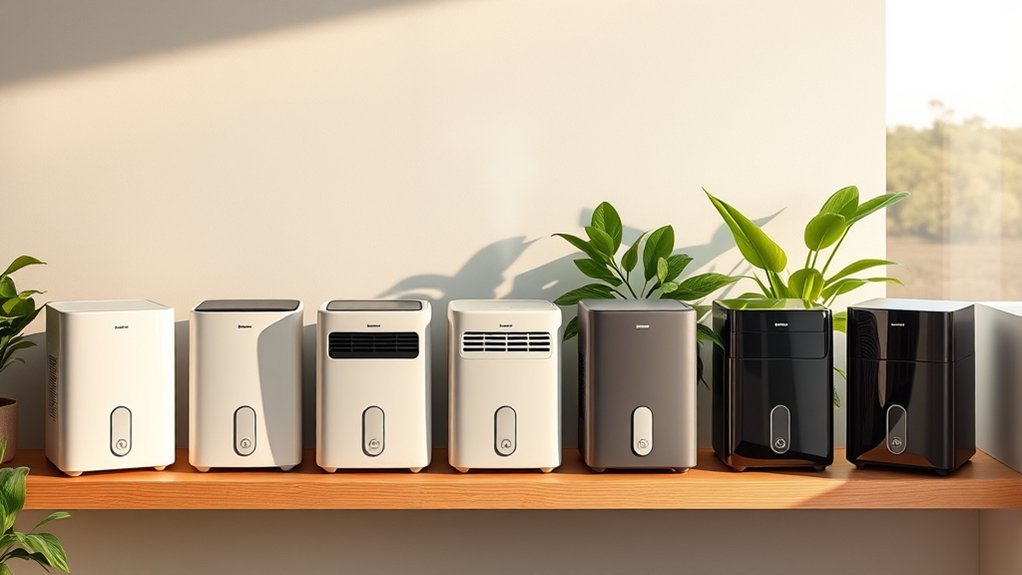
Drying clothes indoors can release a substantial amount of moisture into the surrounding air. A properly sized compressor dehumidifier for drying clothes can lower room humidity, support faster evaporation, and reduce the damp feeling around an indoor drying rack. The most useful choices in this guide are the high-capacity AEOCKY Boreas, the laundry-focused LUKO 30 Pint, the quieter ZAFRO 21 Pint, and the compact PLUSCENT VG270 21 Pint.
Quick verdict: Choose the AEOCKY Boreas for larger rooms and heavier laundry loads, the LUKO 30 Pint for a dedicated laundry room, the ZAFRO 21 Pint when quieter operation matters, or the PLUSCENT VG270 when compact portability is the priority.
Important: Advertised pint ratings may use different temperature and humidity test conditions. Treat them as sizing guides rather than perfect side-by-side laboratory comparisons.
Quick Comparison
| Product | Best For | Advertised Capacity | Laundry Feature | Drainage | Check Details |
|---|---|---|---|---|---|
| AEOCKY Boreas | Large rooms and heavier laundry loads | Up to 50 pints/day at 95°F and 95% RH; lower output in milder conditions | Continuous dehumidification | Tank or drain hose | Check Price on Amazon |
| LUKO 30 Pint | Dedicated laundry rooms and basements | Up to 30 pints/day at 90°F and 90% RH | Dry Clothes function | 68 oz tank or drain hose | Check Price on Amazon |
| ZAFRO 21 Pint | Quieter overnight or apartment use | Up to 21 pints/day under manufacturer test conditions | Dry Clothes mode | 1.7 L tank or included hose | Check Price on Amazon |
| PLUSCENT VG270 | Compact rooms and room-to-room movement | Up to 21 pints/day at 95°F and 90% RH | Laundry mode | 1.5 L tank or drain hose | Check Price on Amazon |
How We Compared These Dehumidifiers
We focused on features that directly affect indoor laundry drying: active compressor-based moisture removal, useful capacity for a drying room, continuous drainage, a laundry or continuous mode, noise, portability, tank size, humidity controls, room-temperature limitations, and honest product drawbacks.
Passive moisture absorbers and very low-capacity thermoelectric mini units were excluded because they are generally better suited to closets, cupboards, or storage containers than a room containing a wet load of laundry.
AEOCKY Boreas 3500 Sq. Ft. Compressor Dehumidifier – Best High-Capacity Pick
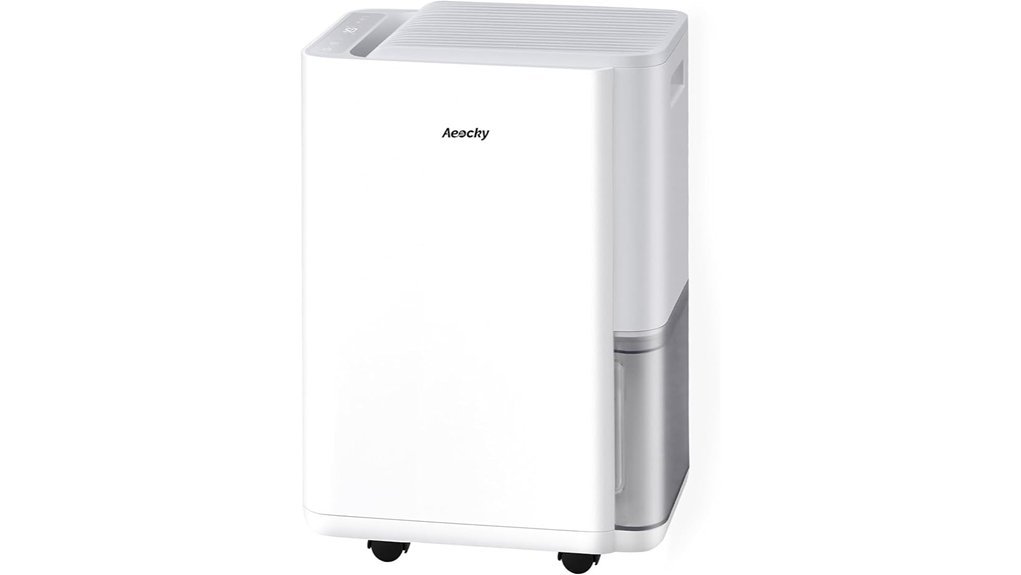
The AEOCKY Boreas is the strongest high-capacity option here for a large laundry room, basement, or open space where several damp garments are drying at once. The manufacturer advertises coverage up to 3,500 square feet, moisture removal up to 50 pints per day at 95°F and 95% relative humidity, and up to 38 pints at 86°F and 80% relative humidity.
Best For: Larger rooms, heavier laundry loads, and users who want more moisture-removal headroom with a continuous-drain option.
Why You’ll Like It: Its higher advertised output gives it more capacity than the smaller 21- and 30-pint models. Humidity sensing, drain-hose support, full-tank protection, a compact footprint, and an approximately 40 dB manufacturer sound claim can make it easier to run through longer drying sessions.
Who Should Avoid It: Buyers with a very small laundry room or occasional single-rack loads may not need this much capacity. A smaller model with a dedicated laundry preset may provide a simpler and less expensive fit.
Before You Buy: A dedicated laundry preset was not confirmed, so plan to use regular or continuous dehumidification. The maximum 50-pint figure is based on unusually hot and humid conditions, and typical output will be lower in an ordinary home.
Pros:
- Highest advertised moisture-removal capacity among the four picks.
- Better suited to larger laundry areas, open basements, and heavier loads.
- Supports extended operation through a drain-hose connection.
- Manufacturer documents humidity control, full-tank protection, and quiet operation.
Cons:
- May provide more capacity than a small laundry room requires.
- Maximum output is measured under extreme heat and humidity.
- No dedicated Dry Clothes or Laundry mode was confirmed.
LUKO 30 Pint Dehumidifier – Best Laundry-Focused Pick
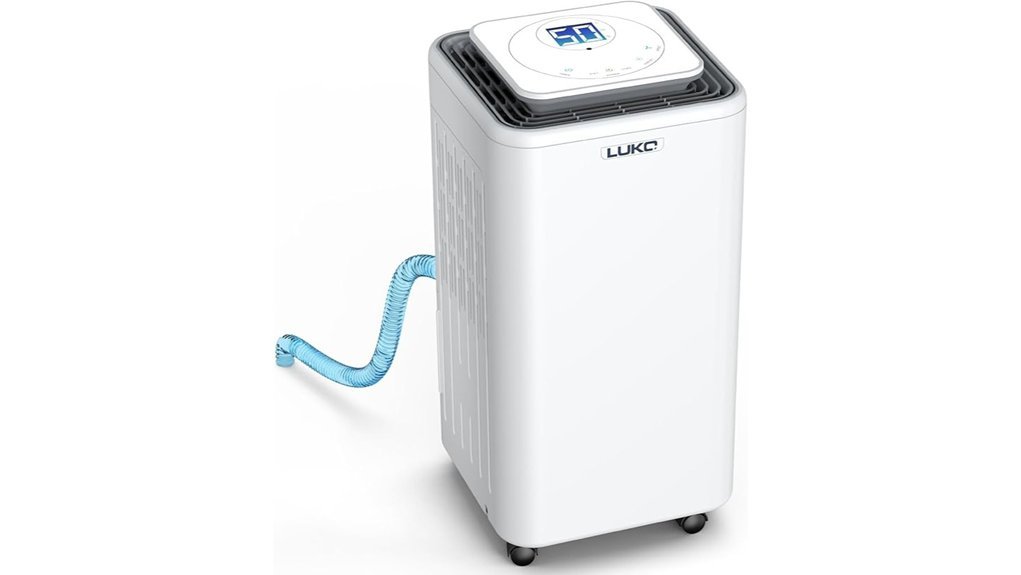
The LUKO 30 Pint Dehumidifier is a practical middle-ground choice when a 21-pint model feels too small but a higher-capacity unit would be excessive. Available documentation lists coverage from approximately 300 to 2,000 square feet, a Dry Clothes function, humidity settings from 30% to 80%, two fan speeds, auto defrost, and a 24-hour timer.
Best For: Dedicated laundry rooms, medium-size basements, and households that want a specific clothes-drying function without moving to the largest machine in the guide.
Why You’ll Like It: The 68-ounce tank is larger than the tanks on the two 21-pint models, while the drain hose supports longer sessions without repeated emptying. Casters, a digital humidity display, and the dedicated Dry Clothes function make it particularly convenient around a drying rack.
Who Should Avoid It: It may not provide enough headroom for a large open basement containing several loads at once. Buyers who need the quietest available option may also prefer the ZAFRO.
Before You Buy: The 30-pint claim is measured at 90°F and 90% relative humidity. Output will be lower in cooler or less humid rooms. Confirm the current model, drain-hose inclusion, voltage, warranty, and return terms before purchasing.
Pros:
- Dedicated Dry Clothes function directly matches the article’s buyer intent.
- Useful balance of capacity, tank size, portability, and continuous drainage.
- Documentation lists auto defrost, a washable filter, two fan speeds, and a 24-hour timer.
- Approximately 30-pint class provides more headroom than compact 21-pint choices.
Cons:
- The advertised capacity uses hot, highly humid test conditions.
- The tank can still fill during a long drying session if the drain hose is not connected.
- Current product support and warranty details should be verified before ordering.
ZAFRO 21 Pint Dehumidifier with Drain Hose – Best Quiet Pick
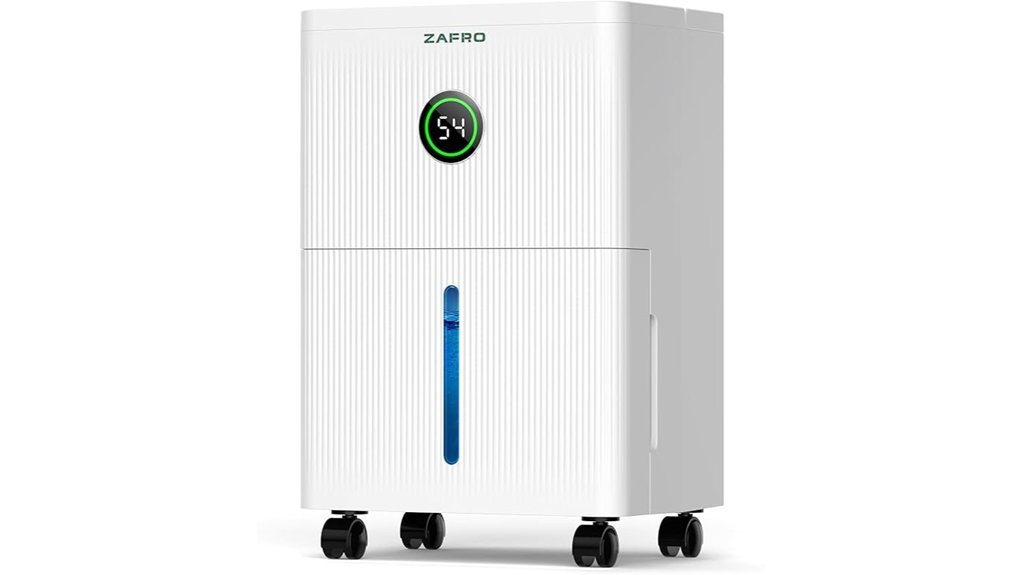
The ZAFRO 21 Pint Dehumidifier is the best fit here for apartments, bedrooms, or laundry areas where lower noise matters. The manufacturer lists operation as low as 41 dB, along with Sleep mode, Dry Clothes mode, a 24-hour timer, two fan speeds, and adjustable humidity from 30% to 80%.
Best For: Smaller to medium laundry rooms, overnight drying, apartments, and buyers who value quieter controls and an included continuous-drain hose.
Why You’ll Like It: Dry Clothes mode is directly useful for indoor laundry, while the dual digital display and three-color humidity light make room conditions easier to check. The 1.7-liter tank, auto shut-off, auto defrost, memory restart, washable filter, child lock, and caster wheels add day-to-day convenience.
Who Should Avoid It: Buyers drying several heavy loads in a large basement may find its 21-pint class too small. The tank can also require frequent emptying when continuous drainage is unavailable.
Before You Buy: The 21-pint figure is an advertised maximum rather than a guaranteed result in every room. Confirm the exact model, voltage, current availability, and included drain hose on the linked listing before ordering.
Pros:
- Dry Clothes mode and continuous drainage suit longer indoor laundry sessions.
- Claimed operation as low as 41 dB is useful for apartments and shared living spaces.
- Includes a humidity indicator, timer, Sleep mode, auto restart, and caster wheels.
- Child lock and full-tank protection add useful household convenience.
Cons:
- Lower capacity than the AEOCKY and LUKO models.
- The 1.7-liter tank may fill quickly with a wet load unless the hose is connected.
- Actual sound and moisture-removal performance depend on the selected mode and room conditions.
PLUSCENT VG270 21 Pint Dehumidifier – Best Compact Pick
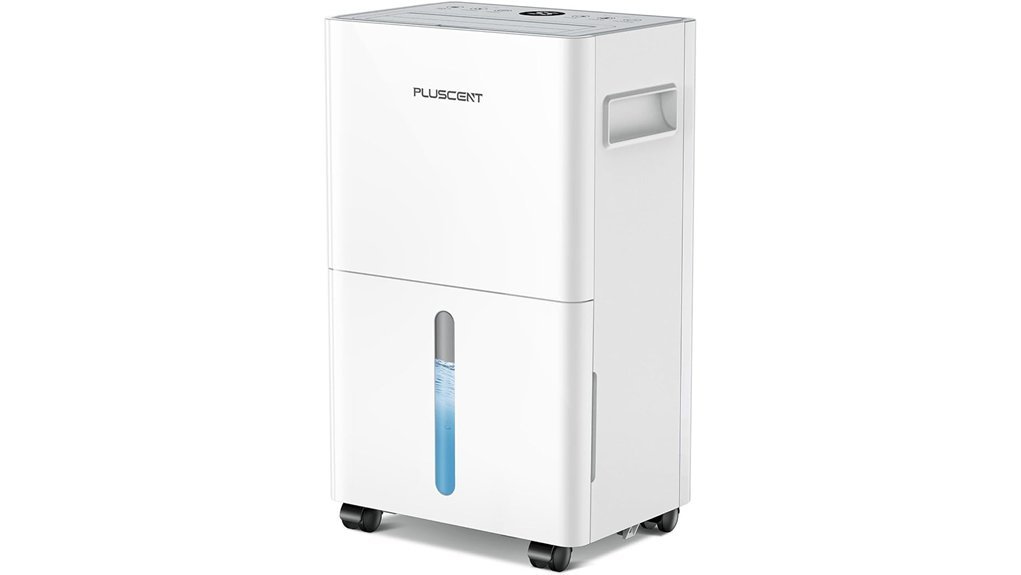
The PLUSCENT VG270 21 Pint Dehumidifier is a compact option for a small laundry room, bathroom, bedroom, or apartment. Manufacturer and indexed product information describe coverage up to 1,500 square feet, three operating modes, a 24-hour timer, auto defrost, child lock, a washable filter, a removable tank, and continuous drainage.
Best For: Buyers who want a narrow, easier-to-move appliance for regular laundry loads in a compact room.
Why You’ll Like It: Its compact body, caster wheels, handles, Laundry mode, and listed 160-watt power draw make it convenient for room-to-room use. Adjustable humidity control and an optional drain hose can also reduce the need to supervise every drying cycle.
Who Should Avoid It: This is not the best choice for several simultaneous laundry loads or a large open basement. Buyers without access to a suitable drain should also consider whether the 1.5-liter tank is large enough for their routine.
Before You Buy: Confirm that the Amazon page specifically shows the PLUSCENT VG270 21-pint model with coverage up to 1,500 square feet. The supplied ASIN has appeared with inconsistent product descriptions on third-party indexed pages. The 21-pint rating is stated at 95°F and 90% relative humidity, so normal household output will be lower.
Pros:
- Compact design with wheels and handles for easier movement.
- Laundry mode, timer, humidity control, auto defrost, and child lock add convenience.
- Supports tank collection or continuous drainage through a hose.
- Listed 160-watt power draw is lower than many larger-capacity machines.
Cons:
- The 1.5-liter tank may require frequent emptying during a wet laundry load.
- Lower capacity than the AEOCKY and LUKO picks.
- The exact Amazon model identity must be checked carefully before ordering.
How to Use a Dehumidifier for Drying Clothes Indoors
- Use a reasonably closed room. Close exterior windows and doors so the appliance is not continually pulling moisture from the rest of the home or outdoors.
- Space the garments apart. Leave gaps between shirts, towels, and heavier fabrics so air can circulate around both sides.
- Position the unit outside the drip zone. Place it near the drying rack without allowing water to drip onto the appliance, plug, outlet, or power cord.
- Select Laundry, Dry Clothes, or Continuous mode. Use the dedicated laundry setting when available. Otherwise, choose continuous operation or a low humidity target during the wettest part of the cycle.
- Connect continuous drainage when practical. A small tank can fill before the clothes are dry, which causes the appliance to stop.
- Improve room airflow safely. Spread garments out and use normal room air circulation. Do not block the dehumidifier’s intake or exhaust with clothing.
- Check the load periodically. Remove dry garments and stop continuous operation after the laundry is dry and room humidity has returned to a comfortable level.
Factors to Consider When Choosing a Dehumidifier for Clothes Drying
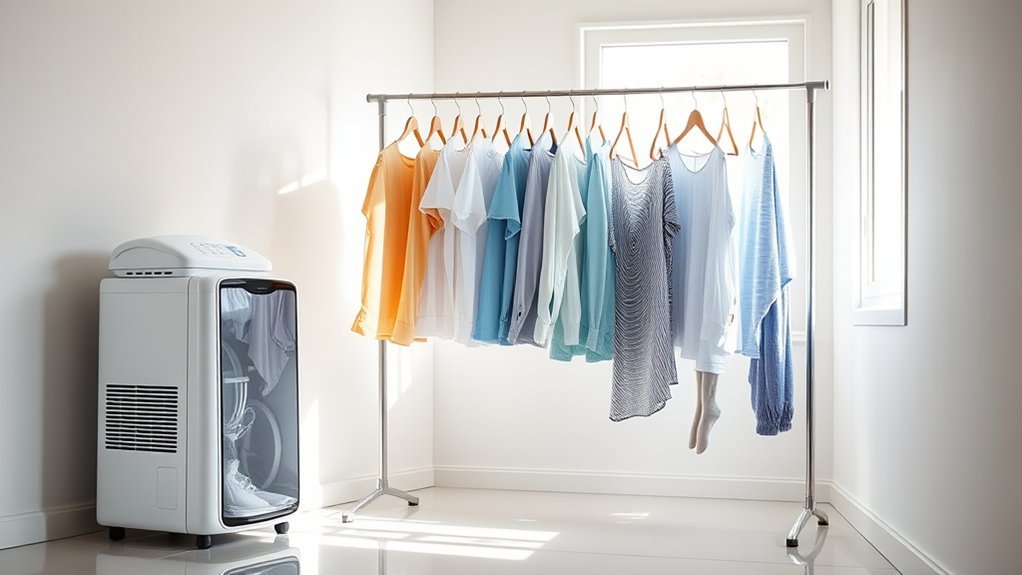
The best dehumidifier for drying clothes is not always the model with the largest advertised coverage number. Match the machine to the laundry load, enclosed room size, temperature, drainage setup, and acceptable noise level. Compare the conditions behind each pint rating because different test standards can make similar machines look very different on paper.
Moisture-Removal Capacity
Capacity is measured in pints of water removed over 24 hours under stated temperature and humidity conditions. Higher capacity generally provides more headroom for bulky loads and damp rooms, but the advertised figure is not the tank size and does not guarantee identical output in every home.
Room Size and Laundry Load
Use coverage figures as rough manufacturer guidance rather than a promise. A closed 150-square-foot laundry room with one drying rack is easier to manage than an open basement containing several loads. A 21-pint-class model may be enough for a compact room, while a 30- or 50-pint-class model offers more headroom when the area is larger or naturally humid.
Compressor vs. Desiccant Dehumidifiers
The four products in this guide are compressor-based models. Compressor dehumidifiers are generally well suited to heated rooms and ordinary household temperatures. Their moisture removal drops as a room becomes colder. A desiccant model may remain more effective in a cold utility room, but it can use more electricity and release warmer air. Match the technology to the room rather than relying only on the headline pint rating.
Laundry Mode or Continuous Operation
A dedicated Laundry or Dry Clothes mode is convenient because it normally keeps the fan and compressor running more aggressively during the wettest part of the cycle. A model without that preset can still help when it offers continuous operation, useful airflow, and an adjustable humidistat.
Drainage Options
Continuous drainage is one of the most valuable features for laundry use. A wet load can fill a small tank before the clothes are dry, causing the machine to stop. If you have a suitable lower drain, connect the hose with a continuous downward slope and no kinks. Otherwise, choose a larger tank and confirm that full-tank auto shut-off is included.
Noise Level
Compressor dehumidifiers produce fan and compressor noise. Models advertised in the low-40 dB range may be easier to tolerate in bedrooms or apartments, but published figures can depend on fan speed and test method. Place the unit on a level surface and keep its filter clean to reduce avoidable vibration and airflow noise.
Room Temperature
Compressor models normally remove less moisture as room temperature falls. Auto defrost helps manage coil icing, but it does not make cold-room performance equal to warm-room performance. In a chilly utility room or basement, expect longer drying times and check the manufacturer’s minimum operating-temperature guidance.
Energy Use
Do not estimate operating cost from wattage alone. Use this formula: wattage × hours used ÷ 1,000 = kilowatt-hours. Multiply the result by your local electricity rate. Correct room sizing, a clean filter, a humidistat, a timer, and continuous drainage can help prevent unnecessary runtime.
Humidity Target
For ordinary indoor moisture control, a target around 40% to 50% relative humidity is a practical starting point. Laundry or continuous mode may run more aggressively while garments are wet. Once the load is dry, return the machine to a normal target or switch it off so it does not run longer than necessary.
Before You Buy Checklist
- Confirm that the appliance is compressor-based and suitable for room dehumidification.
- Check the pint-rating test conditions rather than comparing headline numbers alone.
- Choose a dedicated Laundry mode, Dry Clothes mode, or continuous-operation setting.
- Make sure the drain hose can reach a safe lower drain if you plan continuous use.
- Check tank size, noise, operating-temperature range, filter access, and warranty terms.
- Confirm that the voltage and plug type match your household electrical supply.
- Leave the manufacturer-recommended clearance around the air intake and outlet.
- Confirm the exact model and included accessories on the current Amazon listing.
Frequently Asked Questions
How Much Faster Can a Dehumidifier Dry Clothes?
There is no guaranteed time saving. Drying speed depends on room temperature, starting humidity, airflow, fabric type, load size, garment spacing, and dehumidifier capacity. A closed room, well-spaced garments, and a correctly sized machine normally provide better conditions than an open room with poor airflow.
Can a Dehumidifier Dry Clothes in an Unheated Room?
It can help, but compressor performance falls as the room becomes colder. Auto defrost reduces coil icing, yet drying may still take much longer. Check the model’s minimum operating-temperature guidance or move the drying rack to a warmer room when cold conditions prevent effective moisture removal.
Should I Use Laundry Mode or Set a Humidity Level?
Use Laundry or Dry Clothes mode during the first part of the cycle when the garments contain the most moisture. If the unit has no dedicated preset, continuous mode can work. After the clothes are mostly dry, return to a normal humidity target around 40% to 50% or stop the appliance.
How Much Electricity Will It Use?
Check the unit’s rated wattage and multiply it by operating hours. For example, a 270-watt model running for four hours uses approximately 1.08 kWh. Actual cost depends on the local electricity rate and how often the compressor cycles off after reaching the selected humidity.
Is a Bigger Dehumidifier Always Better for Laundry?
No. A higher-capacity unit offers more headroom for large rooms and heavy loads, but it may cost more, occupy more space, and be unnecessary for a small closed laundry room. Choose the smallest model that can reasonably manage the room size, normal load, baseline humidity, and operating temperature.
Do I Need a Drain Hose for Drying Clothes?
A hose is not essential, but it is helpful. Wet laundry can cause a small tank to fill before the drying cycle is complete. Continuous gravity drainage allows the appliance to run without stopping, provided the hose reaches a safe lower drain and remains free of kinks.
Where Should I Place the Dehumidifier?
Place it near the drying rack but outside the drip zone, with the manufacturer’s recommended clearance around the intake and exhaust. Keep doors and windows closed, spread garments apart, and do not place clothing directly against the appliance.
Conclusion
Final recommendation:
Choose the AEOCKY Boreas when higher moisture-removal capacity is the priority. The LUKO 30 Pint is the strongest laundry-focused choice because its documentation includes a Dry Clothes function and a larger tank than the compact models.
Choose the ZAFRO 21 Pint when lower noise and apartment-friendly controls matter, or the PLUSCENT VG270 when compact size and portability are more important—after confirming that the linked listing shows the exact 21-pint VG270 model.
Whichever model you choose, compare its capacity test conditions, use continuous drainage when practical, keep the drying room reasonably closed, provide safe airflow around the garments, and stop continuous operation after the laundry is dry.