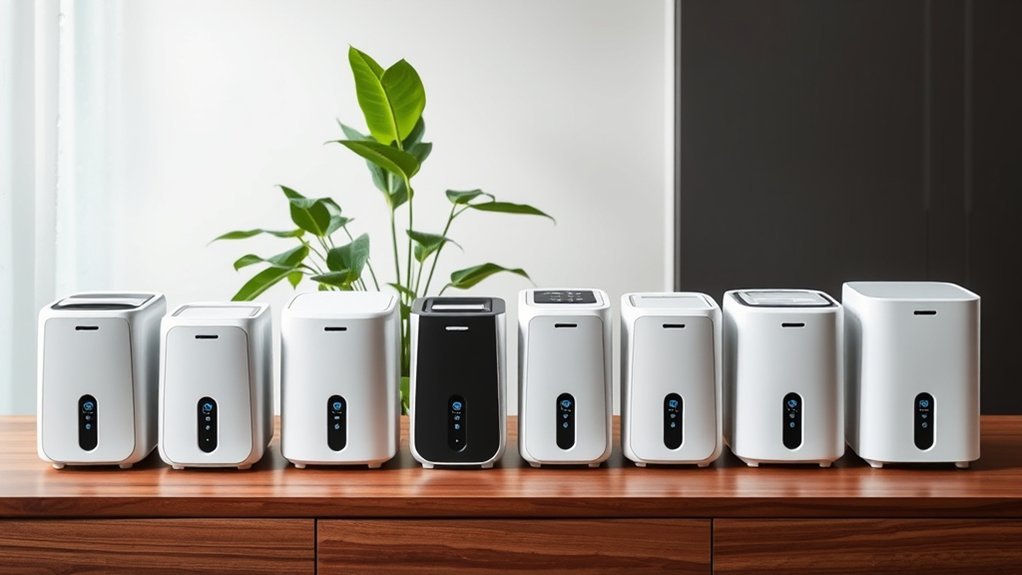
Drying clothes indoors adds a concentrated amount of moisture to the room. For regular full laundry loads, a compressor dehumidifier with continuous drainage is usually the most practical choice because it can remove substantially more water than a small thermoelectric moisture collector.
This updated shortlist focuses on two compressor models that better match the needs of indoor laundry drying. The AEOCKY RHEA-001 offers higher capacity for frequent or heavy loads, while the GoGuess 21-Pint is a more compact option for smaller laundry rooms and apartment drying areas.
Quick verdict
- Best for frequent or heavy laundry: AEOCKY RHEA-001 80-Pint Compressor Dehumidifier
- Best value for smaller laundry rooms: GoGuess 21-Pint Compressor Dehumidifier
How these products were selected
The retained models use compressor-based moisture removal, offer tank and hose drainage, and publish extraction capacities suitable for more than basic background humidity control. Small thermoelectric models were excluded because their moisture-removal rates are generally too low for regular full laundry loads.
Quick Comparison
| Product | Best For | Listed Moisture Removal | Tank | Drying Controls | Drainage | Amazon |
|---|---|---|---|---|---|---|
| AEOCKY RHEA-001 | Frequent loads, large rooms, and humid basements | Up to 80 pints/day at 95°F and 95% RH; 59.3 pints/day at 86°F and 80% RH | 1.45 gallons | Adjustable humidity and fan controls | Tank or gravity drain hose | Check Availability |
| GoGuess 21-Pint | Smaller laundry rooms, apartments, and moderate loads | Up to 21 pints/day at 95°F and 90% RH | 2.3 liters | Turbo, DEHU, and Sleep modes | Tank or included 3.28-foot hose | Check Availability |
Important: Maximum extraction figures are measured under controlled temperature and humidity conditions. A dehumidifier will normally collect less water in a cooler or less humid room. Advertised square-foot coverage is useful for comparison, but laundry volume, airflow, room temperature, and starting humidity are usually more important.
AEOCKY RHEA-001 Energy Star 80-Pint Dehumidifier with Hose
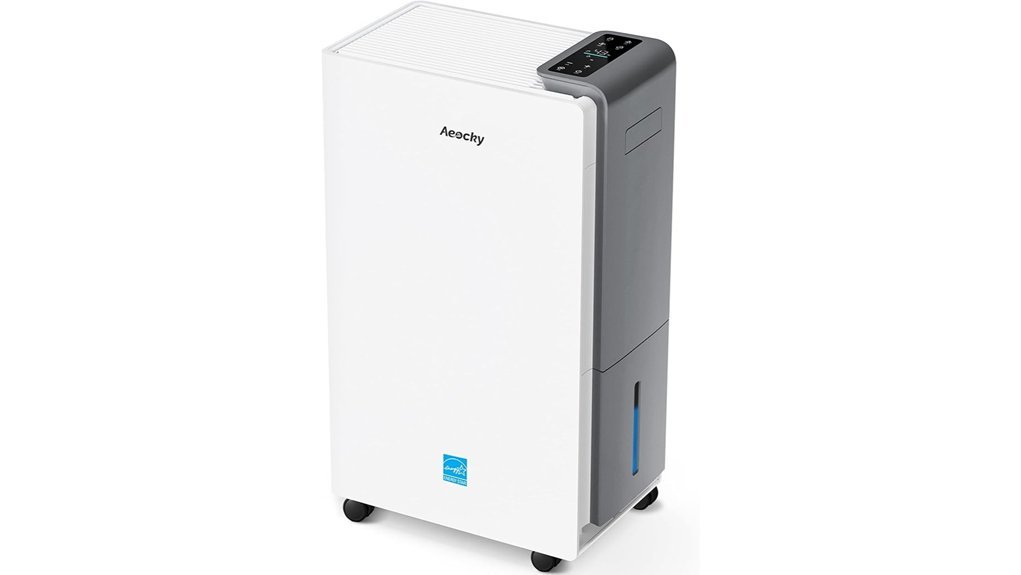
Best for frequent or heavy laundry
The AEOCKY RHEA-001 is the higher-capacity choice for households that regularly dry full loads indoors. Its listing specifies a maximum extraction rate of 80 pints per day at 95°F and 95% relative humidity and 59.3 pints per day at 86°F and 80% relative humidity. Those figures make it better suited to heavy moisture loads than low-capacity room dehumidifiers.
The unit is advertised for spaces up to 4,500 square feet and has a 1.45-gallon tank. More importantly for laundry use, it includes a gravity drain hose and garden-hose adapter. Continuous drainage allows the machine to keep running without repeatedly stopping when its tank fills, provided the hose is installed according to the manual.
The listing also identifies the RHEA-001 as an ENERGY STAR Most Efficient 2025 model. Adjustable humidity control, automatic operation, auto defrost, and a listed 44 dB low setting add flexibility for long drying sessions.
Best For: Frequent indoor laundry, large drying rooms, humid basements, and households drying several loads each week.
Why You’ll Like It: Its higher moisture-removal capacity can manage a demanding laundry load more quickly, while continuous drainage reduces the need to monitor the tank.
Who Should Avoid It: Buyers with a very small laundry space, occasional single-garment drying needs, or no suitable location for a larger compressor appliance.
Pros:
- Highest listed extraction capacity of the two retained models.
- Includes a drain hose and garden-hose adapter.
- Large 1.45-gallon tank for situations where hose drainage is unavailable.
- Adjustable humidity control and automatic operation.
- ENERGY STAR Most Efficient 2025 designation shown on the listing.
- Listed 44 dB sound level at the lowest setting.
Cons:
- The maximum 80-pint figure is measured under unusually hot and humid conditions.
- Its larger size and capacity may be excessive for a small apartment drying area.
- A compressor dehumidifier will be more noticeable than a mini fan-based moisture collector.
- Current seller, warranty, and availability details should be checked before ordering.
Buyer tip: Choose the RHEA-001 when drying speed and moisture-removal capacity matter more than having the smallest possible appliance. Use the drain hose whenever practical during repeated laundry sessions.
GoGuess 1600 Sq. Ft. 21-Pint Dehumidifier with Drain Hose and Timer
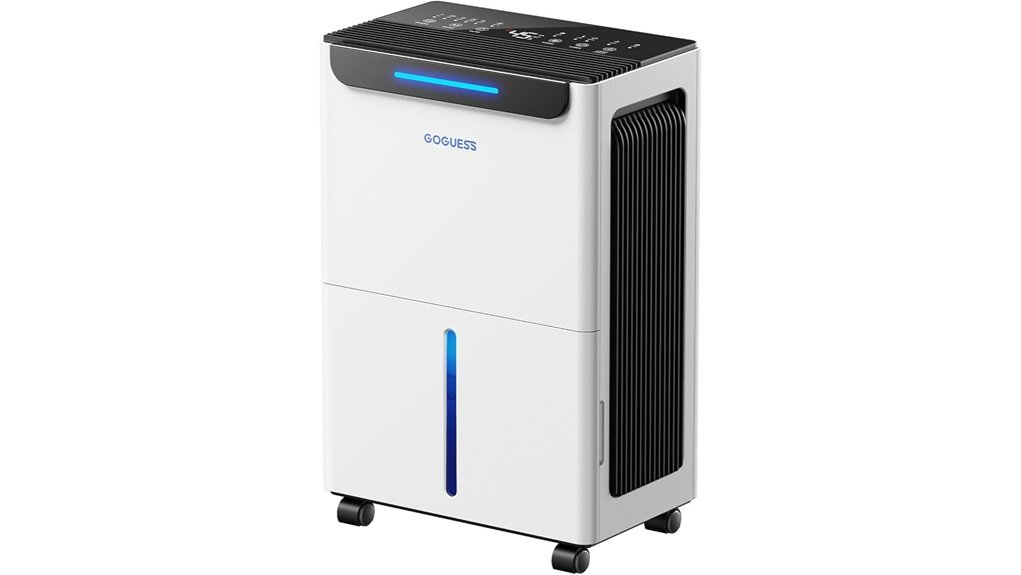
Best value for smaller laundry rooms
The GoGuess is a smaller compressor dehumidifier with a listed extraction capacity of up to 21 pints per day at 95°F and 90% relative humidity. It is less powerful than the AEOCKY RHEA-001, but it offers the core features needed for moderate indoor laundry loads in a smaller room.
Its Turbo mode is specifically described for faster clothes drying. DEHU mode lets the unit cycle around a selected humidity level, while Sleep mode lowers the operating speed for quieter use. The listing also specifies adjustable humidity, a 24-hour timer, three fan speeds, automatic defrost, automatic restart, and a child lock.
The removable tank holds 2.3 liters. For longer sessions, the included 3.28-foot hose supports continuous gravity drainage. This is particularly useful when drying several garments because the machine does not need to stop whenever the tank reaches capacity.
Best For: Apartment laundry areas, small or medium drying rooms, moderate loads, and buyers seeking compressor performance without moving to a high-capacity model.
Why You’ll Like It: Turbo mode, continuous drainage, and adjustable humidity provide more useful laundry controls than a basic mini dehumidifier.
Who Should Avoid It: Households drying several heavy loads each week, very large rooms, or persistently wet basements that need greater extraction capacity.
Pros:
- Compressor-based moisture removal with a listed 21-pint maximum.
- Turbo mode is intended to help accelerate clothes drying.
- DEHU and Sleep modes support everyday humidity control.
- Includes a 3.28-foot continuous-drain hose.
- Adjustable humidity, timer, child lock, and automatic defrost.
- More compact and easier to place than a larger-capacity model.
Cons:
- The 21-pint rating is measured in hot, highly humid test conditions.
- The 2.3-liter tank may fill quickly during laundry drying when the hose is not used.
- It may take longer than a higher-capacity unit to dry thick towels, bedding, or large loads.
- The exact model or listing variation displayed on Amazon should be confirmed before ordering.
Buyer tip: The GoGuess is the more practical choice when you dry one moderate load at a time in a closed room and want a smaller compressor unit with a dedicated Turbo setting.
Which Laundry Dehumidifier Should You Choose?
| Your Situation | Better Match | Reason |
|---|---|---|
| You dry several full loads each week | AEOCKY RHEA-001 | Its higher extraction capacity is better suited to repeated, heavy moisture loads. |
| You dry bedding, towels, or thick clothing | AEOCKY RHEA-001 | Bulky fabrics release more water and generally benefit from greater capacity. |
| You have a small apartment laundry area | GoGuess 21-Pint | It is easier to place while still providing compressor-based extraction. |
| You normally dry one moderate load at a time | GoGuess 21-Pint | Turbo mode and continuous drainage provide a useful balance of size and performance. |
| Your drying room is also a damp basement | AEOCKY RHEA-001 | The higher-capacity model is better prepared for both background dampness and wet laundry. |
Factors to Consider When Choosing a Dehumidifier for Drying Laundry
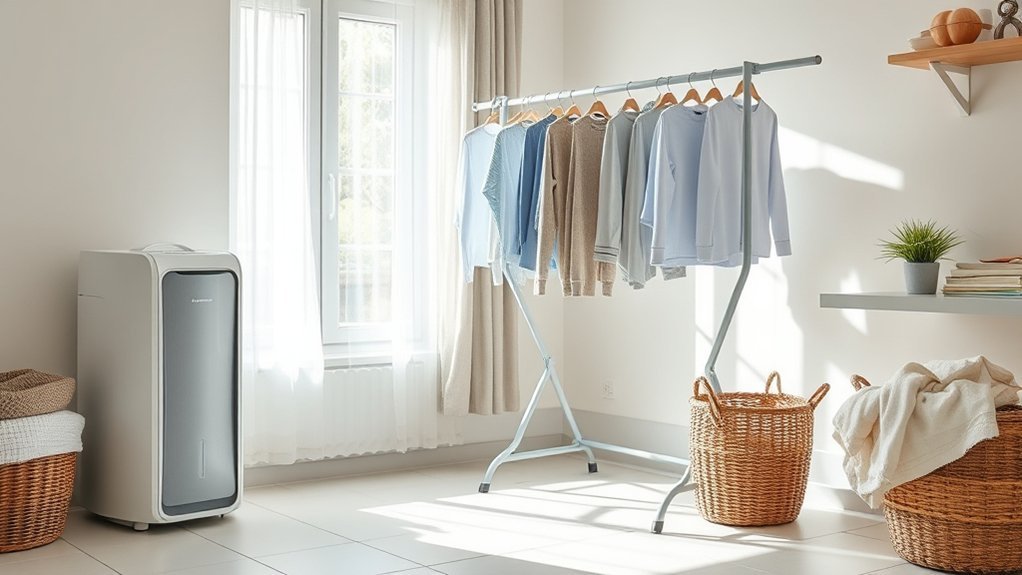
The best dehumidifier for drying clothes indoors should have enough extraction capacity for the laundry load, reliable humidity control, adequate airflow, and a convenient drainage system. Advertised floor coverage alone is not enough to predict drying performance.
Compressor vs. Thermoelectric
A compressor dehumidifier is generally the better choice for full washing-machine loads because it can remove many pints of water per day. A thermoelectric model is smaller and may be quieter, but its output is commonly measured in ounces or a small number of liters per day.
A mini thermoelectric unit may help control background moisture in a closet or bathroom, but it should not be expected to perform like a 20-pint, 50-pint, or 80-pint compressor machine. For regular laundry, prioritize extraction capacity over decorative lighting, a large-looking tank, or an optimistic square-foot claim.
Moisture Removal Rate and Test Conditions
The daily extraction rating tells you how much moisture the machine can remove under specified conditions. Always check the temperature and humidity used for the rating.
A unit advertised at 21 or 80 pints per day may only reach that maximum in a warm, extremely humid test environment. Extraction usually falls as the room becomes cooler or drier. This does not necessarily mean that the appliance is defective; it means the maximum rating is not a guarantee of everyday collection.
What Capacity Is Best for Laundry?
A compressor model rated at approximately 20 pints per day or more is a practical starting point for one regular load in a small, closed room. Consider a higher-capacity model when:
- You dry multiple loads each week.
- The room is large or connected to other spaces.
- You frequently dry towels, jeans, bedding, or other thick fabrics.
- The room already has a dampness or condensation problem.
- You live in a consistently humid climate.
A larger dehumidifier may reach the selected humidity sooner, but the right choice still depends on room temperature, airflow, drainage, and the amount of water in the clothing.
Room Size and Airflow
Advertised square-foot coverage is a broad marketing guide rather than a precise laundry-sizing measurement. A small closed room can often dry clothes more efficiently than a large open-plan area because the dehumidifier is treating a smaller volume of air.
Close doors and windows during the drying session. Leave space between garments and avoid pushing the clothes rack against a wall. Keep the dehumidifier’s intake and outlet clear so air can move through the machine and around the wet clothing.
Laundry, Turbo, and Humidity Modes
A Turbo or laundry-oriented mode can increase fan activity and help move moist air away from clothing. However, a named drying mode does not replace adequate extraction capacity.
Adjustable humidity control is also useful. A setting around 45% to 55% relative humidity is a practical range for many homes, although the appliance manual and room conditions should guide the final setting. Extremely low settings may increase runtime without providing a meaningful laundry benefit.
Drainage Options
Continuous drainage is one of the most useful features for indoor laundry. A drain hose lets the appliance operate without stopping every time its tank fills.
Most included hoses use gravity drainage. The hose generally needs to slope downward continuously without kinks, raised loops, or a drain positioned above the outlet. Follow the manufacturer’s installation instructions and check the connection for leaks during the first session.
When using the tank, choose a model with automatic shutoff. Check the tank regularly during the first few loads to learn how quickly it fills in your room.
Tank Capacity Is Not Extraction Capacity
A “21-pint” or “80-pint” specification describes daily moisture removal under stated test conditions. It does not describe the size of the water tank.
A high-capacity dehumidifier may have a much smaller tank than its daily pint rating, which means the tank can fill several times during prolonged operation. This is why a drain hose is usually more valuable than an oversized bucket for frequent laundry drying.
Noise Level
Compressor models produce fan noise and periodic compressor sound. Lower fan settings may be quieter, but they can reduce airflow and extend drying time.
When the laundry area is near a bedroom or living space, compare the listed low-speed sound level. Placing the unit on a stable, level floor and keeping it away from furniture can also reduce vibration and rattling.
Cold-Room Performance
Compressor dehumidifiers normally become less effective as the room temperature drops. Frost can form on the internal coils, causing the machine to pause for defrosting.
Choose a model with automatic defrost when drying laundry in a basement, garage, or cold utility room. Keep the room within the operating-temperature range stated in the manual. Adding safe room heat may improve drying, but never place a heater where it can contact wet clothing or the dehumidifier.
Energy Use and Runtime
A small dehumidifier may consume fewer watts per hour but run much longer because it removes less moisture. Compare energy use with extraction performance rather than choosing by wattage alone.
A humidistat, timer, automatic cycling, and an appropriate capacity can reduce unnecessary runtime. ENERGY STAR certification can also help identify more efficient compressor models, but actual electricity use will still depend on the room and operating schedule.
Safety and Placement
Place the dehumidifier on a stable, level surface and keep the electrical connection away from dripping garments. Do not hang wet clothing directly above the appliance. Maintain the clearances specified by the manufacturer and keep the intake, filter, and outlet unobstructed.
Useful safety and convenience features include:
- Automatic shutoff when the tank is full
- Automatic defrost
- Automatic restart after a power interruption
- Child lock
- Washable air filter
- Secure continuous-drain connection
How to Dry Laundry Faster With a Dehumidifier
- Use a closed room: Shut doors and windows so the machine is not continuously treating humid air from the rest of the home.
- Spin the laundry thoroughly: Use the washing machine’s highest fabric-safe spin speed to remove more water before hanging.
- Leave gaps between garments: Crowded clothing traps moist air and slows evaporation.
- Place thick items on the outside: Towels, jeans, and hoodies need more direct airflow than thin shirts.
- Use the higher fan or Turbo setting: Increased airflow usually helps during the first part of the drying cycle.
- Connect the drain hose: Continuous drainage prevents a full tank from stopping the session.
- Turn thick garments: Rotate towels, waistbands, pockets, and folded areas partway through drying.
- Clean the filter: A dirty filter can restrict airflow and reduce performance.
Before you buy
- Choose a compressor model for regular full laundry loads.
- Check the rated extraction capacity and its test conditions.
- Confirm that a drain hose and suitable drain location are available.
- Measure the space where the appliance will sit.
- Check the manufacturer’s operating-temperature range.
- Confirm the exact model, voltage, warranty, seller, and included accessories on Amazon.
- Make sure the Amazon page still shows the product variation described in this guide.
Frequently Asked Questions
Can a Dehumidifier Dry Laundry Faster in Winter?
Yes. A dehumidifier removes water released into the air by wet clothing and can reduce condensation while the laundry dries. However, a compressor model may collect less water in a cold room. Use a model with automatic defrost and keep the room within the manufacturer’s recommended temperature range.
What Size Dehumidifier Is Best for a Full Load of Laundry?
A compressor model rated at around 20 pints per day or more is a reasonable starting point for one normal load in a small, closed drying room. Choose a higher-capacity unit for large rooms, thick fabrics, multiple weekly loads, or persistently humid conditions.
How Long Does a Dehumidifier Take to Dry Clothes?
There is no single drying time. Results depend on fabric thickness, washing-machine spin speed, room temperature, starting humidity, airflow, garment spacing, and the dehumidifier’s extraction capacity. Thin garments may dry much sooner than towels, jeans, or bedding.
Should the Door Be Closed When Drying Laundry?
Usually, yes. Closing the room helps the dehumidifier treat a smaller volume of air and prevents humid air from continually entering. The appliance still needs clear airflow around its intake and outlet.
How Noisy Are Dehumidifiers During Overnight Laundry Drying?
Compressor dehumidifiers are generally more noticeable than compact thermoelectric models because they use both a fan and compressor. A low or Sleep setting may reduce noise, but it can also increase drying time. Avoid placing the appliance directly beside a bed.
Do Dehumidifiers Increase Electricity Bills Significantly?
Any dehumidifier adds electricity use. The final cost depends on its power draw, runtime, local electricity rate, room conditions, and selected humidity. A properly sized compressor model may use more power per hour than a mini unit but finish the moisture-removal job much faster.
Is a Heated Airer Better Than a Dehumidifier for Laundry?
A heated airer warms the clothing directly, while a dehumidifier removes moisture from the room. A heated airer can speed evaporation, but the released water still enters the surrounding air. A dehumidifier helps control that humidity and condensation. Using both together can be effective when each appliance is operated according to its safety instructions.
Can I Use a Fan With a Dehumidifier?
Yes. A separate fan can improve airflow around garments and help move moist air toward the dehumidifier. Keep the fan and all electrical connections away from dripping clothing, and do not position the airflow so clothing blocks the dehumidifier’s intake or outlet.
How Should I Position Clothes for Faster Dehumidifier Drying?
Leave gaps between garments, open pockets, spread thick sections, and rotate heavy items during the drying session. Keep the rack in a closed room and place the dehumidifier where air can circulate around the clothing without violating the manufacturer’s clearance instructions.
Can a Small Desktop Dehumidifier Dry a Full Load?
A small thermoelectric dehumidifier may collect some moisture in a very small room, but it normally removes far less water than a compressor model. It is better suited to background humidity control than dependable, fast drying of a full washing-machine load.
Conclusion
The AEOCKY RHEA-001 is the better choice for frequent laundry, large drying rooms, thick fabrics, and homes with a substantial humidity load. Its higher listed extraction capacity, large tank, adjustable controls, and continuous drainage make it the stronger overall performer.
The GoGuess 21-Pint is the more practical choice for smaller laundry rooms, apartments, and moderate loads. Its Turbo mode, adjustable humidity, compact format, and included drain hose provide the main features needed for indoor clothes drying without moving to the largest capacity class.
Final recommendation: Choose the AEOCKY RHEA-001 when capacity and faster moisture removal are the priorities. Choose the GoGuess 21-Pint when you normally dry one moderate load in a smaller closed room. For either model, use continuous drainage when possible and confirm the exact Amazon listing before buying.