Affiliate disclosure: This article contains Amazon affiliate links. We may earn a commission from qualifying purchases at no additional cost to you.
If you are comparing the best dehumidifiers for microgreens, focus on an adjustable humidistat, enough moisture-removal capacity for the real tray load, and a drainage setup you can use safely every day. The Ivation 13-Pint is the most practical choice here for a compact or cooler grow room. The Waykar 30-Pint and HOGARLABS 30-Pint fit many small to medium enclosed rooms, while the GE 50-Pint and Midea 50-Pint offer more recovery capacity for several racks or persistent humidity. The Midea 22-Pint is a balanced compressor-based option for compact indoor farms that do not need a 50-pint machine.
Quick verdict
- Best overall for many grow rooms: Waykar 30-Pint
- Best for small or cooler spaces: Ivation 13-Pint
- Best balanced compact compressor model: Midea 22-Pint
- Best high-capacity option with Smart Dry: GE 50-Pint
- Best high-capacity alternative: Midea 50-Pint
- Best straightforward 30-pint option: HOGARLABS 30-Pint
Humidity note: Microgreen recommendations vary by crop and production system. Published production guidance commonly places growing-room humidity around 50% to 70% relative humidity, but the best setpoint depends on crop, temperature, airflow, growth stage, and disease pressure. Use a separate hygrometer near canopy level, maintain gentle airflow, and adjust the setpoint based on crop response rather than relying only on the dehumidifier’s display. See the Virginia Tech microgreen production guidance for broader environmental context.
How these models were evaluated
- Adjustable humidity control instead of a simple fixed-output on/off design
- Daily moisture-removal capacity appropriate for compact through multi-rack rooms
- Gravity-drain or continuous-drain compatibility
- Operating-temperature fit, especially for cooler grow areas
- Tank size, portability, filter care, heat output, and noise tradeoffs
Important: Advertised square-foot coverage is a residential reference, not a reliable grow-room sizing formula. Wet media, irrigation frequency, plant transpiration, ventilation, and room temperature can change the real moisture load substantially.
Quick Comparison of Dehumidifiers for Microgreens
| Product | Listed Daily Capacity | Best For | Key Buying Point | Amazon |
|---|---|---|---|---|
| Ivation 13-Pint | 13-pint model name; official output varies by test condition | Small or cooler grow rooms | Desiccant operation and adjustable humidity control | Check Price |
| Waykar 30-Pint | 30 pints/day on the current linked listing | Medium grow rooms | ENERGY STAR compressor model with drain hose and automatic humidity control | Check Price |
| GE 50-Pint Smart Dry | 50 pints/day | Large or persistently humid rooms | Smart Dry, 15-pint tank, and continuous-drain port | Check Price |
| HOGARLABS 30-Pint | 30 pints/day | Small to medium grow rooms | Digital controls, multiple modes, and drain hose | Check Price |
| Midea 22-Pint | 22 pints/day | Compact indoor farms | Adjustable humidistat and reusable filter | Check Price |
| Midea 50-Pint | 50 pints/day | Large indoor growing areas | High extraction capacity and adjustable humidity range | Check Price |
Ivation 13-Pint Compact Dehumidifier for Small Spaces
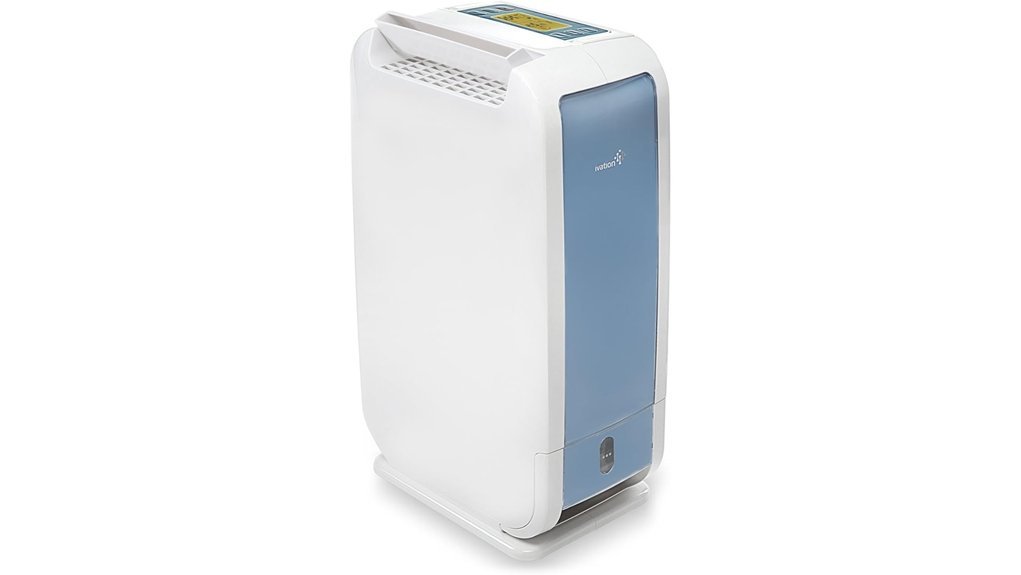
Best for small or cooler grow rooms. The Ivation IVADDH06 is sold as a 13-pint compact desiccant dehumidifier for spaces up to 270 square feet. Ivation’s current specification lists 12 pints per day at 68°F and 60% RH, so treat “13-pint” as the model’s marketed size rather than a guaranteed output in every room. Its adjustable humidity control, digital display, timer, washable filter, and continuous-drain capability make it more useful for microgreens than a basic mini unit with only an on/off switch.
Why you may like it: Desiccant operation can remain useful in cool conditions, and Ivation lists an operating range beginning at 33°F. The smaller footprint also makes placement easier beside a rack or in a compact growing room.
Who should buy this: Growers managing a small enclosed room, cool basement corner, or single-rack setup with a moderate moisture load.
Who should avoid this: Large rooms, multiple heavily watered racks, or hot and very humid environments that need 30 to 50 pints of daily capacity.
Pros:
- Humidity can be adjusted across a broad range rather than relying on constant uncontrolled operation.
- Compact design suits tight grow-room layouts.
- Continuous drainage can reduce manual tank emptying.
Cons:
- Lower capacity than the compressor models in this guide.
- The 0.5-gallon tank may fill quickly if continuous drainage is not used.
- Desiccant operation can add some heat to the room, which may matter in warm growing conditions.
Waykar 30-Pint ENERGY STAR Dehumidifier
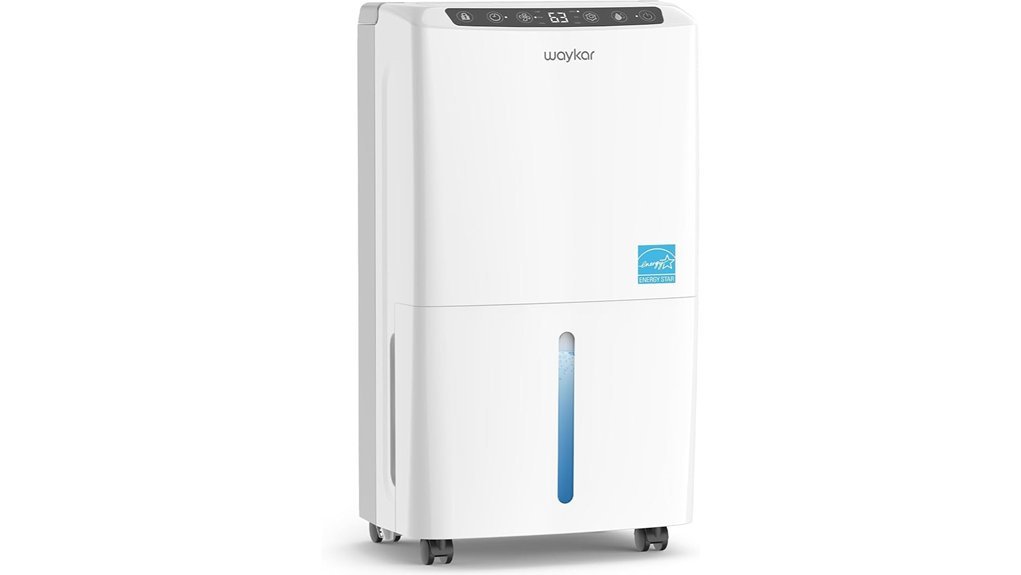
Best overall for many small to medium grow rooms. The linked Waykar listing is currently titled as a 30-pint model and identifies the unit as model PD160B-PRO. It includes a drain hose, washable filter, automatic humidity control, automatic shutoff, and ENERGY STAR certification. Earlier or alternate Waykar pages may show a 34-pint figure under different test conditions, so this article uses the capacity stated on the current linked Amazon listing.
Why you may like it: The 30-pint class gives a grower more moisture-removal headroom than compact models while remaining easier to place than many 50-pint units. It is a sensible middle option for irrigation spikes, dense trays, and seasonal humidity changes.
Who should buy this: Growers with a small to medium enclosed room who want compressor-based performance, adjustable humidity, and continuous drainage.
Who should avoid this: Very cool rooms where compressor efficiency may drop, or large commercial rooms with a high daily moisture load.
Pros:
- ENERGY STAR certification provides a verified efficiency signal for this specific model.
- Automatic humidity control supports more consistent operation.
- Drain hose compatibility reduces daily maintenance.
Cons:
- The approximately 0.62-gallon tank may need frequent emptying without continuous drainage.
- Advertised room coverage is not a substitute for sizing to actual plant and irrigation moisture load.
- Performance depends on room temperature and starting humidity.
GE Portable Dehumidifier with Smart Dry (50 Pint)
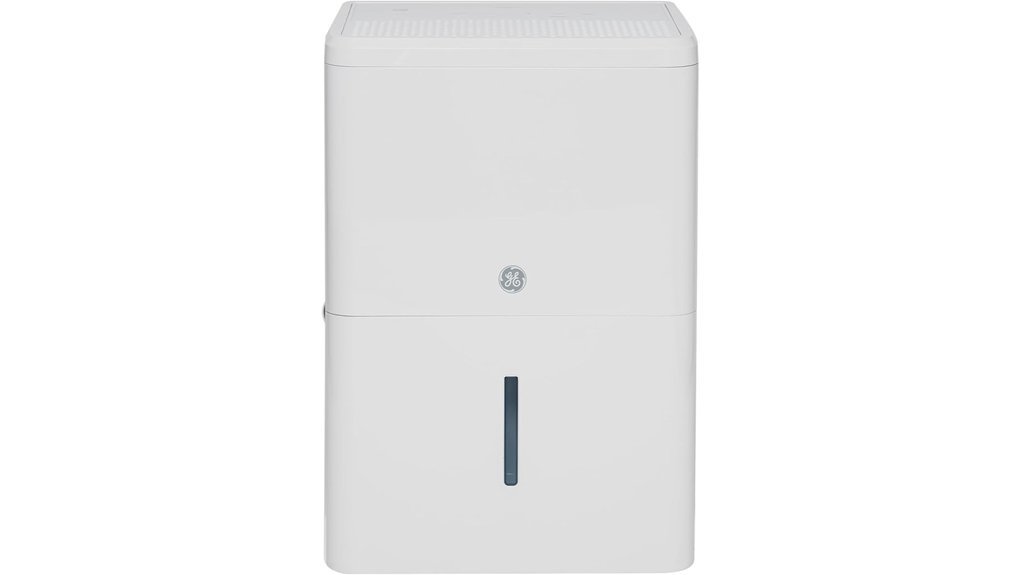
Best high-capacity option with automatic fan adjustment. The linked GE model is ADHE50BWF, a current 50-pint portable dehumidifier with Smart Dry, target-humidity control, three fan speeds, and a 15-pint collection tank. Smart Dry adjusts fan operation in response to room conditions, which can be useful when humidity rises sharply after watering.
Why you may like it: The larger capacity is useful when several trays are watered in the same room, outdoor humidity is high, or a smaller unit runs continuously without reaching the target.
Who should buy this: Growers with a larger room, multiple racks, or recurring humidity spikes after irrigation.
Who should avoid this: Very small setups where a 50-pint unit would take unnecessary space or cause frequent short cycling.
Pros:
- High extraction capacity for demanding indoor growing conditions.
- Smart Dry can adjust fan operation as room conditions change.
- A continuous-drain port supports gravity drainage when a compatible hose is correctly routed.
Cons:
- Larger footprint and higher power demand than lower-capacity models.
- Fan and compressor noise may be noticeable near living or work areas.
- The listing title mentions a drain hose, but the included-components field is inconsistent; verify package contents before ordering.
HOGARLABS 30 Pint Dehumidifier for Home and Basements
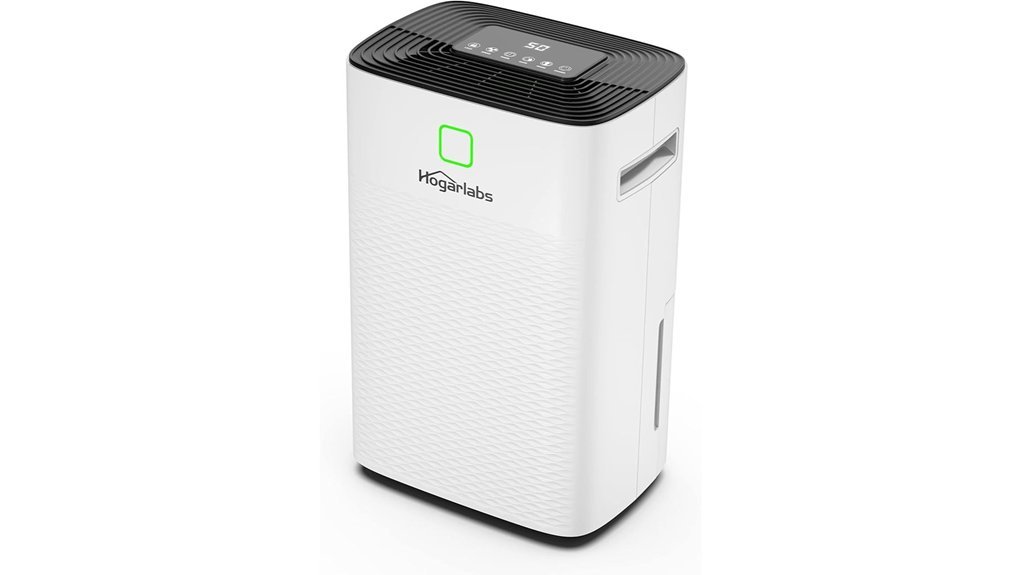
Best straightforward 30-pint option. The HOGARLABS model offers digital humidity control, three operating modes, overflow protection, automatic shutoff and restart, and a drain hose. Its capacity fits between the smaller Ivation and Midea 22-Pint models and the larger 50-pint options.
Why you may like it: It offers the basic controls most microgreen growers need without relying on app connectivity or decorative features.
Who should buy this: Growers who want a conventional compressor dehumidifier for a small to medium room and can route a hose for continuous drainage.
Who should avoid this: Large, highly humid facilities or cold rooms where a standard compressor unit may not be the best technology.
Pros:
- Adjustable humidity control and multiple operating modes.
- Overflow protection and automatic restart support routine grow-room use.
- Drain hose option can reduce manual tank handling.
Cons:
- The built-in coverage claim may overstate performance in a room full of actively transpiring plants.
- Tank emptying may still be frequent without a drain connection.
- The manufacturer’s own product page has shown this model as sold out, so verify current Amazon availability, seller, return terms, and warranty support before purchase.
Midea 22-Pint EasyDry Dehumidifier
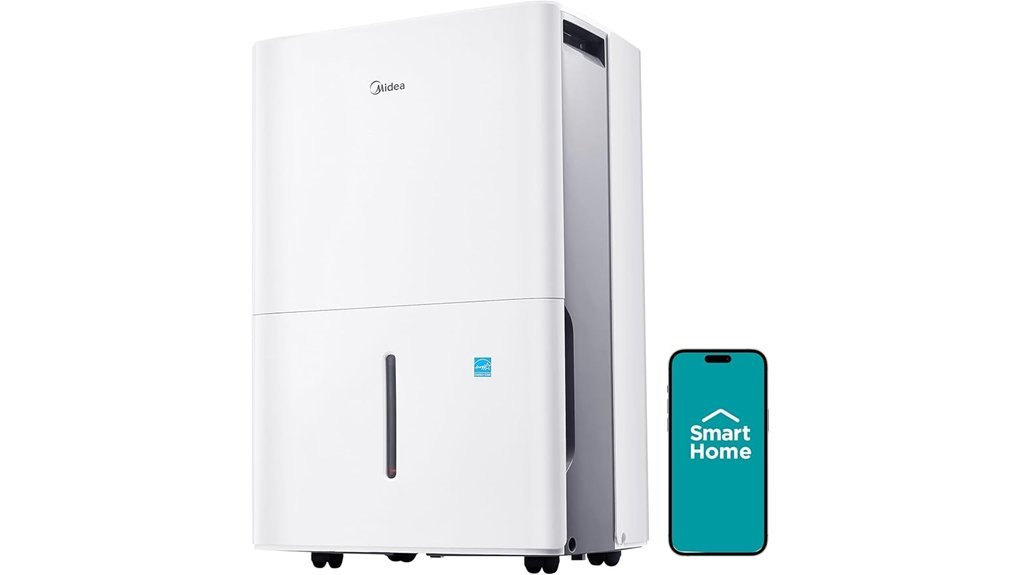
Best balanced compact compressor model. The Midea EasyDry MAD22C1AWS is rated for 22 pints per day and is listed for spaces up to 1,500 square feet in normal residential use. It has wheels, a timer, a reusable filter, automatic shutoff, adjustable humidity control, and continuous-drain compatibility. It can be a sensible step up from a low-output mini unit without the size and weight of a 50-pint machine.
Why you may like it: Its capacity is better matched to a compact indoor farm or dedicated grow room than tiny thermoelectric models that remove only ounces of water per day.
Who should buy this: Growers with a compact room, one or two racks, moderate humidity, and a stable indoor temperature.
Who should avoid this: Large grow rooms or setups where humidity stays high despite continuous operation from a 20- to 30-pint unit.
Pros:
- 22-pint compressor capacity offers a useful balance of size and moisture removal.
- Adjustable humidity settings support crop-specific fine-tuning.
- Reusable filter and drain compatibility simplify routine care.
Cons:
- The tank may require frequent emptying if continuous drainage is not used.
- This model has no built-in pump; gravity drainage requires a continuously downward hose route.
- Built-in humidity readings should be checked against a separate canopy-level hygrometer.
Midea 50 Pint Dehumidifier for Basements and Rooms
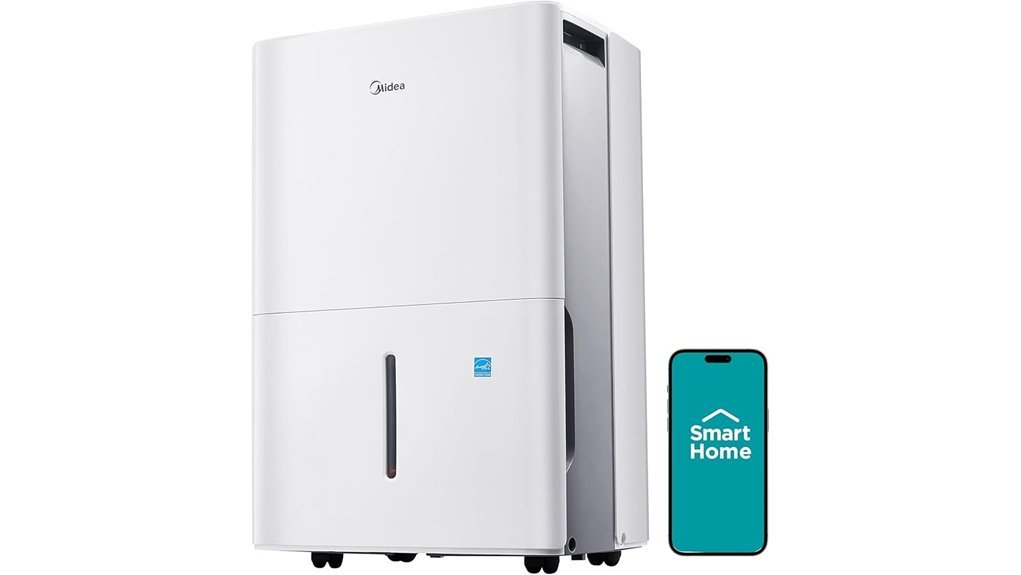
Best high-capacity alternative. The linked Midea model is MAD50C1AWS-A, rated for 50 pints per day with adjustable humidity control, a reusable filter, automatic shutoff, three fan speeds, a 1.6-gallon tank, and portable wheels. It is better suited to several racks or a consistently damp room than to a single tray or small shelf.
Why you may like it: The extra capacity gives growers more recovery speed after watering and more headroom during humid weather.
Who should buy this: Growers running several racks in a dedicated room or anyone whose smaller machine cannot maintain the target humidity.
Who should avoid this: Small rooms where space, heat output, noise, and short cycling are bigger concerns than maximum extraction.
Pros:
- High daily moisture-removal rating for larger indoor growing areas.
- Adjustable humidity settings allow more control than fixed-output mini units.
- Wheels make repositioning easier during cleaning or layout changes.
Cons:
- Heavier and bulkier than the 13- to 30-pint options.
- This linked version is not advertised as a built-in-pump model; verify the included drain adapter and plan for gravity drainage.
- Higher capacity does not eliminate the need for airflow and accurate humidity monitoring.
Factors to Consider When Choosing a Dehumidifier for Microgreens
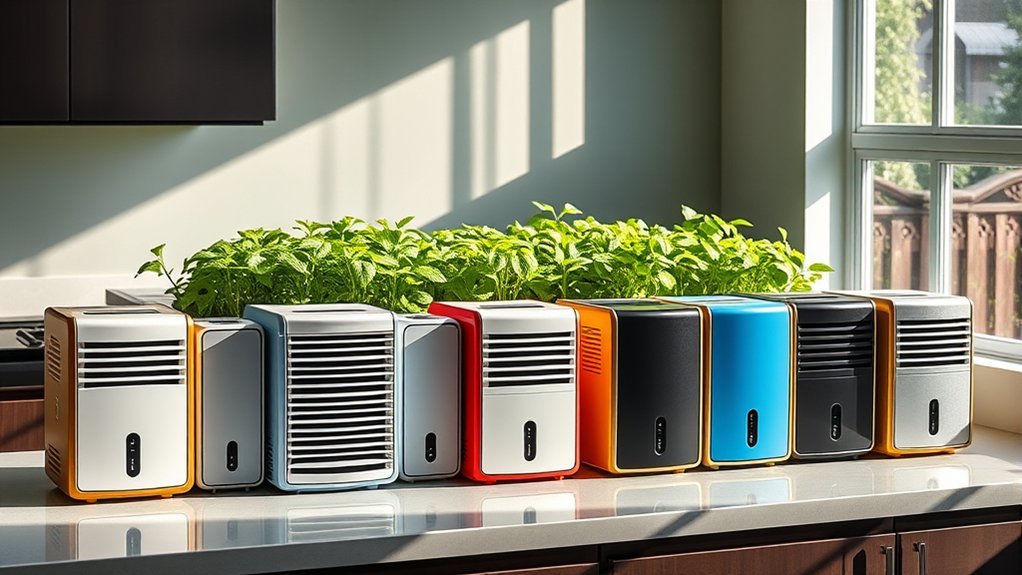
The best unit is not simply the one with the largest advertised coverage area. Microgreen racks add moisture through wet growing media, irrigation, evaporation, and plant transpiration, so capacity should be matched to the actual room and crop load.
Humidity Control Range
Choose a model with an adjustable humidistat. A practical starting point for many microgreen systems is around 50% to 70% relative humidity, but crop type, temperature, growth stage, airflow, and disease pressure can change the appropriate target. During germination, humidity inside a covered tray may be intentionally higher than the surrounding room. After emergence, avoid keeping the room unnecessarily humid, and vent covers so moisture does not remain trapped around dense seedlings.
Dehumidification Capacity Needed
Size the unit according to room volume, starting humidity, temperature, number of trays, watering schedule, and how quickly humidity rebounds after irrigation. A 13- to 22-pint model may suit a compact enclosed room. A 30-pint model offers more headroom for many small to medium setups. A 50-pint model is more appropriate when several racks, high outdoor humidity, or frequent watering create a heavy moisture load. Advertised square-foot coverage is only a rough reference.
Capacity-label caution: Pint ratings can differ by test temperature and relative humidity. Compare the exact model number and the conditions behind the rating instead of assuming every “30-pint” or “50-pint” label represents identical real-world output.
Compressor, Desiccant, or Thermoelectric
Compressor dehumidifiers generally provide the most practical capacity for warm indoor grow rooms. Desiccant models can be useful in cooler spaces but may add more heat. Small thermoelectric or Peltier units are quiet and compact, yet their output is usually measured in ounces rather than pints per day and they often lack a true adjustable humidistat. That makes them a weak primary choice for an active microgreen room.
Energy Efficiency Ratings
Because a grow-room dehumidifier may run for many hours, compare capacity and energy efficiency together. ENERGY STAR certification can be a useful screening factor, but operating cost still depends on room conditions, setpoint, runtime, and local electricity rates. Avoid relying on generic annual savings claims that are not calculated for your setup.
Noise Level Considerations
Noise matters when the growing area is near a bedroom, office, or customer-facing space. Compressor models usually create more sound than small thermoelectric units, especially at high fan speed. Use a lower fan setting when conditions allow, place the machine on a level surface, and keep adequate clearance around the air intake and outlet.
Size and Portability
Measure the available floor space before buying. The unit needs open airflow and should not blow directly onto delicate seedlings at close range. Handles and wheels make cleaning and seasonal repositioning easier, but the dehumidifier should remain stable and away from splash zones.
Drainage Options Available
Continuous drainage is one of the most useful features for a grow room. Gravity drainage requires the outlet hose to slope downward without kinks. A built-in pump is only necessary when water must travel upward to a sink or drain. If using the tank, check it daily until you understand how quickly it fills under your normal watering routine.
Independent Humidity Monitoring
Do not rely on only one sensor. Place a separate hygrometer near canopy height but away from direct mist, wet media, and the dehumidifier exhaust. Compare readings and watch how humidity changes before watering, immediately after watering, and during the dark period.
Airflow and Placement
A dehumidifier works best as part of a complete moisture-control plan. Use gentle air circulation around the racks, avoid overcrowding trays, remove standing water, and keep filters and air passages clean. Do not point a strong stream of dry air directly at seedlings, because uneven airflow can dry some trays faster than others.
Maintenance Requirements
Clean the water tank, filter, drain hose, and surrounding floor regularly. Follow the manufacturer’s filter-cleaning interval, inspect the hose for algae or blockage, and keep the intake free of dust. Disconnect power before cleaning and never allow irrigation water to splash onto the appliance.
Safety Features Included
Look for automatic shutoff, overflow protection, automatic restart, and auto-defrost where appropriate. Plug the unit directly into a suitable grounded outlet, follow the manufacturer’s clearance requirements, and avoid light-duty extension cords. Keep electrical equipment and connections away from wet trays and floor drains.
Before You Buy
- Measure the room and count the trays or racks that regularly hold wet media.
- Record humidity before and after watering for several days.
- Choose an adjustable humidistat rather than a simple on/off mini unit.
- Plan where collected water will drain.
- Confirm the operating-temperature range for your room.
- Allow clear space around the intake and exhaust.
- Use a separate hygrometer to confirm the actual canopy-level humidity.
Frequently Asked Questions
How Do Dehumidifiers Affect the Growth of Microgreens?
A dehumidifier can reduce excessive room humidity and help limit the damp conditions that favor mold and some plant diseases. It should be used with airflow, careful watering, clean trays, and crop-appropriate temperature control. Running the room too dry can also increase water loss and stress seedlings, so monitor rather than guessing.
Can I Use a Dehumidifier in a Greenhouse?
Yes, but effectiveness depends on how well the greenhouse is sealed, its temperature, outside-air exchange, and the amount of plant material. In a leaky or frequently vented greenhouse, ventilation and horizontal airflow may be more economical than asking a portable dehumidifier to condition constantly changing outdoor air.
What Humidity Level Is Ideal for Microgreens?
There is no single perfect number for every crop and system. Many controlled microgreen environments operate around 50% to 70% relative humidity. The lower part of that range may be useful when mold pressure is high, while some crops and growth stages tolerate higher humidity. Track the crop, temperature, and airflow together.
How Often Should I Empty the Dehumidifier Tank?
Check it at least daily when first setting up the unit and after major watering days. The real interval depends on tank size and moisture load. Continuous drainage is preferable for unattended grow rooms, provided the hose is securely routed and checked for blockage.
Are Dehumidifiers Noisy During Operation?
Compressor models create fan and compressor noise, and higher-capacity machines are usually more noticeable than mini thermoelectric units. Compare the listed sound level when available, use a lower fan speed when practical, and place the unit away from occupied rooms while maintaining adequate airflow.
Should a Microgreen Dehumidifier Run All Day?
It may run for long periods during humid weather or after watering, but continuous nonstop operation can indicate that the unit is undersized, the room is leaking humid air, the setpoint is too low, or drainage and airflow need attention. A properly sized humidistat-controlled model should cycle according to conditions.
Where Should I Place the Dehumidifier?
Place it on a stable, level surface with the manufacturer’s required clearance around the intake and outlet. Keep it away from direct spray, wet floors, and delicate seedlings. For multi-rack rooms, position it where room air can circulate back to the unit rather than trapping humid pockets behind shelves.
Conclusion
Final recommendation
For many small to medium microgreen rooms, the Waykar 30-Pint offers the strongest balance of adjustable control, continuous-drain convenience, verified ENERGY STAR certification, and manageable size. Choose the Ivation 13-Pint for a compact or cooler room, the Midea 22-Pint for a smaller compressor-based setup, and a GE or Midea 50-Pint model when several racks or humid conditions demand faster moisture recovery. The HOGARLABS 30-Pint remains a simple alternative, but current seller, availability, return, and warranty details deserve extra checking.
The final choice should be based on measured humidity, room temperature, tray count, watering pattern, airflow, and drainage access rather than advertised square-foot coverage alone. Start with a realistic setpoint, confirm it with a separate canopy-level hygrometer, and watch whether the unit cycles normally or runs continuously without reaching the target.