The best dehumidifier for a server room is rarely a stand-alone consumer appliance. A portable compressor model can provide supplemental humidity control in a small, non-mission-critical server room, but it should not replace properly designed cooling, ventilation, environmental monitoring, alarms, leak detection, or redundant facility controls.
The three models below are household dehumidifiers with continuous-drain support, automatic moisture control, and restart-related features that may be useful in lower-risk equipment rooms. Capacity claims must be read carefully because advertised maximum pint ratings are commonly measured in much hotter and wetter conditions than a cooled server room.
Quick Verdict
AEOCKY 4500 Sq.Ft is the best-balanced option for efficiency-focused operation, low-speed noise, and restart memory. Waykar 80 Pints is the strongest choice for adjustable swing airflow and clearly published operating specifications. Yaufey 5000 Sq. Ft. is a practical alternative for buyers who want simple preset modes, adjustable humidity control, and an included gravity-drain hose.
How These Options Were Evaluated
- Continuous gravity-drain support for unattended moisture removal.
- Automatic humidity control, defrost protection, and restart behavior.
- Clearly stated capacity test conditions instead of square-foot claims alone.
- Published noise, tank, hose, airflow, or weight details where available.
- Honest limitations for server-room use, including heat load, leak risk, and lack of facility-grade monitoring.
Quick Comparison
| Product | Best For | Maximum Claimed Capacity | Drainage | Amazon |
|---|---|---|---|---|
| AEOCKY 4500 Sq.Ft | Best overall efficiency-focused option | Up to 80 pints/day at 95°F and 95% RH; about 56 pints/day at 86°F and 80% RH | Tank, included drain hose, or compatible garden-hose connection | Check Price |
| Waykar 80 Pints | Swing airflow and well-documented operating specs | Up to 80 pints/day at 95°F and 90% RH | 1.14-gallon tank or included 3.3-foot gravity-drain hose | Check Price |
| Yaufey 5000 Sq. Ft. | Flexible preset modes and straightforward controls | Up to 80 pints/day at 95°F and 90% RH | 1.06-gallon tank or included 3.28-foot gravity-drain hose | Check Price |
AEOCKY 4500 Sq.Ft Energy Star Dehumidifier
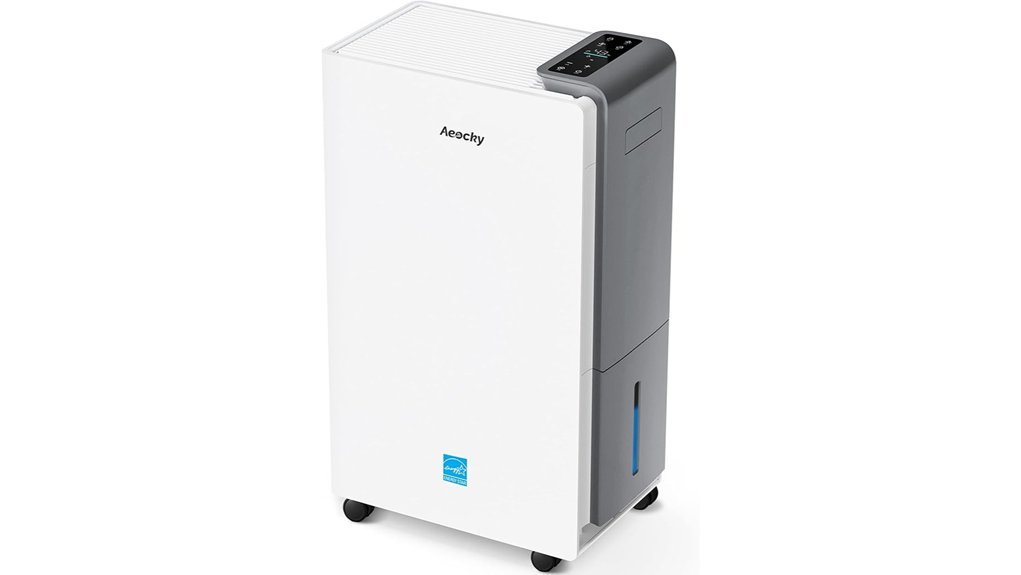
The AEOCKY 4500 Sq.Ft model is the most balanced option here for a small server room that needs supplemental moisture removal without excessive low-speed fan noise. The RHEA-001 listing claims up to 80 pints per day at 95°F and 95% RH and about 56 pints per day at 86°F and 80% RH. It also lists a 44 dB low-fan setting, automatic defrost, power-interruption memory, an included drain hose, and a garden-hose adapter.
Why You’ll Like It: The efficiency-focused design, quiet low-speed setting, and restart memory can be useful where the unit may run for long periods. The multiple gravity-drain options also make it easier to create a secure floor-level condensate route instead of depending on the tank.
Best For: Small or medium non-mission-critical server rooms where energy use, low-speed noise, restart behavior, and continuous drainage matter.
Who Should Avoid It: Facilities that require networked building-management integration, redundant humidity control, precision dew-point control, dry contacts, or commercial service coverage.
Pros:
- Efficiency-focused compressor design with ENERGY STAR positioning.
- Up to 80 pints/day under the manufacturer’s maximum test conditions.
- Power-interruption memory and automatic defrost.
- Published 44 dB low-fan noise figure.
- Included drain hose and garden-hose adapter for continuous gravity drainage.
Cons:
- It is a household dehumidifier, not a precision data-center environmental-control system.
- The maximum pint figure is measured in much hotter and wetter conditions than most cooled server rooms.
- The compressor adds heat that the room’s cooling system must remove.
- It does not replace independent sensors, alarms, leak detection, or redundant HVAC.
Waykar 80 Pints Energy Star Dehumidifier for Home
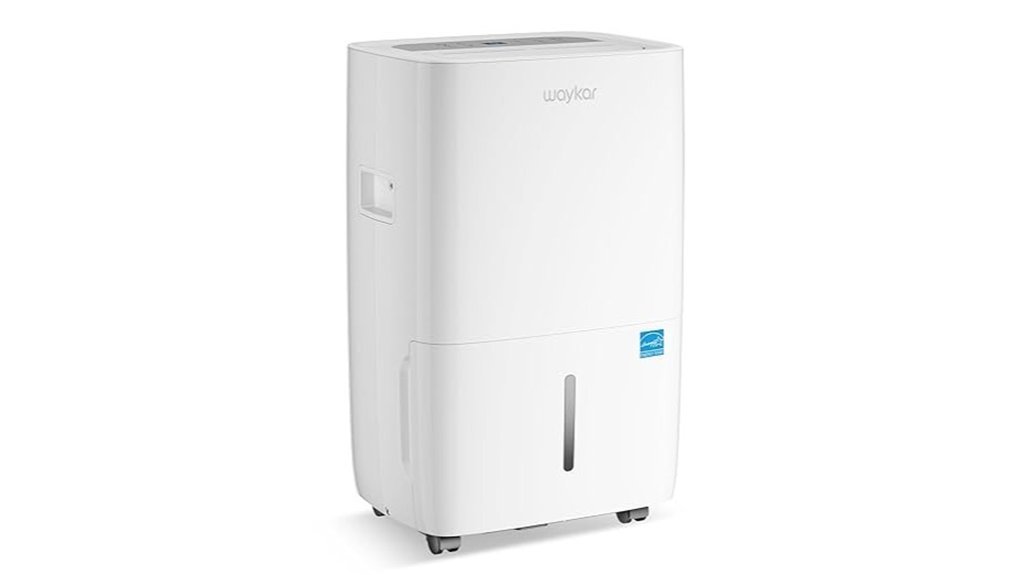
The Waykar JD025CE-80 is rated for up to 80 pints per day at 95°F and 90% RH. The manufacturer lists automatic defrost, restart memory, adjustable swing airflow, a 1.14-gallon tank, an included 3.3-foot gravity-drain hose, a 42 dB noise figure, and a weight of about 33.55 pounds.
Why You’ll Like It: The adjustable swing outlet can help mix room air instead of concentrating dry air in one spot. Its published tank, hose, noise, size, weight, and capacity details also make installation planning easier than with a poorly documented listing.
Best For: Small server rooms where air mixing, automatic restart, continuous gravity drainage, and clearly documented operating specifications are priorities.
Who Should Avoid It: Installations that need a built-in condensate pump, remote alarm contacts, network monitoring, precision dew-point control, or commercial redundancy.
Pros:
- Up to 80 pints/day under the manufacturer’s maximum test conditions.
- Adjustable swing airflow for wider air distribution.
- Automatic defrost, protection features, and restart memory.
- Tank or continuous gravity drainage.
- Published 42 dB noise figure and 33.55-pound weight.
Cons:
- The included gravity hose needs an uninterrupted downward slope and a safe drain location.
- The coverage figure is a home-use marketing claim, not a server-room sizing calculation.
- Its fan and compressor still add sound and heat to the equipment room.
- It does not provide facility-grade remote alarms or redundant moisture control.
Yaufey 5000 Sq. Ft. Energy Star Dehumidifier
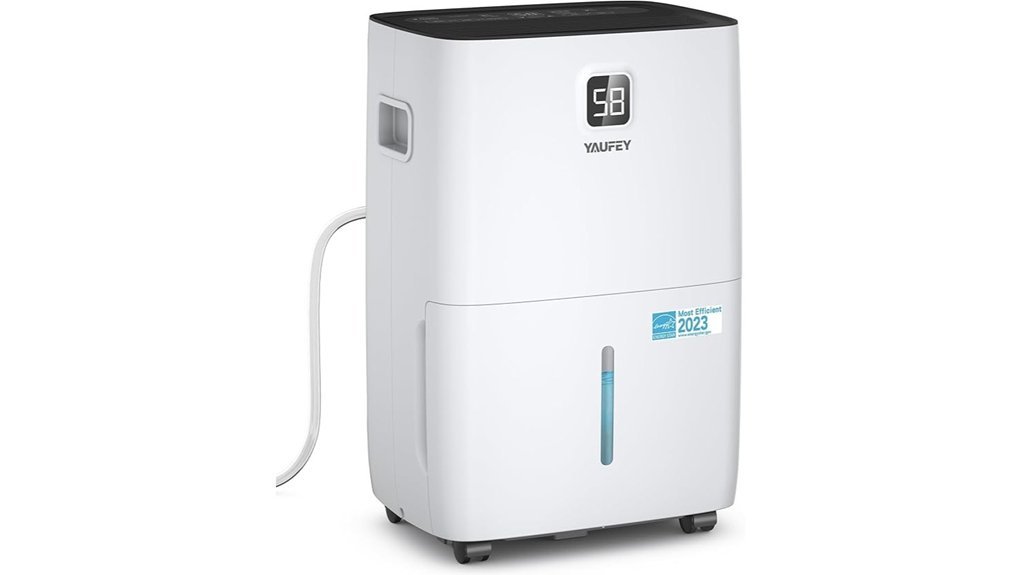
The Yaufey JD025Q-80 is rated by the manufacturer for up to 80 pints per day at 95°F and 90% RH. Its adjustable humidity range runs from 30% to 80%, and it includes four operating modes, automatic defrost, restart memory, a washable filter, a 1.06-gallon tank, and an included 3.28-foot gravity-drain hose.
Why You’ll Like It: The digital display, preset modes, wheels, and two drainage methods make setup straightforward. Continuous mode can help during initial moisture correction, while automatic humidity control is more appropriate for normal operation after the cause of excess humidity has been identified.
Best For: Buyers who want simple controls, preset modes, easy mobility, adjustable humidity settings, and an included drain hose.
Who Should Avoid It: Rooms that need a verified low-decibel requirement, built-in pumping, remote alarm output, network integration, or facility-grade humidity control.
Pros:
- Up to 80 pints/day under the manufacturer’s maximum test conditions.
- Adjustable 30% to 80% humidity setting range.
- Automatic defrost and restart memory.
- Tank drainage or continuous gravity drainage with the included hose.
- Four operating modes for straightforward setup.
Cons:
- The current product page describes quiet operation but does not provide a clear decibel specification.
- The tank can fill quickly in a damp room, making continuous drainage the safer server-room setup.
- The short included hose may require careful placement near a suitable floor-level drain.
- It is designed as a home dehumidifier rather than a monitored commercial system.
Factors to Consider When Choosing a Dehumidifier for a Server Room
A server room should be sized and controlled as an equipment environment, not like a bedroom or basement. Floor-area claims are only a rough screening tool. The actual moisture load depends on outdoor humidity, air leakage, door openings, wall construction, cooling-system operation, room temperature, and nearby water sources.
Confirm Whether a Dehumidifier Is Needed
Start with a separate, calibrated temperature and humidity monitor that records trends. If humidity is only briefly elevated, the underlying problem may be ventilation, an oversized air conditioner that short-cycles, uncontrolled outside-air leakage, a blocked condensate drain, or a building-envelope issue. Adding a dehumidifier without finding the cause can increase heat and energy use while hiding the real fault.
Humidity and Dew-Point Control
There is no universal 30% to 50% rule for every server room. Data-center guidance evaluates both relative humidity and dew point, and equipment manufacturers may publish their own environmental limits. Follow the specifications for the servers, storage devices, UPS batteries, networking equipment, and cooling system. Stable, noncondensing conditions matter more than driving the room to the lowest possible humidity.
Dehumidification Capacity
Compare capacity at the stated test temperature and humidity. An “80-pint” rating measured at 95°F and 90% or 95% RH does not mean the unit will remove 80 pints every day in a cooler server room. Actual water removal generally falls as temperature and humidity decrease. Choose capacity from measured moisture load, condensate volume, and runtime rather than coverage area alone.
Continuous Drainage and Leak Protection
Continuous drainage is strongly preferred in an equipment room. Route the hose downhill without kinks, secure both ends, and test the full drain path before leaving the unit unattended. Place the dehumidifier in a drain pan or beside a leak sensor. Do not route condensate over racks, power strips, UPS units, batteries, or cable trays. A tank-full shutoff prevents overflow, but it also stops dehumidification until someone empties the tank.
Heat Load and Airflow
Compressor dehumidifiers discharge warmer air. Make sure the cooling system can remove that additional heat without raising server inlet temperatures. Keep the dehumidifier’s intake and exhaust clear, maintain manufacturer-recommended spacing, and avoid directing hot exhaust into rack intakes or creating short air-circulation loops.
Power, Restart, and Monitoring
Look for automatic restart after a power interruption, but confirm that the unit resumes the intended humidity setting. Use a properly rated outlet and follow the manufacturer’s electrical instructions. Do not overload a branch circuit serving IT equipment. A separate remote sensor with high-humidity and high-temperature alerts is more trustworthy than relying only on the dehumidifier’s built-in display.
Noise, Filters, and Maintenance Access
Noise is usually less important than reliability in a dedicated server room, but a quieter unit can make nearby work easier. Leave enough clearance to remove and wash the filter, inspect the drain, test the tank float, and service the unit without moving cables or disturbing equipment.
Before You Buy
- Log temperature, relative humidity, and dew point over several days.
- Confirm the environmental limits for the installed IT and battery equipment.
- Find and correct air leaks, drainage faults, and cooling-control problems first.
- Calculate whether the cooling system can handle the added dehumidifier heat.
- Plan a gravity-drain route, drain pan, secure hose connection, and leak alarm.
- Check restart behavior after a controlled power interruption.
- Keep the unit and all water lines below and away from IT hardware.
- Use facility-grade HVAC, alarms, maintenance procedures, and redundancy for mission-critical operations.
Frequently Asked Questions
How Often Should I Empty the Dehumidifier’s Water Tank?
For a server room, continuous drainage is safer and more practical than routine tank emptying. During initial setup, inspect the hose, drain connection, pan, and tank at least daily until the condensate rate and drainage reliability are understood. If the tank must be used, never assume a fixed emptying schedule will be adequate because the fill rate changes with humidity and temperature.
Can I Use a Dehumidifier With Air Conditioning?
Yes, but the systems affect each other. The air conditioner removes sensible heat and some moisture, while the dehumidifier removes additional moisture and releases heat into the room. Confirm that the cooling system has enough capacity and that both controls are not cycling against each other.
What Is the Ideal Humidity Level for Server Rooms?
Use the environmental limits specified by the equipment manufacturers and facility design. Server-room guidance commonly considers both relative humidity and dew point rather than one universal percentage. Avoid condensation and uncontrolled high humidity, but do not over-dry the room simply because a portable dehumidifier can be set to 30%.
Are Dehumidifiers Noisy During Operation?
All compressor dehumidifiers create fan and compressor noise. Published figures can vary by fan speed and test method. Among these options, AEOCKY lists 44 dB at its lowest fan speed for the 4500 Sq.Ft model, while Waykar lists 42 dB for the JD025CE-80. Treat those figures as manufacturer specifications rather than guarantees for every room.
Does a Server-Room Dehumidifier Need a Built-In Pump?
Not necessarily. A gravity drain is often simpler and more reliable when a safe floor-level drain is nearby and the hose can maintain a continuous downward slope. A pump may be necessary when condensate must move upward, but pump failure introduces another risk. Use a leak sensor and high-humidity alert regardless of the drainage method.
Can a Home Dehumidifier Protect a Mission-Critical Server Room?
It should not be the only protection. Mission-critical rooms need professionally designed cooling and humidity control, remote alarms, maintenance procedures, leak detection, and often redundant equipment. The products in this article are better viewed as supplemental options for small, lower-risk installations.
How Do I Maintain My Dehumidifier?
Clean the washable filter on the manufacturer’s schedule, inspect the drain hose for algae, blockage, kinks, loose fittings, or leaks, vacuum dust from the intake and exhaust, and test the tank-full shutoff. Compare the built-in humidity reading with a separate sensor and arrange qualified service if the unit ices repeatedly, leaks refrigerant, trips breakers, overheats, or stops draining correctly.
Conclusion
For supplemental humidity control in a small, non-mission-critical server room, the AEOCKY 4500 Sq.Ft is the best-balanced choice for efficiency-focused operation, low-speed noise, and restart memory. The Waykar 80 Pints is the better fit when swing airflow and detailed operating specifications matter most, while the Yaufey 5000 Sq. Ft. offers straightforward controls and flexible preset modes.
Final Recommendation
Choose only after verifying the room’s moisture load, equipment limits, cooling capacity, electrical circuit, gravity-drain route, leak protection, and monitoring plan. For a critical server room, use professionally designed facility-grade environmental control instead of relying on any portable household dehumidifier.