Best Dehumidifiers for Basement Rooms in 2026
If your basement feels damp, smells musty, or stays humid after rain, the right basement dehumidifier can make the space feel cleaner and easier to maintain. For 2026, focus on a model that matches your square footage, gives you steady humidity control, and supports easy drainage. A compact unit may work for a small basement room, while a larger compressor model is better for heavy moisture, finished basements, laundry areas, or spaces with a floor drain.
Top picks in this guide include the Waykar 80-pint for large rooms, GoGuess for 1,600 sq. ft., ToLife for smaller basement spaces, VEAGASO for quiet mid-size use, and AEOCKY for nonstop drainage. Look for smart humidity control, low noise, a washable filter, auto shutoff, and ENERGY STAR efficiency when available. Keep going, and you’ll see which model best fits your basement size, moisture level, and maintenance style.
Affiliate Disclosure: This article contains Amazon affiliate links. If you buy through these links, we may earn a commission at no extra cost to you. Product details can change, so always confirm the current specs, warranty, and drainage setup on Amazon before buying.
Quick Picks: Best Basement Dehumidifiers by Need
- Best for large basements: Waykar 80 Pint Energy Star Dehumidifier for Home
- Best for 4,500 sq. ft. smart control: AEOCKY 4500 Sq.Ft Smart Dehumidifier with Drain Hose
- Best compact option: ToLife 1000 sq.ft Home Dehumidifier with LED Light
- Best quiet mid-size option: VEAGASO 34-Pint Dehumidifier for Basement and Home
- Best for continuous drainage: KNKA 2500 Sq.Ft Dehumidifier with Drain Hose
- Best smart-home option: Midea 22 Pint Energy Star Dehumidifier with Filter
Quick Verdict
If your basement is large, damp, or used every day, start with a compressor model that supports hose drainage. If your space is small, finished, or only lightly humid, a compact unit can be easier to place and quieter to live with. For the easiest long-term setup, choose a model with adjustable humidity control, auto shutoff, a washable filter, and continuous drainage support.
Basement Dehumidifier Comparison Table
| Product | Best For | Coverage | Drainage | CTA |
|---|---|---|---|---|
| GoGuess 1600 Sq.ft Basement Dehumidifier | Quiet medium basement rooms | Up to 1,600 sq. ft. | Tank or drain hose | Check Price on Amazon |
| Waykar 80 Pint Energy Star Dehumidifier | Large basements and heavy moisture | Up to 5,000 sq. ft. | Tank or continuous drain | Check Price on Amazon |
| ToLife 1000 sq.ft Home Dehumidifier | Small rooms, closets, bathrooms, and light basement use | Up to 1,000 sq. ft. | Tank only | Check Price on Amazon |
| Natrogix CS3 Dehumidifier | Portable room-to-room moisture control | Up to 1,000 sq. ft. | Tank only | Check Price on Amazon |
| VEAGASO 34-Pint Dehumidifier | Quiet mid-size basement use | Up to 2,500 sq. ft. | Tank or drain hose | Check Price on Amazon |
| KNKA 2500 Sq.Ft Dehumidifier | Large damp spaces with continuous drainage | Up to 2,500 sq. ft. | Tank or included drain hose | Check Price on Amazon |
| BEDRED 1000 Sq.Ft Dehumidifier | Light moisture control with ambient lighting | Up to 1,000 sq. ft. | Tank only | Check Price on Amazon |
| PSOS Dehumidifier for Home | Compact rooms with display controls | Up to 1,000 sq. ft. | Tank only | Check Price on Amazon |
| YTE PRO 34 Pint Dehumidifier | Medium-large rooms with easy hose drainage | Up to 2,500 sq. ft. | Tank or 6.56 ft hose | Check Price on Amazon |
| Midea 22 Pint Energy Star Dehumidifier | Smart control and medium basement rooms | Up to 1,500 sq. ft. | Tank or continuous drainage | Check Price on Amazon |
| 2500 Sq.Ft Dehumidifier with Drain Hose and Timer | Quiet large-room drying | Up to 2,500 sq. ft. | Tank or included hose | Check Price on Amazon |
| AEOCKY 4500 Sq.Ft Smart Dehumidifier | Large damp basements and efficient operation | Up to 4,500 sq. ft. | Drain hose support | Check Price on Amazon |
| Vellgoo Max 64 Pint Energy Star Dehumidifier | Energy-conscious large basement drying | Up to 4,000 sq. ft. | Manual or continuous drainage | Check Price on Amazon |
| Aiusevo AS280 1500 Sq. Ft. Dehumidifier | Basements, laundry rooms, and RV spaces | Up to 1,500 sq. ft. | Tank or hose | Check Price on Amazon |
| AEOCKY Compressor Dehumidifier | Compact high-capacity drying with hose drainage | Up to 3,500 sq. ft. | Continuous drainage | Check Price on Amazon |
1600 Sq.ft Basement Dehumidifier with Humidity Control
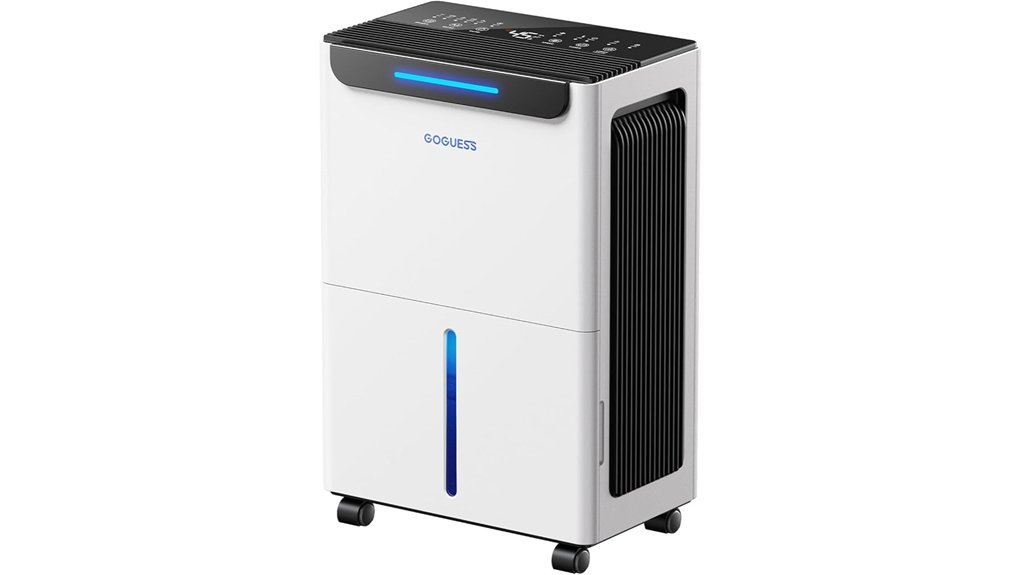
If you need a basement dehumidifier that can handle up to 1,600 sq. ft., the GoGuess model is a strong pick thanks to its humidity control and 21-pint daily capacity. You can set DEHU mode to keep moisture between 30% and 80%, switch to TURBO for quicker laundry drying, or use SLEEP for quieter nights. The 2.3L tank shuts off when full, and the drain hose supports nonstop use. At 40dB, it stays discreet, while child lock, auto-defrost, and overload protection help keep things safe.
Best For: Homeowners or renters needing a quiet, compact dehumidifier for basements and other medium-sized spaces up to 1,600 sq. ft.
Why it stands out: This is a good match if you want a practical basement unit with set-and-hold humidity control, several modes, and the option to drain continuously instead of emptying the tank every time it fills.
Who should skip it: Skip it if your basement is very large, constantly wet, or needs heavy-duty drying after leaks or flooding.
Why You’ll Like It: It gives you a balanced mix of quiet operation, hose drainage, and simple controls without jumping into a bulky high-capacity model. That makes it a useful everyday choice for a finished basement room, laundry corner, or damp lower-level space.
Pros:
- Covers up to 1,600 sq. ft. with a 21-pint daily capacity.
- Offers flexible modes like DEHU, TURBO, and SLEEP for different needs.
- Includes helpful safety and convenience features such as auto-shutoff, child lock, and continuous drainage.
Cons:
- The 2.3L tank may require frequent emptying without the drain hose.
- Best suited for moderate-sized areas, not very large or extremely damp spaces.
- Plastic construction may feel less premium than metal-bodied models.
Bottom Line: Choose this one if you want a quiet mid-size basement dehumidifier with simple controls and flexible drainage.
Waykar 80 Pint Energy Star Dehumidifier for Home
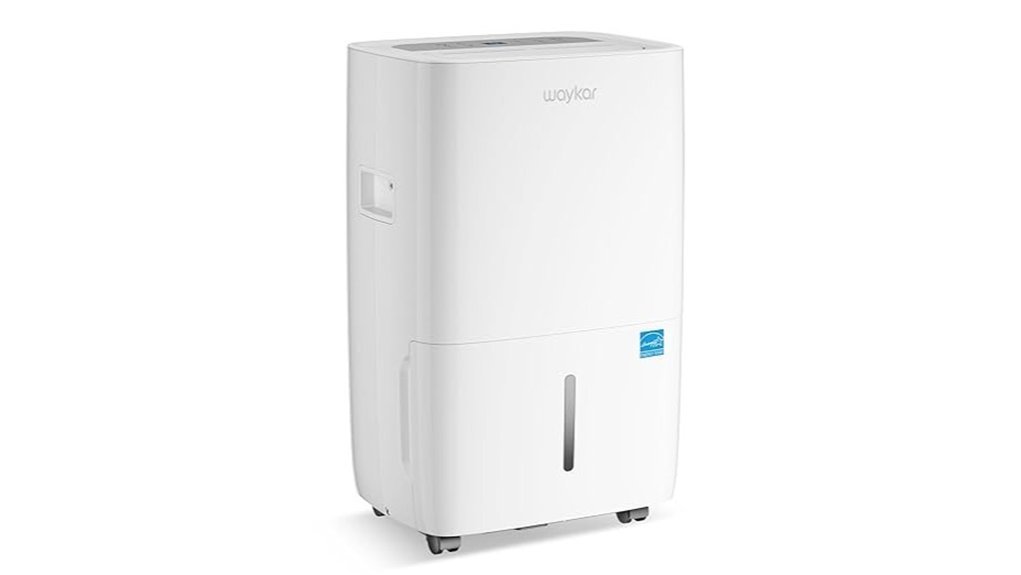
The Waykar 80 Pint Dehumidifier is a strong pick if your basement needs powerful, energy-efficient moisture control. You get 80 pints of daily capacity, enough for spaces up to 5,000 sq. ft., plus flexible humidity settings from 30% to 80%. Its 90° auto swing helps spread dry air evenly, while ENERGY STAR certification keeps running costs down. At about 42 dB, it won’t shout over your day. You can use the tank or continuous drain, set the 24-hour timer, and trust the frost-protecting smart system and 1-year warranty.
Best For: Homeowners needing a powerful, energy-efficient dehumidifier for large spaces like basements up to 5,000 sq. ft.
Why it stands out: The larger capacity makes this model a better fit for open basement layouts, finished basements, and damp rooms where a small thermoelectric unit would struggle.
Who should skip it: Skip it if you only need light moisture control in a small bedroom, closet, or bathroom.
Why You’ll Like It: It is built for shoppers who want fewer compromises: large coverage, strong daily moisture removal, humidity settings, and continuous drainage support. If your basement keeps feeling damp even after ventilation, this type of larger unit is usually a more practical direction.
Pros:
- 80-pint daily capacity handles heavy moisture in large areas effectively.
- ENERGY STAR certification helps reduce energy use and operating costs.
- Quiet operation, flexible drainage options, and a 24-hour timer add convenience.
Cons:
- At 31 pounds, it may be somewhat bulky to move around frequently.
- 42 dB is quiet for a dehumidifier, but still noticeable in very silent rooms.
- Best suited for larger spaces, so it may be overpowered for small rooms.
Bottom Line: Pick the Waykar if your main priority is high-capacity drying for a large basement while still keeping energy use in mind.
ToLife 1000 sq.ft Home Dehumidifier with LED Light
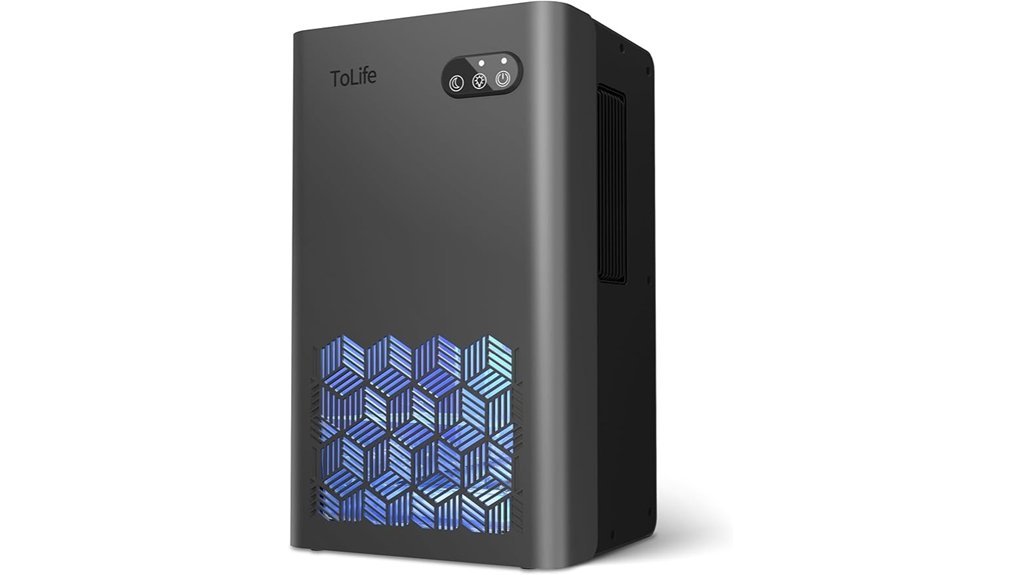
Need a compact basement dehumidifier with a little style? The ToLife TZ-C2 covers up to 1,000 sq. ft., so you can use it in a basement, bedroom, bathroom, or closet. Its semiconductor condensation system pulls up to 1 liter of moisture a day, while Powerful Mode speeds things up. When you want peace, switch to Sleep Mode for whisper-quiet operation under 30 dB. The 95-ounce tank shuts off automatically when full, and its handles make moving it easy. You also get seven LED colors, plus a lockable night light, all in a small 2.64 kg frame.
Best For: Homeowners or renters who want a compact, portable dehumidifier for small to medium spaces like basements, bedrooms, bathrooms, or closets, with quiet operation and customizable LED lighting.
Why it stands out: This model is easy to move, quiet enough for sleeping areas, and useful when you need light moisture control rather than a large compressor machine.
Who should skip it: Skip it for wet basements, large open spaces, or any room where you need fast moisture removal after water intrusion.
Why You’ll Like It: ToLife is less about heavy-duty basement drying and more about simple comfort. It works well when you want a small unit that looks better in a bedroom, bathroom, office, RV, or finished basement corner.
Pros:
- Covers up to 1,000 sq. ft., making it suitable for multiple rooms in the home.
- Sleep Mode runs quietly at under 30 dB, which is great for nighttime use.
- Seven LED color options add ambiance, and the night light can be locked to a preferred color.
Cons:
- Dehumidification capacity is relatively modest at 1 liter per day.
- It is not compatible with smart home systems.
- The 95-ounce tank may require frequent emptying in very damp conditions.
Bottom Line: Choose the ToLife if you want a small, quiet, easy-to-place dehumidifier for light basement moisture or nearby rooms.
Dehumidifier for Home, Basement, Bathroom, Bedroom, RV
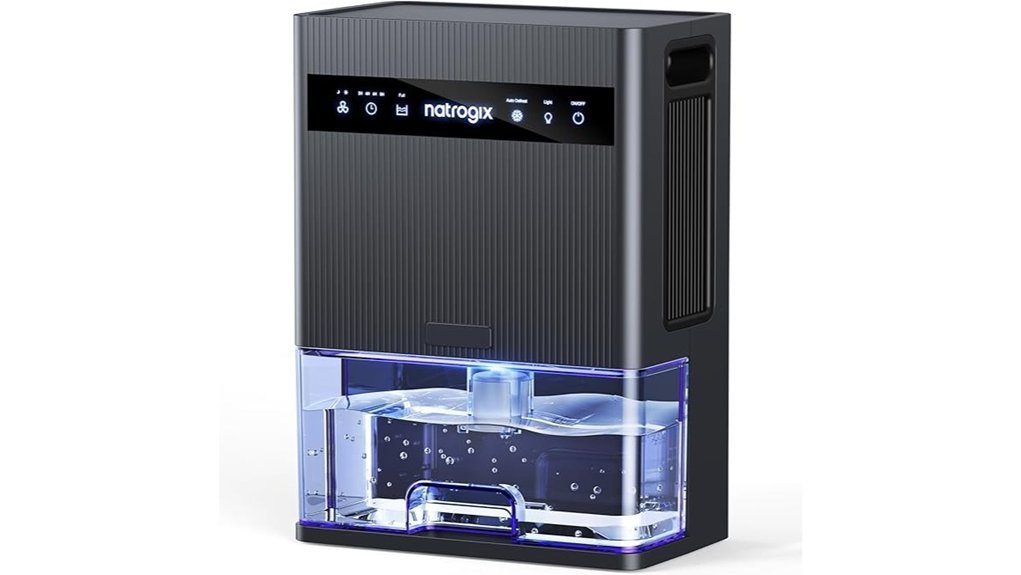
Natrogix CS3 suits you if you need quiet, portable moisture control for multiple rooms. You can move this 5.2-pound unit easily with its hidden handle and use it in your home, basement, bathroom, bedroom, or RV. Its dual semiconductor system removes up to 40 oz of moisture daily and covers up to 1,000 sq. ft. Sleep mode runs at just 20 dB, so it won’t disturb you. The 106 oz tank shuts off automatically when full, and the 2, 4, 6, or 8-hour timer helps you save energy.
Best For: People who want a quiet, portable dehumidifier for multiple small to medium spaces like bedrooms, bathrooms, basements, or RVs.
Why it stands out: It works best for shoppers who value low noise, portability, and a simple tank setup over heavy-duty basement drying power.
Who should skip it: Skip it if you need a dedicated basement dehumidifier that can run through a hose all day without manual emptying.
Why You’ll Like It: This is a practical pick for anyone who wants one dehumidifier to move around the house instead of a larger machine that stays in one spot. The quiet sleep mode also makes it more comfortable for bedrooms and RV use.
Pros:
- Quiet sleep mode at just 20 dB makes it suitable for bedrooms and other quiet areas.
- Portable 5.2-pound design with a hidden handle makes it easy to move from room to room.
- Large 106 oz tank with auto shut-off and a 2/4/6/8-hour timer adds convenience and energy savings.
Cons:
- Best suited for smaller spaces; coverage may not be enough for larger or very damp areas.
- Needs regular tank emptying since it is not a continuous-drain model.
- Performance depends on temperature and humidity, so results may vary by environment.
Bottom Line: This is a better portable pick than a heavy-duty basement pick, especially if you want a quiet unit for several small rooms.
VEAGASO 34-Pint Dehumidifier for Basement and Home
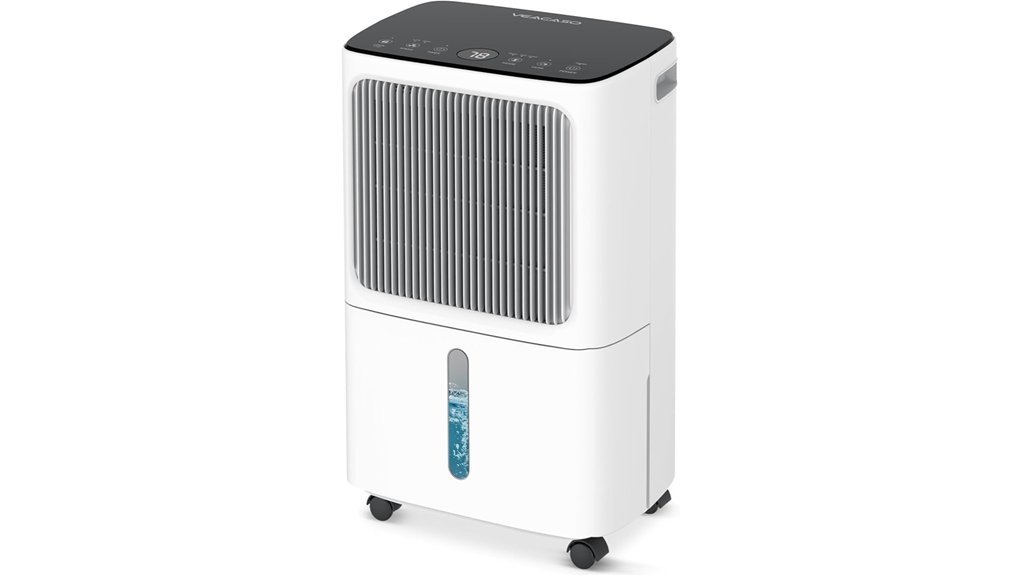
If you need a quiet, compact dehumidifier for a basement up to 2,500 square feet, the VEAGASO VG380 fits well. You get up to 34 pints of moisture removal per day, plus DEHU, DRY, and CONT modes to match damp spaces, laundry drying, or steady control. The LED touch panel lets you set your target humidity and check readings fast. You can empty the 0.53-gallon tank, or use a drain hose for continuous drainage. At ≤40 dB, it’s quiet enough for nighttime use, and its handle and casters make moving it easy.
Best For: Homeowners who need a quiet, space-saving dehumidifier for basements, large rooms, or laundry areas up to 2,500 sq. ft.
Why it stands out: VEAGASO gives you the right middle ground between compact models and large 80-pint units, with a drain hose option that helps reduce daily upkeep.
Who should skip it: Skip it if you need smart app control, a very large tank, or coverage above the stated 2,500 sq. ft. range.
Why You’ll Like It: It gives you the features many basement shoppers actually need: a manageable size, enough capacity for a medium space, quiet operation, and a drain hose option so you are not tied to the tank every day.
Pros:
- Handles spaces up to 2,500 sq. ft. with up to 34 pints of moisture removal per day.
- Offers DEHU, DRY, and CONT modes plus adjustable humidity control for flexible use.
- Quiet operation at ≤40 dB with a portable design, LED touch panel, and continuous drainage option.
Cons:
- The 0.53-gallon tank may require frequent emptying in very damp conditions if not using a drain hose.
- Best suited for medium-to-large spaces, so it may be overkill for smaller rooms.
- Lacks some premium conveniences found on higher-end models, such as app control or smart home integration.
Bottom Line: Pick VEAGASO if you want a quiet, practical basement dehumidifier with enough capacity for many mid-size spaces.
KNKA 2500 Sq.Ft Dehumidifier with Drain Hose
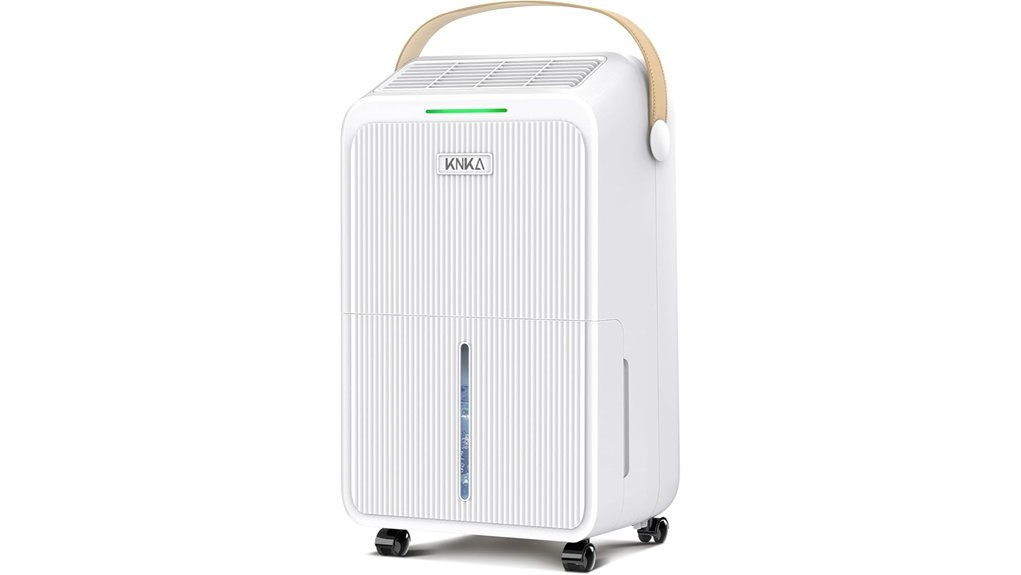
The KNKA 2500 Sq.Ft Dehumidifier suits large, damp basements that need steady moisture control. You can cover up to 2,500 sq. ft. and remove as much as 34 pints of moisture a day. Choose DEHU to set humidity from 30% to 80%, DRY for faster laundry drying, or CONT for nonstop use in soggy spaces. The 3L tank works, but the included 3.28 ft drain hose makes continuous draining easier. At 37dB, it stays quiet, and the sleep mode helps more. You also get child lock, auto shutoff, wheels, and a washable filter.
Best For: Homeowners or renters needing quiet, continuous humidity control in large spaces like basements, bedrooms, laundry rooms, or garages.
Why it stands out: The combination of 34-pint capacity, included drain hose, quiet operation, and washable filter makes this a practical pick for people who want less manual maintenance.
Who should skip it: Skip it if your only humid area is a closet, small bathroom, or tiny storage space.
Why You’ll Like It: KNKA is especially appealing if your basement already has a floor drain, utility sink, or sump area nearby. The drain hose support helps the unit run longer without constant tank checks.
Pros:
- Covers up to 2,500 sq. ft. and removes up to 34 pints of moisture per day.
- Offers flexible modes for dehumidifying, drying clothes, and nonstop operation.
- Quiet 37dB operation with sleep mode, plus useful features like a drain hose, child lock, and washable filter.
Cons:
- The 3L tank may require frequent emptying if continuous drainage isn’t used.
- 230W power use may be noticeable for extended operation.
- Best suited for large damp areas, so it may be more than needed for small rooms.
Bottom Line: Choose KNKA if your basement needs continuous drying and you want a quiet model with a straightforward drain hose setup.
Dehumidifier for Home 1000 Sq.Ft with Ambient Light
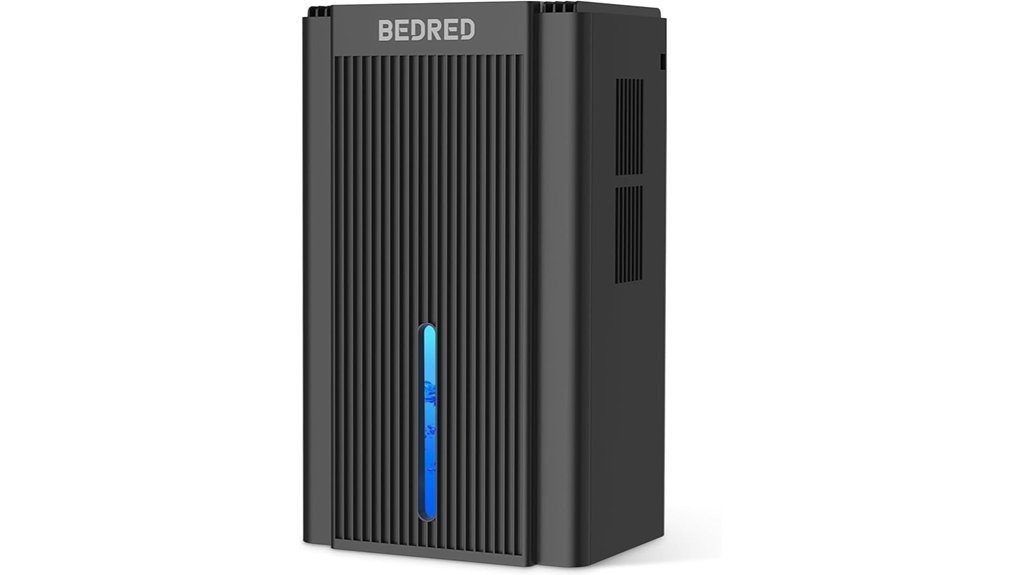
With 1000-square-foot coverage, this BEDRED dehumidifier suits you if you want compact basement moisture control. You get a semiconductor design that uses thermoelectric cooling to pull moisture from the air and help improve air quality. Its 95-fluid-ounce tank and auto shut-off keep operation safe when the reservoir fills. The intermittent mode helps you manage humidity efficiently in living rooms, bedrooms, bathrooms, basements, or RVs. You’ll also enjoy the 7-color ambient light, from calming blue to romantic red. Sleep mode turns lights off and lowers noise to a whisper for restful nights.
Best For: Homeowners or renters who want a compact, stylish dehumidifier for up to 1000 sq. ft., especially for bedrooms, bathrooms, basements, or RVs.
Why it stands out: It combines basic moisture control with a softer bedroom-friendly design, making it more appealing for finished spaces than unfinished utility basements.
Who should skip it: Skip it for heavy basement dampness or if you need a compressor-style unit with hose drainage.
Why You’ll Like It: BEDRED makes sense when you want a small unit that blends into a living space. The ambient light and sleep mode help it feel less like utility equipment and more like a room-friendly appliance.
Pros:
- Covers up to 1000 sq. ft., making it suitable for multiple room types.
- 7-color ambient lighting adds a decorative and relaxing touch.
- Auto shut-off and sleep mode improve safety and quiet nighttime use.
Cons:
- Semiconductor dehumidifiers are generally less powerful than compressor models.
- The 95 oz tank may require frequent emptying in very damp spaces.
- Best suited for light to moderate moisture control rather than heavy-duty dehumidification.
Bottom Line: BEDRED is best for lighter basement moisture, bedrooms, RVs, and people who want a compact unit that does not look too industrial.
PSOS Dehumidifier for Home, 98 OZ Tank
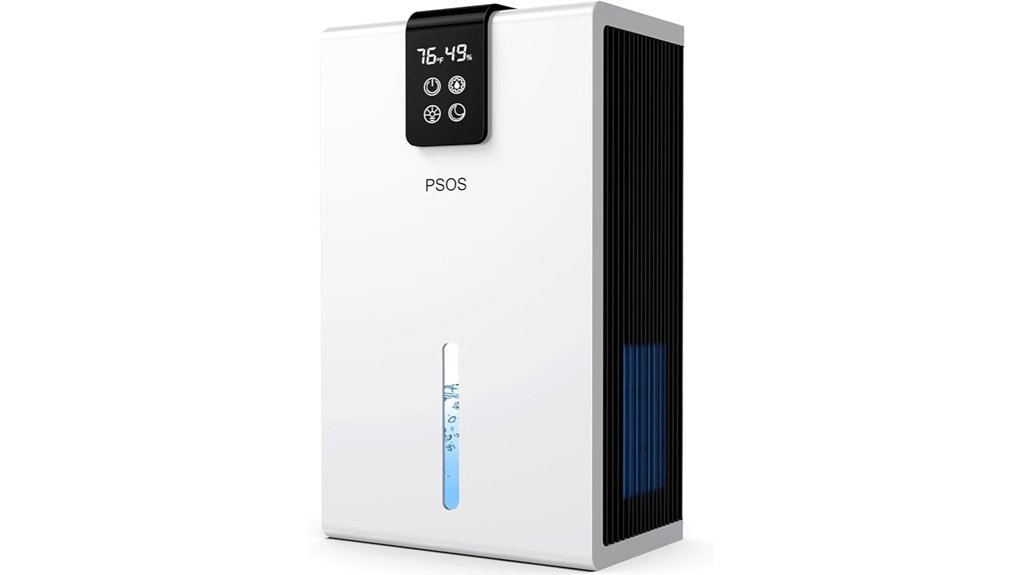
PSOS’s 98-ounce tank suits you if you want steady basement moisture control without constant emptying. You can cover up to 1,000 square feet, and the PS-01SG is listed for strong daily moisture removal. Its powerful mode tackles dampness fast, while sleep mode stays under 30 dBA for quieter nights. You’ll see real-time humidity and temperature on the smart panel, and the washable filter catches hair and dust. Auto shutoff, defrost, and energy-saving controls add convenience. Compact ABS housing and 7-color lighting help it fit your space.
Best For: Homeowners, apartment dwellers, and RV users who want a compact dehumidifier for spaces up to 1,000 sq. ft. with quiet operation and easy moisture control.
Why it stands out: The display panel, filter, auto shutoff, and lighting give it more convenience than a basic tank-only compact dehumidifier.
Who should skip it: Skip it if you want confirmed heavy-duty basement performance, a large hose-drain compressor unit, or whole-basement coverage above 1,000 sq. ft.
Why You’ll Like It: The real-time display is the main advantage here. Instead of guessing whether the room is improving, you can check the humidity and temperature readings at a glance and adjust your use more confidently.
Pros:
- Covers up to 1,000 sq. ft. and is designed for compact room moisture control.
- Sleep mode runs under 30 dBA, making it suitable for quieter bedrooms and night use.
- Smart humidity/temperature display, washable filter, auto shutoff, and defrost add convenience.
Cons:
- The 98 oz tank may still require regular emptying in very damp areas.
- Best suited for smaller to medium spaces rather than large whole-house use.
- No detailed warranty information is included upfront.
Bottom Line: Pick PSOS if you want a compact dehumidifier with a clear control panel and quiet operation for lighter basement or room use.
34 Pint Dehumidifier for Home with Drain Hose
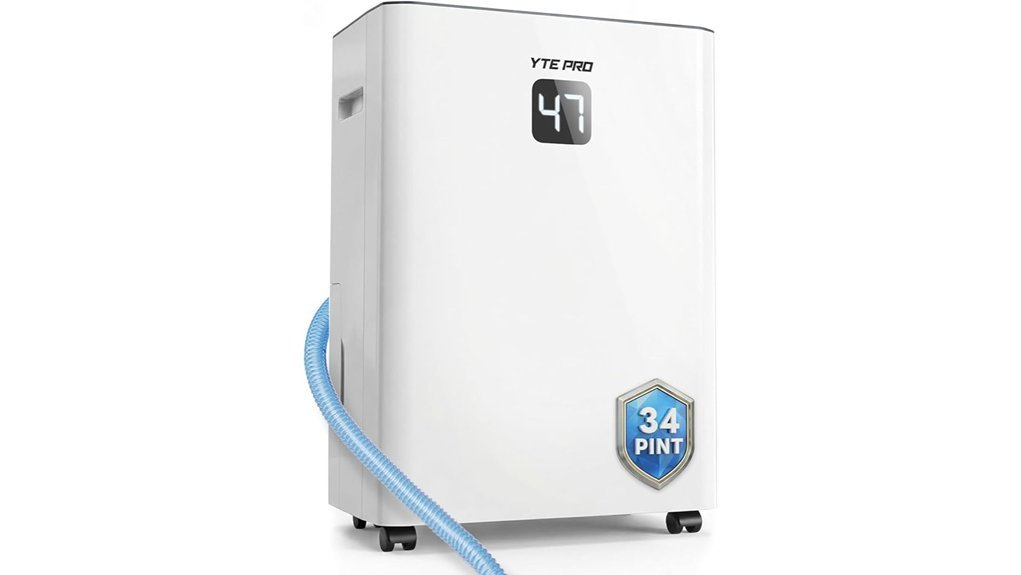
Need reliable moisture control for a medium-large basement? The YTE PRO 34 Pint Dehumidifier covers up to 2,500 sq. ft. and pulls 34 pints of moisture per day, so you can keep damp air under control in bedrooms, bathrooms, or basement rooms. You’ll appreciate the 40dB operation, which stays whisper-quiet, plus the front LED display and humidity sensor for easy monitoring. Use the 6.56ft drain hose for nonstop drainage, or rely on the 2L tank with full-tank shutoff. With wheels, a hidden handle, timer, and washable filter, it’s easy to move and maintain.
Best For: Homeowners who need quiet, reliable moisture control for medium to large spaces like basements, bedrooms, and bathrooms.
Why it stands out: The longer 6.56 ft drain hose gives you more placement flexibility than models with shorter hoses, which can matter in basements where the drain is not right beside the unit.
Who should skip it: Skip it if your basement is extremely damp and you want a larger 50-pint to 80-pint class machine.
Why You’ll Like It: Many basement dehumidifiers include a short hose, so the longer hose is a practical benefit. It gives you more freedom to place the unit where airflow is better instead of squeezing it right beside a drain.
Pros:
- Covers up to 2,500 sq. ft. and removes up to 34 pints of moisture per day.
- Quiet 40dB operation with a front LED display and humidity sensor for easy monitoring.
- Flexible drainage options, including a 6.56ft hose for continuous drainage and a 2L tank with auto shutoff.
Cons:
- 34-pint capacity may be less ideal for very large or extremely damp areas.
- The 2L tank may need frequent emptying if continuous drainage isn’t used.
- Best suited for residential use, so it may not be powerful enough for heavy-duty commercial needs.
Bottom Line: YTE PRO is a good fit if you want a 34-pint basement dehumidifier with a longer drain hose and easy mobility.
Midea 22 Pint Energy Star Dehumidifier with Filter
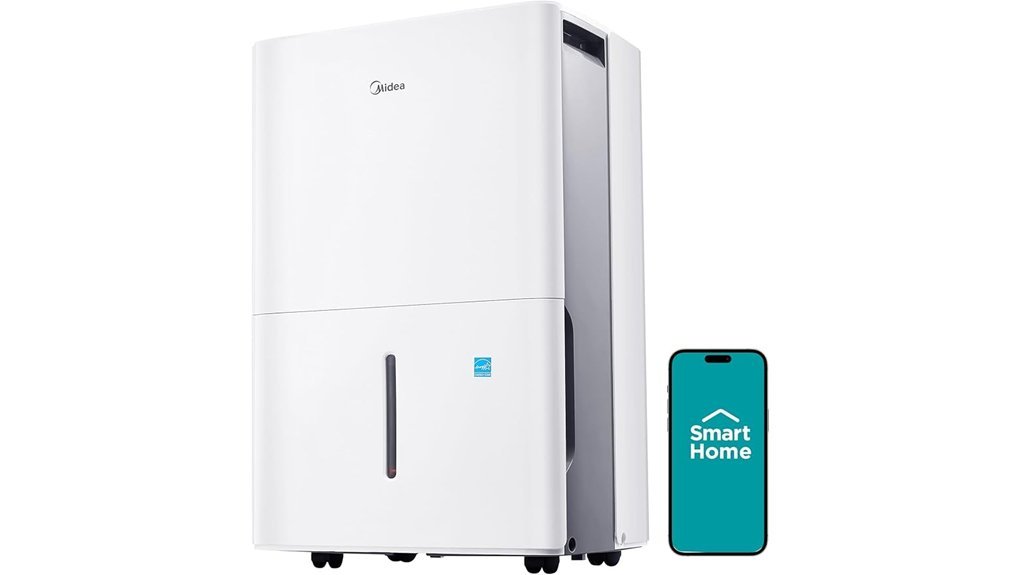
If you need basement moisture control for up to 1,500 square feet, Midea fits well. You can pull up to 22 pints of moisture a day while keeping humidity between 35% and 85%, with 45% to 55% ideal. The ENERGY STAR design cuts energy use by 31%, and its 47 dBA operation won’t disrupt sleep or TV time. You get Wi-Fi control through the SmartHome app, plus Alexa and Google Assistant support. The 0.8-gallon tank shuts off when full, or you can use continuous drainage. Four wheels make moving it easy.
Best For: Homeowners, renters, or anyone needing an efficient, quiet dehumidifier for spaces up to 1,500 sq. ft., especially basements, bedrooms, or offices.
Why it stands out: Midea is the strongest smart-home pick here because it adds Wi-Fi app control and voice assistant compatibility to a practical medium-room dehumidifier.
Who should skip it: Skip it if your basement is larger than 1,500 sq. ft., very damp, or you do not want to buy a separate hose for continuous drainage.
Why You’ll Like It: Smart control is useful if your basement is not a room you check often. You can manage settings from the app, pair it with voice assistants, and keep humidity more consistent without walking downstairs as much.
Pros:
- ENERGY STAR certified and uses 31% less energy than traditional models.
- Quiet 47 dBA operation is suitable for sleeping or watching TV.
- Wi-Fi, Alexa, and Google Assistant compatibility add convenient smart control.
Cons:
- Water tank is relatively small at 0.8 gallons, so it may need frequent emptying without continuous drainage.
- Drain hose is not included for continuous drain setup.
- Best suited for medium-sized spaces, so it may not be enough for larger areas.
Bottom Line: Choose Midea if you want a known smart-control option for a medium basement room and you value app-based humidity management.
2500 Sq.Ft Dehumidifier with Drain Hose and Timer
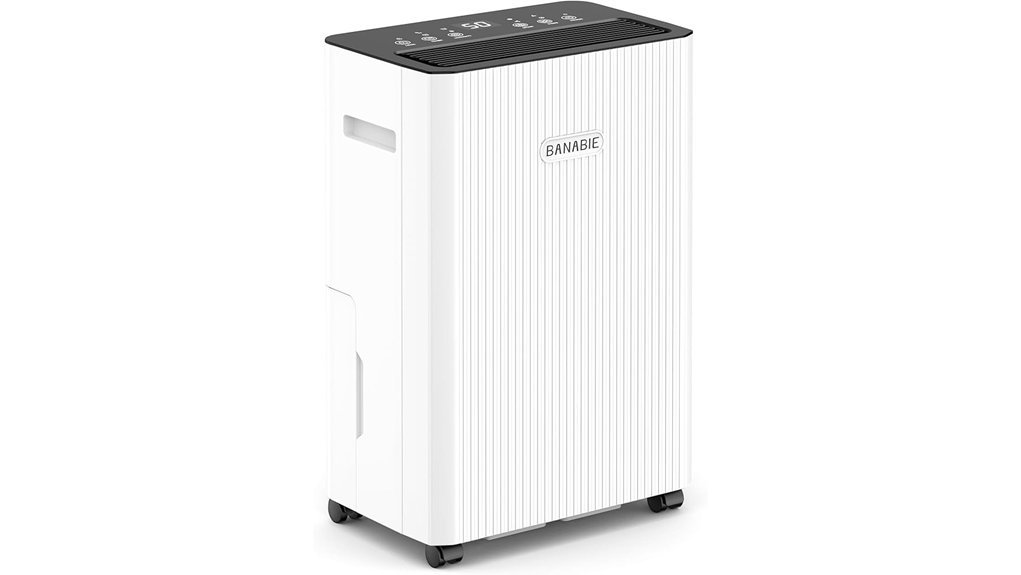
For large basements, this 2,500 sq. ft. dehumidifier is a strong fit. You can pull up to 32 pints of moisture a day, keeping humid spaces in the 45%–55% comfort range. Use the included 3.28-foot hose for gravity drainage, or rely on the 2.5L tank with auto-shutoff when it fills. You’ll like the 24-hour timer, ultra-quiet 32dB operation, and flexible Auto, Continuous, and Custom modes. Wheels and handles make moving it easy, while child lock, auto defrost, and outage memory add peace of mind.
Best For: People needing a quiet, easy-to-move dehumidifier for large basements, crawl spaces, bedrooms, or other humid areas up to 2,500 sq. ft.
Why it stands out: The low listed noise level, outage memory, and continuous mode make it useful for basement areas where you want the unit to run quietly and restart smoothly after power interruptions.
Who should skip it: Skip it if your drain location is far away, since the included hose may be short for some basement layouts.
Why You’ll Like It: The outage memory is a helpful detail for basement use, especially in areas where storms or power interruptions happen. It can make the unit easier to live with if you rely on it for steady humidity control.
Pros:
- Removes up to 32 pints of moisture per day for effective humidity control.
- Offers flexible drainage with a hose or a 2.5L tank plus auto-shutoff.
- Includes convenient features like a 24-hour timer, child lock, auto defrost, and outage memory.
Cons:
- The included drain hose is only 3.28 feet long, which may limit placement options.
- The 2.5L tank may require frequent emptying in very damp conditions.
- Best suited for medium-to-large spaces, so it may be more than needed for small rooms.
Bottom Line: This is a solid choice if you want quiet operation, easy movement, and steady drying for a basement up to 2,500 sq. ft.
AEOCKY 4500 Sq.Ft Smart Dehumidifier with Drain Hose
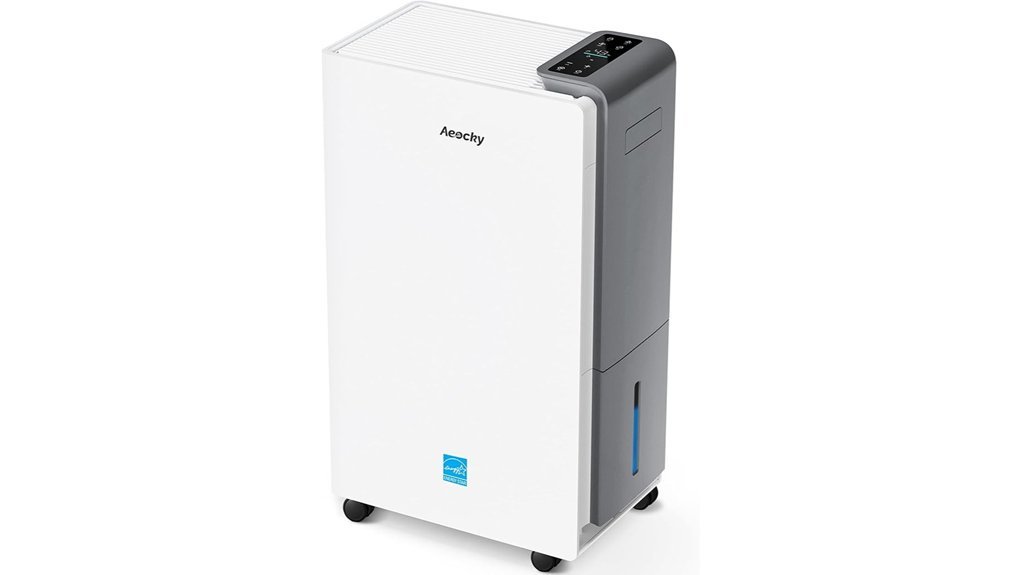
AEOCKY’s 4500 Sq.Ft Smart Dehumidifier suits large, damp basements that need quiet, efficient moisture control. You get ENERGY STAR Most Efficient 2025 performance, strong 80-pint daily extraction in extreme humidity, and efficient operation that can cut electricity use by up to 50% versus non-certified units. Its smart chip tracks humidity fast, while Auto, Sleep, and Continuous modes make control simple. The 44dB low setting keeps noise down, and the drain hose supports nonstop use. With ETL/RoHS certification, a 3-year warranty, and frost-free low-temp operation, it’s built to last.
Best For: Homeowners with large, damp basements or other big spaces who want quiet, energy-efficient, smart humidity control with continuous drainage.
Why it stands out: This is one of the strongest large-basement picks in the article because it combines high stated capacity, efficiency claims, smart control, and continuous drainage support.
Who should skip it: Skip it if your basement is small or only mildly humid, since this level of capacity may be more than you need.
Why You’ll Like It: AEOCKY is made for buyers who want a more serious basement setup. The mix of high capacity, smart modes, quiet low-speed operation, and hose drainage can reduce daily maintenance in a large damp area.
Pros:
- ENERGY STAR Most Efficient 2025 certification with strong moisture removal and lower electricity use.
- Quiet operation at just 44dB on low speed, plus smart modes like Auto, Sleep, and Continuous.
- ETL/RoHS certified with a 3-year warranty, frost-free low-temp performance, and drain hose for nonstop use.
Cons:
- Best suited for larger spaces, so it may be more than needed for small rooms.
- Higher-end features and certification may come with a higher upfront price.
- Its strongest performance is in warm or very humid conditions, so results can vary by environment.
Bottom Line: Choose this AEOCKY model if you need a powerful, efficient dehumidifier for a large basement and want continuous drainage for low-maintenance use.
Vellgoo Max 64 Pint Energy Star Dehumidifier
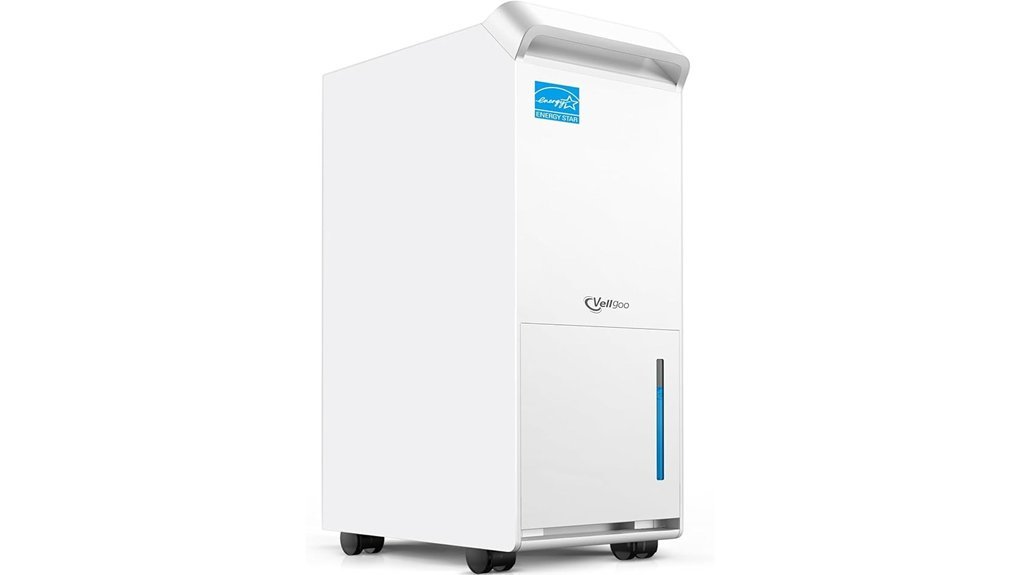
The Vellgoo Max 64 Pint dehumidifier suits large basements needing efficient moisture control. You can cover up to 4,000 square feet with its 64-pint daily capacity, and its Energy Star 2024 certification helps cut power use. You get smart humidity control with Continuous, Comfort, and Humidity Control modes, plus a strong rotary compressor and copper coils for reliable performance. Drain it manually or use the included 6.56-foot hose with the quick-connect adapter for continuous drainage. A washable filter, 24-hour timer, and child lock add convenience and safety.
Best For: Homeowners with large basements or spaces up to 4,000 sq. ft. who want an energy-efficient dehumidifier with flexible drainage and easy-to-use humidity controls.
Why it stands out: Vellgoo gives you a strong mix of large-room coverage, energy-conscious operation, and a longer included hose for easier continuous drainage placement.
Who should skip it: Skip it if you want a very small dehumidifier or do not have enough room for a larger compressor-style model.
Why You’ll Like It: This model fits the buyer who wants strong drying but also cares about long-term running costs and convenience. The longer included hose and washable filter make it easier to maintain in a basement setup.
Pros:
- Energy Star 2024 certified for better efficiency and lower long-term electricity use.
- Strong 64-pint daily capacity with smart modes for continuous, comfort, or humidity-controlled operation.
- Convenient features like a washable filter, 24-hour timer, child lock, and both manual and continuous drainage options.
Cons:
- May be larger than needed for small rooms or apartments.
- No weight information provided, which may make setup expectations less clear.
- Continuous drainage requires hose setup, which may not suit every placement option.
Bottom Line: Pick Vellgoo if you want large-space drying with efficiency features and a more flexible hose setup than many shorter-hose models.
1500 Sq. Ft. Dehumidifier for Basement and Large Rooms
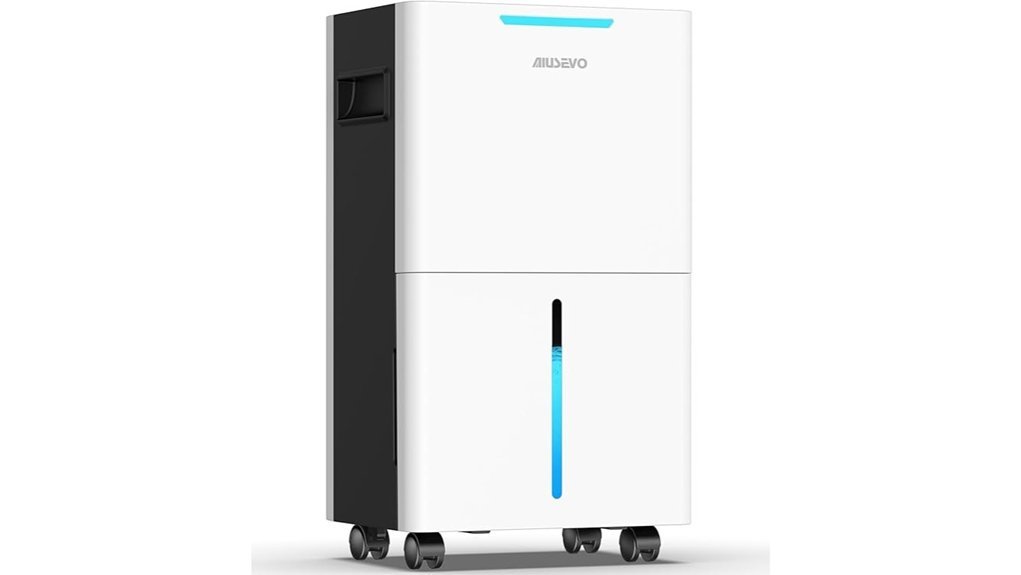
Covering up to 1,500 sq. ft., the Aiusevo AS280 suits basements and large rooms. You can pull 21 pints of moisture daily at 95°F and 90% RH, helping keep humidity between 30% and 50%. Choose DEHU to set levels from 30% to 80%, DRY for laundry, or CONTINUOUS for damp spaces. Its 2L tank shuts off automatically, or you can run the included 3.28 ft hose for nonstop drainage. You’ll also get quiet operation, child lock, real-time readings, wheels, and handles for easy moving.
Best For: Homeowners, renters, and RV users who need a compact dehumidifier for basements, large rooms, laundry areas, or other humid spaces.
Why it stands out: The Aiusevo AS280 gives you useful basement features, including drain hose support, real-time readings, child lock, and easy movement, without jumping into oversized 4,000 to 5,000 sq. ft. territory.
Who should skip it: Skip it if your basement is well above 1,500 sq. ft. or has heavy, persistent moisture.
Why You’ll Like It: Aiusevo is a sensible middle option if you want hose support and real-time readings but do not need a large, expensive, high-capacity unit. It is especially useful for moderate dampness in enclosed spaces.
Pros:
- Covers up to 1,500 sq. ft. with 21 pints/day moisture removal.
- Offers multiple modes, including DEHU, DRY, and CONTINUOUS.
- Includes convenient features like a 2L tank, drain hose, child lock, and quiet operation.
Cons:
- 21 pints/day may be limited for extremely damp or very large spaces.
- 2L water tank may require frequent emptying when not using continuous drainage.
- Best performance depends on maintaining the proper room conditions for the rated capacity.
Bottom Line: Aiusevo is a practical 1,500 sq. ft. pick for shoppers who want drain hose support and simple controls for moderate basement humidity.
AEOCKY Compressor Dehumidifier with Drain Hose
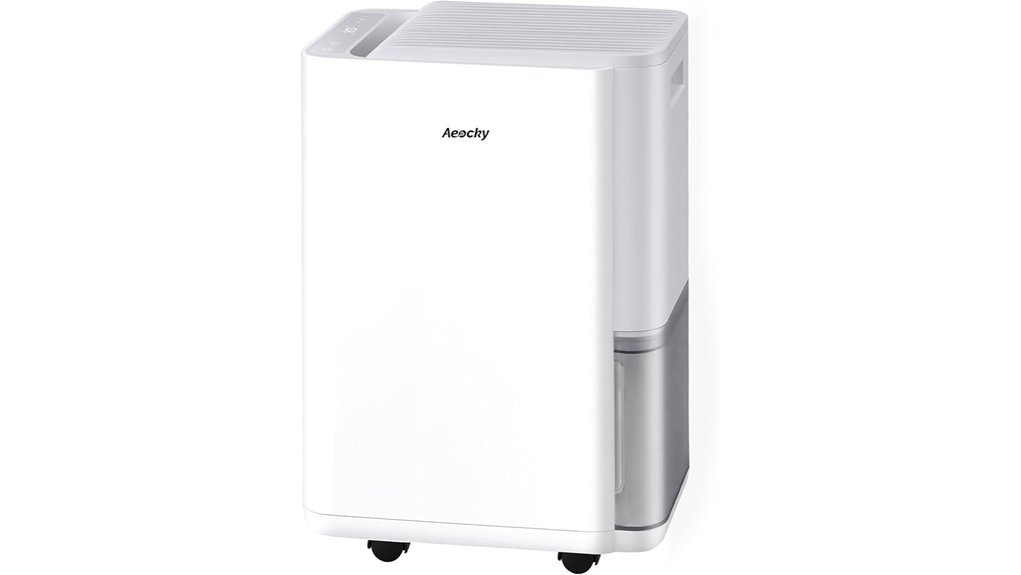
Need powerful basement drying with easy drainage? You’ll like the AEOCKY 3500 Sq. Ft. Compressor Dehumidifier with drain hose. It removes up to 50 pints a day in extreme humidity and handles spaces up to 3,500 square feet. Its brushless DC motor and low-friction compressor boost efficiency, so you can cut energy use by up to 50%. The compact 15.75-inch design fits tight basement corners, while 360° casters make moving it simple. You also get adjustable humidity control, quiet operation, continuous drainage, and durable, lab-validated construction backed by a 3-year warranty.
Best For: Homeowners or renters needing a compact, high-capacity dehumidifier for basements, bedrooms, RVs, or laundry areas with easy continuous drainage and quiet operation.
Why it stands out: This AEOCKY model fits buyers who want stronger compressor performance than compact units but do not need the full size of the 4,500 sq. ft. option.
Who should skip it: Skip it if you only need a small, tank-based unit for occasional bathroom or closet use.
Why You’ll Like It: This is a strong compromise between compact design and serious drying power. It is easier to place than some large basement units but still gives you compressor performance and continuous drainage support.
Pros:
- Removes up to 50 pints per day and covers spaces up to 3,500 sq. ft.
- Energy-efficient brushless DC motor and low-friction compressor help reduce power use.
- Compact, mobile design with 360° casters, adjustable humidity control, and continuous drainage.
Cons:
- Best performance is in enclosed indoor spaces, so it may be more than needed for smaller rooms.
- Compressor models can be heavier and less convenient than smaller portable units.
- Continuous drainage requires access to a drain hose setup.
Bottom Line: Choose this AEOCKY compressor model if you want serious drying power, continuous drainage, and a smaller footprint than the largest basement units.
How to Choose the Right Basement Dehumidifier
Before you choose a model, look at your basement in a practical way. A finished basement used as a family room needs quieter operation and cleaner design. An unfinished storage basement may need stronger drainage and higher capacity. A laundry area may benefit from a dry mode, while a basement with a floor drain is easier to pair with continuous drainage. The best dehumidifier is not always the largest one; it is the one that matches your space, moisture level, and maintenance habits.
- For light moisture: Compact 1,000 sq. ft. models can work if the room only feels mildly humid.
- For moderate basement dampness: Look at 21-pint to 34-pint units with adjustable humidity control.
- For large or wet basements: Choose higher-capacity compressor models with hose drainage.
- For low maintenance: Pick a model with continuous drainage, a washable filter, and auto restart if available.
- For living spaces: Prioritize lower dB ratings, sleep mode, and easy-to-read controls.
Pro Tips Before You Buy
Match the unit to the real problem. A compact tank-only unit can help with light humidity, but it is usually not the right choice for a wet basement. For persistent dampness, choose a compressor model with higher pint capacity and continuous drainage.
Plan the drain path first. Many basement buyers focus on pint capacity but forget hose placement. If you want continuous drainage, make sure the hose can slope downward toward a safe drain point.
Do not ignore comfort. If the basement is a bedroom, office, gym, or media room, noise level, display brightness, and sleep mode matter more than they would in a storage-only basement.
Factors to Consider When Choosing a Dehumidifier for Basement Room
When you choose a basement dehumidifier, make sure its coverage matches your room size and its pint capacity can handle how damp the space gets. You’ll also want to check drainage options and humidity control so it runs efficiently with less upkeep. Since basements can sit near living areas, noise level matters too.
Basement Size Coverage
Basement size coverage should be one of your first checks, because the right dehumidifier needs to match the square footage of your space to work efficiently. If your basement is around 1,000 square feet, you can narrow your search to smaller units, while larger rooms may need models built for up to 5,000 square feet. Don’t guess here, since an undersized unit won’t keep humidity in the recommended 30% to 50% range, and mold can still grow. You should also think about how often you’ll empty the tank, because larger spaces usually collect more water. Finally, consider noise if your basement doubles as a living area, since quieter models make daily use far more comfortable.
Pint Capacity
Pint capacity tells you how much moisture a dehumidifier can pull from the air each day, so it’s a key spec to match to your basement’s size and dampness. For most basements, you should look for at least 30 pints to control humidity and help stop mold growth. If your space stays very damp, choose a higher-capacity unit, since standard models usually range from 20 to 80 pints per day. Bigger basements, heavier moisture, and frequent use all call for more capacity. When you pick the right size, your dehumidifier runs more efficiently, uses less energy, and helps keep your indoor air cleaner and more comfortable. Too small, and it’ll struggle; too large, and you may waste power.
Drainage Options
Drainage options matter because they determine how much hands-on upkeep your dehumidifier needs. If you don’t want to empty a bucket often, choose a model with continuous drainage. You can attach a hose and send water straight to a floor drain or sink, so the unit keeps running without interruption. If you prefer manual drainage, look for a larger tank, since some hold up to 1.14 gallons and need fewer emptying trips. Check the drain hose length too; many units include about 3.28 feet, but your basement layout may call for a longer one. Safety features also help you avoid spills, because auto shut-off can stop the machine when the tank fills or drainage isn’t working properly.
Humidity Control
To keep a basement comfortable and prevent mold, you’ll want a dehumidifier that holds humidity between 30% and 50%. You should choose a unit with adjustable settings so you can match moisture control to your basement’s conditions. Real-time humidity monitoring helps you see when levels rise, so you can fine-tune the target quickly. If your space stays damp, continuous drainage lets the dehumidifier run without stopping, which keeps humidity steadier over time. That matters in basements with persistent moisture, where short gaps can let damp air build again. Aim for a model that responds accurately and lets you set a clear goal, rather than one that only runs blindly. With the right controls, you’ll protect your space and keep it feeling drier.
Noise Level
Once you’ve got humidity under control, the next thing to think about is how much sound the dehumidifier adds to your basement. You’ll usually see noise ratings between 30 and 50 dB, so if your basement doubles as a bedroom, office, or media room, aim for the lower end. For nighttime use, pick a model with a sleep mode; it can cut sound to about 20–30 dB. Many newer units also use noise-reduction tech to keep operation calmer in living areas. Remember that sound changes with the setting, too: turbo modes usually run louder than low-speed modes. Before you buy, read user reviews for real noise complaints, since specs don’t always match everyday performance in your basement.
Energy Efficiency
Energy efficiency matters because a basement dehumidifier may run for hours at a time, so a more efficient model can cut energy use by as much as 50% and lower your electricity bill over time. Look for ENERGY STAR certification, which shows the unit meets strict EPA efficiency standards. You should also compare wattage, because lower-wattage models usually draw less power during long basement runs. Smart humidity control can help too: it senses moisture levels and adjusts output, so you don’t waste energy over-drying the room. A high-efficiency compressor can remove more moisture with less electricity, making it a smart choice for damp basements. When you focus on these features, you’ll save money and keep your space dry more efficiently.
Tank Size and Maintenance
Tank size matters most if you cannot use a drain hose. A small tank can be fine for light daily moisture, but it may become annoying in a wet basement because you’ll need to empty it often. If you plan to run your dehumidifier every day, look for auto shutoff, an easy-pull tank, a washable filter, and clear full-tank alerts. These features help prevent spills and make the machine easier to maintain. Clean the filter regularly, keep the air intake open, and avoid placing the unit tight against a wall.
Continuous Drainage Setup
Continuous drainage is one of the best features for basement use. It lets the machine drain through a hose into a floor drain, utility sink, sump area, or another safe drainage point. Before you buy, check whether the hose is included, how long it is, and whether your drain location is lower than the dehumidifier outlet. Most simple hose setups use gravity, so the water needs a clear downward path. If your drain is too far away or uphill, you may need a different setup.
Safety and Setup Note
Place your dehumidifier on a flat, stable surface with open airflow around the intake and exhaust. Keep the cord away from standing water, check the tank often, and make sure any drain hose is secure before leaving the unit running for long periods. If your basement has active leaks, flooding, or visible mold growth, fix the moisture source instead of relying only on a dehumidifier.
Frequently Asked Questions
How Often Should I Clean My Basement Dehumidifier Filter?
You should clean your basement dehumidifier filter every two to four weeks, and more often if you use it daily or notice dust buildup. Check it monthly, rinse or vacuum it, and let it dry completely before reinstalling it.
Do Dehumidifiers Increase Basement Electricity Bills Significantly?
Usually, you won’t see a huge jump, but you’ll notice some increase if the unit runs many hours a day. You can cut costs by choosing an efficient model, setting the right humidity target, using continuous drainage when needed, and cleaning filters so it does not work harder than necessary.
Can I Use a Dehumidifier in Winter in an Unheated Basement?
Yes, you can use one, but you’ll want a low-temperature model. In an unheated basement, standard units may frost up or underperform. Set humidity around 40–50%, check the drain regularly, and make sure the unit is rated for the temperature in your basement.
How Do I Prevent Mold Around the Dehumidifier Itself?
You prevent mold by cleaning, drying, and checking it often. Wipe the tank, clear dust, empty water fast, and keep airflow open. Don’t let damp spots linger around the machine, because standing moisture can feed mold around your dehumidifier.
Should I Use a Dehumidifier With a Basement Sump Pump?
Yes, you should use one if your basement stays damp. The sump pump helps handle groundwater, while the dehumidifier helps control moisture in the air. Keep both systems clean, check for leaks, and make sure the dehumidifier drains safely if you connect it near the sump area.
What Humidity Level Should a Basement Dehumidifier Be Set To?
For most basements, aim for about 30% to 50% relative humidity. Many people set the target around 45% to 50% for comfort and moisture control. If the room feels too dry, raise the target slightly. If you notice musty smells or condensation, lower it within the recommended range.
Is a Compact Dehumidifier Enough for a Basement?
A compact dehumidifier can be enough for a small, mildly damp basement room. It is usually not the best choice for a large basement, a wet crawl space, or a room with persistent moisture. For heavier basement humidity, a compressor model with higher pint capacity and continuous drainage is usually the safer choice.
Where Should I Place a Dehumidifier in the Basement?
Place it where air can move freely around the intake and exhaust. Keep it away from walls, furniture, curtains, and boxes. If you use a drain hose, place it close enough to a safe drain point so the hose can slope downward and water can flow without backing up.
Is Continuous Drainage Worth It for Basements?
Yes, continuous drainage is worth it if your basement stays damp or you plan to run the unit often. It reduces tank-emptying work and helps the dehumidifier keep operating without stopping when the bucket fills. Just make sure the hose has a safe downward path to the drain.
What Size Dehumidifier Do I Need for a Damp Basement?
For a lightly damp small basement room, a compact unit may be enough. For moderate dampness, look at 21-pint to 34-pint models. For large, humid, or frequently damp basements, choose a higher-capacity compressor model with continuous drainage support.
Final Verdict: Which Basement Dehumidifier Should You Choose?
If your basement is large or stays damp most of the year, start with a higher-capacity model such as the Waykar 80 Pint Energy Star Dehumidifier, the AEOCKY 4500 Sq.Ft Smart Dehumidifier, or the Vellgoo Max 64 Pint Energy Star Dehumidifier. These are better matches for bigger rooms, stronger moisture removal, and long daily run times.
If your basement is medium-sized, the VEAGASO 34-Pint Dehumidifier, KNKA 2500 Sq.Ft Dehumidifier, and YTE PRO 34 Pint Dehumidifier give you a useful balance of coverage, quiet operation, and hose drainage. For smaller spaces, bedrooms, RVs, or light dampness, compact models like ToLife, BEDRED, Natrogix, and PSOS can be easier to move and simpler to use.
Picking the right basement dehumidifier comes down to your room size, humidity levels, and drainage needs. Choose a model that matches your space and keeps maintenance simple. With the right pick, you can protect your home, breathe easier, reduce musty air, and stop moisture before it causes bigger problems. That small choice today can save you a lot of hassle tomorrow.
Final Recommendation Box
Choose a large compressor model if your basement is open, damp, or used often. Choose a 21-pint to 34-pint model if you need balanced performance for a mid-size room. Choose a compact tank-only model if you mainly need light moisture control in a small finished space, bathroom, bedroom, closet, or RV.