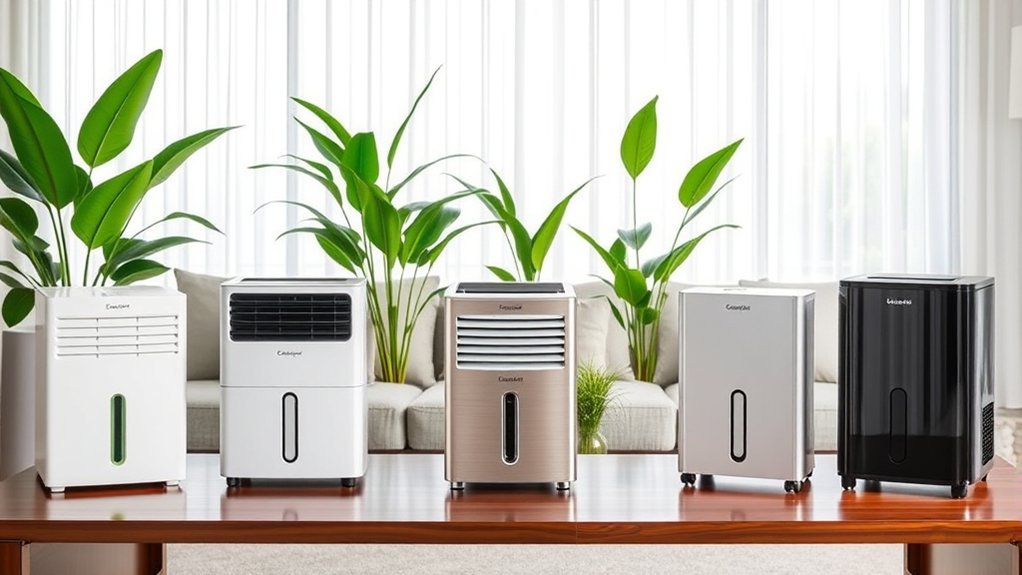
If you want a Vremi-style basement dehumidifier for damp home spaces, focus on the features that matter most: moisture removal, basement coverage, quiet operation, simple drainage, and steady humidity control. The Aiusevo AS280, hOmeLabs Wi-Fi, Glowells 21 Pint, Midea Energy Star 22 Pint, and a 34-Pint model all fit buyers who want a practical dehumidifier for a basement, home, bathroom, crawlspace, or damp living area. For smaller basements, 21 to 22 pints can work well when the moisture level is moderate. For larger or wetter spaces, choose more capacity or a model with stronger coverage. Look for continuous drainage, auto shutoff, easy controls, washable filters, and a target indoor humidity range of about 30% to 50%. This guide compares the key differences so you can choose the right option without overbuying or picking a unit that is too small.
Quick Verdict
Best overall starting point: Choose the Aiusevo AS280 if you want a compact dehumidifier with drain hose support, multiple modes, and easy room-to-room use.
Best for larger basements: Choose the hOmeLabs Wi-Fi model if you need stronger coverage, remote control, and a better fit for bigger damp areas.
Best smart energy-saving pick: Choose the Midea Energy Star 22 Pint if you want app control, a reusable filter, and energy-conscious operation for medium spaces.
Quick Picks for Basement Moisture Control
- Best compact pick: Aiusevo AS280 for small to medium basements and easy room-to-room use.
- Best for large basements: hOmeLabs Wi-Fi Dehumidifier for bigger spaces and remote control.
- Quietest small-space option: Glowells 21 Pint Dehumidifier for bedrooms, offices, and finished basements.
- Best smart energy-saving pick: Midea Energy Star 22 Pint with app and voice control.
- Best higher-capacity option: 34-Pint Dehumidifier for spaces up to 2,500 sq. ft.
Before You Buy
- Measure your space first: Match the dehumidifier to your basement size, not just the product headline.
- Check your drain location: A drain hose is most useful when you have a floor drain, sump area, or utility sink nearby.
- Think about noise: Finished basements, offices, and bedrooms need a quieter model than unfinished storage areas.
- Do not rely on tank size alone: In damp basements, continuous drainage can matter more than the water tank capacity.
- Watch real humidity: A separate hygrometer can help confirm whether the built-in display is matching the room condition.
Comparison Table
| Product | Best For | Stated Coverage | Key Feature | CTA |
|---|---|---|---|---|
| Aiusevo AS280 | Compact basement and home use | Up to 1,500 sq. ft. | DEHU, DRY, and CONTINUOUS modes | Check Price on Amazon ➜ |
| hOmeLabs Wi-Fi Dehumidifier | Large basements and remote control | Up to 7,000 sq. ft. | Wi-Fi control and turbo mode | Check Current Amazon Availability ➜ |
| Glowells 21 Pint | Quiet rooms and small basements | Up to 1,500 sq. ft. | Below 36 dB operation | Check Product Details on Amazon ➜ |
| Midea Energy Star 22 Pint | Energy-conscious smart-home users | Up to 1,500 sq. ft. | ENERGY STAR and app control | View Latest Deal on Amazon ➜ |
| 34-Pint Dehumidifier | Larger damp rooms and basements | Up to 2,500 sq. ft. | Higher capacity with drain hose | See Today’s Price on Amazon ➜ |
1500 Sq. Ft. Dehumidifier for Home and Basement
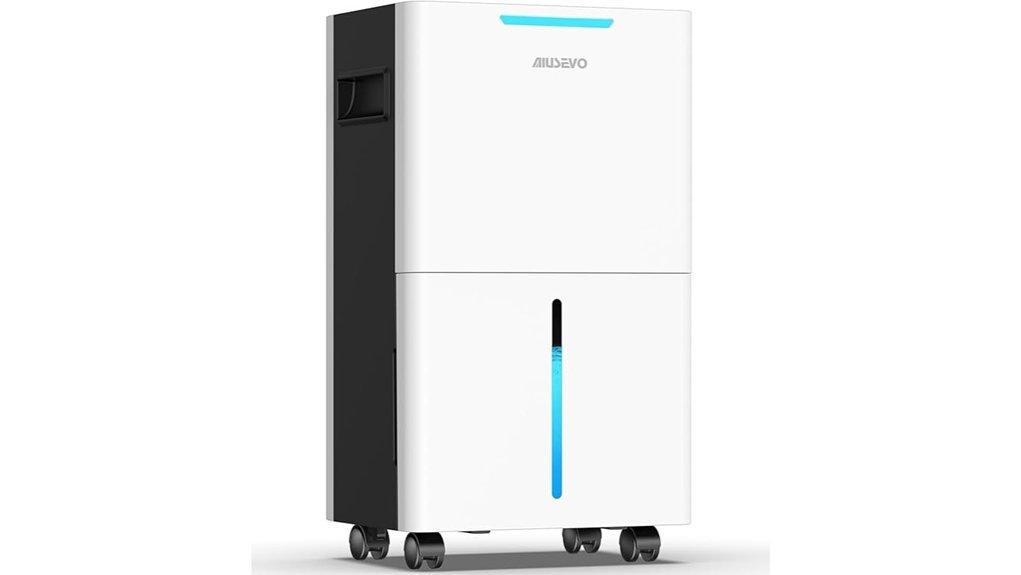
If you’re looking for a 1500 sq. ft. dehumidifier for your home and basement, the Aiusevo AS280 is a strong fit. You can use it in basements, bedrooms, bathrooms, living rooms, crawlspaces, and RVs. It removes up to 21 pints of moisture per day and helps keep humidity between 30% and 50%. Choose DEHU for custom control, DRY for laundry, or CONTINUOUS for very damp spaces. You get a 2L tank, continuous drain hose, smart controls, quiet operation, and easy portability. Automatic shutoff, defrost, and restart add convenience too.
This model is a good starting point if you want the simple, basement-friendly features shoppers often look for in a Vremi-style dehumidifier. It is not the largest option in this list, but it gives you the core tools you need for everyday moisture control: a compact body, drain hose support, adjustable humidity settings, and automatic safety features.
Why You’ll Like It: It solves the most common small-basement problem: damp air that keeps coming back after ventilation. The compact build makes it easier to move, while the hose option helps reduce the daily chore of emptying water.
Best For: Homeowners or renters who need a compact, easy-to-move dehumidifier for basements, bedrooms, bathrooms, living rooms, crawlspaces, or RVs.
Who Should Skip It: Skip it if your basement is very large, has standing water issues, or needs heavy-duty whole-house moisture removal.
Pros:
- Covers up to 1500 sq. ft. and removes up to 21 pints of moisture per day.
- Offers multiple modes, including DEHU, DRY, and CONTINUOUS, for flexible use.
- Includes convenient features like smart controls, automatic shutoff, quiet operation, and continuous drainage.
Cons:
- 2L water tank may need frequent emptying in very humid conditions if not using the drain hose.
- Best suited for small to medium spaces, not large whole-house dehumidification.
- Lightweight build may feel less premium than heavier-duty units.
Buying Tip: Use the drain hose if your basement stays damp for several hours a day. That one setup step can save you from emptying the tank over and over.
hOmeLabs Wi-Fi Dehumidifier for Home and Basement
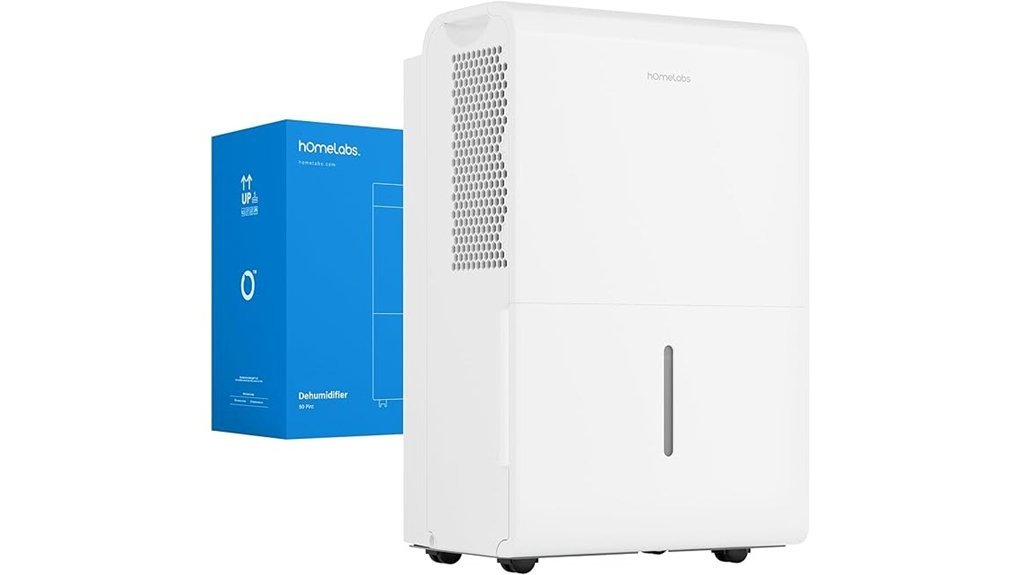
With Wi-Fi control and coverage up to 7,000 sq ft, this hOmeLabs dehumidifier suits large basements. You can adjust humidity remotely through your home network, so you won’t need to head downstairs to change settings. It pulls 50 pints a day under normal conditions and can reach 120 pints in damp, hot rooms. Turbo mode boosts airflow, while auto shut-off, defrost, and continuous drainage help you avoid hassles. The quiet design, digital display, timer, wheels, and handles make it easy to move and use anywhere.
This is the strongest fit in the list for readers with a large basement or a multi-room damp area. The Wi-Fi feature also helps if the unit will sit downstairs, in a utility room, or in a space you do not check every day. If you want more control than a simple dial-style dehumidifier gives you, this one is easier to manage from a phone.
Why You’ll Like It: It reduces the “set it and forget it” worry that comes with basement appliances. Remote control, turbo mode, and drainage support make it easier to manage humidity in a room you may not visit every day.
Best For: Homeowners or basement users who want a Wi-Fi-enabled dehumidifier with remote control, strong coverage for large spaces, and convenient automatic drainage.
Who Should Skip It: Skip it if you only need a small bedroom or bathroom dehumidifier. The larger coverage may be more than you need.
Pros:
- Covers up to 7,000 sq ft, making it a strong fit for large basements and homes.
- Wi-Fi control lets you adjust humidity settings remotely through your home network.
- Helpful convenience features like turbo mode, auto shut-off, defrost, and continuous drainage.
Cons:
- At 41.2 pounds, it may be somewhat heavy to move frequently.
- The 1.6-gallon tank may still require attention if continuous drainage isn’t used.
- Best suited for larger spaces, so it may be more than needed for smaller rooms.
Buying Tip: If your basement is finished or has several connected rooms, choose a higher-coverage model like this instead of pushing a smaller unit too hard.
Glowells 21 Pint Dehumidifier with Drain Hose
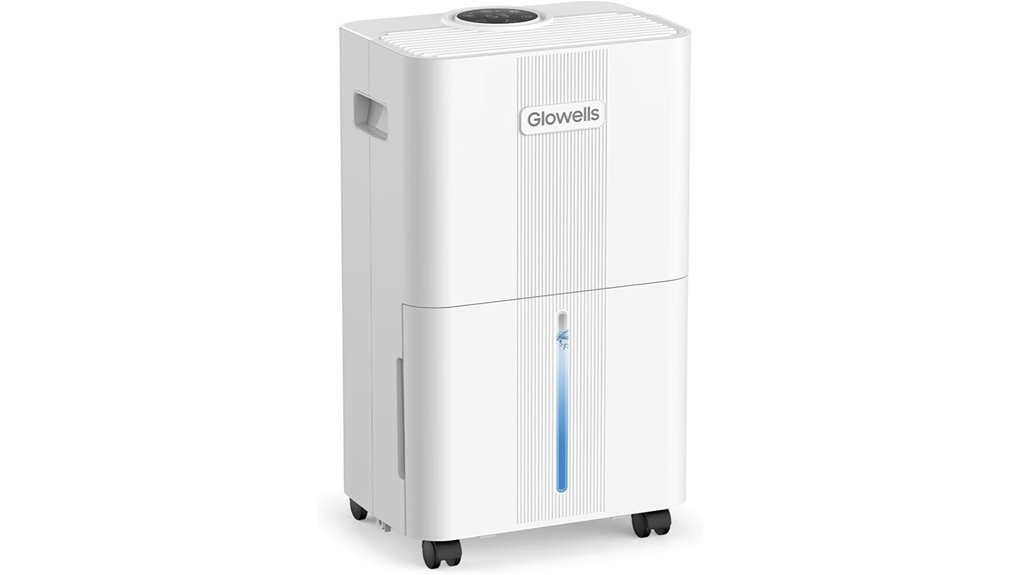
Glowells’ 21-pint PD20A suits small to medium basements up to 1,500 square feet. You can set it to Custom DEHU mode and adjust humidity in 5% steps from 30% to 80%, use Dry mode for laundry, or run CONT mode in very damp spaces. Its whisper-quiet operation stays under 36 dB, so it won’t interrupt sleep or work. You can drain it hands-free with the included hose, or let the tank fill until auto shut-off kicks in. Compact casters and a side handle make moving it easy. It also includes a 1-year warranty and support.
The Glowells model makes sense if your basement is not huge but noise matters. It works well for finished basements, bedrooms, small offices, laundry spaces, and other areas where a loud compressor would become annoying. The drain hose support also makes it more useful for steady basement moisture than a tiny tank-only unit.
Why You’ll Like It: It is built for people who need moisture control without turning the room into a noisy utility space. That makes it especially useful for finished basements, work areas, guest rooms, and laundry rooms.
Best For: Homeowners or renters with small to medium basements or damp rooms up to 1,500 sq. ft. who want a quiet, easy-to-move dehumidifier with flexible drainage options.
Who Should Skip It: Skip it if your basement is very wet, very large, or needs faster water removal than a 21-pint unit can provide.
Pros:
- Quiet operation below 36 dB makes it suitable for bedrooms, offices, and other living spaces.
- Custom DEHU, Dry, and CONT modes offer flexible moisture control for different needs.
- Includes both continuous drain hose use and a tank with auto shut-off for convenience.
Cons:
- Best suited for smaller to medium spaces, so it may not be ideal for very large areas.
- The 21-pint capacity may be limited for extremely wet environments compared with larger units.
- Requires proper hose positioning and closed windows/doors to work most effectively.
Buying Tip: Choose this one if quiet operation is a top priority and your space is closer to a small basement, bedroom, or office than a large unfinished basement.
Midea Energy Star Dehumidifier 22 Pint with Reusable Filter
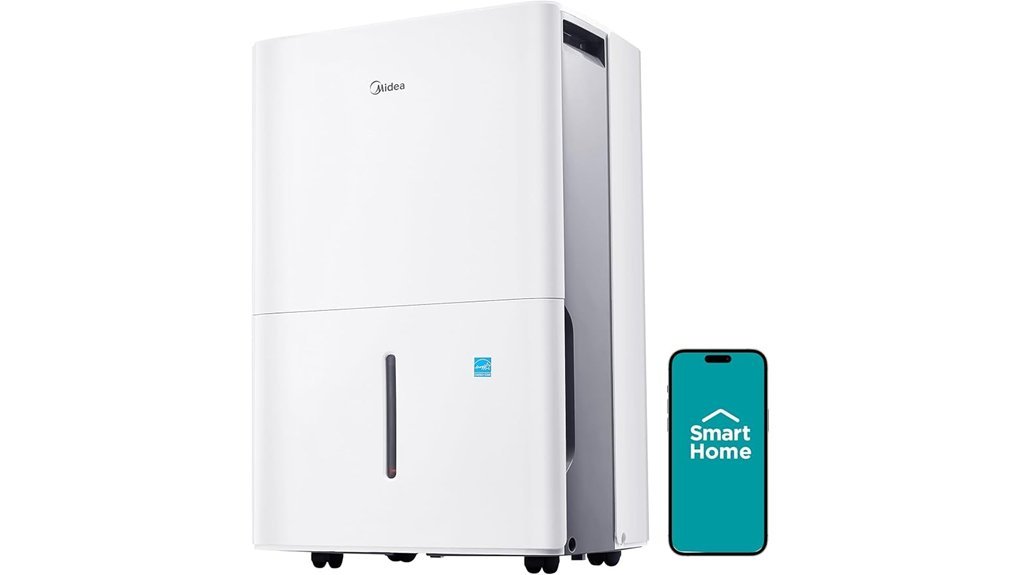
The Midea 22-pint dehumidifier suits basements up to 1,500 square feet. You can use it to pull up to 22 pints of moisture a day, helping you keep humidity in the healthy 45% to 55% range. Its ENERGY STAR certification cuts energy use by 31%, and it runs quietly at 47 dBA. You can adjust settings from 35% to 85%, control it with the SmartHome app, or use Alexa and Google Assistant. The reusable filter, wheels, handles, auto restart, auto defrost, and hose drain make it practical.
This model is best for buyers who want a recognizable home-appliance brand with smart controls and better energy awareness. It is also a strong fit if you want to avoid disposable filters and prefer a reusable filter you can clean. The app and voice-control support are useful, but the real value is the mix of energy efficiency, basement coverage, and easy drainage.
Why You’ll Like It: It combines smart-home convenience with practical basement features. The reusable filter, hose drain, app control, and quieter operation make it easier to keep a medium room comfortable without constant manual checking.
Best For: Homeowners or renters needing a quiet, energy-efficient dehumidifier for medium-sized spaces like basements, bedrooms, or offices with smart app and voice control.
Who Should Skip It: Skip it if you do not want connected features or if your basement is larger than the stated coverage range.
Pros:
- Removes up to 22 pints of moisture per day for spaces up to 1,500 sq. ft.
- ENERGY STAR certified and operates quietly at 47 dBA.
- SmartHome app, Alexa/Google Assistant support, reusable filter, and convenient drainage options.
Cons:
- 22-pint capacity may be too small for very damp or larger-than-recommended areas.
- Requires occasional manual tank emptying if not using continuous drainage.
- Smart features may be unnecessary for users who prefer a simple, non-connected appliance.
Buying Tip: Pick this model if you want a balance of energy efficiency, app control, and medium-room moisture removal instead of the largest possible capacity.
34-Pint Dehumidifier for Home with Drain Hose
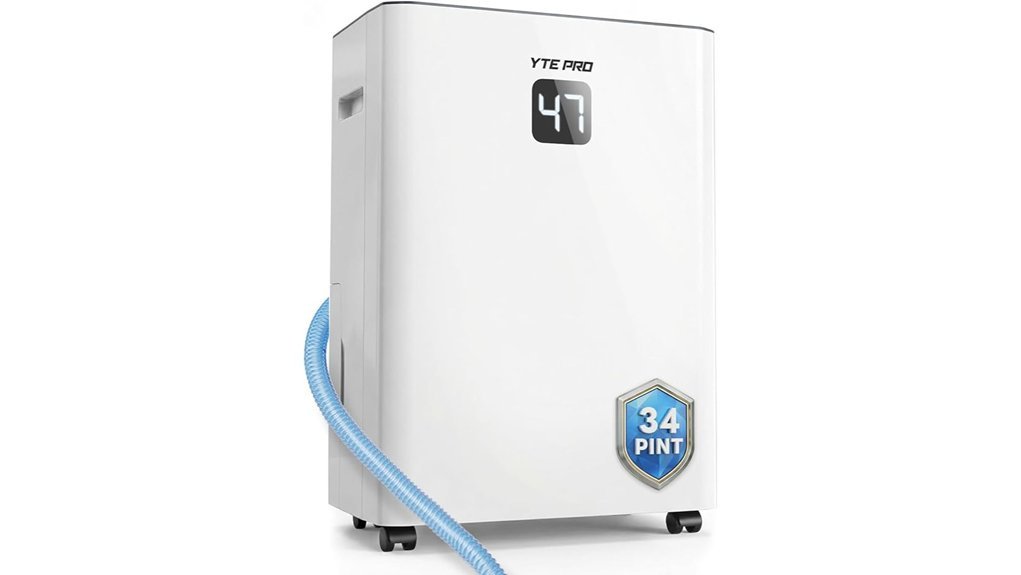
34-Pint capacity suits basements, bedrooms, and bathrooms up to 2,500 sq. ft. You’ll get reliable humidity control from its high-efficiency compressor and built-in sensor, while the front LED display shows live readings. At 40dB, it runs quietly enough for sleep, and you can set a 24-hour timer with three humidity modes. The 0.53-gallon tank and 6.56-foot drain hose let you choose manual or automatic drainage. When the tank fills, it shuts off and alerts you. You can move it easily with the hidden handle, 360° wheels, and switch among two fan speeds.
This 34-pint model is the better choice if a 21- or 22-pint unit feels too small for your basement. It gives you more drying capacity while still keeping the design manageable for home use. The timer, live humidity display, hose drainage, wheels, and quiet rating make it easier to run in a finished basement, bedroom, bathroom, or mixed-use home space.
Why You’ll Like It: It offers a step up in capacity without moving into bulky commercial equipment. That makes it a practical middle ground for damp rooms that need more help than a compact model can provide.
Best For: Homeowners who need a quiet, easy-to-move dehumidifier for bedrooms, bathrooms, or basements up to 2,500 sq. ft.
Who Should Skip It: Skip it if you need a commercial-grade dehumidifier for flood cleanup, severe water intrusion, or a very large basement.
Pros:
- Covers large spaces up to 2,500 sq. ft. with reliable 34-pint dehumidification.
- Quiet 40dB operation with a 24-hour timer and three humidity modes for flexible use.
- Offers both manual and automatic drainage, plus a full-tank alert and shut-off for convenience.
Cons:
- The 0.53-gallon tank may require frequent emptying if not using the drain hose.
- Only two fan speeds, which may feel limited for some users.
- Best suited for moderate moisture control rather than extremely damp environments.
Buying Tip: Choose this one when your basement needs more drying power than a compact 21-pint model but you still want a unit that is easy to move and drain.
How to Choose the Right Basement Dehumidifier Size
Start with your basement size, then think about how damp the room feels. A small, mildly humid basement can often work with a 21- or 22-pint model. A larger basement, a laundry area, or a space with a musty smell may need a higher-capacity unit. If the room feels wet even after normal ventilation, choose more capacity instead of buying the smallest option.
You should also check where the water will go. If you have a floor drain, utility sink, or sump area nearby, a drain hose can make daily use much easier. If you do not have a good drain location, choose a model with auto shutoff and a tank that is easy to remove.
For better results, avoid choosing only by square footage. A cool basement with poor airflow, laundry moisture, or a musty smell may need more capacity than a dry room of the same size. If you are choosing between two sizes, the stronger model is usually the safer pick for damp basements.
Best Choice by Buyer Type
- Choose Aiusevo AS280 if you want compact size, simple controls, and a good everyday basement option.
- Choose hOmeLabs Wi-Fi if you want large-space coverage and remote control from your phone.
- Choose Glowells 21 Pint if low noise matters in a finished basement, office, or bedroom.
- Choose Midea 22 Pint if you want a smart, energy-conscious unit with a reusable filter.
- Choose the 34-Pint model if your room needs more drying power than a 21- or 22-pint option.
Factors to Consider When Choosing a Dehumidifier for Basement Vremi
When you choose a Vremi-style basement dehumidifier, make sure it matches your basement size and handles the right moisture removal capacity. You’ll also want to think about drainage and maintenance, plus how much noise it makes during daily use. Smart controls and useful modes can make it easier to manage humidity without extra hassle.
Basement Size Coverage
Choosing the right basement dehumidifier starts with matching its coverage area to your space, since models can handle anything from about 1,500 sq. ft. to more than 7,000 sq. ft. You should measure your basement first, then choose a unit rated for at least that size, or slightly larger if your space has thick walls, multiple rooms, or poor airflow. A properly sized dehumidifier helps keep humidity under control without overworking the machine. If your basement is small, you don’t need an oversized model. For larger finished basements, pick one built for broader coverage so it can handle the full area evenly. This simple match gives you better comfort, more reliable performance, and fewer moisture problems over time.
Moisture Removal Capacity
Once you’ve matched a dehumidifier to your basement’s size, the next thing to look at is moisture removal capacity, measured in pints per day. This tells you how much water the unit can pull from the air in 24 hours, and it directly affects how well you control dampness. If your basement is small or only mildly humid, around 21 pints may be enough. For larger spaces or very wet conditions, choose a 50-pint model. For basements up to 1,500 square feet, 22 to 34 pints per day usually works well. Keep in mind that ratings come from test conditions, like 95°F and 90% RH, so real-world results can change. Check humidity often and aim for 30% to 50%.
Drainage And Maintenance
Drainage can make basement dehumidifier maintenance much easier, especially if you want to avoid emptying the tank all the time. You can choose a model with a built-in tank and automatic shutoff, so it stops before overflowing. If you’d rather skip manual emptying, look for continuous drainage with a hose that sends water straight to a drain. Make sure you angle the hose downward to keep water flowing and prevent backflow. You should also check for full-tank and maintenance alerts, since they help you stay ahead of problems. Regular upkeep matters too: clean or replace filters as recommended to keep performance strong and extend the unit’s life. With the right drainage setup, you’ll spend less time managing water and more time keeping your basement dry.
Noise And Convenience
When you’re choosing a basement dehumidifier, noise and convenience can matter just as much as drying power. You’ll appreciate a model that runs as quietly as 36 dB, especially if your basement doubles as a family room, office, or bedroom. Look for automatic shut-off, so the unit stops when the tank fills and you don’t have to keep checking it. If you move it often, 360° wheels and an ergonomic handle make transport easier. A digital display also helps you track humidity at a glance and adjust timer settings quickly. For even less upkeep, choose a dehumidifier with a drain hose for continuous drainage. Those features save you time, cut hassle, and make everyday use much smoother.
Smart Controls And Modes
Smart controls make it easier to keep your basement in the ideal 30% to 50% humidity range without constant adjustments. You can let the dehumidifier adjust itself, so you won’t have to keep checking levels. Choose models with modes like DEHU for everyday moisture removal, DRY for faster clothes drying, and CONTINUOUS for damp basements that need nonstop operation. If you want extra convenience, Wi-Fi lets you change settings from your phone, even when you’re away. A digital display helps you monitor humidity in real time and set timers to save energy. Automatic shut-off stops the unit when the tank fills, and auto-restart gets it running again after outages. These features help you manage moisture with less effort.
Safety and Use Note
A dehumidifier can help control damp air, but it should not be used as a fix for leaks, flooding, foundation cracks, or active water intrusion. If you see standing water, wet drywall, electrical hazards, or mold growth, address the source of moisture first. Keep the unit on a flat surface, leave space around the vents, and follow the product manual for filter cleaning, hose setup, and safe operation.
Pro Tips for Better Basement Results
- Keep doors and windows closed while the dehumidifier runs so it is not pulling in new humid air all day.
- Place the unit away from walls so air can move freely through the intake and exhaust areas.
- Use continuous drainage if the basement stays damp for long periods or if you do not want to empty the tank often.
- Clean the filter regularly because dust buildup can reduce airflow and make the unit work harder.
- Check humidity with a separate hygrometer if your basement has a musty smell or feels damp even when the display looks normal.
Frequently Asked Questions
How Often Should I Clean a Vremi Dehumidifier Filter?
You should clean your Vremi dehumidifier filter every 2 to 4 weeks, depending on dust and use. Check it weekly, and clean it sooner if airflow drops or the filter looks dirty. Always follow the exact cleaning instructions in your model’s manual.
Can a Vremi Dehumidifier Run Continuously in Winter?
Yes, you can run it continuously in winter, but you should monitor humidity and room temperature; cold air can reduce efficiency and cause freezing. If temperatures drop too low, you’ll need intermittent operation instead. Auto defrost can help, but it does not replace proper temperature limits.
Does Vremi Work Well in Unfinished Basements?
Yes, you’ll likely get decent results in an unfinished basement if it isn’t extremely cold. You should place it centrally, keep doors closed, and empty or drain it regularly for steady moisture control. If the basement has leaks or standing water, fix the water source before relying on a dehumidifier.
How Noisy Is a Vremi Dehumidifier at Night?
You’ll usually hear a soft hum at night, not a harsh roar. In sleep settings, it’s generally manageable, but you may notice it in quiet rooms; placing it farther away can help reduce disruption. For bedrooms or offices, compare the listed dB rating before buying.
What Warranty Does Vremi Offer on Basement Models?
You’ll typically get a 1-year limited warranty on Vremi basement dehumidifiers, but you should verify the exact model’s warranty card or listing, since coverage can vary by retailer, region, and purchase date. Save your receipt and check whether registration is required.
What Humidity Should I Set for a Basement?
For most basements, a range around 30% to 50% works well. If the basement feels dry, raise the setting slightly. If you notice a musty smell, damp walls, or condensation, lower the target humidity and let the unit run longer.
Is a Drain Hose Worth It for a Basement Dehumidifier?
Yes, a drain hose is worth it if your basement stays humid often. It lets the dehumidifier drain water without constant tank emptying. Make sure the hose slopes downward and leads to a safe drain point. If the hose is kinked or angled upward, water may not drain correctly.
Conclusion
Choosing the right dehumidifier for your basement is like picking the right umbrella before a storm because it helps stop bigger moisture problems before they spread. If you want a dry, comfortable space, focus on capacity, drainage, energy efficiency, noise level, and ease of use. Choose the Aiusevo AS280 or Glowells 21 Pint for smaller basements, the Midea 22 Pint for smart energy-saving control, the 34-Pint model for more drying power, and the hOmeLabs Wi-Fi model for larger basement coverage. Pick the model that fits your room size and moisture level, and you’ll protect your home, reduce mold risk, and breathe easier year-round.
Final Recommendation
If you are not sure which one to choose, start with your room size and moisture level. For a smaller damp room, the Aiusevo AS280 and Glowells 21 Pint are easier to manage. For smart control and energy awareness, the Midea 22 Pint is the better fit. For extra drying power, move up to the 34-Pint model. For a large basement or connected area, the hOmeLabs Wi-Fi model is the strongest choice in this list.