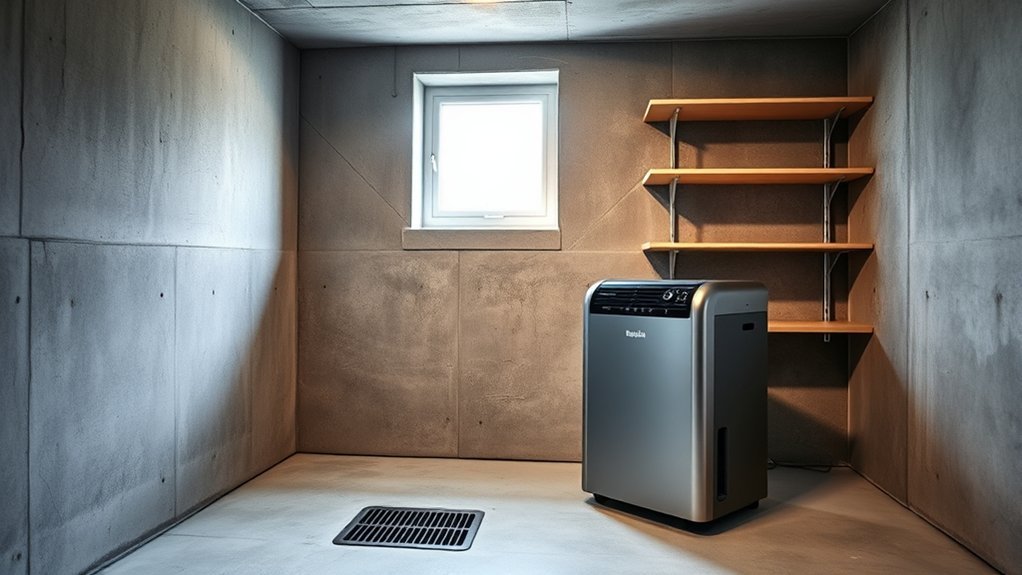
If you are comparing the best electric basement dehumidifiers for 2026, focus first on moisture-removal capacity, drainage setup, operating temperature, and energy efficiency—not just the advertised square-foot number. This updated guide prioritizes compressor dehumidifiers that are better suited to sustained basement humidity, from medium-room models to high-capacity units with built-in pumps.
Affiliate disclosure: This article contains Amazon affiliate links. If you buy through a link, we may earn a commission at no extra cost to you.
Quick Answer
Best overall: The AEOCKY RHEA model is the strongest all-around choice for a large basement when you have a floor drain or another lower gravity-drain point. Best with a pump: The AEOCKY LEO pump model is better when water must travel upward to a sink or window. Best for a medium basement: The Waykar 34-pint model offers a more practical size and tank capacity for everyday moisture control. Best compact compressor model: The AEOCKY ARION-001 fits tighter spaces while still offering continuous drainage.
Key Takeaways
- Choose by pints per day, drainage type, temperature range, and actual dampness; square-foot coverage is only a rough marketing guide.
- A built-in pump is valuable when the drain is higher than the dehumidifier. Gravity hoses must run continuously downhill.
- Capacity numbers may use different test conditions. Compare standard or ENERGY STAR ratings when available instead of treating every “maximum” pint claim as directly equal.
- For mold prevention, moisture control also requires fixing leaks, improving drainage, and drying wet materials quickly; a dehumidifier cannot repair a water-intrusion problem.
How We Selected These Basement Dehumidifiers
We checked whether each ASIN was actually a basement-suitable dehumidifier, whether the listed brand and model matched the product, and whether key claims such as capacity, tank size, drainage, controls, and ENERGY STAR status could be supported. We favored compressor models with a humidistat, auto-defrost, auto-restart, washable filters, and continuous drainage. We did not rank products by temporary price, review count, or unverified seller claims.
Quick Comparison
| Product | Listed Coverage | Moisture-Removal Claim* | Drainage | Best For | Amazon |
|---|---|---|---|---|---|
| avylo ADC018 | Up to 4,500 sq. ft. | Up to 90 pints/day | Tank, gravity hose, or pump | Large basement; large tank | Check Price |
| Waykar YDZ-80 | Up to 5,000 sq. ft. | Up to 80 pints/day | Tank or gravity hose | Large basement without pump | Check Price |
| Glowells PD20A26 | Up to 1,500 sq. ft. | Up to 21 pints/day | Tank or gravity hose | Medium or mildly damp basement | Check Price |
| Tehanld 2026 Promax001 | Up to 5,000 sq. ft. | Up to 50 pints/day | Tank or gravity hose | Large-room features on a budget | Check Price |
| Aiusevo AS280 | Up to 1,500 sq. ft. | Up to 21 pints/day | 2L tank or gravity hose | Medium basement or laundry area | Check Price |
| BANABIE 32-Pint | Up to 2,500 sq. ft. | Up to 32 pints/day | 2.5L tank or gravity hose | Quiet medium-size setup | Check Price |
| Vellgoo DryTank | Large-room listing | Check current variant | Tank or gravity hose | Energy-conscious buyers | Check Price |
| AEOCKY RHEA | Up to 4,500 sq. ft. | 80-pint max; lower standardized rating | Tank or gravity hose | Best overall with floor drain | Check Price |
| AEOCKY LEO with Pump | Up to 4,500 sq. ft. | 80-pint max; lower standardized rating | Tank, gravity hose, or pump | Drain must go upward | Check Price |
| AEOCKY ARION-001 | Up to 3,500 sq. ft. | Up to 50 pints/day | 0.5-gal tank or gravity hose | Compact compressor option | Check Price |
| Waykar PD160B | Up to 2,000 sq. ft. | Up to 34 pints/day | 0.66-gal tank or gravity hose | Medium basement | Check Price |
| KNKA PD22SC-12 | Up to 2,500 sq. ft. | Up to 34 pints/day | 3L tank or gravity hose | Laundry and basement use | Check Price |
| PLUSCENT PD10 | Up to 2,500 sq. ft. | Up to 32 pints/day | 2L tank or gravity hose | Simple daily moisture control | Check Price |
*Maximum capacity claims often use warm, very humid laboratory conditions. Real-world output can be lower, especially in a cool basement.
avylo ADC018 Basement Dehumidifier with Pump
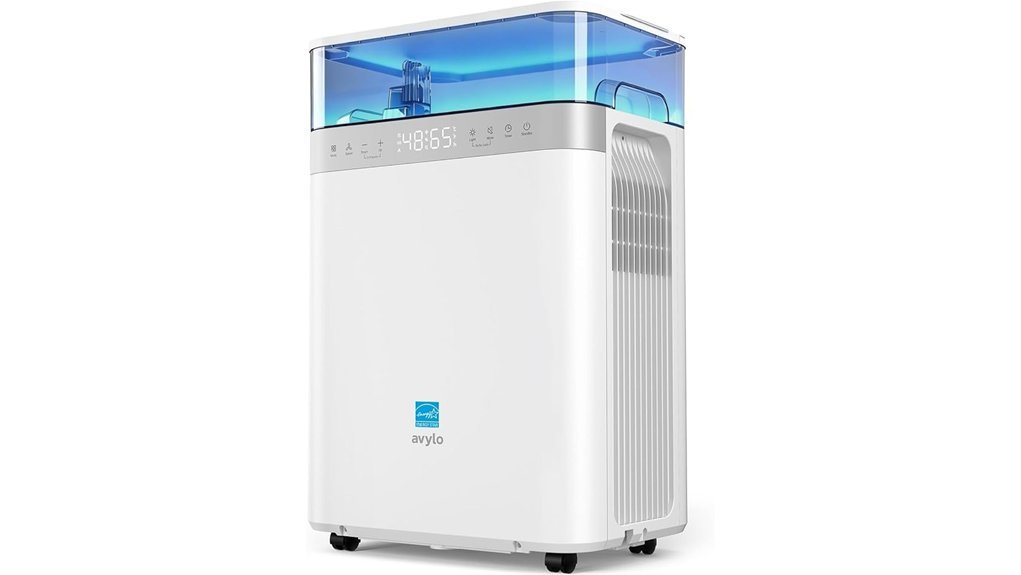
Best Large-Tank Pump Model
The avylo ADC018 is built for a large, persistently damp basement where manual emptying would be inconvenient. Its listing advertises up to 90 pints per day under high-humidity conditions and coverage up to 4,500 square feet. The standout feature is its drainage flexibility: you can use the large 2.11-gallon tank, a gravity drain, or the built-in pump with the included 15-foot hose. The pump makes it practical when the only drain point is above floor level.
Best For: Large basements, workshops, or storage areas that need unattended drainage and benefit from a larger tank.
Who Should Avoid It: Choose a simpler gravity-drain model if you do not need a pump; this unit is larger and heavier than medium-capacity options.
Pros:
- Built-in pump and long hose support upward drainage.
- Large top-mounted tank reduces emptying frequency.
- Smart humidistat, auto-defrost, timer, child lock, and auto shut-off.
Cons:
- The 90-pint figure is a maximum-condition claim, not guaranteed everyday output.
- The large cabinet needs more floor space.
- Pump models usually cost more than comparable gravity-drain units.
Waykar YDZ-80 Energy Star Dehumidifier
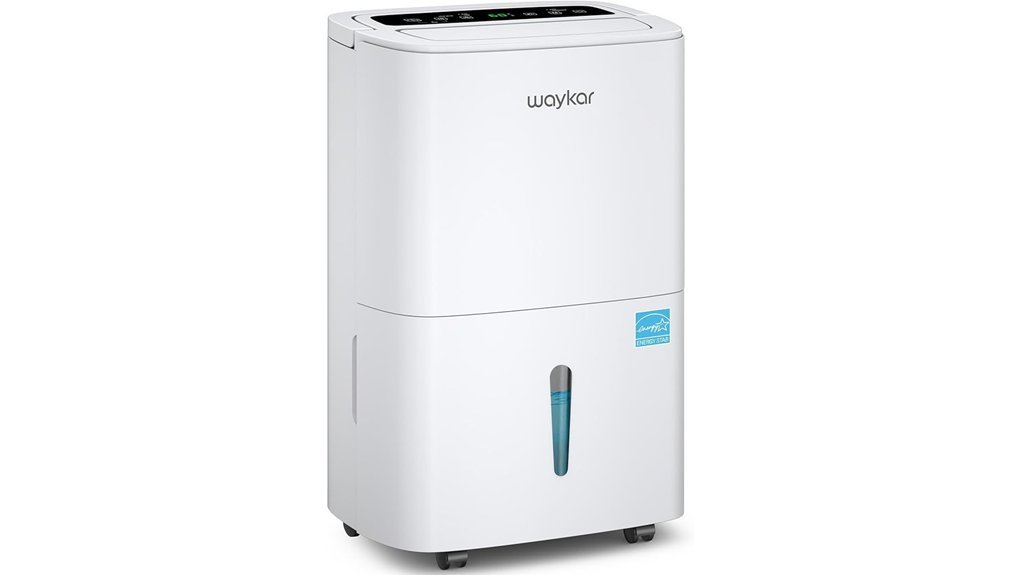
Best Large-Basement Gravity-Drain Pick
The Waykar YDZ-80 is a strong fit for a large basement with access to a floor drain. The listing states up to 80 pints per day at 95°F and 90% relative humidity and coverage up to 5,000 square feet. It includes adjustable humidity control, auto and continuous modes, auto-defrost, self-drying, a timer, wheels, and a drain hose. Because it does not rely on a built-in pump, the hose must slope downward to the drain.
Best For: Large basements where you want high advertised capacity, mobility, and gravity drainage.
Who Should Avoid It: Avoid it when water must be lifted to a higher sink or window; choose a pump model instead.
Pros:
- High advertised extraction for large, damp rooms.
- ENERGY STAR positioning, auto-defrost, and self-drying features.
- Clear controls, caster wheels, tank drainage, and hose drainage.
Cons:
- Maximum output depends on unusually warm and humid test conditions.
- The tank can fill quickly in a wet basement.
- At about 29 pounds, stairs may be awkward despite the wheels.
Glowells PD20A26 21-Pint Dehumidifier
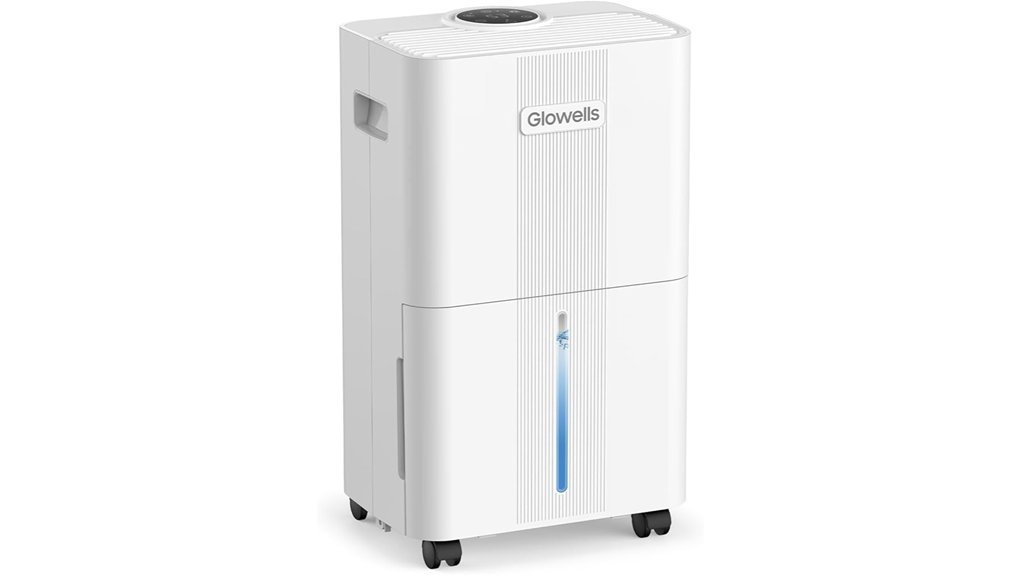
Best for Mild Basement Humidity
The Glowells PD20A26 is a medium-capacity compressor model for a smaller basement, laundry room, or other enclosed area. The listing identifies a 21-pint maximum capacity and coverage up to about 1,500 square feet. DEHU, DRY, and continuous modes let you switch between normal humidity control, laundry drying, and sustained operation. Continuous drainage is gravity-fed, so the hose outlet must remain lower than the unit.
Best For: Smaller basements with moderate humidity, especially when quiet operation and easy movement matter.
Who Should Avoid It: Do not choose it for standing water, severe seepage, or a very large open basement.
Pros:
- Compressor-based moisture removal in a manageable cabinet.
- Three operating modes and adjustable humidity controls.
- Manual tank and continuous-drain options.
Cons:
- Lower capacity than the large-basement picks.
- Gravity drainage requires a suitable lower drain.
- Noise and warranty details should be confirmed on the current listing.
Tehanld 2026 Promax001 50-Pint Dehumidifier
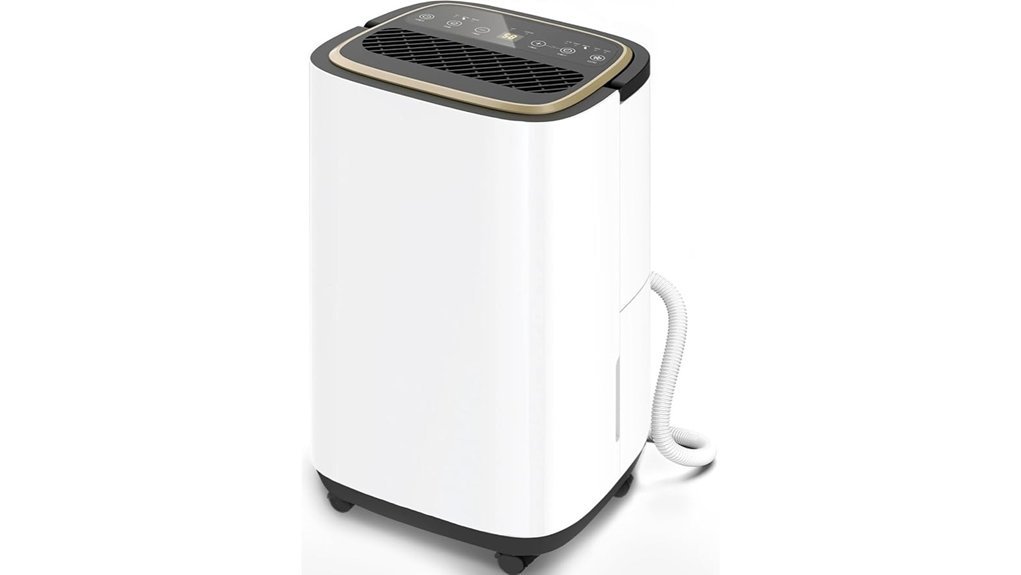
Best Feature-Rich Generic Option
This product is the Tehanld 2026 Promax001, not an unnamed dehumidifier. Its listing advertises up to 50 pints per day and coverage up to 5,000 square feet. It offers auto, manual, and drying modes, dual fan speeds, a 24-hour timer, child lock, a 1.6-gallon tank, and a 60-inch gravity-drain hose. It is relevant to basement use, but the newer brand and limited long-term documentation make it a more cautious choice than established models.
Best For: Buyers who want a large tank and a broad feature set and are comfortable checking current seller support and warranty details.
Who Should Avoid It: Skip it if long-term brand history, readily available manuals, or verified service coverage are top priorities.
Pros:
- Large 1.6-gallon tank for less frequent emptying.
- Multiple modes, fan speeds, timer, child lock, and display.
- Includes a hose for continuous gravity drainage.
Cons:
- Newer model with less established long-term support history.
- The 5,000-square-foot claim should not replace capacity-based sizing.
- No built-in pump for upward drainage.
Aiusevo AS280 21-Pint Dehumidifier
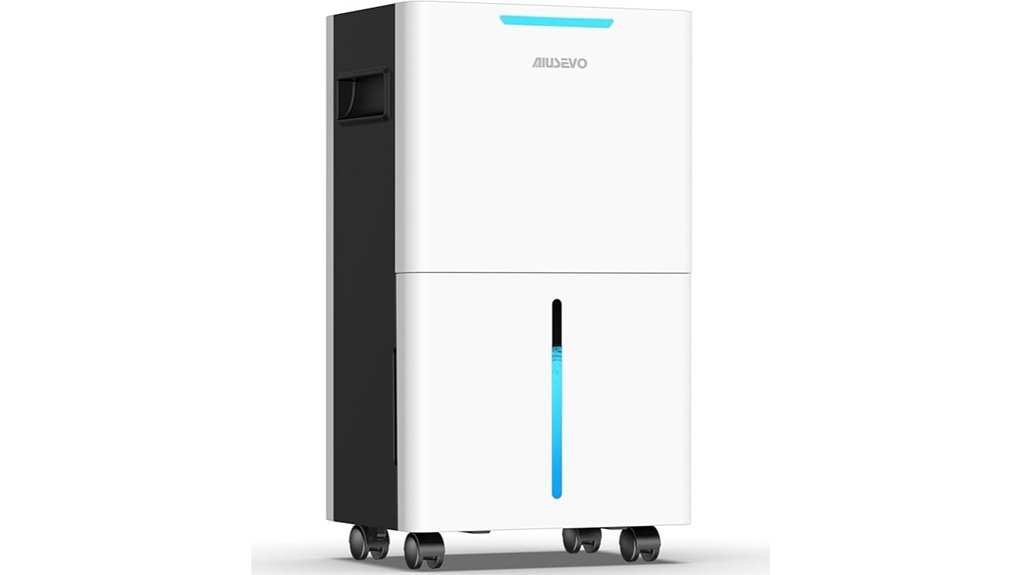
Best Simple Medium-Room Pick
The original section omitted the brand; this ASIN is the Aiusevo AS280. It is a 21-pint maximum-capacity compressor dehumidifier listed for spaces up to 1,500 square feet. You can choose DEHU mode for a target humidity, DRY mode for laundry, or continuous mode for persistent dampness. The 2-liter tank shuts the unit off when full, while the included hose supports continuous gravity drainage.
Best For: Medium-size basements, laundry rooms, bedrooms, or RV spaces with moderate moisture.
Who Should Avoid It: Choose a 34- to 50-pint class unit for a larger, colder, or consistently wet basement.
Pros:
- Straightforward controls with three useful modes.
- Auto shut-off, timer, child lock, wheels, and handles.
- Includes a drain hose for low-maintenance operation.
Cons:
- The 21-pint maximum is measured under warm, humid conditions.
- The 2-liter tank is small for continuous heavy moisture.
- The hose must run downhill to work correctly.
BANABIE 32-Pint Smart Dehumidifier
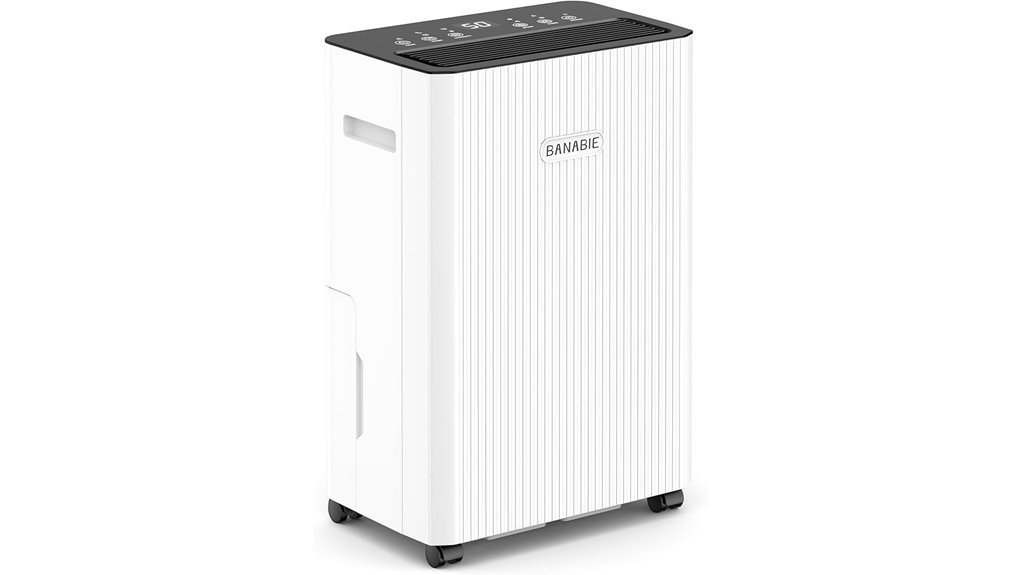
Best Quiet Medium-Basement Pick
This ASIN is sold under the BANABIE brand. It is listed for up to 2,500 square feet with a maximum extraction claim of 32 pints per day. The humidistat can cycle the compressor around the selected setting, and Auto, Continuous, and Custom modes make it easy to match the room. A 2.5-liter tank, auto shut-off, auto-defrost, timer, outage memory, child lock, caster wheels, and an included gravity hose cover the main basement-use needs.
Best For: Medium basements where a compact footprint, simple smart controls, and low advertised noise are priorities.
Who Should Avoid It: Avoid it for major water intrusion or when the drain point is above the machine.
Pros:
- Useful humidistat modes and power-outage memory.
- Compact design with wheels and continuous drainage.
- Listing advertises quiet operation around 32 dB.
Cons:
- Noise figures are seller claims and may vary by mode and room.
- Short drain hose can limit placement.
- The small tank will fill quickly in severe humidity.
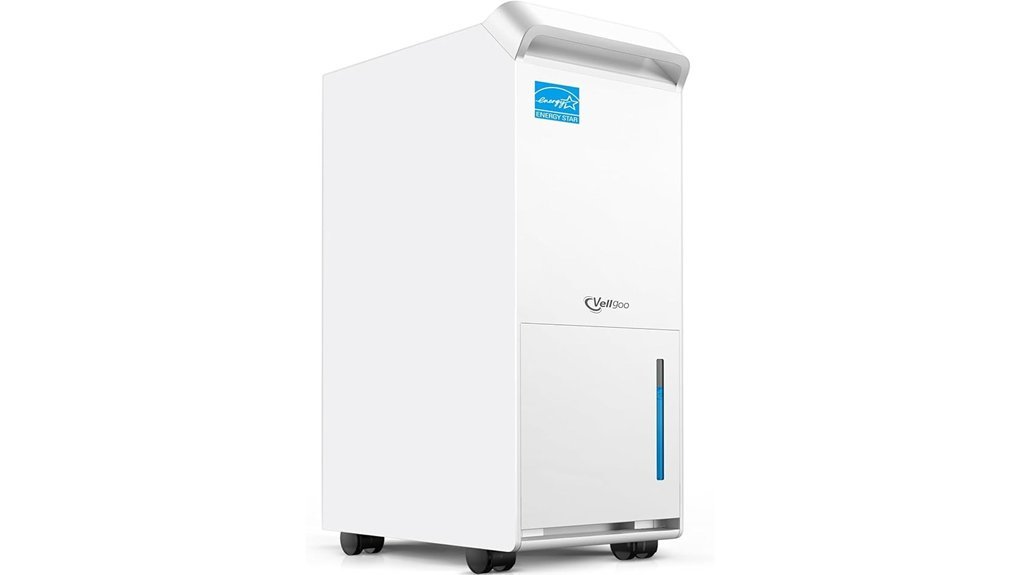
Vellgoo DryTank Energy Star Dehumidifier
Best Energy-Efficiency Focus
The Vellgoo DryTank is a large-room compressor dehumidifier with smart humidity control, timer functions, and continuous drainage. The current ASIN has appeared with different maximum-capacity and coverage labels across listing versions, so check the exact Amazon variant before ordering. ENERGY STAR currently lists Vellgoo TAURUS PRO portable models among its Most Efficient 2025 products, which supports the brand’s efficiency positioning, but the standardized rating may be lower than the large “maximum pint” number shown in marketplace copy.
Best For: Buyers who prioritize efficient operation and are willing to confirm the exact capacity variant on the product page.
Who Should Avoid It: Skip it if you need a built-in pump or if the listing does not clearly identify the model and standardized capacity.
Pros:
- ENERGY STAR Most Efficient positioning for compatible Vellgoo models.
- Smart humidistat and continuous gravity drainage.
- Timer, washable filter, caster wheels, and child lock.
Cons:
- Capacity labels vary by listing version and test condition.
- No built-in pump on this version.
- Manual tank emptying is still required without a drain.
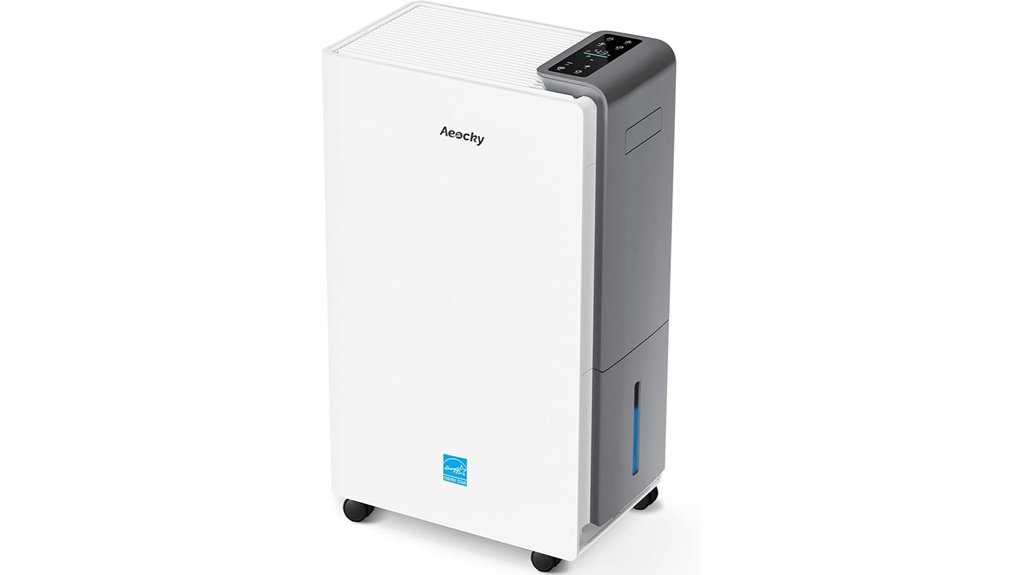
AEOCKY RHEA-001 Energy Star Dehumidifier
Best Overall
The AEOCKY RHEA-001 is the most balanced choice for a large basement with a lower drain point. Marketplace copy advertises up to 80 pints per day in extreme conditions, while the ENERGY STAR directory reports a standardized water-removal capacity of about 44.34 pints per day for the RHEA PRO platform. That difference is why test conditions matter. The unit offers humidity control, auto, constant-humidity, continuous, drying, and sleep modes, plus a tank, drain hose, and garden-hose adapter.
Best For: Large basements that need efficient automatic control and can use gravity drainage.
Who Should Avoid It: Choose the LEO pump version if the drain is higher than the unit.
Pros:
- ENERGY STAR Most Efficient 2025 platform with strong efficiency data.
- Multiple modes, humidistat control, auto-defrost, and outage restart.
- Drain hose and garden-hose adapter support flexible gravity runs.
Cons:
- The 80-pint number is a maximum-condition claim, not the standardized rating.
- No built-in pump.
- Large capacity and metal construction make it heavier than compact units.
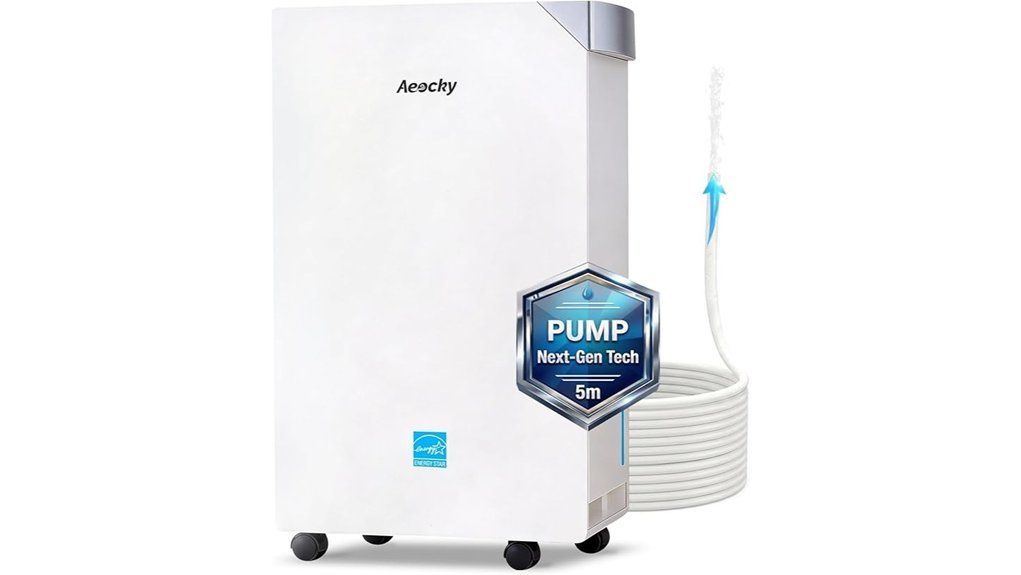
AEOCKY LEO Energy Star Dehumidifier with Pump
Best Built-In Pump
The AEOCKY LEO adds a built-in condensate pump to the large-basement feature set. The listing advertises up to 80 pints per day in extreme humidity, while ENERGY STAR reports about 44.94 pints per day under its standardized test for the LEO PRO platform. The pump can send water upward through the included long hose, which is the key advantage when you do not have a nearby floor drain. Smart humidity control, outage memory, and dry-run protection support unattended use.
Best For: Basements where condensate must be pumped to a sink, window, standpipe, or other higher drain point.
Who Should Avoid It: A gravity-drain model offers better value when a floor drain is already available.
Pros:
- Built-in pump solves difficult basement drainage layouts.
- ENERGY STAR Most Efficient 2025 platform.
- Smart humidistat, outage memory, and pump-protection features.
Cons:
- Higher cost and more moving parts than gravity-only models.
- The maximum 80-pint claim is not the standardized daily rating.
- The larger cabinet is less convenient for tight rooms.
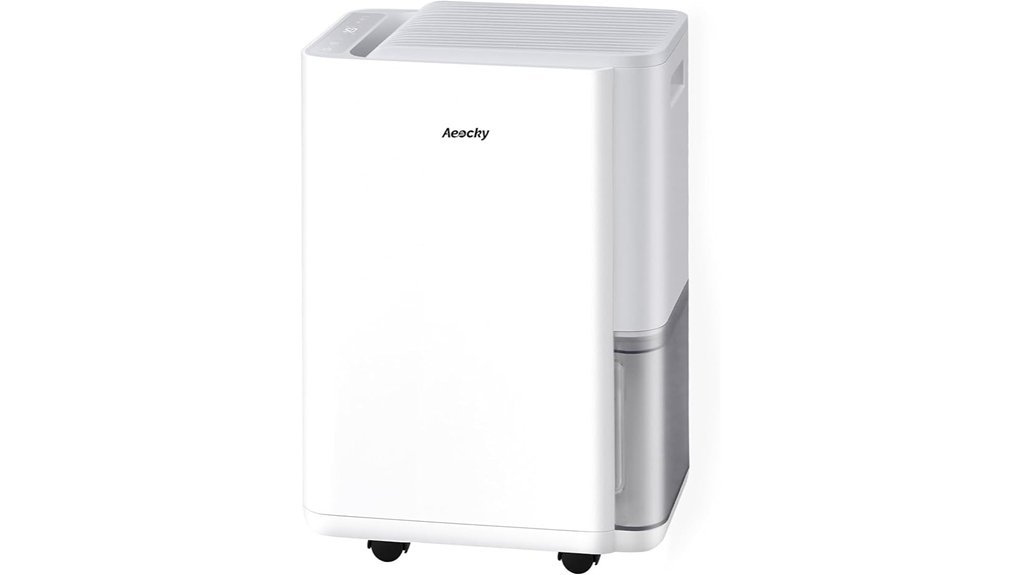
AEOCKY ARION-001 Compact Compressor Dehumidifier
Best Compact Compressor Pick
The AEOCKY ARION-001 is useful when you want compressor performance in a smaller cabinet. The listing states up to 50 pints per day at 95°F/95% RH and about 38 pints at 86°F/80% RH, illustrating how output falls under less extreme conditions. It includes adjustable humidity control, continuous, sleep, auto, and constant-humidity modes, plus a 0.5-gallon tank, drain hose, and garden-hose adapter.
Best For: Tight basements, crawlspace-access areas, RVs, bathrooms, or laundry rooms where floor space is limited.
Who Should Avoid It: Avoid it if you rely on the tank alone in a very wet basement; the small bucket will fill often.
Pros:
- Compact footprint with legitimate compressor-based moisture removal.
- Clearer capacity claims at two test conditions.
- Continuous gravity drainage and garden-hose compatibility.
Cons:
- Small 0.5-gallon tank.
- No built-in pump.
- Coverage claims should be treated as a rough guide, not a guarantee.
Waykar PD160B 34-Pint Energy Star Dehumidifier
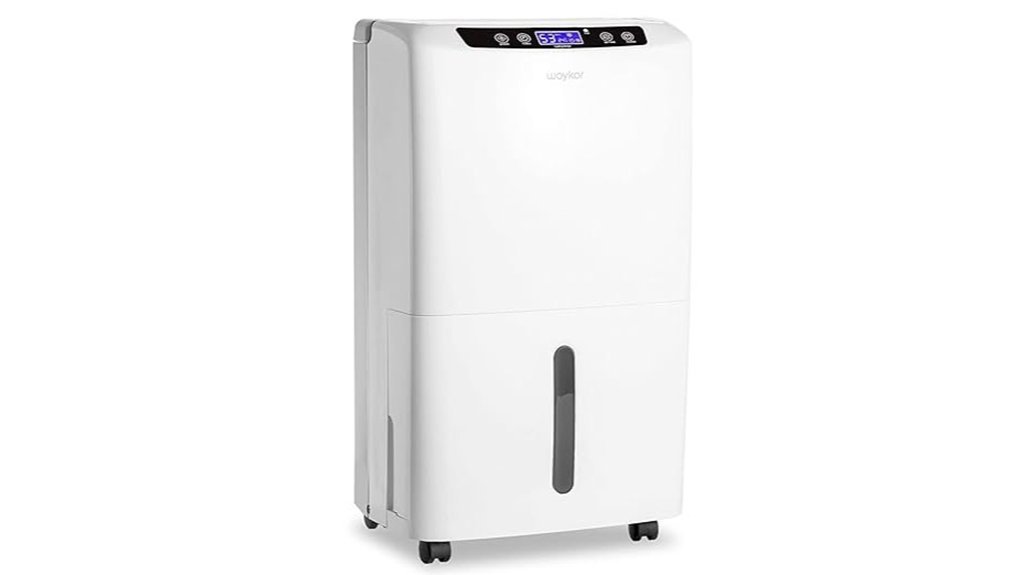
Best for a Medium Basement
The Waykar PD160B is a practical middle-ground option for basements that do not require the largest 50- to 80-pint class machines. It is listed for up to 2,000 square feet and up to 34 pints per day at 95°F/90% RH. A 0.66-gallon tank, included hose, adjustable humidity control, auto mode, continuous mode, auto-defrost, auto-restart, timer, washable filter, and wheels make it easy to use day to day.
Best For: Medium basements, garages, storage areas, and laundry rooms with a floor drain.
Who Should Avoid It: Choose a higher-capacity model for active seepage, a very large open basement, or rapid post-flood drying.
Pros:
- Balanced capacity, tank size, and portability.
- ENERGY STAR positioning and a washable filter.
- Auto restart and continuous drainage suit unattended basement use.
Cons:
- The 34-pint figure is a warm-condition maximum.
- 0.66-gallon tank may need daily emptying in high humidity.
- No pump for upward drainage.
KNKA PD22SC-12 34-Pint Dehumidifier
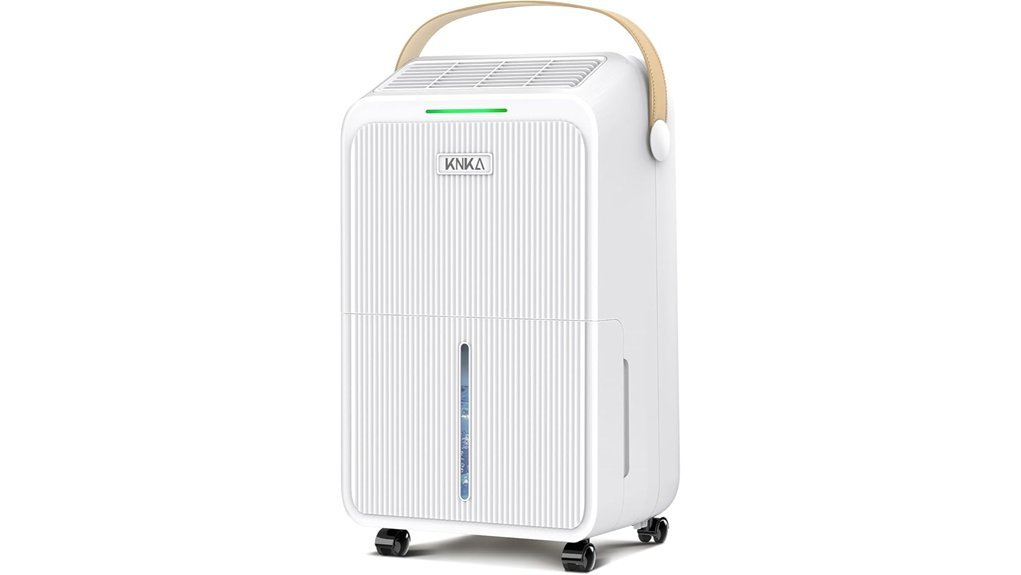
Best for Laundry and Basement Use
The KNKA PD22SC-12 combines normal dehumidifying, laundry-dry, and continuous modes in a unit listed for up to 2,500 square feet. Its maximum extraction claim is 34 pints per day. The 3-liter tank, included hose, auto shut-off, auto-defrost, sleep mode, child lock, washable filter, humidity display, and caster wheels make it a flexible choice for a basement that also serves as a laundry or living area.
Best For: Medium basements and laundry spaces where mode flexibility and a larger bucket are useful.
Who Should Avoid It: Avoid it when you need pump drainage or higher standardized extraction in a very wet space.
Pros:
- Three practical modes for humidity control and clothes drying.
- 3-liter tank plus continuous gravity drainage.
- Sleep mode, display, child lock, washable filter, and wheels.
Cons:
- The included hose is short for some layouts.
- Advertised 37 dB noise may differ in real rooms.
- Maximum output depends on warm, humid test conditions.
PLUSCENT PD10 32-Pint Dehumidifier
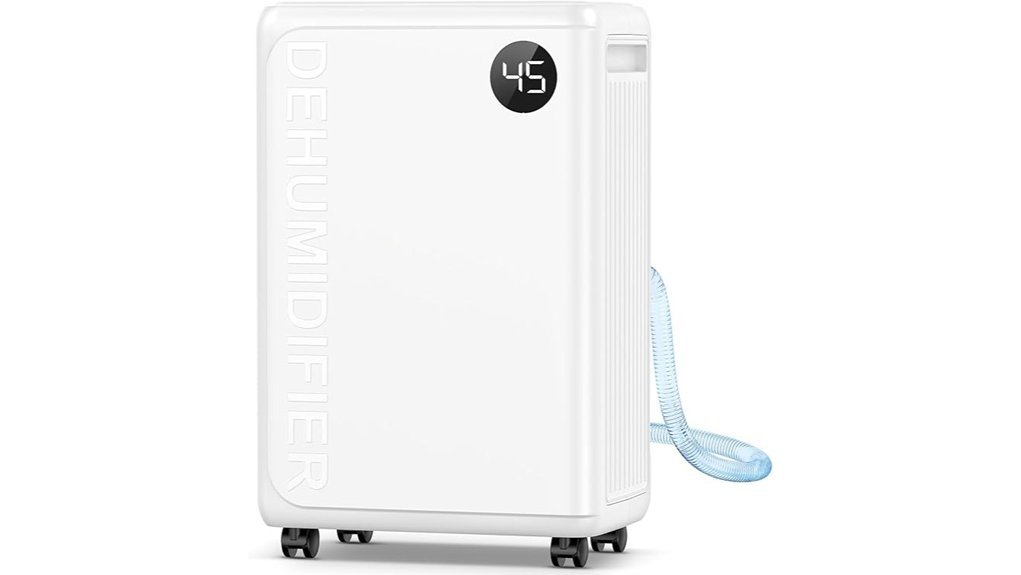
Best Simple Daily-Use Option
The PLUSCENT PD10 is a straightforward compressor model listed for up to 2,500 square feet and up to 32 pints per day. DEHU, CONT, and DRY modes cover normal control, persistent dampness, and laundry. The 24-hour timer, washable filter, auto-defrost, auto-restart, child lock, wheels, 2-liter tank, auto stop, and included hose provide the main features most basement owners need without a built-in pump.
Best For: Medium basements or open living areas where simple controls and continuous gravity drainage are enough.
Who Should Avoid It: Choose a larger-tank or pump model if you cannot run a downhill hose.
Pros:
- Three modes and an easy 24-hour timer.
- Washable filter, auto-defrost, auto-restart, and child lock.
- Tank and continuous-drain options.
Cons:
- Small 2-liter tank for high-moisture conditions.
- No built-in pump.
- Seller-stated 39–42 dB noise should be treated as approximate.
Factors to Consider When Choosing an Electric Basement Dehumidifier
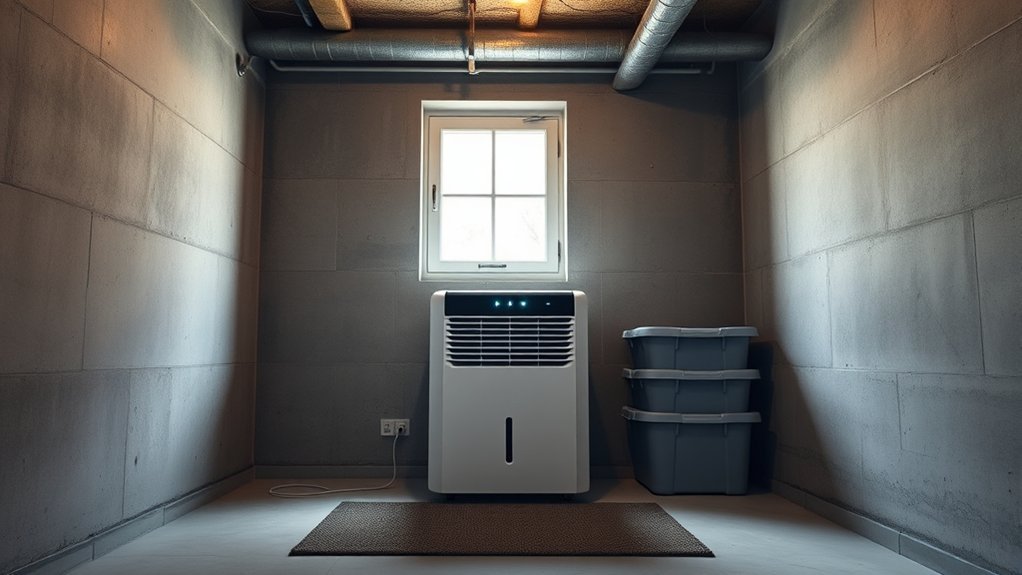
The right basement dehumidifier must match the room’s moisture load, temperature, drainage layout, and intended runtime. Do not buy only from a square-foot headline. Compare standardized capacity when available, verify whether the hose uses gravity or a pump, and make sure the unit can operate safely at your basement temperature.
Coverage Area
Manufacturer square-foot ratings are useful for rough screening, but they are not standardized across every seller. Ceiling height, air leakage, open doorways, foundation seepage, and actual relative humidity can change the result. For a large or very damp basement, prioritize moisture-removal capacity and drainage over a bold coverage claim.
Pints Per Day and Test Conditions
Pints per day describes how much water a unit can remove in 24 hours under specified test conditions. Some marketplace listings emphasize a maximum measured at very warm, extremely humid conditions, while ENERGY STAR and DOE ratings use standardized conditions. Two products with the same large “maximum” number may not have the same standardized performance. Look for the test condition, not just the headline number.
Drainage Options
A removable tank is simple but requires frequent emptying. A gravity hose is better for long-term basement use, but the hose must remain unkinked and slope downward to a floor drain, sump opening, or other lower destination. A built-in pump can move condensate upward, making it the right choice when the only outlet is a sink, window, or standpipe above the unit.
Energy Efficiency
For a dehumidifier that may run for many hours, compare ENERGY STAR certification and Integrated Energy Factor, measured in liters of water removed per kilowatt-hour. A higher IEF means more moisture removal for the electricity used. Correct sizing and a working humidistat also matter because an oversized or undersized unit can cycle inefficiently or run longer than necessary.
Low-Temperature Operation
Cool basement air can cause frost to form on a compressor dehumidifier’s coils. Auto-defrost helps, but it does not make every unit suitable for freezing conditions. Check the manufacturer’s minimum operating temperature and do not operate the product outside that range. For very cold areas, address heating, insulation, leaks, and drainage as part of the moisture plan.
Noise Levels
Noise matters when the basement is used as an office, bedroom, gym, or family room. Seller decibel claims may be measured in controlled settings and can vary with fan speed, compressor cycling, floor vibration, and distance. Sleep mode can reduce fan noise, but it may also slow moisture removal.
Humidistat and Controls
A built-in humidistat lets you choose a target humidity and allows the compressor to cycle automatically. Useful extras include auto-restart after a power outage, auto shut-off when the tank is full, a timer, child lock, washable filter reminder, and a clear humidity display. “Smart control” does not always mean Wi-Fi or app support, so confirm connectivity before buying if remote control matters.
Portability and Maintenance
Wheels and handles help on a flat basement floor, but they do not make a 30- to 40-pound appliance easy to carry on stairs. Check filter access, tank removal direction, hose connection position, cord length, and clearance around the air inlet and outlet. Clean the filter according to the manual and keep the drainage hose free of algae, debris, and kinks.
Before You Buy
- Measure the basement and note whether it is mildly damp, visibly wet, or affected by leaks.
- Confirm the minimum operating temperature.
- Decide whether you need a tank, gravity hose, or built-in pump.
- Compare standardized capacity when available.
- Check the current Amazon variant, included hose length, warranty, and return terms.
- Plan a safe grounded outlet; do not use an extension cord unless the manufacturer explicitly permits it.
Frequently Asked Questions
How Often Should I Clean a Basement Dehumidifier Filter?
Follow the manual first. In many basements, inspecting the filter every two to four weeks is reasonable, but dusty renovation areas, pet hair, or heavy use may require more frequent cleaning. Vacuum or rinse only as directed, and reinstall a washable filter after it is completely dry.
Can I Use a Dehumidifier in Freezing Basement Temperatures?
Only if the manufacturer specifically rates the model for that temperature. Auto-defrost helps in cool rooms, but ordinary portable compressor dehumidifiers are generally not intended to operate in freezing air. Running below the rated temperature can cause icing, poor performance, or damage.
How Much Electricity Does a Basement Dehumidifier Use?
Cost depends on wattage, runtime, local electricity rates, room temperature, and how often the compressor cycles. Use the product’s wattage or ENERGY STAR annual-consumption figure to estimate cost. A correctly sized ENERGY STAR model, a reasonable humidity setting, closed windows, and continuous drainage can reduce unnecessary runtime.
What Humidity Level Is Best for a Basement?
A practical target is usually 30% to 50% relative humidity, with many homeowners starting near 45% to 50%. Avoid pushing the room unnecessarily dry. Use a separate hygrometer to check the dehumidifier’s reading, and fix leaks or seepage rather than relying on the appliance alone.
How Long Should a Basement Dehumidifier Run Each Day?
There is no fixed daily number. During initial drying, it may run almost continuously. Once the basement reaches the target humidity, the humidistat should cycle the compressor as needed. If it never reaches the set point, check sizing, temperature, airflow, drainage, open windows, and hidden moisture sources.
Is a Dehumidifier Enough After a Basement Flood?
No. Remove standing water, stop the water source, address electrical hazards, discard or professionally clean damaged porous materials, and begin drying quickly. A dehumidifier can support the drying process, but significant flooding, sewage contamination, or widespread mold may require professional remediation.
Conclusion
Final Recommendation: Choose the AEOCKY RHEA-001 for a large basement with a floor drain, the AEOCKY LEO pump model when condensate must move upward, or the Waykar PD160B 34-pint model for a medium basement with moderate humidity. The best choice is the one that matches your standardized capacity needs and drainage layout—not simply the product with the largest square-foot claim.
Whichever model you choose, set a realistic humidity target, keep the filter and hose clean, and fix leaks or foundation drainage problems promptly. That combination protects the basement more effectively than running a dehumidifier alone.