Affiliate disclosure: This article contains Amazon affiliate links. If you buy through these links, we may earn a commission at no extra cost to you.
If you are shopping for a DC RV dehumidifier or another low-power moisture-control option for your camper in 2026, start with the power setup. Some compact models can operate from low-voltage DC, while others use an AC-powered adapter, standard plug-in power, or rechargeable silica beads. The right choice also depends on where the moisture collects: a direct-DC model makes sense for RV electrical setups, a drain-hose unit can reduce tank emptying while parked, a quiet Peltier dehumidifier works well near sleeping areas, and a cordless silica-bead unit is better for closets, cabinets, safes, and storage compartments.
Quick Verdict
Best overall for DC-focused RV use: The Litever Compact Quiet Dehumidifier with 57oz Tank is the strongest match because the manufacturer lists a 12VDC–15VDC operating range, 40W consumption, and RV compatibility with a suitable vehicle plug cable. For parked RVs where you want less tank emptying, the Litever Small Portable Dehumidifier with Drain Hose is the better continuous-drain choice. For enclosed cabinets, closets, safes, and storage compartments, the Afloia Rechargeable Mini Dehumidifier is the most practical cordless option.
Important Power Note: These products do not all connect to an RV battery in the same way. The Litever Dual Core is specifically listed for 12VDC–15VDC operation, while other models use an included adapter, conventional plug-in power, or a powered regeneration base. Always verify voltage, amperage, connector size, polarity, fuse requirements, and the manufacturer’s instructions before connecting any dehumidifier to an RV electrical system.
| Product | Best For | Power Setup | Key Advantage | Amazon |
|---|---|---|---|---|
| Litever Compact Quiet Dehumidifier with 57oz Tank | DC-focused RV use and quiet overnight moisture control | Designed for 12VDC–15VDC; included plug-in adapter also supplied | 40W dual-Peltier design and under-20dB Night mode claim | Check Current Amazon Availability |
| Litever Small Portable Dehumidifier with Drain Hose | Tiny RV spaces and continuous drainage while parked | Included transformer converts 120VAC to 9VDC | 4-foot drain hose and compact 2.5 lb design | Check Current Amazon Availability |
| Small Portable Mini Dehumidifier for Home and Office | Quiet RV corners, bathrooms, sleeping areas, and desks | 12V 3A adapter listed; direct vehicle connection not confirmed | 36W thermoelectric operation and 30dB noise claim | Check Current Amazon Availability |
| 1500ML Small Dehumidifier for Home and Bedroom | Small RV zones where a larger water tank is useful | 28W plug-in unit; direct 12V RV connection not verified | 1500ml transparent tank with automatic shutoff | Check Current Amazon Availability |
| Afloia Rechargeable Mini Dehumidifier with Heating Base | RV closets, cabinets, safes, lockers, and storage compartments | Cordless while absorbing; 100–120VAC heating base for regeneration | Reusable silica-bead design with no tank to spill | Check Current Amazon Availability |
How We Compared These RV Dehumidifiers
The ranking prioritizes RV power compatibility first, followed by moisture-removal capacity, power consumption, noise, tank or drainage convenience, physical size, and whether the product solves full-cabin or enclosed-storage humidity problems. Manufacturer maximums are useful for comparison, but real-world performance will vary with temperature, relative humidity, ventilation, and how much moisture enters your RV.
Litever Compact Quiet Dehumidifier with 57oz Tank
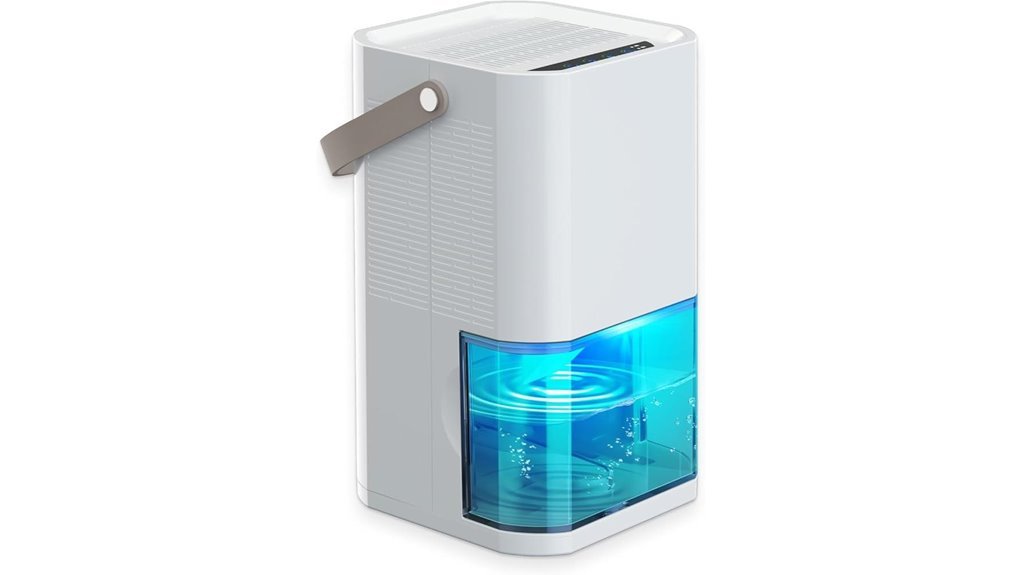
If your main goal is a DC RV dehumidifier, this Litever Dual Core model is the strongest match in the lineup. The manufacturer lists it for 12VDC–15VDC operation and says RV users can connect it through a suitable vehicle plug cable instead of the included plug-in transformer. It consumes 40W and uses two Peltier modules. Under the manufacturer’s warm, high-humidity test conditions, it is rated to remove up to 1000ml or 34 ounces of water in 24 hours and is marketed for spaces up to 300 square feet. Its 57-ounce tank, automatic shutoff, and two operating modes make it especially useful in campers and small RV interiors.
Why You’ll Like It: It combines the most RV-specific power compatibility in this group with useful comfort features. High mode provides stronger dehumidification, while Night mode is listed below 20dB for quieter sleeping conditions. The unit also has a delay-off timer, switchable 7-color light, and self-adhesive pads that can help keep it from shifting when installed as directed.
Best For: RV owners who want a compact low-watt dehumidifier with a manufacturer-listed 12VDC–15VDC operating range.
Who Should Buy This: Choose it if power compatibility is your first priority and you also want a larger tank, quiet mode, timer, and stronger moisture-removal rating than most tiny single-Peltier units.
Who Should Avoid This: Skip it if you need rapid structural drying after a leak, wet insulation, flooding, or severe whole-RV moisture problems. Also verify the correct vehicle plug cable, connector, polarity, current rating, and fuse protection before bypassing the supplied AC adapter.
Pros:
- Designed by the manufacturer to operate from 12VDC–15VDC
- 40W dual-Peltier design with up to 1000ml/day manufacturer-rated moisture removal under stated test conditions
- 57 oz tank with automatic shutoff
- Night mode is listed below 20dB for quieter overnight operation
- High mode, delay-off timer, optional night light, and securing pads add flexibility
Cons:
- Direct RV socket use requires a suitable separately purchased plug cable
- Maximum moisture-removal and coverage figures depend on warm, humid conditions
- Still a compact thermoelectric unit, not a substitute for high-capacity structural drying
Litever Small Portable Dehumidifier with Drain Hose
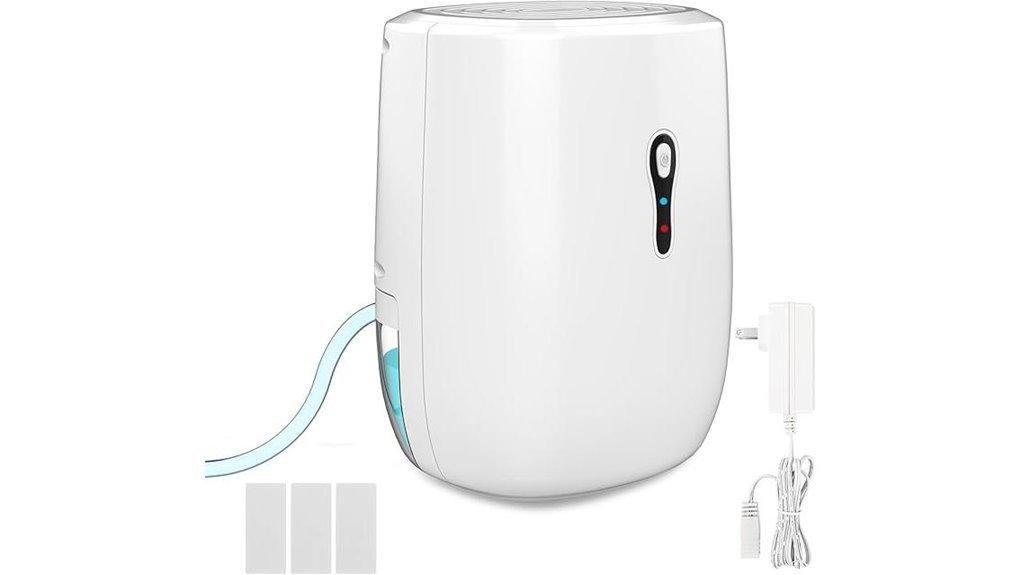
The Litever Small Portable Dehumidifier with Drain Hose is a practical choice for tight RV spaces when continuous drainage matters more than direct 12V compatibility. The included external transformer converts 120VAC to 9VDC for the dehumidifier body, so this is best treated as an AC-powered, low-voltage RV-friendly unit rather than a direct 12V battery model. It weighs about 2.5 pounds, uses 22W, has an 800ml tank, and is intended for spaces under roughly 108 square feet. Under the manufacturer’s 86°F/80% RH test conditions, it is rated to extract up to 360ml of moisture per day.
Why You’ll Like It: The main advantage is the included 4-foot silicone drain hose. When your RV is parked and you can route the hose safely, continuous drainage can reduce how often you need to remove and empty the tank.
Best For: Small bathrooms, compact campers, closets, pantries, and other localized RV zones where a drain hose is useful.
Who Should Buy This: Choose it if you usually camp with shore power or an appropriate AC supply and want a compact unit that can drain continuously.
Who Should Avoid This: Skip it if you specifically need a dehumidifier designed to plug directly into a 12V RV outlet, or if you need to dry a large open motorhome cabin.
Pros:
- Compact 2.5-pound design fits easily in tight spaces
- 4-foot drain hose supports continuous drainage
- Low 22W listed power consumption
- 800ml removable tank with automatic shutoff and anti-spill features
Cons:
- Included power system requires 120VAC input and converts it to 9VDC
- Limited to small localized spaces
- Up-to-360ml/day performance figure is based on warm, humid test conditions
Small Portable Mini Dehumidifier for Home and Office
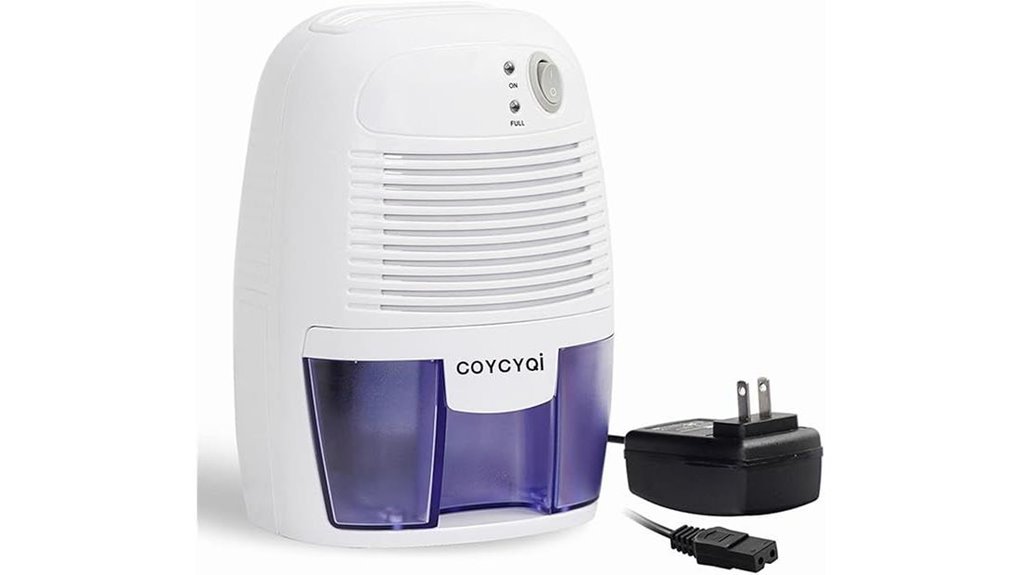
The COYCYQI ETD250 is a compact thermoelectric dehumidifier for mild humidity in an RV bathroom, sleeping area, office corner, closet, or other small space. Its listing specifies a 12V 3A adapter, 36W power consumption, a 17-ounce tank, and a manufacturer coverage claim of about 215 square feet. The Peltier design is listed at about 30dB, which makes it attractive when you want a small unit near a bed or workspace.
Why You’ll Like It: It offers a simple combination of low power draw, compact dimensions, quiet operation, and automatic full-tank shutoff. The manufacturer lists an optimal operating range around 41°F to 122°F and notes that moisture removal becomes less noticeable below 41°F.
Best For: Mild RV humidity in small areas where quiet operation matters.
Who Should Buy This: Choose it if you want a basic low-watt Peltier unit and are comfortable using its specified power adapter.
Who Should Avoid This: Skip it if you need confirmed direct connection to a vehicle 12V socket, continuous drainage, or strong performance in cold conditions.
Pros:
- 36W listed power consumption
- 30dB manufacturer noise claim suits sleeping and work areas
- Automatic shutoff and full-tank indicator reduce spill risk
- Compact 17 oz tank design is easy to place in a small RV zone
Cons:
- Direct vehicle-socket compatibility is not established by the supplied listing information
- Performance is reduced in colder conditions, especially below about 41°F
- Small tank can require frequent emptying in humid weather
1500ML Small Dehumidifier for Home and Bedroom
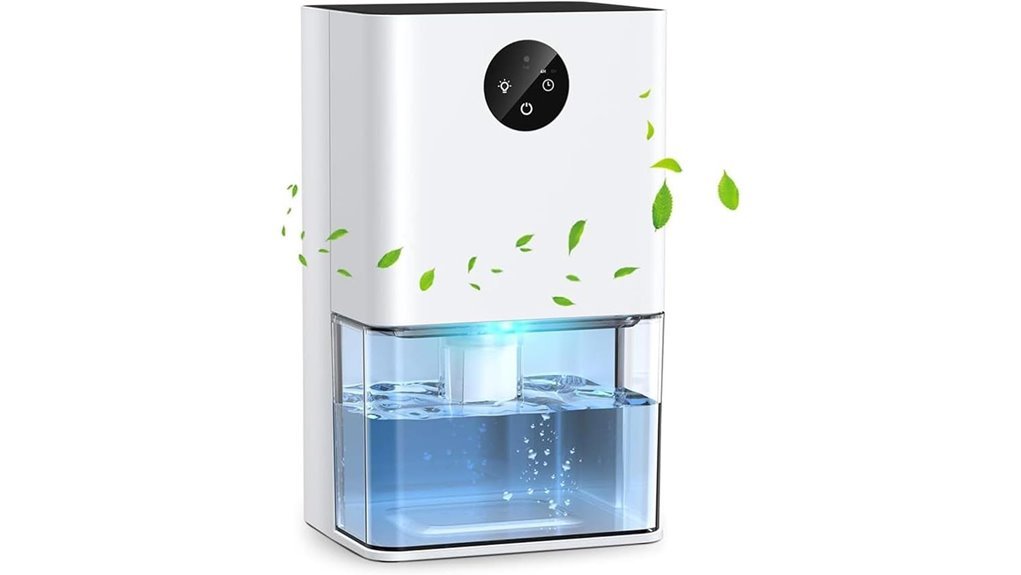
Deyagoo’s DY501 is worth considering when your priority is a larger reservoir rather than verified direct-DC compatibility. The current product data lists a 1500ml transparent tank, 28W power consumption, automatic operation, and up to about 300ml of moisture removal per day under the manufacturer’s warm, humid test conditions. The product is promoted for small spaces including bedrooms, bathrooms, closets, and RVs.
Why You’ll Like It: Its 1500ml tank gives you considerably more water-storage capacity than many miniature Peltier units, and the transparent reservoir makes the water level easy to check. The unit also includes automatic full-tank shutoff and a 30dB manufacturer noise claim.
Best For: Small RV zones where you want a larger tank and relatively low 28W power consumption.
Who Should Buy This: Choose it if you want a simple plug-in dehumidifier with a large reservoir, quiet-operation claim, and easy visual water-level checking.
Who Should Avoid This: Skip it if you specifically need confirmed 12V battery or vehicle-socket operation, built-in continuous drainage, or rapid moisture removal across a large motorhome.
Pros:
- 1500ml transparent tank reduces the need for very frequent emptying
- 28W listed power consumption
- Automatic shutoff helps prevent tank overflow
- 30dB manufacturer noise claim suits sleeping areas
Cons:
- Direct DC RV compatibility is not confirmed
- Up-to-300ml/day moisture removal is modest for severe humidity
- Published square-foot coverage information is inconsistent, so it is better treated as a small-zone unit
Afloia Rechargeable Mini Dehumidifier with Heating Base
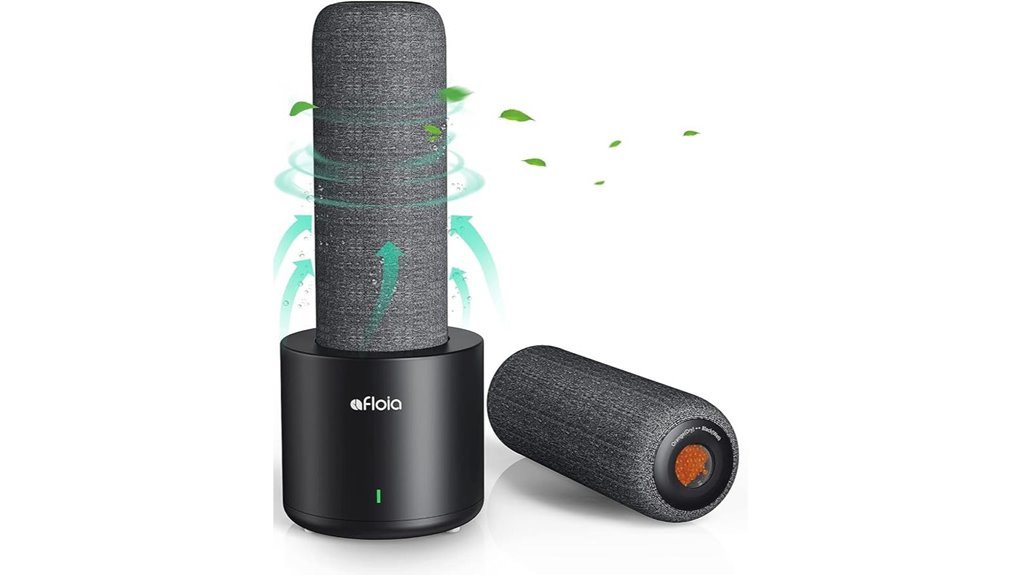
Afloia’s rechargeable mini dehumidifier is different from the electric Peltier models above. The silica-bead dehumidifier stick absorbs moisture without needing power while it is in use, which makes it well suited to enclosed RV closets, cabinets, safes, lockers, storage bins, cars, and boats. The manufacturer rates it for small spaces up to about 54 square feet and up to 4 ounces or 100ml of moisture absorption under stated test conditions.
Why You’ll Like It: There is no water tank to spill and no cord is required while the stick is absorbing moisture. When the silica beads change color, place the stick on the included PTC heating base for about two hours to regenerate it. The base uses 50W and requires a standard 100–120VAC supply during regeneration.
Best For: Tiny enclosed RV storage spaces where active electric dehumidification would be inconvenient.
Who Should Buy This: Choose it if you want reusable, silent, cordless moisture absorption for closets, cabinets, safes, or other small compartments.
Who Should Avoid This: Skip it if you need active dehumidification for an RV bedroom, bathroom, or full cabin. Its moisture capacity is much smaller than powered units.
Pros:
- No electricity or batteries needed while absorbing moisture
- No water tank, reducing spill concerns in storage compartments
- Reusable silica-bead design with a regeneration base
- Compact shape works well in cabinets, closets, safes, and other tight spaces
Cons:
- Not intended as a full-cabin RV dehumidifier
- Limited moisture capacity compared with powered Peltier units
- Heating base requires 100–120VAC and about two hours for regeneration
Factors to Consider When Choosing a DC RV Dehumidifier
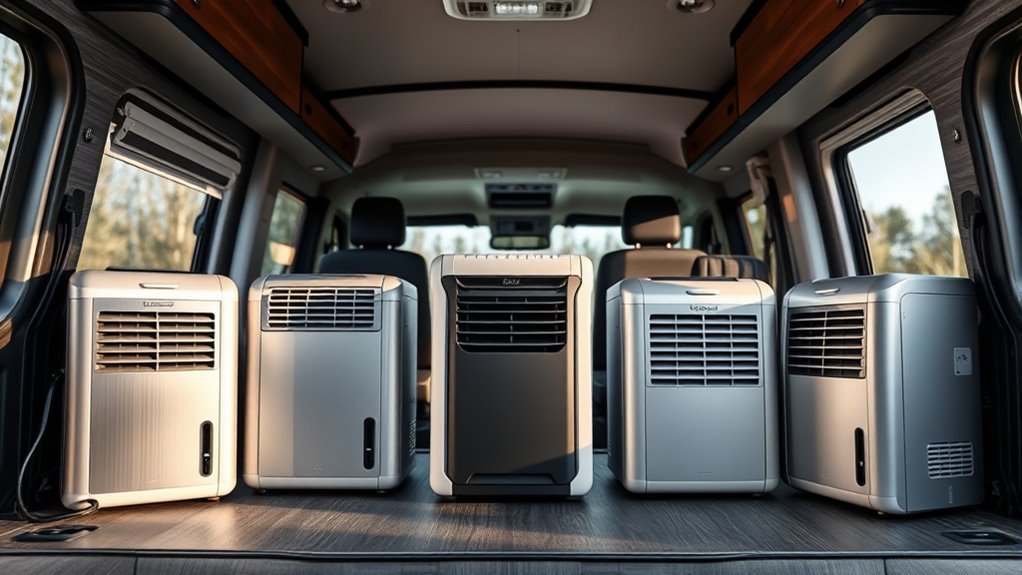
When choosing a DC RV dehumidifier or another low-watt RV moisture-control device, power compatibility should come first. After that, compare moisture-removal capacity, tank size, drainage options, noise, temperature limitations, physical size, and where you actually plan to use the unit. A small Peltier dehumidifier may work well for mild localized condensation, while a rechargeable silica unit is better for a closed storage compartment. Neither should be expected to correct an RV leak, wet insulation, or severe whole-cabin moisture problem.
Before You Buy: Check the product label and manual for input voltage, amperage, connector type, polarity, power-adapter requirements, wattage, tank capacity, drainage method, recommended operating temperature, and whether direct vehicle-socket use is permitted. Never assume that a product using a low-voltage adapter can automatically be connected to an RV battery.
Power Source Compatibility
Power compatibility is the most important difference between these picks. The Litever Dual Core is specifically listed to operate from 12VDC–15VDC, making it the closest match to shoppers looking for a true low-voltage RV dehumidifier. The manufacturer says RV users can use a suitable vehicle plug cable instead of the included transformer. The smaller Litever drain-hose unit is different: its included transformer accepts 120VAC and supplies 9VDC to the dehumidifier body. COYCYQI lists a 12V 3A adapter, but that does not by itself confirm that bypassing the adapter and connecting directly to a vehicle outlet is safe. The Deyagoo is best treated as a low-power plug-in model unless its manual confirms another setup, while the Afloia needs AC power only when regenerating its silica stick on the heating base.
Coverage Area and Moisture Removal
Square-foot ratings are useful as a rough comparison, but they should not be your only deciding factor. Manufacturer coverage claims can be measured under different temperature and humidity conditions, and an RV’s moisture load changes with cooking, showers, wet clothing, outside weather, insulation, and ventilation. Pay attention to the listed moisture-removal rate as well as the claimed floor area. A compact unit may handle mild humidity in one zone but still struggle with heavy window condensation throughout a motorhome.
Tank and Drainage
Tank size affects how often you need to empty a powered dehumidifier. The units here range from small reservoirs to a 1500ml tank, while the Litever drain-hose model offers continuous drainage. A hose can be particularly convenient during long parked stays, but gravity drainage must be routed carefully so water cannot back up, kink the hose, spill inside the RV, or damage the exterior. Automatic full-tank shutoff is useful for tank-based models because it helps prevent overflow when you forget to empty the reservoir.
Noise and Overnight Operation
Noise matters more in an RV than in a large house because your bed, desk, dinette, and dehumidifier may all be only a few feet apart. Thermoelectric Peltier models are generally designed for quieter small-space use. In this lineup, the Litever Dual Core offers separate High and Night modes, with the manufacturer listing Night mode below 20dB and High mode below 43dB. COYCYQI and Deyagoo each advertise approximately 30dB operation. Remember that manufacturer noise ratings may be measured under specific conditions, so actual perceived sound can vary with placement and vibration.
Safety and Portability
A portable RV dehumidifier should sit on a stable surface with unobstructed airflow and enough clearance around its intake and exhaust. Secure the unit before driving, and avoid operating a tank-style appliance while the RV is moving unless the manufacturer explicitly allows it. Check cords, adapters, connectors, and tanks regularly for damage. If you use direct DC power, use the correct connector, polarity, current capacity, and fuse protection specified for the appliance.
RV Moisture Level and Ventilation
A dehumidifier works best when you also reduce the sources of moisture inside your RV. Cooking, showering, drying clothes indoors, wet shoes, pets, and poor airflow can all raise humidity quickly. Use roof vents and bathroom fans when appropriate, ventilate during moisture-producing activities, and dry wet gear before putting it into storage. If you regularly see water running down windows, damp bedding, stains, soft wall materials, or persistent musty odors, inspect for leaks and trapped moisture rather than relying only on a small dehumidifier.
Pro Tips for Better RV Moisture Control
- Use a small hygrometer so you can see whether humidity is actually improving.
- Place the dehumidifier where air can move freely around both the intake and exhaust.
- Close nearby windows while actively dehumidifying unless you are intentionally ventilating moist indoor air.
- Empty and clean water tanks regularly according to the manufacturer’s instructions.
- Use bathroom and kitchen ventilation during showers and cooking to reduce the moisture load.
- Do not rely on a miniature dehumidifier to correct roof leaks, plumbing leaks, wet insulation, or standing water.
Safety Note
Always follow the manufacturer’s voltage and adapter requirements. Never substitute a vehicle-socket cable simply because two devices appear to use the same voltage; connector size, polarity, current rating, and fuse requirements also matter. Secure portable appliances before travel, keep powered units away from standing water, do not use damaged wiring or leaking tanks, and route continuous-drain hoses where they cannot kink or discharge water into a damaging location.
Frequently Asked Questions
Which Listed Model Is the Best Match for a 12V RV?
The Litever Compact Quiet Dehumidifier with 57oz Tank is the clearest direct-DC match in this group because the manufacturer specifies a 12VDC–15VDC operating range. The listing says RV users can put away the included transformer and use a suitable vehicle plug cable. Verify the required connector, polarity, amperage capacity, and fuse protection before making that connection.
Can the Litever Drain-Hose Model Run Directly From a 12V Battery?
Not with its standard included power setup. Its manufacturer states that the supplied transformer converts 120VAC to 9VDC for the dehumidifier body. Do not connect it directly to a 12V battery unless Litever specifically approves a compatible power solution for that purpose.
How Much Power Do These RV Dehumidifiers Use?
The listed power ratings vary considerably: the Litever drain-hose model is listed at 22W, COYCYQI at 36W, the Litever Dual Core at 40W, and Deyagoo at 28W. The Afloia silica-bead stick uses no electricity while absorbing moisture, but its regeneration base is rated at 50W while heating. Actual energy use depends on how long the powered unit runs.
Can I Use One While Boondocking?
Yes, but calculate the load against your battery capacity and the rest of your RV electrical system. A direct-DC-compatible model may avoid inverter losses, but even a 40W appliance can become a meaningful energy load when it runs for many hours. For tiny storage areas, the Afloia stick uses no electricity while absorbing moisture, although you still need AC power later to regenerate it.
Is a Drain Hose Worth It in an RV?
A drain hose is useful when you remain parked for long periods and do not want to empty a small reservoir repeatedly. It only works well when you have a safe gravity-drain route. Keep the hose free of kinks and make sure the discharge point cannot cause leaks, staining, water intrusion, or damage.
Do Small RV Dehumidifiers Work in Cold Weather?
Performance can decline as temperatures fall. For example, COYCYQI states that its ETD250 works best from about 41°F to 122°F and that dehumidification becomes less obvious below 41°F. Check the operating-temperature range for the exact model you own rather than assuming every compact dehumidifier can operate effectively during winter storage.
Can I Run a Dehumidifier While the RV Is Moving?
For tank-style electric models, the safer default is to run them when parked unless the manufacturer specifically permits operation while the vehicle is moving. Road vibration can shift the appliance, disturb a water tank, or strain cables. A cordless silica-bead absorber is easier to use in enclosed storage during travel because it has no water reservoir or powered cord while absorbing moisture.
Can a Mini Dehumidifier Stop Heavy RV Condensation?
It may help with mild or localized humidity, but heavy condensation throughout an RV can overwhelm a small thermoelectric unit. If windows stay wet, bedding feels damp, or musty odors persist, improve ventilation and inspect for leaks, wet insulation, plumbing problems, or other moisture sources. A higher-capacity dehumidifier may also be necessary.
Final Recommendation
For shoppers specifically looking for a DC RV dehumidifier, start with the Litever Compact Quiet Dehumidifier with 57oz Tank because its manufacturer explicitly lists a 12VDC–15VDC operating range and RV vehicle-plug use with a suitable cable. If continuous drainage is more important and you normally have AC power while parked, the Litever Small Portable Dehumidifier with Drain Hose is the more convenient choice. For quiet basic moisture control, the COYCYQI ETD250 is worth comparing. The Deyagoo DY501 is better when a larger tank is your priority, while the Afloia Rechargeable Mini Dehumidifier makes the most sense for closets, cabinets, safes, and other tiny RV storage compartments.
Conclusion
The best RV dehumidifier depends on more than tank size or advertised square footage. Start by matching the unit to your electrical system, especially if you want direct 12V operation. Then compare moisture-removal capacity, wattage, drainage, noise, operating temperature, and the size of the specific area you need to control. For full-cabin RV use, an active powered unit is the better choice; for enclosed storage compartments, a rechargeable silica absorber can be simpler. Whichever type you choose, good ventilation and fixing the source of serious moisture problems remain just as important as the dehumidifier itself.