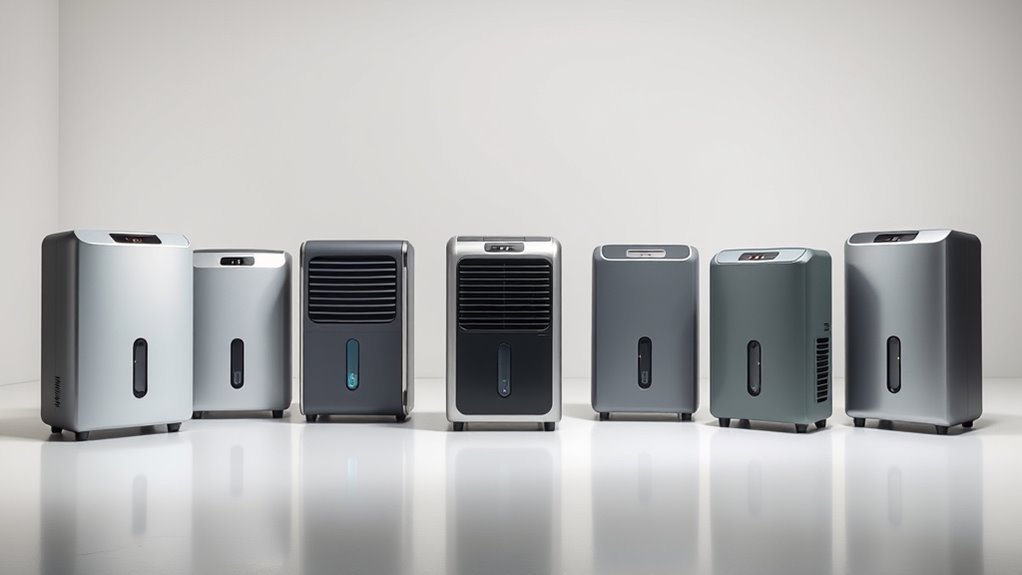
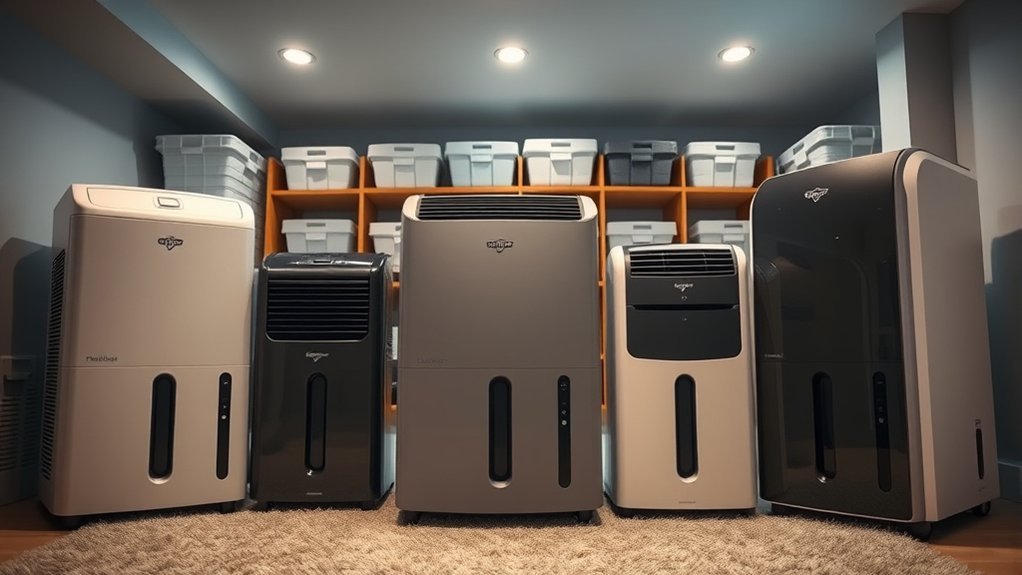
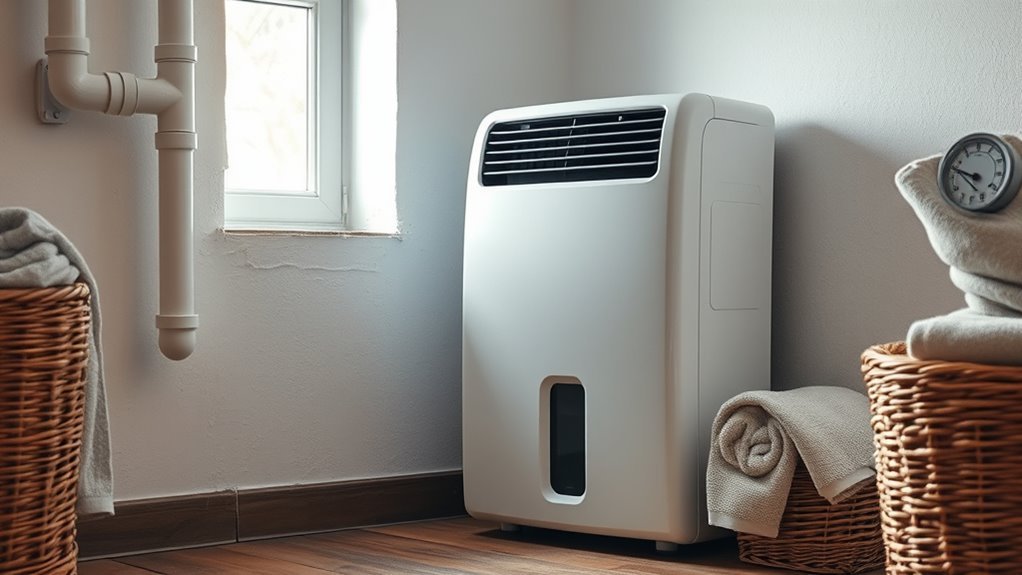
Choosing the best quiet dehumidifier requires more than finding the lowest advertised decibel number. A useful model must remove enough moisture for the room, provide a practical drainage setup, and control humidity without running unnecessarily. For most buyers, the KNKA offers the best overall feature balance, while the Waykar combines the lowest claimed noise rating with verified ENERGY STAR efficiency data. Choose Gasbye for a large, persistently damp basement or hOmeLabs when Wi-Fi monitoring is a priority.
- Best Overall Feature Balance: KNKA
- Quietest Claimed Rating + Verified Efficiency: Waykar
- Best for a Large Damp Basement: Gasbye
- Best Smart Controls: hOmeLabs
- Best Compact Verified-Efficiency Pick: Kesnos
Quick Comparison of the Best Quiet Dehumidifiers
| Model | Best Use | Claimed Noise | Capacity Context | Amazon |
|---|---|---|---|---|
|
KNKA 2500 Sq.Ft Dehumidifier with Drain Hose Best Overall Feature Balance |
Medium-size rooms needing multiple modes, low claimed noise, and continuous drainage | 37 dB claimed | Up to 34 pints/day at 95°F and 90% RH; no exact standardized capacity verified here | Check Availability |
|
Waykar 2000 Sq. Ft 34-Pint Dehumidifier Quietest Claimed + Verified Efficiency |
Noise-sensitive rooms with a moderate moisture load | 33 dB minimum claimed | 10.16 pints/day standardized; up to 34 pints/day at maximum conditions | Check Availability |
|
Gasbye Energy Star Dehumidifier for Large Rooms Best for Large Basements |
Large, persistently damp basements where extraction capacity matters most | About 44–45 dB claimed | 49.7 pints/day standardized; up to 115 pints/day at 86°F and 80% RH | Check Availability |
|
hOmeLabs Wi-Fi Dehumidifier for 3,500 Sq Ft Best Smart Controls |
Remote monitoring, app control, voice control, and a larger tank | Quiet-operation claim; no exact dB used | 24.48 pints/day standardized; up to 64 pints/day at maximum conditions | Check Availability |
|
Kesnos Energy Star Dehumidifier for Home & Basement Best Compact Verified-Efficiency Pick |
Moderately damp smaller rooms where verified efficiency matters | Approximately 35–36 dB claimed | 9.2 pints/day standardized; up to 30 pints/day at maximum conditions | Check Availability |
|
ZAFRO 1600 Sq.Ft Dehumidifier with Drain Hose Best Compact Compressor Pick |
Bedrooms, laundry areas, and small basements needing a compact compressor unit | 41 dB claimed | Up to 21 pints/day under manufacturer maximum conditions | Check Availability |
|
Trazico 21 Pint Quiet Dehumidifier for Home Alternative Quiet Pick |
Bedrooms, offices, and smaller damp rooms needing simple modes | 39 dB seller claim | Up to 21 pints/day at 95°F and 90% RH; no standardized capacity verified | Check Availability |
|
PLUSCENT 21 Pint Portable Dehumidifier for Home Best Simple Controls |
Buyers who want basic controls, wheels, a timer, and two drainage methods | Low-noise seller claim; no exact dB verified | Up to 21 pints/day under manufacturer maximum conditions | Check Availability |
How We Compared These Quiet Dehumidifiers
These products were compared by compressor-based moisture removal, standardized capacity where an exact ENERGY STAR model record could be matched, manufacturer maximum-condition capacity, claimed noise, drainage options, humidistat controls, tank size, mobility, operating modes, and documentation quality. Products with verified standardized capacity received more weight than products supported only by seller-listed maximums.
No hands-on testing, live price, current stock status, customer-review score, or unverified award was used to determine the recommendations. Noise claims were not treated as directly comparable laboratory results because manufacturers may test at different fan speeds, distances, and room conditions.
ENERGY STAR Product Finder.
Similar-looking model variants can have different standardized capacities, efficiency ratings, or certification records.
ZAFRO 1600 Sq.Ft Dehumidifier with Drain Hose
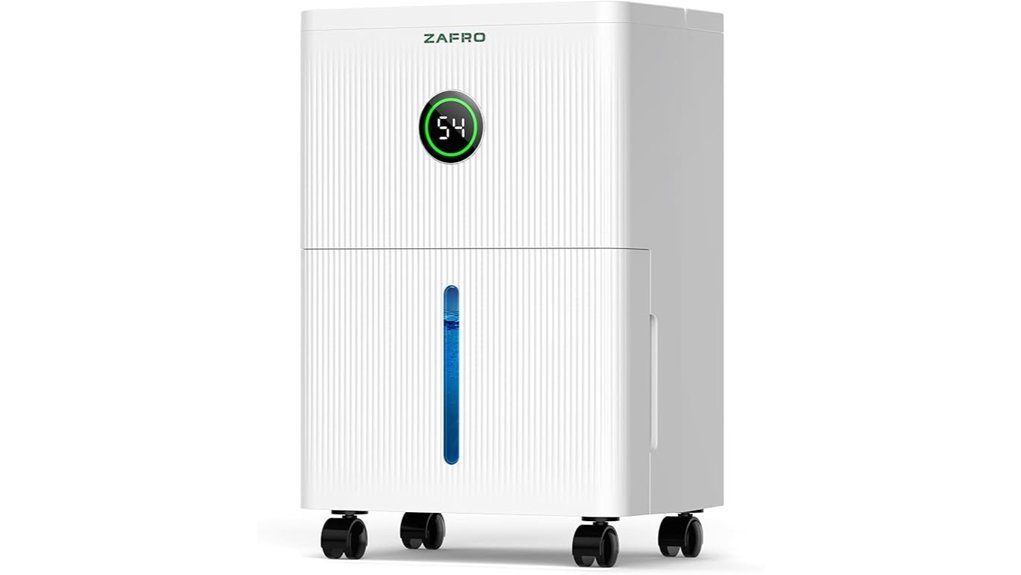
The ZAFRO is a compact compressor dehumidifier for buyers who need more moisture removal than a small thermoelectric unit can provide. The manufacturer lists up to 21 pints per day, coverage up to 1,600 square feet, and operation around 41 dB. These are manufacturer ratings rather than standardized DOE results, so actual extraction will normally be lower in cooler rooms or at moderate humidity.
Its approximately 0.45-gallon removable tank helps keep the cabinet compact, while the included drain hose supports continuous gravity drainage. Auto-defrost, several operating modes, caster wheels, and automatic full-bucket shutoff make it a practical choice for a bedroom, laundry area, bathroom-adjacent space, or smaller basement.
Best For: Buyers who want a compact low-noise compressor model with a drain hose.
Why You’ll Like It:
- Compressor technology removes substantially more moisture than most mini desktop units.
- The 41 dB manufacturer claim is competitive for a compact room dehumidifier.
- Manual and continuous drainage let you choose between portability and unattended operation.
- Auto-defrost and caster wheels improve everyday usability.
Who Should Avoid It:
- Its 21-pint figure is a maximum-condition claim, not a standardized DOE capacity.
- The compact tank may fill quickly in a continuously damp room.
- A larger standardized-capacity model is safer for a wet or expansive basement.
- Compressor cycling and floor vibration may still be noticeable at night.
Kesnos Energy Star Dehumidifier for Home & Basement
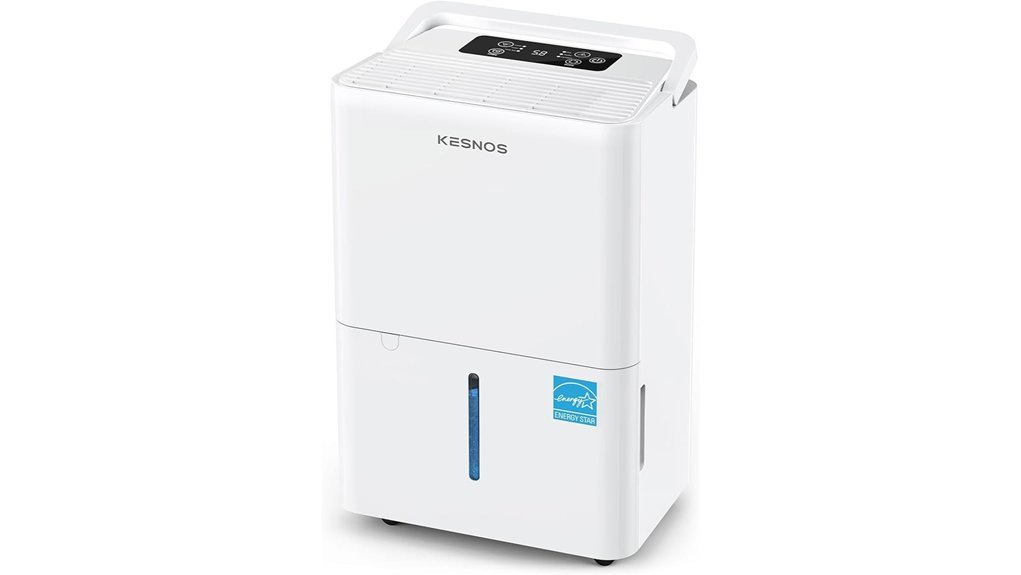
The Kesnos CTH30B is easier to compare than many compact products because an exact ENERGY STAR record is available. Its standardized water-removal capacity is 9.2 pints per day, with an Integrated Energy Factor of 1.7 L/kWh. The larger 30-pint number is a manufacturer maximum measured under hotter and more humid conditions and should not be compared directly with standardized ratings.
Available product material describes operation at approximately 35 to 36 dB, depending on the listing or documentation. Four operating modes, automatic defrost, caster wheels, full-bucket shutoff, restart memory, and continuous drainage make it suitable for a moderately damp bedroom, office, or living area. Its verified capacity is too low to make it the first choice for a large, severely wet basement.
Best For: Smaller or moderately damp rooms where low claimed noise and verified efficiency matter.
Why You’ll Like It:
- An official ENERGY STAR record provides standardized capacity and efficiency data.
- The low manufacturer noise claim suits bedrooms and shared living areas.
- Multiple operating modes provide more control than a basic on-off design.
- Continuous drainage reduces the need to empty its compact bucket.
Who Should Avoid It:
- The 30-pint marketing number is not its standardized capacity.
- Its 9.2-pint standardized rating is better suited to moderate moisture loads.
- The small tank may require frequent emptying without a suitable floor drain.
- Broad square-foot claims should not replace an assessment of actual dampness.
PLUSCENT 21 Pint Portable Dehumidifier for Home
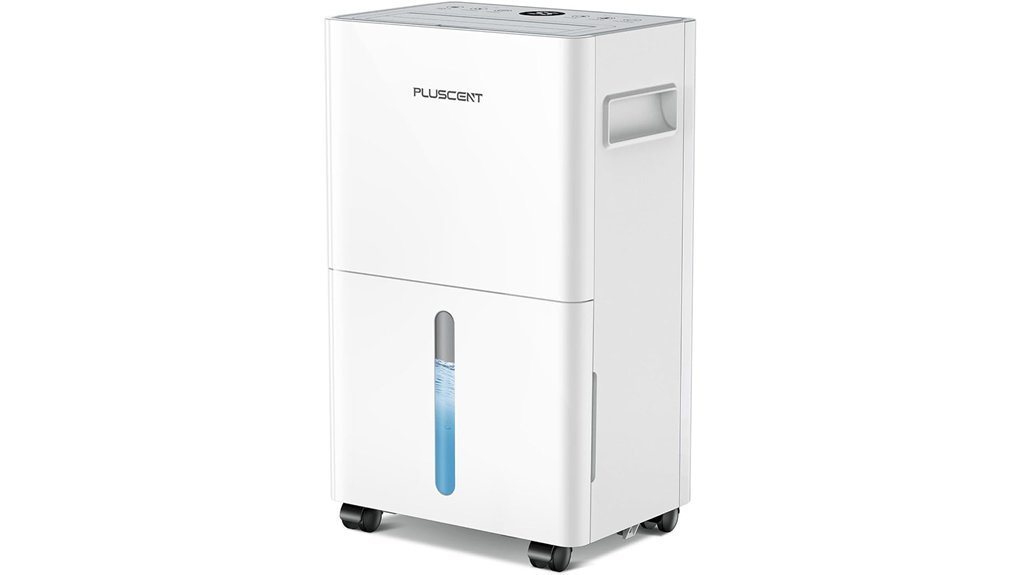
The PLUSCENT is a straightforward compressor dehumidifier for buyers who prefer simple controls over app connectivity or advanced automation. The seller lists a maximum removal rate of 21 pints per day and coverage up to 1,500 square feet. An exact standardized capacity and a consistently documented decibel figure were not matched to this ASIN during the audit, so it ranks below products with stronger capacity and noise documentation.
Its practical features include three operating modes, a 24-hour timer, caster wheels, a washable filter, automatic bucket shutoff, and both bucket and hose drainage. The approximately 1.5-liter tank keeps the machine compact but is best paired with continuous drainage in a regularly damp area.
Best For: Buyers who want uncomplicated controls, a timer, mobility, and two drainage methods.
Why You’ll Like It:
- Compressor-based extraction is more suitable for room humidity control than a mini Peltier unit.
- The controls and three modes are easy to understand.
- A washable filter reduces routine replacement purchases.
- Wheels and hose drainage make it easier to use in more than one room.
Who Should Avoid It:
- No exact verified decibel figure was used, so “quiet” remains a general seller claim.
- The 21-pint rating is a maximum-condition figure rather than standardized capacity.
- The compact tank is not ideal for a heavily damp room without continuous drainage.
- Buyers prioritizing independently documented efficiency should choose a verified ENERGY STAR model.
KNKA 2500 Sq.Ft Dehumidifier with Drain Hose
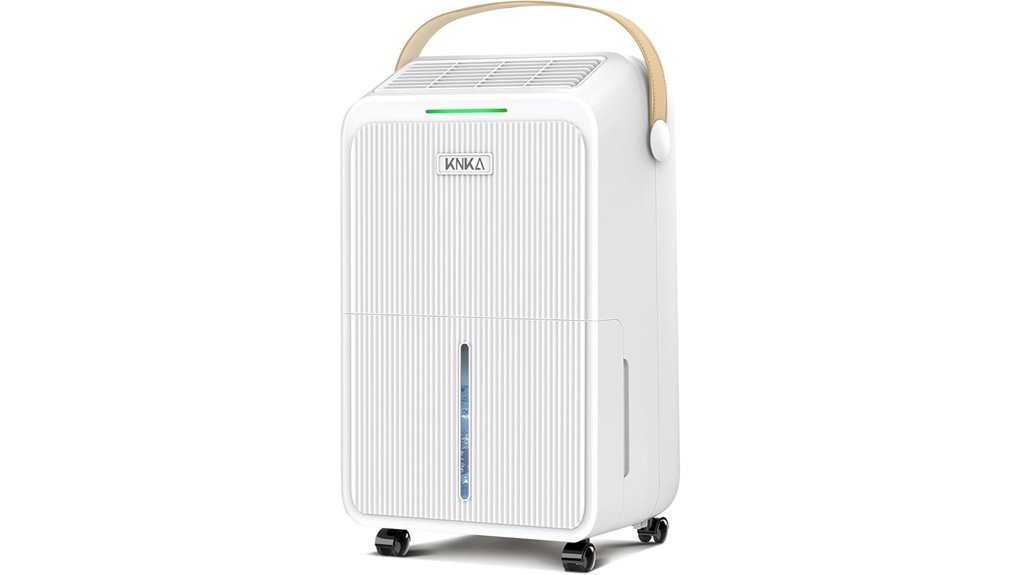
The KNKA provides the strongest overall combination of a low manufacturer noise claim, useful controls, mobility, and flexible drainage. The seller lists a maximum capacity of 34 pints per day at 95°F and 90% relative humidity and operation around 37 dB. Because an exact standardized capacity was not verified for this model, use the 34-pint number only as a maximum-condition specification.
DEHU, DRY, and continuous modes cover normal humidity control, laundry assistance, and extended operation. It also includes adjustable humidity control, a 24-hour timer, automatic defrost, restart memory, a washable filter, child lock, caster wheels, automatic bucket shutoff, and a drain hose. That combination makes it a versatile choice for a medium-size damp room, provided the moisture load is not severe.
Best For: Medium-size rooms needing low claimed noise, flexible controls, and continuous gravity drainage.
Why You’ll Like It:
- Strong mix of operating modes, mobility, drainage, and convenience features.
- The included drain hose supports set-and-maintain use near a suitable drain.
- Auto-defrost helps protect performance when the evaporator becomes cold.
- Child lock and automatic bucket shutoff add practical safeguards.
Who Should Avoid It:
- The 34-pint figure is measured in hot, extremely humid conditions.
- The claimed 2,500-square-foot coverage is not a substitute for standardized capacity.
- The 3-liter tank may still fill quickly in a wet basement.
- Buyers who require independently verified noise testing may prefer to compare in-person return options.
hOmeLabs Wi-Fi Dehumidifier for 3,500 Sq Ft
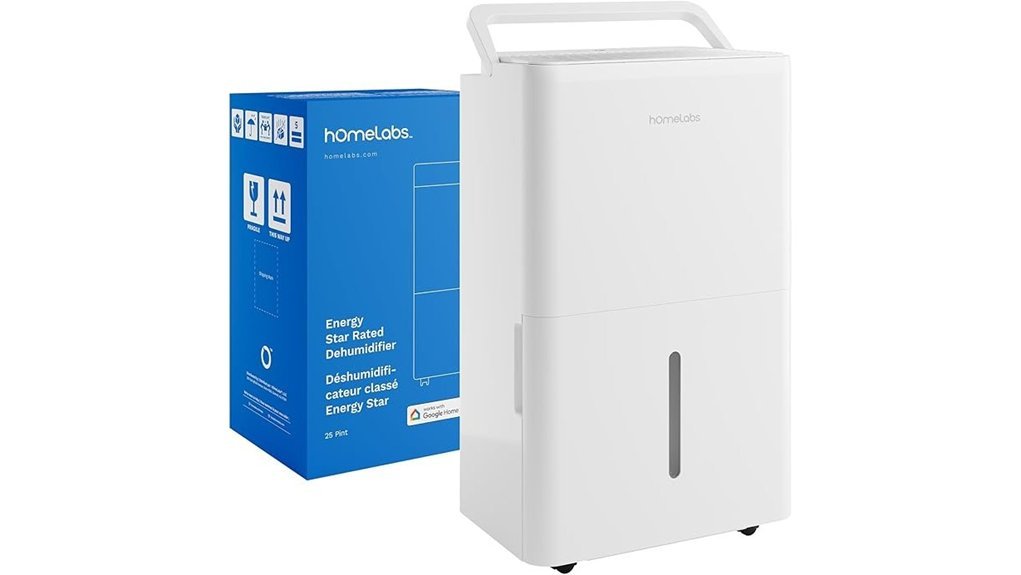
The hOmeLabs HME0088 is the best choice here for buyers who want to monitor and adjust humidity remotely. Its official ENERGY STAR record lists a standardized capacity of 24.48 pints per day, an Integrated Energy Factor of 1.75 L/kWh, and connected capability through Wi-Fi. The manufacturer also lists a maximum of up to 64 pints per day at 95°F and 90% RH.
App control allows remote humidity adjustments, timers, schedules, and monitoring. The model is also described as compatible with Alexa and Google Assistant. A one-gallon tank, caster wheels, auto-defrost, automatic shutoff, a washable filter, and continuous gravity drainage reduce daily maintenance. It is marketed for quiet operation, but this comparison does not assign it an exact decibel number because no consistent figure was verified.
Best For: Buyers who value app monitoring, voice control, standardized capacity, and a larger tank.
Why You’ll Like It:
- Verified standardized capacity makes it easier to compare with other certified models.
- Wi-Fi monitoring is useful for a basement, vacation property, or frequently closed room.
- The one-gallon tank requires less frequent emptying than many compact models.
- Continuous drainage and caster wheels make regular use more convenient.
Who Should Avoid It:
- Wi-Fi setup adds complexity and depends on the app, router, and continued software support.
- The 3,500-square-foot claim does not guarantee adequate performance in a wet basement.
- No exact verified decibel number is used in this comparison.
- Buyers who do not need remote control may get better value from a simpler model.
Gasbye Energy Star Dehumidifier for Large Rooms
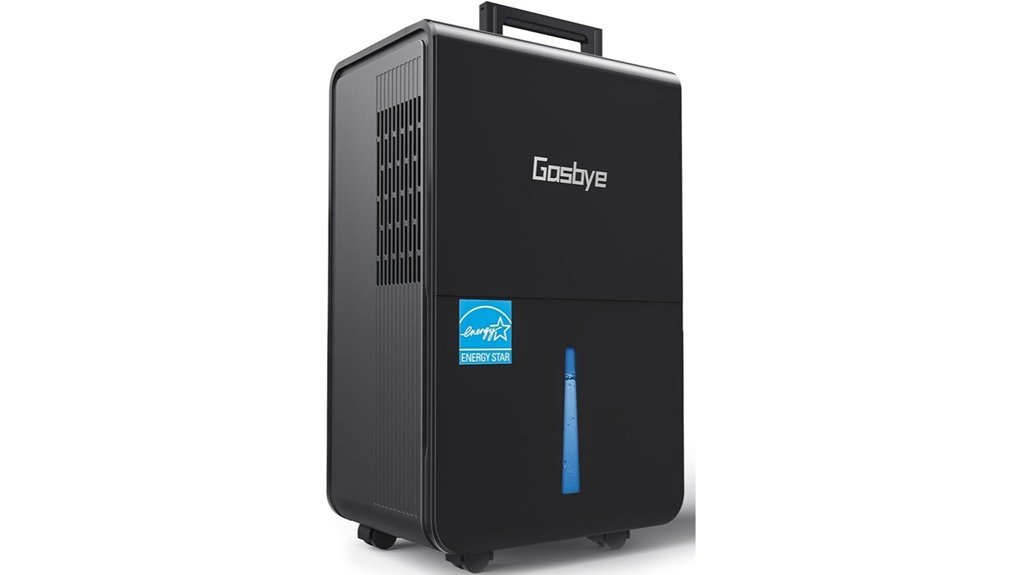
The Gasbye DryPrime-50-B is the capacity-focused recommendation for a large, persistently damp basement. Its official ENERGY STAR record lists 49.7 standardized pints per day and an Integrated Energy Factor of 2.01 L/kWh. The manufacturer separately lists up to 115 pints per day at 86°F and 80% RH and 73 pints per day at 80°F and 60% RH.
Manufacturer material describes operation at approximately 44 to 45 dB. At roughly 42 to 43 pounds, it is much heavier than the compact products, but its approximately 1.72-gallon tank, included gravity-drain hose, garden-hose connection, automatic shutoff, restart memory, caster wheels, washable filter, and several operating modes suit long basement runtimes.
Best For: Large or persistently damp basements where verified extraction capacity matters more than compact size.
Why You’ll Like It:
- Highest verified standardized capacity among the products in this guide.
- Large tank and multiple gravity-drain connections suit extended operation.
- Official ENERGY STAR data provides a meaningful efficiency comparison.
- Automatic restart is helpful after a temporary power interruption.
Who Should Avoid It:
- It is heavier, taller, and less convenient to carry upstairs than compact models.
- The 115-pint headline is not its standardized capacity.
- Approximately 44–45 dB may still be noticeable during sleep or compressor startup.
- It does not have a built-in pump, so the drain hose must follow a continuous downhill route.
Trazico 21 Pint Quiet Dehumidifier for Home
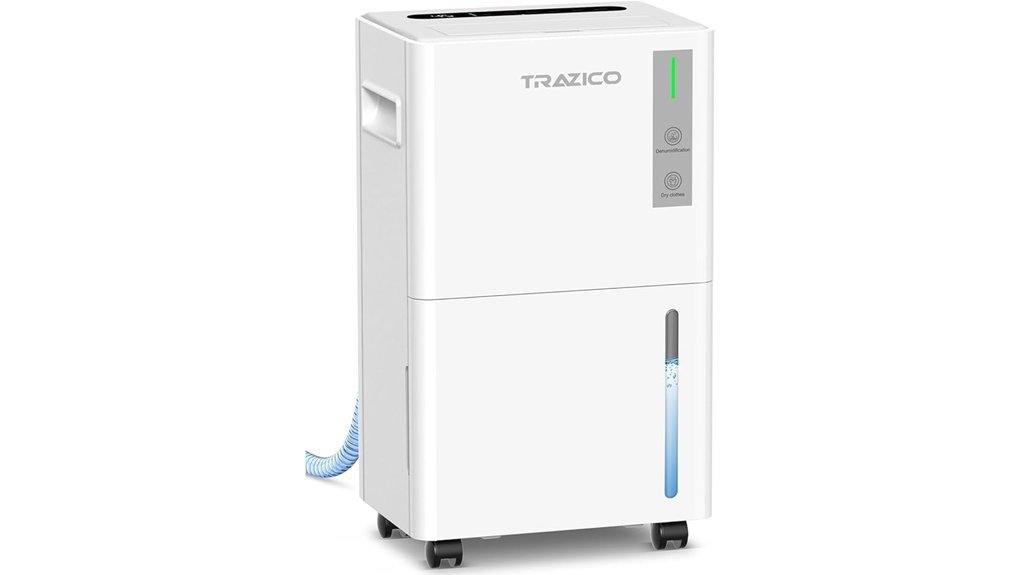
The Trazico is a compact compressor model with a seller-listed 39 dB minimum noise level and up to 21 pints per day at 95°F and 90% RH. It is marketed for spaces up to 1,500 square feet, but no exact standardized capacity or official ENERGY STAR record was matched to this model during the audit. Treat its capacity, noise, and coverage figures as seller claims.
It includes DEHU, DRY, and continuous modes, a touch panel, humidity display, color status indicator, 24-hour timer, auto-defrost, wheels, automatic bucket shutoff, and hose drainage. Its simple controls and compact cabinet may appeal to buyers who prefer its interface, but the model has less authoritative documentation than the verified ENERGY STAR picks.
Best For: Bedrooms, offices, or smaller damp rooms where simple modes and a compact cabinet are priorities.
Why You’ll Like It:
- The 39 dB seller claim places it among the lower advertised ratings in this list.
- Three modes and a timer cover the most useful everyday functions.
- The humidity display and color indicator make room conditions easy to check.
- Wheels and hose drainage improve placement flexibility.
Who Should Avoid It:
- The 21-pint number is measured under hot, very humid maximum conditions.
- The approximately 1.5-liter bucket is small for a persistently wet room.
- Standardized efficiency and capacity data were not verified for this exact model.
- Buyers prioritizing long-term documentation may prefer a model with an official certification record.
Waykar 2000 Sq. Ft 34-Pint Dehumidifier
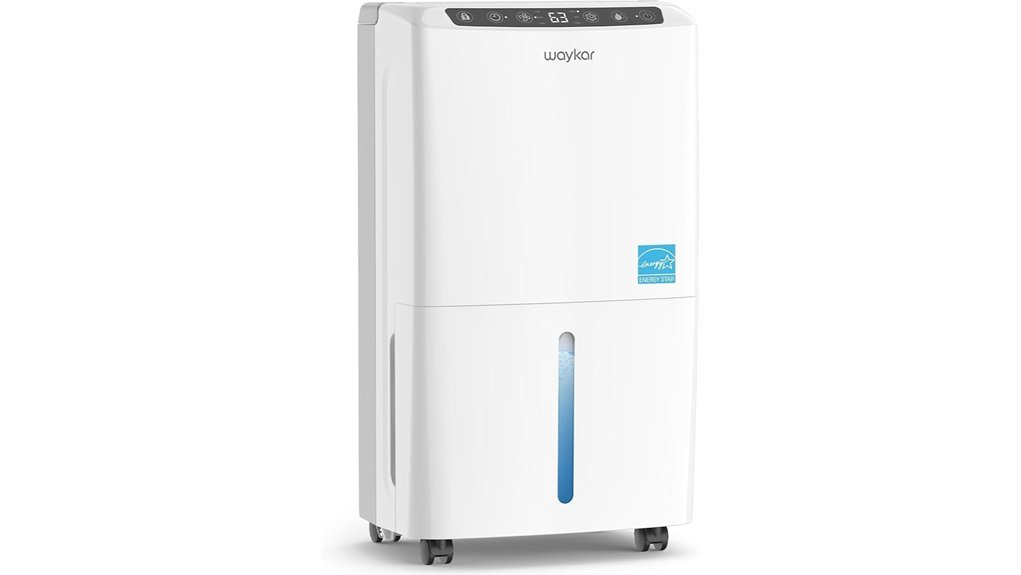
The Waykar PD160B-PRO has the lowest advertised sound level in this group at a minimum of 33 dB. Its official ENERGY STAR record lists a standardized capacity of approximately 10.16 pints per day, an Integrated Energy Factor of 1.91 L/kWh, and ENERGY STAR Most Efficient recognition. The larger 34-pint number is measured at 95°F and 90% RH.
The model includes automatic, continuous, and drying functions, adjustable humidity control, a 24-hour timer, automatic defrost, restart memory, child lock, a roughly 0.6-gallon tank, a drain hose, caster wheels, and a washable filter. Its verified capacity makes it better suited to a moderately damp room than a large wet basement, despite the broad 2,000-square-foot manufacturer claim.
Best For: Noise-sensitive bedrooms, offices, and living areas with a moderate moisture load.
Why You’ll Like It:
- Lowest claimed minimum noise level among the retained products.
- Official standardized capacity and IEF make comparison easier.
- ENERGY STAR Most Efficient recognition supports its efficiency positioning.
- Timer, drain hose, child lock, and auto-defrost cover important daily-use needs.
Who Should Avoid It:
- Its standardized capacity is approximately 10.16 pints per day, not 34 pints.
- The 33 dB figure is a manufacturer minimum and may not represent high fan speed or compressor startup.
- The 0.6-gallon bucket may require frequent emptying in high humidity.
- A large wet basement generally needs a higher standardized-capacity model.
Factors to Consider When Choosing a Quiet Dehumidifier for Your House
A low-noise dehumidifier still needs sufficient standardized capacity for the actual moisture load. Use the following factors to compare models without relying only on broad square-foot estimates or maximum-condition marketing figures.
Compare Noise Claims Carefully
Decibel numbers are useful only when the test method is similar. A manufacturer may measure from a different distance, at the lowest fan speed, before the compressor starts, or in a room with favorable acoustics. Consider airflow, compressor cycling, vibration, fan speed, and whether sleep mode reduces operating noise or merely dims the display.
For a bedroom, place the unit on a level solid floor, maintain the manual’s required clearance, and avoid positioning it against a hollow wall or lightweight cabinet that can amplify vibration. A rubber appliance mat may reduce transmitted vibration, but it must not block an intake, exhaust, wheel, drain opening, or required airflow gap.
Use Standardized Capacity Before Square-Foot Coverage
Do not size a dehumidifier by square footage alone. A cool basement with seepage can require much more capacity than a larger living room with only seasonal humidity. When available, compare the DOE or ENERGY STAR pints-per-day figure under standardized conditions. Treat ratings measured at 86°F to 95°F and very high humidity as separate maximum-performance figures.
| Condition Without Dehumidification | Small or Medium Room | Large Room |
|---|---|---|
| Slightly to Moderately Damp Musty odor may be intermittent |
Consider approximately 20–30 standardized pints/day | Consider approximately 30+ standardized pints/day |
| Very Damp Damp odor and spots are regularly present |
Consider approximately 25–40 standardized pints/day | Consider approximately 40+ standardized pints/day |
| Wet or High Load Seepage, sweating surfaces, or frequent laundry drying |
Consider approximately 30–50 standardized pints/day | Consider approximately 50+ standardized pints/day |
These ranges are general starting points rather than guarantees. Temperature, outdoor air leakage, foundation moisture, ceiling height, open doors, ventilation, and the severity of water intrusion can all change the required capacity. If the room has standing water, an active leak, or visible mold, correct the water source and contamination problem instead of relying on a dehumidifier alone.
Choose the Right Technology
Compressor dehumidifiers are generally the better choice for bedrooms, living areas, laundry rooms, and basements because they remove far more water per day than most small thermoelectric models. Mini Peltier units can be quiet and compact, but they are more appropriate for closets, cabinets, RV compartments, or very small mildly damp spaces.
This guide excludes mini units marketed as whole-room solutions when their extraction capacity does not support that use.
Check ENERGY STAR and IEF
ENERGY STAR certification is more useful than general “energy-saving” wording because exact models are evaluated against defined efficiency requirements. Integrated Energy Factor is listed in liters of water removed per kilowatt-hour. When comparing models of similar standardized capacity, a higher IEF generally indicates more moisture removal for the electricity consumed.
Certification belongs to an exact model number or model family. Check the label on the machine and search the complete model number in the official product finder before relying on a brand-level claim.
Plan the Drainage Route
A bucket is simple but can fill quickly. Gravity drainage works only when the hose travels continuously downhill to a floor drain, sump, or other approved destination without rises, loops, compression, or kinks. The hose outlet must remain lower than the dehumidifier’s drain connection.
A built-in condensate pump is different because it can move water upward. Do not assume a unit has a pump unless the exact listing and manual confirm one. Keep drain water, hoses, and buckets away from outlets, cords, power strips, and electrical equipment.
Consider Tank Size, Weight, and Mobility
Caster wheels and a built-in handle make movement across one floor easier, but they do not make a heavy compressor appliance easy to carry upstairs. Check the product weight before buying and avoid lifting a unit while its bucket contains water.
A larger bucket reduces emptying frequency, while a smaller bucket allows a more compact cabinet. Confirm that the machine fits its intended location while maintaining all intake, exhaust, and service clearances specified in the manual.
Choose Controls You Will Actually Use
Useful controls include an adjustable humidistat, continuous mode, laundry or dry mode, timer, automatic restart, automatic defrost, clear humidity display, full-bucket shutoff, and power-outage memory. Wi-Fi can be useful for a basement, second home, or room that is not checked every day, but it adds setup steps and depends on router compatibility and app support.
A reliable humidistat and correctly installed drain hose may be more valuable than smart features that will rarely be used.
Check Electrical Safety and Recall Status
Use a properly grounded wall outlet and follow the manual’s instructions for clearance, drainage, cleaning, storage, and extension cords. Look for automatic bucket shutoff, auto-defrost, overheat safeguards, and child lock where relevant.
Before using a new or secondhand dehumidifier, check its exact brand, model, date code, and serial information against the
CPSC dehumidifier recall information.
Stop using a unit that overheats, smells burnt, repeatedly trips a breaker, leaks near electrical components, makes unusual mechanical noises, or has a damaged cord or plug.
- Measure the room and identify whether it is mildly damp, very damp, or wet.
- Compare standardized pints per day whenever an exact model record is available.
- Confirm whether an advertised decibel figure represents minimum, sleep, or normal operation.
- Check tank size, product weight, dimensions, operating-temperature range, and required clearances.
- Confirm whether drainage is gravity-only or supported by a built-in pump.
- Verify the exact model’s ENERGY STAR record, warranty, return policy, and recall status.
- Plan a grounded outlet and safe drainage route before the appliance arrives.
Frequently Asked Questions
What Is the Ideal Humidity Level for a Home?
A practical indoor target is generally 30% to 50% relative humidity. Keeping humidity below 60% helps reduce conditions that support mold growth. Use a separate hygrometer if you want to compare the room reading with the sensor built into the dehumidifier.
Humidity that is too low can also be uncomfortable, especially during winter, so do not automatically run a dehumidifier at its lowest possible setting.
What Noise Level Is Considered Quiet for a Dehumidifier?
Manufacturer ratings in the low 30s to low 40s dB are commonly marketed as quiet, but the number is meaningful only when the test conditions are known. Check whether the rating applies to the lowest fan speed, sleep mode, or normal operation. Compressor startup, vibration, and high fan speed can sound louder than the advertised minimum.
How Do I Maintain a Dehumidifier?
Follow the exact model’s manual. Common maintenance includes cleaning the washable filter, emptying and rinsing the bucket, checking the drain hose for kinks or buildup, keeping the intake and exhaust clear, and removing dust from the grille. Unplug the unit before cleaning and never open or repair the sealed refrigerant system yourself.
Can a Dehumidifier Improve Indoor Air Quality?
A dehumidifier can control excess moisture and make the environment less favorable for mold and dust mites. It does not remove existing mold, clean contaminated materials, repair plumbing or foundation leaks, or replace appropriate ventilation and air filtration. Address water intrusion and visible contamination directly.
Are Quiet Dehumidifiers Also Energy-Efficient?
Not automatically. Sound and energy performance are separate characteristics. Check the exact model’s ENERGY STAR status, standardized capacity, and Integrated Energy Factor. Correct sizing, a clean filter, closed doors and windows, humidistat control, and safe continuous drainage can also prevent unnecessary runtime.
Is a 34-Pint Maximum Dehumidifier the Same as a 34-Pint DOE Model?
No. A 34-pint maximum may be measured at approximately 95°F and 90% RH, while a DOE or ENERGY STAR capacity is measured under a standardized procedure. A product can therefore advertise a 34-pint maximum while its standardized capacity is much lower. Compare products using the same test basis whenever possible.
Can I Run a Dehumidifier Overnight?
Many models are designed for extended operation, but always follow the manual. Use a grounded outlet, maintain the required airflow clearance, verify that the bucket shutoff works, and inspect the gravity-drain route before leaving the appliance unattended. Sleep mode may reduce fan speed or display brightness, although the compressor can still cycle.
Do I Need a Drain Hose or a Built-In Pump?
A gravity drain hose is sufficient when a floor drain or sump inlet is lower than the dehumidifier and the hose can run continuously downhill. A built-in pump is useful when water must move upward to a sink or elevated drain. Do not route a gravity hose uphill or assume that a hose connection includes a pump.
How Long Does a Dehumidifier Last?
Service life varies with construction, room temperature, moisture load, runtime, filter cleaning, drainage maintenance, and parts support. Rather than relying on a fixed lifespan claim, compare the written warranty, compressor coverage, replacement-filter availability, return policy, and manufacturer support.
Conclusion
For buyers who want a broad mix of low claimed noise, modes, portability, and continuous drainage, the KNKA 2500 Sq.Ft Dehumidifier offers the best overall feature balance. Its 34-pint figure is a maximum-condition rating, so buyers with a severe moisture problem should not size the room from that number alone.
The Waykar PD160B-PRO is the strongest choice when the lowest advertised noise level and verified efficiency are the priorities. Its standardized capacity is approximately 10.16 pints per day, making it better for a moderately damp room than a large wet basement. The Gasbye DryPrime-50-B is the better large-basement option because its official standardized capacity is approximately 49.7 pints per day.
Choose the hOmeLabs HME0088 for Wi-Fi monitoring and a verified capacity near 24.48 pints per day, or the Kesnos CTH30B for a compact certified option with a low manufacturer noise claim. Whichever product you select, compare capacity on the same test basis, confirm the exact model number, and plan the outlet and drainage route before purchase.