Affiliate disclosure: This article contains Amazon affiliate links. If you buy through one of these links, we may earn a commission at no additional cost to you.
A reusable vehicle dehumidifier can help manage ordinary cabin humidity, musty odors, windshield condensation, and moisture left behind by wet clothing or floor mats. The best option depends on whether you prefer a compact rigid unit, removable cordless sticks, or a microwave-rechargeable silica-gel bag.
For most drivers, the Zarpax two-pack provides a practical balance of vehicle-focused design, simple maintenance, and separate cabin and cargo-area placement. The Eva-Dry E-333 is a compact alternative for buyers who do not want to microwave a fabric bag, while the Afloia TOPZ systems use portable absorbers and a dedicated heating base. For larger cabins or cargo areas, the Wisedry two-pack provides two substantial reusable bags.
Important:
Passive car moisture absorbers work gradually. They may help control normal humidity and recurring condensation, but they cannot repair leaking seals, blocked drains, soaked upholstery, standing water, or a malfunctioning defroster. Find and repair the moisture source when dampness keeps returning.
Quick verdict:
- Best overall: Zarpax Reusable Car Dehumidifier Bags, 2 Pack
- Best compact rigid unit: Eva-Dry E-333
- Best cordless system: Afloia TOPZ 2+1
- Best for several compartments: Afloia TOPZ 4+1
- Best large reusable bags: Wisedry 2 x 500g
- Best for multiple vehicles: Zarpax 4-Pack
- Best single-bag option: Sovhev Silica Gel Car Dehumidifier Bag
- Best indicator-focused alternative: 366 Days Two-Bag Set
Quick Comparison of the Best Vehicle Dehumidifiers
| Product | Best For | Format | Recharge Method | Maintenance Cue | Details |
|---|---|---|---|---|---|
| Zarpax 2-Pack | Most cars, trucks, and RVs | Two reusable vehicle bags | Microwave | Color indicator | Check Availability |
| Eva-Dry E-333 | Small cars and enclosed compartments | Compact rigid unit | Built-in wall plug | Color indicator | Check Availability |
| Afloia TOPZ 2+1 | Cordless moisture control in two zones | Two sticks and heating base | PTC heating base | Indicator window | Check Availability |
| Afloia TOPZ 4+1 | Several vehicles or compartments | Four sticks and heating base | PTC heating base | Indicator window | Check Availability |
| Wisedry 2 x 500g | Larger cabins and cargo areas | Two large silica-gel bags | Microwave or oven | Weight and supplied instructions | Check Availability |
| Zarpax 4-Pack | Multiple vehicles or larger RVs | Four reusable vehicle bags | Microwave | Color indicator | Check Availability |
| Sovhev Single Bag | One small cabin or storage area | Single reusable silica-gel bag | Microwave | Color indicator | Check Availability |
| 366 Days Two-Bag Set | Simple indicator-based maintenance | Two reusable bags | Microwave | Color indicator | Check Availability |
How We Compared These Options
These recommendations are organized by product format, stated capacity, regeneration method, pack size, maintenance requirements, placement flexibility, and suitability for cars, trucks, RVs, boats, or enclosed storage compartments. Product listings and manufacturer information were reviewed in August 2026, but specifications, sellers, and availability can change.
The labels describe the use case each reusable car dehumidifier appears best suited to. They do not represent laboratory testing, hands-on performance testing, or a guarantee that one product will work best in every vehicle or climate.
Passive desiccant products work gradually. They may help with ordinary humidity, damp floor mats, wet outdoor equipment, and recurring windshield condensation, but they cannot repair water leaks or replace your vehicle’s defroster, air conditioning, or ventilation system.
Eva-Dry Wireless Mini Dehumidifier, White (E-333)
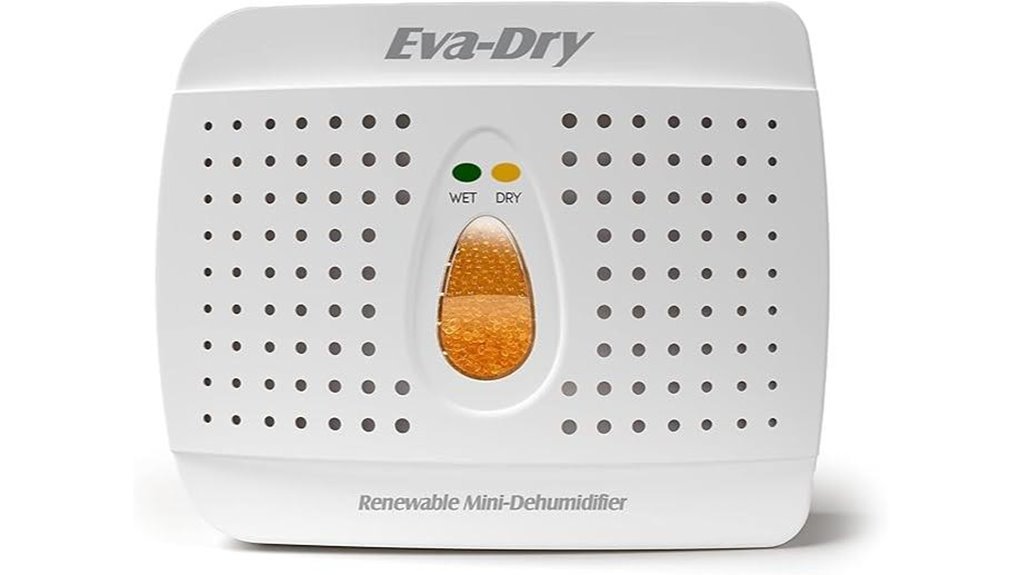
The Eva-Dry E-333 is a compact option for a car cabin, trunk, closet, or other small enclosed space. It uses silica-gel beads rather than a compressor, so it absorbs moisture without a battery, fan, collection tank, or power cord while sitting in the vehicle.
The unit is listed for spaces up to 333 cubic feet and has a stated total absorption capacity of up to six ounces. A color indicator shows when regeneration is due. You then remove the unit and plug it into a suitable wall outlet according to the manufacturer’s instructions.
Best For: Drivers who prefer a self-contained rigid unit and do not want to regenerate a fabric bag in a microwave.
Why You’ll Like It: It is compact, easy to hang or place, and does not create an exposed liquid reservoir inside the vehicle.
Who Should Avoid It: Drivers dealing with an active water leak, soaked carpet, or a large and persistently damp RV may need more capacity and professional leak repair.
Pros:
- Cordless operation while absorbing moisture
- Built-in wall-plug regeneration system
- Color indicator simplifies maintenance
- Compact design for small enclosed spaces
Cons:
- Limited capacity compared with an electric compressor dehumidifier
- Must be removed from the vehicle for regeneration
- May require frequent regeneration in very humid conditions
Afloia Rechargeable Cordless Mini Dehumidifier (TOPZ 2+1)
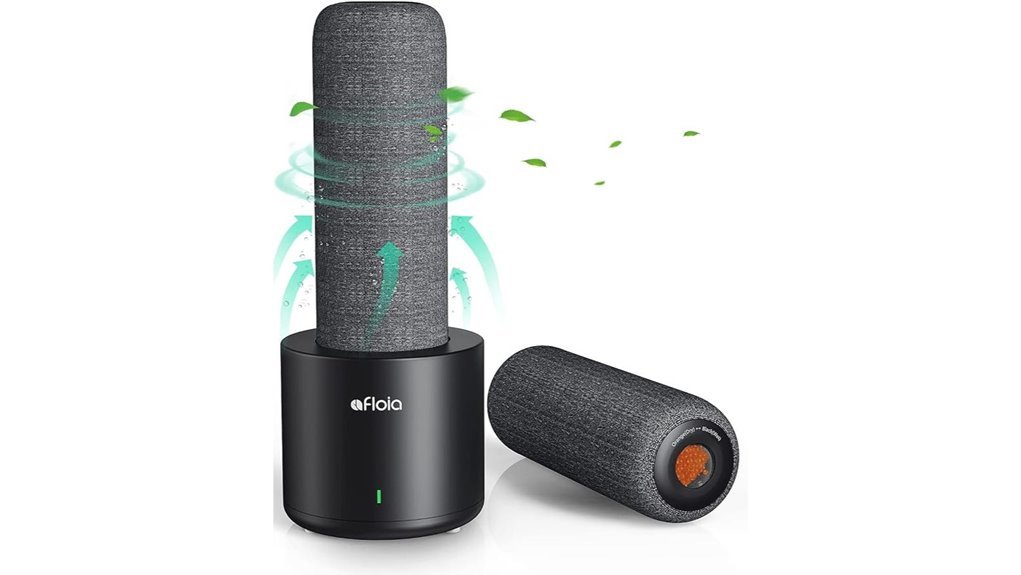
The Afloia TOPZ 2+1 system includes two removable moisture-absorbing sticks and a separate PTC heating base. The sticks work cordlessly inside a car, trunk, cabinet, RV, boat, or other small space. Only the regeneration base requires electrical power.
The listing states that each absorber is intended for areas up to 54 square feet and has a moisture capacity of up to four ounces or 100 milliliters under test conditions of 86°F and 80% relative humidity. Real-world results will vary with temperature, airflow, humidity, and the amount of moisture entering the vehicle.
Best For: Drivers who want two portable absorbers that can be rotated between the passenger cabin, trunk, and storage compartments.
Why You’ll Like It: The cylindrical sticks are easy to move, while the dedicated base avoids heating a fabric moisture absorber in a food microwave.
Who Should Avoid It: Buyers who want a maintenance-free solution or enough capacity for a large RV with continuing moisture intrusion should consider other options and inspect the vehicle for leaks.
Pros:
- Cordless while absorbing moisture
- Two portable sticks provide flexible placement
- Dedicated PTC base handles regeneration
- Suitable for vehicles, RVs, boats, cabinets, and other small spaces
Cons:
- Designed primarily for small enclosed areas
- Regeneration may take longer than microwaving some bags
- More components than a basic silica-gel pouch
Afloia Rechargeable Cordless Dehumidifier (TOPZ 4+1)
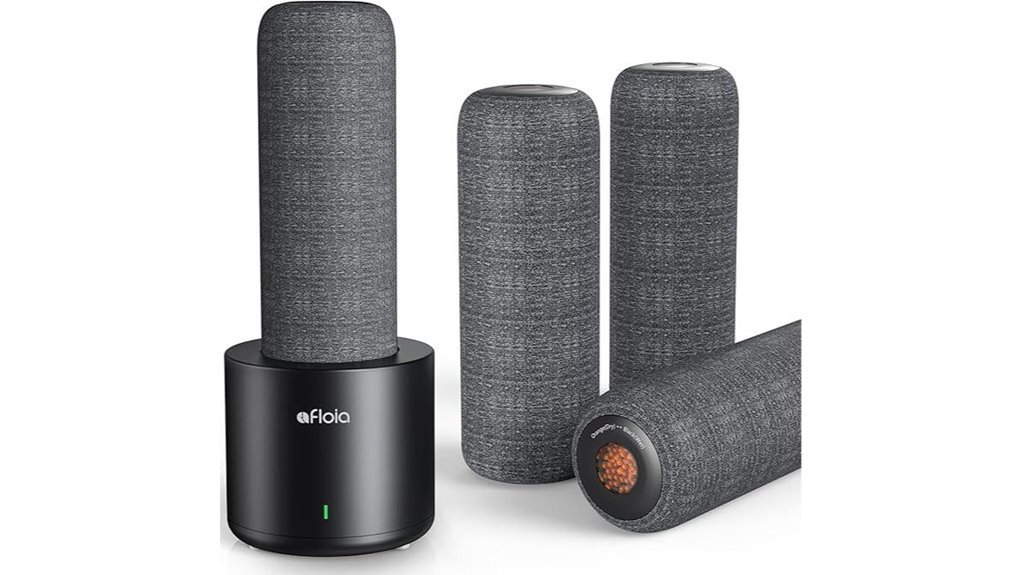
The Afloia TOPZ 4+1 uses the same general cordless-stick approach but provides four moisture-absorbing units and one regeneration base. This format is useful when you want separate absorbers in a front cabin, rear cargo area, trunk, RV storage compartment, boat locker, or several small vehicles.
The product is intended for passive humidity control in enclosed spaces rather than fast removal of water from soaked materials. Regenerate the sticks only as directed by Afloia, and operate the powered heating base indoors or in another dry and stable location rather than inside a parked vehicle.
Best For: Families with multiple vehicles or owners of an RV, boat, truck, or vehicle with several storage compartments.
Why You’ll Like It: Four portable sticks make it easier to distribute moisture control across several smaller zones instead of relying on one oversized absorber.
Who Should Avoid It: A buyer who only needs one absorber for a compact car may find the smaller TOPZ set or a single rigid unit more practical.
Pros:
- Four cordless absorbers support multiple placement points
- Reusable design reduces reliance on disposable absorbers
- Dedicated regeneration base keeps heating outside the vehicle
- Useful for several vehicles or compartments
Cons:
- More expensive and bulky than a single bag
- Only one regeneration base is included
- Not intended for active water removal
Wisedry Reusable Silica Gel Car Dehumidifier Packets
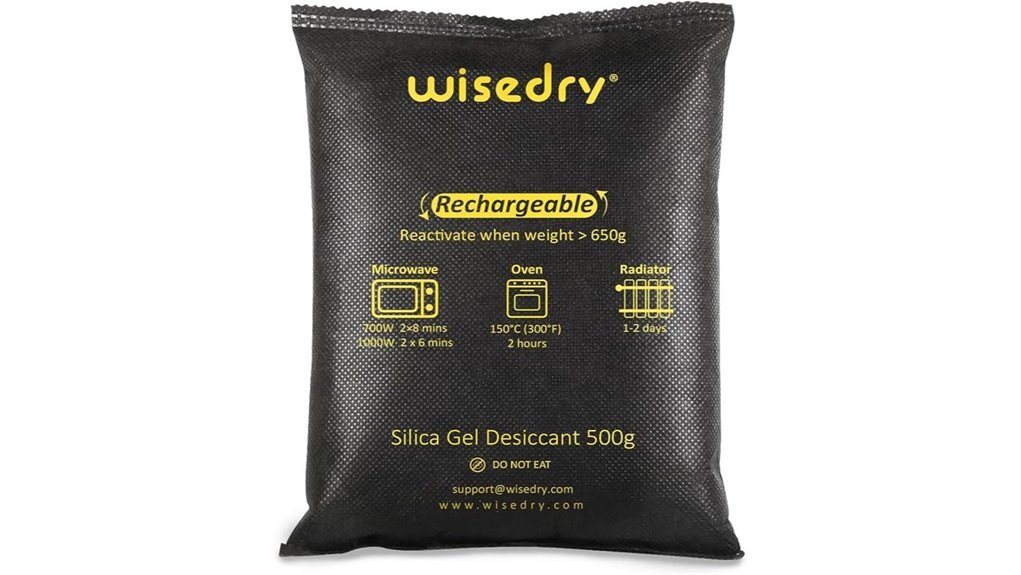
The Wisedry set includes two 500-gram silica-gel bags for use in cars, garages, boats, RVs, closets, and other enclosed areas. Their larger physical size can make them more suitable for an SUV, truck, cargo area, or vehicle that regularly carries wet outdoor equipment.
The 500-gram figure describes the approximate product weight of each bag rather than the amount of water it will remove. Wisedry’s instructions allow microwave or oven regeneration and advise users to check saturation by weight. Follow the supplied heating limits carefully, allow each bag to cool fully, and inspect the outer material before returning it to the vehicle.
Best For: Drivers who want larger reusable bags for an SUV, truck, boat, RV, garage, or cargo area.
Why You’ll Like It: The two large bags can cover separate zones or be alternated while one bag is being regenerated and cooled.
Who Should Avoid It: Buyers who want a simple color-changing saturation window may prefer one of the indicator-equipped vehicle bags.
Pros:
- Two large reusable silica-gel packs
- Useful for larger cabins and storage areas
- Microwave or oven reactivation options
- No exposed liquid collection tank
Cons:
- May require weighing to judge saturation
- Larger and bulkier than compact vehicle pouches
- Requires careful heating, cooling, and inspection
- Must be secured so it cannot move toward the pedals
Zarpax Reusable Car Dehumidifier Bags, 2 Pack
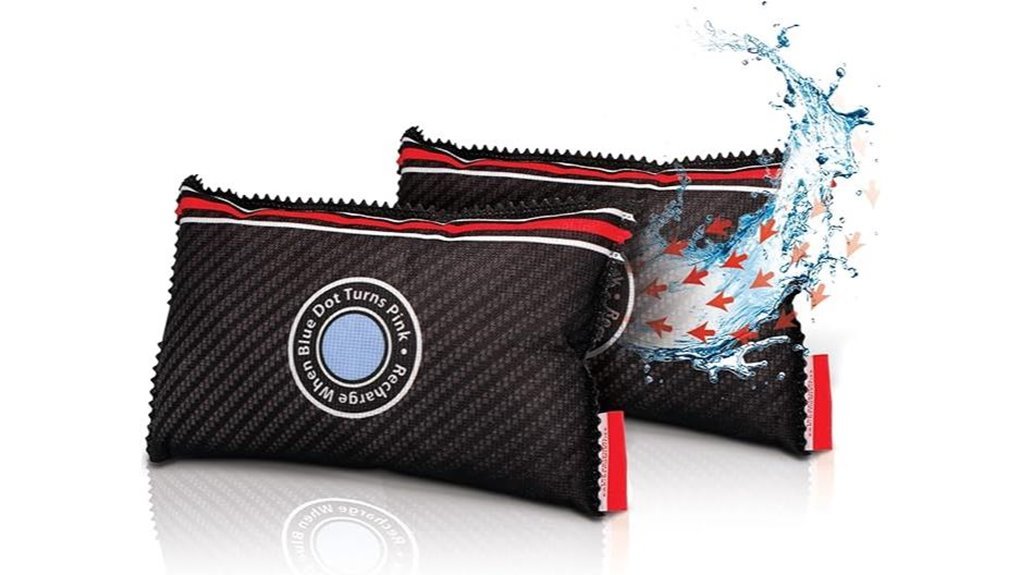
The Zarpax two-pack is designed specifically for cars, trucks, and RVs. Each sealed bag contains moisture-absorbing material and uses a color indicator to show when microwave regeneration is needed.
Because the package contains two bags, you can place one in a secure passenger-cabin location and one in the trunk or cargo area. You can also rotate them so a dry bag remains available while the other is being regenerated and cooled.
Best For: Most drivers who want a straightforward reusable car dehumidifier bag without a separate charging base.
Why You’ll Like It: The vehicle-focused design, two-bag format, and visible indicator provide a useful balance of convenience, placement flexibility, and maintenance guidance.
Who Should Avoid It: Buyers who do not want to use a microwave should choose a wall-plug unit or a system with a dedicated regeneration base.
Pros:
- Designed for cars, trucks, and RVs
- Two bags support cabin and cargo-area placement
- Sealed, leak-resistant construction
- Color indicator helps show when regeneration is due
Cons:
- Needs periodic microwave regeneration
- Cannot correct an active vehicle leak
- Must be kept clear of pedals, vents, airbags, and controls
Zarpax Reusable Car Dehumidifier Bags, 4 Pack
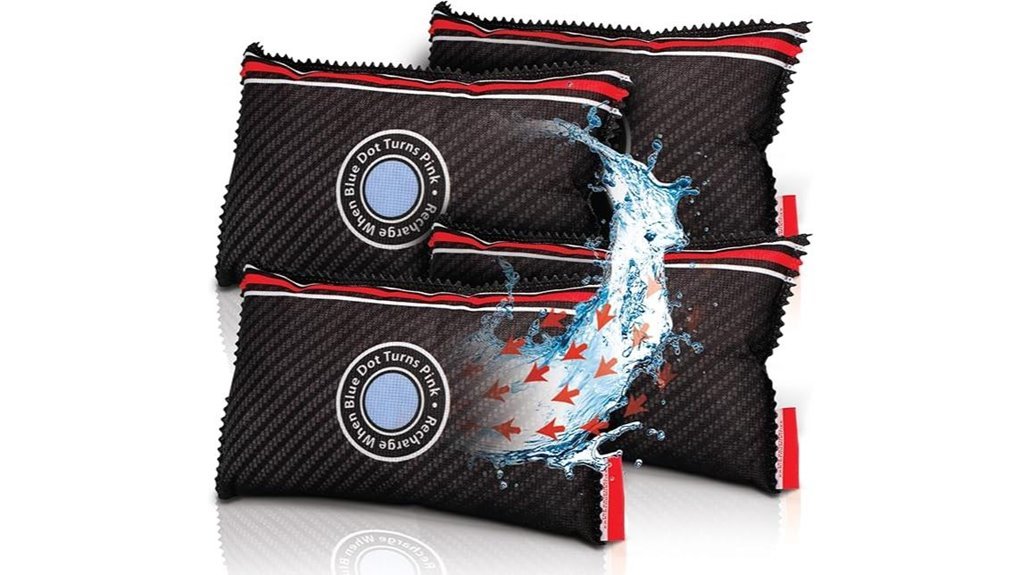
The Zarpax four-pack uses the same reusable car-bag format but provides enough units for several vehicles, a large RV, a boat, or separate passenger and storage zones.
A multi-pack can also simplify maintenance. Instead of waiting for a saturated bag to be regenerated and cooled, you can replace it with a dry bag and restore several used bags together.
Best For: Households with multiple cars or owners of larger trucks, RVs, and boats.
Why You’ll Like It: Four separate bags provide more placement flexibility than one oversized absorber and make it easier to keep dry replacements available.
Who Should Avoid It: A single-car owner with only mild seasonal condensation may not need four bags.
Pros:
- Four reusable bags for several placement points
- Useful for multiple vehicles
- Sealed, leak-resistant construction
- Color indicators simplify maintenance checks
Cons:
- Higher initial cost than a one- or two-bag set
- Every bag requires periodic regeneration
- Several bags require more storage space when not in use
Sovhev Silica Gel Car Dehumidifier Bag
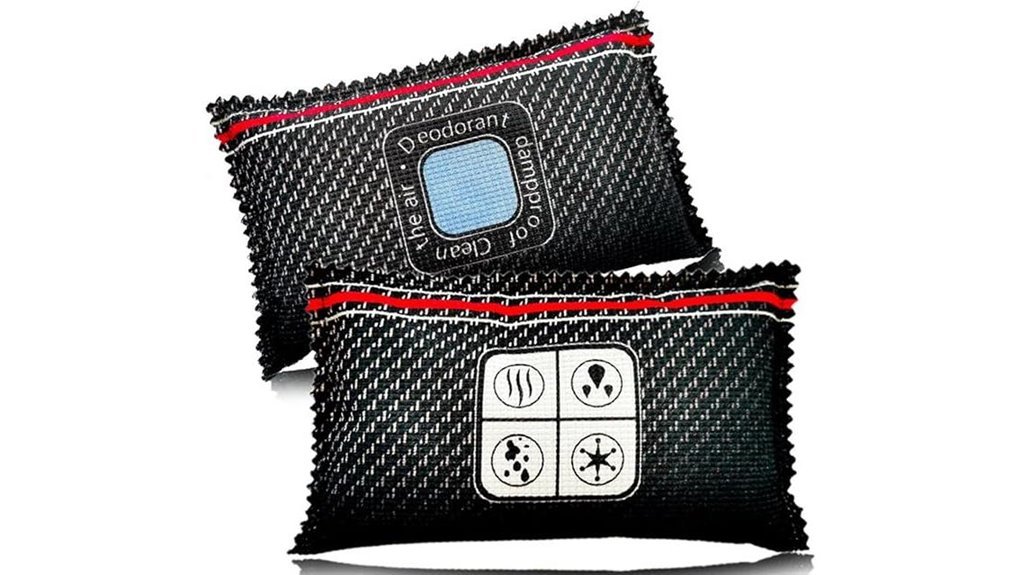
The Sovhev dehumidifier bag is a reusable silica-gel pack intended for cars, closets, garages, safes, and other enclosed storage spaces. It offers a simple option for someone who needs one car moisture absorber rather than a multi-pack.
The bag is regenerated in a microwave when its indicator shows that the desiccant is saturated. Heating time depends on the manufacturer’s directions and microwave wattage, so inspect the product label and outer material before every regeneration cycle.
Best For: A compact car, trunk, storage locker, or buyer who only needs one moisture-absorbing bag.
Why You’ll Like It: It provides the basic reusable-bag format without requiring you to purchase several absorbers.
Who Should Avoid It: One bag may be insufficient for a large SUV, RV, or vehicle with moisture in several separate areas.
Pros:
- Reusable microwave-reactivated format
- Single-pack option avoids unnecessary extras
- Sealed design avoids an exposed water reservoir
- Suitable for several small enclosed spaces
Cons:
- Only one bag is included
- No standardized cabin-coverage measurement is provided
- Performance varies with temperature, humidity, and continuing moisture entry
366 Days Reusable Silica Gel Dehumidifier Bags
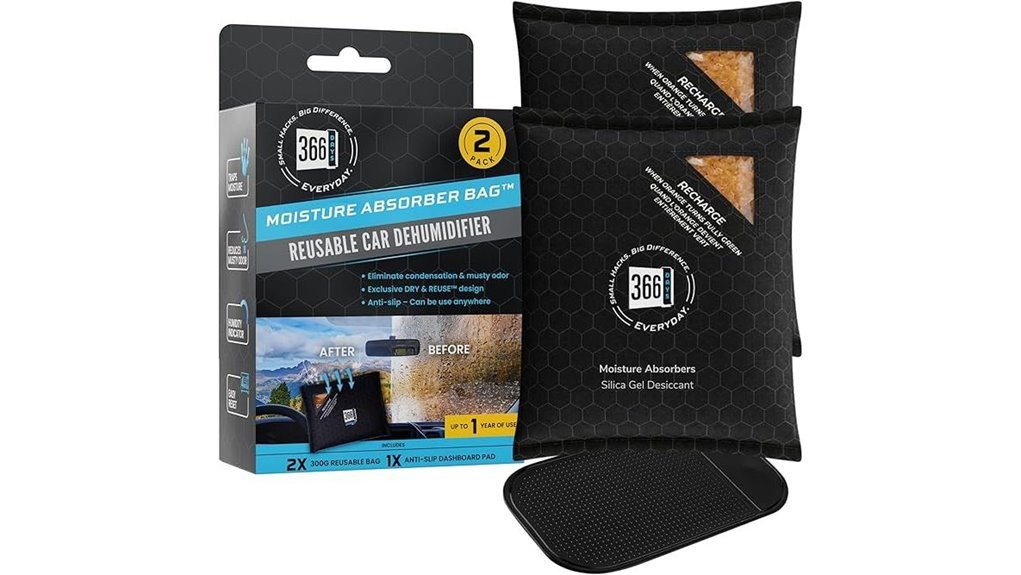
This two-bag set from 366 Days uses reusable silica gel and a color-changing indicator to show when regeneration is needed. It is intended for cars, RVs, and household storage areas where gradual humidity control is useful.
The bags should remain sealed and securely positioned. Do not place them on an airbag cover, directly against sensitive electronics, where they obstruct the driver’s view, or anywhere they could move into the footwell.
Best For: Drivers who want two reusable bags with a clear visual maintenance indicator.
Why You’ll Like It: The indicator reduces guesswork, and the two-bag format supports separate cabin and cargo placement.
Who Should Avoid It: Buyers seeking exact digital humidity readings will need a separate hygrometer because the indicator only shows the desiccant’s general condition.
Pros:
- Two reusable moisture-absorbing bags
- Color-changing saturation indicator
- Suitable for cars, RVs, and small storage spaces
- No battery or power connection needed while in use
Cons:
- Indicator does not provide an exact humidity percentage
- Requires periodic microwave regeneration
- Not intended to remove standing water or repair leaks
Factors to Consider When Choosing a Vehicle Dehumidifier
Start by deciding whether you want a compact rigid unit, a cordless-stick system, or a reusable fabric bag. Then compare regeneration method, maintenance cue, physical size, pack quantity, placement options, and the amount of moisture entering your vehicle.
Quick Decision Guide
- Choose Eva-Dry when you want a compact rigid unit with wall-plug regeneration.
- Choose Afloia when you prefer portable sticks and a dedicated heating base.
- Choose Zarpax or 366 Days when you want indicator-equipped microwave-rechargeable vehicle bags.
- Choose Wisedry when you need two larger bags and are comfortable checking saturation by weight.
- Choose a four-pack when you have multiple vehicles or several separate moisture-prone zones.
Product Format
A rigid silica-gel unit such as the Eva-Dry is easy to hang or place and uses its own wall-plug regeneration system. An Afloia-style cordless stick can fit into a door pocket, cabinet, trunk, or RV compartment and regenerates on a separate base. Fabric silica-gel bags are usually the simplest and most flexible format, but they normally require microwave or oven heating.
Moisture Absorption Capacity
Passive products may be described by moisture-holding capacity, coverage area, or total bag weight. These figures do not mean the same thing. A 500-gram bag does not necessarily absorb 500 grams of water, and a square-foot rating cannot be compared directly with a cubic-foot rating.
Do not compare a passive absorber’s capacity with the pint-per-day extraction rating of an electric compressor dehumidifier. A larger bag may last longer between regeneration cycles, but temperature, humidity, airflow, wet clothing, damp carpets, and water leaks can change performance significantly.
Recharge Method
Microwave-rechargeable bags are convenient when you have access to a suitable microwave and can follow the specified wattage, timing, rest periods, and maximum heating cycles. Some larger bags also allow oven regeneration.
A dedicated heating base or built-in plug system keeps the regeneration process separate from food appliances but may take longer. Always follow the instructions for the exact product. Never microwave a rigid unit, a cordless stick, or any product that is not specifically labeled for microwave regeneration.
Vehicle and Cabin Size
A compact car with ordinary seasonal condensation may need only one small unit or bag. An SUV, van, truck, RV, or boat may benefit from two or more absorbers placed securely in separate zones.
Coverage figures are not always reported consistently. Consider the product’s physical size, stated capacity, intended applications, and number of included absorbers together rather than choosing by one number alone.
Indicator and Maintenance
A color-changing indicator can show when many products are approaching saturation, but it is not a digital humidity meter. Check the absorber regularly and regenerate it when directed by its manufacturer.
Not every reusable bag has an indicator. Some products, including certain Wisedry bags, may require weighing before and after use to determine whether regeneration is necessary. During rainy weather or after transporting wet clothing, maintenance may be needed more often.
Portability and Placement
Place the absorber where air can circulate around it, but keep it stable and secure. Suitable locations may include a cargo tray, door pocket, trunk organizer, storage compartment, or another position permitted by the product and vehicle manufacturers.
Never allow a vehicle dehumidifier to interfere with the steering wheel, pedals, handbrake, gear selector, airbags, seat tracks, vents, visibility, charging equipment, or access to emergency supplies. A non-slip pad reduces movement but does not replace secure positioning.
Safety and Materials
Choose an intact, sealed, and leak-resistant product. Inspect fabric bags for tears, heat damage, staining, swelling, or loose seams before returning them to the vehicle after regeneration.
Keep desiccants out of reach of children and pets. Do not open a bag or allow its contents to contact food. Let a regenerated product cool completely before placing it near upholstery, plastics, electronics, or other heat-sensitive surfaces.
When a Vehicle Dehumidifier Is Not Enough
A passive vehicle dehumidifier can manage ordinary airborne moisture, but persistent dampness often indicates another problem. Check for:
- Wet carpets, floor mats, insulation, or seat padding
- Blocked sunroof, cowl, or air-conditioning drains
- Damaged door, trunk, windshield, or window seals
- Water entering through body seams or rear-light assemblies
- A heater-core or cooling-system leak
- Poor ventilation or a malfunctioning defroster
Repair the moisture source first. A reusable car moisture absorber should support that repair, not conceal continuing water intrusion.
Before You Buy Checklist
- Confirm that the product is intended for cars, trucks, RVs, boats, or enclosed vehicle spaces.
- Choose a secure placement location before purchasing.
- Check whether regeneration requires a microwave, oven, wall outlet, or heating base.
- Confirm whether saturation is shown by an indicator or must be checked by weight.
- Compare pack size with the number of vehicles or compartments you need to cover.
- Review the current product instructions for heating time, wattage, cooling, and maintenance.
- Check current listing details and availability before ordering.
- Do not use an unsecured liquid-collection cup or bucket in a moving vehicle.
Frequently Asked Questions
How Often Should I Recharge a Reusable Vehicle Dehumidifier?
Recharge it when its indicator changes, when a weight-based check shows saturation, when the manufacturer’s stated interval has passed, or when it stops controlling condensation as effectively. Humid weather, wet carpets, and frequent door opening can shorten the interval considerably.
Can Vehicle Dehumidifiers Prevent Windshield Fogging Completely?
No. They may reduce the amount of moisture available to condense on the glass, but they cannot eliminate every cause of fogging. Use the vehicle’s defroster, air conditioning, and ventilation system, and repair any water leaks.
Do Reusable Vehicle Dehumidifiers Work in Winter?
They can help manage ordinary cabin moisture during winter, especially moisture brought in on shoes, coats, and floor mats. However, performance varies with temperature and humidity, and the absorber does not replace the defroster or proper ventilation.
Can I Microwave Every Reusable Vehicle Dehumidifier?
No. Microwave only a product that is specifically labeled for microwave regeneration. Rigid units and cordless sticks may require a wall outlet or dedicated heating base. Follow the exact timing, wattage, and cooling instructions supplied with the product.
Are Dehumidifier Bags Safe to Use in Electric Vehicles?
A sealed passive bag can generally be used in an electric vehicle when the product instructions permit vehicle use. Secure it away from pedals, airbags, vents, charging equipment, wiring, screens, and exposed electronics. Stop using it if the outer material becomes damaged.
How Do I Know When a Moisture Absorber Is Saturated?
Many reusable absorbers have a color-changing indicator. Others must be weighed or may stop controlling condensation as effectively. Follow the product’s instructions rather than opening the bag to inspect the desiccant.
Can I Place a Car Dehumidifier Near Electronics or Airbags?
Keep it away from airbag covers, wiring, charging ports, screens, control modules, and other sensitive equipment. Even a leak-resistant product should be secured in a stable location where it cannot strike or obstruct anything during sudden braking.
Can I Leave a Car Dehumidifier in Place While Driving?
A sealed bag or compact unit may remain in the vehicle only when it is securely positioned and the manufacturer permits vehicle use. Remove any product that can roll, swing, tip, block visibility, interfere with controls, or enter the pedal area.
Will a Car Dehumidifier Remove a Musty Smell?
Reducing humidity may help limit a damp or stale odor, but it will not remove mold, spilled liquids, dirty cabin filters, wet insulation, or contaminated upholstery. Clean and dry the affected material and repair the source of moisture.
Conclusion
The best vehicle dehumidifier is one that fits your cabin, regeneration routine, and moisture level without creating a placement hazard. For most drivers, the Zarpax two-pack is the strongest all-around choice because it provides two vehicle-focused bags, visible maintenance indicators, and flexible cabin and cargo-area coverage.
The Eva-Dry E-333 is a practical compact option when you prefer wall-plug regeneration. The Afloia TOPZ 2+1 suits buyers who want portable cordless sticks and a separate heating base, while the TOPZ 4+1 is better suited to several vehicles or compartments.
For larger reusable bags, the Wisedry two-pack is suitable for cargo areas, trucks, boats, and RVs, provided you are comfortable following weight-based maintenance guidance. The Zarpax four-pack is more convenient for multiple vehicles, while the Sovhev and 366 Days options suit buyers who need a smaller package or indicator-focused alternative.
Whichever reusable car dehumidifier you choose, secure it carefully, follow its regeneration instructions, and investigate persistent water or condensation. A passive moisture absorber can support a drier cabin, but repairing the source of excess moisture will provide the most dependable long-term result.