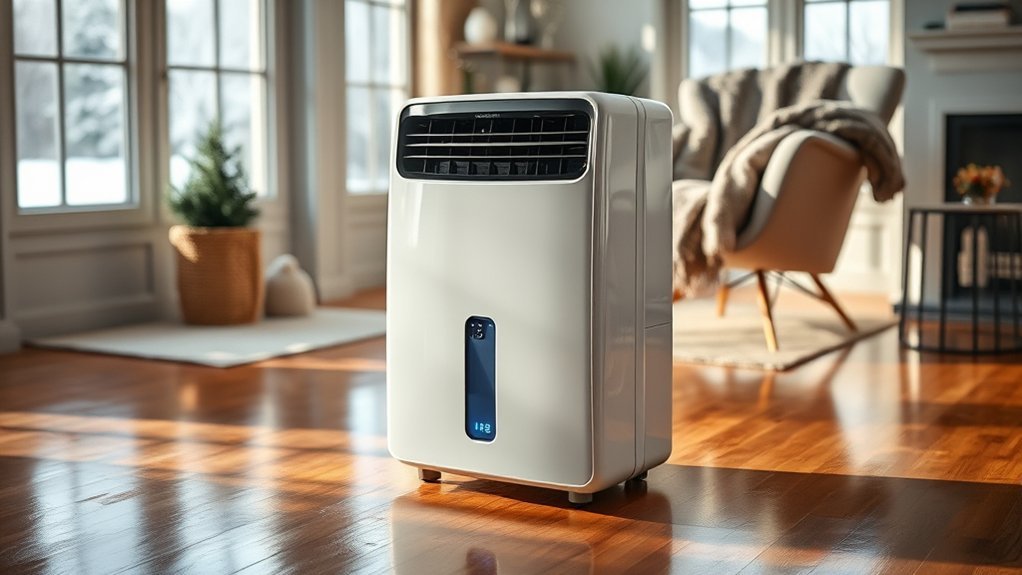
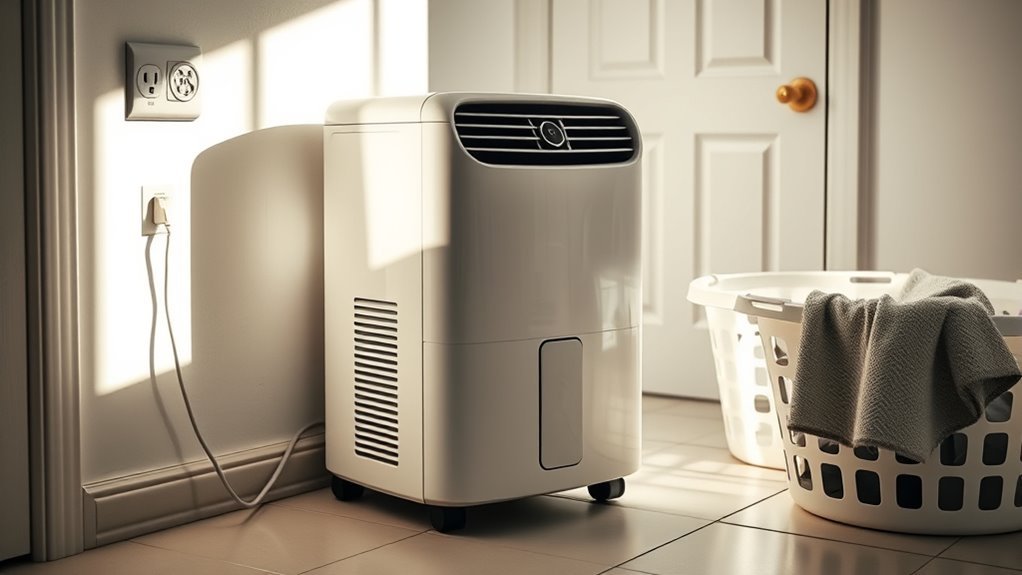
For a genuinely damp medium-sized room, basement, garage, or open living area (roughly 300 to 1,500 square feet), a compressor dehumidifier is far more effective than a compact thermoelectric unit. While tiny semiconductor dehumidifiers pull only a few ounces of water from the air per day, a full compressor model extracts tens of pints daily, maintains your target relative humidity automatically, and supports continuous hose drainage. Among medium-space options, the AEOCKY 4500 Sq.Ft Energy Star Dehumidifier is the strongest high-capacity choice for heavier dampness or larger areas, while the Waykar 34 Pints Energy Star Dehumidifier is the most practical, right-sized option for a typical medium room.
Affiliate disclosure: As an Amazon Associate I earn from qualifying purchases. This article contains Amazon affiliate links, meaning we may earn a commission at no additional cost to you.
Quick verdict
- Best overall for medium to large spaces: AEOCKY 4500 Sq.Ft Energy Star Dehumidifier — best when a damp basement, open floor plan, or persistent humidity problem demands extra extraction headroom and a longer stated warranty.
- Best value for a typical medium space: Waykar 34 Pints Energy Star Dehumidifier — ideal for standard bedrooms, home offices, laundry rooms, and moderately damp garages up to 2,000 sq. ft.
Important: Square-foot coverage and maximum pint figures are manufacturer guidelines, not guarantees. Room temperature, starting relative humidity, ceiling height, airflow, water intrusion, and drainage setup significantly affect real-world water removal.
Quick Comparison
| Product | Best For | Rated Max Capacity & Coverage | Drainage & Controls | Stated Warranty | Amazon |
|---|---|---|---|---|---|
| AEOCKY 4500 Sq.Ft Energy Star Dehumidifier | Damp basements, larger rooms, and heavier moisture loads | Up to 80 pints/day (manufacturer max high-temp/high-RH test); marketed up to 4,500 sq. ft. | Removable bucket or continuous gravity hose; digital humidistat | 3-year manufacturer-stated warranty | Check Price on Amazon |
| Waykar 34 Pints Energy Star Dehumidifier | Typical medium rooms, garages, and moderately damp basements | Up to 34 pints/day (manufacturer stated hot/humid test); marketed up to 2,000 sq. ft. | Removable tank or continuous gravity hose; digital humidistat, 2 fan speeds | 1-year base warranty | Check Price on Amazon |
AEOCKY 4500 Sq.Ft Energy Star Dehumidifier
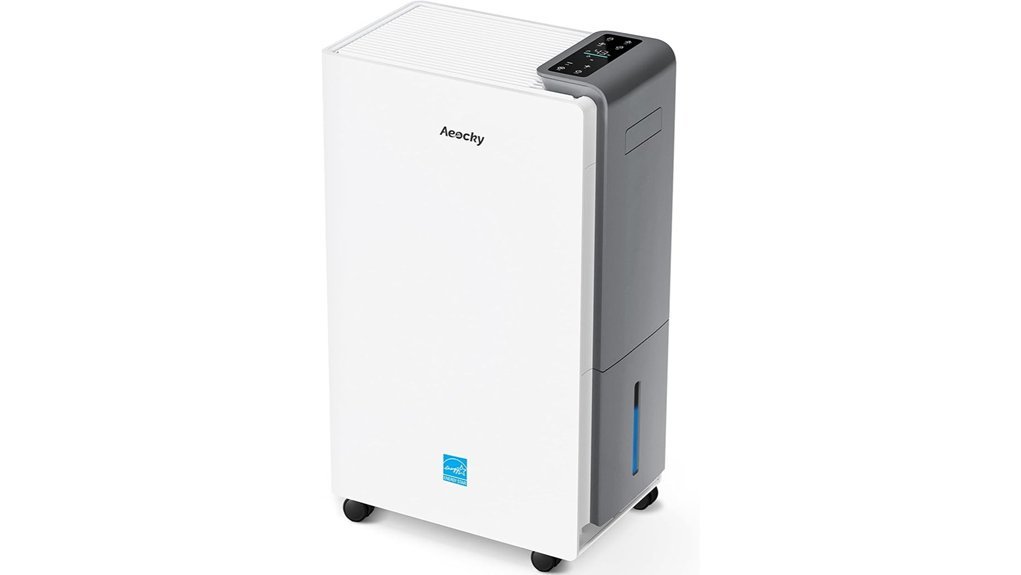
The AEOCKY 4500 Sq.Ft Energy Star Dehumidifier is the stronger choice when a medium-sized space has a heavy moisture load, or when a single unit needs to manage humidity across an open basement or multi-room layout. Built around a rotary compressor, it features an adjustable digital humidistat and supports both manual bucket emptying and continuous gravity drainage. The manufacturer advertises up to 80 pints of moisture removal per day under saturation test conditions (typically 86°F to 95°F at 80% to 90% relative humidity), so everyday household extraction in a cooler 65°F to 72°F room will naturally be lower.
The model has been marketed on Amazon with ENERGY STAR Most Efficient 2025 recognition (buyers should check the current ENERGY STAR certified product list to confirm active annual certification). Because standardized US Department of Energy (DOE) ratings are measured at a much cooler 65°F and 60% relative humidity, its DOE pint rating is substantially lower than the 80-pint maximum headline figure. Always compare the test temperature and humidity conditions rather than relying solely on the largest number in a product title. AEOCKY also backs the unit with a manufacturer-stated three-year warranty.
Key Specifications:
- Dehumidification Type: Refrigerant compressor with automatic defrost
- Manufacturer Max Rating: Up to 80 pints/day (under high-heat, high-humidity test conditions)
- Marketed Coverage Area: Up to 4,500 sq. ft. (best suited to very damp medium rooms of 500–1,500 sq. ft. or larger open basements)
- Humidity Control: Adjustable digital humidistat with auto-cycling and power-outage auto-restart
- Drainage Methods: Removable internal bucket with full-tank auto shutoff, or continuous gravity drain hose
- Stated Warranty: 3-year manufacturer-stated coverage
Best For: Damp basements, large bedrooms, open living areas, or medium-sized spaces where a smaller 20- to 30-pint unit would have to run non-stop.
Why You’ll Like It: Its higher extraction ceiling brings high humidity down to a comfortable 45% to 50% range faster, allowing the compressor to cycle off sooner rather than droning continuously.
Who Should Avoid It: Buyers treating a small bathroom, walk-in closet, or lightly humid bedroom under 300 square feet will find it physically larger, heavier, and more expensive than necessary.
Pros:
- High-capacity rotary compressor handles persistent dampness that overwhelms compact thermoelectric units.
- Adjustable humidistat automatically cycles the compressor and fan to maintain your target relative humidity.
- Continuous gravity drainage option reduces manual bucket emptying during humid summer months.
- Three-year manufacturer-stated warranty provides longer peace of mind than the typical one-year industry standard.
Cons:
- The advertised 80-pint figure reflects extreme heat and humidity testing and should not be mistaken for its cooler 65°F DOE basement extraction rate.
- Its footprint and weight are overkill for a compact room with only occasional window condensation.
- Does not include an internal condensate pump, so continuous drainage requires a downward slope to a floor drain (or an external condensate pump).
Waykar 34 Pints Energy Star Dehumidifier
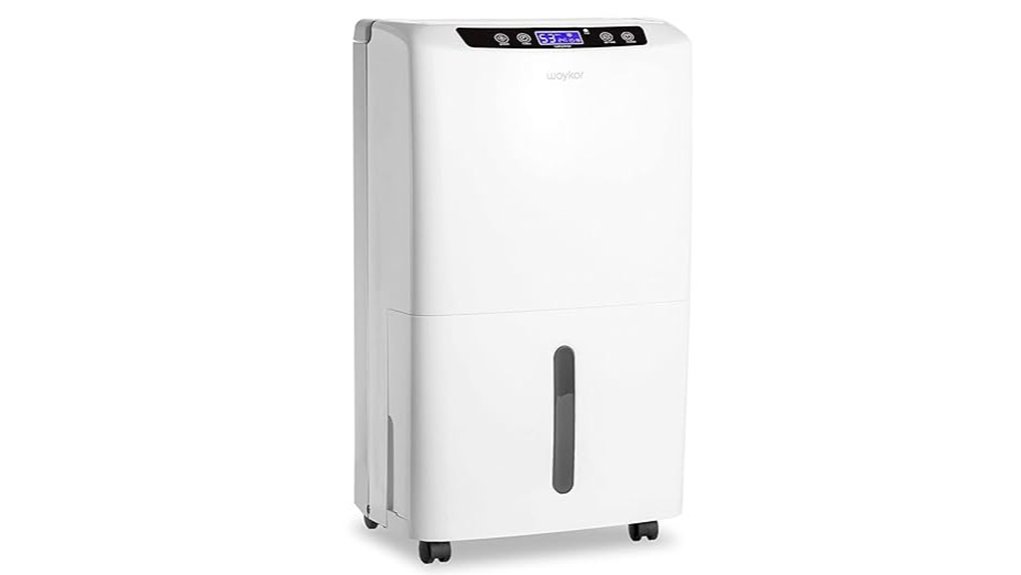
The Waykar 34 Pints Energy Star Dehumidifier is the more balanced, right-sized pick for a typical medium-sized room, single-car garage, laundry area, or moderately damp basement between 300 and 1,200 square feet. The manufacturer rates it to extract up to 34 pints per day under its stated warm, humid test conditions and markets it for spaces up to 2,000 square feet. As with all compressor models, daily water collection in a cooler room will be lower than the maximum rating and depends on starting humidity and airflow.
Its digital humidistat lets you set your preferred indoor humidity level—typically between 45% and 50% RH—so the appliance automatically pauses when the target is reached and restarts if moisture rises. Two fan speeds and manual airflow adjustment give you practical control over air circulation and operating noise. You can empty the removable water tank manually during occasional damp spells or attach the included drain hose for continuous gravity drainage into a floor drain.
Key Specifications:
- Dehumidification Type: Refrigerant compressor with auto defrost
- Manufacturer Max Rating: Up to 34 pints/day (under manufacturer-stated high-temp/high-humidity conditions)
- Marketed Coverage Area: Up to 2,000 sq. ft. (ideal for moderately damp medium spaces of 300–1,000 sq. ft.)
- Humidity & Fan Controls: Digital humidistat, 2 fan speeds, 24-hour timer, auto restart
- Drainage Methods: Removable water tank with full-tank shutoff alert, or continuous gravity drain hose
- Stated Warranty: 1-year base warranty
Best For: Homeowners and renters who want a reliable compressor dehumidifier for a standard medium room without stepping up to a bulkier, higher-wattage basement machine.
Why You’ll Like It: It pairs true compressor extraction and automatic humidity cycling with caster wheels and a compact housing that rolls easily between a bedroom, hallway, and laundry room.
Who Should Avoid It: It is underpowered for active groundwater seepage, sprawling unsealed basements over 1,500 square feet, or severe dampness that requires rapid commercial-grade drying.
Pros:
- 34-pint manufacturer-rated capacity delivers vastly better moisture control in medium rooms than sub-2-pint thermoelectric units.
- Digital humidistat prevents over-drying and saves electricity by cycling the compressor off once target humidity is met.
- Dual drainage options (removable bucket or continuous gravity hose) fit both temporary room use and longer basement runs.
- Compact wheeled cabinet and integrated handle make room-to-room placement straightforward.
Cons:
- The internal collection tank is relatively compact and can require emptying once or twice a day during peak summer humidity if no hose is connected.
- Gravity drainage requires the hose outlet to sit lower than the unit’s drain port with no upward loops.
- The one-year base warranty is shorter than the AEOCKY’s stated three-year coverage.
How We Narrowed the List
Many dehumidifier buying guides mix full-size compressor machines with tiny desktop Peltier (thermoelectric) units that claim coverage for several hundred square feet despite pulling less than a pint of water per day. To ensure our recommendations actually lower relative humidity in real-world medium spaces, we filtered out compact closet units and evaluated models against five strict criteria:
- True compressor-based extraction: Refrigeration coils capable of handling persistent indoor dampness across 300 to 1,500+ square feet.
- Automatic humidistat control: Built-in digital humidity sensors that cycle the unit around a target percentage (such as 45% to 50% RH) rather than running blindly on a simple on/off switch.
- Meaningful daily moisture removal: Enough extraction capacity to keep up with damp basements, laundry rooms, and humid living areas.
- Continuous drainage support: A direct hose connection so homeowners do not have to empty a water bucket multiple times a day.
- Transparent rating context: Clear separation between maximum saturation test numbers and everyday household performance.
If neither the AEOCKY nor the Waykar matches your layout, other established compressor models worth comparing in this size class include the Midea Cube 20-Pint or 35-Pint (DOE) Dehumidifier (which uses a lift-and-twist nested bucket design for larger water storage), the Honeywell TP50WKN, and the hOmeLabs 35-Pint (DOE) Energy Star Dehumidifier.
Before you buy
A portable dehumidifier manages airborne water vapor, but it cannot repair plumbing leaks, stop foundation seepage, or remove existing mold colonies. When a room has standing water, clogged gutters, foundation cracks, or visible mold growth, fix the underlying water entry and remediate affected surfaces first.
Factors to Consider When Choosing Dehumidifiers for Medium Size Spaces
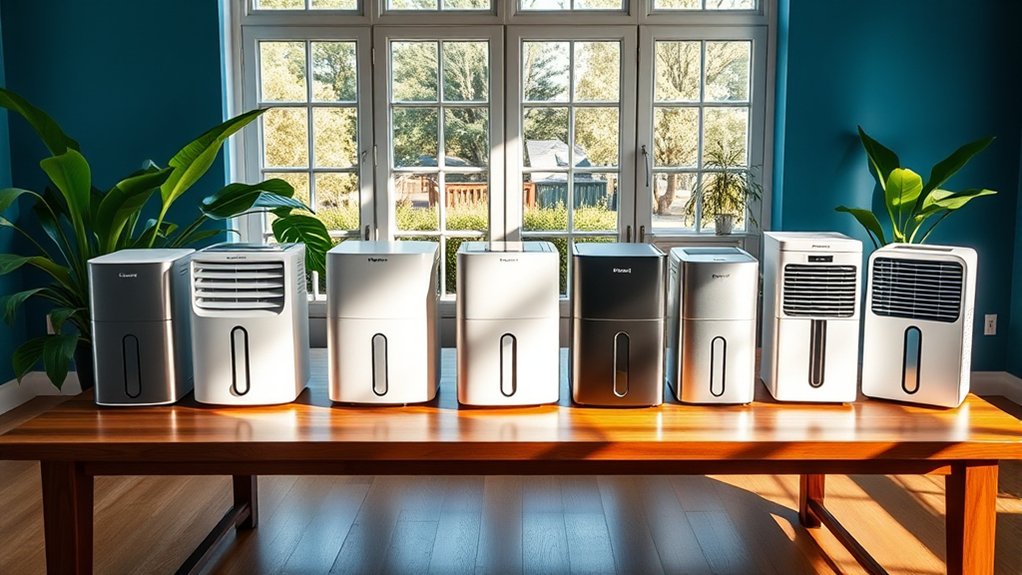
Choosing a dehumidifier by its headline square-foot claim alone often leads to an undersized purchase. Before ordering, evaluate your room’s dampness level, how pint ratings are tested, ambient room temperature, drainage logistics, and noise levels.
Coverage Area and Dampness Level
A mildly humid upstairs bedroom and a damp concrete basement of the exact same square footage place very different workloads on a dehumidifier. Manufacturer square-foot claims generally assume well-sealed rooms with moderate humidity and standard 8-foot ceilings. Step up one capacity tier if your space has high ceilings, open doorways, damp masonry walls, indoor clothes drying, or frequent occupant moisture.
| Room Size (Sq. Ft.) | Moderately Damp (Musty only in humid weather) | Very Damp (Always feels clammy or smells musty) | Wet (Damp walls/floors or sweating pipes) |
|---|---|---|---|
| 300 – 500 sq. ft. | 20–22 pints (DOE) / ~30–34 pints (Max) | 25–30 pints (DOE) / ~40–50 pints (Max) | 30–35 pints (DOE) / ~50–60 pints (Max) |
| 500 – 1,000 sq. ft. | 22–30 pints (DOE) / ~34–50 pints (Max) | 30–35 pints (DOE) / ~50–70 pints (Max) | 35–50 pints (DOE) / ~70–80+ pints (Max) |
| 1,000 – 1,500 sq. ft. | 30–35 pints (DOE) / ~50–70 pints (Max) | 35–50 pints (DOE) / ~70–80+ pints (Max) | 50+ pints (DOE) / ~80+ pints (Max) |
Moisture Removal Capacity and Test Conditions
Daily moisture removal is measured in pints per 24 hours, but online listings routinely cite three different testing standards:
- Current US DOE / ENERGY STAR Standard (since 2019): Tested at 65°F and 60% relative humidity to reflect cooler basement conditions.
- Previous DOE Standard (pre-2019): Tested at 80°F and 60% relative humidity. A unit rated at 30 pints under the current 65°F test is roughly equivalent to a 50-pint unit under the older 80°F test.
- Manufacturer Maximum (Saturation) Condition: Often tested at 86°F to 95°F and 80% to 90% relative humidity. Because warm, saturated air holds far more water vapor, this test produces the highest possible pint number (such as 34 pints or 80 pints).
Always check which test condition a brand uses before comparing two numbers side by side.
Compressor vs. Thermoelectric Models
Compressor dehumidifiers pull warm, moist air across cold evaporator coils using a refrigerant loop, much like a window air conditioner where both the cool and warm coils stay inside one cabinet. They are the standard choice for medium rooms and basements because they extract 20 to 80+ pints per day. By contrast, small thermoelectric (Peltier) units typically extract only 8 to 34 ounces (0.5 to 2 pints) per day and are best reserved for small closets, gun safes, or tiny RVs. Keep in mind that standard compressor coils lose efficiency in cold rooms below 65°F (18°C) and can ice over below 60°F (15.6°C); for unheated winter garages below 50°F, a desiccant dehumidifier is usually a better fit.
Energy Efficiency
ENERGY STAR certified portable dehumidifiers use more efficient compressors and fans to remove more water per kilowatt-hour of electricity consumed. However, an efficiency badge cannot compensate for an undersized machine. A larger compressor unit (like the AEOCKY) that reaches 50% humidity quickly and cycles off for hours often uses power more sensibly in a damp basement than a smaller unit that runs 24 hours a day without ever catching up.
Noise Level
Every compressor dehumidifier generates both airflow noise from the fan and a low mechanical hum from the compressor—typically ranging between 46 dBA and 53 dBA depending on fan speed. For a bedroom, nursery, or home office, place the unit on a flat, solid floor (or a vibration-damping mat) away from the bed, run it on low fan speed once humidity is under control, and keep 8 to 12 inches of open space around the intake grille and exhaust vents so the fan does not strain.
Drainage Options
Relying on the internal slide-out bucket works for lightly humid rooms, but a 0.5- to 1.5-gallon tank can fill up in less than 12 hours during humid summer weather—triggering the full-tank shutoff while the room is still damp. Continuous gravity drainage solves this by routing water through a hose into a nearby floor drain or sump pit, provided the entire length of the hose slopes downward with no kinks. Neither the AEOCKY nor the Waykar includes an internal pump, so if you need to discharge water upward into a utility sink or out a high basement window, you can pair the gravity drain hose with a standalone external condensate pump positioned on the floor next to the dehumidifier.
Safety and Maintenance Features
Look for essential safeguards including automatic full-bucket shutoff with an indicator light, automatic defrost (which briefly pauses the compressor while keeping the fan running to melt frost off the coils in cooler rooms), power-outage auto-restart (which remembers your target humidity setting after a brief blackout), and a washable mesh air filter. Always plug a compressor dehumidifier directly into a grounded wall outlet rather than using an undersized extension cord or power strip.
Portability and Placement
Because compressor units weigh roughly 25 to 45 pounds empty, smooth-rolling 360-degree caster wheels and recessed side handles make a major difference when moving the machine between seasons. Before buying, check the cord length, where the drain port exits the cabinet, and whether the air exhaust blows out the top or side so furniture or curtains will not block airflow.
Frequently Asked Questions
How Often Should I Empty the Dehumidifier’s Water Tank?
Empty the tank whenever the full-bucket indicator chimes and pauses the machine. During the first few days in a very damp room, you may need to empty a typical 0.5- to 1.5-gallon bucket once or twice daily as moisture pulls out of carpets, drywall, and furniture. Once the room stabilizes around 45% to 50% relative humidity, emptying frequency drops—or you can attach a continuous gravity drain hose to skip bucket emptying altogether.
Can a Dehumidifier Remove Mold or Allergens?
A dehumidifier cannot kill or remove existing mold growth, nor does it replace HEPA air filtration or plumbing repairs. However, according to the US Environmental Protection Agency (EPA), keeping indoor relative humidity between 30% and 50% (and strictly below 60%) prevents new mold spores from thriving and reduces dust mite populations. Visible mold and water-damaged drywall still require proper surface cleaning or remediation.
What Maintenance Is Required?
Rinse and air-dry the removable mesh air filter every two to four weeks to keep dust from insulating the cold coils and restricting airflow. Every couple of weeks, wash the water collection bucket with warm water and mild dish soap to prevent slimy biofilm or musty odors, and periodically check gravity drain hoses for kinks, algae buildup, or blockages.
Are Compressor Dehumidifiers Noisy?
Yes, they are noticeably louder than tiny thermoelectric units because they house both a refrigeration compressor and a high-airflow circulation fan, sounding similar to a box fan on medium speed (around 46 to 53 dBA). Running the unit on high speed during the daytime to lower humidity and switching to low fan speed at night makes bedroom operation much more comfortable.
How Do I Choose the Right Capacity?
Start with your room’s square footage, then size up if the space is below grade, poorly ventilated, or consistently above 65% relative humidity. Placing an inexpensive standalone digital hygrometer on the opposite side of the room lets you verify actual room humidity independently of the sensor built into the dehumidifier housing.
Should I Use the Tank or a Drain Hose?
Use the removable water tank when rolling the dehumidifier between bedrooms, bathrooms, or living spaces where no floor drain exists. Use a continuous drain hose for basements, laundry rooms, or utility spaces where a floor drain or sump basin sits lower than the dehumidifier’s drain outlet.
What Humidity Percentage Should I Set My Dehumidifier To?
For most medium-sized rooms and basements, set your humidistat between 45% and 50% relative humidity. Setting a compressor dehumidifier to 30% or 35% in summer usually forces the unit to run non-stop, driving up your electric bill and adding unnecessary heat to the room without providing extra protection against mold or dust mites.
Can I Run a Compressor Dehumidifier in a Cold Garage or Basement?
Standard compressor dehumidifiers work best when room temperatures stay above 65°F (18°C). While models with automatic defrost can operate down to roughly 41°F to 50°F, cold air causes frost to build up rapidly on the evaporator coils, drastically reducing water extraction. For unheated spaces that regularly drop below 55°F, a desiccant dehumidifier is more effective.
Final Recommendation
Choose the AEOCKY 4500 Sq.Ft Energy Star Dehumidifier when you need extra moisture-removal headroom for a damp basement, an open-plan area over 800 square feet, or a heavier humidity problem—and when you value its longer stated three-year warranty.
Choose the Waykar 34 Pints Energy Star Dehumidifier when you want a compact, easy-to-move compressor dehumidifier for a typical medium bedroom, home office, garage, or moderately damp basement area.
Whichever model you select, verify current product specifications, EnergyGuide pint ratings, warranty terms, cabinet dimensions, and drain-hose thread compatibility on Amazon before ordering. Pairing the right-sized compressor unit with a 45% to 50% humidistat target—and sealing off any exterior moisture leaks—will deliver far more reliable dryness than relying on inflated coverage claims.