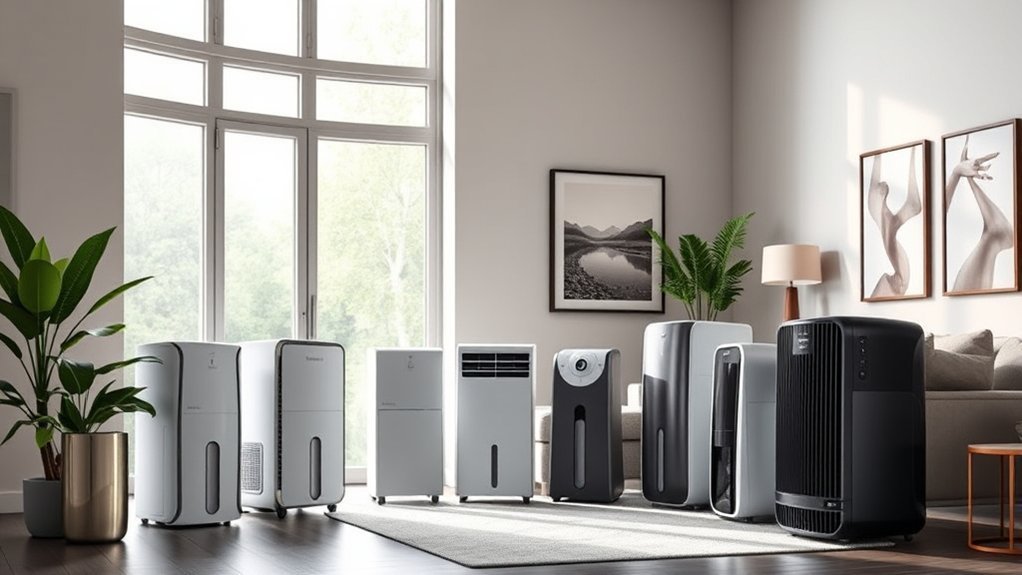
This guide compares seven compact dehumidifier options, including the TCL 25-pint, Onsekin home dehumidifier, Shinco 30-pint, HXCOCKCROW 34-pint, Midea Cube 20-pint, Frigidaire 22-pint Wi-Fi model, and ZAFRO 21-pint unit. Some are better for damp basements, while others make more sense for mild humidity in bedrooms, closets, bathrooms, RVs, nurseries, and small living spaces.
How We Compared These Small Dehumidifiers
To make the choices easier, this guide focuses on practical buyer factors: listed pint capacity, room-size claims, tank size, hose drainage, noise level, portability, safety features, humidity controls, and whether each model makes sense for light, moderate, or heavier dampness. Manufacturer ratings can depend on warm and humid test conditions, so use them as a comparison tool rather than a guaranteed daily result in every room.
Quick Picks: Small Dehumidifiers Compared
Use this quick table to match each model to your room size and buying goal before reading the full reviews.
| Product | Best Use | Key Reason to Consider It | Check Price |
|---|---|---|---|
| TCL 25-Pint Portable Dehumidifier for Rooms up to 2000 Sq.Ft | Basements and medium rooms | ENERGY STAR efficiency, precise humidity control, and bucket or continuous drainage | Check Price on Amazon |
| Home Dehumidifier for 2000 Sq.Ft with Drain Hose | Bedrooms, RVs, closets, and mild home humidity | Compact 9-lb design with digital humidity sensing | Check Price on Amazon |
| Shinco 30 Pint Dehumidifier for Home and Basements | Medium rooms and damp spaces | 30-pint rating, 42 dB operation, timer, and child lock | Check Price on Amazon |
| HXCOCKCROW 34-Pint Dehumidifier for Home and Basement | Basements and rooms up to 1,500 sq. ft. | 34-pint rating, three modes, hose drainage, timer, and child lock | Check Current Amazon Availability |
| Midea Cube 20 Pint Dehumidifier with Alexa Control | Smart homes and medium rooms | Large 3.2-gallon tank with app and voice control | Check Price on Amazon |
| Frigidaire 22-Pint Portable Dehumidifier with Wi-Fi | Small rooms with smart controls | Wi-Fi, voice control, 43 dBA operation, and Energy Star efficiency | Check Price on Amazon |
| ZAFRO 21-Pint Dehumidifier for Home and Basement | Basements and larger rooms up to 1,600 sq. ft. | Sleep mode, wheels, clear displays, and hose drainage | Check Price on Amazon |
Buying tip: For a damp basement, prioritize pint capacity, a drain hose, auto-defrost, and a tank that is not too small. For a bedroom or nursery, noise level, sleep mode, auto shutoff, and easy cleaning matter more than maximum coverage claims.
Before You Buy: Quick Checklist
- Measure the room: A closed bedroom is easier to dry than an open basement or multi-room layout.
- Check the moisture level: Musty smells, window condensation, and damp floors usually call for more capacity.
- Plan the drainage: If you have a floor drain, sink, or shower nearby, a hose can save daily bucket emptying.
- Think about noise: Bedrooms and offices need lower dB ratings and sleep-friendly display controls.
- Look for safety features: Auto shutoff, child lock, auto-defrost, and tip protection can make daily use easier.
TCL 25-Pint Portable Dehumidifier for Rooms up to 2000 Sq.Ft

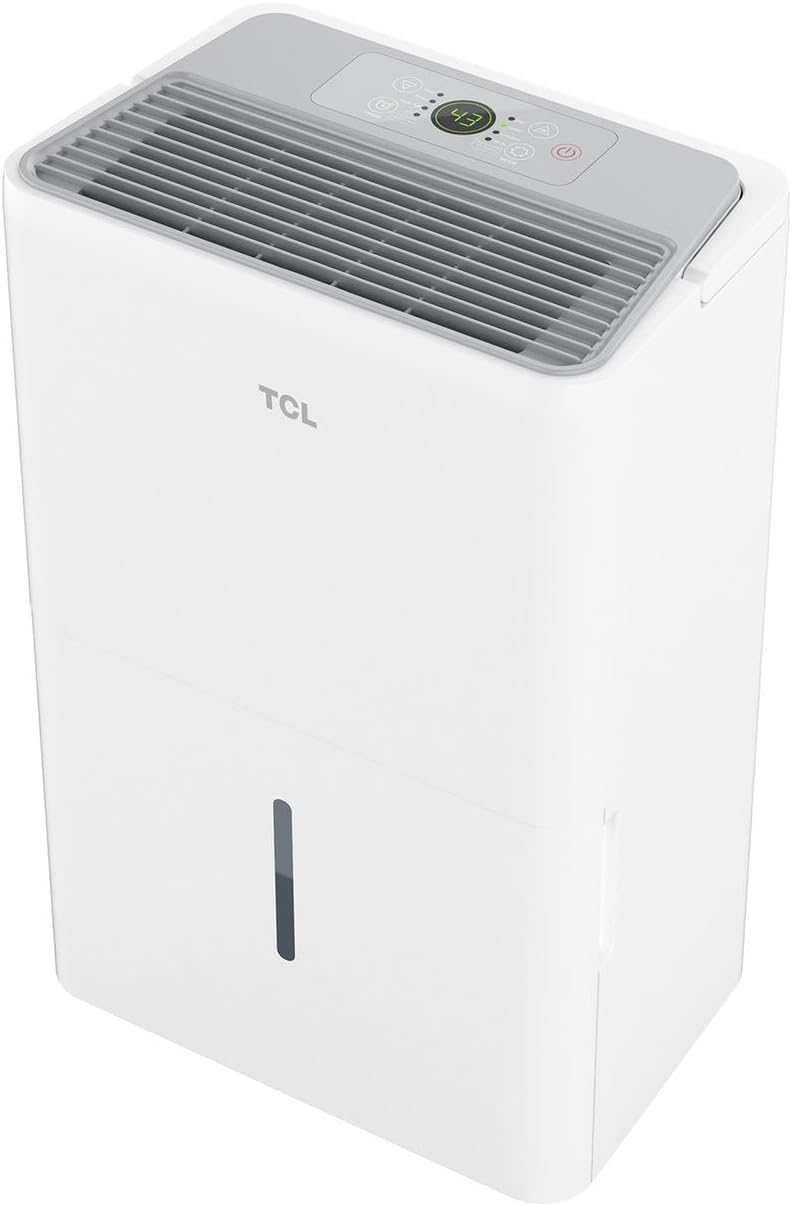
Best energy-efficient 25-pint pick: The TCL T25DC9R is a practical 25-pint compressor dehumidifier for residential spaces up to 2,000 sq. ft. It uses precise humidity control to manage moisture automatically and is ENERGY STAR certified. The 3.8-liter bucket gives you a manual drainage option, while the gravity drain port supports continuous drainage with a standard hose. Its compact body, collapsible handle, and 26.4-pound weight make it easier to move between a basement, bedroom, garage, attic, or other damp room.
Why you’ll like it: This model keeps a useful 25-pint capacity while adding ENERGY STAR certification, precise humidity control, and a current Amazon US listing from a recognizable appliance brand. The controls are straightforward, and continuous drainage can reduce how often you need to empty the bucket.
Best For: Homeowners or renters who want an energy-efficient 25-pint dehumidifier for basements, bedrooms, garages, attics, and medium-sized rooms up to 2,000 sq. ft.
Who Should Skip It: Skip it if you specifically need a drain hose included in the box, since Amazon lists the continuous-drain connection but says the hose is not included.
Pros:
- 25-pint daily dehumidification capacity with coverage listed up to 2,000 sq. ft.
- ENERGY STAR certified with automatic humidity control for more efficient everyday use.
- Supports both bucket drainage and continuous gravity drainage, plus a compact portable design.
Cons:
- A standard drain hose is required for continuous drainage and is not included.
- At 26.4 pounds, it is heavier than lightweight mini dehumidifiers.
- Coverage can vary with room layout, insulation, temperature, and humidity conditions.
Quick Verdict: Choose the TCL if you want a current 25-pint Amazon US option with ENERGY STAR efficiency, simple humidity control, and flexible drainage for medium-sized rooms.
Home Dehumidifier for 2000 Sq.Ft with Drain Hose
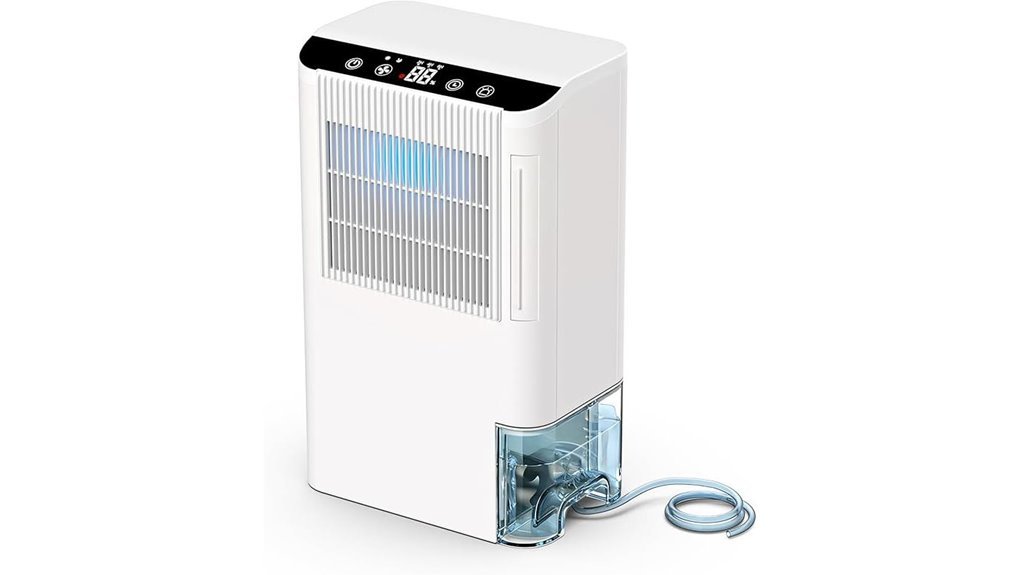
Best lightweight home option: Need dependable moisture control for a 2000 sq. ft. home, and the Onsekin Dehumidifier fits the bill. You get a compact 9-lb unit with a 2.5-liter tank and a 3.3-ft drain hose for continuous use. Its digital sensor checks air every 3 seconds and keeps humidity within ±2%, while removing up to 2.2 liters daily. You can run it quietly at 50 dB, or 46 dB in sleep mode. It works in 41 °F conditions, uses just 270W, and protects bedrooms, basements, bathrooms, closets, RVs, and valuables with smart safety shutoffs.
Why you’ll like it: The strongest reason to consider this model is convenience. It is light, compact, and built for people who want a simple unit for bedrooms, bathrooms, closets, RVs, and storage spaces. Because the listed moisture removal is 2.2 liters per day, it is better for everyday humidity control than for a wet basement with standing moisture or heavy seepage.
Best For: Homeowners, apartment dwellers, and RV users who need quiet, energy-efficient moisture control for spaces up to 2000 sq. ft., especially in bedrooms, basements, bathrooms, closets, or for protecting valuables.
Who Should Skip It: Skip it if your main problem is severe basement dampness and you need high daily pint removal above all else.
Pros:
- Covers up to 2000 sq. ft. while staying compact and lightweight at 9 lbs.
- Quiet operation at 50 dB, with an even quieter 46 dB sleep mode.
- Includes a 3.3-ft drain hose, precise humidity control, and smart safety shutoffs.
Cons:
- 2.5-liter tank may require frequent emptying without continuous drainage.
- Moisture removal rate of 2.2 liters per day may be modest for very damp spaces.
- Best performance is in smaller home environments rather than heavy-duty commercial use.
Quick Verdict: This is a better fit for mild to moderate home humidity than heavy basement drying, especially if portability and automatic sensing matter to you.
Shinco 30 Pint Dehumidifier for Home and Basements
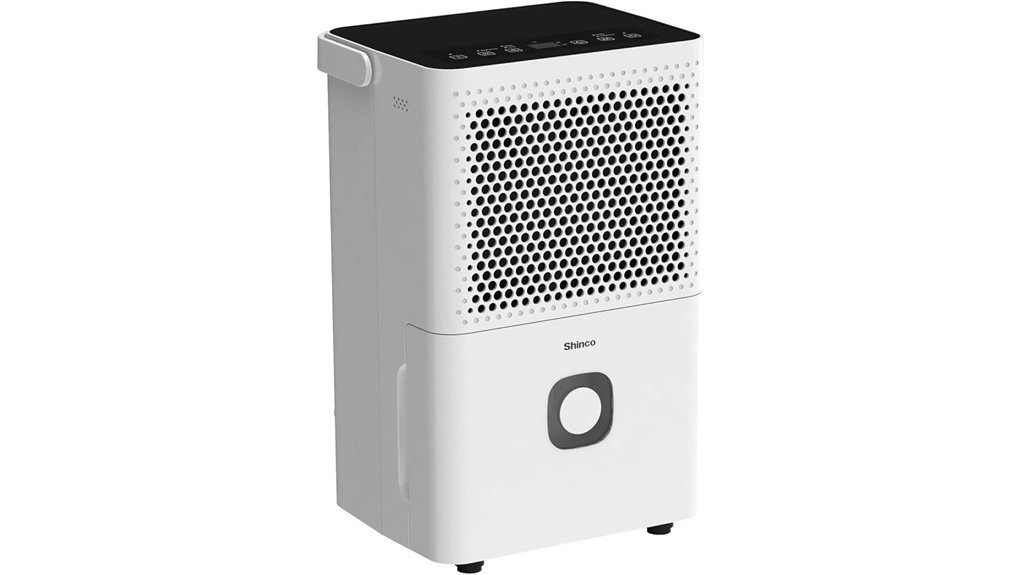
Best higher-capacity compact pick: The Shinco 30 Pint Dehumidifier suits you if you need quiet, compact moisture control for medium spaces. You can use it in bedrooms, bathrooms, offices, basements, or RVs, and it covers up to 1,500 square feet. It pulls up to 30 pints a day under ideal conditions, while running at a low 42 dB. You can set humidity from 45% to 55%, choose two fan speeds, and drain water by hose or tank. It also offers auto restart, a timer, child lock, and washable filters for easy upkeep.
Why you’ll like it: This is one of the stronger choices if you want more daily moisture removal in a compact format. The 30-pint rating gives it a useful edge for damp rooms, but the smaller tank means hose drainage is still the better setup for long runs. It also makes sense for buyers who want a familiar control layout with timer, fan-speed, and restart features.
Best For: Homeowners, renters, or RV users who want a quiet, compact dehumidifier for medium-sized spaces like bedrooms, bathrooms, offices, and basements.
Who Should Skip It: Skip it if you want a large bucket that can run for long periods without manual emptying.
Pros:
- Covers up to 1,500 sq. ft. and removes up to 30 pints of moisture per day.
- Quiet 42 dB operation with two fan speeds for flexible use.
- Convenient features like auto restart, timer, child lock, and both hose and tank drainage options.
Cons:
- The 0.33-gallon tank may require frequent emptying in very humid conditions.
- Best performance is only under optimal conditions, so real-world output may be lower.
- Compact size is great for portability, but it may not be enough for larger or extremely damp areas.
Quick Verdict: Pick the Shinco if you want a compact 30-pint option for medium damp spaces and do not mind using hose drainage for heavier moisture days.
HXCOCKCROW 34-Pint Dehumidifier for Home and Basement
Best flexible-control pick: The HXCOCKCROW 34-Pint Dehumidifier is designed for rooms up to 1,500 square feet and removes up to 34 pints of moisture per day under 95°F and 90% RH test conditions. You can choose DEHU mode with a target humidity range from 30% to 80% RH, DRY mode for clothes, or CONT mode for continuous operation. The unit includes a 3.3-foot drain hose for continuous drainage, plus manual tank drainage when you do not have a nearby drain. A 24-hour timer, child lock, auto shutoff, auto-defrost, power-outage memory, casters, and lift-up handles add everyday convenience.
Why you’ll like it: This replacement is a better fit than the discontinued 17-pint model if you want stronger moisture removal without giving up adjustable humidity control and multiple operating modes. The 1,500-sq.-ft. coverage claim makes it more useful for basements, laundry rooms, bathrooms, bedrooms, RVs, and other medium spaces. For consistently damp rooms, the included hose is the easiest way to avoid frequent tank emptying.
Best For: Homeowners, renters, or RV users who want a compact compressor dehumidifier for spaces up to 1,500 sq. ft. with three operating modes, automatic humidity control, and continuous drainage.
Who Should Skip It: Skip it if you need whole-house coverage, a built-in condensate pump, or a large bucket for long periods of manual drainage.
Pros:
- Removes up to 34 pints per day under high-temperature, high-humidity test conditions and is rated for spaces up to 1,500 sq. ft.
- Offers DEHU, DRY, and CONT modes with adjustable 30% to 80% RH control.
- Includes a 3.3-foot drain hose, child lock, timer, auto shutoff, auto-defrost, power-outage memory, casters, and handles.
Cons:
- Real-world moisture removal can be lower than the maximum laboratory-style rating in cooler or less humid rooms.
- The 3.3-foot drain hose may be too short for some basement layouts.
- It does not include a built-in pump, so continuous drainage depends on gravity and drain placement.
Quick Verdict: Choose the HXCOCKCROW 34-pint model if you want stronger small-to-medium-room moisture removal, flexible modes, and hose drainage without moving up to a much larger dehumidifier.
Midea Cube 20 Pint Dehumidifier with Alexa Control
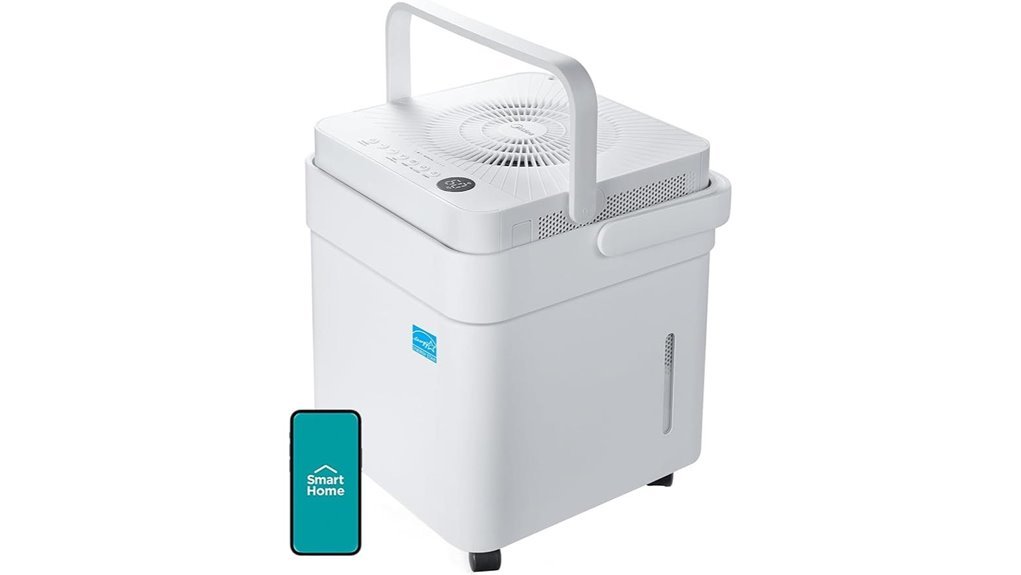
Best smart tank design: If you want smart, hands-free moisture control, the Midea Cube 20 Pint shines. You can cover up to 1,500 sq. ft. while it pulls 20 pints a day, and its 3.2-gallon tank lets you go longer between empties. The lift-and-twist design gives you flexible placement, and the included drain hose supports continuous drainage. Control it from the SmartHome app or with Alexa and Google Assistant. You also get three fan speeds, ENERGY STAR efficiency, auto restart, auto-defrost, and a washable filter. At 33.29 pounds, it’s compact, durable, and easy to manage.
Why you’ll like it: The Midea Cube is a strong pick if you hate frequent bucket emptying. Its large tank is the standout feature, and the app control makes it easier to adjust settings without walking over to the unit. The tradeoff is weight, so it is better as a semi-stationary dehumidifier than a model you move every day.
Best For: Homeowners or renters who want a smart, space-saving dehumidifier for medium-sized areas up to 1,500 sq. ft. with app and voice control.
Who Should Skip It: Skip it if you want the lightest portable unit or do not plan to use smart features.
Pros:
- Wi-Fi connectivity with SmartHome app support and Alexa/Google Assistant control
- Large 3.2-gallon tank plus included drain hose for longer or continuous operation
- ENERGY STAR certified with useful features like auto restart, auto-defrost, and a washable filter
Cons:
- 20-pint capacity may be too small for very damp spaces or larger homes
- At 33.29 pounds, it’s not the lightest unit to move around
- Requires Wi-Fi and a compatible smart device for full smart-control functionality
Quick Verdict: Choose the Midea Cube if you want smart controls, a bigger tank, and fewer manual emptying sessions in a medium-sized room.
Frigidaire 22-Pint Portable Dehumidifier with Wi-Fi

Best known-brand Wi-Fi pick: The Frigidaire FHDD2234W1 suits you if you want smart moisture control in small rooms. It removes up to 22 pints a day, so you can tame humidity in bedrooms, bathrooms, and other compact spaces. You can adjust settings through the Frigidaire app, or use Alexa and Google Home for hands-free control. The 24-hour timer helps you fit it into your routine, while Energy Star efficiency keeps running costs down. At 43 dBA, it stays quiet, and the washable filter, auto shutoff, caster wheels, and continuous drain option make upkeep easy and convenient.
Why you’ll like it: This is a practical choice if you want a known appliance brand and do not want to give up smart controls. It is especially useful when you want to check or adjust humidity from your phone. For bigger, wetter basements, you may want more capacity, but for small rooms it balances features well.
Best For: People who want a compact, Wi-Fi-enabled dehumidifier for small rooms like bedrooms and bathrooms with easy app-based and voice control.
Who Should Skip It: Skip it if you do not want Wi-Fi features or need a higher-capacity dehumidifier for a very damp basement.
Pros:
- Smart controls with the Frigidaire app plus Alexa and Google Home compatibility
- Quiet operation at 43 dBA with Energy Star efficiency to help reduce running costs
- Convenient maintenance features like washable filter alerts, auto shutoff, and continuous drain option
Cons:
- 22-pint capacity is best for smaller spaces, not larger or very damp areas
- Requires Wi-Fi for full smart features, which may not suit everyone
- Manual bucket emptying may still be needed if you don’t use the continuous drain setup
Quick Verdict: Choose the Frigidaire if you want a compact Wi-Fi dehumidifier with quiet operation, app control, and easy maintenance.
ZAFRO 21-Pint Dehumidifier for Home and Basement
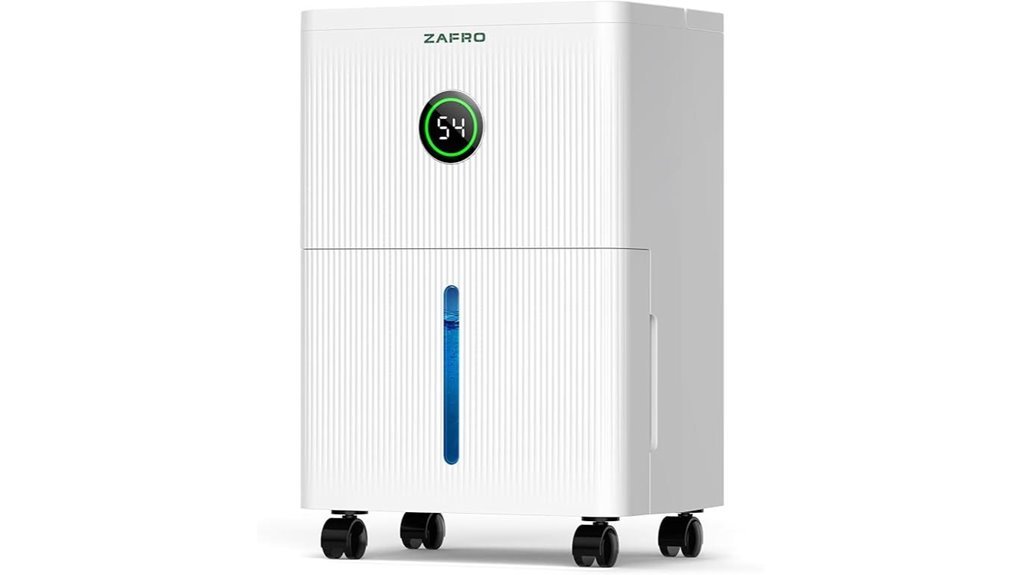
Best easy-move basement option: ZAFRO’s 21-pint dehumidifier fits spaces up to 1,600 square feet, making it ideal for basements and larger rooms. You can pull up to 21 pints of moisture a day, and its 41 dB operation won’t disrupt your routine. Sleep mode lowers fan speed and dims the display, while the 24-hour timer adds flexibility. You’ll see humidity clearly on the dual screens and tri-color LED. Eco-friendly refrigerant, auto-defrost, and triple protection boost reliability. Use the 0.45-gallon tank or the drainage hose, and move it easily on 360° wheels.
Why you’ll like it: The ZAFRO stands out for buyers who want a quieter dehumidifier with clear status displays and easy movement. It is a solid fit for medium to larger rooms, but the smaller tank means you should use the hose if the room is consistently damp. The wheels are especially useful if you plan to move it between a basement, laundry room, and storage area.
Best For: Homeowners, renters, and basement users who need a quiet, easy-to-move dehumidifier for medium to large spaces up to 1,600 square feet.
Who Should Skip It: Skip it if you want smart app control or a large bucket for long manual operation.
Pros:
- Removes up to 21 pints of moisture per day for effective humidity control.
- Runs quietly at 41 dB with sleep mode, a 24-hour timer, and clear humidity displays.
- Offers flexible drainage with a water tank or hose, plus convenient mobility on 360° wheels.
Cons:
- The 0.45-gallon tank may require frequent emptying in very damp conditions.
- Best suited for spaces up to 1,600 square feet, so it may be insufficient for larger areas.
- No mention of smart app control or advanced connectivity features.
Quick Verdict: Choose the ZAFRO if you want quiet basement moisture control, easy movement, and a clear humidity display without needing smart app features.
Factors to Consider When Choosing a Small Compressor Dehumidifier
When you choose a small compressor dehumidifier, start by checking the coverage area and pint capacity so it matches your space and moisture level. You’ll also want to weigh the noise level, drainage options, and humidity controls to make daily use easier. The right balance of these features helps you get efficient performance without extra hassle.
Coverage Area
Coverage area should be one of your first checks, since small compressor dehumidifiers can handle anything from small enclosed rooms to larger spaces, depending on the model. You’ll want to match the unit to the space you’re treating so it can pull moisture efficiently without overworking. A compact model may suit a bathroom, closet, bedroom, or nursery. If you’re tackling a basement or medium-sized room, look for stronger moisture removal and better drainage support. For open layouts or larger rooms, choose a model rated for more square footage than your room size, especially if the area is very damp. Also, consider how humid the area is, since tougher conditions can demand stronger coverage for steady results.
Pint Capacity
Pint capacity tells you how much moisture a dehumidifier can pull from the air in a day. You should match that number to the size of your room and the severity of your humidity problem. If you’re treating a bedroom, bathroom, or other compact space, a lower-capacity model may be enough. For damp conditions, basements, laundry areas, or rooms that smell musty, choose a higher rating when possible. Keep in mind that manufacturers often test capacity under warm, humid conditions, so real-world results can be lower in cooler or less humid rooms. To stay ahead of moisture, it’s smart to pick a unit with a little extra capacity for your space, especially when humidity rises.
Noise Level
Noise level matters a lot because small compressor dehumidifiers often run for hours at a time. In a bedroom, nursery, office, or small apartment, a loud fan or compressor hum can become annoying fast. If you want near-silent operation, look for lower dB ratings and a sleep mode. For a basement, laundry room, or storage area, a slightly louder unit may be fine because background noise is less of a problem. In smaller rooms, even modest sound can feel louder, so check the spec sheet before you buy. Choosing a quieter model helps you stay comfortable while the dehumidifier runs continuously.
Drainage Options
Drainage options matter because they determine how often you’ll need to empty the unit and how smoothly it runs day to day. You can choose a model with a removable tank for manual draining or a hose for continuous drainage. If you don’t want to babysit the dehumidifier, pick one with a drain hose that can route water to a sink or floor drain, so it keeps working without interruptions. Tank size also affects upkeep: a smaller tank fills fast, while a larger tank gives you more time between emptying. Look for auto shut-off, too, since it stops the unit before overflow. If you’ll move it often, a lightweight design, handle, or wheels makes manual draining much easier.
Humidity Controls
Humidity controls can make a small compressor dehumidifier much easier to live with, since they let you set a target level so the unit matches the room instead of running blindly. You should look for digital sensors, clear humidity displays, and simple controls that are easy to understand. Multiple modes also help: a DEHU setting can keep moisture in check continuously, while a DRY mode can help with laundry or damp fabrics. Automatic adjustments mean the compressor kicks on only when readings call for it, and a timer lets you schedule operation around your routine. With these controls, you can fine-tune performance without constant manual tweaks.
Energy Efficiency
Once you’ve set your comfort level with the controls, energy use is the next thing to check in a small compressor dehumidifier. You’ll want to look for ENERGY STAR certification when available, since it can help reduce wasted power during regular use. Check the wattage, timer options, fan settings, and humidity sensor features before you buy. A model that shuts off when it reaches your target humidity can be easier on your electric bill than one that runs nonstop. Quieter units can also be more comfortable for long use, especially in bedrooms or offices. Timers and humidity sensors can help you run the dehumidifier only when it’s needed.
Smart Safety Features
Smart safety features can make a small compressor dehumidifier easier and safer to use every day. You’ll appreciate automatic shut-off when the tank fills, since it stops spills before they start. Overload protection helps guard the unit against electrical faults, so you get better reliability and a longer service life. If you use the dehumidifier in cooler rooms, high-precision sensors can trigger automatic defrosting and keep ice from building up. Child lock controls are useful when kids are around because they prevent accidental changes to settings. A tilt sensor adds another safeguard by turning the unit off if it gets knocked over. When you compare models, look for these protections first. They can save you trouble, protect your home, and keep the dehumidifier working as intended.
Pro tip: A dehumidifier works best when doors and windows stay closed. If fresh humid air keeps entering the room, even a strong unit may run longer and fill the tank faster.
How to Choose the Right Small Dehumidifier for Your Space
For a damp basement, start with higher pint capacity, continuous drainage, auto-defrost, and wheels. For a bedroom, nursery, or office, start with the noise rating, sleep mode, display dimming, and auto shutoff. For closets, RVs, and small bathrooms, portability and tank size may matter more than smart controls.
If you are comparing two models, choose the one with the stronger drainage setup if the space is often damp. Choose the quieter one if it will run near your bed, desk, or baby’s room. Choose the larger tank if you cannot connect a hose and do not want to empty water every day.
Final Recommendation
If you want the best balance for basement use, start with the TCL 25-Pint, Shinco 30 Pint, HXCOCKCROW 34-Pint, or ZAFRO 21-Pint because they focus on stronger moisture removal and hose drainage. If you want smart features and a more modern setup, compare the Midea Cube and Frigidaire Wi-Fi model first. If your top priority is quiet comfort in a bedroom, bathroom, nursery, or closet, the lightweight Onsekin-style home dehumidifier may be easier to live with.
Frequently Asked Questions
How Often Should I Clean a Small Compressor Dehumidifier?
You should clean your small compressor dehumidifier every two to four weeks, and more often if you use it daily or have dusty conditions. Empty and rinse the tank, wipe the exterior, clean or wash the filter if the model allows it, and check the drain hose for buildup.
Can I Use One Dehumidifier Across Multiple Rooms?
Yes, you can use one dehumidifier across multiple rooms, but you’ll need to move it regularly and close doors for best results. You won’t get equal coverage everywhere, so prioritize the dampest room first and let the unit run long enough to lower humidity before moving it.
Do Compressor Dehumidifiers Work Well in Cold Temperatures?
Compressor dehumidifiers usually work best in warmer indoor spaces. In colder rooms, the coils can frost and moisture removal may slow down. If your basement or garage stays chilly, look for auto-defrost or consider whether a desiccant-style dehumidifier would fit the space better.
How Much Electricity Does a Small Dehumidifier Use Monthly?
Monthly electricity use depends on wattage, runtime, humidity level, and how often the compressor cycles on. To estimate cost, multiply the unit’s wattage by daily runtime, convert to kilowatt-hours, and then multiply by your local electric rate.
Is a Compressor Dehumidifier Noisy During Nighttime Use?
Yes, it can be. You’ll usually hear a fan and compressor hum during operation. For nighttime use, look for lower dB ratings, sleep mode, dimmable lights, and a location several feet away from the bed.
What Humidity Level Should I Set My Dehumidifier To?
Many homes feel comfortable when indoor humidity stays around the mid-range rather than too damp or too dry. A target near 45% to 50% RH is a common starting point, but you may need to adjust based on comfort, room temperature, and how damp the space feels.
Is Continuous Drainage Worth It?
Continuous drainage is worth it if the room is damp every day or the tank fills quickly. A hose lets the dehumidifier run without constant emptying, which is especially helpful in basements, laundry rooms, and bathrooms with steady moisture.
Which Small Compressor Dehumidifier Is Best for a Basement?
For a basement, look first at higher pint capacity, continuous drainage, auto-defrost, wheels, and a clear humidity display. A compact model can still work well, but a tiny tank will become annoying if the room is damp every day.
Should I Pick a Smart Dehumidifier or a Basic Model?
Choose a smart dehumidifier if you want app control, voice control, remote monitoring, or scheduled operation. Choose a basic model if you prefer simple controls, lower setup effort, and fewer connected features.
Conclusion
The best small compressor dehumidifier depends on where you plan to use it. For basements and damp medium rooms, focus on pint capacity, hose drainage, auto-defrost, and a tank that will not fill too quickly. For bedrooms, bathrooms, nurseries, RVs, and closets, quiet operation, sleep mode, auto shutoff, and portability may matter more.
If you want smart controls and a larger tank, the Midea Cube and Frigidaire options are easy to compare first. If you want compact moisture control with flexible drainage, the TCL, Shinco, HXCOCKCROW, ZAFRO, and smaller home models give you several practical choices. Match the dehumidifier to your room size, humidity level, and drainage setup, and you’ll have a much better chance of choosing a unit you will actually enjoy using.