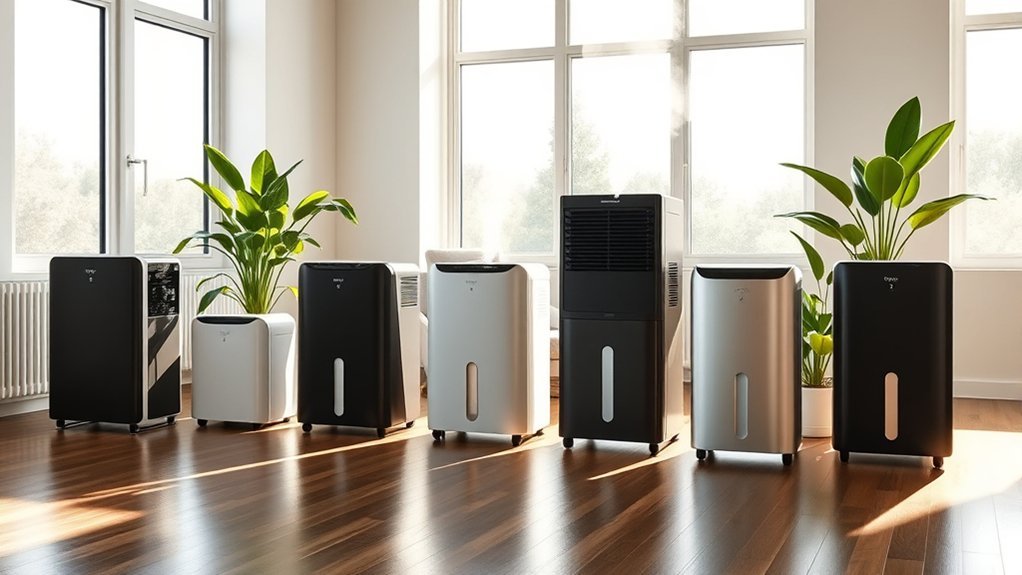
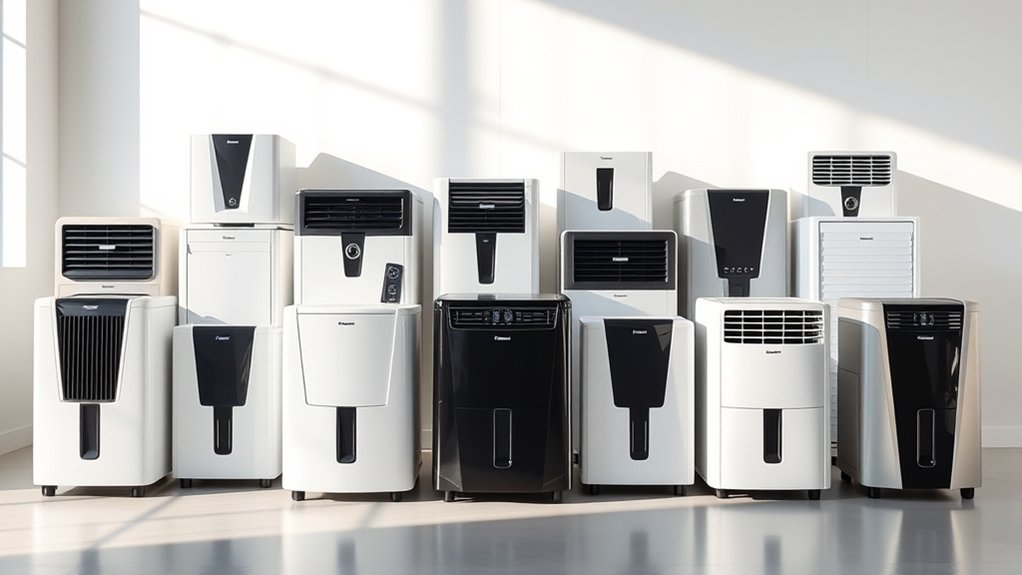
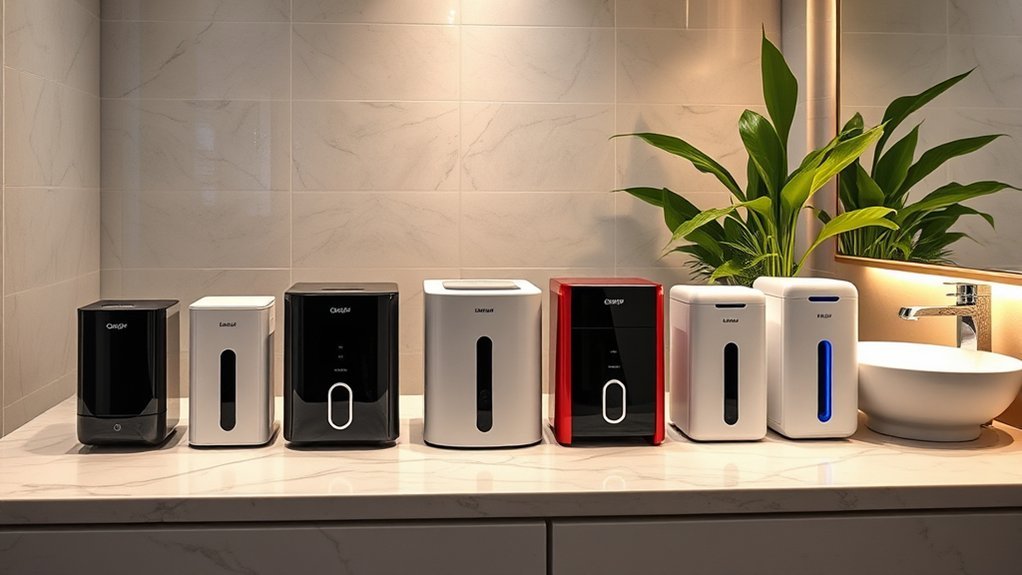
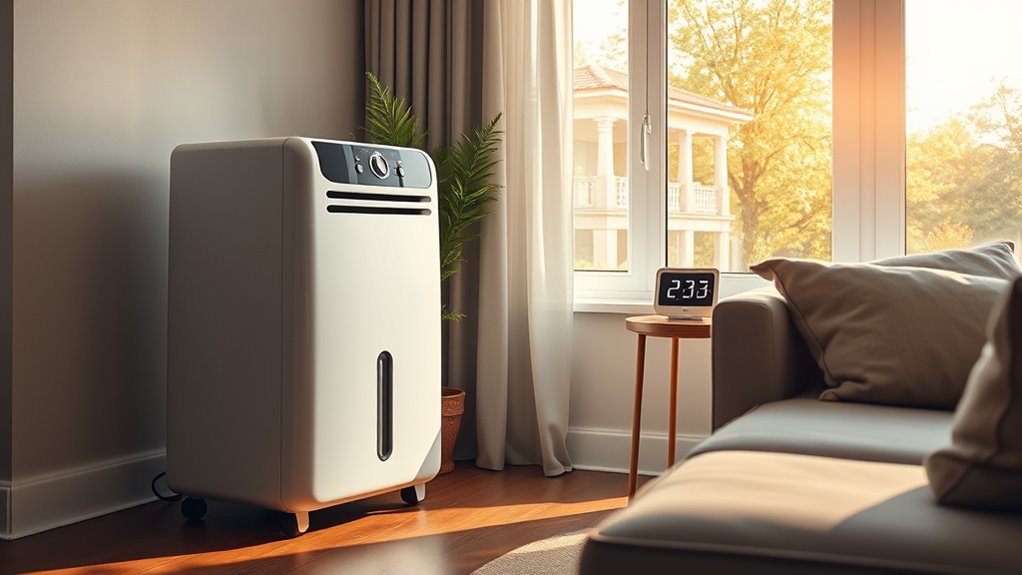
For 2026, the best home dehumidifier depends on the room’s moisture load, the capacity rating’s test conditions, and how you plan to drain the collected water. The Frigidaire 50-Pint Wi-Fi Dehumidifier offers the strongest all-around balance for many larger rooms and basements. The Waykar 80-Pint model is better suited to heavier moisture loads, while the Frigidaire 22-Pint model is easier to place in smaller rooms. The SereneLife 2-in-1 is a low-output specialty option for closets and light moisture, not a substitute for a compressor dehumidifier.
Quick Verdict
- Best Overall: Frigidaire 50-Pint Wi-Fi Dehumidifier
- Best High-Capacity Pick: Waykar 80-Pint Energy Star Dehumidifier
- Best for Large Open Areas: hOmeLabs 50-Pint Wi-Fi Dehumidifier
- Best Small-Room Pick: Frigidaire 22-Pint Portable Dehumidifier
- Best Efficient Mid-Size Pick: Waykar 34-Pint Dehumidifier
- Best for Laundry Areas: VEAGASO VG380
- Best Compact Compressor Option: SEMKAP 32-Pint
- Best for Closets and Light Moisture: SereneLife 91 OZ 2-in-1
How We Compared These Models
We compared moisture-removal capacity, the conditions used for that rating, drainage choices, tank size, portability, noise claims, smart controls, maintenance, and the type of room each unit is designed to serve. We did not treat manufacturer square-foot claims as guaranteed real-world coverage.
| Product | Listed Moisture Removal | Drainage | Best Fit | Main Limitation |
|---|---|---|---|---|
| Frigidaire 50-Pint Wi-Fi | 50 pints/day | Bucket or gravity drain | Basements and larger living areas | Large body; app setup adds complexity |
| Waykar 80-Pint | Up to 80 pints/day at 95°F and 90% RH | Bucket or included gravity-drain hose | Large, persistently damp spaces | Maximum rating is not a standard-room result |
| hOmeLabs 50-Pint Wi-Fi | 50 pints/day at 80°F and 60% RH; up to 120 pints at 95°F and 90% RH | Bucket or hose outlet; check package contents | Large open areas and remote monitoring | Coverage claim depends heavily on layout and moisture load |
| Frigidaire 22-Pint | About 22 pints/day | Bucket or gravity drain | Bedrooms, bathrooms, and smaller rooms | Lower capacity; confirm app support for the exact model |
| Waykar 34-Pint | Up to 34 pints/day at 95°F and 90% RH | Bucket or gravity-drain hose | Mid-size rooms and efficiency-focused use | Certification and noise claims are model-specific |
| VEAGASO VG380 | Up to 34 pints/day in hot, very humid conditions | 0.53-gallon tank or included hose | Laundry areas and moderately damp rooms | Small tank; coverage claim is not a performance guarantee |
| SEMKAP 32-Pint | Up to 32 pints/day at 95°F and 90% RH | 2.5-liter tank or included hose | Compact compressor-based moisture control | Less established support history |
| SereneLife 2-in-1 | About 17 oz/day at 86°F and 80% RH | 91-ounce tank; removable cylinder returns to base for drying | Closets, cabinets, and light moisture | Not comparable to compressor models |
Before You Buy: Compare capacity numbers only when the test conditions are equivalent. A model advertised as “80 pints maximum” in very hot, humid air may remove much less water under cooler household conditions. Also consider room temperature, indoor laundry, air movement, drainage access, and whether seepage or a plumbing leak is adding moisture.
Frigidaire 50-Pint Dehumidifier with Wi-Fi
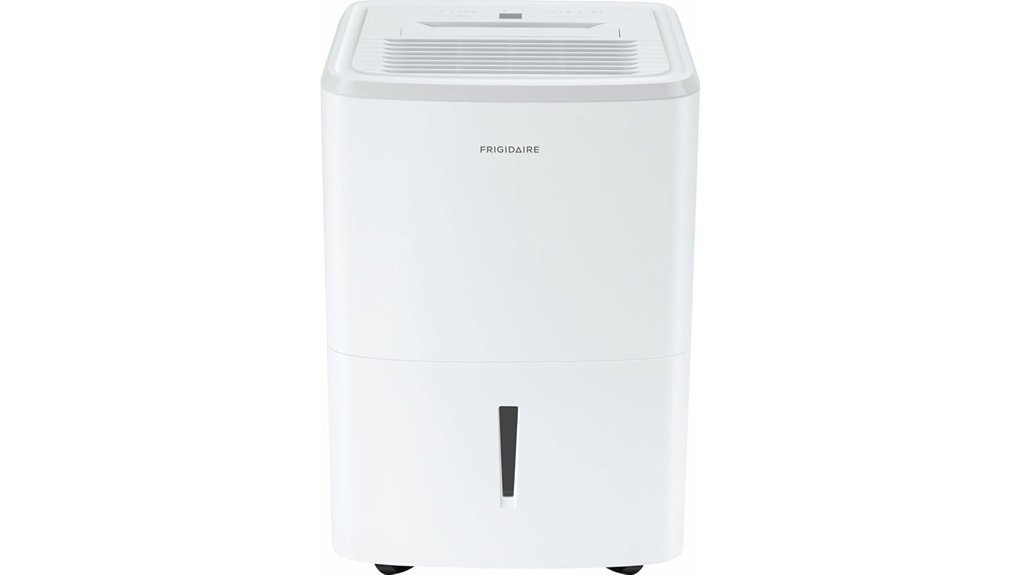
Best Overall
The Frigidaire 50-Pint Dehumidifier with Wi-Fi offers the best balance of useful moisture-removal capacity, remote control, straightforward maintenance, and flexible drainage in this lineup. The linked model is rated to remove 50 pints per day and supports control through the Frigidaire app. Custom humidity settings, a washable filter, automatic shutoff, caster wheels, and continuous gravity drainage make it practical for a basement or larger living area.
Why You’ll Like It: It has enough capacity for many damp-room and basement applications without moving to a permanently installed whole-home system.
Best For: Basements, large living areas, garages, and buyers who want remote monitoring from a recognized appliance brand.
Who Should Avoid It: Buyers with a very small room, limited floor space, or no interest in app-based controls.
Pros:
- 50-pint daily rating for larger damp spaces
- Wi-Fi monitoring, scheduling, and custom humidity control
- Washable filter, automatic shutoff, wheels, and continuous drainage support
Cons:
- Larger and heavier than 22- to 34-pint alternatives
- Remote features rely on the app and home network
- Gravity drainage still needs a lower outlet and a continuously downward hose slope
Waykar 80-Pint Energy Star Home Dehumidifier
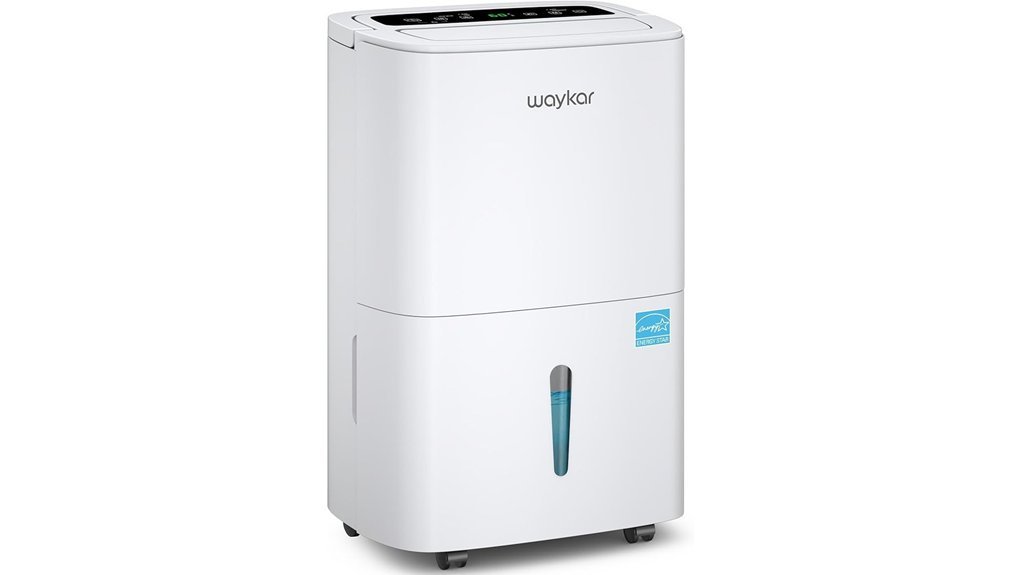
Best High-Capacity Pick
The Waykar 80-Pint Energy Star Dehumidifier is built for large, persistently damp spaces. Its maximum 80-pint figure is measured at 95°F and 90% relative humidity, so buyers should not compare it directly with a 50-pint rating measured at cooler standard conditions. The unit includes adjustable humidity control, automatic and continuous modes, a washable filter, auto defrost, self-drying, casters, a water tank, and gravity-drain support.
Why You’ll Like It: Its higher maximum moisture-removal capability and included drainage features reduce the need to empty a bucket repeatedly in a damp basement.
Best For: Large basements, open living areas, or homes with a consistently heavy moisture load and access to a lower drain.
Who Should Avoid It: Buyers shopping for a small bedroom unit or anyone expecting the 80-pint maximum under ordinary cool-room conditions.
Pros:
- High maximum removal rating for hot, very humid conditions
- Automatic humidity control, auto defrost, and self-drying functions
- Continuous gravity drainage, washable filter, and easy-roll casters
Cons:
- Large size and capacity may be unnecessary for smaller rooms
- The headline capacity is based on extreme test conditions
- Gravity drainage requires a lower drain and a properly sloped hose
hOmeLabs Wi-Fi Dehumidifier, 50 Pint
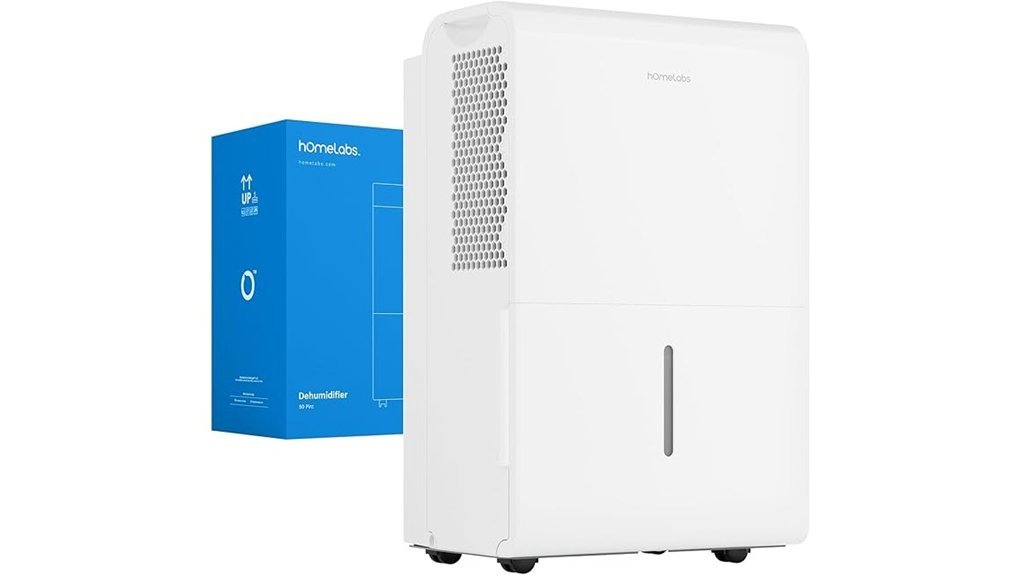
Best for Large Open Areas
The hOmeLabs Wi-Fi Dehumidifier is listed at 50 pints per day at 80°F and 60% relative humidity and up to 120 pints under the hotter 95°F and 90% RH condition. Those numbers describe one unit under different tests, not two capacity classes. It offers Wi-Fi control, turbo airflow, automatic shutoff, a washable filter, wheels, handles, and a hose outlet for continuous drainage. The advertised coverage figure should be treated as a best-case marketing estimate rather than a guaranteed result for every 7,000-square-foot layout.
Why You’ll Like It: It combines a standard-condition 50-pint rating with strong airflow and remote controls for a large area that is inconvenient to check frequently.
Best For: Large basements, open-plan areas, rental properties, and buyers who want app-based monitoring.
Who Should Avoid It: Buyers with tight floor space or anyone assuming the 120-pint maximum will be achieved in ordinary basement conditions.
Pros:
- 50-pint standard-condition rating with a separate extreme-condition maximum
- Wi-Fi control and turbo airflow for large areas
- Washable filter, automatic shutoff, wheels, and continuous-drain capability
Cons:
- Large body may be awkward in small rooms
- Manufacturer square-foot coverage is not a guarantee for every layout
- Drain-hose inclusion can vary by package, so check the current listing
Frigidaire 22-Pint Portable Dehumidifier
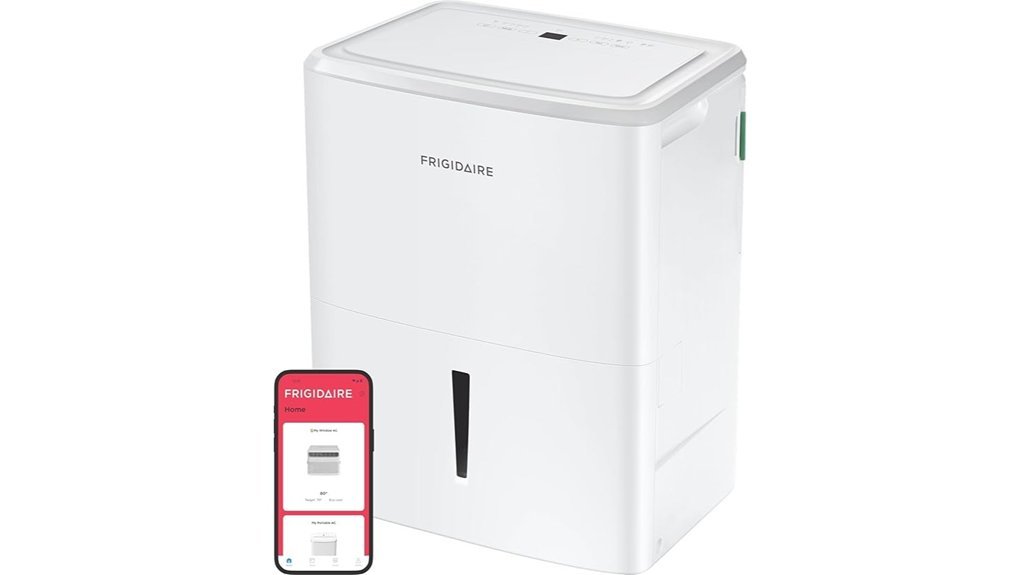
Best Small-Room Pick
The Frigidaire 22-Pint Portable Dehumidifier is a practical choice for bedrooms, bathrooms, offices, and other smaller spaces where a 50-pint unit would take up unnecessary floor space. It includes custom humidity control, automatic shutoff, a washable filter, caster wheels, a removable bucket, and a continuous gravity-drain option.
Why You’ll Like It: It combines a manageable 22-pint capacity with portable handling, familiar controls, and two drainage choices.
Best For: Buyers who need an energy-efficient compressor dehumidifier for a smaller room and do not need high-capacity basement performance.
Who Should Avoid It: Anyone dealing with a wet basement, water seepage, or a large open floor plan that needs faster moisture removal.
Pros:
- Appropriate capacity for many bedrooms, bathrooms, and offices
- Bucket and continuous gravity-drain options
- Washable filter, custom humidity control, and automatic shutoff
Cons:
- 22-pint capacity may be too low for large or persistently wet spaces
- The bucket needs manual emptying when a drain hose is not used
- Connected-feature information for this exact model is inconsistent across product databases
Waykar 34-Pint Energy Star Dehumidifier for Home
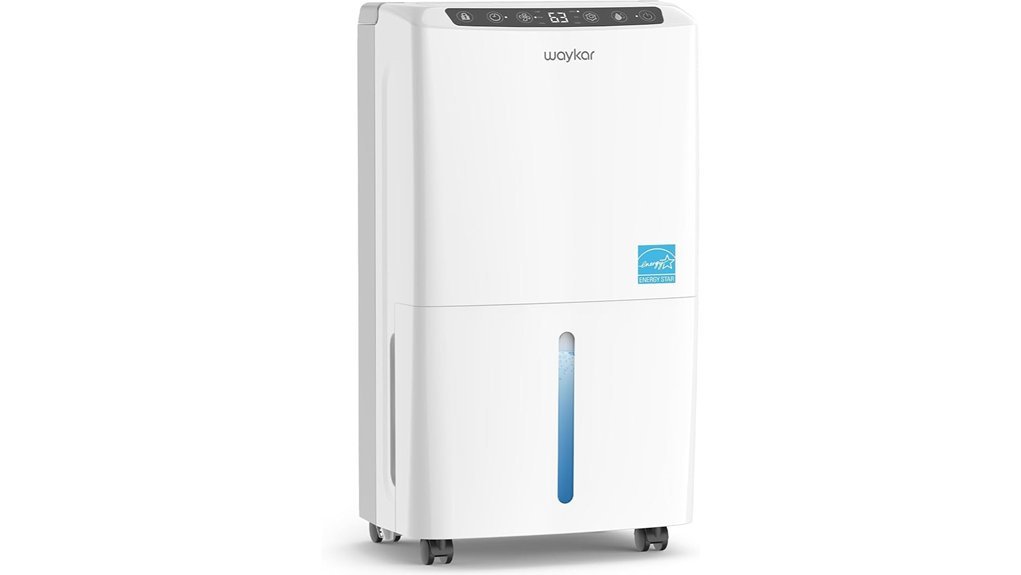
Best Efficient Mid-Size Pick
The linked Waykar 34-Pint model is marketed as a PD160B-PRO variant and is a useful middle ground for buyers who want more capacity than a small-room unit but do not need a bulky 50-pint machine. It is listed as an ENERGY STAR Most Efficient 2025 model, rates maximum removal at 34 pints per day at 95°F and 90% relative humidity, and includes adjustable humidity control, bucket or gravity-hose drainage, a washable filter, timer, child lock, automatic shutoff, and defrost protection.
Why You’ll Like It: It combines compact dimensions, flexible drainage, and an efficiency-focused design for everyday home use.
Best For: Bedrooms, offices, living areas, and moderately damp basements where size and energy use matter.
Who Should Avoid It: Buyers who need high extraction in a wet basement or who cannot use the hose and do not want to empty a relatively small tank.
Pros:
- Compact mid-size design with flexible drainage
- Adjustable humidity control, timer, child lock, and automatic shutoff
- Washable filter and auto-defrost support
Cons:
- The 34-pint figure is measured under hot, very humid conditions
- The small tank may fill quickly without hose drainage
- The advertised 33 dB figure is a lowest-setting claim, not an all-mode noise level
VEAGASO VG380 Dehumidifier for Basements and Laundry Areas
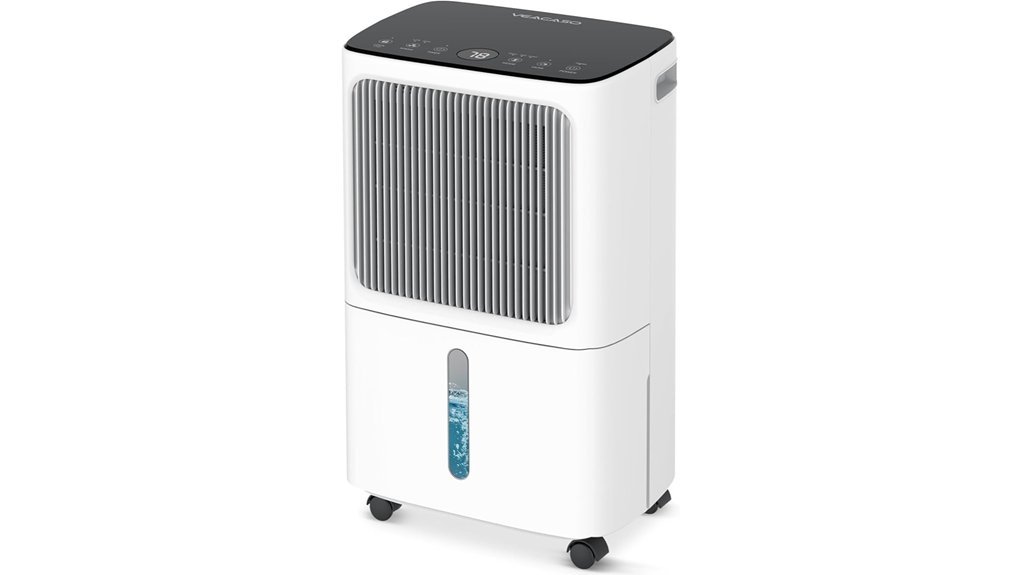
Best for Laundry Areas
The VEAGASO VG380 combines a maximum 34-pint removal rating with three operating modes: DEHU for normal humidity control, DRY for laundry areas, and CONT for continuous operation. The manufacturer lists the maximum under hot, very humid conditions, so real extraction will vary with room temperature and moisture load. The unit includes a 0.53-gallon tank, an included drain hose, automatic shutoff, a timer, LED touch controls, casters, and a recessed handle.
Why You’ll Like It: The dedicated drying mode and included hose make it flexible for laundry rooms and moderately damp spaces.
Best For: Laundry areas, bathrooms, bedrooms, and medium-size rooms where you want simple mode selection and portable handling.
Who Should Avoid It: Buyers with active water seepage or a very large open basement that needs a higher standard-condition capacity.
Pros:
- Three modes for normal dehumidifying, laundry drying, and continuous use
- Included drain hose, automatic shutoff, timer, and touch controls
- Casters and recessed handle simplify room-to-room movement
Cons:
- The 34-pint figure is a hot, high-humidity maximum rating
- The 0.53-gallon tank may need frequent emptying
- Advertised square-foot coverage should not replace moisture-load sizing
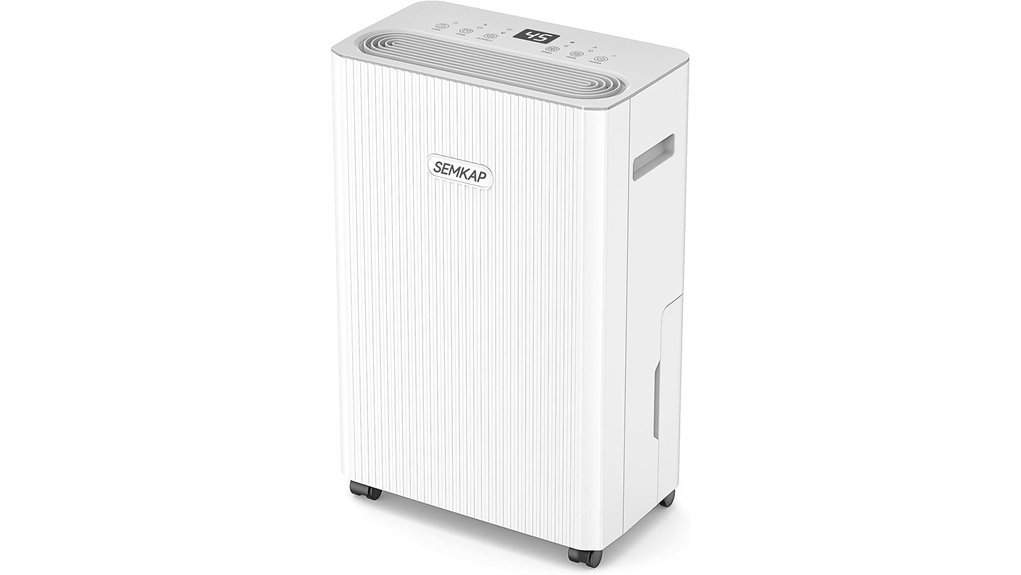
SEMKAP 32-Pint Dehumidifier for Large Rooms
Best Compact Compressor Option
The SEMKAP 32-Pint Dehumidifier offers compressor-based moisture removal in a relatively compact body. Its 32-pint claim is measured at 95°F and 90% relative humidity, so it should not be compared directly with capacities measured under cooler standard conditions. The unit includes a 2.5-liter tank, a drain hose, adjustable humidity settings, a timer, child lock, casters, automatic defrost, and automatic shutoff. The product listing also claims operation as low as 35 dB on the lowest setting.
Why You’ll Like It: It packs a useful set of controls and two drainage choices into a smaller footprint than many full-size basement units.
Best For: Moderately damp bedrooms, offices, RVs, laundry rooms, or smaller basement zones where compact size matters.
Who Should Avoid It: Buyers who prefer a long-established appliance brand, extensive service coverage, or a large bucket for unattended use.
Pros:
- Compact compressor design with casters and a carry handle
- Manual bucket drainage or continuous gravity drainage
- Timer, child lock, automatic shutoff, auto defrost, and adjustable humidity controls
Cons:
- The 32-pint figure is a maximum-condition rating
- The 2.5-liter tank may fill quickly in damp conditions
- Brand support history is less established than major appliance manufacturers
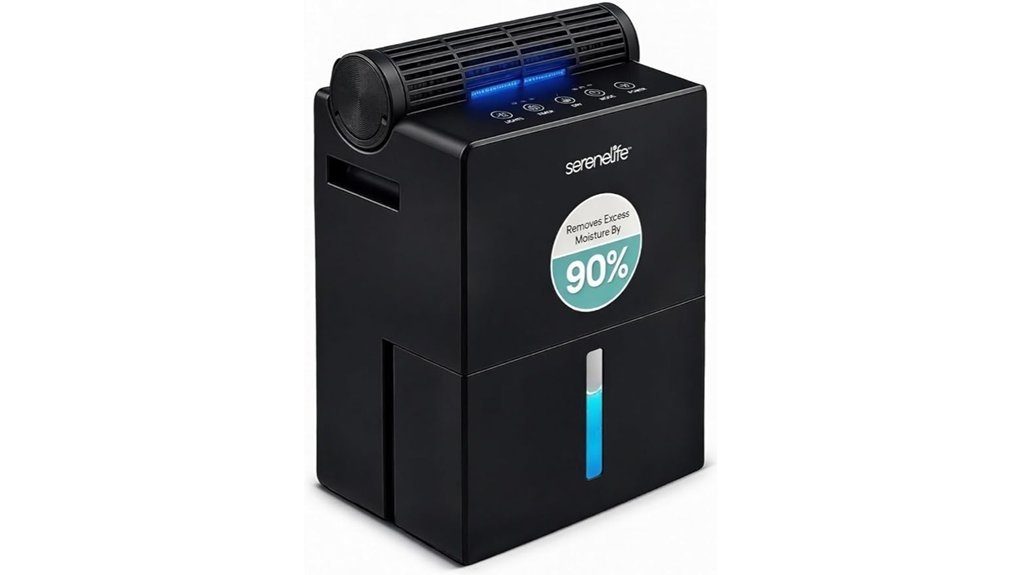
SereneLife 91 OZ 2-in-1 Dehumidifier for Light Moisture
Best for Closets and Light Moisture
The SereneLife 91 OZ model is fundamentally different from the compressor dehumidifiers in this roundup. The 91-ounce number describes tank capacity, while the manufacturer lists daily moisture removal of about 17 ounces at 86°F and 80% relative humidity. Its removable moisture-absorbing cylinder can be placed in a closet, drawer, or cabinet and then returned to the powered base for drying. The base also includes humidity detection, automatic shutoff, defrost protection, timers, sleep mode, and two fan speeds.
Why You’ll Like It: The removable cylinder reaches enclosed spaces that a full-size floor unit cannot.
Best For: Closets, cabinets, drawers, and small areas with light moisture where compact placement matters more than extraction speed.
Who Should Avoid It: Anyone trying to dry a basement, control seepage, or replace a 22- to 50-pint compressor dehumidifier.
Pros:
- Removable cylinder works in closets, drawers, and other enclosed spaces
- Compact 9 x 6 x 13-inch body with timers and sleep mode
- Large 91-ounce collection tank relative to its low daily extraction rate
Cons:
- About 17 ounces of daily removal is far below compressor-model capacity
- Not appropriate for severe dampness, water intrusion, or whole-basement use
- The removable cylinder must be returned to the base for drying
Factors to Consider When Choosing a Home Dehumidifier
A useful dehumidifier should match both the space and the moisture load. Square-foot coverage alone is not enough. Compare the rated pint capacity, test conditions, drainage setup, operating temperature, noise, tank size, controls, maintenance requirements, and the exact model number shown on the product page.
Room Size and Moisture Load
Start with the room’s approximate size, but also judge how damp it is. A mildly humid bedroom needs less capacity than a basement with wet walls, indoor laundry drying, or seepage. Doors, partitions, poor airflow, and cool temperatures can reduce how effectively one portable unit serves a large area. When in doubt, size for the moisture problem rather than relying only on the largest advertised square-foot number.
Pint Capacity and Test Conditions
Pint capacity tells you how much water a unit can remove in 24 hours under a specified test condition. Some listings show a standard rating and a much larger “maximum” rating measured in hotter, more humid air. Compare like with like. A 50-pint standard rating is not directly equivalent to an 80- or 120-pint maximum measured at 95°F and 90% relative humidity.
Drainage Options
Bucket drainage is simple but requires regular emptying. Continuous gravity drainage is better for basements and unattended use, but the hose must slope downward to a lower floor drain, sink connection, or sump opening. If water must travel upward, choose a model with a built-in pump or use a separate condensate pump rated for the installation.
Noise Levels
Noise claims are not always measured the same way. A low dB figure may apply only to the lowest fan setting, while the compressor cycling on and off can still be noticeable. For bedrooms and offices, compare low-speed noise, compressor sound, vibration, and whether the unit offers a sleep or quiet mode. Basement and garage buyers may care more about capacity than sound.
Energy Efficiency
Look for current ENERGY STAR certification and compare efficiency information for models with similar rated capacity. Automatic humidity control can reduce unnecessary runtime by cycling the compressor after the target level is reached. A clean filter, unobstructed airflow, closed windows, and correct placement also help the unit work efficiently.
Smart Features
Wi-Fi can be worthwhile when the dehumidifier sits in a basement, rental property, or room you do not visit often. Useful functions include remote on/off control, humidity adjustment, status checks, and maintenance alerts. Smart control should be treated as a convenience rather than a replacement for proper drainage, leak checks, and regular inspection.
Model Number and Package Contents
Closely related versions can differ in Wi-Fi support, ENERGY STAR status, built-in pumps, noise specifications, tank size, and whether a drain hose is included. Match the model number in this article to the model number on the current Amazon page before ordering. If the listing combines multiple sizes or variants, recheck the selected option after changing the size or color.
Maintenance Needs
Wash or vacuum the filter according to the manual, empty and rinse the bucket, inspect the hose for kinks or buildup, and keep the air intake and outlet clear. Check that the unit sits level and that gravity drainage flows freely. A dehumidifier controls airborne moisture, but it does not repair plumbing leaks, foundation seepage, or existing mold damage.
Moisture Source Reminder: A portable dehumidifier can manage humidity, but it cannot repair a plumbing leak, stop foundation seepage, dry hidden building cavities, or remove established mold. Correct the water source and seek qualified help when damage is extensive.
Frequently Asked Questions
What Indoor Humidity Level Should I Target?
A practical target for many homes is about 30% to 50% relative humidity. Avoid setting the unit lower than necessary, since very dry air can feel uncomfortable and increase runtime. Use a separate hygrometer if you want to compare the machine’s built-in reading with another sensor.
How Often Should a Dehumidifier Filter Be Cleaned?
Follow the product manual first. As a general routine, inspect the filter every two to four weeks during frequent use and clean it sooner in dusty rooms or homes with pets. Restricted airflow can reduce performance and make the unit run longer.
Can a Dehumidifier Run Continuously in a Cold Basement?
Only if the model is approved for the room temperature and has suitable low-temperature or auto-defrost operation. Even then, it is usually better to set a target humidity and let the unit cycle. If frost repeatedly forms on the coils, stop the unit and follow the troubleshooting guidance in the manual.
What Size Dehumidifier Is Best for a Laundry Room?
A 30- to 50-pint class unit is a useful starting point for a damp laundry room, but the right size depends on room dimensions, ventilation, and how often wet clothes are dried indoors. Choose the higher-capacity option when humidity remains high for hours or condensation appears on walls and windows.
Why Do Dehumidifier Capacity Numbers Differ So Much?
Capacity rises when test air is warmer and more humid. That is why one model may be described as a 50-pint unit under standard conditions and a 120-pint maximum unit under extreme conditions. Check the temperature and relative-humidity basis before comparing two products.
Is a Mini Dehumidifier Enough for a Basement?
Usually not. Low-output thermoelectric or removable-cylinder models are better for closets, cabinets, and localized light moisture. A damp basement normally needs a compressor dehumidifier sized by moisture load, room temperature, and drainage access.
Do I Need a Built-In Pump?
Choose a built-in pump when collected water must move upward to a sink, window, or elevated drain. Gravity drainage is sufficient when the hose can run continuously downhill to a lower drain without kinks or raised sections.
Does a Dehumidifier Remove Mold?
No. A dehumidifier can reduce excess airborne moisture and make conditions less favorable for new growth, but it does not remove existing mold or fix the water source. Address leaks, seepage, and damaged materials separately.
Conclusion
Final Recommendation
Choose the Frigidaire 50-Pint Wi-Fi Dehumidifier for the best overall balance of capacity, controls, drainage, and maintenance. Pick the Waykar 80-Pint when the moisture load is heavier and you have a suitable lower drain. The hOmeLabs 50-Pint Wi-Fi is another strong option for large open areas where remote monitoring is useful.
For smaller rooms, the Frigidaire 22-Pint is easier to place, but buyers who need app control should confirm the exact model’s connected features. The Waykar 34-Pint, VEAGASO VG380, and SEMKAP 32-Pint cover mid-size and specialized use cases. Choose the SereneLife 2-in-1 only for closets, cabinets, and mild localized moisture.
Before ordering, compare capacity under equivalent test conditions, verify the selected model number and included accessories, and plan the drainage route. Treat plumbing leaks, foundation seepage, and existing mold as separate repair or remediation problems.