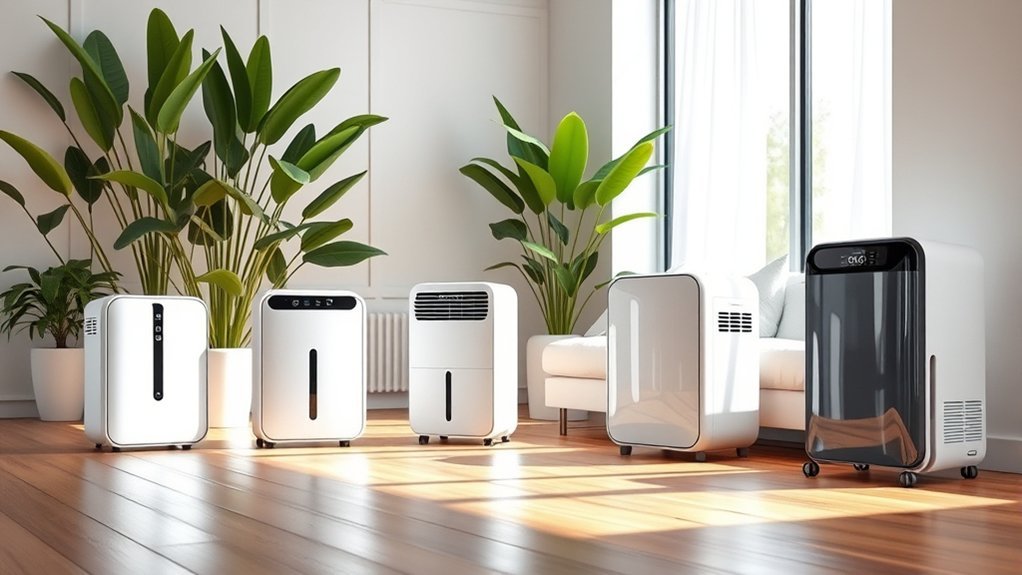
If you need a small size dehumidifier for a bedroom, bathroom, closet, RV, pantry, nursery, or office, the right pick should be quiet, easy to move, simple to empty, and sized for your actual room. For 2026, you can choose from the AlohaAir Small Dehumidifier with Night Light, NeedDuck Small Quiet Dehumidifier, Bangnics Mini Dehumidifier, CLEVAST Small Quiet Mini Dehumidifier, and TABYIK Small Bedroom Dehumidifier. Each one suits small spaces while staying compact, quiet, and easy to place. Look at tank size, noise level, auto shut-off, coverage area, moisture removal rate, and extra features like night lights or defrost mode before you buy.
Quick Verdict: Best Small Dehumidifier for Most People
The best choice depends on where you plan to use it. For a balanced small-room pick, start with the AlohaAir model. For more controls and a larger tank, consider the NeedDuck. For very tight closets, RV corners, or pantries, the Bangnics is the most compact fit. For sleep-sensitive rooms, the CLEVAST has the quietest listed noise level. For bedrooms where you want a larger clear tank and defrost support, the TABYIK is a strong option.
- Best overall small-room pick: AlohaAir Small Dehumidifier with Night Light.
- Best controls and settings: NeedDuck Small Quiet Dehumidifier with 44OZ Tank.
- Best for very tight spaces: Bangnics Mini Dehumidifier.
- Best ultra-quiet pick: CLEVAST Small Quiet Mini Dehumidifier.
- Best bedroom-friendly tank: TABYIK Small Bedroom Dehumidifier.
Quick Picks: Which Small Dehumidifier Fits Your Space?
- Best balanced pick for small rooms: AlohaAir Small Dehumidifier with Night Light, because it combines a 34-ounce tank, 35 dB operation, and coverage for spaces up to 200 square feet.
- Best for more settings and controls: NeedDuck Small Quiet Dehumidifier with 44OZ Tank, because it includes multiple modes, timer options, lighting controls, and auto defrost.
- Best for very tight spaces: Bangnics Mini Dehumidifier, because it is compact, quiet under 30 dB, and designed for smaller areas up to 130 square feet.
- Best ultra-quiet option: CLEVAST Small Quiet Mini Dehumidifier, because its listed 24 dB operation is the quietest option in this roundup.
- Best bedroom-friendly pick: TABYIK Small Bedroom Dehumidifier, because it has a 42-ounce transparent tank, 28 dB operation, defrost support, and a compact shape.
How to Choose Fast
Start with your room size. A closet, RV cabinet, pantry, or small bathroom usually needs less coverage than a bedroom or office. Then check how often you are willing to empty the tank. A larger tank is more convenient in damp rooms, while a smaller tank keeps the unit lighter and easier to move. If you plan to run the unit near your bed, choose the quietest model that still matches your space. Also remember that most small thermoelectric dehumidifiers are made for mild moisture control, not serious water problems, wet basements, or leak repair.
Before You Buy Checklist
- Measure your space: Match the coverage rating to the room, closet, RV area, bathroom, or office where you will use it.
- Check the tank size: A larger tank means fewer emptying trips, but the unit may be slightly larger.
- Think about noise: For bedrooms and nurseries, prioritize listed noise levels and quiet modes.
- Look for auto shut-off: This helps prevent overflow when the tank fills.
- Know the limits: Small dehumidifiers help with mild humidity but cannot fix leaks, standing water, or major mold problems by themselves.
Small Dehumidifier Comparison Table
This table compares the key details listed in the article, so you can narrow your choice before reading each full product section.
| Product | Best For | Coverage | Tank Size | Listed Noise Level | Key Feature | CTA |
|---|---|---|---|---|---|---|
| AlohaAir Small Dehumidifier with Night Light | Bedrooms, bathrooms, RVs, closets | Up to 200 sq ft | 34 oz | 35 dB | 7-color night light and auto shutoff | Check Price on Amazon |
| Small Quiet Dehumidifier for Home with 44OZ Tank | Small rooms needing more controls | Up to 215 sq ft | 44 oz | Quiet operation listed | Sleep, Auto, Performance mode, timer, and auto defrost | Check Price on Amazon |
| Mini Dehumidifier for Small Spaces with Auto Shut-Off | Bathrooms, closets, pantries, RVs | Up to 130 sq ft | 17 oz | Under 30 dB | Power-off memory and full-tank light | Check Price on Amazon |
| CLEVAST Small Quiet Mini Dehumidifier for Home | Bedrooms, closets, nurseries, offices | Up to 285 sq ft | 30 oz | 24 dB | Efficient and Quiet modes with overheat protection | Check Price on Amazon |
| Small Bedroom Dehumidifier with Auto Shut Off | Bedrooms, bathrooms, closets, RVs, offices | Small spaces | 42 oz | 28 dB | Transparent tank, defrost support, and 7-color night light | Check Price on Amazon |
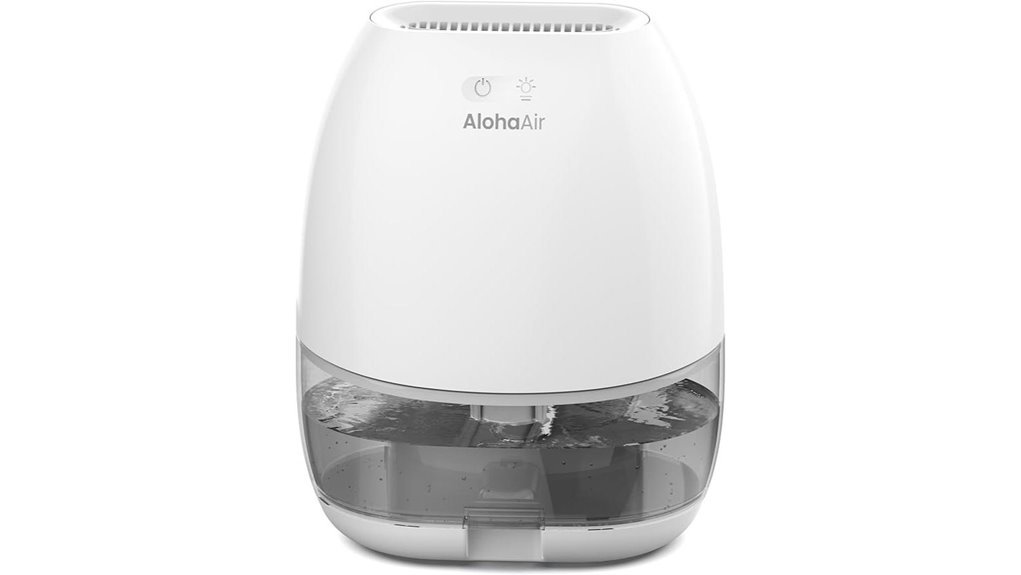
AlohaAir Small Dehumidifier with Night Light
Best for Bedrooms and RVs
The AlohaAir Small Dehumidifier with Night Light is a smart pick if you want a compact unit that can quietly manage moisture in small spaces like bedrooms, bathrooms, RVs, or closets. You can pull up to 280ml of water a day from areas up to 200 square feet while using less than 1kW·h daily. Its 34-ounce tank lets you check levels at a glance, and the auto shutoff protects against overflow. You’ll also get a built-in handle, easy cleaning, 35dB operation, and a 7-color night light with separate control.
- Listed moisture removal: Up to 280ml per day.
- Listed coverage: Up to 200 square feet.
- Tank size: 34 ounces.
- Noise level: 35 dB.
- Useful extras: Auto shutoff, transparent tank, carry handle, and 7-color night light.
Best For: People looking for a compact, ultra-quiet dehumidifier for small spaces like bedrooms, bathrooms, RVs, or closets.
Why you’ll like it: Choose this model if you want a simple small-room dehumidifier with a visible tank and a soft night light. It makes the most sense in spaces where you want quiet moisture control without a bulky floor unit. The balanced tank size, compact body, and auto shut-off make it easy to live with day after day.
Who should skip it: Skip it if your room is much larger than 200 square feet or if you need heavy-duty moisture removal for a wet basement, laundry room, or large open living area.
Pros:
- Removes up to 280ml of moisture per day for small-space humidity control.
- Quiet 35dB operation with a 7-color night light for added convenience.
- Compact, portable design with a 34 oz transparent tank and auto shutoff.
Cons:
- Best suited only for spaces up to 200 square feet.
- Daily water removal capacity is relatively limited compared with larger dehumidifiers.
- The night light feature may be unnecessary for users who want a more basic unit.
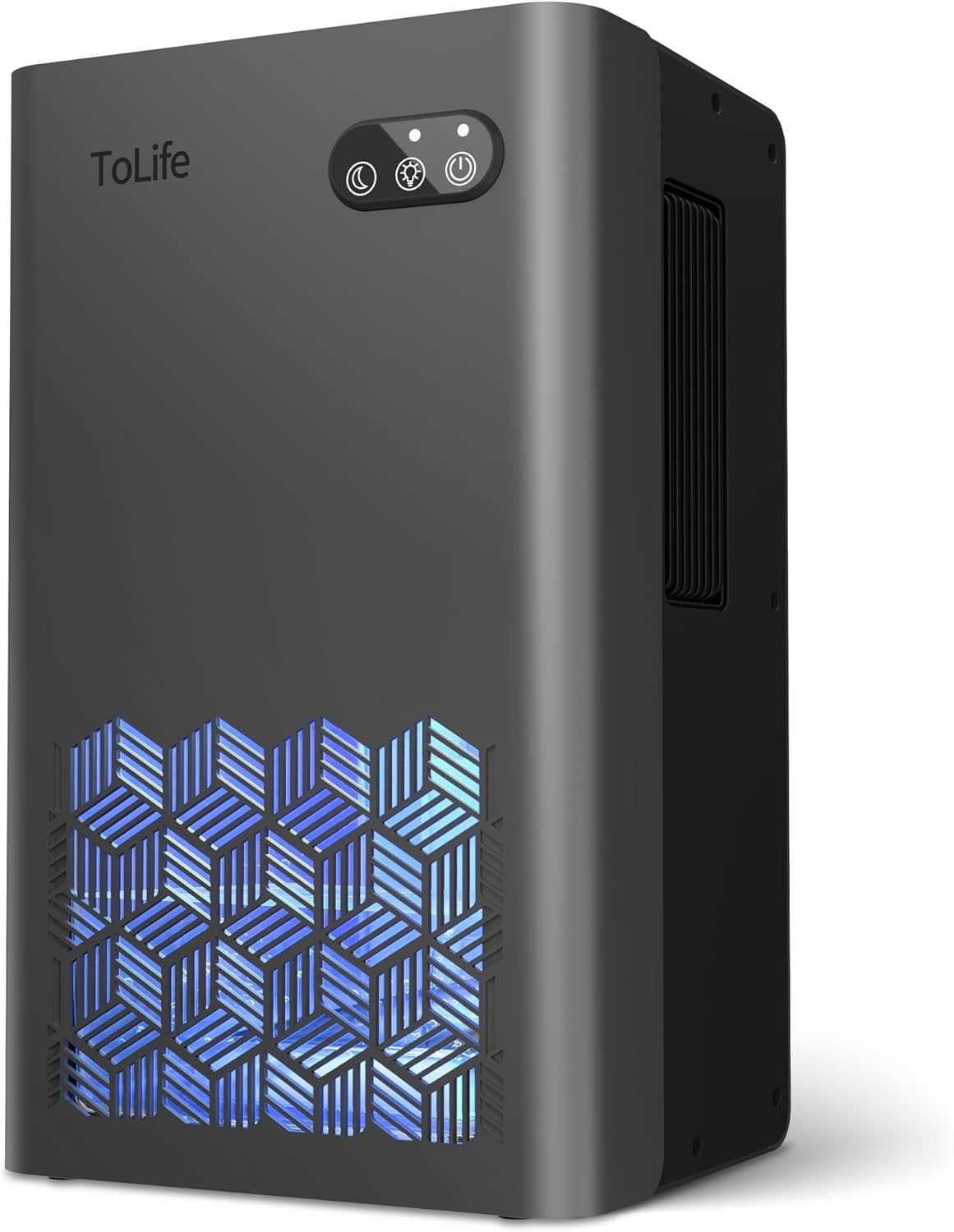
Small Quiet Dehumidifier for Home with 44OZ Tank
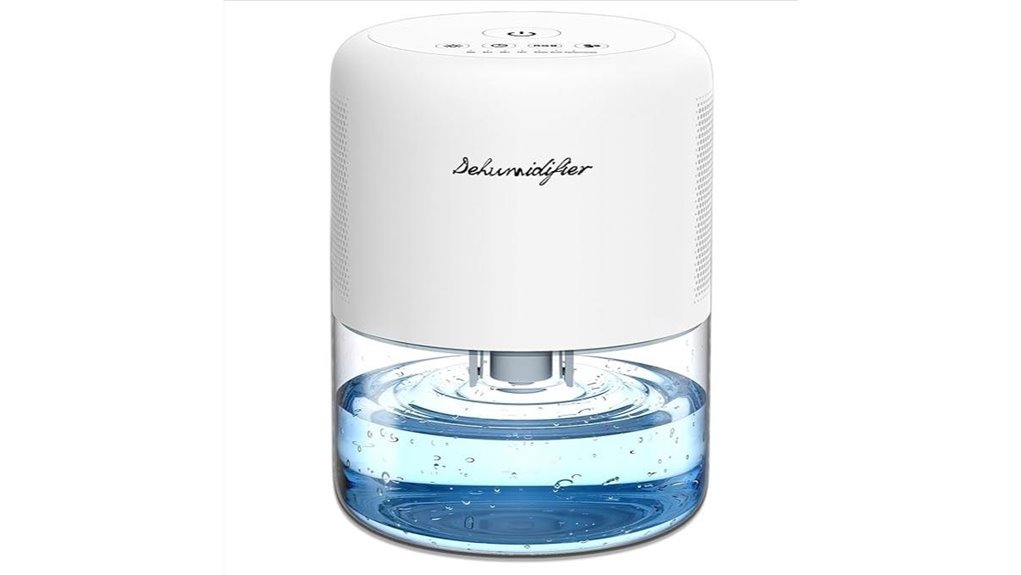
Largest Tank in This Roundup
NeedDuck’s 44-ounce tank suits you if you want a compact, quiet dehumidifier for smaller rooms. You get the B-2 model, which weighs just 2.56 pounds and covers up to 215 square feet. Its 28-watt operation helps keep energy use low, while automatic control gradually lowers humidity instead of making abrupt changes. That means less discomfort and fewer start-stop cycles. You can rely on auto defrost in cooler spaces and auto shut-off when the tank fills, tilts, or detaches. Choose Sleep, Auto, or Performance mode, plus timer settings and 10-color lighting with three brightness levels.
- Model listed: B-2.
- Listed coverage: Up to 215 square feet.
- Tank size: 44 ounces.
- Listed weight: 2.56 pounds.
- Power use: 28 watts.
- Useful extras: Auto defrost, auto shut-off, Sleep mode, Auto mode, Performance mode, timer settings, and 10-color lighting.
Best For: People looking for a compact, quiet dehumidifier for small rooms up to 215 square feet who want low energy use and customizable settings.
Why you’ll like it: Pick this one if you want more control than a basic mini dehumidifier offers. The larger tank, mode options, timer settings, and auto defrost can make it easier to use in a bedroom, bathroom, closet, or small office. It is especially useful if you want to adjust performance during the day and switch to a calmer setup at night.
Who should skip it: Skip it if you want a very simple one-button unit or if your main issue is heavy moisture in a large room. This is still a compact dehumidifier, not a full-size compressor model.
Pros:
- Quiet, energy-efficient 28W operation helps reduce power use and noise.
- Auto defrost and auto shut-off add convenience and safety.
- Multiple modes, timer options, and 10-color lighting offer flexibility and ambiance.
Cons:
- 44 oz tank may need frequent emptying in damp environments.
- Best suited for smaller spaces, not larger rooms.
- Limited to basic dehumidification capacity compared with full-size units.
Mini Dehumidifier for Small Spaces with Auto Shut-Off
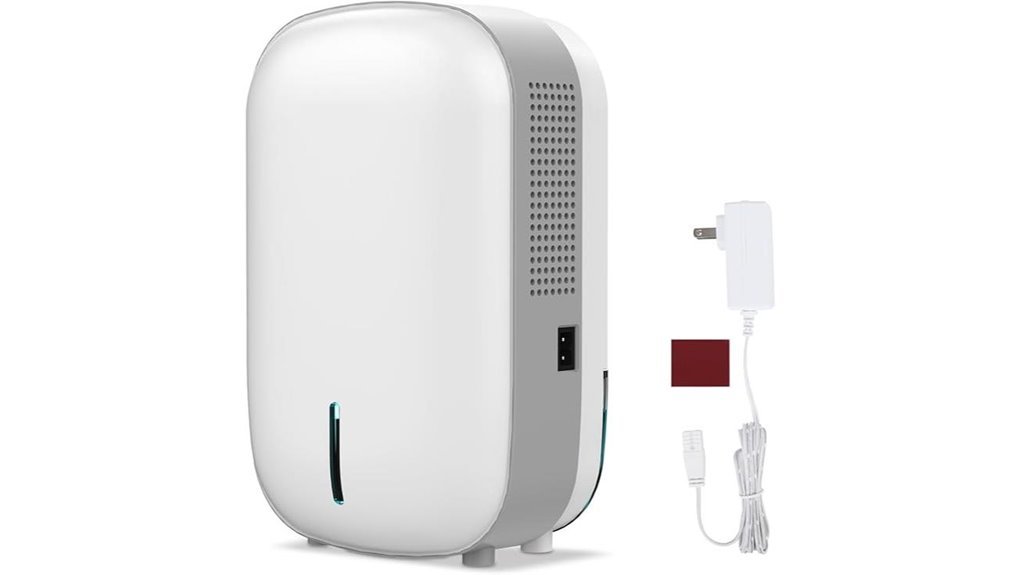
Best for Closets and Pantries
Bangnics’ mini dehumidifier is a smart fit if you need quiet moisture control in tight spaces. You can use it in bathrooms, closets, bedrooms, pantries, RVs, campers, or even on a yacht. It covers up to 130 square feet and pulls up to 14 ounces of moisture a day. The 17-ounce tank and auto shut-off keep you from worrying about spills, and a red light flashes when it’s full. At under 30 dB, it won’t disturb you, and its power-off memory helps it restart after outages.
- Listed moisture removal: Up to 14 ounces per day.
- Listed coverage: Up to 130 square feet.
- Tank size: 17 ounces.
- Noise level: Under 30 dB.
- Power: 25 watts.
- Useful extras: Auto shut-off, full-tank red light, and power-off memory.
Best For: People who need a quiet, compact dehumidifier for small spaces like bathrooms, closets, bedrooms, RVs, or pantries.
Why you’ll like it: This model is best when your space is small and enclosed. It is especially practical for closets, small bathrooms, pantries, campers, and other tight areas where a larger appliance would be awkward. The simple full-tank light and auto shut-off also make it easier to manage in spaces you may not check every hour.
Who should skip it: Skip it if you need a larger tank or want to treat a full bedroom with persistent humidity. Its compact size is useful, but the 17-ounce tank may fill quickly in very damp conditions.
Pros:
- Covers up to 130 square feet, making it useful for small rooms and enclosed spaces.
- Quiet operation at under 30 dB, so it won’t be disruptive.
- Auto shut-off and power-off memory add convenience and help prevent spills.
Cons:
- Best suited only for small areas, so it may not be effective for larger rooms.
- 17-ounce tank means it may need frequent emptying in very damp conditions.
- 25-watt capacity is relatively modest compared with larger dehumidifiers.
CLEVAST Small Quiet Mini Dehumidifier for Home
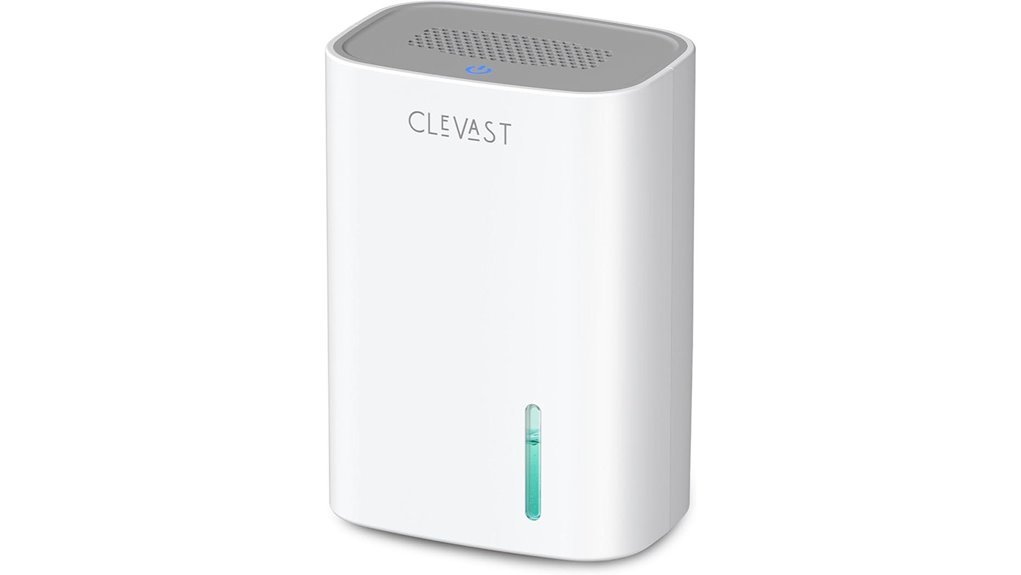
Best for Sleep-Sensitive Rooms
Quiet comfort meets compact power in the CLEVAST CL-DH04, ideal for bedrooms, closets, and nurseries. You get a 2.1-pound dehumidifier that fits tight spaces at 4.5 × 6.5 × 9.2 inches and uses advanced semiconductor condensation to pull up to 10 oz of moisture daily. Its 24 dB operation helps you sleep undisturbed, while Efficient and Quiet modes let you match your needs. You can cover up to 285 square feet, and the 30 oz tank shuts off automatically when full. Built-in overheat protection and a carry handle make it easy to use anywhere.
- Model listed: CL-DH04.
- Listed moisture removal: Up to 10 ounces per day.
- Listed coverage: Up to 285 square feet.
- Tank size: 30 ounces.
- Noise level: 24 dB.
- Listed weight: 2.1 pounds.
- Listed size: 4.5 × 6.5 × 9.2 inches.
- Useful extras: Efficient mode, Quiet mode, auto shut-off, overheat protection, and carry handle.
Best For: People who need a compact, ultra-quiet dehumidifier for small spaces like bedrooms, closets, nurseries, bathrooms, RVs, or offices.
Why you’ll like it: Choose the CLEVAST if noise is your biggest concern. Its listed 24 dB operation makes it a strong option for bedrooms, nurseries, offices, and other quiet spaces where constant fan noise would bother you. It is also a good fit if you want a lightweight unit that is easy to carry between small rooms.
Who should skip it: Skip it if you want the largest tank in this roundup or need high daily water removal. It focuses more on quiet, compact operation than heavy-duty performance.
Pros:
- Very quiet 24 dB operation, making it suitable for sleep-friendly spaces.
- Compact and lightweight design with a built-in carry handle for easy portability.
- Auto shut-off and overheat protection add convenience and safety.
Cons:
- Best suited for small areas, with coverage limited to up to 285 square feet.
- 30 oz tank may need to be emptied frequently in humid conditions.
- Not as powerful as larger compressor dehumidifiers for heavy-duty moisture removal.
Small Bedroom Dehumidifier with Auto Shut Off
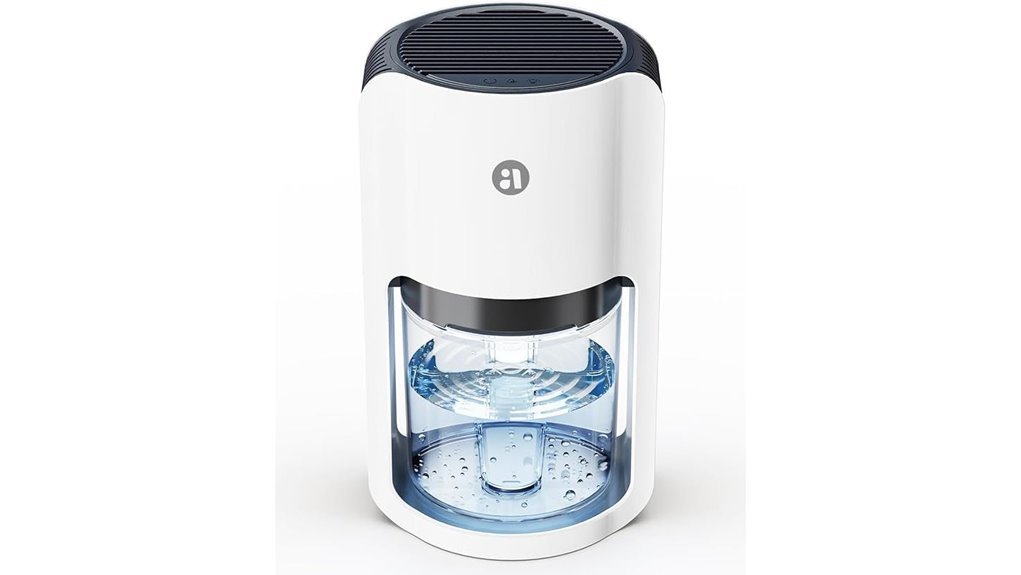
Best with Defrost Support
If you want a compact dehumidifier that shuts off automatically, TABYIK’s DH-CS06 fits bedrooms well. You get a portable unit that pulls up to 16 ounces of moisture a day in warm, humid conditions. Its 42-ounce transparent tank lets you check water levels at a glance, and it stops on its own when full. The built-in defrost helps prevent frost buildup, while the 28dB operation keeps your room quiet. At 5.6 x 6.37 x 11 inches and 2.6 pounds, you can move it easily. A 7-color night light adds a soft touch too.
- Model listed: DH-CS06.
- Listed moisture removal: Up to 16 ounces per day in warm, humid conditions.
- Tank size: 42 ounces.
- Noise level: 28 dB.
- Listed size: 5.6 x 6.37 x 11 inches.
- Listed weight: 2.6 pounds.
- Useful extras: Auto shut-off, transparent tank, built-in defrost, carry handle, and 7-color night light.
Best For: People looking for a compact, quiet bedroom dehumidifier for small spaces like bedrooms, bathrooms, closets, RVs, or offices.
Why you’ll like it: This is a good match if you want a bedroom-friendly unit with a larger transparent tank and quiet operation. The built-in defrost also helps if you plan to use it in cooler small spaces where frost buildup can be a concern. The clear tank is useful because you can check the water level quickly without opening the unit.
Who should skip it: Skip it if you need app controls, a drain hose, or full-size dehumidifier performance. It is better for daily comfort in small rooms than serious moisture problems.
Pros:
- Quiet 28dB operation makes it suitable for bedrooms and other low-noise areas.
- Auto shut-off and transparent 42oz tank make it easy and safe to use.
- Compact, lightweight design with a built-in handle for simple portability.
Cons:
- Best suited for small spaces, so it may not be powerful enough for larger rooms.
- 42oz tank may need frequent emptying in very humid conditions.
- Lacks advanced smart controls or app-based features.
Factors to Consider When Choosing a Small Size Dehumidifier
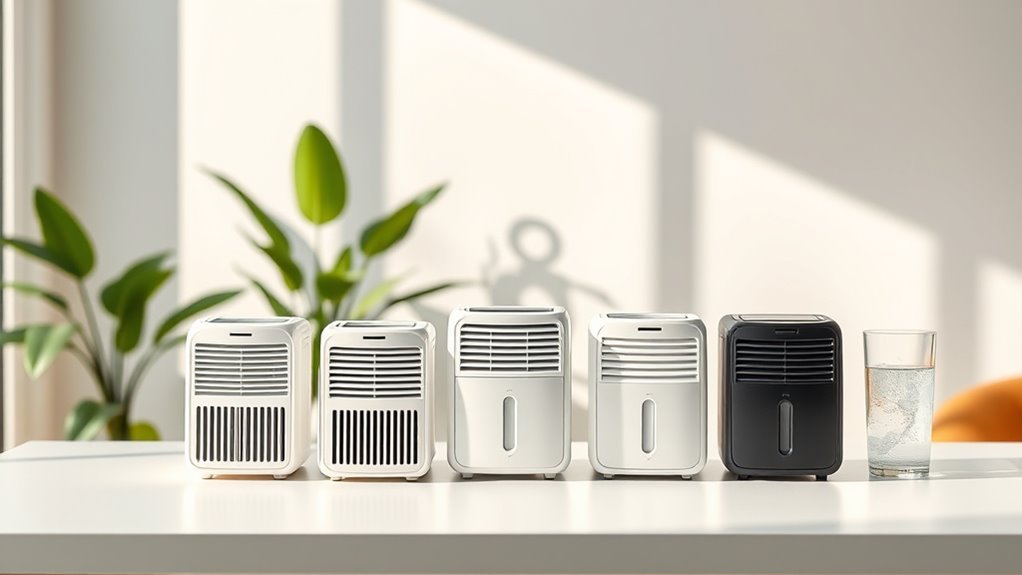
When you choose a small size dehumidifier, check the coverage area first so it matches your room. You’ll also want to compare moisture removal rate, tank capacity, noise level, energy use, portability, and safety features to make sure it fits your needs. These factors help you pick a unit that works efficiently without adding hassle.
Coverage Area
Coverage area is one of the most important factors when you’re choosing a small size dehumidifier, since these units typically handle about 130 to 285 square feet. You should match the unit to the room size so it can work efficiently without overtaxing itself. A model rated for about 200 square feet fits bedrooms and bathrooms well, while one that covers up to 285 square feet suits living rooms or offices. If you’re dealing with a closet, RV, or other tight spot, a compact dehumidifier makes more sense. Also, check the unit’s dimensions so it actually fits where you need it. When you pair the coverage area with your space, you’ll get better everyday performance and easier placement overall.
Moisture Removal Rate
Moisture removal rate tells you how much water a small dehumidifier can pull from the air each day, usually measured in milliliters or ounces. You’ll usually see compact units rated for lower daily removal than full-size compressor dehumidifiers. A higher rate helps when your room feels damp, especially in warm, humid conditions. In cooler or drier spaces, performance may drop, so don’t expect the same results everywhere. Choose a model whose capacity matches your room size and moisture level, so it can work efficiently without struggling. If you’re treating a space up to about 200 square feet, a smaller unit can often do the job well and keep conditions more comfortable for you.
Tank Capacity
Along with moisture removal rate, tank capacity plays a big role in how convenient a small dehumidifier will be to use. You’ll usually see tanks between 17 and 44 fluid ounces in this type of compact model. If you pick a 44-ounce tank, you can run the unit longer before emptying it, which helps in damp rooms or spaces with steady humidity. A 30-ounce tank can still work well, but you’ll need to empty it more often. That tradeoff often makes sense when you want a lighter, more portable unit for a small area. Match the tank size to your room size and humidity level, so you don’t interrupt operation too often. When the tank fits your needs, your dehumidifier stays practical and easier to manage.
Noise Level
Noise level matters a lot when you’re choosing a small dehumidifier, especially if it’ll run in a bedroom, nursery, or other quiet space. You’ll usually want a model that stays below 40 dB, because that helps preserve a calm atmosphere while it removes moisture. Many compact units run between 24 dB and 35 dB, which is quiet enough for daily use. At around 30 dB, the sound is similar to a whisper, so it won’t interrupt sleep or relaxation. Look for models with fewer start-stop cycles, since they tend to stay quieter overall. If you’re especially sensitive to sound, choose a unit with a Quiet Mode to reduce noise further and keep your room peaceful.
Energy Use
After considering noise, energy use is another key factor when you’re choosing a small dehumidifier, especially if you plan to run it regularly. You should check the daily energy rating first; some compact models are designed to keep operating costs low. Low wattage matters too, so look for units in the 25 to 40 watt range if you want to limit electricity use. Compact models can still pull moisture from the air without using as much power as large units. If you want steadier performance, choose one with gradual dehumidification modes, since they avoid sharp energy spikes and keep humidity changes more comfortable for you.
Auto Shut-Off
Auto shut-off is a must-have in a small dehumidifier because it stops the unit automatically when the tank is full, helping you avoid spills and overflow. You’ll appreciate this safety feature when you’re away or busy, since it prevents water from backing up and keeps your space clean. Many models also use a flashing light or similar indicator to let you know the tank needs emptying. That alert saves you guesswork and helps the unit run efficiently. By stopping operation at capacity, the feature also cuts wasted energy and reduces wear on the motor. If you live in a cooler room, look for auto defrost too, since it helps prevent frost buildup and supports reliable performance.
Portability and Placement
A small dehumidifier should be easy to move, but size alone is not enough. Check the weight, handle design, tank access, cord length, and footprint before you choose. If you plan to use one unit in several rooms, a built-in handle and a clear tank can save time. If the unit will stay in one place, look more closely at tank capacity and noise level. Always place the dehumidifier on a flat, stable surface with space around the air intake and outlet.
When a Small Dehumidifier Is Not Enough
A compact dehumidifier is best for mild moisture in small rooms and enclosed areas. It may not solve standing water, leaks, basement dampness, or humidity across a large open floor plan. If you see water stains, musty smells that return quickly, wet drywall, or visible mold, fix the moisture source first. A dehumidifier can help control humidity, but it should not replace leak repair, ventilation, or cleaning.
Pro Tips for Better Results
For better moisture control, close the door or cabinet when using a small dehumidifier in a compact area. Keep the air intake and outlet clear, empty the tank before it reaches the limit, and clean the tank regularly so stale water does not sit inside. In bathrooms, run the exhaust fan after showers and use the dehumidifier as extra support. In closets, avoid packing clothes tightly around the unit because blocked airflow reduces performance.
Safety and Maintenance Note
Use any small dehumidifier on a flat, stable surface and keep it away from water splashes, loose fabrics, and blocked vents. Empty and rinse the tank often, unplug the unit before cleaning, and follow the manufacturer’s instructions for placement, temperature range, and maintenance. If you have visible mold, a leak, or persistent musty odors, treat the moisture source first instead of relying only on a compact dehumidifier.
Final Buying Advice
If you want the easiest all-around choice for a small bedroom, bathroom, closet, or RV, start with the model that matches your room size and noise needs. Choose AlohaAir for a balanced small-room pick, NeedDuck for more controls, Bangnics for very tight spaces, CLEVAST for the quietest listed operation, and TABYIK for a bedroom-friendly tank size. The best small size dehumidifier is not always the one with the biggest coverage number. It is the one you will actually run, empty, and maintain without hassle.
Frequently Asked Questions
How Often Should I Empty a Dehumidifier Tank?
You should empty it whenever it’s full, usually every 6–24 hours depending on humidity, room size, and tank capacity. Check it daily at first, so you don’t risk overflow or reduced performance.
Can Small Dehumidifiers Run Overnight Safely?
Yes, you can run a small dehumidifier overnight safely if you use a modern model, keep it on a flat surface, and empty the tank as needed. Use auto shut-off as a backup safety feature, but still check the tank regularly.
Do Dehumidifiers Help Reduce Mold and Mildew?
Yes, you can reduce mold and mildew risk by lowering humidity, and you’ll slow their growth. You still need to clean existing spots, fix leaks, and improve airflow, because dehumidifiers won’t remove established mold.
What Humidity Level Is Ideal for Bedrooms?
You should aim for 30%–50% humidity in your bedroom; below 60% helps curb mold, and about 40% often feels comfortable. If you’ve ever slept poorly, moisture levels may have played a bigger role than you’d think.
How Much Electricity Do Small Dehumidifiers Use?
You’ll usually use about 20 to 200 watts, so your small dehumidifier may draw roughly 0.5 to 5 kWh daily depending on wattage and runtime. Check its listed wattage, estimate how many hours you will run it, and you can estimate electricity costs more easily.
Are Small Dehumidifiers Good for Bathrooms?
Small dehumidifiers can help in bathrooms with mild moisture, especially if the bathroom is compact and has poor airflow. They work best after showers when you also use a fan, open a door, or improve ventilation. If the bathroom stays wet for hours, fix airflow first.
Can I Use a Small Dehumidifier in a Closet?
Yes, a small dehumidifier can work well in a closet if there is enough space around the unit for airflow. Choose a compact model with auto shut-off, check the tank often, and avoid blocking the vents with clothing, boxes, or storage bins.
What Size Small Dehumidifier Do I Need?
Match the dehumidifier to the square footage and moisture level of your space. For closets, cabinets, pantries, and RV corners, a smaller unit may be enough. For bedrooms or offices, look for a higher coverage rating and a larger tank so you do not have to empty it constantly.
Which Small Dehumidifier Is Best for a Bedroom?
For bedrooms, focus on low noise, auto shut-off, a clear tank, and enough coverage for your room size. CLEVAST is the quietest listed option in this roundup, while TABYIK offers a larger transparent tank and quiet 28dB operation. AlohaAir is also a balanced choice if you want a night light and simple small-room performance.
Do Small Dehumidifiers Work in RVs?
Small dehumidifiers can work in RVs when the moisture issue is mild and the space is enclosed. They are most useful for sleeping areas, cabinets, closets, and small corners. For heavy condensation, you may also need better ventilation, leak checks, and regular tank emptying.
Conclusion
Choosing the right small dehumidifier can make your space feel fresher, quieter, and more comfortable. Whether you want a model for a bedroom, bathroom, closet, office, pantry, or RV, the best pick depends on tank size, noise level, room coverage, and auto shut-off features. If you want a simple place to start, choose AlohaAir for balanced small-room use, NeedDuck for extra settings, Bangnics for tight spaces, CLEVAST for quiet operation, or TABYIK for a bedroom-friendly tank and compact design. Pick the unit that fits your room best, then run it consistently, empty it on time, and keep the airflow clear so your space stays more comfortable.