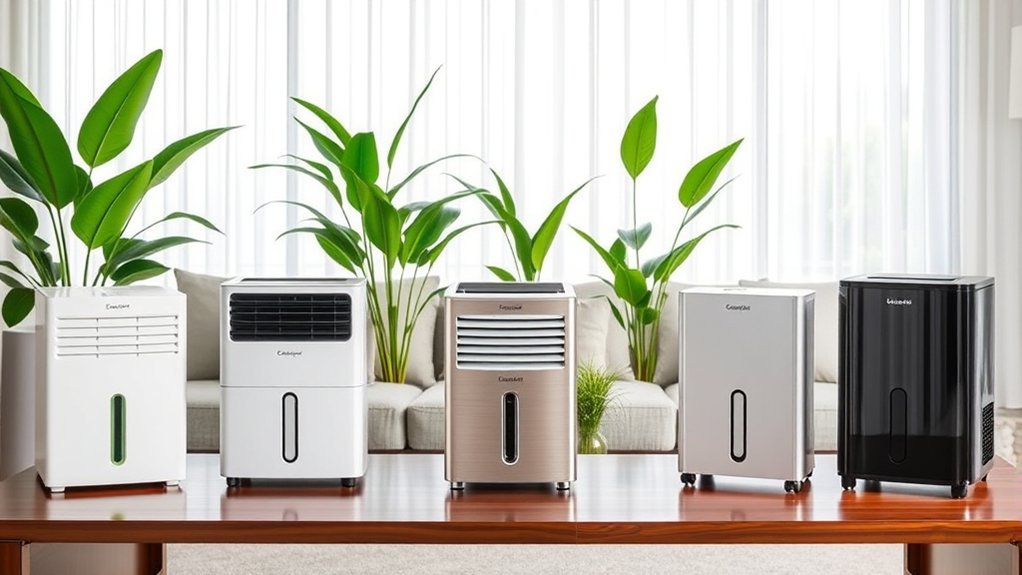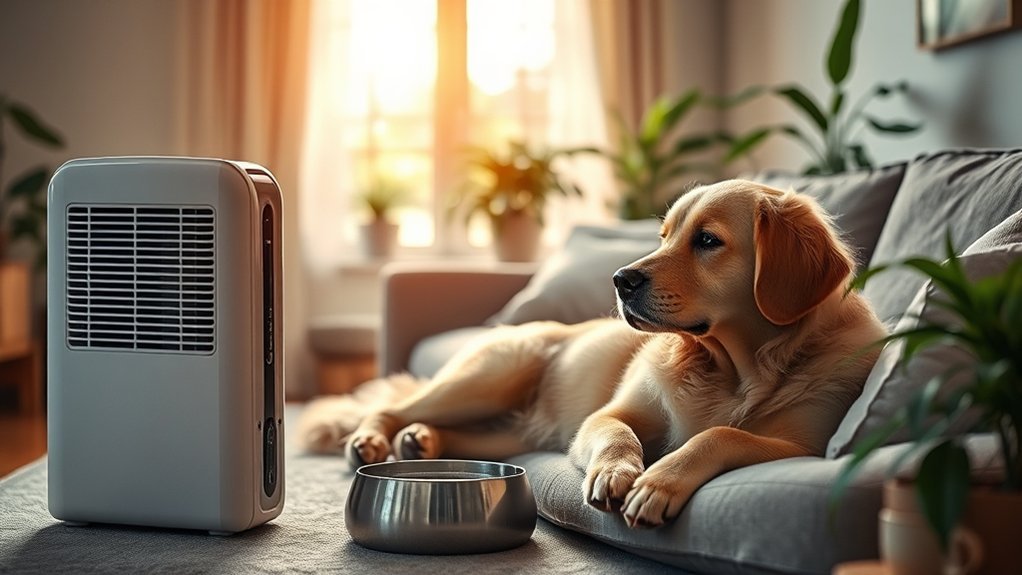
Dehumidifiers are generally fine to use around dogs when the goal is to control excess indoor moisture, not to make an already-dry room drier. The key distinction is that the commonly cited 30% to 50% relative-humidity range is a home indoor-air target from the EPA, not a veterinary humidity prescription for dogs. Use a hygrometer, place the unit safely, keep the room from becoming hot or excessively dry, and treat coughing, breathing trouble, or skin problems as health symptoms that may have causes beyond humidity.
Quick Answer
Usually, yes. A dehumidifier can be used in a home with dogs if it is stable, clean, safely wired, and used to control real dampness. Use the EPA’s 30% to 50% indoor-humidity guidance as a home moisture-control target, not a dog-specific medical cutoff. If your dog develops persistent coughing, labored breathing, weakness, or other concerning symptoms, move the dog to a comfortable area and contact your veterinarian rather than assuming humidity is the cause.
Key Takeaways
- A dehumidifier is most useful when the home is damp, musty, or persistently humid; it is an indoor moisture-control tool, not a medical treatment for a dog.
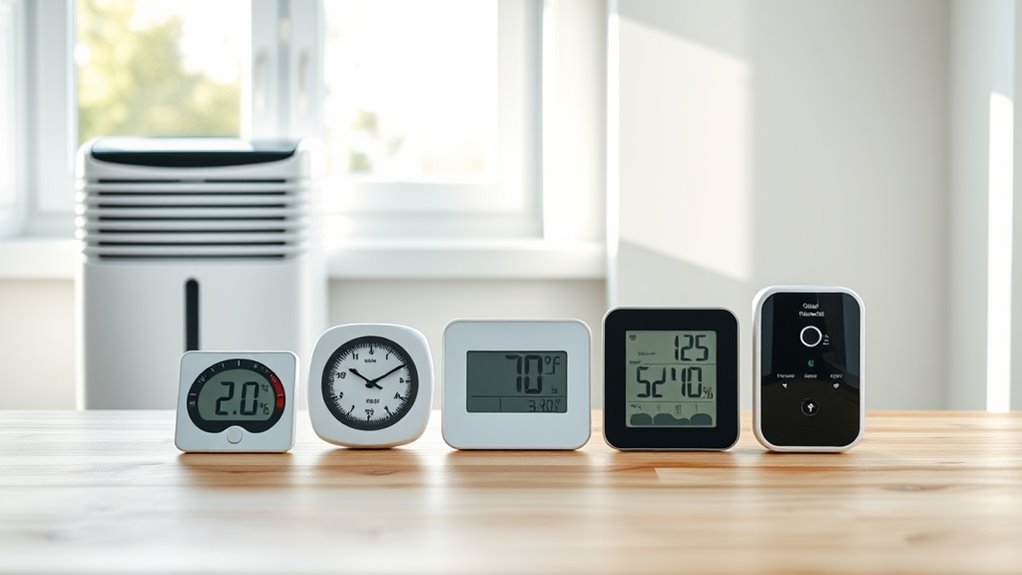
- Use a hygrometer instead of guessing. The EPA recommends keeping indoor humidity between 30% and 50% for homes; this is not a canine-specific veterinary threshold.
- A dehumidifier can be a problem if it over-dries the air, runs too loudly near your dog, leaks, has a chewable cord, or is not cleaned.
- In hot or humid conditions, dogs with short muzzles, heart or lung disease, obesity, or age-related vulnerability need extra caution because heat and humidity can make cooling harder.
- A humidifier may make more sense when the air is too dry, but it must also be cleaned and monitored carefully.
At a Glance
| Time Required | 5 to 10 minutes to check humidity and set up the unit safely; a few minutes each week for cleaning and inspection. |
| Difficulty | Easy, as long as you monitor humidity instead of running the dehumidifier nonstop. |
| Tools Needed | Hygrometer, dehumidifier with a humidistat if possible, clean filter, safe outlet, and cord cover if your dog chews. |
| Humidity Guide | Use 30% to 50% as EPA home indoor-air guidance, not as a dog-specific medical threshold. Also consider room temperature and your dog’s health. |
| Cost | No extra cost if you already own the unit; otherwise budget for a hygrometer, filter care, and electricity. |
Are Dehumidifiers Bad for Dogs?
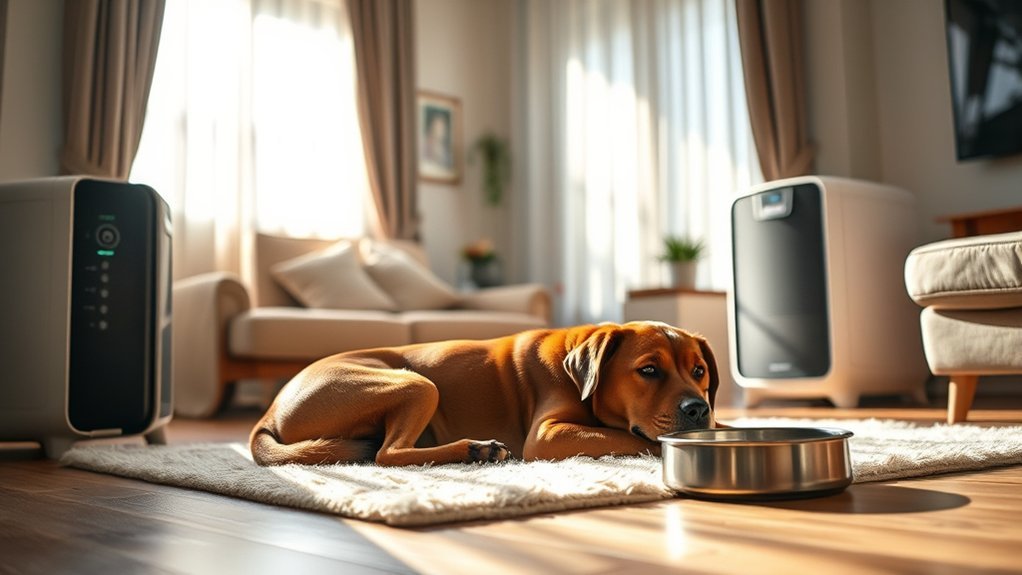
No, a properly used dehumidifier is not inherently bad for dogs. A dehumidifier removes excess moisture from indoor air. That can help in damp homes because excess moisture supports mold growth, musty odors, condensation, and conditions that favor dust mites.
The safest approach is not to guess. Place a hygrometer in the room where your dog spends the most time. The EPA recommends 30% to 50% relative humidity for indoor air, while the CDC advises keeping home humidity no higher than 50% all day to help prevent mold. Those are building and indoor-air targets, not veterinary limits for dogs, so also consider room temperature, airflow, and your dog’s individual health.
Note: A dehumidifier is not a treatment for coughing, wheezing, allergies, skin disease, or breathing trouble. It is an indoor-air tool. If your dog has ongoing symptoms, call your veterinarian.
A dehumidifier can cause problems when it is used carelessly. The main risks are unnecessary drying, placing the unit where your dog can knock it over, leaving cords exposed, letting the tank or filter get dirty, or adding heat and noise to a small resting area. A dehumidifier removes water vapor from room air; it does not pull water directly from your dog’s body. Fresh drinking water should still always be available, especially in warm weather.
Quick decision rule: If the room is below 30% humidity, further dehumidifying is usually unnecessary for ordinary home comfort. From 30% to 50%, you are within EPA indoor-air guidance. If humidity stays above 50%, look for moisture sources and consider dehumidification; the CDC recommends keeping home humidity no higher than 50% all day for mold control. Above 60%, the EPA considers the room above its preferred indoor-humidity ceiling, so address leaks, ventilation, or other moisture sources as well as running the unit.
Why High Humidity Can Be Hard on Dogs
High humidity matters in two different ways. First, excess indoor moisture can support mold growth and dust mites; the EPA says indoor relative humidity should stay below 60% and ideally between 30% and 50% when possible. Second, when the room is also hot, humidity can make it harder for a dog to lose heat through panting.
Think of humidity as a room-condition signal, not a diagnosis. Dampness raises the risk of mold and dust-mite problems, while hot, humid air makes panting less effective for cooling. New coughing, itching, or breathing changes still need to be judged as health symptoms, not automatically blamed on the dehumidifier.
- Mold and dampness: excess moisture is the core condition that allows indoor mold to grow, so fixing leaks and drying wet materials matters as much as running a dehumidifier.
- Dust mites: the EPA notes that lower indoor humidity may discourage dust mites, another reason to control persistent dampness without over-drying the room.
- Heat and humidity: dogs rely heavily on evaporative cooling through panting. Texas A&M veterinary guidance notes that rising humidity reduces evaporation and makes heat loss less efficient.
Humidity alone is not the whole story. Temperature matters too. Cornell University’s canine health guidance warns that heatstroke can happen after prolonged exposure to hot or humid environments. Cornell also notes that dogs mainly cool themselves by panting, and flat-faced breeds cannot pant as efficiently. Dogs with thick coats, obesity, heart disease, breathing problems, or advanced age need extra caution in warm, humid rooms.
Warning: Heavy panting, drooling, vomiting, weakness, collapse, pale or blue gums, or labored breathing can be urgent. Move your dog to a cooler area and contact a veterinarian or emergency clinic right away.
What Humidity Level Should You Use in a Home With Dogs?
The authoritative veterinary sources reviewed for this update do not specify one relative-humidity cutoff that applies to every dog. For the home itself, a strong evidence-based starting point is the EPA’s 30% to 50% indoor range, with the CDC advising no higher than 50% all day for mold prevention. Treat those numbers as building guidance. A dog’s comfort and risk also depend on temperature, breed, age, coat, and heart or lung health.
| Humidity reading | What it may mean | What to do |
|---|---|---|
| Below 30% | Below the EPA’s preferred indoor range; the room may be unnecessarily dry. | Stop or reduce dehumidifier use unless you have a specific moisture-remediation reason. Recheck with a hygrometer. |
| 30% to 50% | EPA’s preferred indoor-humidity range for homes. | Maintain the room as needed; do not treat this as a dog-specific medical target. |
| Above 50% | Above the CDC’s all-day home target for mold prevention. | Reduce moisture, improve ventilation where appropriate, and check for leaks or damp materials. |
| Above 60% | Above the EPA’s recommended upper ceiling for indoor relative humidity. | Dehumidify and investigate the moisture source; fix leaks and address visible mold safely. |
Humidity readings can change through the day. Check the room in the morning, after showers or cooking, during rainy weather, and after the dehumidifier has run. If your unit has a built-in humidistat, still use a separate hygrometer occasionally to confirm the reading.
When a Dehumidifier Can Be Bad for Dogs
A dehumidifier becomes risky when it creates a new problem while solving dampness. Watch for these situations:
- The room drops below 30% humidity. That is below the EPA’s preferred indoor range, so continued dehumidifying is usually unnecessary unless you are actively drying a moisture problem.
- The unit is too close to your dog’s bed or crate. Constant airflow, vibration, or noise may make rest harder.
- Your dog can reach the cord. Chewing a power cord can cause burns, shock, or fire risk.
- The tank, filter, or drain hose is dirty. Moisture buildup inside the appliance can worsen odor and air quality.
- Your dog can reach the bucket or drain water. Do not let your dog drink dehumidifier condensate. It is not treated drinking water, and manufacturers such as GE Appliances instruct users to discard collected water.
- The room is hot. Some dehumidifiers release warm air. In a small warm room, that may add heat stress.
- Your dog has medical risk factors. In hot or humid conditions, take extra care with short-muzzled dogs and dogs that are older, overweight, or living with heart or lung disease.
If symptoms begin after you start using the dehumidifier, turn the unit down or off, check the humidity reading, move your dog to another room, and call your veterinarian if symptoms continue.
Signs to Recheck the Room and Your Dog
Do not use symptoms alone as a humidity meter. Coughing, scratching, panting, or restless breathing can have environmental or medical causes. Use the hygrometer to judge the room, and use your dog’s symptoms to decide whether to change the environment, observe more closely, or call your veterinarian.
Coughing Or Wheezing
Coughing, wheezing, sneezing, or noisy breathing are not specific to humidity. They can occur with airway disease, infection, smoke or other irritants, overheating, and many other problems. Check the hygrometer and the room for obvious triggers, but do not use a humidity adjustment as a substitute for veterinary assessment when symptoms persist or breathing looks difficult.
- Track when coughing happens: after the unit runs, at night, during rain, or in one specific room.
- Check for musty odor, visible mold, dusty vents, or dirty filters.
- Call your veterinarian if coughing lasts more than a short period, worsens, or comes with lethargy, fever, appetite loss, or breathing effort.
Itchy Skin Or Scratching
Itching is not a reliable way to diagnose low or high humidity. Fleas, allergies, skin infection, parasites, and other dermatologic problems are common causes. If a room is outside the recommended home humidity range, correct the room condition, but judge persistent skin symptoms separately.
If your home is damp, lowering humidity can reduce conditions that support mold and dust mites. If the room is below the EPA range, reducing dehumidifier use is reasonable. Redness, hot spots, hair loss, odor, sores, or repeated licking deserve a veterinary check because humidity alone does not explain them.
Restless Breathing At Night
Restless or labored breathing at night deserves more attention than the humidity number alone. Heat, pain, anxiety, heart disease, airway disease, and other problems can change breathing. Look for patterns in the room, but contact a veterinarian promptly if breathing effort is new, persistent, or worsening.
- Note whether symptoms worsen in damp weather or after showering, cooking, or drying laundry indoors.
- Check the hygrometer before bed and again in the morning.
- Move the dehumidifier farther from your dog’s sleeping area if the airflow or sound seems disruptive.
Signs the Room May Be Too Dry
The clearest sign that the room is too dry is the hygrometer reading, not a symptom checklist. If relative humidity is below 30%, stop or reduce ordinary dehumidifier use and let the room move back toward the EPA range. If your dog also has coughing, eye irritation, or skin problems, treat those as separate symptoms that may need veterinary attention.
Signs the Room Is Too Damp
Air may be too damp if you notice condensation on windows, a musty smell, damp bedding, mold spots, slow-drying floors, or humidity readings above 50% to 60%. In that case, a dehumidifier can help, but you should also look for leaks, poor ventilation, wet carpets, or damp walls.
How to Use a Dehumidifier Safely
You can use a dehumidifier safely around dogs by treating it like any other electrical appliance: place it carefully, manage the cord, clean it often, and monitor the room instead of running it blindly.
Recommended Products

Semiconductor dehumidifiers use thermoelectric cooling to remove moisture from the air. They create a drier, more comfortable environment by reducing humidity and improving air quality.

REUSABLE, ECO-FRIENDLY DESIGN: The Osmo Moisture Absorber features a refillable water tank, removing up to 44 fl oz of moisture from the air. Unlike disposable moisture absorbers such as hanging bags or crystals, our Moisture Absorber can be used over and over again, helping to reduce waste and improve your carbon footprint.
Safe Placement Tips
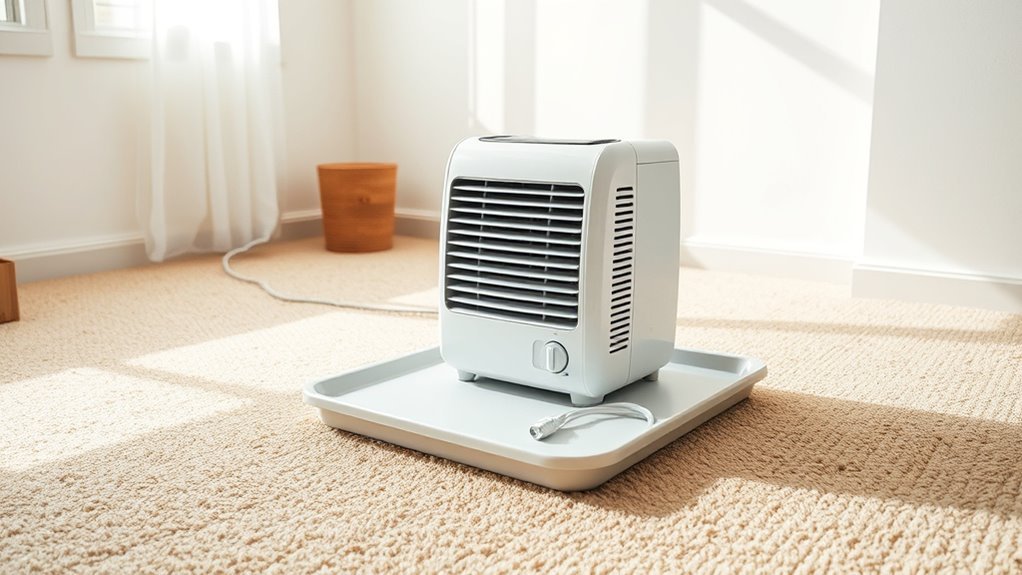
Place the dehumidifier on a stable, level surface where your dog cannot knock it over. Keep it away from water bowls, dog beds, crates, doorways, and play areas. Do not point strong airflow directly at your dog’s sleeping spot.
- Choose a low-traffic location with enough clearance around the air intake and outlet.
- Route cords behind furniture or use a cord cover if your dog chews.
- Keep the collection bucket seated properly so it does not leak.
- Empty the bucket before your dog can sniff, tip, or drink from it.
- Do not use a damaged cord, cracked tank, or unit that smells hot or makes unusual sounds.
- Keep packaging, small parts, and drain caps away from dogs that chew or swallow objects.
Pro Tip: Put the hygrometer near your dog’s usual resting height, not on top of the dehumidifier. That gives you a better reading of the air your dog is actually breathing.
Maintain Healthy Humidity
Set the unit to a target within the EPA’s 30% to 50% indoor range if your model has a humidistat. A setting near the upper part of that range can reduce unnecessary drying while still controlling dampness. If your dehumidifier only has low, medium, and high settings, use the hygrometer to decide when to run it instead of relying on a fixed daily schedule.
Fresh water should always be available. Humidity control is not a substitute for cooling, shade, ventilation, or hydration, especially in warm weather or after exercise.
Clean And Maintain The Unit
A dirty dehumidifier can work poorly and smell musty. Follow your model’s manual, but use this routine as a simple baseline:
- Daily or as needed: Empty the water tank before it overflows, keep it out of your dog’s reach, and rinse it if it smells stale.
- Weekly: Wash and dry the bucket, wipe reachable surfaces, and check for slime, mineral buildup, or mold.
- Every few weeks: Clean or replace filters according to the manual, especially in homes with shedding dogs.
- Monthly: Inspect the cord, plug, drain hose, vents, and wheels or feet.
- After storage: Clean the tank and filter before using the unit again.
If the dehumidifier uses a continuous drain hose, make sure the hose slopes correctly, does not kink, and drains somewhere your dog cannot drink from or chew. Keep the drain route away from food bowls, bedding, and high-traffic paths so a leak does not create a damp spot your dog rests on.
Dehumidifier vs. Humidifier vs. Air Purifier
These appliances solve different problems. Using the wrong one can make your dog’s environment worse.
| Device | Best for | Dog-safety note |
|---|---|---|
| Dehumidifier | Damp rooms, condensation, musty smells, high humidity, mold prevention. | Do not over-dry the room. Keep cords and drainage away from your dog. |
| Humidifier | Dry winter air or indoor humidity below the preferred home range. | Clean often. Do not add essential oils unless your veterinarian specifically approves. |
| Air purifier | Airborne particles such as dust, pollen, smoke, and pet dander. | Choose a particle air cleaner with a room-appropriate CADR; HEPA filtration is common. Avoid devices that intentionally produce ozone. |
A dehumidifier may have a washable filter that catches some hair and lint, but it is not the same as a dedicated air purifier. If your main problem is airborne particles such as dander, pollen, dust, or smoke, use the EPA’s air-cleaner guidance to choose a unit with a room-appropriate clean air delivery rate (CADR). For gases or odors, particle filtration alone is not enough.
Recommended Products

WHY CHOOSE AHAM VERIFIDE AIR PURIFIERS: AHAM (Association of Home Appliance Manufacturers) is an ANSI-accredited organization that sets strict standards for appliance performance. Air purifiers with the AHAM VERIFIDE seal have been independently tested for air cleaning performance and energy efficiency. When you choose an AHAM certified air purifier, you're choosing a product trusted for reliable and effective indoor air quality improvement
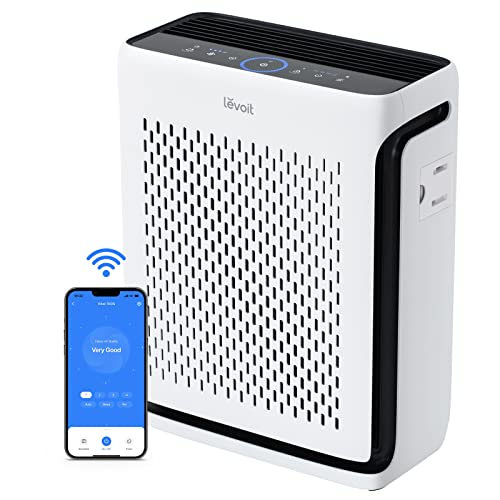
𝐖𝐇𝐘 𝐂𝐇𝐎𝐎𝐒𝐄 𝐀𝐇𝐀𝐌 𝐕𝐄𝐑𝐈𝐅𝐈𝐃𝐄 𝐀𝐈𝐑 𝐏𝐔𝐑𝐈𝐅𝐈𝐄𝐑𝐒: AHAM (Association of Home Appliance Manufacturers) is an ANSI-accredited organization that sets strict standards for appliance performance. Air purifiers with the AHAM VERIFIDE seal have been independently tested for air cleaning performance and energy efficiency. When you choose an AHAM certified air purifier, you're choosing a product trusted for reliable and effective indoor air quality improvement
When a Humidifier Makes More Sense
A humidifier may make more sense when your home’s air is below the preferred indoor range, especially during winter heating or in dry climates. If your hygrometer regularly reads below 30%, ordinary dehumidifier use is probably the wrong approach for that room.
A clean humidifier may help make dry indoor air more comfortable, but it should still be used with a hygrometer. Too much humidifier use can push the room back into the damp range where mold and dust mites become more likely.
- Use the hygrometer to confirm that the room is actually dry before adding moisture.
- Keep the humidifier clean so it does not become another source of contamination.
- Do not use a humidifier as a treatment for persistent coughing, skin disease, or breathing trouble unless your veterinarian recommends it.
Warning: Do not add essential oils to a humidifier or diffuser around your dog unless your veterinarian says it is safe. The Merck Veterinary Manual notes that essential oils can cause toxicosis in animals.
How to Choose a Dehumidifier for a Home With Dogs
If your home really needs a dehumidifier, pick one that controls moisture without creating new problems for your dog. The best model depends on room size, dampness level, noise tolerance, drainage setup, and how curious your dog is.
| Feature | What to look for | Why it matters |
|---|---|---|
| Noise | Quiet operation, sleep mode, or lower fan settings. | Reduces stress near beds, crates, and resting areas. |
| Humidistat | Adjustable target humidity or auto mode. | Helps prevent over-drying. |
| Filter | Washable filter or easy-to-replace filter. | Helps catch hair and lint before they clog the unit. |
| Safety shutoff | Auto shut-off when the bucket is full. | Prevents overflow and wet floors. |
| Capacity | A size matched to the room and moisture level. | An undersized unit may run constantly and still fail to control humidity. |
| Operating temperature | Low-temperature operation or auto-defrost for cool basements. | Cold rooms can frost the coils, which reduces moisture removal and may make the unit run longer. |
| Energy efficiency | ENERGY STAR certified model when available. | ENERGY STAR says certified dehumidifiers use about 20% less energy than similarly sized conventional units while removing the same amount of moisture. |
| Air-cleaning modes | If a hybrid unit includes an ionizer or air-cleaner mode, check whether it intentionally produces ozone. | The EPA advises avoiding air cleaners that intentionally produce ozone, a lung irritant. |
| Portability | Handles, wheels, and a stable base. | Makes it easier to move the unit away from dogs or into the dampest room. |
When you choose carefully, your dehumidifier can support comfort, air quality, and calm coexistence. The safest model is not always the strongest one; it is the one that keeps humidity in range without making the room hot, loud, dry, or hazardous. For a damp basement or laundry room, match capacity to the room’s size and moisture level instead of choosing only by price or tank size.
Recommended Products
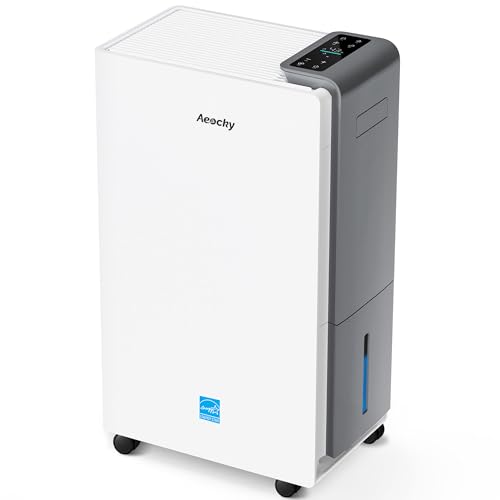
【ENERGY STAR 25 ≠ ENERGY STAR Most Efficient 2025】Don't fall for competitors' word games. With only 2.6% of ENERGY STAR models earning "Most Efficient 2025" title, these options are exceptionally rare on the market. RHEA-001 is one of the few to truly hold this top-tier certification. Many brands use misleading phrases like "Energy Star Efficient 25" or "Energy Star 25" to imply a standard they haven't met. Choosing them is a risk.With AEOCKY, you get verified performance and the peace of mind of authentic, top-tier efficiency.
Frequently Asked Questions
Can dogs be in a room with a dehumidifier?
Yes. Dogs can be in a room with a dehumidifier when the unit is stable, the cord and drain are protected, and the room does not become hot or excessively dry. Use 30% to 50% as EPA home indoor-air guidance, not as a dog-specific veterinary target.
Can a dog sleep with a dehumidifier on?
Yes, if the room actually needs dehumidification and the unit is stable, safely wired, and not adding uncomfortable heat or direct airflow near the bed. Use auto mode or a humidistat when possible, and recheck the room with a hygrometer.
Can a dehumidifier make my dog cough?
A cough that starts after you change the room environment is a reason to check the hygrometer, filter, dust level, temperature, and airflow, but coughing is not specific to dehumidifier use. If it persists, worsens, or comes with breathing effort, contact your veterinarian.
Will a dehumidifier dehydrate my dog?
A dehumidifier removes water vapor from room air; it does not directly pull water from your dog’s body. Keep fresh water available, and pay more attention to heat, exercise, illness, vomiting, diarrhea, or poor water intake as dehydration risks.
Can dogs drink dehumidifier water?
No. Dehumidifier condensate is not treated drinking water. Keep the bucket and drain route away from your dog, empty the tank as directed, and provide fresh potable water instead.
What humidity is too low for dogs?
The veterinary sources reviewed here do not give one humidity cutoff for every dog. For the home, below 30% is below the EPA’s preferred indoor range, so further ordinary dehumidification is usually unnecessary. Use a hygrometer rather than symptoms alone to judge the room.
What humidity is too high for dogs?
The veterinary sources reviewed here do not give one dog-specific cutoff. For homes, the CDC recommends keeping humidity no higher than 50% all day to help prevent mold, and the EPA recommends staying below 60%, ideally 30% to 50%. For dogs, high humidity becomes especially important when the room is also hot because it reduces evaporative cooling.
Should I leave a dehumidifier on all day with a dog at home?
Let the humidity reading, not the clock, control runtime. Auto mode or a humidistat is better than a fixed all-day schedule because the unit can cycle as the room changes. Before leaving a dog alone with it, secure the cord, bucket, drain hose, and airflow path.
Should I use a dehumidifier or air purifier for dog allergies?
Use a dehumidifier for a moisture problem such as persistent dampness or high humidity. Use a particle air cleaner for airborne dander, pollen, dust, or smoke; choose one with a room-appropriate CADR, and avoid models that intentionally produce ozone. Some homes need both because the devices solve different problems.
Conclusion
Dehumidifiers are not inherently bad for dogs when they are used with care. Use one to solve a real moisture problem, not simply because a room feels different. Measure humidity with a hygrometer, use the EPA’s 30% to 50% range as home indoor-air guidance, keep the unit stable and clean, keep condensate away from your dog, and make sure fresh drinking water is always available.
If your dog coughs, wheezes, scratches, pants heavily, seems restless, or has trouble breathing, do not assume humidity is the only cause. Adjust the room, check the humidity reading, move your dog to a safer space, and contact your veterinarian if symptoms continue or look serious.
Sources
- U.S. Environmental Protection Agency: Care for Your Air — backs the 30% to 50% indoor humidity range and hygrometer guidance.
- U.S. Environmental Protection Agency: Mold Course, Chapter 2 — backs mold and indoor relative humidity guidance.
- CDC: Mold — backs keeping home humidity no higher than 50% all day to help prevent mold.
- Cornell University College of Veterinary Medicine: Summer Heat Safety Tips for Dogs — backs the risk of hot or humid environments for dogs.
- Texas A&M School of Veterinary Medicine: Keeping Pets Safe as Temperatures Rise — explains how humidity reduces evaporative heat loss.
- ENERGY STAR: Dehumidifiers — backs the current energy-efficiency guidance and the approximately 20% energy-use advantage for certified units.
- Merck Veterinary Manual: Toxicoses From Essential Oils in Animals — backs the warning about essential oils around pets.
- U.S. Environmental Protection Agency: Guide to Air Cleaners in the Home — backs CADR-based particle-air-cleaner selection and the warning to avoid devices that intentionally produce ozone.
- GE Appliances: Dehumidifier Use Guidance — backs discarding collected dehumidifier water rather than drinking it.