Disclosure: As an Amazon Associate, we earn from qualifying purchases. If you click a link on this page and make a purchase, we may receive a small commission at no extra cost to you.
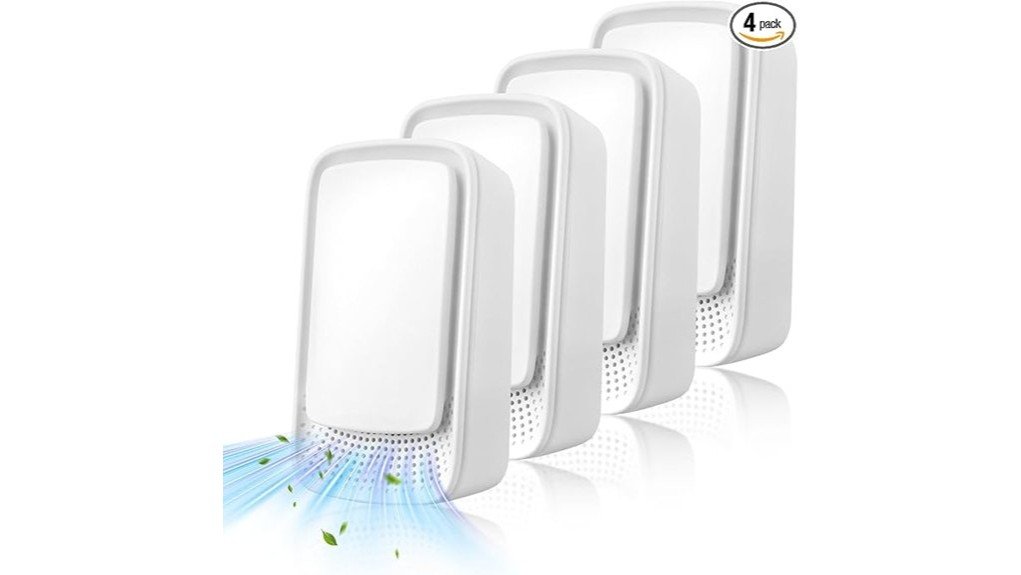
A small plug-in air cleaner sounds appealing when you want less maintenance than a traditional filtered purifier. The TRPYD AIR 1 Plug-In Ionic Air Purifier is sold as a four-pack of compact, filterless negative-ion units designed for bedrooms, kitchens, offices, and other small spaces. Its biggest advantages are simple plug-in operation, low power use, and no replacement filters, but ionization is not the same as HEPA filtration and should not be treated as a proven solution for every pollutant. This review explains where the AIR 1 makes sense, where its limitations matter, and what you should check before using an ionizer in occupied rooms.
Quick Verdict
Rating: Recommended with caveats
Best For: Buyers who want a compact, filterless plug-in ionizer for small rooms and understand the limits of ionization technology.
Bottom Line: The TRPYD AIR 1 is easy to place and inexpensive to maintain because it uses no replaceable filter. However, it should not replace a properly sized HEPA purifier when dependable airborne-particle capture is your main goal, and you should verify ozone-emissions compliance for the exact model before using it around sensitive occupants.
Key Takeaways
- The TRPYD AIR 1 is a four-pack of plug-in negative-ion air cleaners with a filterless design.
- The listing identifies 3-watt AC operation, making each unit simple to run from a standard wall outlet.
- Ionization charges airborne particles so that they are more likely to settle on nearby surfaces. It does not work like a HEPA filter that physically traps particles.
- The filterless design eliminates routine replacement-filter purchases, although surrounding surfaces may need more frequent cleaning as charged particles settle.
- The product is better suited to buyers who prioritize compact size and minimal maintenance than buyers who need verified high-efficiency filtration.
- Because electronic ionizers can produce ozone as a byproduct, verify appropriate ozone-emissions certification for the exact model before using it around babies, people with asthma, or other sensitive occupants.
Key Specifications
| Specification | Detail |
|---|---|
| Brand | TRPYD |
| Model | AIR 1 |
| Product type | Plug-in negative-ion air cleaner |
| Quantity | 4 units |
| Color | Pure white |
| Listed dimensions | Approximately 1.1 × 2.28 × 3.78 inches |
| Listed item weight | 9.6 ounces for the product listing; per-unit weight is not clearly specified |
| Power | AC plug-in, listed at 3 watts |
| Filter | No replaceable filter |
| Control | Button control |
| Included item | User manual |
| Listed warranty | 1 year |
| Best use | Small indoor spaces where you want compact, filterless ionization rather than primary HEPA filtration |
What Is the TRPYD AIR 1 Plug-In Ionic Air Purifier?
The TRPYD AIR 1 is a small electronic air cleaner that plugs directly into a wall outlet. Instead of pulling room air through a replaceable HEPA or carbon filter, it generates ions that electrically charge some airborne particles.
Once charged, those particles can attach to nearby surfaces or combine with other particles and settle. That distinction matters because the AIR 1 does not physically collect pollutants inside a replaceable filter in the way a conventional mechanical purifier does.
You receive four units in the package, so the format is convenient when you want to place separate devices in several small areas rather than move one larger purifier from room to room.
Who Should Buy It?
Best For
- You want four compact plug-in units for several small rooms.
- You prefer a filterless product with no recurring replacement-filter schedule.
- You understand that ionization is an add-on air-cleaning method rather than a direct substitute for HEPA filtration.
Skip If
- You need verified high-efficiency capture of pollen, fine dust, smoke particles, or other airborne contaminants.
- You want a purifier with a published CADR and clearly documented room-cleaning performance.
- You cannot verify acceptable ozone-emissions performance for the exact unit you plan to use.
Before You Buy: Do not assume that a filterless ionizer provides the same particle removal as a HEPA purifier. Ionizers can also generate ozone as a byproduct, so check the exact model’s ozone-emissions certification and manufacturer instructions before using it in occupied rooms.
Design and Everyday Convenience
The AIR 1’s main practical advantage is its compact plug-in format. You do not need floor space, a tabletop, ductwork, or a separate power cord. That can be useful in bedrooms, home offices, bathrooms, or other places where a full-size purifier would be inconvenient.
The four-pack also gives you more placement flexibility. Instead of expecting one tiny unit to influence several rooms, you can put individual units near the spaces where you spend time.
The tradeoff is that a wall-mounted device occupies an electrical receptacle. It may also interfere with the second socket on some outlet layouts, depending on orientation and nearby plugs.
Filterless Ionization Performance
The AIR 1 uses negative-ion technology rather than a mechanical filter. Ionizers charge airborne particles, which encourages some of those particles to settle onto walls, furniture, flooring, or other surfaces.
This means a room may appear to have fewer suspended particles without those particles necessarily being captured inside the device. Regular surface cleaning still matters because settled material can return to the air when disturbed.
You should also keep expectations realistic for pollen, larger dust allergens, smoke, and gaseous odors. A dedicated HEPA purifier is generally a better fit when your priority is trapping airborne particles, while activated carbon is commonly used when gaseous contaminants and odors are a major concern.
Noise Level and Bedroom Use
Because the AIR 1 does not rely on a conventional high-airflow fan and replaceable filter system, it is designed for quiet operation. That makes the format attractive for bedrooms and offices where fan noise may be distracting.
However, individual sensitivity matters. Some electronic air cleaners may produce a faint electrical sound that is more noticeable in a silent bedroom. If you are sensitive to small noises, test the unit away from the head of your bed before deciding on permanent placement.
Maintenance and Cleaning
The lack of a replaceable filter is one of the AIR 1’s clearest ownership benefits. You do not have to keep a replacement-filter schedule or budget for consumable filters.
Filterless does not mean maintenance-free. Because charged particles can settle on nearby surfaces, you may need to wipe walls, furniture, shelves, and other surfaces more often. Follow the supplied manual for any cleaning required on the unit itself, and unplug it before performing manufacturer-approved maintenance.
Pro Tip: Place each unit where air can circulate around it rather than hiding it behind curtains, large furniture, or tightly packed objects. Keep nearby surfaces clean so settled particles are less likely to become airborne again.
How It Performs in Real Use
In a Bedroom
The compact format is convenient when you have little floor or bedside-table space. Quiet operation is another advantage, but place the unit away from your pillow if you notice any faint electrical noise and verify appropriate ozone-emissions compliance before long-term use.
In a Home Office
A plug-in design avoids another device on your desk and requires almost no daily interaction. The AIR 1 makes more sense here as a low-maintenance supplemental device than as your only solution for heavy dust, smoke, or other significant indoor-air problems.
In a Home With Pets
Pet owners may be interested in the AIR 1 because charged particles can settle out of the air, but it should not be presented as a complete pet-dander or odor solution. Vacuuming, surface cleaning, ventilation, source control, and appropriate filtration remain important.
For Long-Term Use
The filterless design can reduce ongoing consumable costs compared with a purifier that requires frequent filter replacements. The larger consideration is performance: if your goal is measurable airborne-particle removal, you may eventually get more predictable results from a properly sized mechanical purifier with a published CADR.
Placement Tips for Better Results
- Use an open outlet: Avoid placing the device behind large furniture or heavy curtains.
- Do not expect one unit to cover several closed rooms: The four-pack is more useful when units are distributed among separate spaces.
- Keep surrounding surfaces clean: Ionized particles may settle on furniture, walls, or floors.
- Follow the supplied instructions: Use the electrical outlet type and operating conditions specified by the manufacturer.
- Do not block ventilation: Normal source control and ventilation remain important for indoor air quality.
Safety and Ozone Considerations
Electronic ionizers deserve more safety scrutiny than a simple filterless description suggests. Ion-generating air cleaners can produce ozone as a byproduct, and ozone can irritate the respiratory system.
For that reason, do not assume the AIR 1 is automatically appropriate for nurseries, children’s rooms, people with asthma, or anyone who is particularly sensitive to air pollutants. A current independent ozone-emissions certification for this exact TRPYD AIR 1 model was not confirmed during editorial review.
If respiratory health is your primary reason for buying an air cleaner, consider discussing the choice with an appropriate healthcare professional and compare the AIR 1 with mechanical HEPA units that do not depend on ion generation. Always follow the manufacturer’s safety instructions.
Pros and Cons
Pros
- Four plug-in units are included for multi-room placement.
- Filterless design eliminates routine replacement-filter purchases.
- Compact wall-plug format takes up very little room.
- Listed 3-watt power use is modest.
- Designed for quiet operation in bedrooms and workspaces.
Cons
- Ionization does not provide the same physical particle capture as a HEPA filter.
- Charged particles may settle on nearby surfaces and require additional cleaning.
- Ozone-emissions certification for this exact model should be verified before use around sensitive occupants.
Is It Worth the Price?
The AIR 1 can offer reasonable value if you specifically want four small, filterless ionizers and want to avoid recurring filter costs. Receiving four units also makes it easier to distribute them among several small rooms.
The value becomes less convincing when your main goal is verified particulate filtration. In that situation, published CADR data, a suitable room-size rating, and a mechanical HEPA filter may matter more than low maintenance.
In short, the AIR 1 is worth considering for its compact format and filterless operation, but it is not the best fit when dependable high-efficiency filtration is your top priority.
How It Compares to Alternatives
A mechanical HEPA air purifier is generally the stronger option when you want airborne particles physically captured inside a filter. You will need to replace filters periodically, but properly sized HEPA units provide a more direct and measurable approach to particle removal.
If household odors or gaseous pollutants are your main concern, compare the AIR 1 with a purifier that includes a meaningful amount of activated carbon. If you specifically want electronic ionization, compare models with independently documented ozone-emissions testing and clear room-performance information before deciding.
Frequently Asked Questions
Does the TRPYD AIR 1 use a replaceable filter?
No. The AIR 1 uses a filterless ionization system, so you do not have a scheduled HEPA or carbon filter to replace. You should still follow the manufacturer’s cleaning instructions and clean nearby surfaces where charged particles may settle.
Is an ionic air purifier the same as a HEPA purifier?
No. A HEPA purifier moves air through a physical filter that traps particles. An ionizer electrically charges particles so they may attach to surfaces or settle, so the two technologies should not be treated as equivalent.
Will the AIR 1 remove pet odors?
Do not rely on an ionizer as your only odor-control method. Source control, cleaning, ventilation, and products that use appropriate gas-adsorbing media such as activated carbon are more relevant when persistent odors are the main problem.
Can it help with seasonal allergies?
It should not be marketed as an allergy treatment. Ionizers may affect some suspended particles, but a properly sized HEPA purifier is generally a more direct choice when airborne allergen capture is your main purchasing goal.
Is the TRPYD AIR 1 safe to use around babies and children?
Do not assume that simply because the unit has no filter. Ionizers can produce ozone as a byproduct, so verify appropriate ozone-emissions testing or certification for the exact model before using it in a nursery or around sensitive occupants. Seek professional guidance when respiratory health is a concern.
Where should I place each unit?
Use an unobstructed wall outlet where furniture, curtains, or other objects do not crowd the device. The four-pack is most useful when units are spread among separate small areas rather than clustered together.
Do I need to clean anything if there is no filter?
Yes. Filterless operation removes replacement-filter maintenance, not general cleaning. Dust and other charged particles may settle on nearby surfaces, so regular household cleaning remains important.
Who should skip this plug-in ionizer?
Skip it if you need proven high-efficiency particle capture, a published CADR, or clearly documented room-cleaning performance. You should also avoid relying on an electronic ionizer when you cannot verify suitable ozone-emissions performance for your intended environment.
The Bottom Line
The TRPYD AIR 1 makes the most sense when you want four compact, low-power, filterless ionizers and understand that ionization is different from mechanical filtration. Its simple plug-in design and lack of replacement filters are useful strengths, but buyers who need reliable allergen or smoke-particle capture should favor a properly sized HEPA purifier, and ozone-emissions compliance should be verified before using an ionizer around sensitive occupants.
Ready to Buy?
Check the latest product details and confirm that the exact model fits your intended use before you decide.