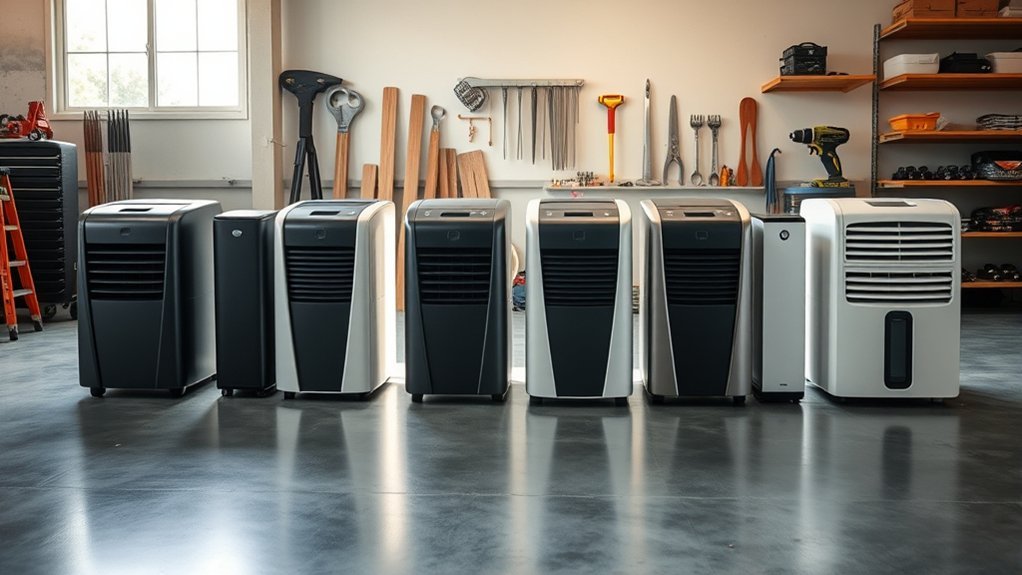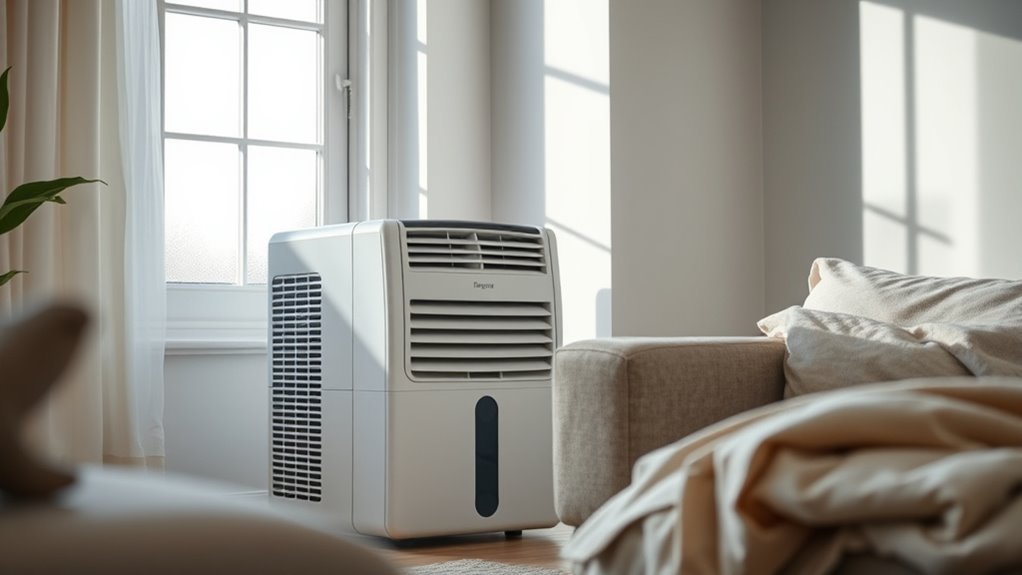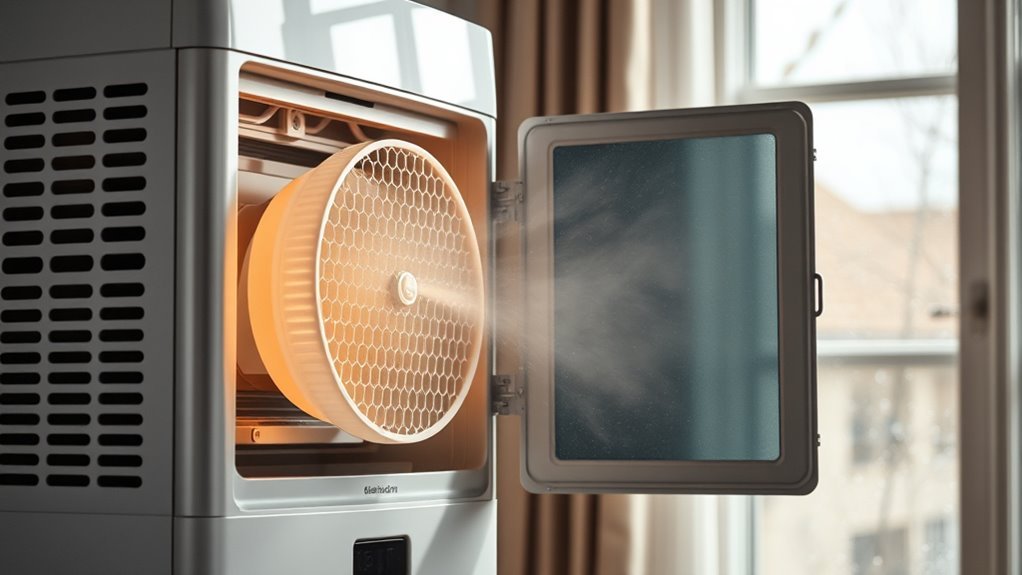
You usually cannot recharge a compressor dehumidifier yourself. Most portable compressor models are factory-sealed refrigeration systems, and a low refrigerant charge normally means the system has leaked or been damaged. If you have a desiccant or thermoelectric/Peltier dehumidifier, there is no conventional refrigerant charge to top off. Before you assume a compressor unit has a refrigerant problem, check the simple causes first: dirty filter, blocked airflow, frozen coils, a full-bucket switch, drainage trouble, the humidity setting, and a room that is too cold for the model. If those checks do not restore water collection, get a written service quote and compare it with replacement.
Quick Answer
A compressor dehumidifier does not need a routine refrigerant “top-off.” If the charge is low, the sealed system has a leak or another fault. For refrigerants covered by EPA Section 608, attaching gauges, adding or removing refrigerant, or otherwise servicing the refrigerant circuit requires the appropriate certification. EPA identifies Type I certification for servicing small appliances. Homeowners can still clean the filter, confirm airflow, check the bucket and drain, measure room humidity and temperature, and look for repeated frosting before deciding whether professional service is worthwhile.
Can You Recharge a Dehumidifier?
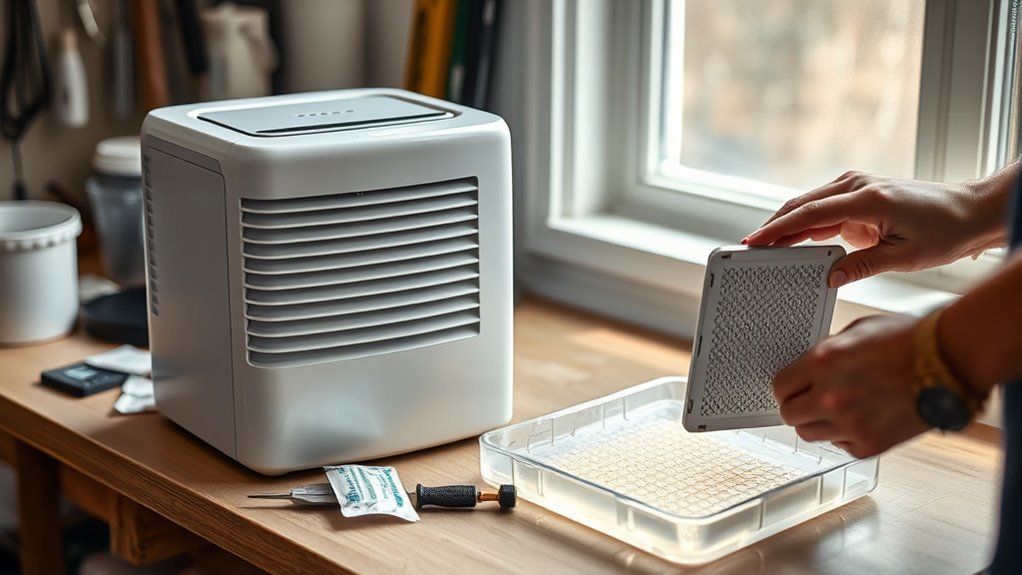
In most cases, you should not try to recharge a consumer compressor dehumidifier yourself. The refrigerant circuit is sealed at the factory, and many portable units do not provide a field service port. If the charge is low, refrigerant escaped through a leak or sealed-system failure, so adding more without correcting the underlying problem does not provide a lasting repair.
A proper sealed-system repair may require refrigerant recovery, leak diagnosis and repair, pressure testing, evacuation, and charging according to the manufacturer’s specified refrigerant and charge amount. EPA defines factory-sealed dehumidifiers containing five pounds or less of refrigerant as small appliances. For refrigerants covered by Section 608, EPA lists attaching gauges and adding or removing refrigerant as technician activities and identifies Type I certification for servicing small appliances. Some substitute refrigerants have different federal regulatory treatment, so the refrigerant must be identified before service. A regulatory exemption does not make puncturing or modifying a sealed system a sensible homeowner repair.
| Question | Practical answer |
|---|---|
| Can you add refrigerant like topping off a car? | No routine top-off is needed. A low charge points to a leak or sealed-system problem. |
| Does every dehumidifier contain refrigerant? | No. Compressor models use a refrigeration circuit; desiccant and thermoelectric/Peltier models do not use the same conventional refrigerant system. |
| Can low refrigerant happen? | Yes. In a sealed compressor unit, it usually means refrigerant escaped through a leak or damaged component. |
| What should you check first? | Filter, airflow, coils, bucket switch, drain hose, humidity setting, room temperature, and actual RH. |
| Who should open or service the refrigerant circuit? | A qualified refrigeration or appliance technician using the correct process for that refrigerant; Section 608 certification applies when required by EPA rules. |
Why Most Dehumidifiers Aren’t DIY-Rechargeable
Most compressor dehumidifiers are not designed for homeowner recharging because the refrigerant circuit is sealed, the factory charge is specific to the appliance, and a leak must be diagnosed before the system can reliably hold refrigerant again. A low charge is a symptom, not the original problem.
Most Units Have No Service Port
Many portable dehumidifiers leave the factory without a conventional field service valve. Adding an access fitting changes the sealed system and should not be treated as normal homeowner maintenance.
For the owner, the absence of a service port is a stop sign. You can inspect the label, clean the filter, confirm airflow, and document symptoms, but do not cut, puncture, or modify refrigerant tubing to create charging access.
Refrigerant Rules Limit DIY Recharging
In the United States, EPA Section 608 rules apply to refrigerant handling in stationary refrigeration and air-conditioning equipment. EPA states that technician activities include connecting or disconnecting gauges, adding or removing refrigerant, and other work that can violate the integrity of a small appliance’s refrigerant circuit. For covered refrigerants, the appropriate Section 608 certification is required.
EPA also restricts sales of refrigerants intended for stationary equipment under its refrigerant sales rules. Some substitute refrigerants are exempt from portions of Section 608, so exact regulatory requirements depend on the refrigerant and application. Regardless of regulatory status, a sealed-system repair still requires the correct equipment, refrigerant-specific safety procedure, and manufacturer service information.
A Recharge Without Leak Diagnosis Is Incomplete
If a sealed compressor system has lost refrigerant, simply adding more does not explain where the original charge went. Ask a technician whether a leak or failed component was identified, what repair is proposed, what refrigerant the unit uses, and whether the work carries a warranty. Use that written estimate to decide whether the appliance is worth repairing.
How to Check the Refrigerant Type
First determine which dehumidifier technology you own. Recharge questions apply to compressor or refrigerant-based units, not to every type of dehumidifier.
| Dehumidifier type | How it removes moisture | Does a refrigerant recharge apply? |
|---|---|---|
| Compressor / refrigerant | Cools an evaporator surface so water condenses from the air. | Potentially, but only after a sealed-system fault or leak is diagnosed. |
| Desiccant | Uses a moisture-absorbing material rather than a conventional compressor refrigeration circuit. | No conventional refrigerant charge to refill. |
| Thermoelectric / Peltier | Uses a solid-state thermoelectric module to create a cold surface. | No conventional compressor refrigerant charge to refill. |
For a compressor model, check the dehumidifier’s nameplate, data label, or manual. The label or service information typically identifies the refrigerant and factory charge amount. You may find the label on the back or side of the cabinet or in the manufacturer’s documentation. If it is unreadable, use the exact model number to find the manufacturer’s support documentation.
Do not guess or mix refrigerants. Systems are designed around specific refrigerants, pressures, components, lubricant requirements, and safety controls. EPA notes that some newer refrigerated appliances use R-290, or propane. If your unit lists R-290 or carries a flammable-refrigerant warning, do not puncture tubing, braze the refrigerant circuit, or use a generic charging kit. Follow the manufacturer’s service procedure.
EPA also warns homeowners not to use products marketed as “R-22a” or “22a” as substitutes for HCFC-22 in equipment not designed for those hydrocarbon blends because they can be highly flammable. See the EPA homeowner refrigerant guidance.
What Equipment Does a Technician Use for Sealed-System Service?
The equipment below describes professional sealed-system service, not a homeowner shopping list. The exact setup depends on the refrigerant and appliance design. A technician may need recovery equipment, diagnostic gauges, a vacuum pump, leak-detection equipment, a refrigerant scale, approved refrigerant, and appropriate personal protective equipment.
| Tool or gear | Why it matters |
|---|---|
| Recovery equipment | Removes refrigerant using the required recovery process |
| Manifold gauges and hoses | Support system-pressure diagnosis where appropriate |
| Vacuum pump and micron gauge | Remove air and moisture from an opened system before charging |
| Refrigerant scale | Measures the specified refrigerant charge |
| Leak detector or pressure-test setup | Helps locate faults and confirm whether the repaired system holds |
| Refrigerant-specific safety equipment | Addresses exposure, pressure, ignition, and other hazards for the refrigerant being serviced |
If a portable dehumidifier lacks service access, the technician must decide whether opening and repairing the sealed system is technically appropriate and economically sensible. For many inexpensive portable units, replacement may be more practical.
How Can You Tell If a Dehumidifier Really Needs Refrigerant Service?
Low refrigerant cannot be confirmed from one symptom alone. Before paying for sealed-system diagnosis, rule out the common operating problems that manufacturers and ENERGY STAR identify.
- Confirm that the unit is a compressor model. Desiccant and thermoelectric/Peltier units do not follow the same refrigerant troubleshooting path.
- Measure the room humidity. If actual RH is already near or below the set point, low water collection can be normal.
- Check room temperature. ENERGY STAR says frost can form on dehumidifier coils below 65°F and reduce moisture removal. Let an iced unit fully defrost before judging its performance.
- Restore airflow. Clean the filter and make sure furniture, walls, dust, or debris are not blocking the intake or discharge.
- Check the bucket, switch, drain, and settings. Reseat an empty bucket, clear drain-hose kinks, and make sure the selected humidity level is below the room’s measured RH.
- Watch performance after those checks. Repeated frosting in suitable room temperatures, little or no water collection while measured humidity remains high, or little change in RH after an extended run can justify professional diagnosis.
Do not use warm discharge air by itself as evidence of low refrigerant. ENERGY STAR notes that a dehumidifier normally warms the area around it as it removes moisture. See ENERGY STAR dehumidifier guidance.
What to Record Before You Call
- The exact brand and model number.
- The refrigerant code and charge information visible on the label, if present.
- The room temperature and measured relative humidity.
- Whether the fan and compressor appear to run.
- Whether frost returns after the unit has fully defrosted.
- Whether any water is collected during normal operation.
- Any error code, unusual shutdown, leak evidence, or damaged tubing you can observe without opening the appliance.
This information helps a repair company decide whether the problem sounds like airflow, controls, drainage, ambient conditions, the compressor, or the sealed refrigeration system before major work is authorized.
Why Dehumidifier Recharge Repairs Cost So Much
A sealed-system repair costs more than the refrigerant itself because the technician first has to determine why the charge was lost. Depending on the failure, the work can involve recovery, access to the sealed circuit, leak or component repair, evacuation, testing, and restoring the manufacturer-specified charge. On a small portable unit, that labor and specialized equipment can outweigh the appliance’s replacement value.
| Cost driver | What it means | Decision impact |
|---|---|---|
| Leak search | Finding a small coil, tubing, or joint leak takes diagnostic time | Raises labor cost |
| Sealed-system access | Many portable units do not provide normal field service access | Adds repair complexity |
| Evacuation and charging | An opened system must be serviced using the correct procedure and charge specification | Requires specialized equipment |
| R-22 system | New HCFC-22 production and import ended in the United States in 2020; existing systems can still use reclaimed, recycled, or previously produced supplies | Strengthens the case for comparing repair with replacement |
Use the written quote as a decision tool. If the unit is out of warranty, old, inefficient, or inexpensive to replace, a new ENERGY STAR certified dehumidifier may make more sense than repairing a leak-prone sealed system.
Should You Repair or Replace It?
Repair may make sense if the dehumidifier is newer, high-capacity, under warranty, or part of a more expensive whole-home installation. Replacement often makes more sense for an older portable unit with a major sealed-system failure, inaccessible or corroded coils, unavailable parts, repeated failures, or a repair quote close to the cost of a comparable replacement.
| Choose repair when… | Choose replacement when… |
|---|---|
| The unit is still under warranty. | The sealed-system quote is close to a comparable new unit. |
| It is a high-capacity, whole-home, or commercial-grade dehumidifier. | It is a small portable model and sealed-system work is uneconomical. |
| The technician finds a repairable, isolated fault. | The coil is badly corroded or the leak is difficult to repair. |
| Parts are available and the quote includes a useful repair warranty. | The unit is inefficient, undersized, or repeatedly failing. |
Also compare operating cost. ENERGY STAR currently says certified dehumidifiers are 20% more efficient than non-certified models. Replacing an older failed appliance can therefore change both the repair calculation and future electricity use.
Recommended Products

Product Specifications: Input voltage: 220V-50/60Hz 1.2A; Output Voltage: 12V - 4000mA; Connection port size: 5.5*2.1-11 MM, Make sure the product matches your device's charging port

Compatibility: There are 2 types of hose connector size design, the larger one is suitable for tubes ranging from 0.79in to 0.98in, and it can also cut to smaller one is suitable for tubes ranging from 0.59in to 0.79in. Beyond dehumidifiers, this versatile hose is ideal for draining portable air conditioners, dishwashers, and washing machines, making it a complete drainage solution

Premium Quality Material:This dehumidifier hose is made of durable and thick PVC, which has moderate flexibility and is easy to bend without breaking; Ripple design can prevent tangling, ensure smooth water flow, and make it easy to move in small spaces
What to Do If Your Unit Uses R-22
If the label shows R-22 or HCFC-22, do not treat it as a normal refill job. EPA says that as of January 1, 2020, new HCFC-22 is no longer produced or imported into the United States for normal servicing, although reclaimed, recycled, and previously produced supplies can still be used to service existing equipment. That makes the repair quote especially important when an older R-22 dehumidifier develops a sealed-system failure.
Do not use products sold as “R-22a” or “22a” as a shortcut. EPA warns that these hydrocarbon products can be highly flammable and are not acceptable substitutes in equipment that was not designed for them.
- Check the nameplate for R-22, HCFC-22, or another refrigerant code.
- Ask what refrigerant rules and technician qualifications apply to that unit.
- Ask whether the technician identified and repaired the source of refrigerant loss rather than proposing only a refill.
- Compare the written quote with the cost and efficiency of a modern replacement.
- Use an appliance disposal or recycling path that handles the refrigerant properly.
Frequently Asked Questions
Can you recharge a dehumidifier yourself?
Usually no. A compressor dehumidifier is normally a sealed refrigeration appliance. For refrigerants covered by EPA Section 608, attaching gauges, adding or removing refrigerant, and other work that compromises the refrigerant circuit requires the appropriate technician certification. Homeowners can safely check the label, filter, airflow, bucket, drain, room temperature, and measured humidity before deciding whether professional diagnosis is worthwhile.
Do all dehumidifiers use refrigerant?
No. Compressor dehumidifiers use a refrigeration circuit, but desiccant models use moisture-absorbing material and thermoelectric/Peltier models use a solid-state cooling module. If your unit is not a compressor model, a conventional refrigerant recharge is not part of its repair process.
Can a dehumidifier run out of refrigerant?
A sealed compressor dehumidifier should not normally consume refrigerant. If its charge becomes low, refrigerant escaped through a leak, damaged component, or previous service problem. Adding more without correcting the source of the loss can lead to another failure.
How do you know if a dehumidifier has low refrigerant?
Possible clues include weak water collection while measured room humidity remains high, repeated coil icing after low temperature and poor airflow are ruled out, and little change in RH during an extended run. These signs do not prove a low charge. Check the filter, airflow, room temperature, humidity setting, bucket switch, and drainage first.
Is it worth repairing a dehumidifier refrigerant leak?
It depends on the unit. Repair is easier to justify for a newer, warrantied, high-capacity, whole-home, or expensive dehumidifier. For an older portable model, compare the sealed-system repair quote, warranty, condition, capacity, and operating efficiency with the cost of a comparable replacement.
What indoor humidity should a dehumidifier maintain?
ENERGY STAR says the optimum relative humidity level for a building is generally 30% to 50%, while levels above that range may promote mold growth. During colder heating seasons, ENERGY STAR notes that 30% to 40% RH can help prevent window condensation.
What should you do with an old dehumidifier that contains refrigerant?
Do not cut the refrigerant lines or deliberately release the charge. EPA recommends using appropriate municipal, retailer, utility, appliance-repair, or recycling options so the refrigerant is handled before final disposal where required.
Sources Checked
- EPA: Section 608 Technician Certification Requirements
- EPA: Definitions of Section 608 Terms
- EPA: Refrigerant Sales Restriction
- EPA: Homeowners and Consumers FAQ
- EPA: Appliance Disposal
- ENERGY STAR: Dehumidifiers
Conclusion
Do not treat a weak compressor dehumidifier as if it simply needs a quick refill. First confirm that the unit actually uses a refrigeration circuit, then clean the filter, restore airflow, check the bucket and drain, measure room temperature and RH, and let any frozen coils fully defrost. If the unit still removes little moisture and a sealed-system fault is suspected, get a qualified technician’s written diagnosis and repair quote. For many older portable units, replacement is the simpler and more economical choice.