Affiliate disclosure: This article contains Amazon affiliate links. We may earn a commission from qualifying purchases at no additional cost to you.
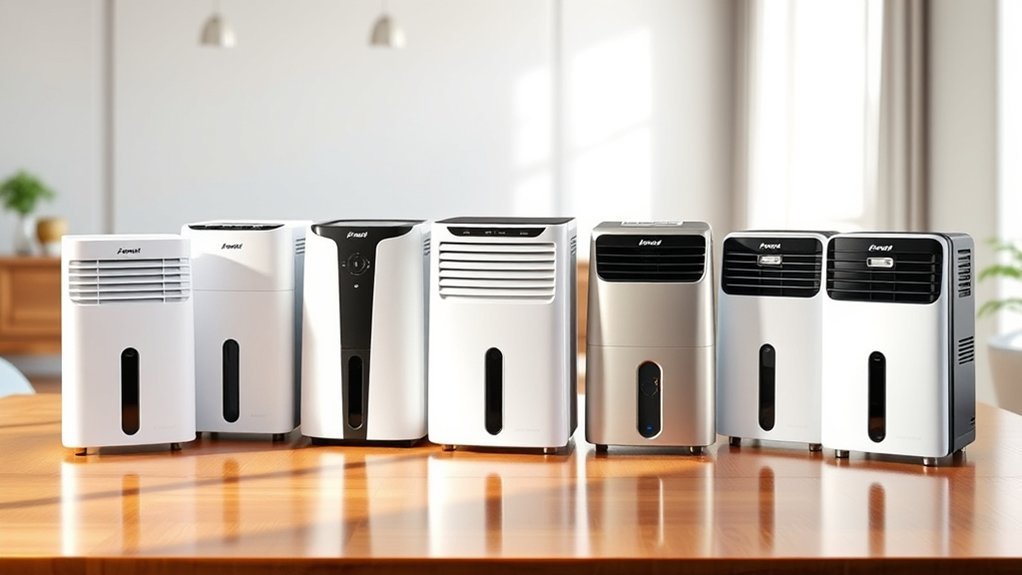
These three compact dehumidifiers for 2026 address different small-space moisture problems. The Ivation 13-Pint Desiccant Dehumidifier offers the strongest stated extraction and is the better fit for cool rooms. The 106 OZ and TENKER models are lower-output semiconductor units intended mainly for mild humidity in warm bedrooms, bathrooms, closets, offices, or RVs. Compare the moisture-removal rate, testing conditions, technology, tank capacity, drainage, noise settings, and power use—not the advertised square-foot figure alone.
How These Picks Were Compared
- Stated daily moisture removal and the temperature and humidity used for that rating
- Desiccant versus semiconductor moisture-removal technology
- Tank capacity, automatic shut-off, controls, drainage, noise settings, and portability
- Realistic room type and humidity load rather than coverage claims alone
- Important limitations that buyers should understand before ordering
Quick Verdict
- Best Overall and Best for Cool Spaces: Ivation 13-Pint Desiccant Dehumidifier
- Best Large Water Tank: 106 OZ Large-Tank Semiconductor Dehumidifier
- Best Quiet Bedroom Pick: TENKER 77 oz Dehumidifier
Quick Comparison
| Product | Technology | Stated Moisture Removal | Tank | Best Use | Amazon |
|---|---|---|---|---|---|
| Ivation 13-Pint | Desiccant | Marketed at up to 13 pints/day at 68°F and 60% RH; manufacturer information contains inconsistent 12- and 13-pint figures | 1.8 L / 3.8 pints | Cool bathrooms, closets, laundry areas, RVs, attics, and suitable small utility spaces | Check Product Details on Amazon |
| 106 OZ Large-Tank Model | Semiconductor | Up to 40 oz/day, about 2.5 US pints, at 86°F and 80% RH | 106 oz | Warm bedrooms, bathrooms, offices, closets, and RVs with mild humidity | Check Product Details on Amazon |
| TENKER 77 oz | Semiconductor | Up to 35 oz/day, about 2.2 US pints, at 86°F and 80% RH | 77 oz | Bedrooms, closets, bathrooms, kitchens, and RVs with mild humidity | Check Product Details on Amazon |
Important comparison note: These products are not in the same performance class. The Ivation has a much higher stated daily extraction rate, while the two semiconductor models prioritize compact size, quiet operation, and larger collection tanks. Tank capacity tells you how much water a unit can store before emptying; it does not tell you how quickly it removes moisture.
Capacity Warning
The 1,000-square-foot figures attached to the two semiconductor models are seller coverage claims, not standardized proof that either unit can control serious humidity across a large room. Their maximum extraction figures were measured under hot and very humid conditions. Expect lower collection in cooler or less humid rooms.
Ivation 13-Pint Compact Quiet Desiccant Dehumidifier
Best Overall and Best for Cool Spaces
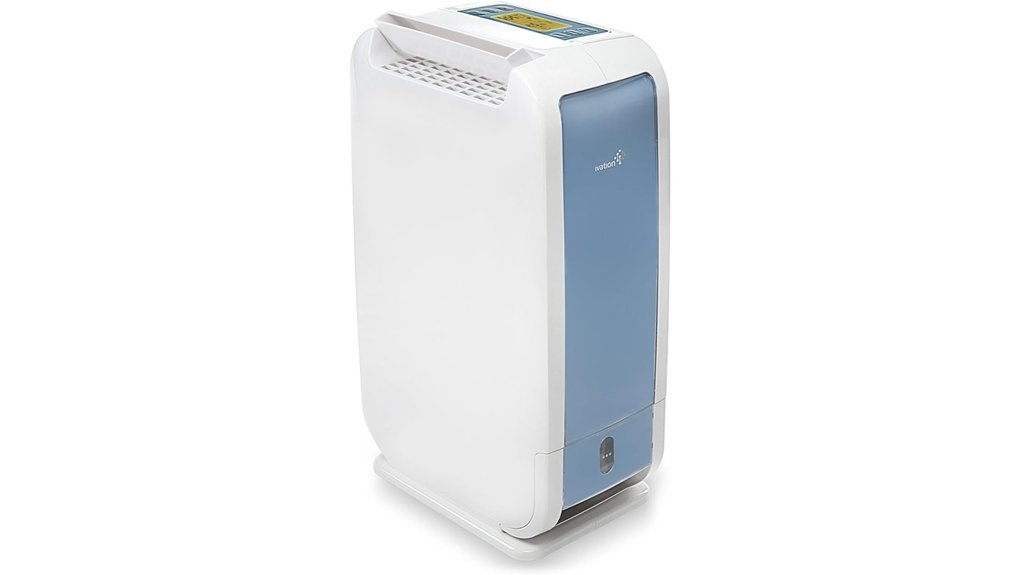
The Ivation 13-Pint Compact Quiet Desiccant Dehumidifier is the strongest moisture-removal option in this comparison. The current Amazon information markets it at up to 13 pints per day at 68°F and 60% relative humidity. Ivation’s own product information contains both 12- and 13-pint figures, so buyers should confirm the current manual and specification label before purchasing.
The unit is marketed for spaces up to 270 square feet and has a stated operating range of 33°F to 104°F. Its desiccant rotor makes it more suitable than a basic semiconductor unit for cool bathrooms, laundry areas, closets, RVs, and other small spaces where condensation-based performance may decline. Room size remains secondary to the actual moisture load, so it should not be treated as a solution for active leaks, standing water, or a severely damp full-size basement.
You can set a target humidity level, choose continuous operation, adjust the fan, schedule a timer, activate sleep mode, dim the display, and control the outlet swing. The removable reservoir holds about 1.8 liters or 3.8 pints. It also supports continuous gravity drainage, although buyers should verify whether a drain hose is included with the current Amazon offer.
Desiccant technology releases warmer, drier air. This can help dry laundry and make a cool utility room more comfortable, but it may noticeably warm a bedroom or bathroom during hot weather. The listed power use is also considerably higher than that of a typical mini semiconductor model.
Best For: Buyers who need meaningful moisture removal in a cool small space and want adjustable humidity controls, low-temperature operation, and continuous-drain support.
Why You’ll Like It:
- Provides substantially higher stated moisture removal than the two semiconductor models in this comparison.
- Operates across a wide stated temperature range, including cool spaces where small condensation units may collect very little water.
- Offers a humidistat, fan adjustment, timer, sleep mode, dimmable display, washable filter, outlet swing, and drainage support.
Who Should Avoid It:
- Buyers who want the lowest possible power consumption, because the listed consumption is 470 watts on high and 280 watts on low.
- People who do not want warm discharge air in a small room.
- Anyone trying to correct active water intrusion or severe dampness across a large basement.
Pros:
- Strongest stated extraction rate in this three-product comparison.
- Designed to keep operating in temperatures as low as 33°F.
- Includes more precise humidity and operating controls than the semiconductor models.
- Supports continuous drainage for locations with a suitable downhill drain route.
Cons:
- The 3.8-pint tank may require frequent emptying during heavy collection unless drainage is used.
- Consumes more electricity than a small semiconductor unit.
- Warm exhaust may be undesirable during summer.
- The manufacturer’s published material contains inconsistent 12- and 13-pint capacity figures.
106 OZ Large-Tank Semiconductor Dehumidifier
Best Large Water Tank
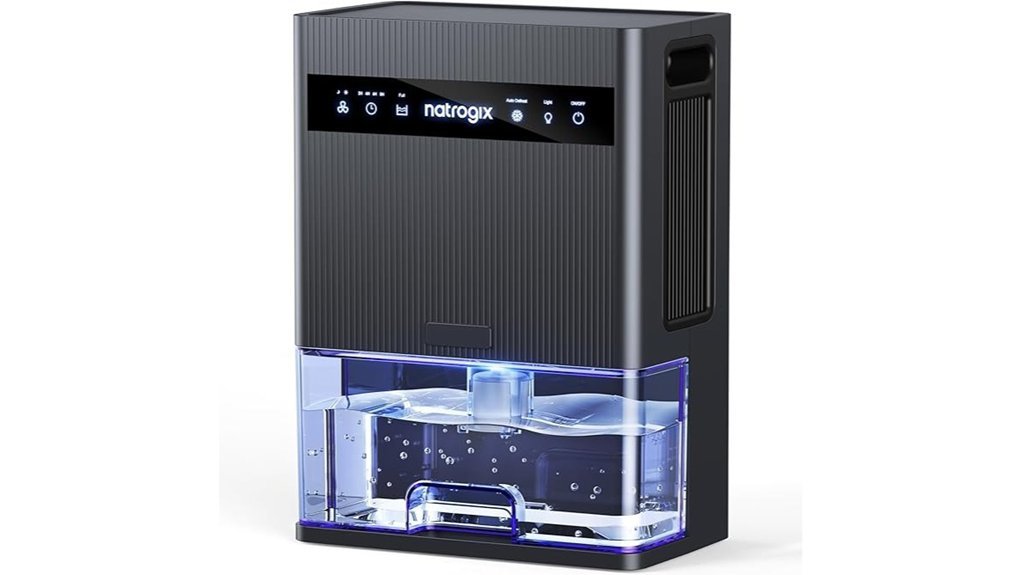
If you want a compact semiconductor dehumidifier with a generous collection reservoir, this 106 oz model is the most convenient option in the group. Its listing states a maximum extraction rate of up to 40 fluid ounces per day in a sealed space at 86°F and 80% relative humidity. That equals about 2.5 US pints per day under favorable conditions, so it should not be confused with a true 10-, 12-, or 13-pint-per-day dehumidifier.
The listing advertises coverage up to 1,000 square feet, but the extraction rate makes the model more realistic for light moisture maintenance in a warm bedroom, bathroom, office, closet, or RV. It is not an appropriate first choice for persistent seepage, wet walls, standing water, or serious basement humidity.
You can switch between Power and Sleep modes, select 2-, 4-, 6-, or 8-hour timer settings, and turn the seven-color lighting on or off. The unit automatically stops when the tank is full, while the hidden handle makes it easier to move between rooms.
The Amazon title does not clearly identify an established manufacturer. Before ordering, check the current seller, warranty coverage, return conditions, voltage, manual, replacement support, and whether any drainage accessory is included.
Best For: People who want a portable compact unit with a large tank for mild humidity in a warm bedroom, bathroom, office, closet, or RV.
Why You’ll Like It:
- The 106 oz tank can reduce emptying frequency compared with smaller mini-dehumidifier tanks.
- Power and Sleep modes provide a choice between stronger operation and quieter nighttime use.
- Timer settings, automatic shut-off, switchable lighting, and a carrying handle improve everyday convenience.
Who Should Avoid It:
- Buyers who specifically need a verified 10-pint-or-higher daily extraction rate.
- People dealing with standing water, persistent seepage, wet walls, or severe basement dampness.
- Anyone who requires adjustable humidity targeting or a confirmed continuous-drain connection.
- Buyers who prefer a clearly established manufacturer with easily verified warranty and replacement support.
Pros:
- Large 106 oz collection tank for a compact semiconductor model.
- Seller-stated maximum extraction of up to 40 oz per day under hot, humid conditions.
- Includes two operating modes, timer settings, automatic shut-off, lighting controls, and a carrying handle.
Cons:
- Real-world collection can be much lower in cooler or less humid rooms.
- The 1,000-square-foot claim does not demonstrate high-capacity performance.
- No adjustable humidity target or verified continuous-drain feature is stated in the supplied product information.
- Brand, warranty, and long-term support information require careful verification on the current listing.
TENKER Dehumidifier for Home, 77 oz Tank
Best Quiet Bedroom Pick
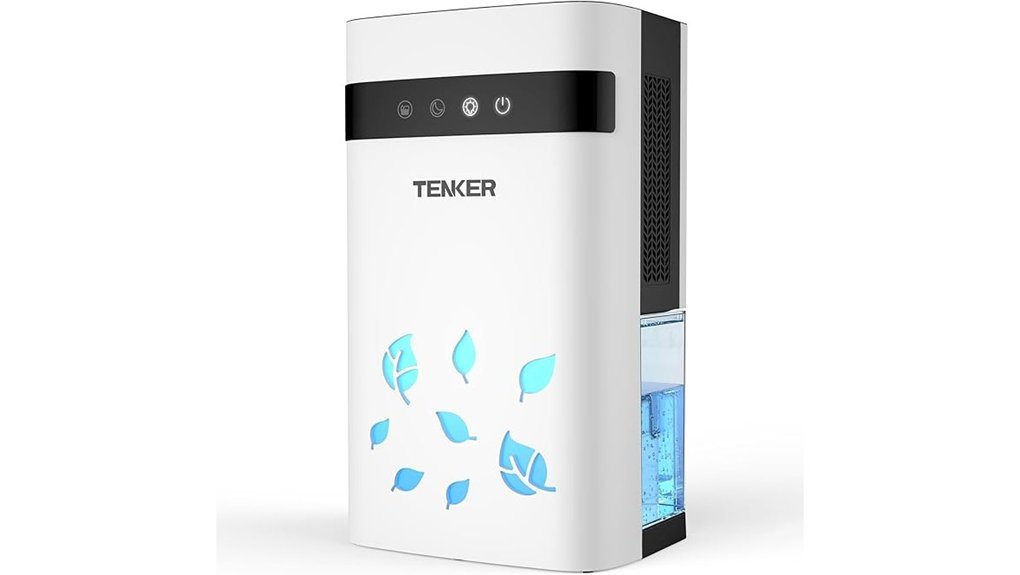
TENKER’s 77 oz tank, dual fans, and dual semiconductor condensers make it a practical option for mild moisture in warm bedrooms, bathrooms, closets, kitchens, and RVs. The seller states that it can collect up to 35 fluid ounces of water in 24 hours in a closed room at 86°F and 80% relative humidity. That is about 2.2 US pints per day under favorable conditions, placing it in the mini-dehumidifier category rather than the 10-pint class.
Use high-speed mode when stronger operation is needed, or select the seller-stated sleep mode below 30 dB for nighttime use. Actual perceived noise can vary with fan speed, distance, flooring, vibration, and room acoustics. The unit automatically shuts off when its tank is full and displays a red warning light. Its seven-color LED lighting can be used as ambience or switched off, while the recessed handle helps with room-to-room movement.
Although the listing advertises coverage up to 1,000 square feet, this should be treated as a general seller claim. Its stated extraction rate makes TENKER a better match for localized mild humidity than serious moisture control across a large open room or basement.
Best For: Buyers who prioritize quiet nighttime settings, simple operation, and a compact design for mild humidity in a warm enclosed room.
Why You’ll Like It:
- The listed sleep setting is designed for lower-noise bedroom and office use.
- The 77 oz reservoir provides more storage than many entry-level mini dehumidifiers.
- Automatic shut-off, a full-tank warning, switchable lighting, and a recessed handle simplify daily use.
Who Should Avoid It:
- Buyers who need compressor-level or high-output desiccant performance.
- People trying to control serious humidity across a full basement or large open floor plan.
- Anyone who requires precise humidity targeting or a confirmed continuous-drain hose connection.
Pros:
- Dual-fan and dual-semiconductor design in a compact housing.
- Offers high-speed operation and a seller-stated low-noise sleep mode.
- Includes automatic shut-off, a full-tank warning light, switchable ambient lighting, and a portable handle.
Cons:
- Maximum extraction is stated under hot, high-humidity conditions and may not reflect a normal bedroom.
- Not a substitute for a higher-capacity compressor or desiccant unit in a very damp space.
- The claimed 1,000-square-foot coverage should not be used as the primary sizing measurement.
- No precise humidistat or verified continuous-drain feature is identified in the supplied information.
Factors to Consider When Choosing a Compact Dehumidifier
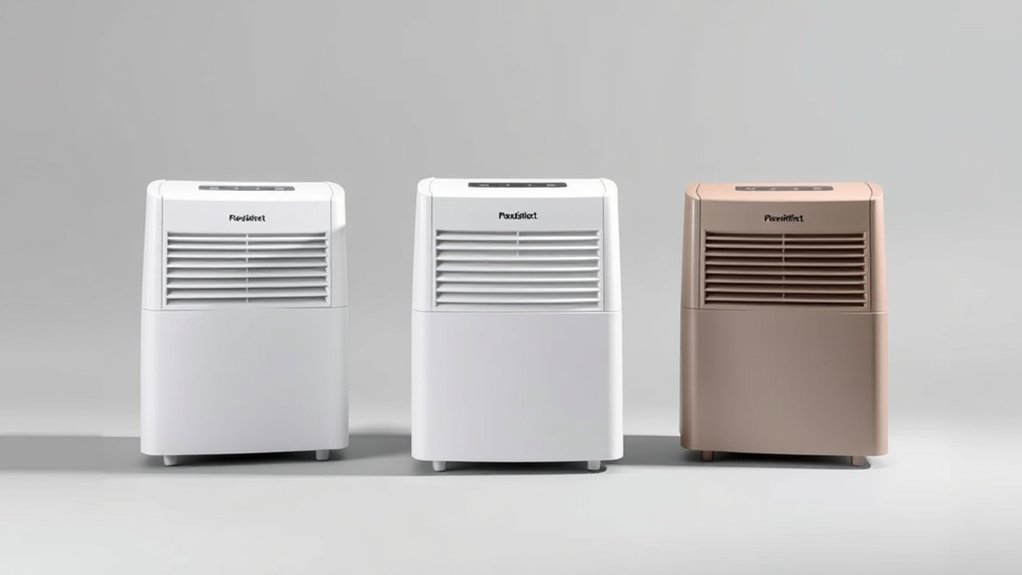
When choosing a compact dehumidifier, start with the severity of the moisture problem. Then compare daily extraction, testing conditions, technology, tank capacity, room temperature, humidity controls, noise settings, drainage, and power consumption. Do not rely on a large water tank or generous square-foot claim by itself.
Moisture Removal Capacity
The pint-per-day or ounce-per-day figure describes how much water a product is claimed to remove in 24 hours under stated conditions. Temperature and relative humidity matter because semiconductor condensation units generally collect more water in warm, humid air. The 106 OZ and TENKER figures are based on 86°F and 80% relative humidity, while the Ivation rating uses 68°F and 60% relative humidity. These numbers are not directly comparable without considering the different test environments.
A lower-output semiconductor unit may help maintain a small warm room that is only slightly humid. It is less likely to lower humidity quickly when walls are wet, laundry is continually drying indoors, outside air is entering, or the room is cool.
Semiconductor vs. Desiccant Technology
Small semiconductor dehumidifiers use thermoelectric condensation. They are usually compact, easy to move, and mechanically simple, but their extraction rate can decline significantly as the room becomes cooler or less humid.
A desiccant dehumidifier uses a moisture-absorbing rotor and is generally better suited to cooler conditions. It can provide much stronger moisture removal than a mini semiconductor unit, but it often consumes more electricity and releases warmer air.
Room Size and Humidity Load
Square footage is only one part of sizing. A mildly humid bedroom and a wet basement of the same size require very different extraction rates. Consider the current relative humidity, musty odors, visible condensation, damp walls, laundry drying, seepage, airflow, ceiling height, and how often doors or windows open.
For persistent moisture, visible water, or widespread dampness, correct the underlying source and choose a higher-capacity unit. A compact dehumidifier should not be expected to compensate for plumbing leaks, groundwater entry, roof leaks, or inadequate ventilation.
Tank Capacity
Tank capacity determines how much collected water a unit can hold before it shuts off or needs to be emptied. It does not determine how much moisture the machine removes each day. A large tank can make a low-output unit more convenient, while a high-output unit with a smaller tank may need continuous drainage or frequent emptying.
Humidity Controls
A built-in humidistat lets you select a target relative humidity and allows the unit to cycle instead of running continuously. The Ivation provides adjustable humidity controls. Equivalent targeting is not verified in the supplied information for the 106 OZ or TENKER models, so those units may rely mainly on manual mode selection and full-tank shut-off.
Noise Level
Check whether a noise figure applies to the strongest setting or only to sleep mode. The 106 OZ model lists separate Power and Sleep settings, while TENKER advertises sleep operation below 30 dB. Treat exact figures as seller measurements rather than guaranteed real-room noise levels. Flooring, furniture, fan speed, vibration, and distance from the bed can change what you hear.
Power Consumption
Compare wattage with the amount of moisture removed under clearly stated conditions. The Ivation lists 470 watts on high and 280 watts on low. Equivalent consumption figures are not included in the supplied information for the two semiconductor products. A timer or automatic shut-off can reduce unnecessary runtime, but those features do not replace reliable energy-use specifications.
Drainage Options
A removable reservoir works well when someone can check the unit regularly. Continuous gravity drainage is more convenient for extended operation, but the hose must run downhill without kinks and terminate at a suitable drain.
The Ivation supports continuous drainage. A drain connection is not verified for the 106 OZ or TENKER products. Confirm the current listing, manual, included accessories, hose diameter, and drain-placement requirements if unattended drainage is essential.
Safety and Placement
Place the dehumidifier upright on a stable, level surface with the required clearance around its intake and outlet. Keep the plug, outlet, cord, and housing away from standing water. Do not operate a damaged unit, use an unsuitable extension cord, or block its airflow. Special locations such as bathrooms, crawlspaces, attics, boats, and RVs require a suitable dry electrical connection and compliance with the manufacturer’s placement instructions.
Extra Features
Useful extras include adjustable humidity control, a timer, sleep mode, automatic shut-off, a full-tank indicator, automatic restart, a washable filter, a carrying handle, and an adjustable outlet. Colored lighting can be convenient as a night light, but it should not outweigh extraction performance, drainage, electrical safety, or suitability for the room.
Before You Buy
- Identify whether you have mild humidity, persistent dampness, or an active water source.
- Compare daily moisture removal and the conditions used to produce the rating.
- Choose desiccant technology for cooler spaces or stronger small-room extraction.
- Treat semiconductor models as light-duty options for warm, enclosed spaces.
- Confirm tank size, full-tank shut-off, humidity controls, and drainage support.
- Verify dimensions, ventilation clearances, voltage, wattage, warranty, seller, and return terms.
- Check whether a drain hose, power adapter, filter, or other required accessory is included.
Frequently Asked Questions
How Often Should a Compact Dehumidifier’s Filter Be Cleaned?
Follow the maintenance schedule in the product manual and inspect the intake regularly for dust, hair, and lint. Clean a filter with water only when the manufacturer identifies it as washable, and allow it to dry completely before reinstalling it. Some semiconductor models may use an intake screen rather than a removable washable filter.
Do Compact Dehumidifiers Work in Cold Temperatures?
Performance depends on the technology. Small semiconductor units usually collect less water as the room becomes cooler. Desiccant models are generally better suited to cool spaces, although they may consume more power and release warmer air.
Can a Compact Dehumidifier Run Overnight?
A unit can operate overnight when the manufacturer permits extended use and it is placed on a stable surface with unobstructed airflow. Use a functioning full-tank shut-off or correctly installed drainage, keep electrical parts dry, and follow the manual’s clearance and placement instructions.
How Noisy Are Compact Dehumidifiers?
Noise varies by technology, fan speed, operating mode, flooring, and distance. Some semiconductor models advertise sleep settings near or below 30 dB, but stronger modes may be more noticeable. Check whether the display and decorative lights can be switched off for bedroom use.
Can a Small Dehumidifier Handle a Basement?
A compact unit may help a small enclosed basement area with mild humidity, but it is usually not appropriate for a large, wet, or persistently damp basement. Visible seepage, standing water, sweating walls, or widespread odors normally require correction of the moisture source and a higher-capacity dehumidifier.
Are 1,000-Square-Foot Claims Reliable for Mini Dehumidifiers?
A square-foot claim should be considered together with the daily extraction rate and test conditions. A mini unit removing only a few pints per day may provide localized maintenance in a mildly humid space but is unlikely to deliver the same control as a full-size dehumidifier across a damp 1,000-square-foot area.
What Maintenance Does a Compact Dehumidifier Require?
Empty and rinse the tank, inspect and clean the filter or intake screen as directed, remove dust from the vents, and check any drain hose for kinks or buildup. Keep the unit upright and inspect the cord, plug, adapter, and housing for damage before operation.
Conclusion
These products suit three different small-space priorities. Choose the Ivation 13-Pint Desiccant Dehumidifier when you need the strongest stated extraction, better cool-temperature operation, adjustable humidity control, and continuous-drain support. Choose the 106 OZ model when a large collection tank and simple portable controls matter more than rapid moisture removal. Choose the TENKER 77 oz model when you want a bedroom-focused semiconductor unit with a seller-stated low-noise sleep setting.
The Ivation is the only product here that approaches a meaningful double-digit daily pint rating. The two semiconductor models are better viewed as light-duty moisture-maintenance appliances. Do not select either one solely because its listing mentions 1,000 square feet.
Final Recommendation
For meaningful moisture removal in a cool or moderately damp small room, the Ivation is the most convincing option in this group. For mild humidity in a warm bedroom, bathroom, closet, office, or RV, choose between the 106 OZ model’s larger tank and TENKER’s bedroom-oriented sleep setting. Match the stated extraction rate and technology to the moisture problem before considering tank size, lighting, or advertised coverage.