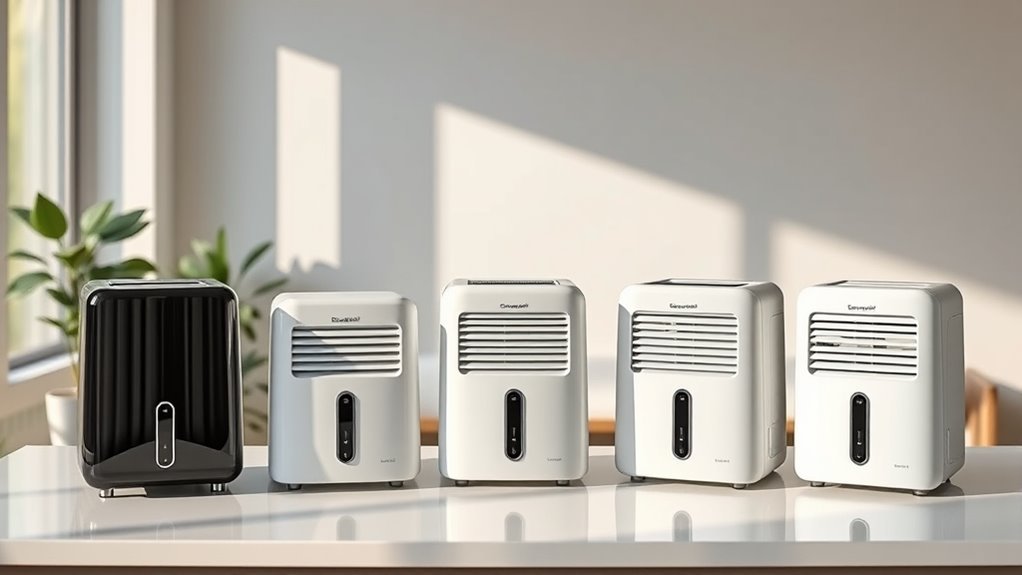
7 Best Tankless Dehumidifiers for Basements in 2026
If your basement feels damp, smells musty, or makes stored items feel soft and clammy, a tankless dehumidifier can make the space easier to manage. In this guide, “tankless” means a basement dehumidifier that supports continuous drainage through a hose or pump, so you do not have to rely only on emptying the bucket by hand. The best fit depends on your basement size, drain location, humidity level, and whether you want smart controls, quiet operation, or higher drying power.
Below, you can compare seven basement-ready options: the Waykar Max 80 Pint, 5000 Sq.Ft Smart Dehumidifier, Airzentti 155 Pint, Vellgoo Max 64 Pint, KNKA 2500 Sq.Ft, Frigidaire 50 Pint Wi-Fi model, and AEOCKY 4500 Sq.Ft unit. Each one is best for a different setup, from moderate basement moisture to large spaces that need stronger daily moisture removal.
Affiliate disclosure: This article contains Amazon affiliate links. If you buy through these links, we may earn a commission at no extra cost to you.
Quick verdict: Choose a hose-drain model if you have a nearby floor drain. Choose a pump model if the water needs to move upward to a sink, window, or higher drain point. For basements that stay humid for long periods, continuous drainage is usually the main feature to prioritize.
Before you buy: Measure your basement, check where the water will drain, and confirm whether gravity drainage is enough. A hose usually needs a downhill path. A built-in pump is better when the drain point is higher than the dehumidifier.
Ideal basement humidity: Many homeowners aim for a comfortable indoor humidity range around 40% to 50%. Avoid over-drying the space, and always follow the product manual for setup, drainage, filter cleaning, and safe electrical use.
Quick Comparison
| Product | Best For | Listed Coverage | Drainage Style | Amazon |
|---|---|---|---|---|
| Waykar Max 80 Pint Home Dehumidifier | Large, cool basements | Up to 5,000 sq. ft. | Tank or hose drainage | Check Price on Amazon |
| 5000 Sq.Ft Dehumidifier with Drain Hose, Smart Control | Smart humidity control | Up to 5,000 sq. ft. | Tank or 60-inch hose | Check Price on Amazon |
| 155 Pint Commercial Dehumidifier with Pump and Hose | Very large or wet areas | Up to 7,500 sq. ft. | Built-in pump or gravity hose | Check Price on Amazon |
| Vellgoo Max 64 Pint Energy Star Dehumidifier | Energy-conscious buyers | Up to 4,000 sq. ft. | Tank, hose, or garden-hose adapter | Check Price on Amazon |
| KNKA 2500 Sq.Ft Dehumidifier with Drain Hose | Quieter moderate-size basements | Up to 2,500 sq. ft. | Tank or 3.28 ft drain hose | Check Price on Amazon |
| Frigidaire 50 Pint Dehumidifier w/Wifi | Wi-Fi control and large rooms | Up to 4,500 sq. ft. | Bucket or continuous drain | Check Price on Amazon |
| AEOCKY 4500 Sq.Ft Energy Star Dehumidifier | Efficient high-capacity drying | Up to 4,500 sq. ft. | Continuous-drain focused setup | Check Price on Amazon |
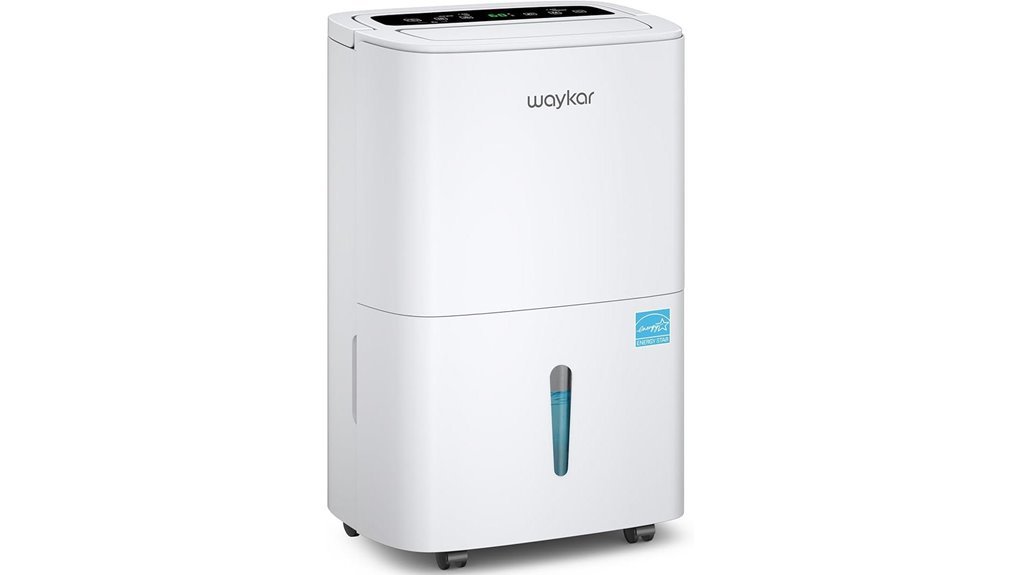
Waykar Max 80 Pint Home Dehumidifier
Best Overall for large basements
If you need a dehumidifier for a large, damp basement, the Waykar Max 80 Pint Home Dehumidifier is a strong pick because it covers up to 5,000 sq. ft. and still works well in cool spaces as low as 41°F. You can set humidity anywhere from 30% to 80%, choose auto or continuous mode, and use the 24-hour timer for easy control. It removes up to 80 pints a day, uses a washable filter, and gives you tank or hose drainage. Four casters and a handle make moving it simple.
Best For: Homeowners needing a high-capacity dehumidifier for large spaces like basements, laundry rooms, or living areas, especially in cool, damp conditions.
Why it stands out: This model is a good match if your basement has a floor drain nearby and you want the option to run the unit for long stretches without watching the bucket. The wide humidity range also helps if you want to keep the basement comfortable without over-drying the air.
Why you’ll like it: The Waykar Max is built for buyers who want simple, powerful moisture control without relying on a small bucket. It is especially useful when the basement has a steady musty smell, damp corners, or stored boxes that feel soft after humid weather.
Who should skip it: Skip it for a small bedroom, closet, or lightly damp utility room. The larger coverage and 80-pint output make more sense for bigger spaces with steady moisture problems.
Pros:
- Covers up to 5,000 sq. ft. and removes up to 80 pints of moisture per day.
- Works well in cooler areas as low as 41°F, making it suitable for basements.
- Offers flexible controls, including adjustable humidity settings, auto/continuous modes, and a 24-hour timer.
Cons:
- At 28.57 pounds, it may still be somewhat bulky despite the casters and handle.
- The built-in tank may need frequent emptying if continuous drainage isn’t used.
- Best suited for larger spaces, so it may be more than needed for small rooms.
Bottom line: Choose the Waykar Max 80 Pint if you want a large-room basement dehumidifier with simple controls, hose drainage, and enough capacity for damp lower-level spaces.
5000 Sq.Ft Dehumidifier with Drain Hose, Smart Control
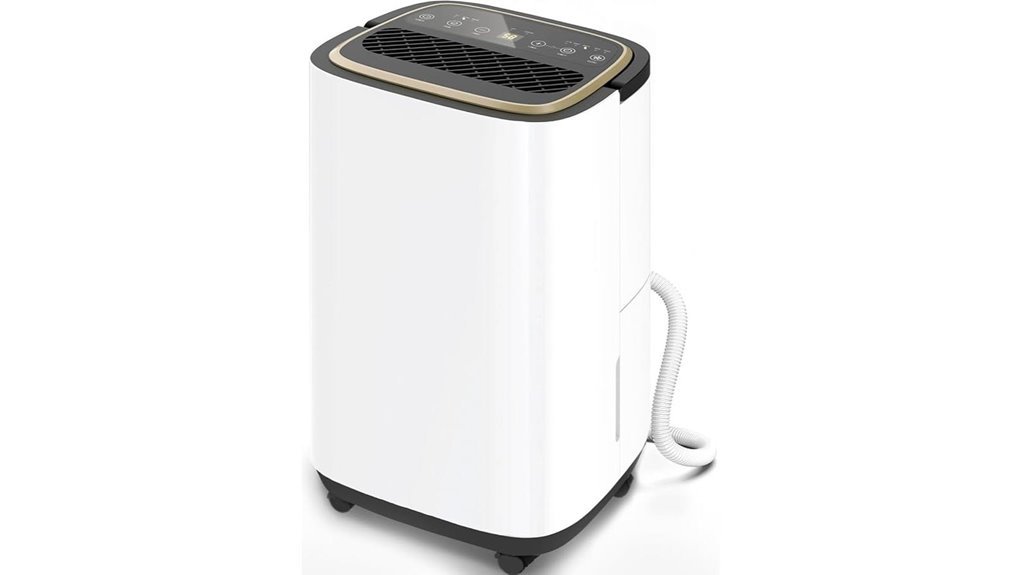
Best for smart humidity control
For large basements, this 5000 sq. ft. dehumidifier keeps humidity under control with smart automation. You get a 50-pint unit that tackles spaces like laundry rooms, garages, and bedrooms, dropping moisture from 90% to 30% for better air quality. Set your target between 30% and 80%, dry clothes, or boost airflow with its 3-in-1 mode. The display shows real-time humidity, while dual fan speeds help you fine-tune performance. Use the 1.6-gallon tank, or connect the 60-inch drain hose for nonstop drainage. Wheels, a handle, and smart sensors make setup simple and safe.
Best For: Homeowners needing a powerful, easy-to-use dehumidifier for large spaces like basements, garages, laundry rooms, or bedrooms.
Why it stands out: This option is useful if you want a dehumidifier that gives you more feedback while it runs. The real-time humidity display, target humidity range, and dual fan speeds make it easier to adjust the unit as basement conditions change.
Why you’ll like it: It is a practical pick if you do not want to guess whether the room is still damp. The display and humidity settings help you see what is happening and make small adjustments without constantly checking the basement by feel.
Who should skip it: If you only need a simple plug-in unit for a small room, the smart modes and large coverage may be more than you need.
Pros:
- Covers up to 5,000 sq. ft. with strong 50-pint moisture removal.
- Offers flexible use with tank drainage or the included 60-inch hose for continuous operation.
- Smart features like humidity control, dual fan speeds, timer, child lock, and washable filter improve convenience.
Cons:
- May be larger and heavier than ideal for small rooms or tight storage spaces.
- The 1.6-gallon tank may need frequent emptying if not using the drain hose.
- Advanced features and settings may be more than some users need for basic dehumidification.
Bottom line: Pick this model if you want large-space coverage, continuous drainage, and smart controls that help you manage humidity without constant checking.
155 Pint Commercial Dehumidifier with Pump and Hose
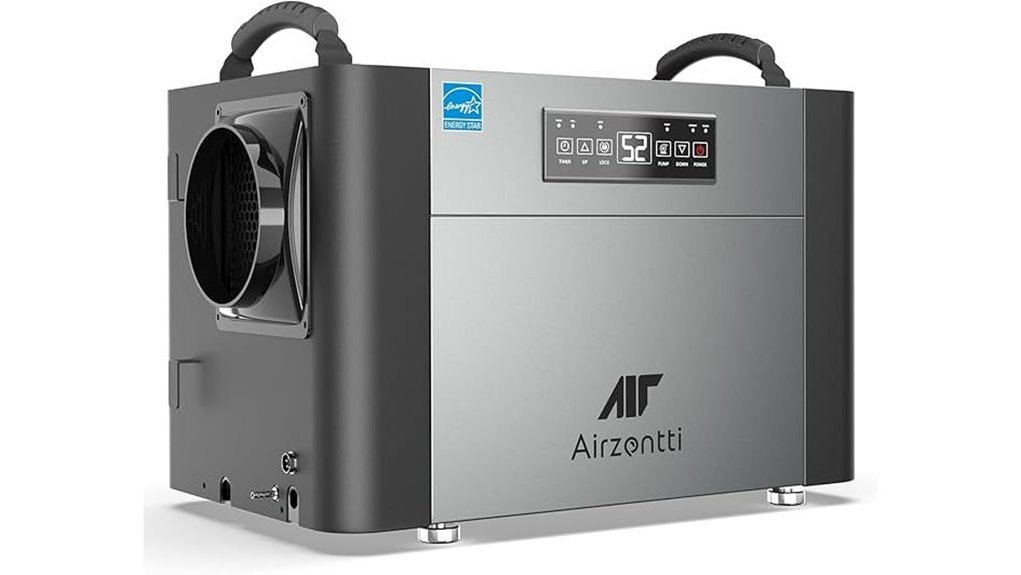
Best heavy-duty pick with pump drainage
The Airzentti ACD155P-PG100(B) is best if you need serious basement drying power. You can cover up to 7,500 square feet, and it pulls 155 pints a day, or 70 PPD AHAM, from damp spaces. Use the built-in pump to move water up to 16.4 feet, or set the gravity drain with the included 6.56-foot hose. Its 220 CFM airflow, humidity controls, timer, and multiple modes give you flexible operation. You also get auto defrost, auto drain, listed Energy Star efficiency, and a washable filter for easier maintenance.
Best For: Commercial and residential users who need powerful, high-capacity moisture removal for large spaces like basements, warehouses, attics, garages, or water-damage cleanup.
Why it stands out: The built-in pump is the key feature here. If your drain point is above the unit or across the room, a pump can be easier than relying only on gravity drainage. The high airflow and larger listed capacity also make this a better fit for more demanding moisture problems.
Why you’ll like it: This model reduces one of the biggest basement drainage headaches: where the water should go. If you do not have a floor drain close to the unit, the pump gives you more placement flexibility than a simple gravity-only setup.
Who should skip it: This is not the first choice for a small finished basement that only feels slightly humid. It is heavier, more powerful, and better suited to large or serious drying jobs.
Pros:
- Covers up to 7,500 sq. ft. with strong 155-pint-per-day dehumidification capacity.
- Built-in pump can drain water up to 16.4 ft, plus it includes a gravity drain hose.
- Listed Energy Star efficiency with useful features like auto defrost, auto drain, timer, and washable filter.
Cons:
- At 60 lbs, it may be bulky and less convenient to move around.
- Higher-capacity commercial models can be overkill for small rooms or light humidity issues.
- Upper operating temperature is limited to 95°F, which may restrict use in hotter environments.
Bottom line: Choose the Airzentti 155 Pint model if you need a higher-capacity basement dehumidifier with a pump, strong airflow, and more flexible drainage placement.
Vellgoo Max 64 Pint Energy Star Dehumidifier
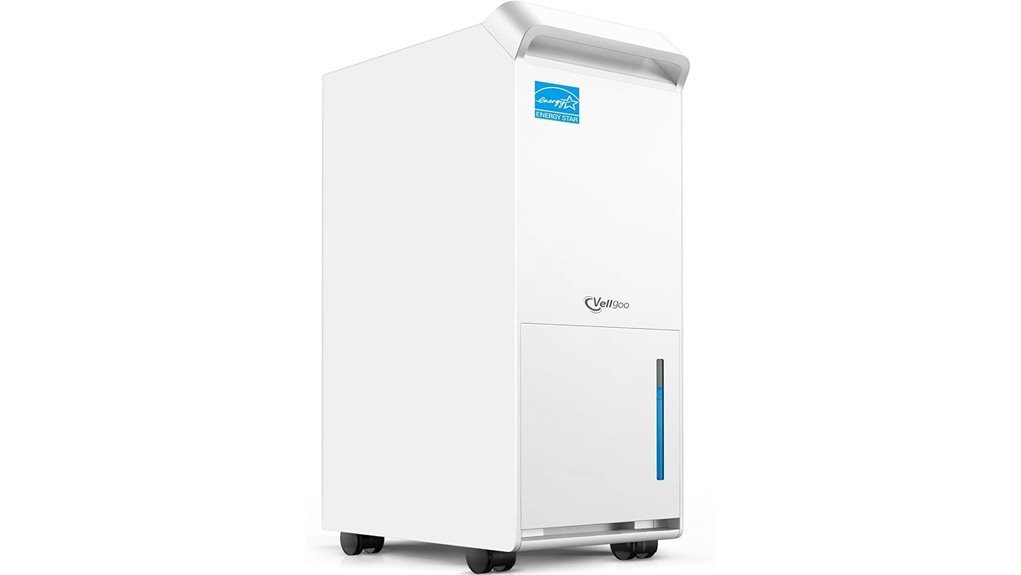
Best for energy-conscious basement use
Vellgoo’s 64-pint DryTank model suits large, damp basements needing efficient, hands-off moisture control. You can cover up to 4,000 sq. ft. while pulling 64 pints a day in hot, humid conditions. Its listed Energy Star 2024 Most Efficient rating helps you focus on lower power use during long basement runtimes. You’ll also get smart humidity control, a rotary compressor, and a durable copper-and-aluminum build. Use the 6.56-foot hose, garden-hose adapter, or tank. A washable filter, timer, and child lock make upkeep easy.
Best For: Homeowners with large, damp basements or spaces up to 4,000 sq. ft. who want efficient, low-maintenance moisture control and flexible drainage options.
Why it stands out: This model makes sense if you expect your basement dehumidifier to run often and want to balance capacity with efficiency. The hose, garden-hose adapter, and tank options also give you more flexibility during setup.
Why you’ll like it: If your basement dehumidifier runs for many hours during humid seasons, efficiency and maintenance matter. This option is positioned for buyers who want strong drying power without ignoring long-term operating comfort.
Who should skip it: Skip it if your basement does not have a convenient drain route and you do not want to deal with hose setup. You can still use the tank, but that reduces the hands-off benefit.
Pros:
- Listed Energy Star 2024 Most Efficient certification may help reduce electricity use during long runtimes.
- Smart humidity control with tank, hose, and garden-hose drainage options makes operation convenient.
- Durable build with a rotary compressor, copper coils, and aluminum fins supports reliable long-term use.
Cons:
- Bulkier size may be less convenient for smaller rooms or tight storage areas.
- 64-pint capacity is best suited to larger spaces and may be more than needed for small areas.
- Continuous drainage requires hose setup, which may not suit every installation.
Bottom line: Choose the Vellgoo Max 64 Pint if you want an efficient basement dehumidifier with smart humidity control and several drainage options.
KNKA 2500 Sq.Ft Dehumidifier with Drain Hose
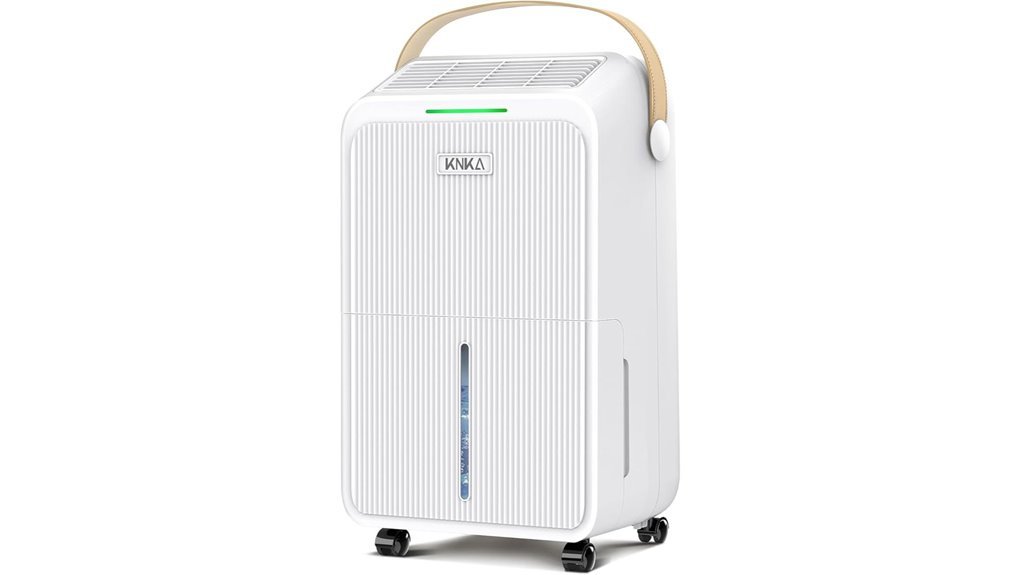
Best quieter pick for moderate basements
KNKA’s 2500 sq. ft. dehumidifier suits you if you want set-and-forget basement moisture control. You get up to 34 pints of daily removal, which handles damp basements, crawlspaces, and other rooms up to 2,500 square feet. Choose DEHU for 30% to 80% humidity control, DRY for laundry, or CONT for nonstop drying. The 3L tank shuts off when full, but the included 3.28 ft drain hose lets you skip emptying. At 37dB, it stays quiet, and the LED humidity display, wheels, child lock, and auto defrost make it easy to use.
Best For: Homeowners or renters who need quiet, set-and-forget moisture control for basements, crawlspaces, laundry rooms, or other spaces up to 2,500 sq. ft.
Why it stands out: KNKA is the quieter, more moderate-capacity pick in this list. It is a better match for finished basements, laundry areas, or crawlspaces where you want continuous drainage without buying an oversized commercial unit.
Why you’ll like it: It gives you a simpler middle ground between tiny room units and larger basement machines. The quieter operation may also matter if the basement is used as an office, guest area, workout space, or family room.
Who should skip it: If your basement is very large, frequently wet, or has severe moisture problems, a higher-capacity unit in this guide may be a better fit.
Pros:
- Removes up to 34 pints of moisture per day and covers large areas up to 2,500 sq. ft.
- Offers three useful modes: DEHU, DRY, and CONT for different humidity and drying needs.
- Includes a drain hose, quiet 37dB operation, LED humidity display, wheels, and safety features like child lock and auto defrost.
Cons:
- The 3L tank may still need emptying if you don’t use the drain hose.
- At 230 watts, it may use more power than smaller dehumidifiers.
- Best suited for moderate-to-large spaces, so it may be overkill for small rooms.
Bottom line: Choose the KNKA 2500 Sq.Ft model if you want a quieter basement dehumidifier for moderate moisture and a simple drain-hose setup.
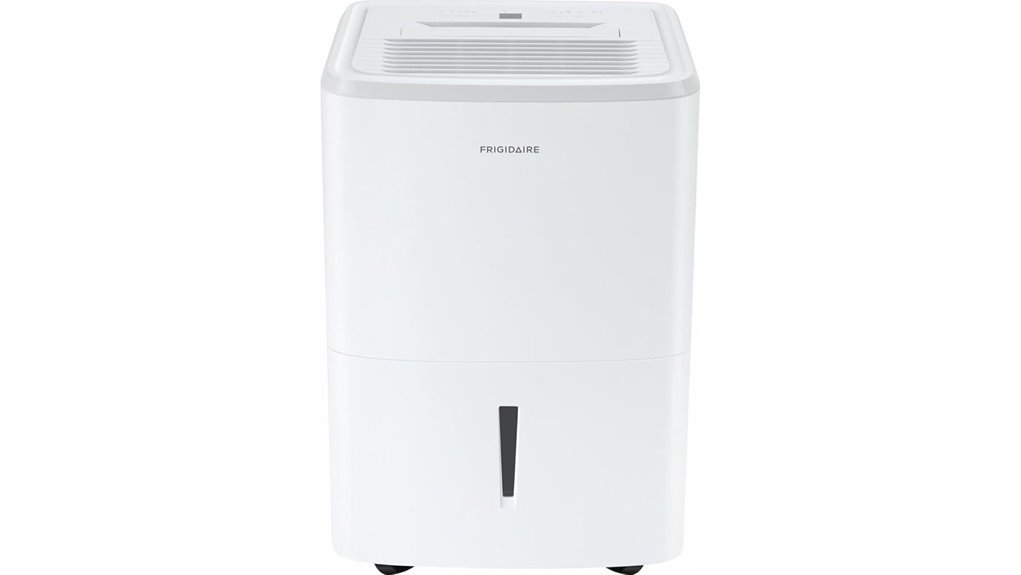
Frigidaire 50 Pint Dehumidifier w/Wifi
Best Wi-Fi pick from a familiar appliance brand
With Wi-Fi control and 50-pint daily capacity, Frigidaire’s FHDD5034Y1 suits large, damp basements. You can cover up to 4,500 square feet while its 235 CFM airflow pulls moisture fast. The portable white unit weighs 44.53 pounds, so you can move it where you need it. Use the washable filter, custom humidity settings, and three speeds to fine-tune comfort. A 2.7-gallon bucket with auto shutoff helps prevent overflow, and the continuous drain option lets you skip manual emptying. It also works with smart home systems and includes a one-year limited warranty.
Best For: Homeowners who want a basement dehumidifier with Wi-Fi control, larger-room performance, a washable filter, and the option to use either a bucket or continuous drain setup.
Why it stands out: The main appeal is remote control. If your basement is not a space you visit often, Wi-Fi features can make it easier to check settings and adjust humidity without walking downstairs every time.
Why you’ll like it: This Frigidaire model is useful if you want a more connected setup for a finished basement, storage area, or lower-level living space. The larger bucket is helpful when you cannot use continuous drainage right away, while the drain option gives you a path to more hands-off operation later.
Who should skip it: Skip it if Wi-Fi control does not matter to you or if you need a built-in pump. Continuous drain setups usually need proper hose placement, so check your drain location before buying.
Pros:
- 50-pint daily capacity and listed coverage up to 4,500 sq. ft. suit many large basement spaces.
- Wi-Fi control and smart home compatibility can make humidity management more convenient.
- Washable filter, custom humidity settings, three speeds, auto shutoff, and continuous drain option improve everyday usability.
Cons:
- At 44.53 pounds, it may be heavier than some buyers expect for frequent moving.
- Wi-Fi features may be unnecessary if you only want a basic basement dehumidifier.
- Continuous drainage still depends on having a suitable drain route nearby.
Bottom line: Choose the Frigidaire 50 Pint Wi-Fi model if you want a connected basement dehumidifier with strong airflow, flexible settings, and continuous drain support.
AEOCKY 4500 Sq.Ft Energy Star Dehumidifier
Best efficient high-capacity pick
The AEOCKY 4500 Sq.Ft Energy Star Dehumidifier is a good fit if you want a basement-ready unit focused on efficient high-capacity drying and continuous-drain convenience. Its listed coverage reaches up to 4,500 sq. ft., making it suitable for many larger basements, utility areas, garages, and damp lower-level spaces. Because this article focuses on “tankless” dehumidifiers in the practical sense, the main buying point here is the continuous-drain focused setup that can reduce the need for manual bucket emptying.
Best For: Buyers who want an efficient dehumidifier for a larger basement and plan to use a continuous drainage setup for more hands-off moisture control.
Why it stands out: The AEOCKY option earns its place for readers who care about steady moisture removal but do not necessarily need a commercial pump model. It gives you another high-coverage choice in the 4,500 sq. ft. range.
Why you’ll like it: If your basement is damp but not extreme enough for a heavy commercial machine, this type of unit can be easier to position and run as a regular home moisture-control appliance. It is especially useful when you want to keep stored items, tools, seasonal decor, or finished basement furniture away from constant dampness.
Who should skip it: Skip it if your drain point is above the unit and you specifically need a built-in pump. Also consider a smaller model if your basement is compact or only slightly humid during part of the year.
Pros:
- Listed coverage up to 4,500 sq. ft. makes it suitable for many larger basement setups.
- Continuous-drain focused design can reduce bucket-emptying chores.
- Efficient high-capacity positioning works well for buyers who expect longer seasonal runtimes.
Cons:
- May be more capacity than needed for small rooms, closets, or lightly damp areas.
- Continuous drainage requires a suitable drain path and proper hose setup.
- Not the best match if you need pump-assisted drainage to a higher sink or drain point.
Bottom line: Choose the AEOCKY 4500 Sq.Ft model if you want an efficient high-capacity basement dehumidifier and plan to run it with continuous drainage.
How to Choose a Tankless Basement Dehumidifier
1. Match capacity to the actual moisture problem
Coverage numbers are helpful, but the dampness level matters just as much as square footage. A lightly humid finished basement may not need the same drying power as a wet unfinished basement, crawlspace, or garage. If the air smells musty, surfaces feel damp, or boxes soften quickly, choose a stronger model rather than the smallest unit that claims to cover your floor area.
2. Decide between gravity drainage and pump drainage
A continuous-drain hose is easiest when the water can flow downhill into a floor drain. If the drain is higher than the dehumidifier, look for a built-in pump, such as the commercial 155-pint model in this guide. This one detail can make the difference between a truly hands-off setup and a frustrating hose layout.
3. Look at tank size even if you plan to use a hose
Even tankless-style dehumidifiers often include a bucket. A larger bucket is useful if you cannot set up the hose right away, if you move the unit between rooms, or if your drain route is temporary. Auto shutoff is important because it helps prevent overflow when the bucket is full.
4. Check basement temperature range
Basements can run cooler than the rest of the home. If your space gets cold, look for features such as auto defrost and low-temperature operation. This helps the unit keep working in cooler conditions and reduces the chance of performance issues during damp seasons.
5. Think about noise and placement
If the unit will run in a finished basement, office, TV room, or guest area, noise matters more. The KNKA model is the quieter-style pick in this list, while larger commercial units are better for unfinished spaces where drying power is more important than sound level.
Quick Buying Recommendations
Choose Waykar Max 80 Pint if you want a strong overall pick for a large damp basement with hose drainage.
Choose the 5000 Sq.Ft Smart Dehumidifier if you want real-time humidity feedback, smart-style controls, and a drain hose setup.
Choose the Airzentti 155 Pint Commercial Dehumidifier if you need maximum drying power and a pump that can move water upward.
Choose Vellgoo Max 64 Pint if you want efficient long-runtime basement moisture control with flexible drainage options.
Choose KNKA 2500 Sq.Ft if you want a quieter moderate-capacity option for a finished or medium-size basement.
Choose Frigidaire 50 Pint Wi-Fi if you want smart home control from a familiar appliance brand.
Choose AEOCKY 4500 Sq.Ft if you want an efficient high-capacity unit for continuous-drain basement use.
Pro Tips for Basement Drainage Setup
- Test the hose slope first: For gravity drainage, the hose should run downward without loops that trap water.
- Keep the filter clean: A clogged filter can reduce airflow and make the unit work harder.
- Do not block airflow: Leave space around the intake and exhaust areas so the dehumidifier can pull damp air properly.
- Use a grounded outlet: Basements can be damp, so follow the manual’s electrical safety instructions carefully.
- Check the first few hours of operation: Even with continuous drainage, inspect the hose connection early to make sure water is flowing where it should.
Frequently Asked Questions
Are tankless dehumidifiers really tankless?
Most home dehumidifiers still include a bucket, but many support continuous drainage through a hose or pump. In this article, “tankless” means you can run the dehumidifier with continuous drainage so you do not have to depend on manual bucket emptying.
Do I need a pump for a basement dehumidifier?
You need a pump only if the water must move upward or across a difficult route. If you have a floor drain near the unit and the hose can slope downward, gravity drainage may be enough. If the drain is a sink, window, or higher pipe, a pump model is usually easier.
What size dehumidifier is best for a basement?
It depends on the basement size and moisture level. A moderate basement may do well with a 34- to 50-pint unit. Larger, colder, or wetter basements may need 64, 80, or even commercial-grade 155-pint capacity. Oversizing can cost more, but undersizing may leave the space damp.
Can I run a basement dehumidifier continuously?
Many models include continuous mode, but you should follow the manufacturer’s instructions. Continuous drainage, clean filters, safe electrical setup, and proper airflow are important if the unit will run for long stretches.
Where should I place a dehumidifier in the basement?
Place it where air can circulate and where drainage is practical. Avoid pushing it tightly against walls or furniture. If you use a hose, position the unit so the hose reaches the drain without sharp bends, kinks, or uphill sections unless you are using a pump.
Will a dehumidifier remove musty basement smell?
A dehumidifier can help reduce the damp conditions that often cause musty odors, but it may not solve every odor source. If the smell comes from leaks, mold, wet carpet, or damaged materials, fix the moisture source and clean the affected area as well.
Final Recommendation
If you want the best all-around tankless-style dehumidifier for a large basement, the Waykar Max 80 Pint is a strong starting point because it balances high capacity, hose drainage, and simple controls. If your basement has a difficult drain location, the 155 Pint Commercial Dehumidifier with Pump and Hose is the better choice because the pump gives you more drainage flexibility. For quieter moderate spaces, the KNKA 2500 Sq.Ft model is easier to justify, while the Frigidaire 50 Pint Wi-Fi model makes sense if app-style control is important to you.
The right choice comes down to your basement size, how wet the space gets, and where the water will drain. Pick the model that fits your drainage setup first, then compare capacity, noise, smart controls, and efficiency.