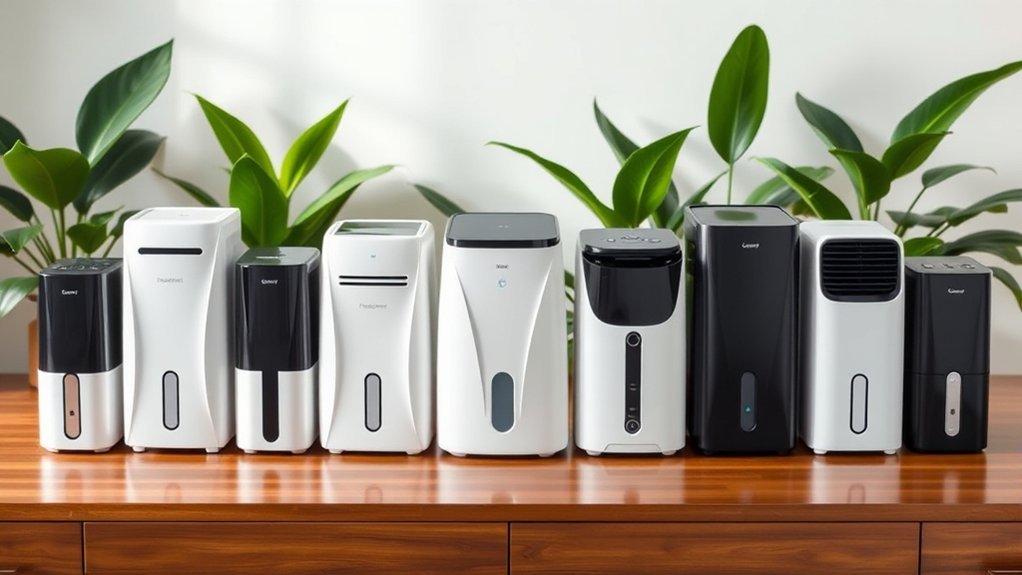
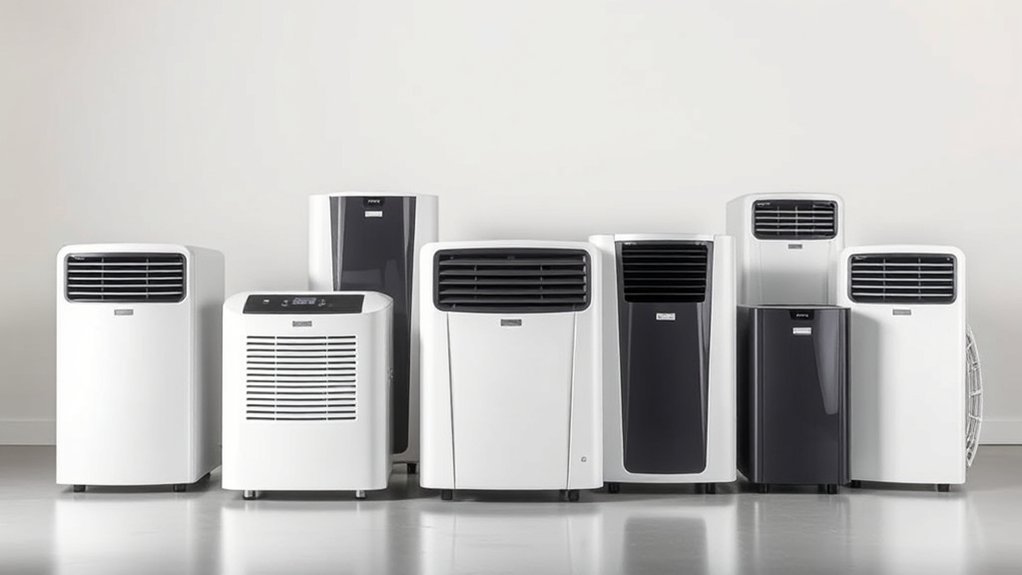
Small damp spaces do not always need a large compressor dehumidifier. If you want a quiet, compact, low-power moisture-control option for a bedroom, bathroom, closet, RV, boat, or small office, a thermoelectric dehumidifier can be a practical fit. These small Peltier or semiconductor-style models work best in warm, moderately humid, enclosed spaces where you want steady moisture collection without the compressor noise and bulk of a full-size unit.
In this guide, you’ll find compact picks such as the Ivation IVADM35 for stronger small-space moisture collection, the NeedDuck B-2 for quiet bedroom use, AEOCKY if you want a drain hose and timer, and smaller models for closets, RVs, boats, and tight corners. Compare by room size, tank capacity, noise level, drainage style, operating conditions, and power use so you can choose the model that fits your space without overbuying.
Affiliate disclosure: As an Amazon Associate, this site may earn from qualifying purchases. Product details, specifications, and availability can change, so always check the current Amazon listing before buying.
Quick Answer
The Ivation IVADM35 is the best all-around pick here if you want a simple thermoelectric dehumidifier with a larger 2-liter tank and up to 20 oz/day listed extraction under warm, humid test conditions. Choose NeedDuck B-2 for bedroom-friendly controls, AEOCKY when continuous drainage matters, Ivation IVADM10 for very small enclosed spaces, and CLEVAST CL-DH04 when a low-noise Quiet Mode is your priority.
Quick Verdict
- Best Overall: Ivation IVADM35 for small-to-mid-size enclosed spaces where you want simple, quiet thermoelectric moisture control.
- Best Quiet Bedroom Pick: NeedDuck B-2 for compact rooms, multiple operating modes, timers, and soft lighting.
- Best with Drain Hose: AEOCKY small dehumidifier for hands-off drainage in a suitable small enclosed space.
- Best Style Pick: BeOkay DH-A2 1657ml Dehumidifier for small rooms where appearance, lighting, and timers matter.
- Best for Tiny Spaces: Ivation IVADM10 for closets, boats, RV storage areas, and other very small enclosed spaces.
- Quietest Simple Pick: CLEVAST CL-DH04 if low-noise Quiet Mode matters more than advanced controls.
- Best Basic Compact Pick: TABYIK DH-CS01 for straightforward bedroom, bathroom, RV, or closet moisture control.
How We Chose These Thermoelectric Dehumidifiers
These picks are compared using listed moisture-removal capacity, tank size, thermoelectric or semiconductor design, noise information, drainage options, controls, portability, operating conditions, and intended room size. The rankings do not imply hands-on laboratory testing. Manufacturer and seller specifications can change, so use this guide to narrow your choices and confirm the current specifications on the linked product page before buying.
Quick Comparison
|
Product |
Best For |
Tank / Drainage |
Key Reason to Choose It |
Amazon |
|---|---|---|---|---|
|
Ivation IVADM35 |
Small-to-mid-size enclosed spaces |
2-liter tank |
20 oz/day listed capacity with quiet Peltier design and 72W power rating |
|
|
NeedDuck B-2 |
Bedrooms, closets, bathrooms, and RVs |
44 oz tank |
Thermoelectric design with multiple modes, timers, auto defrost, and lighting |
|
|
AEOCKY Small Dehumidifier |
Small spaces where continuous drainage helps |
64 oz tank plus drain hose |
Continuous drainage and a 24-hour timer reduce day-to-day maintenance |
|
|
BeOkay DH-A2 1657ml Dehumidifier |
Small rooms where style and ambiance matter |
1657 ml / 58 oz tank |
Three modes, timers, auto shutoff, and adjustable night lights |
|
|
Ivation IVADM10 |
Very small enclosed areas |
17 oz tank |
Ultra-compact design with a low 13.5W power rating |
|
|
CLEVAST CL-DH04 |
Noise-sensitive small rooms |
30 oz tank |
24 dB listed Quiet Mode with simple two-mode controls |
|
|
TABYIK DH-CS01 |
Simple bedroom, bathroom, RV, or closet use |
1000 ml / 35 oz tank |
28 dB listed noise level, auto shutoff, and compact size |
Before You Buy a Thermoelectric Dehumidifier
Thermoelectric dehumidifiers are best for small, enclosed, warm, moderately humid spaces. They are usually quieter and lighter than compressor dehumidifiers, but they also remove much less moisture. If you have a wet basement, standing water, an active leak, very cold temperatures, or a large open room, a properly sized compressor dehumidifier will usually be the stronger choice. For closets, small bedrooms, RVs, storage areas, and other modest spaces, thermoelectric models can make everyday humidity easier to manage.
Buying Note
Treat advertised coverage and daily moisture-removal figures as reference points, not guaranteed real-room results. Peltier performance changes with temperature, relative humidity, airflow, room openness, and how often doors or windows are opened.
Humidity Target
For general indoor moisture control, the U.S. EPA recommends keeping relative humidity below 60% and ideally around 30% to 50%. A dehumidifier can help with humidity, but leaks, condensation, water intrusion, and existing mold still need to be addressed at the source. See EPA moisture guidance.
Ivation Mid-Size Thermo-Electric Dehumidifier (IVADM35)
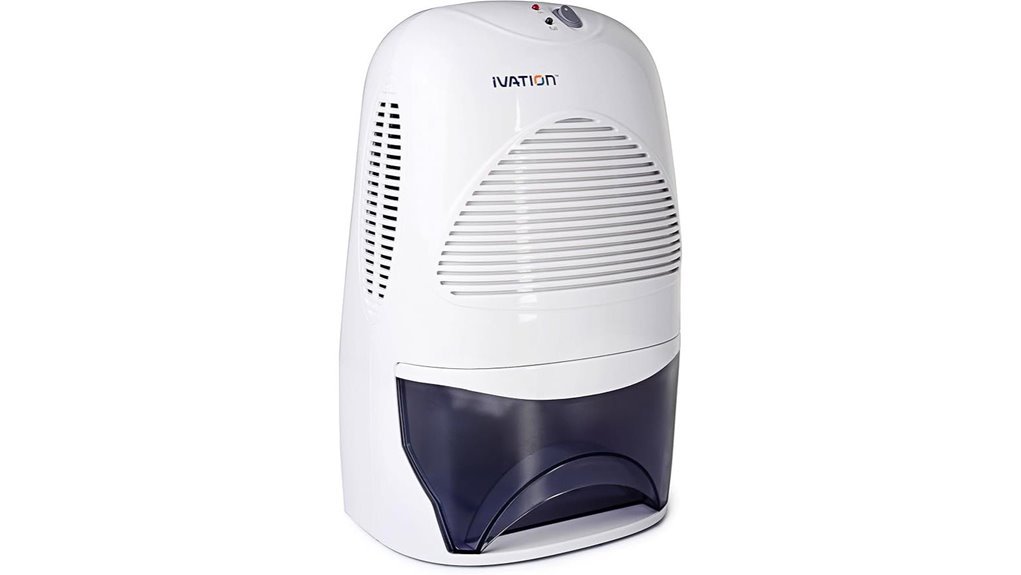
If you need a quiet, compact thermoelectric dehumidifier for a small-to-mid-size enclosed area, the Ivation IVADM35 is one of the stronger straightforward options in this group. It is listed for spaces up to 2,200 cubic feet and uses Peltier technology instead of a conventional refrigerant compressor, which helps reduce compressor-style noise and vibration. Its listed power consumption is 72 watts.
Under warm, humid test conditions, the IVADM35 is listed to remove up to 20 ounces of moisture per day. Its approximately 2-liter reservoir gives it substantially more storage than many mini thermoelectric models, while automatic shutoff stops operation when the tank reaches capacity. Choose this model if you value simple controls, a larger tank, and higher listed extraction than the smallest Peltier units.
Best For: People who want a quiet, uncomplicated thermoelectric dehumidifier for a small-to-mid-size enclosed room, RV, boat, storage area, or similar warm space.
Why You’ll Like It: It gives you more listed moisture-removal capacity and tank space than many tiny thermoelectric units while remaining compact and easy to operate.
Who Should Avoid It: Skip it for cold basements, active leaks, standing water, large open rooms, or heavy moisture problems that call for a higher-capacity compressor dehumidifier.
Pros:
- Thermoelectric Peltier design avoids a conventional compressor
- Up to 20 oz/day listed extraction under warm, humid test conditions
- Approximately 2-liter tank with automatic full-tank shutoff
Cons:
- Best suited to enclosed small-space use rather than large open rooms
- Much lower extraction capacity than a full-size compressor dehumidifier
- Tank still requires manual emptying because there is no continuous-drain feature listed here
NeedDuck B-2 Quiet Portable Dehumidifier for Home with 44oz Tank
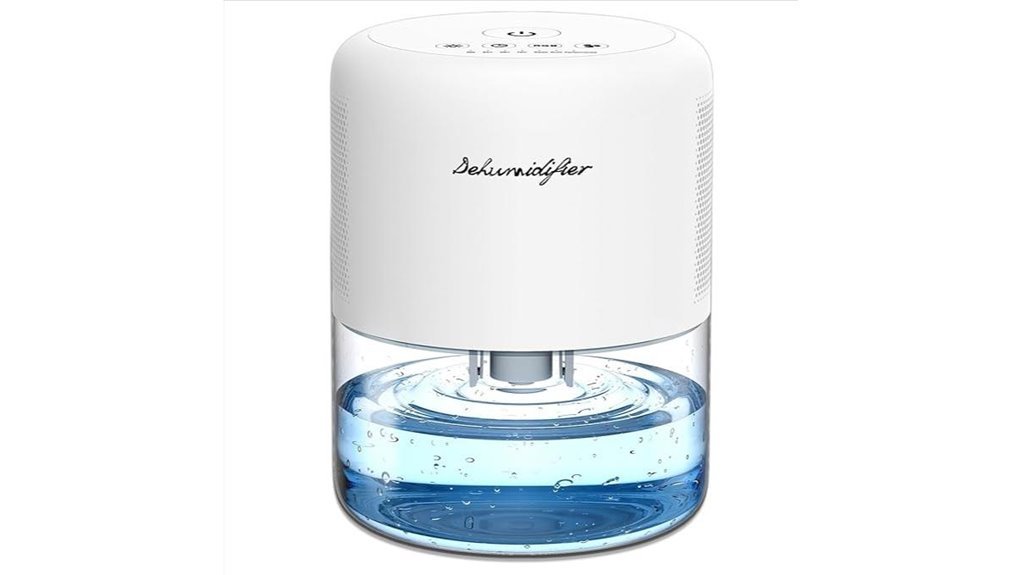
NeedDuck B-2 suits you if you want a quiet, compact thermoelectric dehumidifier for a bedroom, bathroom, closet, RV, or other small room. It uses a semiconductor cooling module based on the thermoelectric effect and is listed with a 44 oz tank, approximately 215-square-foot coverage, and a lightweight build that is easy to reposition.
Its listed 28-watt design keeps power demand modest, while Sleep, Auto, and Performance modes give you more flexibility than a basic one-button unit. You also get timer settings, auto defrost, auto shutoff, and multiple light colors. Because it is still a small thermoelectric machine, expect the best results in a closed, warm room with moderate humidity rather than a large or severely damp space.
Best For: People looking for a compact thermoelectric dehumidifier with bedroom-friendly controls for a small room, closet, bathroom, or RV.
Why You’ll Like It: It offers more control than a simple mini dehumidifier, especially if you want operating modes, timers, defrost support, and optional lighting.
Who Should Avoid It: Skip it if you need continuous drainage, a substantially larger tank, or high-capacity moisture removal for a large room.
Pros:
- Semiconductor thermoelectric design for compact small-space operation
- 44 oz tank and listed coverage around 215 sq. ft.
- Multiple modes, timer choices, auto defrost, auto shutoff, and lighting
Cons:
- Tank may require regular emptying in humid conditions
- Small-space design is not a substitute for a high-capacity room dehumidifier
- Lighting may be unnecessary if you prefer a simpler utility-focused unit
AEOCKY Small Dehumidifier with Drain Hose and Timer
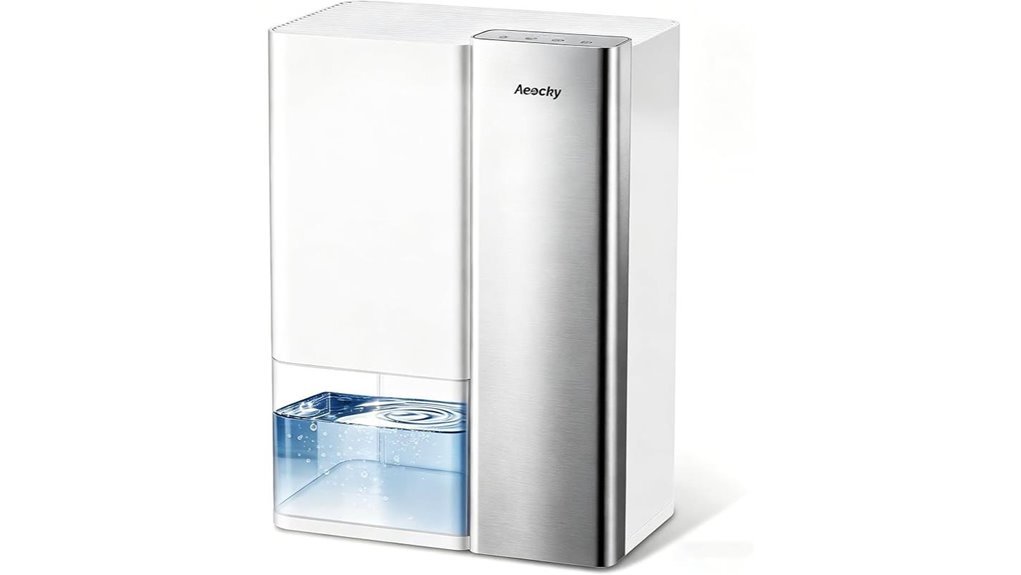
AEOCKY is the most convenient option here if your priority is continuous drainage. The current linked product is presented as a small thermoelectric dehumidifier with a 64-ounce water tank, included drain hose, and 24-hour timer, making it useful when you want to reduce how often you manually empty a reservoir.
The drain setup is especially useful for a suitable bathroom, laundry nook, storage area, bedroom, or RV where you can route the hose safely downward to an appropriate drain point. Exact extraction, power, humidity-control, and display specifications can change between AEOCKY versions, so confirm those details on the current Amazon listing before choosing it for a specific humidity target.
Best For: People who want a compact thermoelectric dehumidifier with a drain hose for easier long-duration small-space use.
Why You’ll Like It: The combination of a 64 oz tank, drain hose, and timer reduces routine maintenance compared with tank-only mini models.
Who Should Avoid It: Skip it if you only need an ultra-small closet unit or cannot route a gravity drain hose downward to a safe drainage point.
Pros:
- Thermoelectric design intended for compact small-space use
- 64 oz reservoir gives you more storage than many mini models
- Included drain hose and 24-hour timer improve hands-off convenience
Cons:
- Not intended to replace a high-capacity compressor dehumidifier for severe dampness
- Continuous drainage requires correct hose routing and a suitable lower drain point
- Confirm current extraction and control specifications on the exact Amazon listing before buying
BeOkay DH-A2 1657ml Small Dehumidifier with Color Lights
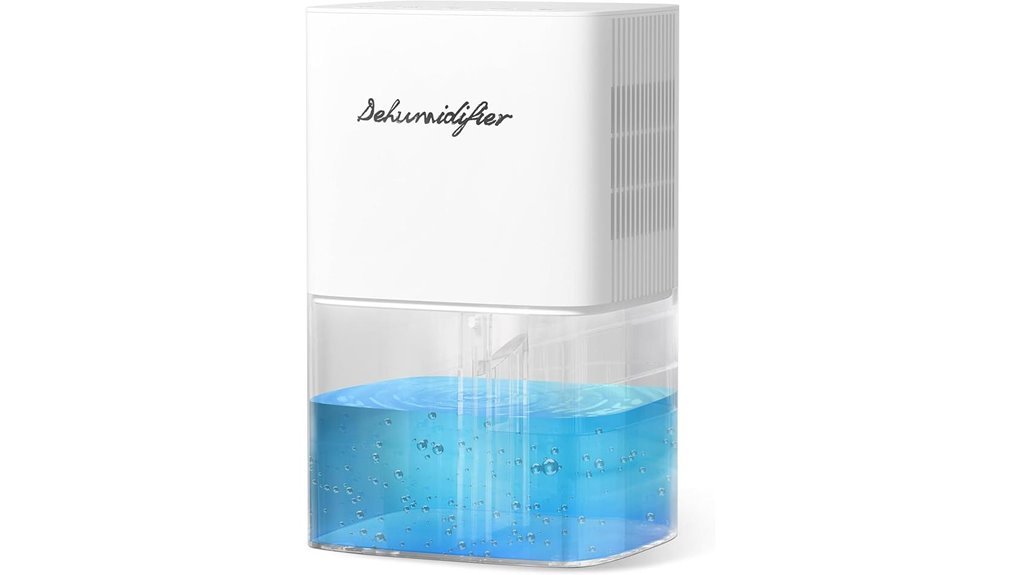
The BeOkay DH-A2 combines a 1657ml / 58 oz tank with a compact semiconductor dehumidification system and color lighting. It is listed for spaces up to around 230 ft², with a listed extraction capacity of about 0.3 liters per day under specified conditions.
You can choose sleep, normal, or performance operation, and sleep mode is listed below 40 dB. The unit also includes timer choices, auto shutoff, semiconductor defrost support, and 10 night-light colors. At roughly 2.3 pounds in current specifications, it is easy to move between suitable small enclosed rooms.
Best For: People looking for a compact semiconductor dehumidifier for a small bedroom, bathroom, or similar space, especially if lighting and timer functions appeal to them.
Why You’ll Like It: It combines a relatively roomy tank for its compact size with multiple modes, timers, and night-light styling.
Who Should Avoid It: Skip it if your priority is maximum moisture extraction, continuous drainage, or a plain utility-style design without lights.
Pros:
- 1657ml / 58 oz tank is larger than many basic mini-dehumidifier reservoirs
- Sleep, normal, and performance modes offer flexible operation
- Auto shutoff, defrost support, timers, and adjustable lighting add convenience
Cons:
- Listed extraction is modest at roughly 0.3 liters per day
- Best suited to small enclosed spaces rather than large-room moisture control
- Lighting features add little value if you prefer a simple utility appliance
Ivation Small Thermo-Electric Dehumidifier for Small Spaces
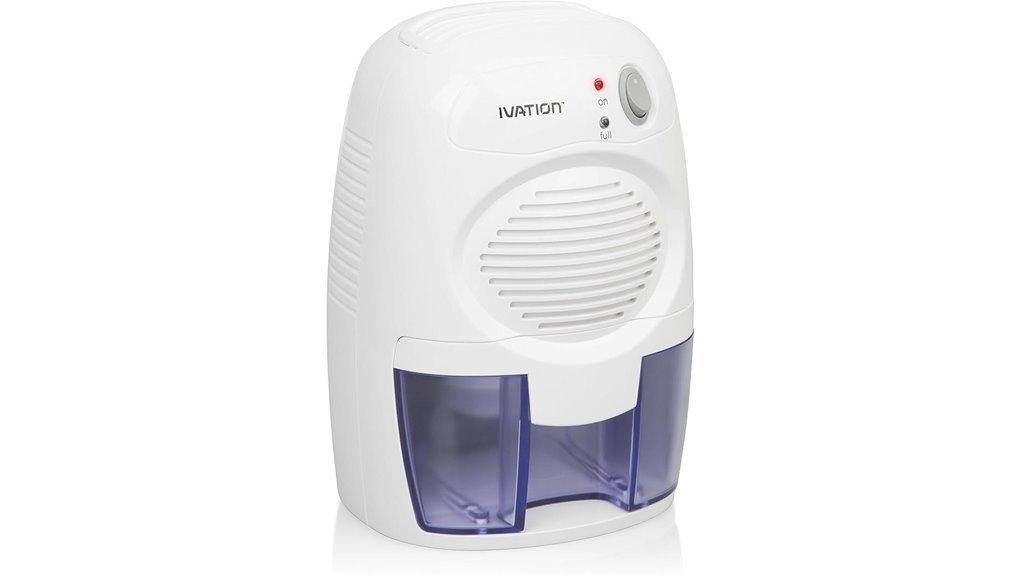
The Ivation IVADM10 suits you best when you need quiet moisture control in a very small enclosed space. You can place this compact thermoelectric model in a closet, RV, boat, small storage area, cupboard, or similar warm space. Its Peltier design is listed at just 13.5 watts and is intended for areas up to about 1,100 cubic feet.
The IVADM10 is listed to remove approximately 6 ounces of moisture per day at 86°F and 80% relative humidity, so it is not meant for large rooms or heavy dampness. Its approximately 17-ounce reservoir includes automatic full-tank shutoff, and the simple design includes indicator lights and straightforward controls.
Best For: People who need an ultra-compact thermoelectric dehumidifier for a closet, RV, boat, cupboard, or other very small enclosed area.
Why You’ll Like It: Its tiny footprint and low 13.5W power rating make it easy to place where a larger appliance would be awkward.
Who Should Avoid It: Skip it for heavy bathroom steam, cold basements, damp crawl spaces, larger bedrooms, active leaks, or any space that needs high-capacity extraction.
Pros:
- Very compact and easy to place in tight enclosed spaces
- Thermoelectric cooling with a low 13.5W listed power draw
- Approximately 17 oz tank with automatic full-tank shutoff
Cons:
- Very low extraction compared with larger thermoelectric and compressor models
- Small reservoir requires manual emptying
- Performance depends heavily on warm temperature and adequate humidity
CLEVAST Small Quiet Dehumidifier for Home, Bathroom, Bedroom
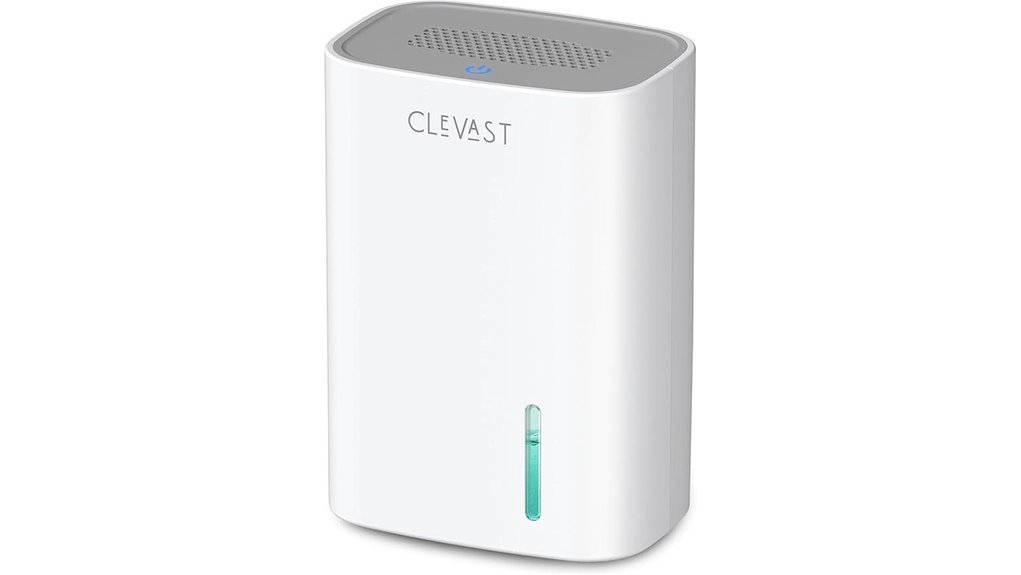
CLEVAST’s CL-DH04 is a strong pick when low noise matters. Its Quiet Mode is listed at 24 dB, and the compact 30-ounce model uses semiconductor/Peltier condensation rather than a conventional compressor. It is listed for small enclosed spaces up to about 285 square feet.
Under warm, humid test conditions of about 86°F and 85% RH, the CL-DH04 is listed to collect up to 10 ounces of water per day. You can switch between Efficient and Quiet modes, and auto shutoff stops operation when the tank is full. At roughly 2.1 pounds with a built-in handle, it is also easy to reposition.
Best For: People who want an uncomplicated, low-noise thermoelectric dehumidifier for a bedroom, office, closet, RV, or other small enclosed space.
Why You’ll Like It: It focuses on a dedicated 24 dB Quiet Mode, simple controls, and easy portability instead of extra lighting or complicated settings.
Who Should Avoid It: Skip it if you need a drain hose, adjustable humidistat, larger reservoir, or high-capacity room drying.
Pros:
- Quiet Mode is listed at just 24 dB
- 30 oz tank with compact 2.1-pound portable design
- Two operating modes plus automatic full-tank shutoff
Cons:
- Modest extraction compared with compressor dehumidifiers
- No continuous-drain option listed for this model
- Best performance is expected in its recommended warm operating range
TABYIK DH-CS01 Small Bedroom Dehumidifier with Auto Shut Off
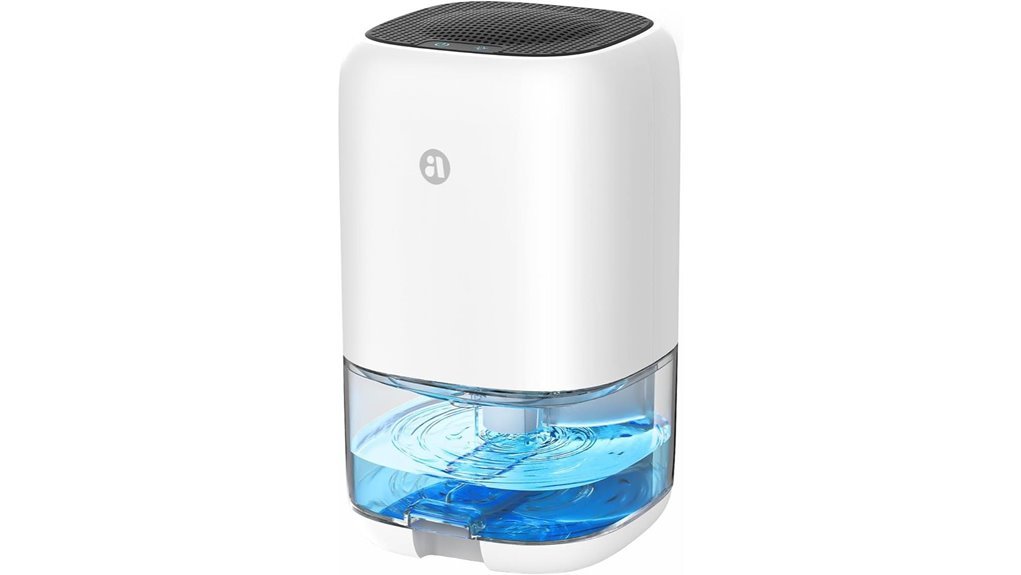
If you want a compact bedroom dehumidifier with simple controls and automatic full-tank protection, TABYIK’s DH-CS01 is an easy-to-understand option. It uses Peltier technology and is listed for small spaces up to about 280 sq. ft., making it suitable for a small bedroom, bathroom, RV, closet, or laundry corner when conditions are appropriate.
The DH-CS01 is listed to remove up to about 16 oz / 450 ml of moisture per day at 86°F and 80% RH. Its transparent 1000 ml / 35 oz tank stops collecting when the water reaches roughly 700 to 800 ml and alerts you with a flashing red light. The listed noise level is about 28 dB, and optional 7-color lighting adds a small night-light effect.
Best For: People who need a straightforward, compact thermoelectric dehumidifier for a small bedroom, bathroom, RV, closet, or similar enclosed space.
Why You’ll Like It: It is easy to operate and combines low listed noise, a visible tank, and automatic shutoff without a complicated control panel.
Who Should Avoid It: Skip it if you want adjustable humidity targets, continuous drainage, or stronger moisture removal for a large or very damp room.
Pros:
- Compact Peltier design for small enclosed spaces
- Listed extraction up to about 16 oz / 450 ml per day under warm, humid test conditions
- Automatic shutoff, visible tank, and approximately 28 dB listed operation
Cons:
- Coverage claims should not be treated as a guarantee in very damp or open rooms
- No drain hose or adjustable humidistat listed for this model
- 1000 ml tank still requires routine manual emptying
Factors to Consider When Choosing Thermoelectric Dehumidifiers
When you choose a thermoelectric dehumidifier, start with dehumidification capacity, operating temperature, room conditions, and tank or drainage setup. Noise and energy use also matter if the unit will run beside a bed or desk. Because Peltier models have much lower extraction capacity than full-size compressor machines, buying for the correct use case matters more than choosing the largest advertised coverage number.
Dehumidification Capacity
Check extraction capacity in ounces, milliliters, or liters per day, but also check the temperature and relative humidity used for that rating. A model rated at 86°F and 80% RH will normally collect less water in a cooler or less humid home. In this group, listed extraction ranges from only a few ounces per day for ultra-small units to around 20 ounces per day for larger traditional Peltier models. Use the figure as a comparison tool rather than a guarantee.
Room Size Coverage
Thermoelectric dehumidifiers are most convincing in small enclosed rooms and storage areas. Advertised square-foot or cubic-foot coverage does not tell the whole story because dampness level, temperature, ceiling height, ventilation, door opening, and moisture sources can dramatically change results. If a basement or room remains very damp despite continuous operation, stepping up to a properly sized compressor dehumidifier is usually more effective than adding another tiny Peltier unit.
Noise Level
Noise matters if the unit will sit in a bedroom or office. Thermoelectric models avoid a conventional compressor, but they still use fans, so they are not silent. Check whether the advertised decibel number applies to Quiet/Sleep Mode or maximum operation. Models in this guide advertise figures such as 24 dB in CLEVAST’s Quiet Mode and approximately 28 dB for TABYIK, while other products simply describe their operation as quiet.
Energy Consumption
Small thermoelectric dehumidifiers generally draw modest power because their extraction capacity is also modest. Examples here range from the 13.5W Ivation IVADM10 to higher-powered compact models. Do not choose on wattage alone: compare power consumption against moisture-removal capacity. A very low-watt unit may cost less to operate but may also need much longer to make a meaningful difference in a damp room.
Tank Capacity
A larger tank means fewer trips to the sink, but tank size does not determine how quickly the unit removes moisture. The models here range from roughly 17 oz to 64 oz, with several options around 30 to 58 oz. Match the reservoir to how often you are willing to empty it, and choose a drain-hose model when regular manual emptying would be inconvenient.
Auto Shut-Off
Automatic full-tank shutoff is one of the most useful features on a tank-based dehumidifier. It prevents the unit from continuing to collect water once the reservoir reaches its designed limit. Some models also add visual indicators or other protection features. Always verify exactly what triggers shutoff on the model you buy rather than assuming every mini dehumidifier behaves the same way.
Portability Features
If you plan to move the unit between a bedroom, closet, RV, bathroom, or storage area, look at weight, footprint, tank design, handle placement, and power-adapter requirements. A small unit is easier to reposition, but moving a dehumidifier full of water can spill the tank, so empty it before relocating whenever practical.
Drainage Options
Most mini thermoelectric dehumidifiers use a removable reservoir. If you want less maintenance, choose a model with a continuous gravity drain hose, such as the AEOCKY option in this guide. Route the hose continuously downward into a safe drain, avoid kinks, and follow the manufacturer’s instructions. If gravity drainage is not practical, a larger tank with automatic shutoff may be easier.
Electrical Safety Note
Keep any dehumidifier on a stable surface with its air inlet and outlet unobstructed. Do not place an electrical appliance where it can be splashed, fall into water, or violate the clearances and placement instructions in its manual. Use the supplied power equipment and follow the safety instructions for your exact model.
Frequently Asked Questions
How Often Should Thermoelectric Dehumidifier Filters Be Cleaned?
First check whether your model actually has a removable or washable filter. If it does, inspect it regularly for dust and follow the cleaning interval in the owner’s manual. Some compact thermoelectric units use simple intake grilles rather than a conventional reusable filter, so one cleaning schedule does not apply to every model.
Can Thermoelectric Dehumidifiers Run Continuously Overnight?
Many models are designed for extended operation, but use the instructions for your exact unit. Keep the air intake and outlet clear, place the dehumidifier on a stable surface, make sure the tank is seated correctly, and confirm that automatic full-tank shutoff works as intended. For a bedroom, a dedicated Quiet or Sleep Mode can make overnight use more comfortable.
Do Thermoelectric Dehumidifiers Work Well in Cold Basements?
Usually not. Peltier and semiconductor dehumidifiers become less effective as temperatures fall, and many mini models are designed around much warmer test conditions. A cold or persistently damp basement generally calls for a properly sized compressor dehumidifier rated for the basement’s operating temperature, along with correction of any leaks or water intrusion.
What Noise Level Is Typical for Small Thermoelectric Dehumidifiers?
Noise varies by model and fan setting. Some compact units advertise Quiet or Sleep modes in the mid-20-dB range, while others operate louder in higher-performance modes. Always check whether a stated decibel number applies to the quietest setting or normal operation before comparing models.
How Much Electricity Do Thermoelectric Dehumidifiers Usually Consume?
Power use varies substantially with the size and design of the unit. The compact models in this guide include very low-power examples such as the 13.5W Ivation IVADM10 as well as higher-powered options. Compare wattage together with extraction capacity and expected runtime, because lower wattage normally comes with lower moisture-removal capability.
Can a Thermoelectric Dehumidifier Help With Mold-Related Moisture?
It can help lower humidity in a properly sized small space, but it is not mold remediation and cannot guarantee mold prevention. Fix leaks and water intrusion, dry wet materials, clean existing mold appropriately, and keep indoor relative humidity under control. The EPA recommends keeping humidity below 60% and ideally around 30% to 50%.
Which Thermoelectric Dehumidifier Should I Choose for a Bedroom?
For a bedroom, prioritize low noise, automatic full-tank shutoff, stable placement, adequate tank capacity, and controls that make nighttime operation easy. NeedDuck B-2 is attractive if you want multiple modes, timers, and lighting. CLEVAST CL-DH04 is the simpler choice if its 24 dB Quiet Mode is more important to you than advanced controls.
Is a Drain Hose Worth It on a Small Dehumidifier?
Yes, if the unit will run for long periods and you have a safe gravity-drain location below the dehumidifier’s outlet. A drain hose can greatly reduce tank-emptying chores. If you cannot maintain a continuous downward slope or do not have an appropriate drain, a removable tank with automatic shutoff is the safer and simpler setup.
Conclusion
The best thermoelectric dehumidifier depends more on your room conditions and maintenance preferences than on the largest advertised coverage number. Choose the Ivation IVADM35 if you want a simple all-around Peltier unit with a larger tank and up to 20 oz/day listed extraction, NeedDuck B-2 if bedroom-friendly controls and timers matter most, or AEOCKY if a continuous drain hose is your main priority.
For very small enclosed spaces, Ivation IVADM10 is easier to place and uses very little power. CLEVAST CL-DH04 is attractive for its dedicated 24 dB Quiet Mode, while TABYIK DH-CS01 offers straightforward auto-shutoff operation with a visible 1000 ml tank. Choose the BeOkay DH-A2 if you want a compact semiconductor model with a larger reservoir, timers, and color lighting. Most importantly, match the unit to your actual temperature, humidity level, room size, drainage setup, and moisture source so you do not expect a mini thermoelectric dehumidifier to do the work of a full-size compressor machine.