The best fridge moisture absorber is usually a compact, sealed product made specifically for refrigerator or food-storage use—not a plug-in room dehumidifier or a calcium-chloride tub. After removing products that were designed for bedrooms, basements, closets, cars, safes, and storage totes, two options remain relevant: a cut-to-fit refrigerator mat for moisture and odor control, and a compact rechargeable silica-gel bag for enclosed food-storage areas.
Quick verdict: Choose the Rechargeable Fridge Deodorizer & Moisture Absorber if you want a fridge-specific, cut-to-fit liner that also targets odors. Choose the Absorb Pro Rechargeable Dehumidifier Bag if you prefer a smaller reusable silica-gel pack for an enclosed food-storage area.
Important: These passive absorbers may help with minor condensation or odors, but they cannot repair a faulty door seal, blocked drain, warm refrigerator, or serious moisture problem.
Quick Comparison
| Product | Best For | Main Material | Reactivation | Amazon |
|---|---|---|---|---|
| Rechargeable Fridge Deodorizer & Moisture Absorber | Fridge shelves, drawers, and layouts that benefit from a trimmable mat | Activated carbon and silica gel | Sun-dry when the indicator turns pink | Check on Amazon |
| Absorb Pro Rechargeable Dehumidifier Bag | Compact enclosed food-storage spaces | 100g silica-gel bag | Microwave according to the product instructions | Check on Amazon |
Rechargeable Fridge Deodorizer & Moisture Absorber, 2 Pack
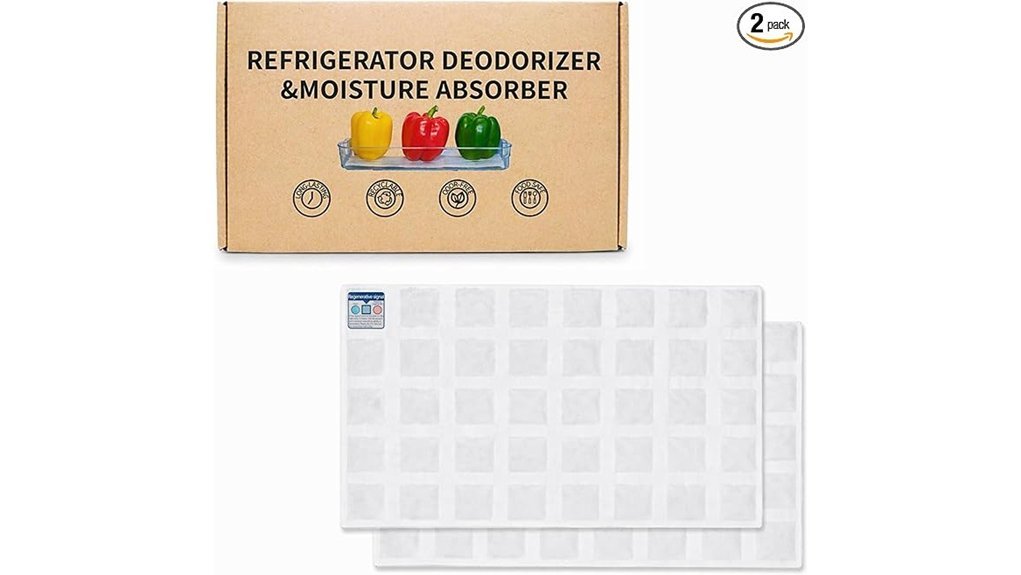
This two-pack is the most direct match for shoppers who want a refrigerator moisture absorber and deodorizer. Each large mat combines activated carbon for odor control with silica-gel particles for passive moisture absorption. The flexible material can be trimmed to fit a shelf, produce drawer, door rack, cabinet, or pantry area without taking up the space of a bulky tub.
A color indicator turns pink when the mat needs attention. The manufacturer’s directions call for sun-drying it for about half a day before reuse. Because the product is passive, it works silently and requires no outlet, fan, or disposable liquid reservoir.
Why You’ll Like It: It is designed around refrigerator use, provides both odor and moisture control, and can be cut to match an unusual shelf or drawer shape.
Who Should Buy This: Households dealing with mild shelf condensation, produce-drawer dampness, or recurring food odors.
Who Should Avoid This: Anyone trying to solve heavy water buildup, a leaking appliance, poor cooling, or a damaged door gasket.
Pros:
- Designed for refrigerator and freezer odor and moisture control
- Combines activated carbon with silica gel
- Trimmable format works with different shelf and drawer layouts
- Reusable after sun-drying according to the product directions
Cons:
- Needs enough open surface area to work effectively
- Must be monitored and dried when the indicator changes
- Cannot correct appliance faults or severe condensation
Absorb Pro Rechargeable Dehumidifier Bag (1-Pack)
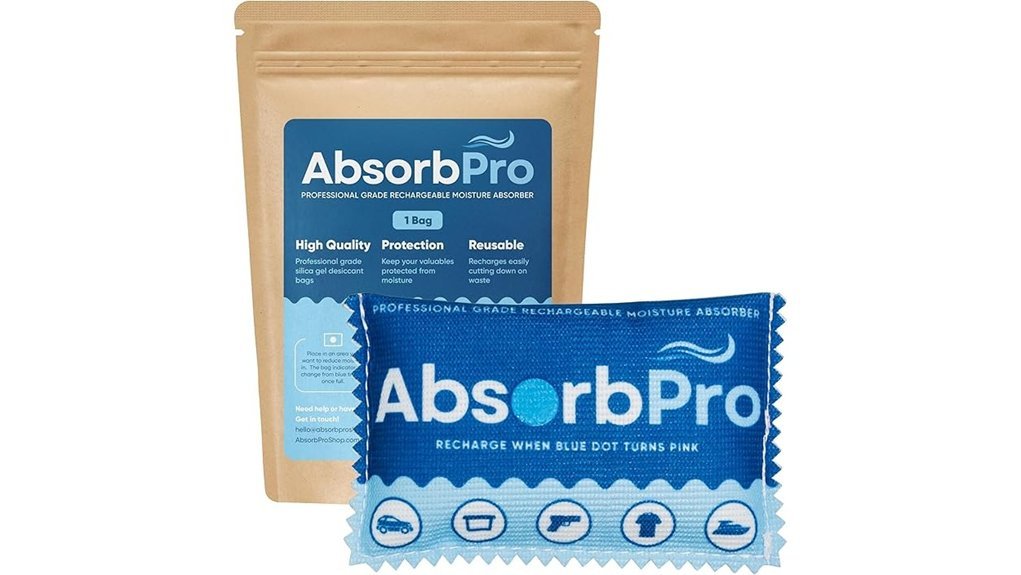
The Absorb Pro is a compact 100g rechargeable silica-gel bag marketed for enclosed storage uses that include food storage. Its small 1 x 5 x 3-inch format is easier to place than a large mat when shelf space is limited. A color indicator changes from blue to pink as the silica gel collects moisture.
When the indicator changes, follow the manufacturer’s microwave directions exactly, including the stated power level, orientation, and heating time. Let the bag cool fully before returning it to a cold storage area. Keep the sealed bag away from direct food contact and stop using it if the outer pouch becomes damaged.
Why You’ll Like It: It is compact, reusable, and easy to check without opening the pouch.
Who Should Buy This: Shoppers who want a small passive absorber for an enclosed food-storage space and are comfortable reactivating it in a microwave.
Who Should Avoid This: Anyone who wants a fridge-specific shelf liner, odor-control material, or a no-maintenance disposable product.
Pros:
- Compact size fits tight enclosed spaces
- Reusable silica gel reduces repeated replacement
- Color indicator shows when reactivation is needed
- No cord, fan, or collection tank
Cons:
- Not as fridge-specific as the cut-to-fit mat
- Requires careful microwave reactivation
- Provides targeted passive absorption rather than whole-appliance moisture control
Factors to Consider When Choosing a Fridge Moisture Absorber
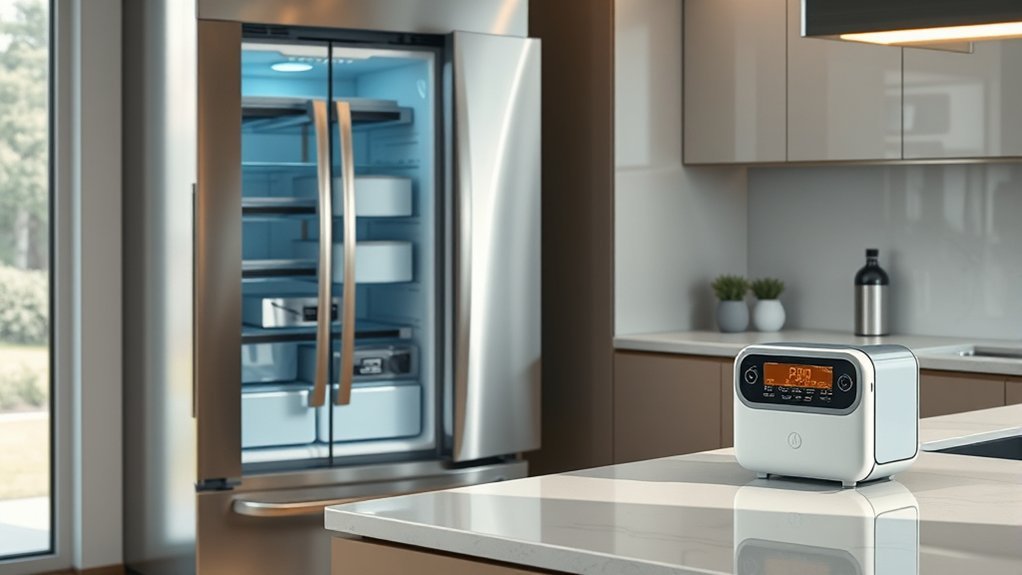
A passive absorber can be useful for minor condensation or odor control, but it should be the final step after checking refrigerator temperature, airflow, door seals, drainage, and food packaging. Use the checklist below to choose a product without creating a spill, contamination, or over-drying problem.
Refrigerator-Approved Use
Choose a sealed product whose current label or instructions specifically permit refrigerator, freezer, or food-storage use. A product intended for a closet, car, gun safe, basement, or room is not automatically appropriate beside food. Never place loose beads or an opened desiccant pouch in the refrigerator.
Material and Spill Risk
Silica-gel packs and activated-carbon liners stay dry during normal use, making them easier to manage around food than calcium-chloride tubs that collect liquid brine. Whatever material you choose, keep it sealed, upright when required, and separated from uncovered food. Discard a product if its pouch, membrane, tray, or outer casing becomes damaged.
Size and Airflow
Measure the intended shelf or drawer before ordering. The absorber should not block an air vent, prevent a drawer from closing, or crowd food so tightly that cold air cannot circulate. A trimmable liner works well across a broad shelf, while a small bag is easier to place in a compact compartment.
Recharge Method
Rechargeable products may require sunlight, a microwave, or an oven. Follow only the directions for the exact product you own; heating times and temperature limits are not interchangeable. Allow the product to cool completely before putting it back into the refrigerator.
Odor Control Versus Moisture Control
Activated carbon is primarily useful for odors, while silica gel is used for moisture adsorption. A combined product may address both mild dampness and smells, but neither material removes the need to discard spoiled food, cover leftovers, clean spills, and wash the refrigerator regularly.
Food Safety and Produce Humidity
Do not try to force the entire refrigerator to a generic 30% to 50% humidity target. Produce has different storage needs: many vegetables benefit from a higher-humidity crisper, while many fruits do better in a lower-humidity drawer. More importantly, keep the refrigerator at 40°F (4°C) or below, avoid overpacking it, cover foods, and clean spills promptly. See the FDA’s refrigerator food-safety guidance and the USDA’s refrigeration guidance.
Before You Buy
- Confirm the current product instructions allow refrigerator or food-storage use.
- Check the dimensions against your available shelf or drawer space.
- Choose a sealed design and keep it away from direct food contact.
- Make sure it will not block vents or interfere with the door seal.
- Pick a reactivation method you will realistically maintain.
- Investigate heavy condensation instead of trying to absorb it indefinitely.
Frequently Asked Questions
How Often Should a Fridge Moisture Absorber Be Recharged?
Use the product’s saturation indicator or written instructions rather than a fixed calendar schedule. Recharge time varies with the refrigerator, door-opening frequency, food load, humidity, absorber size, and product design.
Are Fridge Moisture Absorbers Safe Near Food?
They can be appropriate when the manufacturer permits refrigerator or food-storage use and the material stays fully enclosed. Do not let the absorber touch uncovered food, and discard it if the pouch or container leaks, tears, or opens.
Do Fridge Moisture Absorbers Prevent Freezer Burn?
No. Freezer burn is mainly reduced by using airtight, freezer-safe packaging, removing excess air, maintaining a stable freezer temperature, and avoiding unnecessarily long storage. A passive moisture absorber should not be treated as a freezer-burn solution.
Can a Moisture Absorber Remove Mold Inside a Refrigerator?
No. Remove spoiled or moldy food, clean contaminated surfaces, wipe up spills, and check that the refrigerator stays at 40°F (4°C) or below. An absorber may help with minor dampness after cleaning, but it does not sanitize the appliance.
What Causes Excess Condensation in a Refrigerator?
Common causes include frequent door opening, uncovered warm food, blocked air vents, a dirty or damaged door gasket, poor drainage, overpacking, or an appliance that is not cooling correctly. Fix the underlying cause before relying on an absorber.
Which Option Is Better for a Mini Fridge?
A small sealed silica-gel bag is usually easier to place in a mini fridge, provided the manufacturer allows that use. Leave space around vents, keep it away from uncovered food, and monitor the refrigerator temperature with an appliance thermometer.
Final Recommendation
Best overall: The Rechargeable Fridge Deodorizer & Moisture Absorber is the better fit for most readers because it is designed around refrigerator use, combines odor and moisture control, and can be trimmed for different layouts.
Best compact option: The Absorb Pro bag makes more sense when you need a small reusable silica-gel pack for an enclosed food-storage space. Whichever product you choose, treat it as a supplement—not a substitute for correct temperature, airflow, cleaning, packaging, and appliance maintenance.