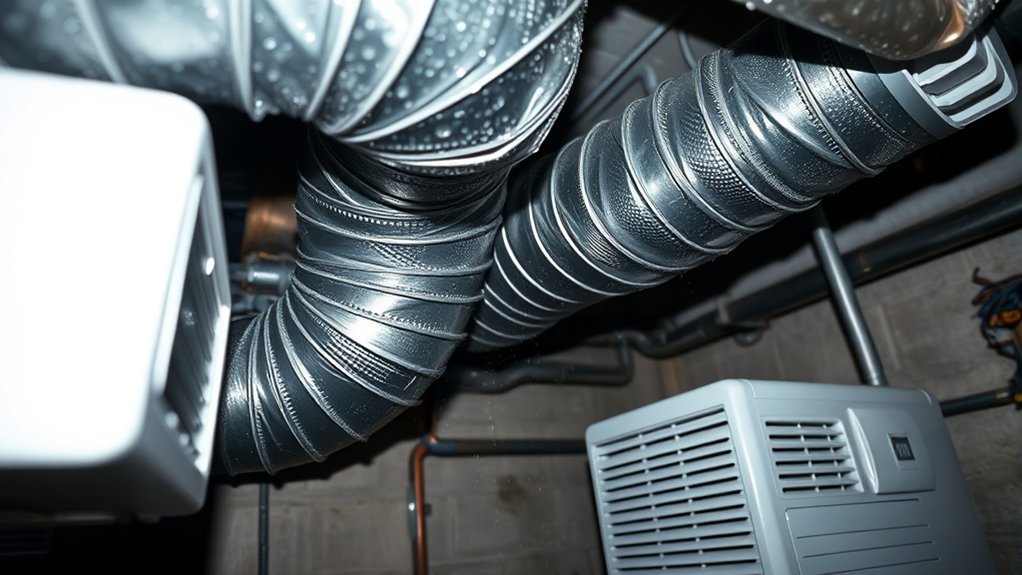
A dehumidifier can help stop condensation on ductwork when excess indoor humidity is the main cause. It will not fix every case of sweaty ducts, though. Condensation forms when warm, moist air touches a duct surface that is cold enough to drop below the air’s dew point. For lasting results, you usually need a mix of humidity control, sealed duct leaks, intact duct insulation, a sound vapor barrier, and steady HVAC airflow.
Quick Answer
Yes, a dehumidifier can reduce or stop duct condensation if high humidity is the main problem. Keep indoor relative humidity below 60%, and ideally around 30% to 50% when possible. If ducts are uninsulated, leaking, poorly sealed, or sitting in a humid attic or crawlspace, those problems must be fixed too.
Key Takeaways
- A dehumidifier helps most when the air around the ducts is too humid.
- Condensation still returns if cold duct surfaces are exposed to warm, moist air.
- Duct insulation needs an intact vapor barrier, not just more wrap.
- Seal duct joints with mastic or approved metal foil tape; do not rely on cloth duct tape.
- If insulation is wet, mold is visible, or water keeps dripping, call an HVAC technician.
At a Glance
| Time Required | 15 minutes to check humidity and filters; 1 to 3 hours for basic sealing; longer for insulation or professional duct repairs |
| Difficulty | Easy for humidity checks and filter replacement; moderate to advanced for duct sealing, attic work, and insulation repairs |
| Tools Needed | Hygrometer, flashlight, gloves, replacement HVAC filter, mastic sealant or UL-rated foil tape, duct insulation, and a camera for documenting problem areas |
| Cost | Low for monitoring and filter changes; moderate for a portable dehumidifier; higher for whole-house dehumidification, duct repairs, or attic insulation work |
Will a Dehumidifier Stop Duct Condensation?
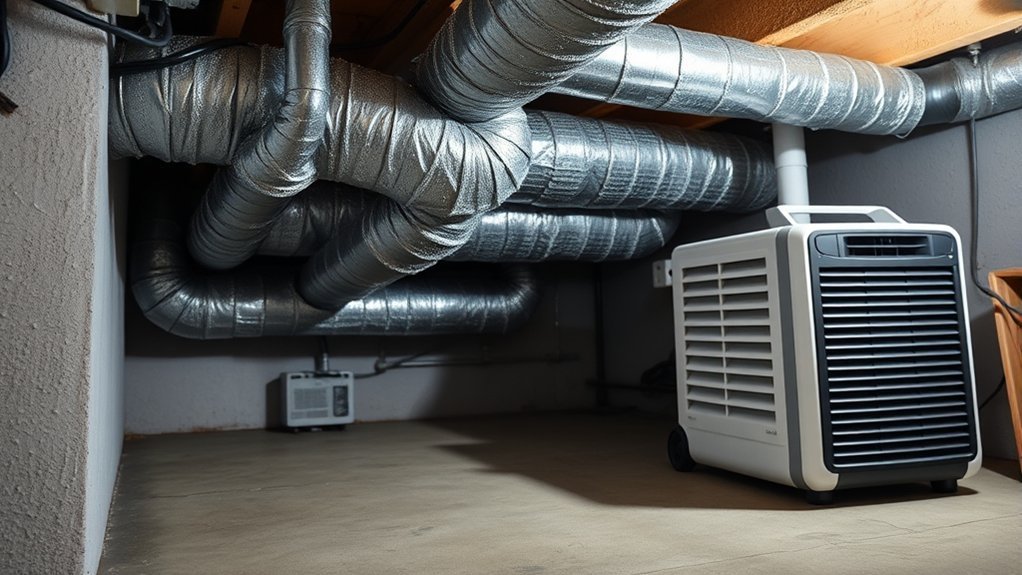
Yes—a dehumidifier can help stop duct condensation by lowering the moisture content of the air around the ductwork. The EPA recommends keeping indoor relative humidity below 60%, ideally between 30% and 50% when possible. That range lowers the chance that moist air will condense on cold duct surfaces.
However, a dehumidifier is only one part of the fix. Ducts sweat when their outer surface gets colder than the dew point of the surrounding air. If the duct has missing insulation, torn vapor barrier, leaky joints, low airflow, or is installed in a humid attic or crawlspace, condensation can continue even after you lower room humidity.
Note: A portable dehumidifier works best in a closed room, basement, or crawlspace where you can control the air. It is usually not the first fix for a vented attic because outdoor air can keep bringing moisture back in.
A whole-house dehumidifier can help when it is designed and installed correctly, especially in humid climates or homes where the air conditioner does not remove enough moisture. It should be installed according to the manufacturer’s instructions and sized by an HVAC professional, because poor installation can affect airflow, drainage, and system performance.
Recommended Products

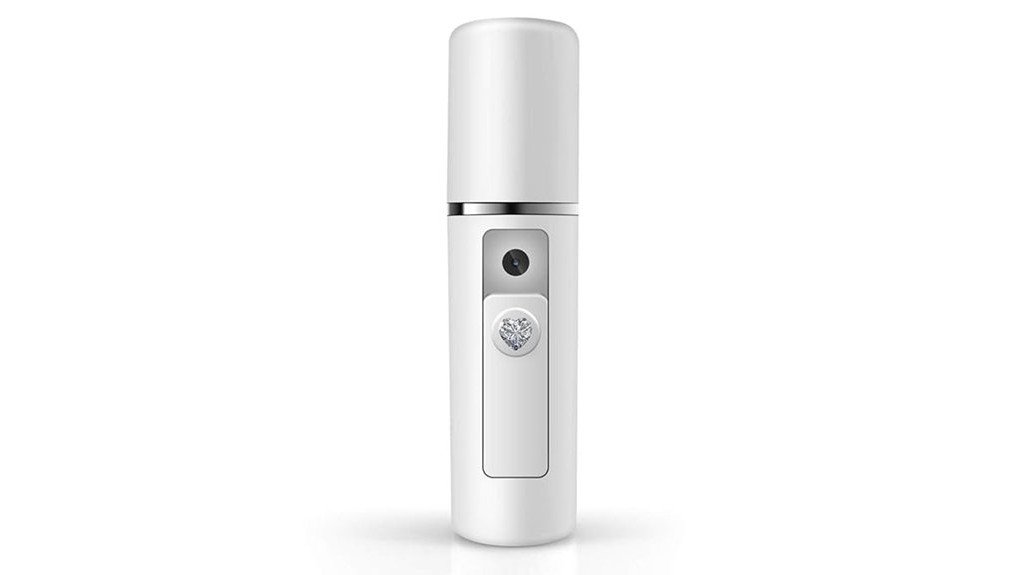
Semiconductor dehumidifiers use thermoelectric cooling to remove moisture from the air. They create a drier, more comfortable environment by reducing humidity and improving air quality.
What Causes Sweaty Ductwork?
Sweaty ductwork happens when warm, humid air meets a cold duct surface. The moisture in that air changes into liquid water on the duct, similar to water droplets forming on a cold drink glass in summer.
The most common causes are:
- High indoor humidity: If the air is too damp, ducts are more likely to sweat. The CDC advises keeping home humidity no higher than 50% all day long to help prevent mold growth.
- Missing or damaged duct insulation: Bare metal ducts in attics, crawlspaces, garages, or basements can get cold enough for condensation to form.
- Torn vapor barrier: Duct wrap needs a sealed outer jacket. If humid air reaches the cold duct or wet insulation, sweating can return.
- Leaky duct joints: Gaps, failed tape, loose collars, or disconnected sections can pull humid air into the system or leak cold air into unconditioned spaces.
- Low airflow: Dirty filters, blocked returns, closed registers, or undersized ductwork can make the air inside the duct too cold and increase condensation risk.
- Humid attic or crawlspace air: Ducts in unconditioned spaces are more exposed to moisture and temperature swings.
- Short-cycling air conditioner: An oversized or poorly controlled AC may cool quickly without running long enough to remove enough moisture.
Condensation is not just a “humidity problem.” It is a temperature-and-humidity problem: the duct surface must stay above the dew point, or moisture can form.
How to Check What Is Causing the Condensation
Before buying a larger dehumidifier, check whether the ducts are sweating because of humidity, missing insulation, air leaks, or weak airflow.
| What You See | Likely Cause | Best First Fix |
|---|---|---|
| Water on bare metal duct | Missing insulation | Add properly sealed duct insulation |
| Wet duct wrap or sagging insulation | Failed vapor barrier or long-term condensation | Replace wet insulation and seal the vapor jacket |
| Condensation mostly in attic or crawlspace | Humid unconditioned space | Seal air leaks, improve drainage/ventilation, and insulate ducts |
| Weak airflow from vents | Dirty filter, blocked return, duct restriction, or blower issue | Replace filter, clear vents, and have airflow checked |
| Indoor RH above 60% | Excess indoor moisture | Use a dehumidifier and fix moisture sources |
Use a hygrometer to measure humidity near the ductwork and inside the living space. Check readings at different times of day because humidity can change quickly after cooking, bathing, storms, or long AC cycles.
How to Lower Attic Humidity
To lower attic humidity, start with air sealing, then check ventilation, insulation, and duct condition. A dehumidifier may help in some enclosed or encapsulated spaces, but it should not be used as a substitute for fixing moisture entry, roof leaks, blocked vents, or damaged duct insulation.
Recommended Products
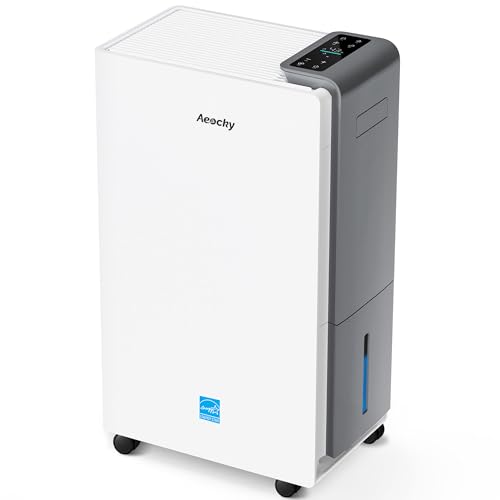
【ENERGY STAR 25 ≠ ENERGY STAR Most Efficient 2025】Don't fall for competitors' word games. With only 2.6% of ENERGY STAR models earning "Most Efficient 2025" title, these options are exceptionally rare on the market. RHEA-001 is one of the few to truly hold this top-tier certification. Many brands use misleading phrases like "Energy Star Efficient 25" or "Energy Star 25" to imply a standard they haven't met. Choosing them is a risk.With AEOCKY, you get verified performance and the peace of mind of authentic, top-tier efficiency.

[Commercial Grade Dehumidifier] This Airzentti crawl space dehumidifier with large capacity removes moisture from basement, attic, large room and small rooms efficiently up to 155 pints per day under nearly saturated condition (70 PPD in AHAM), with 220 CFM airflow, it is ideal for space up to 7,500 square feet.

【45-80 Pints for 4500 Sq.Ft Moisture Control】:This dehumidifier for basement and home features flexible 45–80 pints dehumidification output with an ultra-wide 4500 square feet coverage range, offering premium whole-space moisture control. No matter damp basement, humid bathroom, quiet bedroom for restful sleep, large living room, or compact RV traveling space, this multi-functional dehumidifier for home effortlessly sucks up excess moisture,, maintaining ideal humidity levels for all indoor environments.
Seal Attic Air Leaks
Sealing attic air leaks helps block warm, moist air from entering cooler attic areas and condensing on ductwork. Inspect duct penetrations, plumbing chases, electrical holes, attic hatches, dropped soffits, and gaps around boots or registers.
Use appropriate sealants such as caulk, fire-rated foam where required, rigid blocking, or weatherstripping at attic access points. For duct leaks, use mastic sealant or UL-rated metal foil tape. Energy Star advises sealing duct leaks with mastic or metal tape and not relying on ordinary duct tape.
Add Dehumidification
If humidity stays high after moisture sources and air leaks are addressed, add dehumidification. In living spaces, basements, and enclosed crawlspaces, a portable or whole-house dehumidifier can help keep RH in a safer range.
For duct condensation, aim to keep indoor humidity below 60% and preferably closer to 30% to 50% when possible. In damp areas where mold prevention is the concern, the CDC’s guidance is stricter: keep humidity no higher than 50% throughout the day.
Pro Tip: Set the dehumidifier by a real humidity reading, not by feel. A room can feel cool while still being humid enough to make cold ductwork sweat.
Improve Attic Ventilation
Attic ventilation helps carry heat and moisture out of unfinished attic spaces. A balanced system usually brings air in through soffit vents and lets it exit through ridge, roof, or gable vents. The goal is steady airflow without blocked intake paths.
Do not cover soffit vents with insulation. Energy Star recommends using rafter vents or baffles so outside air can move from soffit vents toward ridge or gable vents while insulation still covers the attic floor properly.
Warning: Do not seal attic vents as a quick condensation fix unless an HVAC or building-science professional is intentionally converting the attic to an unvented or conditioned design. Blocking vents can trap moisture and make roof or mold problems worse.
Be careful with powered attic fans. If the attic is not well sealed from the living space, an attic fan can pull conditioned air out of the home and make the air conditioner work harder. Fix attic air leaks and blocked soffits before assuming a fan will solve duct sweating.
Why Duct Insulation Matters
You need duct insulation because it slows heat transfer between the cold air inside the duct and the warm, humid air around it. When insulation is intact, the outside of the duct stays warmer and is less likely to fall below the dew point.
The Department of Energy says insulating ducts in unconditioned spaces is usually cost-effective, and ducts in attics, garages, vented crawlspaces, and unfinished basements are especially important to seal and insulate.
Insulation Blocks Heat Transfer
Insulation blocks heat transfer by slowing the movement of heat from the surrounding air to the cold duct surface. This helps keep moisture from condensing on the duct exterior.
In hot attics and crawlspaces, insulation also helps the HVAC system deliver air closer to the intended temperature. That improves comfort and reduces wasted cooling.
Prevents Surface Condensation
Proper duct insulation creates a thermal barrier, but the outer vapor barrier is just as important. If the vapor jacket is torn, loose, compressed, or open at seams, humid air can reach the cold duct or soak the insulation. Wet insulation loses performance and can support mold growth.
Inspect for:
- Tears in the shiny outer jacket
- Loose duct wrap seams
- Condensation around collars, boots, and plenums
- Wet, heavy, or sagging insulation
- Black staining or musty odor near ducts
Protects Duct Efficiency
Well-insulated ductwork helps your HVAC system move conditioned air more efficiently by reducing unwanted heat gain or loss along the duct run. This matters most in unconditioned areas where ducts are surrounded by hot, cold, or humid air.
Even if a dehumidifier is controlling indoor humidity, damaged duct insulation can still allow condensation to form. Check insulation at least once a year, especially before the cooling season in humid climates.
Which Leaks and Airflow Problems to Fix
Start with duct joints, collars, boots, and returns. These are common places for warm, humid air to enter or cold air to leak out. Energy Star notes that a typical home can lose 20% to 30% of the air moving through the duct system because of leaks, holes, and poor connections.
| Problem | What to Check | Fix |
|---|---|---|
| Leaky duct joints | Gaps, loose collars, failed tape, cracked mastic | Reseal with mastic or UL-rated foil tape |
| Poor airflow | Weak supply air, closed registers, blocked returns | Open vents, clear obstructions, and test airflow |
| Dirty air filter | Dust loading, restricted airflow, filter past service life | Replace as recommended by the filter and HVAC manufacturer |
| Wet duct insulation | Drips, stains, sagging wrap, musty smell | Replace wet insulation and correct the moisture source |
| Return-side leaks | Unsealed return boxes, attic air pulled into returns | Have return ducts sealed and pressure-tested |
Keep air moving evenly through the system. A clogged filter, blocked return, kinked flex duct, or closed register can reduce airflow enough to make supply ducts colder than normal. That increases the chance of sweating.
Portable vs. Whole-House Dehumidifier
A portable dehumidifier can help in a damp room, basement, or small crawlspace. It is easy to test because you can place a hygrometer nearby and see whether RH drops into the target range. Make sure the unit drains safely and is rated for the space.
A whole-house dehumidifier is better when the entire home stays humid, when the air conditioner short-cycles, or when several rooms feel damp even with the AC running. Whole-house units are usually installed into the HVAC system or ducted separately, so sizing and installation matter.
For a vented attic, do not assume that placing a portable dehumidifier near sweaty ducts will solve the problem. In many homes, a vented attic keeps exchanging air with the outdoors. The better fix is usually to seal attic air leaks from the living space, keep passive ventilation paths open, repair duct insulation, and seal duct leaks.
Recommended Products

125 Pint Crawl Space Dehumidifier – Designed for crawl spaces, basements, and large areas up to 6,500 sq. ft., this unit removes up to 125 pints of moisture per day (95°F, 90% RH). A 176 CFM airflow and brushless motor help dry spaces faster with 10%–90% RH adjustable humidity

158 Pint Crawl Space Dehumidifier – Designed for crawl spaces, basements, and large areas up to 6,500 sq. ft., this unit removes up to 158 pints of moisture per day (95°F, 90% RH). A 206 CFM airflow and brushless motor help dry spaces faster with 10%–90% RH adjustable humidity

160 Pints/Day Upgraded Energy-Efficient Dehumidification: Built with an upgraded high-efficiency system, the Moiswell WD160 removes up to 160 pints of moisture per day (65 PPD @DOE) with lower energy consumption(2.25 L/wKh). It maintains optimal humidity levels across large living spaces, helping prevent structural damage such as wood rot and musty odors, while promoting a healthier indoor environment.
What Not to Do
- Do not wrap over wet insulation. Remove wet duct insulation and fix the moisture source first.
- Do not use cloth duct tape for permanent duct sealing. Use mastic or approved metal foil tape.
- Do not block soffit vents with insulation. Use baffles or rafter vents to keep airflow open.
- Do not ignore moldy smells. Moisture problems can spread into insulation, wood, drywall, and HVAC components.
- Do not oversize a dehumidifier without a drain plan. Overflow, poor drainage, or short cycling can create new moisture problems.
When to Call an HVAC Technician
If condensation keeps forming on your ductwork after you lower humidity, replace filters, and check visible insulation, call an HVAC technician. Persistent sweating often means there is a hidden duct leak, damaged vapor barrier, airflow imbalance, refrigerant/coil issue, or duct sizing problem.
Call a professional if you notice:
- Water dripping from ducts onto ceilings, insulation, or framing
- Wet or moldy duct insulation
- Condensation around the air handler, plenum, or supply trunk
- Rooms that stay humid even while the AC runs
- Weak airflow from multiple vents
- Rust, staining, musty odor, or visible mold near ducts
- Condensation that started after new HVAC equipment was installed
An HVAC technician can inspect duct sealing, measure static pressure and airflow, check equipment sizing, test humidity, and recommend whether duct repair, insulation replacement, balancing, or whole-house dehumidification is the right next step.
Frequently Asked Questions
Will a dehumidifier stop my ductwork from sweating?
A dehumidifier can stop ductwork from sweating if high humidity is the main cause. It will not solve condensation caused by missing insulation, torn vapor barrier, duct leaks, low airflow, or ducts installed in a very humid attic or crawlspace.
How do you stop condensation on ductwork?
Stop condensation by lowering humidity, sealing duct leaks, insulating ducts in unconditioned spaces, repairing torn vapor barriers, replacing dirty filters, clearing blocked returns, and fixing attic or crawlspace moisture. The duct surface needs to stay above the dew point of the surrounding air.
What humidity should I keep my home at to prevent sweaty ducts?
Keep indoor relative humidity below 60%, and ideally around 30% to 50% when possible. In damp or mold-prone areas, aim closer to 50% or lower. Use a hygrometer because comfort alone is not a reliable humidity measurement.
Should I put a dehumidifier in the attic?
Usually not as the first fix for a vented attic. A dehumidifier in a vented attic may run constantly because outdoor air keeps entering. First seal air leaks from the living space, keep soffit and roof ventilation paths clear, repair duct insulation, and seal duct leaks. Ask an HVAC or building professional before conditioning or dehumidifying an attic.
Should you use a dehumidifier if you have COPD?
A dehumidifier may help if your home is damp or mold-prone, but COPD needs vary by person. Very humid air and very dry air can both be uncomfortable for some people. Monitor humidity with a hygrometer and ask your clinician what indoor humidity range is best for your condition.
What is the 2-foot rule for ductwork?
There is no universal homeowner “2-foot rule” that solves duct condensation. The phrase is sometimes used in duct design or airflow discussions, but sweaty ducts are fixed by controlling humidity, sealing leaks, maintaining airflow, and using code-appropriate duct insulation with an intact vapor barrier.
Conclusion
A dehumidifier can stop much of the condensation on ductwork when the air around the ducts is too humid. Keep indoor humidity below 60%, and ideally in the 30% to 50% range when possible. For lasting results, also seal duct leaks, repair damaged insulation, protect the vapor barrier, maintain airflow, and control attic or crawlspace moisture. If water keeps returning, bring in an HVAC technician before the problem damages insulation, ceilings, framing, or the HVAC system.
Sources
- U.S. Environmental Protection Agency — Mold Course, Chapter 2 — supports indoor humidity targets, condensation basics, and moisture control.
- Centers for Disease Control and Prevention — You Can Control Mold — supports keeping home humidity no higher than 50% for mold prevention and using dehumidification when needed.
- Energy Star — Duct Sealing — supports duct sealing guidance, duct leakage impact, and use of mastic or metal tape.
- U.S. Department of Energy — Minimizing Energy Losses in Ducts — supports sealing and insulating ducts in unconditioned spaces.
- Energy Star — About Attic Ventilation — supports keeping soffit ventilation paths clear and cautions about attic fans pulling conditioned air from the home.
- Building Science Corporation — Moisture Performance of Unvented Attics — supports hot-humid attic condensation risks around cold air-conditioning ductwork.