To dehumidify your tent, focus on moisture control instead of trying to run a household dehumidifier outdoors. Pitch on dry elevated ground, open vents for low-to-high airflow, keep wet gear outside the sleeping area, and dry the rainfly before packing. You usually cannot make a tent completely condensation-free, especially in cold, rainy, or very humid weather, but the right setup can keep the walls, sleeping bag, and gear much drier overnight.
Quick Answer
The best way to dehumidify a tent is to pitch on higher dry ground, open high and low vents for crossflow, keep wet gear and cooking steam outside, tension the rainfly, and dry the tent in the morning. Moisture absorbers can help in small spaces, but ventilation does most of the work.
Key Takeaways
- Condensation forms when warm, damp tent air reaches a cold surface at or below the dew point.
- Higher, drier ground and steady airflow reduce moisture before it collects on the fabric.
- Wet clothes, soaked boots, cooking steam, and sealed vents are the biggest preventable moisture problems.
- Small fans, silica gel, or DampRid-style absorbers can help, but they cannot replace open vents and cross ventilation.
- Cold-weather camping needs ventilation too; sealing the tent tight usually makes condensation worse.
At a Glance
| Time Required | 10–20 minutes during setup, plus 5 minutes before sleep and 5–15 minutes for morning drying |
| Difficulty | Easy |
| Tools Needed | Tent vents, guylines, stakes, small microfiber towel, dry bag or pack liner, optional battery fan, optional silica gel or spill-proof moisture absorber |
| Cost | $0 with good habits; optional towels, absorbers, vent props, or compact fans vary by item and store |
Best Ways to Dehumidify a Tent
| Method | Best For | Limits |
|---|---|---|
| Dry elevated campsite | Reducing runoff, cold-air pooling, and damp ground exposure before bedtime | Will not overcome fog, rain, or saturated air by itself |
| High and low ventilation | Moving breath moisture out before it settles on the fly | Needs protected openings during wind-driven rain |
| Tight rainfly and air gap | Preventing the wet fly from touching the inner tent or sleeping bag | Requires enough stakes, guylines, and space around the tent |
| Wet-gear control | Keeping soaked boots, jackets, socks, and packs away from bedding | Needs a vestibule, tarp, dry bag, or separate storage area |
| Battery fan | Still, humid nights in larger car-camping tents | Only helps when vents are open; it cannot dry sealed humid air |
| Silica gel or calcium chloride absorber | Small enclosed corners, vestibules, stored gear, and low-level dampness | Too slow and small to dehumidify a whole tent on a wet night |
Recommended Products

✔ EASY TO USE: This mini dehumidifier is spill and mess free. Just hang and go! Non-toxic, child and pet safe! Your small rooms will be dry and odor free. Works for areas up to 333 cubic feet.

EFFECTIVE ABSORBING: Vacplus dehumidifier bags use Spherical calcium chloride to enlarge the area to absorb quickly. One-way moisture permeable paper absorbs effectively. 500 ml/pack large capacity moisture absorption keep dry for a long time.
![wisedry 4 x 500 Grams [4.4 lbs] Rechargeable Silica Gel Car Dehumidifier, Microwave Fast Reactivated Desiccant Packets Large for Gun Safe Closet Basement Garage Storage Moisture Absorber Bag Reusable](https://m.media-amazon.com/images/I/51pHUtcOd3L._SL500_.jpg)
✅ [ NO MORE FOGGY WINDOWS ] - Wisedry car dehumidifier bag reduces the misting on car windows which can be a problem in cold winter mornings. Thanks to its high moisture absorption, each 500g silica gel adsorbs 150g(max 180g) of moisture! Also suitable for preventing moisture in other larger spaces like cupboard, gun safes, storage room, tool shop, garage, RV, boat, basement etc.
How Tent Condensation Forms
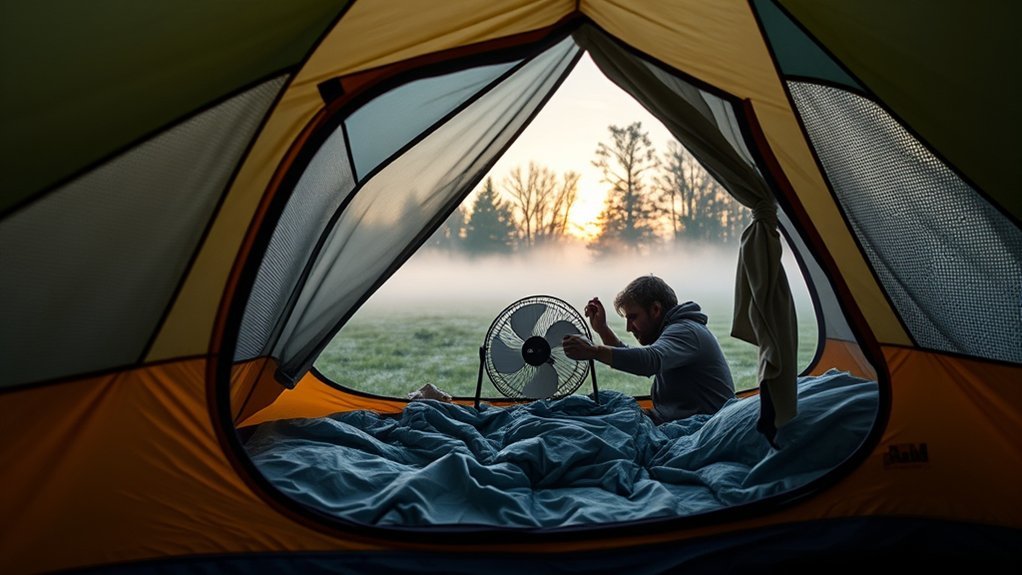
Tent condensation forms when warm, moist air inside your tent touches cooler fabric and turns into water droplets. The key idea is the dew point: the temperature where air becomes saturated and water vapor starts turning into liquid. That is why a tent can feel dry at bedtime and damp by morning.
You add moisture every time you breathe. Wet boots, damp clothes, soaked packs, and cooking steam add even more. Cold outer fabric, a tight rainfly, blocked vents, and still air make that moisture collect faster. Single-wall tents often show condensation more quickly because the warm inner air touches the colder shelter wall directly. Double-wall tents help by creating an air gap, but they still need ventilation.
You do not beat condensation with one gadget. You beat it by reducing moisture sources, keeping the rainfly off the inner tent, and moving damp air out before it settles.
Pick the Driest Campsite
Where you pitch decides how much moisture the tent has to fight overnight. Look for higher, drier ground where rain will drain away and cold damp air will not pool. Avoid hollows, dry creek beds, marshy soil, fresh mud, and low spots between hills. These areas can trap cold air and collect runoff during a storm.
Choose firm ground that drains well. Sandy, gravelly, grassy, or lightly forested sites often stay drier than clay or mud. REI’s tent setup guidance also notes that higher, drier ground and protected sites under trees can reduce moisture problems. Trees can create a slightly warmer microclimate, but check overhead for dead branches and avoid thick brush that blocks airflow.
- Best choice: slightly elevated, dry, durable ground with a light breeze.
- Avoid: hollows, soggy soil, lakeside edges, stream banks, and heavy vegetation with no airflow.
- Check before staking: rain runoff direction, overhead limbs, wind exposure, and whether the ground already feels damp through your knees or hand.
Pro Tip: Set the tent where morning sun can reach it. Even 15 minutes of early light helps dry the fly before you pack.
Reduce Moisture Inside the Tent
Once the campsite is set, control what enters the tent. Keep the sleeping area for sleeping, not drying, cooking, or storing soaked gear. The less water you bring inside, the less water can end up on the tent walls.
Keep Wet Gear Out of the Sleeping Area
Shake rain off jackets before entering. Store wet boots, rain pants, and soaked packs in the vestibule, under a tarp, or inside a dry bag or pack liner. Keep damp items away from the mesh inner wall so they do not transfer moisture to the sleeping area. A small microfiber towel is useful for wiping the fly or floor when droplets start forming.
Do Not Cook or Boil Water in the Tent
Cooking and boiling water add a lot of steam fast. They also create safety problems. The National Park Service recommends cooking away from tents and sleeping areas in the backcountry to keep food odors away from camp and wildlife.
Warning: Never cook, run a gas grill, use a charcoal grill, or operate a fuel-burning heater inside a closed sleeping tent. Besides adding moisture, combustion can create carbon monoxide. The U.S. Forest Service warns that gas and charcoal grills can produce dangerous carbon monoxide indoors.
Use Absorbers the Right Way
Silica gel packets, rechargeable desiccant packs, and spill-proof calcium chloride moisture absorbers can help in small enclosed spaces, especially in a car-camping tent or vestibule. They work best after you have already opened vents and removed wet gear. A tiny packet will not dry a whole tent on a wet night.
DampRid explains that its crystals absorb excess moisture and gradually dissolve into liquid brine. Independent CHOICE testing found DampRid worked in a sealed closet-size chamber, but much more slowly than an electric dehumidifier. That makes absorbers useful for mild, small-space dampness, not for serious tent condensation during active camping.
DampRid-style products can absorb excess moisture from air, but the official DampRid safety data sheet lists calcium chloride-based moisture absorbers as skin and eye irritants and harmful if swallowed. Use only a stable, spill-proof container. Keep it away from kids, pets, sleeping bags, food, and tent fabric.
Note: A dehumidifier or absorber helps most when the tent is mostly closed and still. During real camping, open vents and airflow usually matter more than absorption.
Can You Use an Electric Dehumidifier in a Tent?
An electric dehumidifier is usually the wrong first fix for a camping tent. Most tents are too drafty, too damp, and too exposed for a household unit to work safely or efficiently. In a small backpacking tent, you also do not have safe power, drainage, floor space, or weather protection for the appliance.
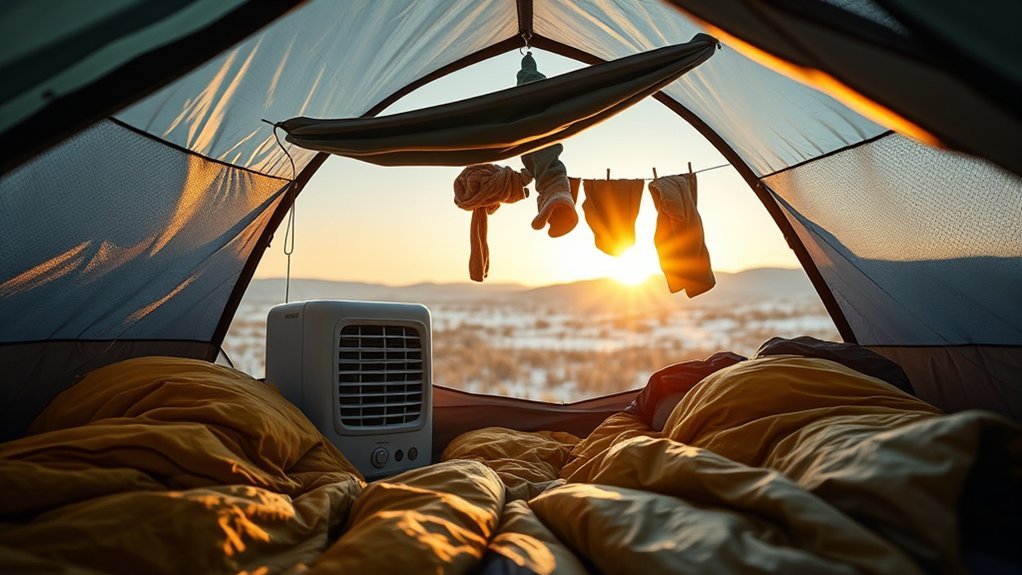
A compact electric dehumidifier may help only in a large car-camping tent, canvas tent, cabin tent, or powered glamping setup where the unit stays dry, level, ventilated, and protected from rain. Even then, treat it as a comfort add-on. You still need campsite selection, open vents, wet-gear control, and morning drying.
Recommended Products

🍀 1657ML Larger Capacity: The water tank of this dehumidifier can hold of water at most 1657ml(58 OZ), you don’t need to pour water frequently and don’t worry about the water overflow or water leaking. Please read the instruction manual before using the product!

High-Efficiency Dehumidifier for Home: Still annoyed about the muggy weather? Just Take it easy! Have a try at our 35OZ Peltier dehumidifier, in a closed small room with humid environment of 86°F and 80% RH, it can collect a max of 16oz(450ml) of water in 24 hours, and with very low energy consumption (no more than1 kWh per day).
Improve Tent Ventilation
Good ventilation replaces damp inner air with drier outside air. REI’s condensation guidance breaks prevention into three main strategies: choose a good campsite, reduce moisture sources, and ventilate early and fully. That is the same pattern to follow every night.
- Open high and low vents. Warm humid air rises, so top vents help it escape. Low openings let replacement air enter.
- Create crossflow. Open two vents or doors on opposite sides when weather allows.
- Tension the rainfly. Use guylines and stakes so the fly does not sag onto the inner tent.
- Keep a gap under the fly. Do not bury the fly edge in leaves, snow, or gear unless storm protection requires it.
- Point a door toward a gentle breeze in hot weather. During wind-driven rain, turn the door away from the weather and rely on protected vents.
- Move gear away from vents. A jacket, pack, or sleeping bag pressed against mesh can block airflow.
- Use a small battery fan when air is still. Aim it toward a vent, not directly at a wet wall.
Prevent Tent Condensation in Cold Weather
Cold weather makes condensation harder because the tent fabric cools quickly. Warm air can carry more moisture than cold air, so the moisture from breathing and damp gear can turn to droplets when it reaches the cold fly. The fix is not to seal the tent completely. You still need airflow.
Pitch on higher ground, use every protected vent, and keep the rainfly tight. A double-wall tent helps because the inner tent and rainfly are separated, but the air gap only works when vents stay open. Keep sleeping bags and clothing away from the walls. In snow, clear a small vent gap around the fly instead of sealing every edge tight.
During winter, wipe heavy droplets before they drip onto your insulation. Store wet socks, gloves, and base layers in a dry bag instead of drying them in the sleeping area. Keep one vent cracked even when the air feels cold. A dry sleeping bag is warmer than a sealed tent full of damp air.
Hot and Humid Weather Tips
In hot and humid weather, the air already contains a lot of moisture. You may not be able to dry the tent fully overnight, but you can reduce the sticky, trapped feeling inside. Choose a breezy site, use shade when it does not block airflow, and keep doors or windows open under bug mesh. A tarp pitched above the tent can reduce heat while leaving space for air to pass underneath.
Do not place the tent directly beside lakes, rivers, or wet grass when better ground is available. Those spots can be beautiful, but nearby evaporation and cooler night air can increase dampness around the shelter.
What to Pack for a Drier Tent
- Microfiber towel: wipes walls, floor edges, and gear before droplets spread.
- Dry bag or pack liner: isolates wet clothes and prevents moisture from reaching bedding.
- Extra guylines and stakes: help tension the rainfly and improve airflow gaps.
- Small battery fan: useful in still, humid weather or large car-camping tents.
- Footprint or groundsheet: helps reduce ground moisture under the tent floor when sized correctly and kept inside the tent footprint edge.
- Compact hygrometer: optional, but useful when you want to see how vent changes affect humidity.
- Spill-proof absorber: optional for car camping, vestibules, and stored gear; not a substitute for ventilation.
Nightly Routine to Keep Humidity Down
- Before dark: choose high dry ground, tension the fly, and open vents while the tent is still warm.
- Before bed: shake off jackets, move wet gear to the vestibule or dry bag, and crack doors or vents for crossflow.
- During rain: keep protected vents open, close only the side taking direct rain, and prevent gear from blocking mesh.
- During cold nights: keep at least one high vent open and maintain a small low gap for air intake.
- In the morning: wipe droplets, open the tent fully, shake the fly, and dry it in sun or moving air before packing when possible.
Troubleshooting Tent Moisture
Still waking up wet? Use the symptoms to find the cause.
- Water on the underside of the fly: normal condensation. Open vents earlier, tension the fly, and keep wet gear outside the sleeping area.
- Water dripping through mesh: the fly may be sagging onto the inner tent. Tighten guylines and add more space between layers.
- Wet floor edges: check for runoff, groundsheet exposure, or gear pressing against the walls.
- Wet sleeping bag footbox: your bag may be touching the tent wall. Move your sleep system inward or use a shorter pad layout.
- Condensation despite open vents: the campsite may be too still, low, or humid. Add a small fan, open a second vent, or move to higher ground next night.
- Strong damp smell: dry the tent fully as soon as possible. Never pack a wet tent for long-term storage.
Frequently Asked Questions
How do you reduce humidity in a camping tent?
Open high and low vents, create cross ventilation, pitch on dry elevated ground, keep wet gear out of the sleeping area, and avoid cooking or boiling water inside. A fan or moisture absorber can help, but airflow is the main fix.
What naturally soaks up moisture in a tent?
Silica gel and calcium chloride are the most practical moisture-absorbing materials for camping storage spaces. Activated charcoal can help with odor, but it is not a strong tent dehumidifier. Rice, newspaper, and baking soda are best for very small containers, not for drying a full tent overnight.
Does DampRid work in a tent?
DampRid can absorb some moisture in a tent, especially in a small car-camping tent or vestibule, but it will not solve condensation by itself. Use a stable spill-proof container, keep it away from kids, pets, food, sleeping bags, and fabric, and pair it with ventilation.
Can you use an electric dehumidifier in a tent?
A small electric dehumidifier only makes sense in a large powered car-camping or glamping tent where the appliance stays dry, level, and protected. It is usually impractical for backpacking tents and should not replace ventilation, wet-gear control, and morning drying.
How do you decrease humidity in a dry tent before sleeping?
Vent the tent before bedtime, remove wet clothing and boots, avoid bringing open water containers inside, and keep the fly tight. A dry tent can become damp overnight when breathing moisture collects, so keep vents open before condensation starts.
Should tent vents stay open in cold weather?
Yes, keep at least one protected vent open in cold weather. Closing every vent traps warm humid air, which can condense or freeze on the tent fabric. Use your sleep system for warmth and use ventilation to protect it from moisture.
Will a battery fan stop tent condensation?
A battery fan can reduce condensation by moving damp air toward a vent, especially on still nights. It works best with vents open. A fan blowing around sealed humid air will not dry the tent well.
Why is my tent wet inside when it did not rain?
The moisture is usually condensation. Breath, damp gear, humid air, and cool tent fabric create droplets on the inside of the fly or wall. Better ventilation, a drier campsite, and less wet gear inside will reduce it.
Conclusion
A drier tent starts before bedtime. Pick higher dry ground, tension the rainfly, open vents, and keep wet gear out of the sleeping area. Never cook or boil water inside the tent, and do not seal every opening just to feel warmer. Use absorbers or a small fan as helpers, not the main solution. Keep air moving, wipe heavy droplets early, and dry the tent before packing whenever you can.
Sources
- National Weather Service: Dew Point vs. Humidity — supports dew point and condensation explanation.
- REI Expert Advice: How to Prevent Condensation in a Tent — supports campsite choice, moisture reduction, and ventilation strategy.
- REI Expert Advice: How to Set Up/Pitch a Tent — supports higher dry ground, tree microclimate, wind orientation, and low-spot avoidance.
- National Park Service: Cooking in Camp — supports cooking away from tents and sleeping areas.
- U.S. Forest Service: Carbon Monoxide Hazards — supports the warning against indoor grills and combustion risks.
- DampRid: How DampRid Works — supports how calcium chloride moisture absorbers collect moisture.
- DampRid Moisture Absorbers Safety Data Sheet — supports absorber ingredients and safety cautions.
- CHOICE: DampRid vs Dehumidifiers — supports the limitation that absorbers work slowly compared with electric dehumidifiers.