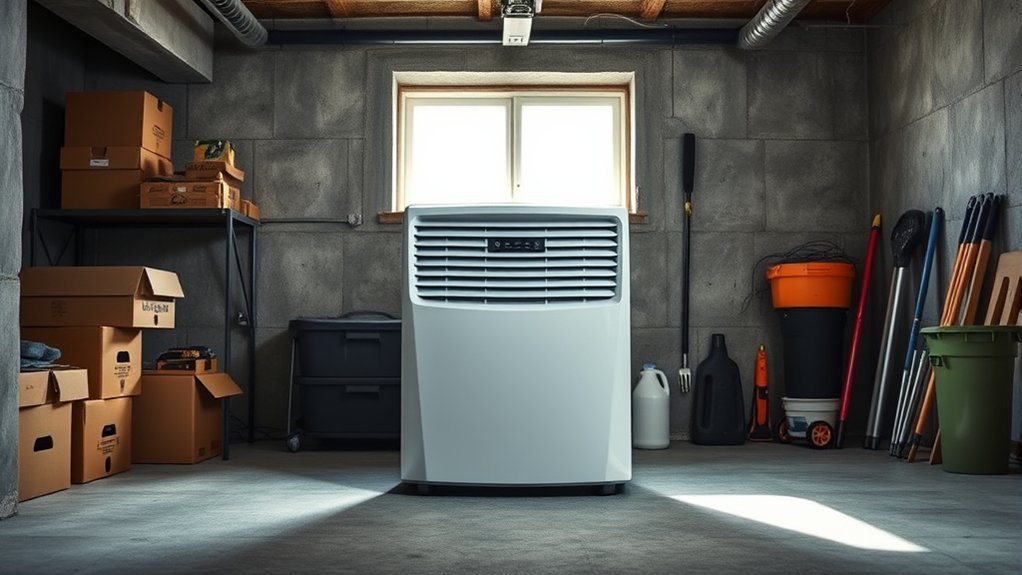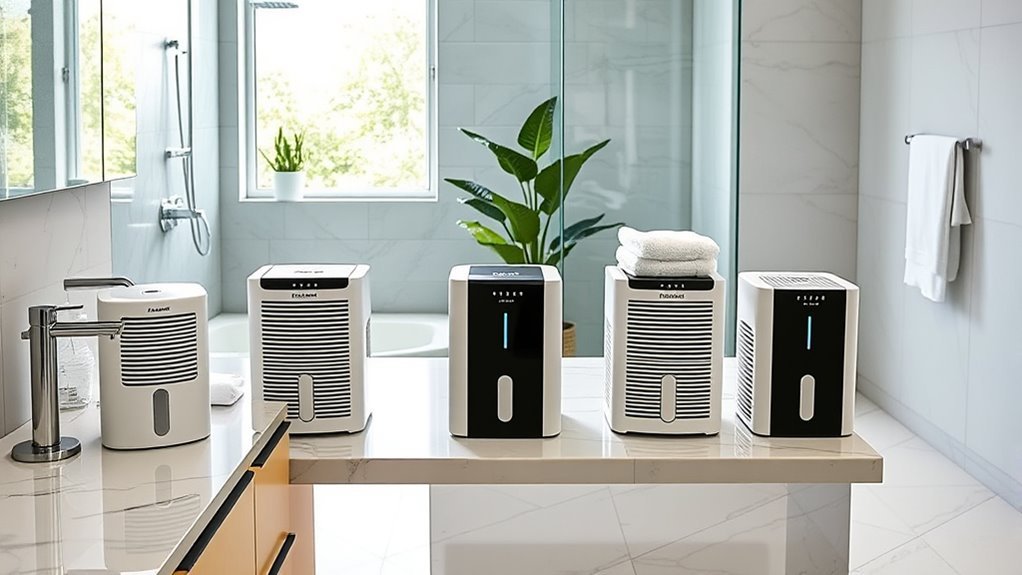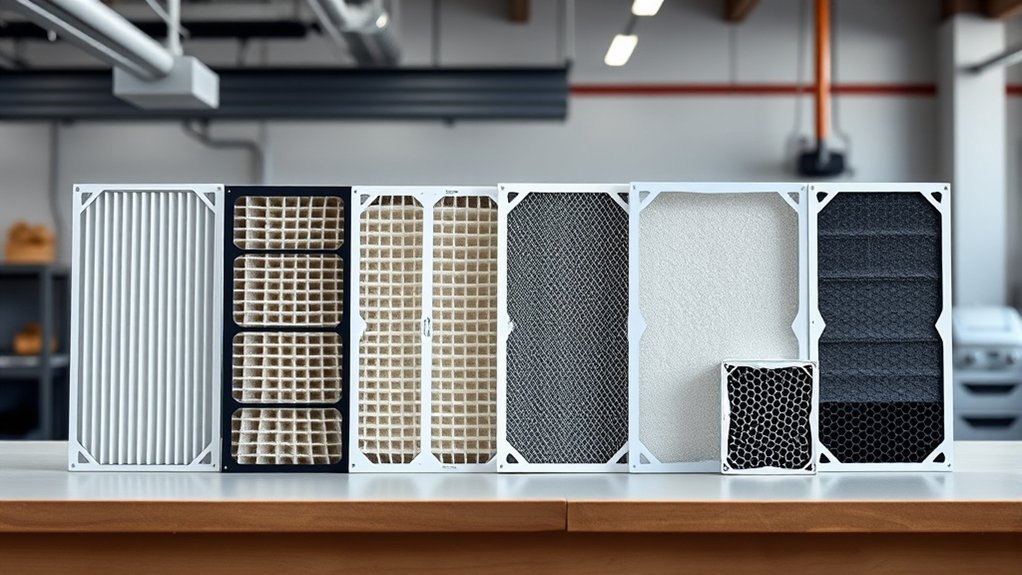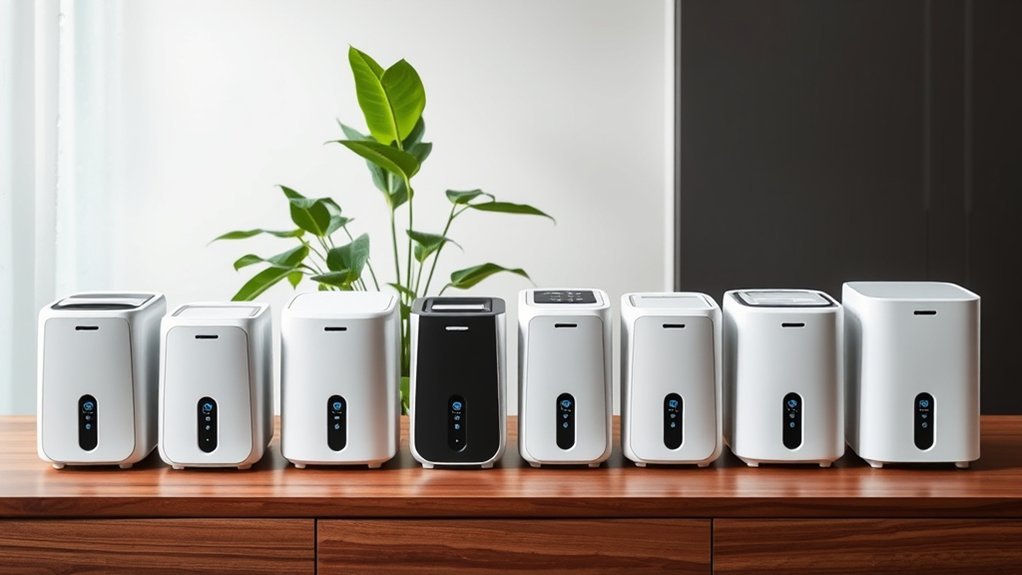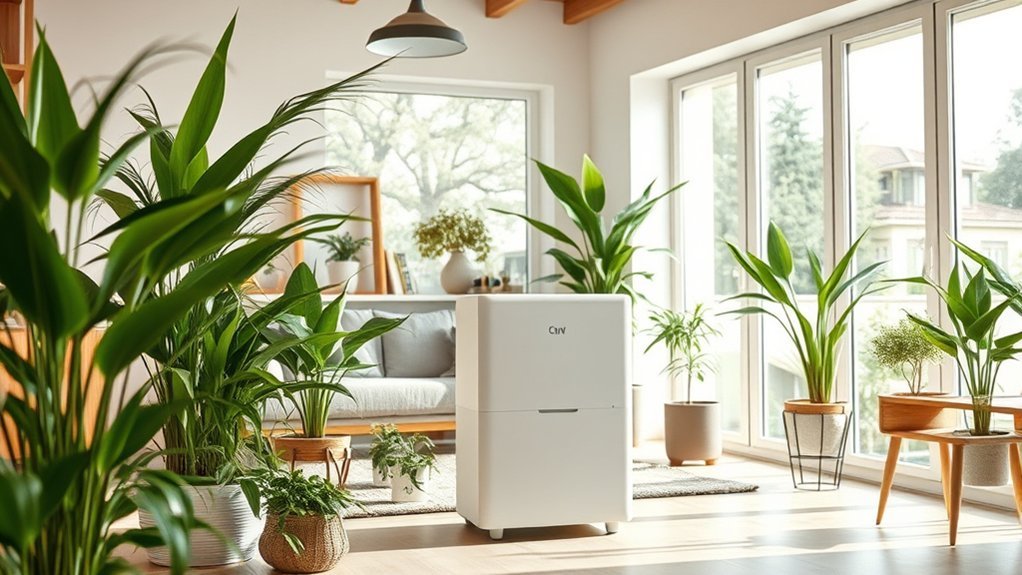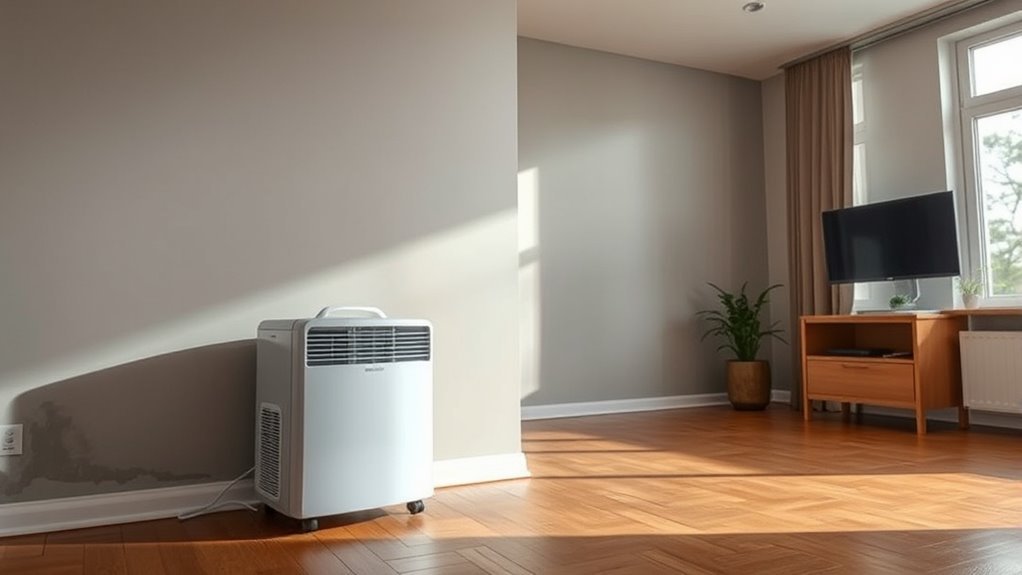
For most portable dehumidifiers, a level floor or low, stable platform is the safest default unless the manufacturer allows another setup. Height itself is not the main performance factor. The more important priorities are keeping the intake and exhaust clear, giving the unit a stable dry base, providing safe drainage, and placing it where humid room air can reach it. Do not raise or lower a dehumidifier simply because you assume humid air always rises or sinks.
Last updated: August 19, 2026
Quick Answer
A portable dehumidifier is usually safest on a level floor or low, stable platform. Do not choose the height based on the idea that humid air always settles low. Instead, follow your model’s required vent clearance, keep the unit dry and stable, provide a safe bucket or drain-hose setup, and position it where room air can circulate freely.
Key Takeaways
- Use a level floor or low, stable platform as the default for most portable dehumidifiers unless the manual permits another position.
- Airflow matters more than height. Check where your model’s intake and exhaust are located and follow its required clearance.
- Keep exterior doors and windows closed while the unit runs. Open interior doors only when you want to dry connected rooms and the unit is sized for the larger area.
- Use a hygrometer rather than guessing. The EPA recommends indoor relative humidity below 60% and ideally 30% to 50%; CDC mold-prevention guidance says no higher than 50%.
- Avoid standing water, splash zones, blocked vents, unstable surfaces, heat sources, heavy dust, and drain hoses or cords that cross walkways.
At a Glance
| Default Position | Level floor or low, stable platform unless the manual allows another setup |
| Top Placement Priority | Keep the intake and exhaust clear according to the manufacturer’s required clearance |
| Humidity Target | EPA: below 60% and ideally 30% to 50%; CDC mold guidance: no higher than 50% |
| Drainage | For gravity drainage, keep the drain lower than the hose outlet and maintain a continuous downward slope; follow the manual for pump-equipped units |
| Cold-Room Caution | Below about 65°F, compressor units may lose performance from coil frost; check the model’s actual operating range |
Should You Place a Dehumidifier High or Low?
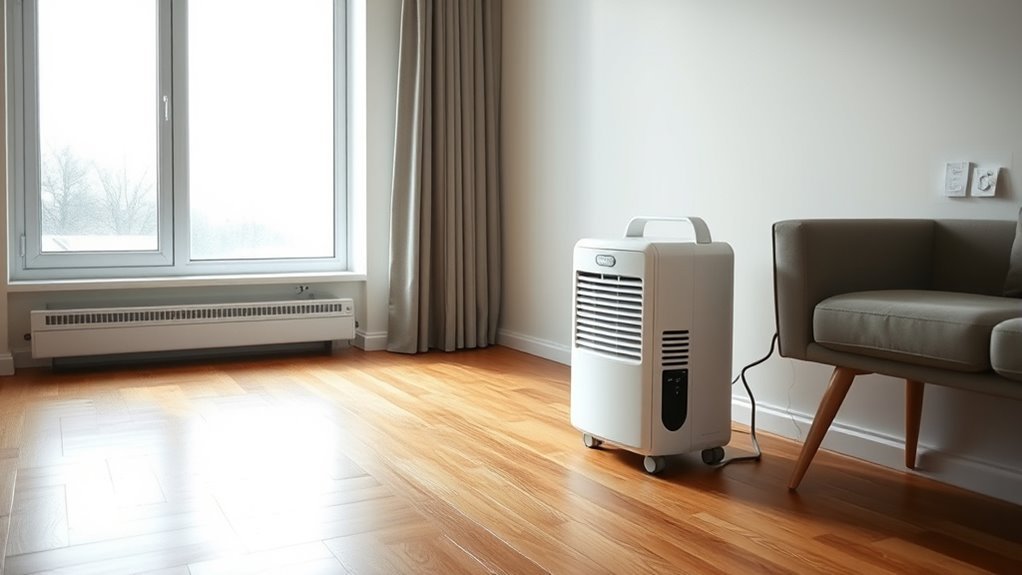
For most portable room dehumidifiers, start low on a level floor or stable platform. This is primarily a practical and safety choice. A floor-level position keeps a heavy appliance stable, makes the bucket easier to remove, and usually simplifies continuous drainage.
That does not mean a dehumidifier removes more water simply because it is closer to the floor. Room humidity is affected by temperature, air movement, wet materials, leaks, showers, laundry, outdoor air, and other moisture sources. The dehumidifier can only remove moisture efficiently when humid air can reach its intake and dry air can leave its exhaust.
The best height therefore depends partly on your model. Some portable dehumidifiers have a top-mounted discharge and can be positioned close to a wall. Others require more clearance around a rear, side, or front vent. ENERGY STAR advises keeping non-top-discharge units away from walls and furniture so air can circulate freely.
This guide applies to portable room dehumidifiers. Ducted whole-house dehumidifiers have different installation, condensate, airflow, and service-clearance requirements and should be positioned according to their installation documentation.
Pro Tip: Put a separate hygrometer away from the dehumidifier’s dry exhaust. If the room-wide reading falls while damp corners improve, the placement is working. If one area stays musty or wet, move the unit closer to that moisture source or improve air circulation without blocking the vents.
Why Is Low Placement the Best Default in Most Rooms?
Low placement is usually the best default because it matches the practical needs of most portable units. A level floor provides a stable base, makes a collection bucket easier to remove, reduces fall risk, and can make gravity drainage easier to arrange.
Do not confuse that practical advantage with a rule that humid air always collects at floor level. Relative humidity varies throughout a room as temperature and air movement change. A cold wall or window can develop condensation even when the center of the room feels comfortable, while a laundry rack, shower, foundation wall, or leak can create a local moisture source at another height.
Use this priority order when choosing a spot:
- Manufacturer clearance: Keep the intake and exhaust open exactly as the manual requires.
- Stability and electrical safety: Use a dry, flat surface where the appliance cannot tip or contact standing water.
- Drainage: Make sure the bucket is accessible or the drain hose can follow the required route.
- Moisture-source proximity: Move closer to a persistent damp area when practical.
- Room-wide circulation: Avoid corners, curtains, furniture, boxes, and other barriers that isolate the unit from room air.
For healthy humidity control, use measurements rather than guesswork. The U.S. Environmental Protection Agency recommends keeping indoor humidity below 60% if possible and ideally between 30% and 50% relative humidity. The CDC recommends keeping home humidity no higher than 50% throughout the day to help prevent mold growth.
The best dehumidifier height is the position that keeps the appliance stable, dry, reachable, safely drained, and able to move air freely through its vents.
When Is a Higher Dehumidifier Position Better?
A raised position can be appropriate, but height should solve a real installation problem rather than follow a general humidity myth. Raise a portable dehumidifier only when its manual allows the setup and the supporting surface can safely hold the appliance with a full water bucket.
One practical reason for elevation is gravity drainage. If your model drains through a gravity-fed hose, the drain point needs to be below the hose outlet and the hose should maintain a continuous downward route without kinks. A sturdy manufacturer-approved platform may help create that fall. If the dehumidifier has a built-in condensate pump, drainage rules can be different, so follow that model’s instructions.
- Use a sturdy shelf, counter, or platform only when the manufacturer permits it and the surface can support the fully loaded unit.
- Keep the intake and exhaust vents open according to the model’s specified clearance.
- Keep the bucket accessible even when the unit is raised.
- Make sure a gravity drain hose slopes continuously toward a lower drain and does not cross a walkway.
- Do not place the unit near standing water, a tub, shower, sink splash zone, stove, radiator, or heat vent.
Warning: Never put a dehumidifier where water can splash onto the appliance, plug, cord, or outlet, or where the appliance could contact standing water. Use a properly grounded outlet and follow the manufacturer’s electrical and drainage instructions.
Recommended Products

Multi-Purpose Hose, 6ft Cut-to-Fit:This 6-foot hose is designed for various applications, including dehumidifier drainage and gardening tasks. It can be easily cut to the desired length for flexible use. Please confirm the required length before purchase.

[Convenient] This drain hose automatically drains water from the dehumidifier to the drain for uninterrupted use.

MULTIFUNCTIONAL UNIVERSAL DRAIN HOSE: This drain hose has multiple uses, in addition to being suitable for dehumidifier drainage, it is also suitable for air conditioner drainage as well as being suitable for a variety of gardening tasks. Additionally our dehumidifier drain hose can be cut to your desired length to customize it for different situations.
How Does Room Layout Change the Best Dehumidifier Spot?
Room layout affects placement because walls, doors, furniture, airflow, drains, and moisture sources determine how easily humid air can reach the appliance. Start with a stable, open location and then adjust the position to match the room’s actual moisture problem.
| Room or Layout | Best Placement | Why It Works |
|---|---|---|
| Open concept | Stable, open, and reasonably central | Helps room air reach the intake without furniture or corners creating a dead zone. |
| Compact room | Near a wall only when the model’s vent design and clearance instructions allow it | Saves space without restricting the intake or exhaust. |
| Basement | Near the damp area and a safe drain, but away from standing water | Targets the moisture problem while making continuous drainage easier. |
| Laundry room | Near the drying area, but not directly under wet clothing | Targets laundry moisture without allowing drips to reach the appliance. |
| Bathroom area | Outside the wet or splash-prone area unless the manufacturer specifically permits bathroom use | Reduces electrical risk while allowing the unit to tackle moisture after bathing. |
| Bedroom | Open location away from bedding, curtains, and the bed | Keeps fabric from blocking airflow and reduces direct noise near the sleeper. |
| Hallway or landing | Central open location with interior doors open | Can help a sufficiently sized unit exchange air with several connected rooms. |
| Closet or crawl space | Use only when the model is designed and rated for the space | Restricted spaces can block circulation, complicate drainage, or exceed the appliance’s operating conditions. |
Recommended Products

【45-80 Pints for 4500 Sq.Ft Moisture Control】:This dehumidifier for basement and home features flexible 45–80 pints dehumidification output with an ultra-wide 4500 square feet coverage range, offering premium whole-space moisture control. No matter damp basement, humid bathroom, quiet bedroom for restful sleep, large living room, or compact RV traveling space, this multi-functional dehumidifier for home effortlessly sucks up excess moisture,, maintaining ideal humidity levels for all indoor environments.
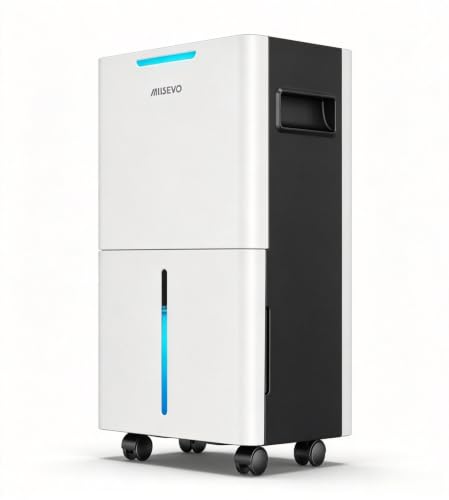
High Efficient Dehumidifier — Equipped with a high-performance compressor, Whether it’s your basement, bedroom, bathroom, living room, bathroom, crawlspace, or even an RV, this dehumidifier effectively keeps your environment dry, comfortable, and healthy.

【Reduce humidity - Enhance comfort】:Massive Capacity + Wide Coverage. This dehumidifier has dehumidification capacity ranging 45- 80 pints—outperforming standard units while covering 4,500 sq. ft. of living space. Great dehumidifier for basements, large house, garages, bedroom, bathroom and gyms where excess humidity triggers cause unpleasant odors and discomfort. The result? A noticeably drier, fresher, and more comfortable environment for your entire family.
Where Are the Best Spots for Dehumidifier Airflow?
The best airflow position is open, reachable, and close enough to the moisture problem to be useful. Do not rely on one universal clearance such as 12 inches or 30 centimeters for every unit. Check the manufacturer’s instructions because vent locations and required clearances differ by model. ENERGY STAR notes that many top-discharge portable units can be positioned against a wall, while units without top-mounted discharge may need more open space around them.
- Read the clearance instructions. Find the intake and exhaust and use the distance specified for your model.
- Choose a level, stable surface. Avoid a wobbly shelf, uneven floor, or soft surface that could affect stability or block a lower vent.
- Keep exterior doors and windows closed. This prevents a continuous supply of humid outdoor air from increasing the moisture load.
- Open interior doors only for multi-room drying. This allows air to move between connected spaces, but the unit must be sized for the larger area.
- Keep dust away from the intake. Dust and debris can load the filter and restrict airflow.
- Leave room to remove the bucket. Do not wedge the appliance into a spot where the reservoir cannot be safely accessed.
- Plan the drain path. A gravity hose should descend continuously toward a lower drain without kinks or trip hazards.
Note: If the room regularly falls below about 65°F, check the model’s operating-temperature rating. ENERGY STAR warns that frost can form on condensing coils below 65°F and reduce performance. This is not a universal shutdown temperature, so use the actual range specified for your dehumidifier.
Recommended Products

【Efficient Dehumidification】With 360° dual cooling semiconductor technology, the dehumidification area reaches up to 650sq ft. The Levoair safe dehumidifier with 2000ml(68oz)water tank could absorb up to 35oz (1000ml) of moisture per day in a humid environment (Temperature: 86°F, Humidity: 80%RH) and keep moisture below 45%. Say goodbye to humidity!

2X SEMICONDUCTOR CONDENSERS: In order to improve the efficiency, our dehumidifiers equipped with DUAL semiconductor condensers which almost double the effect of other small dehumidifiers. It effectively absorb up to 700ml excess moisture per day (Tested in 86°F, 80% RH which can achieve optimal performance). Our dehumidifier can cover various small spaces such as bathrooms, kitchens, cloakrooms, RV, etc.

High-Efficiency Dehumidifier for Home: Still annoyed about the muggy weather? Just Take it easy! Have a try at our 35OZ Peltier dehumidifier, in a closed small room with humid environment of 86°F and 80% RH, it can collect a max of 16oz(450ml) of water in 24 hours, and with very low energy consumption (no more than1 kWh per day).
Where Should You Not Place a Dehumidifier?
Bad placement can make a capable dehumidifier perform poorly or create avoidable safety problems. Avoid these locations:
- Tight corners that block vents: A corner is only acceptable when the model’s intake, exhaust, and required clearances remain fully open.
- Against furniture or curtains: Fabric and furniture can restrict airflow or be pulled toward an intake.
- On unstable or unsuitable soft flooring: Use a flat, stable surface and check the manual before placing a unit on thick carpet or rugs, especially if it has lower vents.
- Near heavy dust or debris: Workshops, renovation areas, litter, and dirty storage spaces can clog filters and coils more quickly.
- Near heat sources: Keep the unit away from radiators, ovens, stoves, and other heat sources unless the manufacturer explicitly allows that location.
- Inside an unventilated sealed space: Do not assume a standard room unit is suitable for a tiny closed closet or crawl space.
- Near splash zones or standing water: Keep the appliance, cord, plug, and outlet away from tubs, showers, sinks, flooding, and dripping laundry.
- Where a cord or hose crosses a walkway: A trip can tip the unit, pull the plug, or disconnect the drain.
How Do You Test Whether the Placement Is Working?
Do not judge placement only by how much water appears in the bucket. Use a hygrometer and watch the humidity trend across the room.
- Record the starting humidity. Put a separate hygrometer away from the dehumidifier’s dry exhaust, direct sun, windows, and obvious water sources.
- Run the unit with exterior doors and windows closed. Use the humidity setting recommended for your situation.
- Check the trend after a few hours. A falling room reading shows that the unit is removing moisture from the air, but wet walls, floors, furniture, or other materials may continue releasing moisture for much longer.
- Check more than one part of the room. Look at corners, closets, windows, exterior walls, and known damp areas for condensation or musty conditions.
- Adjust placement if necessary. If one area remains damp, move the unit closer while maintaining its required vent clearance and safe drainage.
If humidity remains high, placement may not be the only problem. The dehumidifier may be undersized, its filter may be dirty, the room may be too cold for that model, outside air may be leaking in, or there may be an active plumbing, roof, foundation, or drainage problem. A dehumidifier should remove remaining moisture, not substitute for repairing an ongoing water source.
Frequently Asked Questions
Is it better to have a dehumidifier up high or down low?
Down low on a level floor or stable low platform is the safest default for most portable units. This is mainly because it improves stability, bucket access, and drainage convenience. Height itself does not guarantee better moisture removal, so follow the model’s airflow and clearance instructions.
Does humid air rise or sink in a room?
Do not base dehumidifier placement on a simple rule that humid air always rises or always sinks. Relative humidity changes with temperature, air circulation, wet surfaces, ventilation, and local moisture sources. For a portable dehumidifier, clear airflow and safe placement matter more than chasing one assumed layer of humid air.
Can I put a dehumidifier on a shelf or table?
Only if the manufacturer allows raised placement and the shelf or table is flat, dry, stable, and strong enough for the appliance with a full bucket. The vents must remain clear, the bucket must be safely accessible, and the cord or drain hose must not create a fall or trip hazard.
How far should a dehumidifier be from a wall?
Use the clearance specified in your model’s manual rather than one universal distance. ENERGY STAR notes that many portable units with top-mounted discharge can be placed against a wall, while other vent designs need more open space around the appliance.
Should you use a dehumidifier if you have COPD?
A dehumidifier is not a treatment for COPD. It may be useful when a home is excessively humid or mold-prone because controlling moisture can help limit mold growth. People with COPD should avoid moldy environments, and individual symptoms can respond differently to dry or humid air. Measure the humidity, avoid extreme settings, keep the appliance clean, and ask a healthcare professional about symptom-specific indoor conditions.
Where should you not place a dehumidifier?
Do not place it where vents are blocked, on an unstable surface, in standing water, under dripping laundry, beside major heat or dust sources, or where a cord or drain hose creates a trip hazard. Keep standard portable units away from bathroom splash zones unless the manufacturer specifically permits that use.
Where in a room should a dehumidifier be located?
For whole-room humidity control, choose a stable open location where furniture and curtains do not block the vents. For a localized problem such as condensation or a damp basement wall, move it closer to that source while preserving the manufacturer’s airflow clearance, electrical safety, bucket access, and drainage path.
Should doors and windows be open when using a dehumidifier?
Keep exterior doors and windows closed while the dehumidifier runs so it is not continually drying incoming outdoor air. Interior doors can remain open when you want to dehumidify connected rooms, provided the unit has enough capacity for the larger combined space.
What humidity should I set my dehumidifier to?
For most homes, start within the 30% to 50% relative-humidity range and adjust for comfort and condensation. The EPA recommends keeping indoor humidity below 60% and ideally between 30% and 50%, while CDC mold-prevention guidance says home humidity should be no higher than 50% throughout the day.
Conclusion
So, should you place a dehumidifier high or low? For most portable models, start low on a level, stable, dry surface. That is a practical safety default, not proof that humid air always collects near the floor. For better results, check the manufacturer’s vent clearance, keep the appliance away from water and obstructions, plan the bucket or drain-hose route, and use a separate hygrometer to verify that humidity is falling across the room. Raise the unit only when the manual permits it and the higher position solves a real installation or drainage need.
Sources
- U.S. Environmental Protection Agency – A Brief Guide to Mold, Moisture and Your Home – supports residential humidity targets, moisture control, condensation guidance, and hygrometer use.
- Centers for Disease Control and Prevention – Mold – supports keeping home humidity no higher than 50% to help prevent mold and improving indoor airflow.
- Centers for Disease Control and Prevention – Mold Clean Up Guidelines and Recommendations – supports additional caution for people with COPD in moldy environments.
- ENERGY STAR – Dehumidifiers – supports vent-clearance guidance, top-discharge placement differences, closed exterior doors and windows, sizing considerations, and the below-65°F frost caution.