Last updated: July 7, 2026 · Reviewed for accuracy
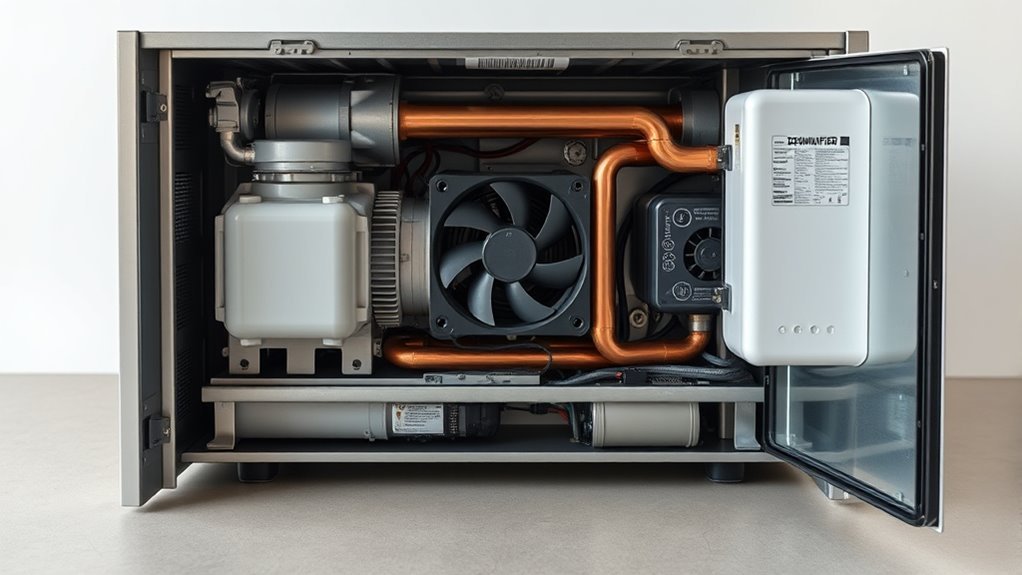
Open a typical portable dehumidifier and you will not find anything mysterious: it is mainly a fan, filter, cold evaporator coil, warm condenser coil, compressor, humidity control, water bucket, drain parts, and safety sensors working together. The important part is knowing what each component does, because one dirty filter, blocked hose, frozen coil, or faulty bucket switch can make the whole unit seem broken.
Quick Answer
Inside a dehumidifier are a fan, air filter, evaporator coil, condenser coil, compressor, refrigerant lines, humidistat or humidity sensor, control board, water tank, float switch, drain connection, and often a frost sensor. The fan moves damp air across cold coils, water condenses, and drier air returns to the room.
Key Takeaways
- A compressor-style dehumidifier removes moisture by cooling humid air below its dew point, then reheating the drier air before sending it back out.
- The evaporator coil is the cold moisture-removal coil; the condenser coil is the warm reheat coil.
- The bucket, float switch, drain hose, and condensate pump handle the water after it drips off the coil.
- A humidistat or humidity sensor turns the unit on and off based on your target humidity setting.
- Clean filters, clear airflow, correct room temperature, and safe drainage matter as much as the compressor itself.
What Is a Dehumidifier?
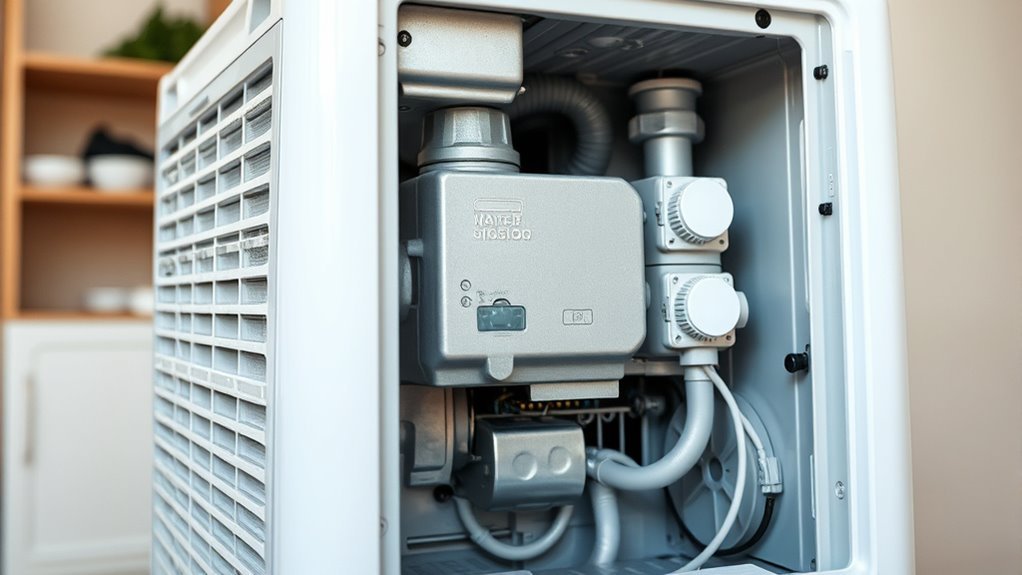
A dehumidifier is an appliance that lowers indoor relative humidity by removing water vapor from the air. Most home units do this with a refrigeration cycle: the fan pulls in damp air, the evaporator coil cools that air until moisture condenses into liquid water, and the condenser coil warms the drier air before it returns to the room.
For most homes, the practical goal is not to make the air bone-dry. The U.S. Environmental Protection Agency recommends keeping indoor humidity below 60% relative humidity, ideally around 30% to 50% when possible. The CDC also recommends keeping humidity no higher than 50% all day to help prevent mold growth.
Note: A dehumidifier is not the same as an air purifier. It can reduce dampness that supports mold and dust mites, but it does not filter fine particles as effectively as a dedicated air purifier with the right filter.
Main Parts of a Dehumidifier
Most portable compressor dehumidifiers share the same internal layout. The exact shape changes by brand, but the main parts are usually easy to recognize once you know their jobs.
| Part | What It Does | What to Watch |
|---|---|---|
| Fan | Pulls humid room air into the unit and pushes dry air back out. | Weak airflow, rattling, dust buildup, or blocked grilles. |
| Air filter | Traps dust before it reaches the coils. | A dirty filter reduces airflow and can contribute to frost. |
| Evaporator coil | Gets cold so moisture condenses out of the air. | Dust, frost, bent fins, or poor airflow. |
| Condenser coil | Releases heat and helps warm the dried air before discharge. | Dust buildup, warm cabinet surfaces, or reduced efficiency. |
| Compressor | Circulates refrigerant through the sealed cooling system. | Clicking, humming without cooling, or failure to remove moisture. |
| Humidistat or humidity sensor | Measures room humidity and tells the unit when to run. | Wrong humidity readings or short cycling. |
| Water tank and float switch | Collects condensate and stops the unit when the bucket is full. | “Bucket full” errors, leaks, or a tank that is not seated correctly. |
| Drain hose or pump | Moves water to a floor drain, sink, sump, or condensate line. | Kinks, clogs, leaks, or uphill drains without a pump. |
| Frost sensor and defrost control | Detects cold coil conditions and helps protect performance. | Frequent defrost mode, icy coils, or low room temperature. |
What Can You Check Without Opening the Cabinet?
You can learn a lot about the parts inside a dehumidifier without removing the outer shell. Start with the safe, external checks below before you suspect the compressor, refrigerant circuit, or control board.
| Safe Check | What It Tells You | When to Stop |
|---|---|---|
| Feel for steady airflow at the outlet. | The fan is moving air and the filter is not completely blocked. | If airflow is weak after cleaning the filter. |
| Check the tank fit and float movement. | A false bucket-full warning may come from the tank or switch area. | If the light stays on with an empty, seated tank. |
| Inspect the drain hose slope. | Gravity drains need a clear downward path with no kinks. | If water backs up even with a clean, sloped hose. |
| Compare the display with a separate hygrometer. | A large mismatch may point to a sensor or placement issue. | If readings stay far apart after 30–60 minutes in the same room. |
How a Refrigeration Dehumidifier Works
A compressor dehumidifier works like a small air conditioner that keeps both the cold side and warm side inside the same cabinet. Instead of cooling the room, it removes moisture and usually sends out air that feels slightly warmer than the room air.
1. The Fan Pulls In Humid Air
The fan creates steady airflow through the front or rear grille. Humid air first passes through the filter, which catches dust and lint before they can coat the coils. If the fan is weak or the filter is blocked, the air moves too slowly and the unit removes less water.
2. The Evaporator Coil Cools the Air
The evaporator coil is the cold coil. As warm, moist air crosses it, the air temperature drops below the dew point. Water vapor then changes into liquid droplets on the coil fins, similar to the way water beads on a cold glass.
3. Water Drips Into the Tank or Drain
Condensed water runs down the coil and into a tray, bucket, or drain channel. From there, it either collects in the removable tank or exits through a hose. A float switch or bucket sensor prevents overflow by stopping the unit when the tank is full.
4. The Compressor and Condenser Complete the Cycle
The compressor keeps refrigerant moving through the sealed system. After the refrigerant leaves the cold evaporator side, it passes through the condenser side, where heat is released. The outgoing air is drier and often slightly warmer, which is normal during dehumidifier operation. ENERGY STAR notes that air directly around a running dehumidifier may feel warmer because moisture removal adds heat to the surrounding space.
The easiest way to remember the cycle: the evaporator gets cold and collects water; the condenser gets warm and reheats the dry air.
Water Tank, Drain Hose, and Pump
The water-handling parts are just as important as the cooling parts. A dehumidifier can have a working compressor and fan, but still shut off if the bucket is full, the float switch sticks, or the drain hose is installed incorrectly.
Recommended Products
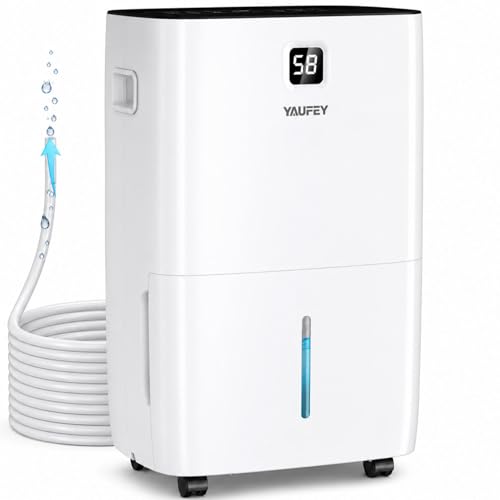
Dehumidifier for Basement: This dehumidifier for home removes up to 150 pints (95℉, 90% RH) of moisture per day and with a maximum dehumidification area of 8500 square feet. This dehumidifier with drain hose has a dehumidification range of 30% to 80%, increasing or decreasing by 5% at a time, which you can adjust to your preferred humidity level. In addition, this basement dehumidifier has 3 modes for you to choose from - Living Area (50% RH), Basement (45% RH) and Continuous (CO).

AUTOMATIC CONDENSATE PUMP: features a vertical-type switch to reduce footprint and is designed to automatically remove condensate produced by boilers, furnaces, air conditioners and de-humidifiers

Energy- Efficient Performance: avylo dehumidifier Certified ENERGY STAR Most Efficient 2025 with an EER of 2.05 L/kWh; Powered by a high-efficiency compressor and optimized airflow design, with a maximum daily dehumidification capacity of 90 pints(90°F,90% RH); Ideal for basements, home, living rooms, garages, and large areas up to 5000 sq. ft., keeping your home dry, comfortable
Water Collection Tank
The removable tank catches the water pulled from the air. Most portable units use a float switch or sensor to detect when the tank is full. When the float rises, the unit shuts off and shows a full-bucket light or error code.
Empty the tank before it overflows, and wash it regularly with mild soap and water. The Mayo Clinic advises draining and cleaning a dehumidifier’s moisture tray often to help prevent bacteria and mold.
Continuous Drain Hose
A continuous drain hose lets water flow straight to a floor drain, utility sink, sump pit, or other suitable outlet. Gravity-drain setups need a steady downward slope. If the hose rises uphill, water can back up into the unit unless the model has a built-in condensate pump.
Built-In Condensate Pump
Some dehumidifiers include a small pump that pushes water upward or across a longer distance. This is useful when the only drain is higher than the unit, such as a sink or laundry standpipe. Check the pump hose for kinks, mineral buildup, and loose fittings if you see leaks or pump errors.
Pro Tip: If you use a drain hose, pour a small amount of clean water into the bucket area after setup and confirm it flows to the drain before leaving the unit unattended.
What a Humidistat Does
The humidistat is the control that tells the dehumidifier when the room is too damp. On older units, it may be a dial. On newer units, it is usually a digital humidity sensor connected to the control board.
You choose a target humidity level, and the unit compares the room reading to that target. If the room is above the setting, the fan and compressor run. When the room reaches the target, the compressor shuts off or the whole unit cycles down, depending on the model.
For general home moisture control, a target around 45% to 50% relative humidity is a practical starting point. Lower settings may run longer and use more energy. Higher settings may not control musty smells, condensation, or mold risk well enough in damp rooms.
Filters, Airflow, and Maintenance
Filters, grilles, and coils control how easily air moves through the dehumidifier. When dust blocks that path, the unit has to work harder, removes less water, and may freeze more often.
At a Glance
| Time Required | 10–20 minutes for basic filter, tank, grille, and drain checks. |
| Difficulty | Easy for exterior cleaning; professional help for sealed refrigerant or electrical repairs. |
| Tools Needed | Soft cloth, vacuum brush attachment, mild dish soap, small brush, towel, and hygrometer. |
| Cost | Usually $0–$20 unless a part, hose, pump, or professional repair is needed. |
| Area | Care Step | Why It Matters |
|---|---|---|
| Filter | Vacuum or rinse if the manual allows it, then dry fully before reinstalling. | Restores airflow and helps prevent coil icing. |
| Tank | Empty, wash, rinse, and dry regularly. | Reduces stagnant water, odor, bacteria, and mold growth. |
| Grilles | Vacuum dust from intake and discharge openings. | Keeps air moving freely through the cabinet. |
| Drain hose | Check slope, kinks, clogs, and loose fittings. | Prevents leaks and bucket-full shutdowns. |
Ice Buildup and Frost Sensors
Ice forms when the evaporator coil gets cold enough for moisture to freeze instead of dripping away as liquid water. This usually happens because of low room temperature, poor airflow, a dirty filter, dust-coated coils, or a refrigerant/system problem.
ENERGY STAR notes that frost can form on the condensing coils when the space is typically below 65°F, reducing performance and causing the compressor to cycle without removing moisture. Some units include an anti-frost sensor that turns the appliance off below a certain temperature.
Warning: If coils freeze repeatedly after the filter is clean and the room is warm enough, do not keep forcing the unit to run. Unplug it, let it thaw, and consider professional service, especially if you suspect a refrigerant or compressor problem.
Desiccant vs. Refrigeration Dehumidifiers
Not every dehumidifier uses a compressor. The two common designs are refrigeration dehumidifiers and desiccant dehumidifiers.
Recommended Products

【The Undisputed Champion — Industry-Leading Dehumidifier Brand】Choose AEOCKY, getting double market validation. According to data independently verified by Stackline, a leading third-party data analytics company, AEOCKY was an industry‑leading dehumidifier brand on Amazon U.S. in 2025. Meanwhile, it stands as a technology-leading rotary desiccant dehumidifier brand on Amazon. This isn’t just an appliance—it’s a complete humidity-control solution for small spaces. Skip low-performance alternatives and trust a brand recognized by the market.

✔ EASY TO USE: This mini dehumidifier is spill and mess free. Just hang and go! Non-toxic, child and pet safe! Your small rooms will be dry and odor free. Works for areas up to 333 cubic feet.

Semiconductor dehumidifiers use thermoelectric cooling to remove moisture from the air. They create a drier, more comfortable environment by reducing humidity and improving air quality.
Refrigeration Dehumidifier Cycle
A refrigeration dehumidifier uses a compressor, refrigerant, evaporator coil, and condenser coil. It is usually efficient in warm, humid rooms such as basements, laundry areas, bathrooms, and living spaces. It removes moisture best when the room is warm enough for water to condense and drain instead of freezing on the coil.
Desiccant Dehumidifier Operation
A desiccant dehumidifier uses moisture-attracting material instead of a cold coil as its main drying method. ASHRAE describes desiccants as sorbents with a particular affinity for water. In plain terms, the material grabs water vapor from the air, then heat or a separate airflow helps release that moisture so the material can dry again.
Which Type Should You Choose?
| Situation | Better Fit | Why |
|---|---|---|
| Warm basement or living space | Refrigeration | Good moisture removal in moderate to warm temperatures. |
| Cool garage, storage room, or unheated area | Desiccant or low-temperature-rated unit | Less risk of coil icing because drying is not based only on cold-coil condensation. |
| Whole-home humidity control | Whole-home dehumidifier | Can be integrated with HVAC ductwork when sized and installed correctly. |
Capacity and Energy Ratings
Dehumidifier capacity is usually listed in pints per day. That number means how much water the unit can remove in 24 hours under specific test conditions, not how much water it will remove in every room. Actual performance changes with room temperature, humidity, airflow, room size, and how much moisture keeps entering the space.
ENERGY STAR explains that the U.S. Department of Energy defines dehumidifier capacity and efficiency test methods. Since June 2019, new dehumidifiers have been rated using Integrated Energy Factor, or IEF, which measures liters of water removed per kilowatt-hour and includes energy used when the unit has cycled off.
When comparing units, look at both capacity and efficiency. A higher-capacity unit is not automatically better if it short cycles, runs in a room that is too cold, or wastes energy after the humidity target has already been reached.
Recommended Products

【Compact Size, Big Efficiency】 The upgraded 2025 Waykar dehumidifier features cutting-edge rotary compressor technology. It’s more compact but still powerful, capable of removing up to 34 pints of moisture per day (at 95℉, 90% RH), ideal for spaces up to 2,000 sq. ft. such as living rooms, basements, bedrooms, and offices. The adjustable humidity range from 30% to 80% helps you easily maintain the ideal indoor humidity

1600 Sq.Ft High Capacity Dehumidifier- The GoGuess basement dehumidifier is equipped with a quiet yet powerful compressor that efficiently extracts up to 21 pints of moisture per day (tested at 95°F and 90% RH). Perfect for use in basements, offices, bathrooms, bedrooms, kitchens, storage areas, living rooms, laundry spaces, garages, crawl spaces, and RVs. It helps maintain a healthy humidity level between 30% and 70%, promoting a more comfortable and healthier indoor environment
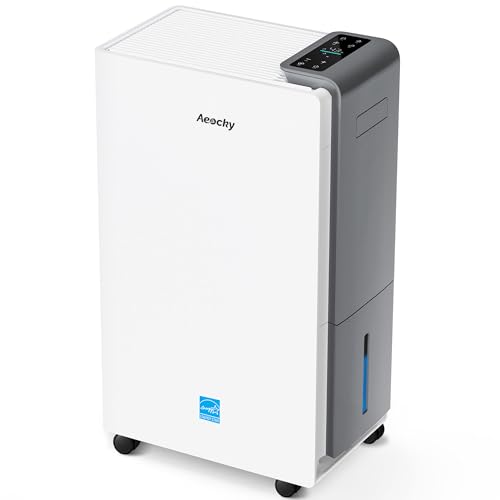
【ENERGY STAR 25 ≠ ENERGY STAR Most Efficient 2025】Don't fall for competitors' word games. With only 2.6% of ENERGY STAR models earning "Most Efficient 2025" title, these options are exceptionally rare on the market. RHEA-001 is one of the few to truly hold this top-tier certification. Many brands use misleading phrases like "Energy Star Efficient 25" or "Energy Star 25" to imply a standard they haven't met. Choosing them is a risk.With AEOCKY, you get verified performance and the peace of mind of authentic, top-tier efficiency.
Safe Inspection Before Opening a Dehumidifier
It is fine to remove the bucket, clean the filter, inspect the hose, and wipe accessible surfaces according to your owner’s manual. It is not safe to treat the sealed refrigerant system or internal electrical parts as a casual DIY project.
Warning: Unplug the dehumidifier before cleaning or inspection. Do not puncture refrigerant tubing, bypass switches, run the unit with covers removed, or work near standing water. Compressor, refrigerant, control-board, and power-cord repairs should be handled by a qualified technician.
For safer operation, place the dehumidifier where air can circulate freely, keep doors and windows closed while it runs, keep drain hoses away from electrical cords, and connect the unit to a properly grounded outlet. These steps match the practical safety and placement guidance given by ENERGY STAR.
Signs a Dehumidifier Part May Be Failing
If your dehumidifier stops removing water, do not assume the compressor is dead first. Many problems come from simple airflow, tank, hose, or sensor issues.
| Symptom | Likely Area | What to Check First |
|---|---|---|
| Runs but collects little or no water | Humidity setting, filter, coils, room temperature | Confirm room RH with a hygrometer, clean the filter, and make sure the room is warm enough. |
| Bucket-full light stays on | Bucket, float switch, tank sensor | Reseat the tank, check the float, and clean the bucket area. |
| Water leaks onto the floor | Drain hose, tank seal, pump line | Check for loose hose connections, kinks, clogs, and a tilted unit. |
| Coils freeze | Airflow, filter, temperature, sealed system | Clean the filter, improve airflow, warm the room, and thaw the unit before restarting. |
| Fan runs but compressor does not start | Humidistat, control board, compressor circuit | Lower the humidity setting and listen for compressor startup; call for service if it only clicks or hums. |
| Musty smell from the unit | Tank, filter, drain tray, stagnant water | Wash the tank, clean the filter, and flush the drain path if the manual allows it. |
Frequently Asked Questions
What are the main components inside a dehumidifier?
The main components are the fan, air filter, evaporator coil, condenser coil, compressor, refrigerant lines, humidistat or humidity sensor, control board, water bucket, float switch, drain connection, and frost sensor. Some models also include a condensate pump.
Does every dehumidifier have a compressor?
No. Most portable home dehumidifiers use a compressor and refrigeration coils, but desiccant models use moisture-attracting material instead of relying only on cold-coil condensation. Compressor units usually work best in warmer rooms, while desiccant models can be useful in cooler spaces.
Would a dehumidifier help with COPD?
A dehumidifier may help if dampness, mold, or musty air makes symptoms worse, but it is not a COPD treatment. People with chronic lung disease can be more sensitive to mold and damp indoor environments, so controlling moisture may support better indoor air quality. Ask a healthcare provider for personal COPD advice.
Where does all the water in a dehumidifier come from?
The water comes from water vapor already in the air. When humid air touches the cold evaporator coil, the vapor condenses into droplets. Those droplets run into the bucket or out through a drain hose.
What is the downside of a dehumidifier?
The main downsides are electricity use, noise, heat output, tank emptying, and regular cleaning. A dehumidifier can also over-dry a room if the humidity setting is too low, so use a hygrometer and aim for a balanced range rather than the lowest possible number.
Will a dehumidifier help dry out plaster?
Yes, a dehumidifier can help plaster dry by lowering room humidity and encouraging moisture to leave the surface. Use gentle airflow, avoid overheating the plaster, and make sure the original water source has been fixed. If plaster is soaked from a leak or flood, inspect for hidden moisture before repainting.
Why is my dehumidifier blowing warm air?
Slightly warm discharge air is normal. After moisture condenses on the cold coil, the air passes over the warm condenser coil before returning to the room. If the air is hot, smells burnt, or the cabinet feels unsafe to touch, unplug the unit and have it checked.
Can I clean the coils inside a dehumidifier?
You can clean accessible dust with a soft brush or vacuum only if your owner’s manual allows it and the unit is unplugged. Do not bend coil fins, wet electrical parts, or open the sealed refrigerant system. For deep internal cleaning, electrical faults, or refrigerant problems, use a qualified technician.
Conclusion
A dehumidifier is a simple-looking appliance with a carefully balanced set of parts inside. The fan moves humid air, the filter protects airflow, the evaporator coil collects water, the compressor and condenser keep the cooling cycle moving, and the bucket or drain system removes the condensate. The humidistat, float switch, frost sensor, and control board make the unit safer and more automatic.
If your dehumidifier stops working well, start with the basics: clean the filter, empty and wash the tank, check the drain hose, confirm the humidity setting, and make sure the room is not too cold. If the problem points to the compressor, refrigerant system, wiring, or control board, stop troubleshooting and call a qualified repair professional.
Sources
- ENERGY STAR: Dehumidifiers — humidity range, operating temperature, frost, drainage, placement, IEF, and safety guidance.
- ENERGY STAR: Dehumidifier Testing and Capacity — DOE capacity ratings, pints per day, and Integrated Energy Factor context.
- U.S. EPA Mold Course Chapter 9 — indoor humidity targets and mold-prevention moisture control.
- CDC: Mold — mold prevention, health-sensitive groups, and humidity no higher than 50% guidance.
- Mayo Clinic: Humidifiers and Dehumidifiers — dehumidifier tray cleaning and damp-air guidance.
- ASHRAE TC 8.12: Desiccant Dehumidification Equipment and Components — desiccants, sorbents, and dehumidification terminology.