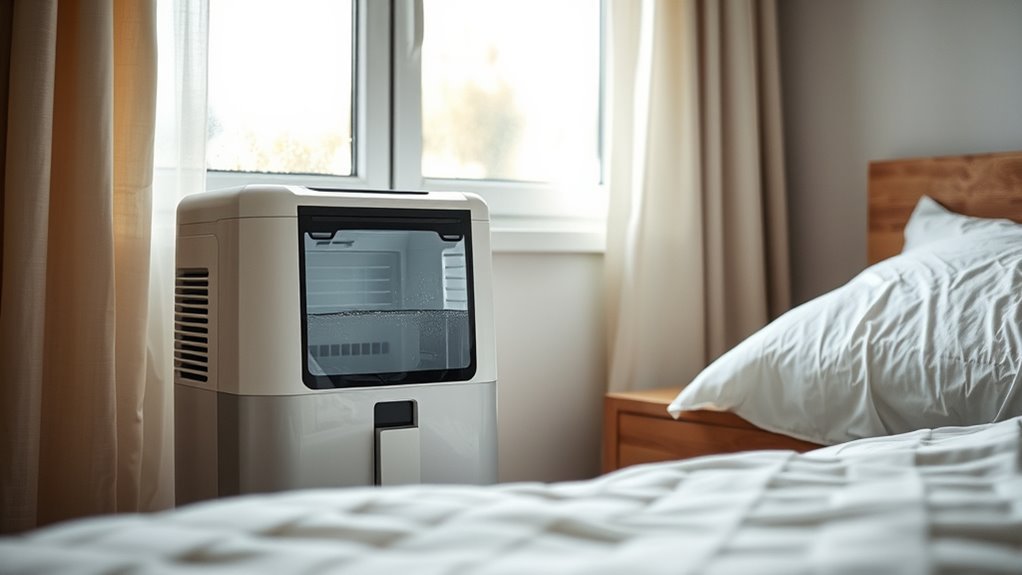
Yes, portable dehumidifiers are effective when the moisture problem is limited to one room or connected zone and the unit has enough pints-per-day capacity for the actual dampness. They are useful for a clammy bedroom, laundry area, basement zone, or bathroom-adjacent area after showers. They are much less effective when moisture comes from active leaks, flooding, wet wall cavities, or whole-home humidity. Use a hygrometer, aim for about 30% to 50% relative humidity, and judge success by whether the room reaches and holds that range, not just by how much water appears in the bucket.
Quick Answer
Portable dehumidifiers work well for targeted moisture control in one room or zone when their extraction capacity matches the room’s size and dampness. Choose by pints per day, starting humidity, temperature, airflow, and drainage setup, not square footage alone. Aim for roughly 30% to 50% indoor relative humidity, and repair leaks or water damage instead of relying on the appliance alone.
Key Takeaways
- A portable dehumidifier is best for one room or connected zone, not an entire damp house.
- Use a hygrometer and aim for roughly 30% to 50% relative humidity indoors.
- Size the unit by pint capacity, dampness level, temperature, airflow, and manufacturer guidance.
- Mini thermoelectric models are light-duty tools and should not be treated as equivalents to full-size compressor dehumidifiers.
- A drain hose or pump model is useful if the bucket fills frequently.
- If humidity stays high after moisture sources are corrected, you may need more capacity, multiple zones, or a whole-home system.
At a Glance
| Time Required | 10 to 20 minutes to set up; a few minutes daily or weekly for bucket emptying, filter checks, drainage checks, and humidity readings. |
| Difficulty | Easy for one room; moderate if you need continuous drainage, a pump, low-temperature operation, or basement-wide control. |
| Tools Needed | Portable dehumidifier, hygrometer, properly grounded outlet, clean filter, and optional drain hose or compatible condensate pump. |
| Cost | Lower upfront than whole-home equipment; running cost depends on wattage, runtime, moisture load, efficiency, and local electricity rates. |
How this guide was checked: No hands-on performance claims are made here. Sizing, humidity, test-method, mold, and building-material guidance was checked against current EPA, ENERGY STAR, federal DOE/eCFR, American Lung Association, USG, and Gypsum Association sources.
How Effective Are Portable Dehumidifiers?
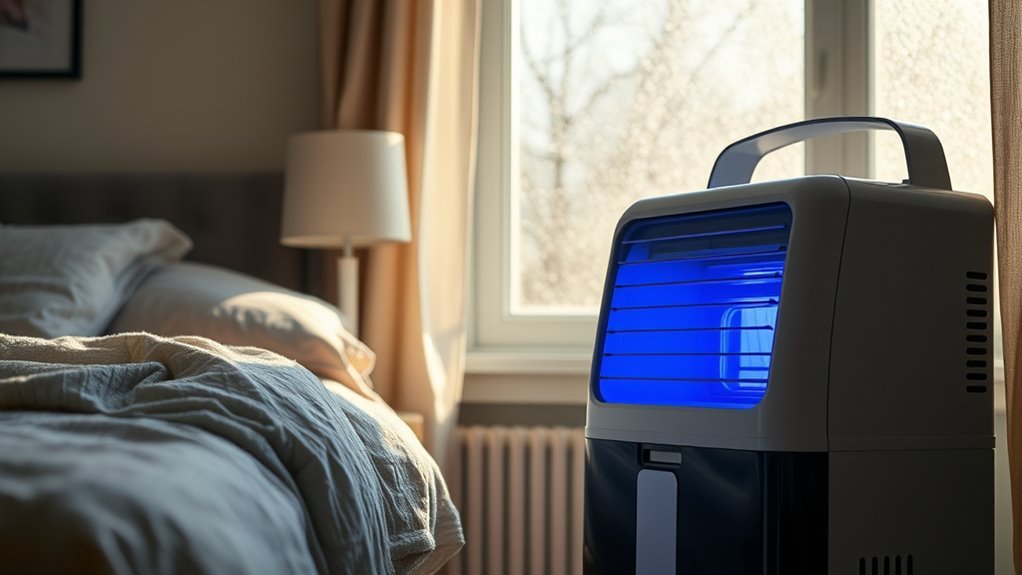
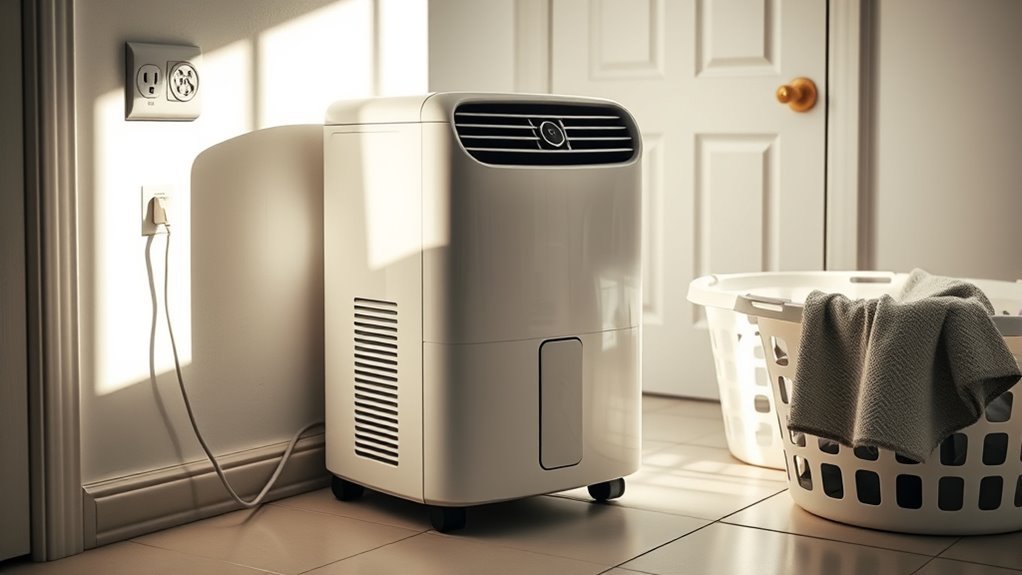
Portable dehumidifiers are effective when the moisture problem is contained and the appliance is properly sized. A typical refrigerant or compressor model draws damp room air across cold coils, condenses water into a bucket or drain line, and returns drier air to the room. That can reduce condensation, musty air, and the clammy feel associated with excessive indoor humidity.
The most useful performance number is the unit’s capacity, usually shown as pints of water removed per day. ENERGY STAR explains that capacity is the amount of water removed during 24 hours under defined test conditions. A 50-pint rating therefore describes standardized extraction capacity, not a guarantee that every room will lose exactly 50 pints of moisture each day. Actual collection changes with temperature, starting humidity, airflow, room leakage, and the amount of moisture entering the space.
A portable dehumidifier works best as a room-by-room moisture-control tool, not as a substitute for repairing leaks, drying hidden wet materials, or correcting a whole-home moisture problem.
For mold prevention and general moisture control, the humidity target matters more than how full the bucket looks. The U.S. EPA recommends keeping indoor relative humidity below 60%, ideally between 30% and 50%. Use a hygrometer instead of judging the room only by feel. If the unit cannot move the room toward your target RH after sustained operation under the manufacturer’s recommended conditions, check room closure, airflow, drainage, temperature, capacity, and active moisture sources.
Note: A dehumidifier can reduce the moisture conditions that support mold growth, but it does not remove existing mold. If you can see or smell mold, correct the water source and follow appropriate cleanup or remediation guidance.
What Size Rooms Can Portable Dehumidifiers Handle?
Portable dehumidifier sizing should start with both space size and moisture severity. A lightly damp bedroom is not the same load as a basement with seepage, wet walls, indoor laundry, or persistent condensation. Manufacturer coverage figures can help, but standardized pint capacity and actual room conditions are more useful than square footage alone.
Current ENERGY STAR buying guidance uses the following ranges as starting points. These are capacity ranges, not guarantees of performance in every building.
| Condition Without Dehumidification | Small-Medium Space <2,000 sq. ft. |
Large Space >2,000 sq. ft. |
| Slightly to moderately damp: damp feel or intermittent musty odor; roughly 50% to 75% RH. | 20–30 pints/day | 30+ pints/day |
| Very damp: consistently damp feel or odor; damp spots may appear; roughly 75% to 90% RH. | 25–40 pints/day | 40+ pints/day |
| Wet/high load: sweating surfaces, seepage, or high moisture loads such as indoor laundry; roughly 90% to 100% RH. | 30–50 pints/day | 50+ pints/day |
Temperature also matters. ENERGY STAR notes that if the room commonly falls below 65°F, you should look for a dehumidifier specifically designed for lower-temperature operation. Frost can form on compressor coils in cooler conditions and reduce moisture removal, although some models include automatic defrost or anti-frost controls.
There is also a rating-history issue. DOE energy standards changed in June 2019, and newer portable dehumidifiers are tested at 65°F instead of the older 80°F condition. Because cooler air contains less removable moisture, newer standardized capacity numbers can look smaller even when the appliance is comparable to an older unit. The current federal test-method appendix incorporates relevant provisions from AHAM DH-1-2022. Do not compare an old 70-pint label with a newer rating as if both were measured under the same procedure.
Recommended Products

Room Size & Humidity Guidance:Performance varies with temperature, humidity, airflow, and moisture sources. Use continuous drainage in enclosed spaces for 40–50% RH; open areas reach 50–55% RH. For lower targets, choose a higher-capacity model. Readings may vary by location with air circulation—not a defect.

【Powerful 30-Pint Dehumidifier for Basement, Bedroom & Whole Home】This high-capacity dehumidifier removes up to 30 pints per day (95°F, 90% RH) and 25 pints under normal conditions (86°F, 80% RH).conditions, making it the go-to dehumidifier for basement spaces with sweating walls, a musty dehumidifier for bedroom comfort, and a versatile choice among dehumidifiers for home use. Covers up to 2,000 sq. ft., eliminating condensation, odors, and damp air for a fresher living environment.(Dehumidification capacity≠Water Tank Volume)
Do Mini Portable Dehumidifiers Work?
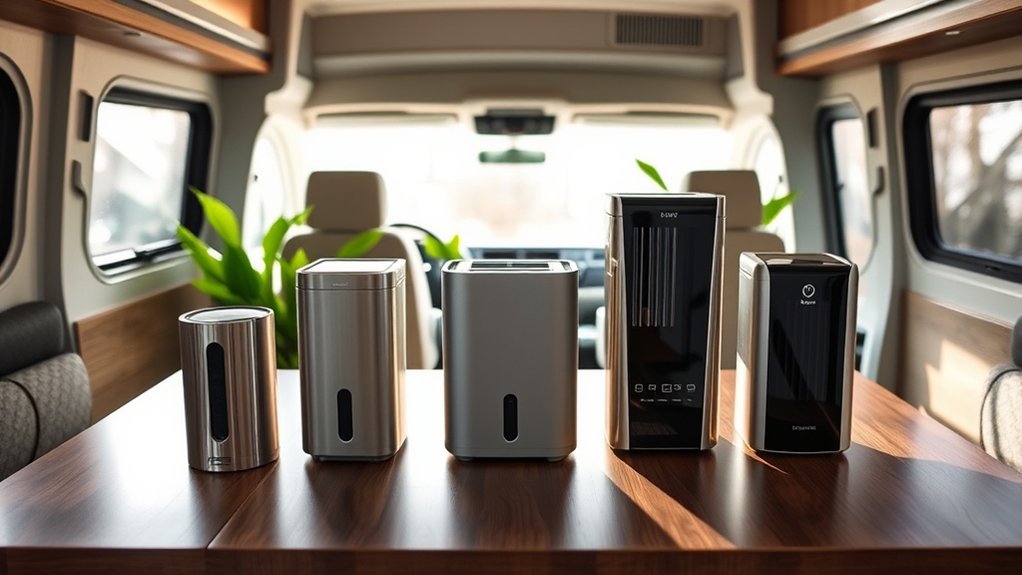
Mini portable dehumidifiers can work for light moisture in a small, enclosed space, but they are not interchangeable with full-size compressor models. Small thermoelectric units are attractive because they are compact and usually quieter, yet their moisture-removal capacity is much lower. They make more sense for a closet, RV, small closed bedroom, or mild condensation problem than for a persistently damp basement or large open room.
The practical rule is to compare daily extraction, not tank size or a large advertised square-foot number. A large collection tank only tells you how much water the appliance can hold before it needs emptying. If you are comparing mini and full-size options, see the site’s dehumidifier for a damp house comparison, which separates light-duty thermoelectric models from higher-capacity compressor units.
Recommended Products

✔ EASY TO USE: This mini dehumidifier is spill and mess free. Just hang and go! Non-toxic, child and pet safe! Your small rooms will be dry and odor free. Works for areas up to 333 cubic feet.

Fast Drying & Rechargeable — Keep your enclosed spaces perfectly dry with ease! This mini dehumidifier uses silica beads to trap dampness quickly, dropping indoor humidity from 50% down to 30%. You no longer need to deal with the hassle of buying or throwing away standard disposable bags. It is built for a simple, continuous cycle. Just plug the unit in for 16 hours to fully recharge it, and you will get up to 5 days of reliable dryness for your daily life.

REUSABLE, ECO-FRIENDLY DESIGN: The Osmo Moisture Absorber features a refillable water tank, removing up to 44 fl oz of moisture from the air. Unlike disposable moisture absorbers such as hanging bags or crystals, our Moisture Absorber can be used over and over again, helping to reduce waste and improve your carbon footprint.
Which Rooms Are Best for Portable Dehumidifiers?
The best locations are enclosed spaces where excess airborne moisture builds faster than the home can remove it. Bedrooms, laundry rooms, basements, utility rooms, and some bathroom-adjacent areas are common examples. A portable unit is most useful when the dampness has a clear location rather than being spread throughout the entire house.
For example, a basement corner with recurring condensation, a laundry room with poor moisture removal, or a bedroom that stays clammy during humid weather can be a good portable-dehumidifier use case. Keep exterior windows and doors closed while the unit operates and measure RH away from the dry-air outlet.
If you use a dehumidifier in or near a bathroom, follow the exact placement and electrical instructions for that model. Keep the appliance outside splash zones and away from tubs, showers, sinks, wet flooring, and any location the manufacturer does not approve.
Pro Tip: Put a separate hygrometer across the room rather than directly beside the dehumidifier’s outlet. The air leaving the appliance is unusually dry, so a nearby reading can make the whole room look drier than it really is.
How Can You Tell If a Portable Dehumidifier Is Working?
Water in the bucket proves that the appliance is condensing moisture, but it does not prove that the room is adequately controlled. Judge effectiveness by the room’s humidity trend and whether the result holds.
| Signal | What It Tells You |
| Room RH drops toward 30%–50% | The unit is removing moisture fast enough to change the room conditions. |
| Humidistat begins cycling the compressor on and off | The room is reaching the selected setpoint instead of demanding constant maximum operation. |
| Condensation and musty air return slowly or stop recurring | Moisture control is keeping pace with the normal room load. |
| RH remains high while the unit runs continuously | Check capacity, airflow, low temperature, open doors or windows, drainage, leaks, seepage, and wet materials. |
For a cleaner comparison, take humidity readings from the same location under similar room conditions. Bucket volume is useful as a secondary clue, but warm humid weather will naturally produce more collected water than cooler or drier conditions.
How to Use a Portable Dehumidifier for Best Results
Placement and setup can make a large difference. Treat the appliance as a small moisture-control system rather than a box that can work effectively anywhere.
- Measure first. Check the room with a hygrometer. If it is already within a suitable range, continuous dehumidification may not be necessary.
- Close the room to outdoor moisture. Shut exterior windows and doors while the unit runs so humid outdoor air is not continually replacing the moisture being removed.
- Give it the required clearance. Keep the intake and exhaust unobstructed according to the manufacturer’s manual.
- Position it near the problem zone. Place it where damp air can reach the intake, but never where it can be splashed or stand on wet flooring.
- Use continuous drainage when appropriate. A gravity hose can reduce bucket work when it slopes continuously to a lower drain. Use a pump only when the model or compatible drainage setup supports it.
- Check the temperature. If the space frequently falls below 65°F, verify the model’s low-temperature operating range and defrost features.
- Clean the filter. A clogged filter restricts airflow and can reduce effective moisture removal.
- Recheck the source. If humidity rebounds quickly, investigate leaks, poor ventilation, seepage, wet materials, and other sources of moisture.
Warning: Do not place a dehumidifier where it can be splashed from a tub, shower, sink, or floodwater. Use a properly grounded outlet, keep drainage away from electrical connections, avoid damaged cords, and follow the manufacturer’s electrical instructions.
What Can’t a Portable Dehumidifier Fix?
A portable dehumidifier can dry the air it can reach. It cannot repair a plumbing leak, stop foundation seepage, remove standing water, dry sealed wall cavities by itself, replace damaged insulation, or make contaminated building materials safe. If moisture is continually entering faster than the appliance can remove it, the unit may run continuously without solving the underlying problem.
Warning signs that the moisture problem is larger than simple airborne humidity include:
- Humidity remains above 60% despite sustained operation and a correctly configured unit.
- Condensation returns quickly on windows, pipes, walls, or other cold surfaces.
- Musty odor spreads through multiple rooms instead of staying in one local zone.
- Water continues entering through a roof, plumbing system, foundation, crawl space, or other building component.
- Visible mold, wet drywall, delamination, soft materials, or contaminated water exposure is present.
Water-damaged gypsum board needs a more careful decision than simply placing a dehumidifier nearby. The Gypsum Association’s GA-231 guidance says exposed board generally should be replaced unless the water source has been eliminated, the water was uncontaminated, the board can be thoroughly dried before mold growth begins, typically within 24 to 48 hours depending on conditions, and the board remains structurally sound. Gypsum board exposed to sewage or floodwater should be replaced.
Do Portable Dehumidifiers Add Noise, Heat, or Maintenance?
Yes. Most full-size portable dehumidifiers use a fan and compressor, so some operating noise is normal. For a bedroom, compare published decibel ratings and look for a useful low-fan or sleep setting. A mini thermoelectric model may be quieter, but that lower noise normally comes with much lower moisture-removal capacity.
A compressor dehumidifier can also make the surrounding area slightly warmer. That is normal. ENERGY STAR notes that the appliance releases some heat back into the room as it removes moisture. The effect may be welcome in a cool basement and less comfortable in a warm bedroom.
If the dehumidifier will run for many hours, check energy efficiency as well as capacity. ENERGY STAR uses Integrated Energy Factor, expressed as liters of water removed per kilowatt-hour. A higher IEF indicates better standardized efficiency. ENERGY STAR currently states that certified dehumidifiers are about 20% more efficient than non-certified models.
Maintenance is simple but important:
- Empty and clean the collection tank as the manual recommends.
- Rinse, vacuum, or replace the filter according to the manufacturer’s schedule.
- Check a gravity drain hose for kinks, clogs, or upward loops.
- Keep the intake and outlet clear.
- Keep standing water from becoming stale inside the bucket.
If you want less daily work, choose a model with a drain-hose connection. If the required drain point is higher than the appliance, use a model with a built-in pump or another manufacturer-compatible condensate-pump arrangement rather than trying to make a gravity hose drain uphill.
When Is a Portable Dehumidifier Not Enough?
A portable unit is not enough when the home is admitting or producing more moisture than one room appliance can remove. Common causes include foundation seepage, roof or plumbing leaks, wet crawl spaces, inadequate bathroom exhaust, improperly vented dryers, and water-damaged materials hidden behind finished surfaces.
Signs You Need More Capacity or Source Control
Watch for these patterns:
- Humidity stays high: The room cannot reach the target range even after airflow, temperature, drainage, and placement have been checked.
- The unit rarely cycles off: It runs continuously because the moisture load remains high.
- The tank fills very frequently: Continuous drainage may solve the maintenance problem, but repeated heavy collection plus high RH can also indicate a larger moisture source.
- Multiple rooms stay damp: One portable unit has limited influence across closed doors and separate air zones.
- Mold or water damage is visible: Dehumidification may support drying, but cleanup, repair, removal, or remediation may still be necessary.
When Does a Whole-Home Dehumidifier Make More Sense?
When humidity is consistently elevated across much of the house, a ducted whole-home dehumidifier may be a better fit. These systems can connect to HVAC or dedicated ductwork, drain continuously, and control a larger air volume without routine bucket emptying.
ENERGY STAR notes that whole-home dehumidifiers can be useful in relatively well-sealed homes with central air when humidity stays above about 55% throughout the house. It also recommends professional sizing and installation. If you are instead comparing individual product options for damp rooms, see the site’s dehumidifier for a damp house guide.
Portable vs. Whole-House Dehumidifiers
| Feature | Portable Dehumidifier | Whole-House Dehumidifier |
| Best use | One room, one basement zone, or a localized moisture problem. | Ongoing humidity control across a larger home or multiple connected zones. |
| Upfront cost | Lower. | Higher because equipment and professional installation are commonly involved. |
| Maintenance | Bucket emptying or drain checks, filter cleaning, and placement checks. | Filter and system maintenance with permanent or semi-permanent drainage. |
| Noise | The fan and compressor operate in the occupied room. | Equipment can often be located away from primary living spaces, depending on installation. |
| Flexibility | Easy to relocate between suitable rooms. | Fixed system designed for broader humidity control. |
If you need affordable, localized moisture control, a portable unit is usually the simpler starting point. If several rooms remain humid and source-control problems have already been addressed, a professionally sized whole-home system may provide more consistent long-term control.
Recommended Products

Semiconductor dehumidifiers use thermoelectric cooling to remove moisture from the air. They create a drier, more comfortable environment by reducing humidity and improving air quality.

Engineered with Dual Semiconductor Technology - Mecmic dehumidifier is designed with two semiconductor modules work together to remove moisture more efficiently than traditional single-semiconductor designs, up to 34 oz (1000 ml) of moisture per day under ideal conditions,helping your space feel fresher and more comfortable in less time. Specifically for bedrooms, bathrooms, closets, laundry rooms, RVs, and other compact areas.

【Efficient Dehumidification】With 360° dual cooling semiconductor technology, the dehumidification area reaches up to 650sq ft. The Levoair safe dehumidifier with 2000ml(68oz)water tank could absorb up to 35oz (1000ml) of moisture per day in a humid environment (Temperature: 86°F, Humidity: 80%RH) and keep moisture below 45%. Say goodbye to humidity!
Health, Mold, and Safety Notes
A dehumidifier can reduce excess indoor moisture, which helps limit conditions that support mold and dust mites. The American Lung Association notes that excess indoor moisture supports mold problems and that dampness and mold can affect the respiratory system. Moisture control is therefore an environmental measure, not a medical treatment.
Do not treat a dehumidifier as a treatment for COPD, asthma, allergies, immune conditions, or unexplained breathing symptoms. If someone has a lung condition or is unusually sensitive to dry or damp air, use measured humidity as one part of the indoor-air plan and follow personal medical guidance from a qualified healthcare professional.
Frequently Asked Questions
Do portable dehumidifiers work well?
Yes. Portable dehumidifiers work well for one room or one damp zone when the unit has enough extraction capacity for the space and moisture load. They are less effective for whole-house humidity, active leaks, flooding, hidden wet materials, or rooms outside the unit’s operating conditions.
What size portable dehumidifier do I need?
Choose by both room size and dampness. ENERGY STAR currently suggests roughly 20–30 pints per day for a slightly to moderately damp space under 2,000 square feet, 25–40 pints for a very damp space, and 30–50 pints for wet or high-load conditions. Also check room temperature, airflow, drainage, and the manufacturer’s operating range.
What humidity should I set a portable dehumidifier to?
A practical target is about 45% to 50% relative humidity for many homes. The EPA recommends keeping indoor humidity below 60%, ideally between 30% and 50%. Use a hygrometer to confirm the actual room humidity instead of relying only on how the air feels.
Do mini portable dehumidifiers work?
They can work for light moisture in a small, enclosed space, but they have much lower extraction capacity than full-size compressor dehumidifiers. Use a mini thermoelectric model for mild condensation or a compact space, not as a substitute for a properly sized unit in a wet basement or persistently damp large room.
Should you use a dehumidifier if you have COPD?
Use a dehumidifier only when excess indoor moisture needs to be controlled. Dampness and mold can be respiratory irritants, but a dehumidifier is not a COPD treatment and overly dry air may also be uncomfortable. Measure the room humidity and ask your healthcare professional for guidance that fits your condition.
Will a dehumidifier help dry out fresh plaster?
It can remove moisture from the surrounding air, but fresh plaster should not be forced to dry too quickly. USG guidance warns that low humidity, high temperatures, and excessive air movement can create rapid-drying conditions that lead to dryout or excessive shrinkage. Follow the instructions for the specific plaster system.
Will a dehumidifier help with gnats?
It may help make a chronically damp area less favorable, but humidity control alone is not a complete gnat-control method. Remove wet organic material, correct persistently damp areas, avoid overwatering plants, clean problem drains when relevant, and address the actual breeding source. You can also read more about how low a dehumidifier can go.
Can a portable dehumidifier remove mold?
No. A portable dehumidifier can lower humidity so conditions are less favorable for mold growth, but it does not remove existing mold from walls, ceilings, fabrics, or stored items. Correct the moisture source and follow appropriate mold-cleanup or remediation guidance.
How long should a portable dehumidifier run?
Run it until the room reaches the selected humidity target, then let the humidistat cycle the unit as needed. A very damp room may require long initial run times. If the unit keeps running but cannot move the room toward the target range, check moisture sources, capacity, temperature, airflow, drainage, and room closure.
Conclusion
Portable dehumidifiers are effective when you give them the right job: controlling excess airborne moisture in one room or connected zone. Start with a hygrometer, choose capacity by dampness as well as floor area, check low-temperature operation when needed, and use drainage that suits the space. Success means the room moves toward and holds an appropriate RH range, not merely that the bucket collects water. If humidity remains high because of leaks, seepage, widespread dampness, or wet building materials, correct the source and move beyond a single portable unit when necessary.
Sources
- U.S. EPA — A Brief Guide to Mold, Moisture and Your Home — indoor humidity targets, mold prevention, leak and condensation guidance.
- ENERGY STAR — Dehumidifiers — sizing ranges, operating temperature, placement, drainage, humidistats, efficiency, and whole-home guidance.
- ENERGY STAR — Dehumidifier Testing and Capacity — capacity ratings, pints per day, energy metrics, and 2019 DOE testing changes.
- eCFR — Appendix X1 to 10 CFR Part 430 — current federal test-method references for dehumidifier energy performance.
- American Lung Association — Mold and Indoor Air — dampness, mold, respiratory irritation, and moisture-control guidance.
- USG — Plastering Technical Guide: Environmental Factors — ventilation, humidity, temperature, and rapid-drying cautions for plaster.
- Gypsum Association GA-231 — Assessing Water Damage to Gypsum Board — drying conditions, water-source elimination, salvage criteria, and replacement cautions.