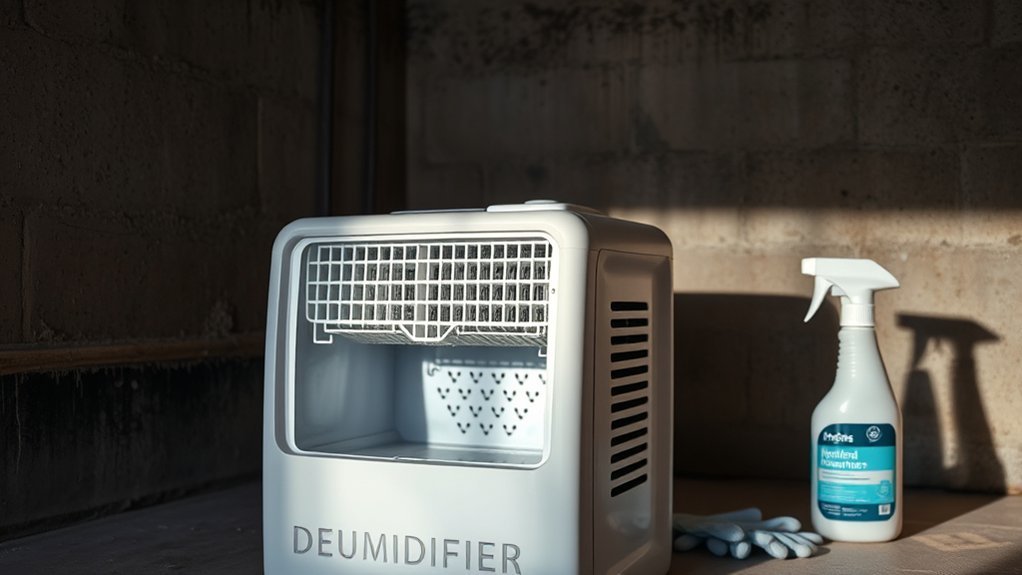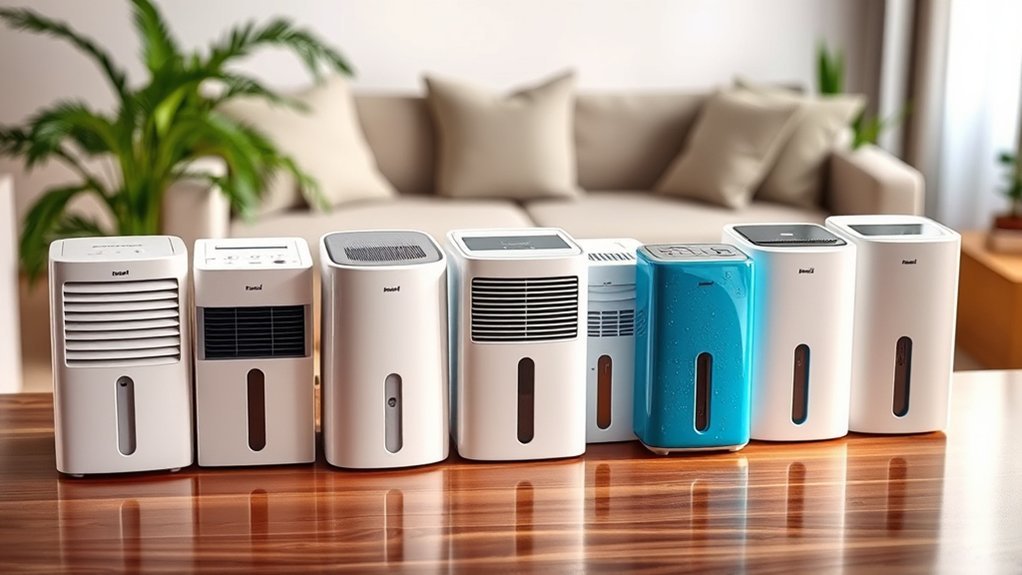
A dehumidifier can dry out your skin if it lowers indoor relative humidity too far. The unit removes moisture from the air, not from your skin directly; the problem is the drier environment it creates. Low humidity can reduce skin hydration and affect barrier function, so use a dehumidifier when a room is damp, musty, or mold-prone and keep humidity near 40% to 50% as a practical balance between skin comfort and moisture control.
Quick Answer
Yes. A dehumidifier can contribute to dry, tight, or flaky skin if it pushes the room below the commonly recommended indoor humidity range. For most homes, 40% to 50% relative humidity is a practical target: it stays within the 30% to 50% range Mayo Clinic describes as ideal for homes while also aligning with CDC moisture-control guidance.
Key Takeaways
- A dehumidifier dries the air, not your skin directly. Low humidity can reduce skin hydration and stress the skin barrier.
- A practical indoor target is usually about 40% to 50% relative humidity, measured with a hygrometer.
- Use a dehumidifier in damp rooms, basements, bathrooms, or mold-prone spaces, and let a humidistat stop the unit at your target instead of defaulting to continuous mode.
- If your skin feels tight, itchy, flaky, or irritated, check the humidity before changing your skincare routine.
- Clean the tank and filter as directed, because poor maintenance can turn a helpful moisture-control tool into an air-quality problem.
Does a Dehumidifier Dry Out Skin?
Yes, a dehumidifier can dry out skin if it lowers indoor humidity too much. Low-humidity environments are associated with reduced moisture in the skin’s outer layer, greater roughness, and changes in barrier function. That can make skin feel tight, dull, itchy, or flaky, especially if you already have dry or sensitive skin.
The device itself is not the enemy. A dehumidifier can be helpful when a room is damp, musty, or prone to mold. The key is to control the setting instead of letting the unit run until the air feels desert-dry. The U.S. Environmental Protection Agency recommends keeping indoor relative humidity below 60% and ideally between 30% and 50% where possible to help control mold and pests such as dust mites.
Note: For skin comfort, many people feel best around 40% to 50% humidity. If your room is below 30%, a dehumidifier is usually not the right tool for that space.
What Indoor Humidity Level Is Best for Skin?
The best humidity level depends on your goal. Mayo Clinic describes 30% to 50% as an ideal home humidity range and notes that low humidity can cause dry skin. For mold prevention, the CDC advises keeping home humidity no higher than 50% throughout the day. The American Academy of Dermatology also notes, specifically for adults in their 60s and 70s with dry, itchy skin, that 45% to 60% indoor humidity can help reduce dryness.
Those ranges are not truly contradictory because they address different goals and populations. If you are balancing skin comfort with mold control, about 40% to 50% is a practical everyday compromise. It sits inside Mayo Clinic’s general 30% to 50% home range, the CDC’s ceiling of 50% for mold control, and the AAAAI’s 40% to 50% guidance for limiting dust-mite-friendly humidity.
At a Glance
| Time Required | About 5 minutes to check humidity; recheck through the day as conditions change |
| Difficulty | Easy |
| Tools Needed | Hygrometer, dehumidifier with humidistat, moisturizer |
| Cost | Low if you already own a dehumidifier; a basic hygrometer is usually inexpensive |
Humidity Decision Guide
Use the reading on a hygrometer to decide what to do next. This is more reliable than guessing from how the air feels, because temperature, airflow, and skin sensitivity can all change your comfort level.
| Humidity Reading | What It Means | Best Next Step |
|---|---|---|
| Below 30% | Too dry for many people | Turn off the dehumidifier; consider a humidifier if symptoms continue |
| 30% to 40% | Acceptable for mold control, but may feel dry | Avoid continuous mode and watch for tight skin or dry lips |
| 40% to 50% | Best everyday compromise | Use this as your usual dehumidifier target |
| Above 50% | Above the CDC mold-control target | Run the dehumidifier as needed, improve ventilation, and check for leaks or condensation |
Why Does Dry Air Make Skin Feel Tight?
Dry air can reduce hydration in the skin’s outer layer and affect how well the barrier functions. Your face, hands, lips, elbows, and legs may then feel tight or rough. The Mayo Clinic lists low-humidity climates and indoor heating among common contributors to dry skin.
Low Humidity Can Reduce Skin Hydration
When humidity is low, the skin’s outer layer can hold less water and may become rougher or less flexible. You may notice more dryness after running a dehumidifier in a bedroom overnight, using central heating in winter, or keeping the unit set to “continuous” mode in an already dry room.
- Skin may feel tight after washing.
- Flakes may appear around the cheeks, legs, or hands.
- Itching may increase, especially at night.
- Fine lines may look more obvious because the surface is dehydrated.
Low Humidity Can Stress the Skin Barrier
Your skin barrier helps retain water and limit irritant penetration. Low humidity can alter stratum-corneum hydration and barrier behavior, although the exact response varies by study and by person. People with eczema-prone skin may be especially sensitive to dry indoor conditions, but humidity is only one possible trigger.
| Sign | What It May Mean |
|---|---|
| Tight skin | Low humidity may be contributing to surface dryness |
| Flakes | Reduced surface hydration or barrier stress may be present |
| Dull tone | Skin hydration may be reduced |
| Irritation | The skin barrier may need more support |
Heating Can Make Dryness Worse
Central heating, fireplaces, wood stoves, and space heaters can reduce indoor humidity. If you run a dehumidifier at the same time, the room may become too dry quickly. This is common in winter, when outdoor air is already cold and dry.
- Check the room humidity before turning the dehumidifier on.
- Use the humidistat instead of continuous mode.
- Moisturize after washing, while skin is still slightly damp.
What Does Research Say About Humidity and Skin?
The research supports a link between low humidity and dry-skin symptoms, but the mechanism is more complicated than saying dry air always makes transepidermal water loss rise. A 2016 dermatology review found that low indoor humidity was associated with dry-skin symptoms, altered water content in the stratum corneum, lower elasticity, and greater roughness, while studies of transepidermal water loss produced mixed findings. A 2025 laboratory study using reconstructed human epidermis found that one hour of low-humidity exposure increased transepidermal water loss and changed proteins involved in barrier structure.
The practical takeaway is simpler than the biology: avoid over-drying the room. Measure relative humidity, keep it in a moderate range, and treat persistent skin symptoms as a skin-care or medical issue rather than assuming humidity is the only cause.
Can a Dehumidifier Help When a Room Is Too Damp?
A dehumidifier may improve comfort indirectly when the real problem is excess moisture. Damp indoor air can support mold growth and dust mites and can create musty, uncomfortable conditions. Reducing excess humidity can help control those moisture-related triggers, but a dehumidifier is not a skin treatment.
It Can Reduce Damp-Room Triggers
In basements, bathrooms, laundry rooms, and poorly ventilated spaces, a dehumidifier can lower excess moisture. The American Academy of Allergy, Asthma & Immunology notes that dust mites grow best where there is moisture, recommends keeping home humidity around 40% to 50%, and suggests monitoring it with a hygrometer.
If dampness is triggering musty smells, visible mold, or allergy symptoms, a dehumidifier can make the room more comfortable. The benefit is not that it “moisturizes” your skin. The benefit is that it reduces moisture-related irritants.
Balanced Humidity Benefits
Balanced humidity protects both your skin and your home. Too much moisture can encourage mold and dust mites. Too little moisture can make skin feel dry, lips crack, and nasal passages feel irritated. That is why measuring the room matters more than guessing.
Pro Tip: Put a small hygrometer in the room where you use the dehumidifier most. Check it morning and evening for a few days, because humidity changes with showers, cooking, weather, heating, and ventilation.
When Dehumidifiers Help Most
A dehumidifier is most useful when indoor air feels damp, sticky, or musty. It may also help if you see condensation on windows, smell mildew, or have a basement that stays humid. In those cases, set the unit to a moderate target rather than the lowest possible setting.
- Use it when humidity is persistently above your target, especially when readings stay above 50% or you see dampness, condensation, or mold risk.
- Set it around 45% to 50% for a skin-friendly compromise.
- Empty and clean the water tank as the manufacturer directs.
- Do not use it to solve dry winter air.
When Can a Dehumidifier Dry Out Skin?
A dehumidifier is more likely to dry your skin when it runs too long, sits too close to your bed or desk, or is set far below the humidity your room actually needs. Continuous operation can be especially drying in winter or in naturally dry climates.
The Room Drops Below 30%
If your hygrometer shows indoor humidity below 30%, the room is below the lower end of the 30% to 50% range Mayo Clinic describes as ideal for homes. At that point, dry skin, a scratchy throat, dry eyes, or irritated nasal passages may become more noticeable.
Warning: Humidity control is supportive care, not a diagnosis or treatment plan. If you have eczema, psoriasis, cracked or bleeding skin, asthma, mold allergy, or symptoms that keep returning, ask a clinician for guidance.
You Run It All Night Without Measuring Humidity
Sleeping with a dehumidifier can be helpful in a damp bedroom, but it can dry the room too much if it runs continuously. Use the built-in humidistat if your unit has one. If it does not, pair it with a separate hygrometer and turn it off once the room reaches your target range.
A good overnight approach is simple: run the dehumidifier before bed if the room is damp, set a target around 45% to 50%, and move the unit so it does not blow directly toward your face or body. There is no universal number of hours that is right for every room; stop based on the humidity target rather than a fixed runtime.
Room-by-Room Dehumidifier Settings for Skin Comfort
Different rooms often need different operating strategies. A damp basement may need more dehumidification than a heated bedroom, so avoid using one whole-house rule for every space. The targets below are practical operating ranges synthesized from general indoor-humidity guidance; they are not room-specific medical prescriptions.
| Room | Skin-Friendly Target | Practical Tip |
|---|---|---|
| Bedroom | 45% to 50% | Avoid direct airflow toward your face while sleeping |
| Bathroom | Below 50% after showers | Use exhaust ventilation first, then dehumidify if dampness lingers |
| Basement | 40% to 50% | Check for leaks if humidity keeps returning quickly |
| Living area | 40% to 50% | Use auto mode instead of running the unit all day |
Recommended Products

Upgrade High Efficient Dehumidification: Dehumidifier utilize semi conductor condensation technology, ensuring quiet operation while effectively extracting moisture from the air. This advanced feature helps keep humidity levels below 45%

Semiconductor dehumidifiers use thermoelectric cooling to remove moisture from the air. They create a drier, more comfortable environment by reducing humidity and improving air quality.

32-Pint Daily Capacity for Spaces up to 2,500 Sq. Ft. — Designed to manage ambient moisture in large living spaces, finished basements, and storage areas. This unit removes up to 32 pints of water vapor every 24 hours under test conditions of 95°F and 90% RH, helping promote a more balanced indoor air environment across areas up to 2,000 sq. ft
How to Prevent Dry Skin Indoors
To prevent dry skin indoors, control the air and support your skin barrier at the same time. Humidity helps, but it is only one part of the routine.
- Measure first. Use a hygrometer before running a dehumidifier. Do not rely only on how the room feels.
- Set a target. Aim for about 40% to 50% relative humidity when skin comfort and mold control both matter.
- Avoid continuous mode. Use the humidistat, timer, or auto setting instead.
- Moisturize after washing. The AAD recommends applying moisturizer after bathing and using gentle skin-care habits to relieve dry skin.
- Limit hot showers. Long, hot showers can strip skin oils and make dryness worse.
- Use gentle cleansers. Harsh soaps, antibacterial washes, and fragranced products can irritate dry skin.
- Adjust by season. You may need a dehumidifier in humid summer rooms and a humidifier during dry winter heating.
Signs Indoor Air Is Too Dry
You can often feel when indoor air is too dry, but a hygrometer gives you the clearest answer. Watch for these signs:
- skin that feels tight after washing
- flaking around the face, hands, legs, or elbows
- itching that feels worse indoors
- dry lips or cracked cuticles
- static electricity
- dry throat or irritated nasal passages
If several of these signs appear and your humidity is below 30%, turn the dehumidifier off and consider adding moisture back into the air.
When Is a Humidifier the Better Choice?
A humidifier is the better choice when the room is already dry. It adds moisture to the air, while a dehumidifier removes it. According to the Mayo Clinic, humidifiers are often used to soothe problems caused by dry indoor air, such as dry sinuses, bloody noses, and cracked lips.
Consider a humidifier when your hygrometer reads below 30% and you are dealing with dry skin, dry throat, or irritated nasal passages. Keep it clean and avoid raising humidity too high, because dirty humidifiers or overly damp rooms can create new air-quality problems.
Recommended Products

𝙁𝙖𝙨𝙩 𝙃𝙪𝙢𝙞𝙙𝙞𝙛𝙞𝙘𝙖𝙩𝙞𝙤𝙣 𝘼𝙡𝙡 𝙉𝙞𝙜𝙝𝙩: Runs for up to 25 hours on low thanks to its SUPER LARGE capacity of 2.5 liters. The soothing moisture helps quickly relief congestion and dry throat.

𝗟𝗔𝗥𝗚𝗘 𝟯𝗟 𝗪𝗔𝗧𝗘𝗥 𝗧𝗔𝗡𝗞: Still be bothered by congestion, coughing, or dry mouth when sleeping? With a 25W power rating, the impressive 3-liter tank provides 25 hours of moisture, helping you sleep comfortably for 3 nights with one single refill.

𝐅𝐨𝐫𝐠𝐞𝐭 𝐚𝐛𝐨𝐮𝐭 𝐜𝐨𝐧𝐬𝐭𝐚𝐧𝐭 𝐫𝐞𝐟𝐢𝐥𝐥𝐬: With a 3L tank and convenient top-fill design, dreo humidifiers for bedroom offer up to 30 hours of long run time humidification in sleep mode, ensuring dry air is no longer an issue for your family, plants, and baby.
Dehumidifier vs. Humidifier vs. Air Purifier
These devices solve different problems. Choosing the wrong one can make your skin or indoor air feel worse.
| Device | What It Does | Best For |
|---|---|---|
| Dehumidifier | Removes moisture from air | Damp rooms, musty odors, condensation, mold-prone spaces |
| Humidifier | Adds moisture to air | Dry winter air, dry skin, cracked lips, dry nasal passages |
| Air purifier | Filters particles or certain pollutants from air | Dust, smoke, pollen, pet dander, airborne particles |
Typical air purifiers do not control humidity. The EPA explains that portable air cleaners are designed to filter air in a room or area. If your problem is dry skin from low humidity, an air purifier alone will not add moisture back into the air.
Recommended Products

𝟰𝗟 𝗟𝗮𝗿𝗴𝗲 𝗧𝗮𝗻𝗸 𝗳𝗼𝗿 𝗖𝗼𝗻𝘁𝗶𝗻𝘂𝗼𝘂𝘀 𝗖𝗼𝗺𝗳𝗼𝗿𝘁: Enjoy quiet sleep without congestion, coughing, or dry mouth, DREO baby humidifier's ultrasonic atomization brings noise down to 28dB, while its 4L tank provides up to 36 hours of moisture without the need to refill.

𝐅𝐨𝐫𝐠𝐞𝐭 𝐚𝐛𝐨𝐮𝐭 𝐜𝐨𝐧𝐬𝐭𝐚𝐧𝐭 𝐫𝐞𝐟𝐢𝐥𝐥𝐬: With a 3L tank and convenient top-fill design, dreo humidifiers for bedroom offer up to 30 hours of long run time humidification in sleep mode, ensuring dry air is no longer an issue for your family, plants, and baby.

Top-Fill Design for Easy Refilling: Easily refill the 3L water tank by removing the top cover. No need to flip or disassemble—just pour in water and keep your hands dry.
Related Guides
Frequently Asked Questions
Can dehumidifiers dehydrate you?
A dehumidifier lowers room humidity; it does not remove water directly from your body. Dry air can contribute to dry skin, dry lips, or irritated nasal passages, but those local symptoms are not the same as diagnosing whole-body dehydration. Check the room humidity if symptoms appear.
Do air purifiers dry indoor air?
Typical air purifiers do not remove moisture from the air. They filter particles or certain pollutants, depending on the filter type. If your room feels dry while using an air purifier, the cause is more likely heating, weather, ventilation, or naturally low humidity.
Is sleeping with a dehumidifier good for you?
Sleeping with a dehumidifier can be helpful if your bedroom is damp, musty, or persistently above your humidity target. It may be uncomfortable if the room drops below 30%. Use a hygrometer and set the unit around 45% to 50% instead of running it continuously.
What are the negative effects of a dehumidifier?
If overused, a dehumidifier can make indoor air too dry. That may contribute to dry skin, tightness, flaky patches, dry throat, or nasal irritation. Mayo Clinic also advises draining and cleaning the moisture tray often to help prevent bacteria and mold.
Can a dehumidifier make eczema worse?
It can make eczema-prone skin feel worse if it dries the air too much. Low humidity can increase dryness and itching for some people. If you have eczema, use a hygrometer, avoid very dry air, moisturize consistently, and ask a clinician for guidance if flares continue.
What humidity setting should I use to avoid dry skin?
Start around 45% to 50% relative humidity. If the room still feels damp or smells musty, adjust slightly lower. If your skin feels tight or flaky and the reading is below 30%, stop dehumidifying and consider adding moisture back into the air.
Conclusion
A dehumidifier can contribute to dry skin when it makes the room too dry. Used carefully, it can improve comfort and moisture control in damp, musty, mold-prone areas. Measure the room with a hygrometer instead of guessing. For many homes, about 40% to 50% relative humidity is a practical balance between skin comfort and moisture control. If your skin feels tight, flaky, or irritated, check the humidity, adjust the dehumidifier if needed, and support your skin barrier with gentle cleansing and regular moisturizer.
Sources
- U.S. Environmental Protection Agency: Mold Course Chapter 2 — supports indoor humidity guidance and mold/dust mite control.
- Centers for Disease Control and Prevention: Mold — supports keeping home humidity no higher than 50% for mold prevention.
- American Academy of Dermatology: Dermatologists’ Tips for Relieving Dry Skin — supports dry-skin care steps and moisturizer guidance.
- American Academy of Dermatology: How to Care for Your Skin in Your 60s and 70s — supports the 45% to 60% humidity comfort range for dry, itchy skin.
- Mayo Clinic: Dry Skin Symptoms and Causes — supports dry air, heating, and low humidity as dry-skin contributors.
- American Academy of Allergy, Asthma & Immunology: Humidifiers and Indoor Allergies — supports humidity monitoring and dust mite/allergy context.
- Mayo Clinic: Humidifiers, Ease Skin and Breathing Symptoms — supports the 30% to 50% home humidity range, low-humidity dry-skin guidance, dehumidifier use, and cleaning cautions.
- Goad et al.: The Impact of Air Humidity on the Skin — supports the nuanced relationship between low humidity, skin hydration, roughness, elasticity, eczema, and transepidermal water loss.
- Izutsu-Matsumoto et al.: Effect of Low Humidity on Skin Barrier Functions — supports laboratory evidence that low-humidity exposure can alter barrier-related proteins and increase transepidermal water loss in a reconstructed human epidermal model.
- U.S. Environmental Protection Agency: Guide to Air Cleaners in the Home — supports the distinction between air cleaning and humidity control.