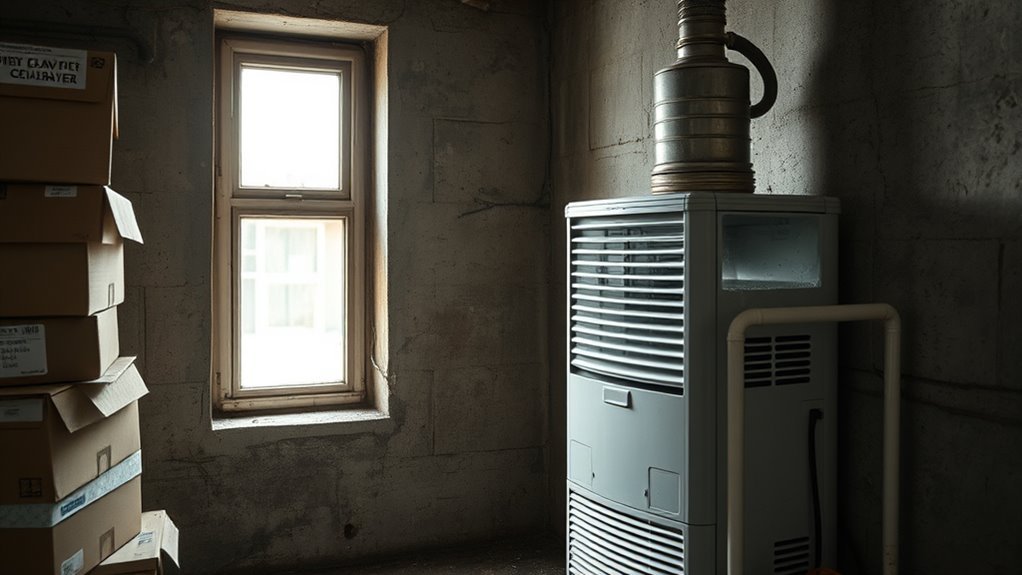
A household dehumidifier can provide years of reliable moisture control, but its actual lifespan depends on its design, workload, room temperature, maintenance, drainage, and the amount of moisture entering the space. Rather than replacing it on a fixed date, watch its humidity performance, runtime, noise, heat, drainage, and repair history.
Quick Answer
Most household dehumidifiers last about 5 to 10 years, and eight years is a useful planning benchmark. Heavy use, dust, blocked airflow, poor drainage, cold-room frosting, and incorrect sizing can shorten that life. Regular filter cleaning, sensible humidity settings, and quick attention to unusual noise or heat can help the unit last longer.
Key Takeaways
- Five to ten years is a practical planning range, not a warranty or guaranteed replacement interval.
- An older housing-component study listed eight years as a general dehumidifier life-expectancy benchmark.
- Clean washable filters every few weeks during heavy use, or follow the exact schedule in your manual.
- Frost does not always mean failure. Standard units can frost in rooms below about 65°F.
- Before replacing the unit, check its setpoint, filter, airflow, bucket, drain, room temperature, sizing, and recall status.
- Control leaks, standing water, and ground moisture instead of expecting a dehumidifier to overcome them.
At a Glance
| Time Required | About 15 to 30 minutes for a basic inspection and cleaning |
| Difficulty | Easy for routine care; internal electrical and refrigerant repairs require a qualified technician |
| Tools Needed | Separate hygrometer, vacuum with brush attachment, soft cloth, mild dish soap, water, and a towel |
| Cost | Usually no added cost for routine cleaning; parts and professional service vary by model |
What Is the Average Dehumidifier Lifespan?
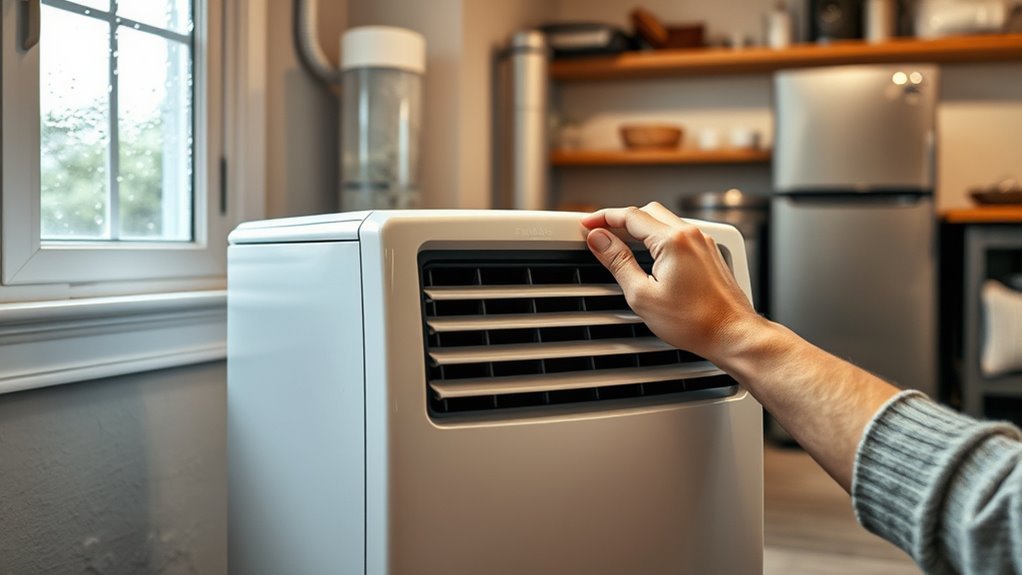
A practical expectation for many household dehumidifiers is about 5 to 10 years. A widely cited 2007 National Association of Home Builders study listed dehumidifiers at eight years, but the report also warned that maintenance, climate, installation quality, and intensity of use can change the result.
That eight-year figure is best treated as a planning benchmark, not a promise. A portable unit running through every humid day in a dusty basement may fail much earlier. A correctly installed whole-home or crawl-space model with dependable drainage and professional service may remain useful for longer.
| Unit or Use Type | What to Expect | Main Life-Limiting Factors |
|---|---|---|
| Portable compressor unit | Often reaches the shorter end of the range under heavy basement or laundry-room use | Dust, blocked airflow, frequent moving, full buckets, cold-room frost, and long runtime |
| Dedicated crawl-space unit | Can provide longer service when the space is sealed, drained, and maintained | Ground moisture, corrosion, dirt, standing water, poor drainage, and difficult service access |
| Whole-home unit | May outlast a basic portable unit because parts are often more serviceable | Poor installation, duct restrictions, drain faults, incorrect controls, and missed professional maintenance |
| Thermoelectric or desiccant unit | Not directly comparable with a compressor model because the technology and moisture-removal capacity differ | Fan wear, heating elements, power supply, desiccant condition, and use outside the intended space size |
Note: A unit does not need replacement only because it has reached a certain age. Replace it when safety, repeated failures, declining moisture removal, unavailable parts, or repair cost make continued use unreasonable.
What Affects Dehumidifier Lifespan?
A dehumidifier’s lifespan depends on its operating hours, the amount of water it must remove, the cleanliness of its airflow path, room temperature, drainage reliability, and how well its capacity matches the space. A correctly sized unit with a humidistat can cycle off after reaching its target. An undersized unit may run for long periods without catching up.
Usage Frequency
Frequent operation creates more wear on the compressor, fan, controls, and drain system. However, long runtime does not automatically mean the machine is overheating or defective. It may be drying moisture stored in concrete, wood, furniture, and other materials, especially during its first few days in a damp space.
| Operating Pattern | Likely Effect | Better Practice |
|---|---|---|
| Runs heavily during humid seasons | Normal added wear | Clean the filter more frequently and verify that the capacity matches the space |
| Runs continuously during initial drying | May be normal for several days | Track humidity with a separate hygrometer and confirm that readings are falling |
| Runs continuously for weeks without reaching the target | Possible sizing, airflow, temperature, leakage, or mechanical problem | Inspect the room and unit instead of simply lowering the setpoint |
| Cycles normally around the setpoint | Lower unnecessary runtime | Use a reasonable humidity target rather than continuous mode after the space is dry |
Maintenance and Conditions
Dust, pet hair, lint, poor clearance, and a clogged filter reduce airflow. The unit may remove less water while the fan and compressor operate for longer periods. Keep the intake and discharge clear, and follow the manufacturer’s minimum wall-clearance instructions.
Room temperature also matters. According to ENERGY STAR buying guidance, frost can form on conventional dehumidifier coils when the space falls below about 65°F. A model approved for lower temperatures or equipped with effective automatic defrost is a better choice for a cool basement or crawl space.
- Use a separate hygrometer to check whether the room is actually reaching the selected humidity.
- Keep doors and windows closed while dehumidifying unless ventilation is part of a planned moisture-control strategy.
- Fix plumbing leaks, roof leaks, groundwater entry, and dryer-vent problems.
- Keep the bucket seated correctly and the continuous-drain hose clear.
- Do not place objects against the inlet or warm-air outlet.
- Use the unit only within the temperature and clearance limits in its manual.
The U.S. Environmental Protection Agency recommends keeping indoor relative humidity below 60% and ideally around 30% to 50%. A setting near 45% to 50% is suitable for many damp household spaces without forcing the machine to chase an unnecessarily low target.
ENERGY STAR states that a certified dehumidifier removes the same amount of moisture as a comparable standard model while using about 20% less energy.
Signs Your Dehumidifier Is Failing
Weak moisture removal can indicate appliance failure, but it can also come from a dirty filter, open doors, low room temperature, an unrealistic setpoint, poor sizing, or an active water source. Complete the simple checks below before assuming that the compressor has failed.
Recommended Products

Universal Compatibility This dehumidifier drain adapter is specifically designed to fit a wide range of popular dehumidifier models, ensuring seamless integration with your dehumidifier hose. It works perfectly with for AeonAir, for Whirlpool, for Idylis Dehumidifiers, and for RPD-702WP units, and is also compatible with for friedrich dehumidifier systems. No matter which brand you own, this adapter provides a secure and reliable connection for your dehumidifier drain hose.

COMPATIBILITY: Specifically designed as a replacement humidity sensor module board for HIS06 model for dehumidifiers and humidifiers

Multi-Purpose Hose, 6ft Cut-to-Fit:This 6-foot hose is designed for various applications, including dehumidifier drainage and gardening tasks. It can be easily cut to the desired length for flexible use. Please confirm the required length before purchase.
Checks to Make Before Replacing It
- Verify the humidity: Compare the built-in display with a separate hygrometer placed several feet away.
- Check the target: The selected level must be below the current room humidity before the compressor will run.
- Give it enough time: A newly installed unit may need several days to dry the air and moisture stored in room materials.
- Clean the filter: A clogged filter can sharply reduce airflow and water removal.
- Check the bucket: Make sure it is empty, correctly seated, and activating the bucket switch.
- Inspect the drain: Look for a kinked, blocked, loose, frozen, or improperly sloped hose.
- Check airflow: Move furniture, curtains, boxes, and stored items away from the intake and outlet.
- Check room temperature: Frost in a cool room may require defrosting or a low-temperature model.
- Close the space: Open windows or doors can continually introduce humid outdoor air.
- Look for water sources: Repair leaks, standing water, wet walls, exposed soil, or an improperly vented clothes dryer.
After those checks, the following symptoms are stronger signs that service or replacement may be necessary:
| Symptom | What It May Mean | Recommended Action |
|---|---|---|
| Fan runs but no water is collected in a warm, humid room | Compressor, refrigerant system, sensor, or control fault | Confirm settings and humidity, then request service if performance does not improve |
| Grinding, scraping, or repeated loud knocking | Fan, motor, compressor mount, or internal mechanical problem | Turn it off and inspect for safe external causes; arrange service if the noise continues |
| Repeated frost in a room within the rated temperature range | Airflow, temperature sensor, defrost control, fan, or refrigerant problem | Defrost the unit and obtain service if frost quickly returns |
| Random shutdowns or persistent error codes | Sensor, pump, drain, overload, control-board, or electrical fault | Use the model-specific error guide and avoid repeated resets without correcting the cause |
| Water under or inside the unit | Loose hose, cracked bucket, blocked drain, pump fault, ice melt, or internal leak | Unplug it before handling water near electrical components |
| Persistent musty odor | Dirty bucket, wet filter, contaminated drain, or an unresolved room-mold problem | Clean the accessible parts and correct the moisture source |
Warning: Stop using and unplug a dehumidifier that smokes, sparks, smells like burning plastic, repeatedly trips its circuit, has a damaged cord or hot plug, or appears on a safety recall. The U.S. Consumer Product Safety Commission has recalled millions of dehumidifiers because some models could overheat and catch fire. Check the brand, model number, date code, and serial number against the CPSC recall database before repairing or continuing to use an older unit.
How Crawl Spaces Shorten Dehumidifier Life
Crawl spaces can expose equipment to constant moisture, dust, insects, corrosion, low temperatures, and difficult drainage conditions. However, the dehumidifier should not be the first or only defense against a wet crawl space.
Before relying on the unit, correct roof runoff, grading, plumbing leaks, groundwater entry, open sump pits, standing water, torn ground covers, and dryer or HVAC condensate problems. The U.S. Department of Energy’s Building America guidance recommends controlling bulk water and covering exposed crawl-space soil with a continuous vapor barrier as part of a complete moisture-management system.
- Use a model specifically approved for crawl-space temperatures and conditions.
- Provide continuous drainage to an approved location or properly installed condensate pump.
- Protect the hose from kinks, freezing, standing water, and upward runs that prevent gravity drainage.
- Keep the unit raised above areas that could flood.
- Provide safe service access for filter cleaning and inspection.
- Do not place a standard room unit where the manual prohibits installation.
- Inspect the vapor barrier, drain, filter, coils, and surrounding wood regularly.
Pro Tip: Track crawl-space humidity with a separate remote hygrometer. If humidity stays high while the unit runs continuously, investigate water entry, open vents, torn ground covering, drain failure, incorrect sizing, or restricted airflow before assuming that a larger dehumidifier is the only solution.
How to Extend Dehumidifier Lifespan
The best way to extend service life is to maintain airflow, control the moisture source, use a reasonable humidity target, and keep water leaving the machine without leaks or backups. Always follow the model-specific manual when its instructions differ from a general schedule.
Clean Filters Regularly
A dirty filter reduces airflow and moisture removal. It can make the fan and compressor operate longer to achieve the same result. Do not wait one or two years between cleanings.
GE Appliances advises checking filters on some older models every two to three weeks and cleaning filters on newer models at least every 250 operating hours. Danby recommends cleaning every two weeks for efficient performance. Your manual remains the final authority for your model.
- Turn the unit off and unplug it.
- Remove the filter according to the manual.
- Vacuum loose dust or wash it with warm water and mild dish soap if washing is allowed.
- Do not use harsh chemicals or reinstall a wet filter.
- Allow it to dry completely.
- Reinstall it securely before operating the unit.
- Replace a reusable filter only when it is damaged, permanently clogged, or the manual requires replacement.
Monitor Drainage Systems
Continuous drainage reduces bucket-emptying work, but the hose must be installed correctly. A loose, blocked, kinked, frozen, or incorrectly sloped hose can cause a full bucket, pump error, leakage, or shutdown.
- Inspect the hose and fittings at least monthly during regular use.
- Confirm that a gravity hose slopes downward for its entire run.
- Clean buildup using the method allowed in the manual.
- Check pump-equipped units for error codes and pump-reservoir contamination.
- Make sure discharged water cannot flow back toward the appliance.
- Test the drain after moving the unit or changing the hose route.
Keep Airflow Clear and Use the Right Setting
Leave the clearance required by the manufacturer around the intake and outlet. Do not cover the unit or push a side-discharge model against a wall. Vacuum dust from the exterior grilles with the appliance unplugged.
Use continuous mode for initial drying or a specific high-moisture task, not automatically for the entire season. After the space stabilizes, a target around 45% to 50% relative humidity is appropriate for many homes. Avoid an unnecessarily low target that keeps the compressor running without a practical benefit.
Dehumidifier Maintenance Schedule
| Task | General Schedule | Purpose |
|---|---|---|
| Compare humidity with a separate hygrometer | Weekly at first, then monthly or when performance changes | Confirms that the unit is reaching the real room target |
| Inspect and clean the filter | About every two to three weeks during heavy use, or as the manual specifies | Maintains airflow and moisture-removal performance |
| Wash and dry the bucket | Every few weeks or sooner if slime, odor, or residue appears | Reduces mold, bacteria, algae, and odors |
| Inspect the hose and pump | Monthly and after moving the appliance | Prevents leaks, backups, pump errors, and unexpected shutdowns |
| Vacuum exterior grilles | Monthly or more often in dusty or pet-friendly homes | Keeps the intake and discharge open |
| Inspect the cord, plug, cabinet, and operating sound | Monthly | Catches heat damage, abrasion, looseness, leaks, and mechanical changes early |
| Professional service for installed units | According to the installer or manufacturer’s schedule | Checks controls, drainage, ductwork, electrical components, and sealed-system operation |
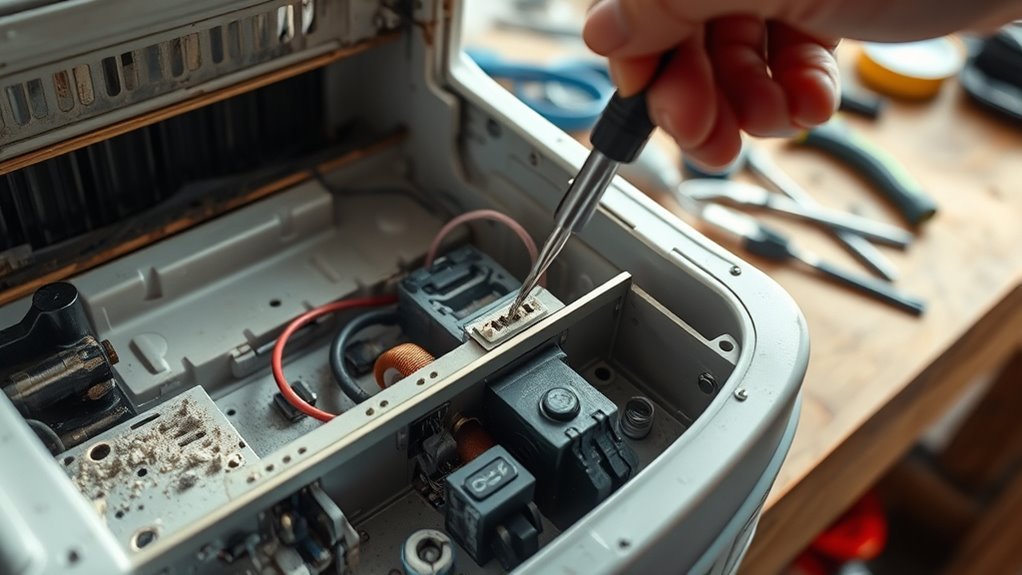
Warning: Do not open the sealed refrigerant system, cut refrigerant lines, bypass safety switches, or attempt live electrical testing unless you are properly trained and authorized. Unplug portable units before routine cleaning.
Should You Repair or Replace Your Dehumidifier?
Age matters, but it should not be the only factor. Start by checking the warranty and recall status. Then identify whether the problem is a simple external issue, a replaceable component, or an expensive sealed-system or control failure.
| Repair May Make Sense When | Replacement Is Usually Better When |
|---|---|
| The unit is still under warranty | The unit is recalled and the remedy requires stopping use |
| The problem is a hose, bucket, float, filter, fitting, or accessible sensor | The cabinet, cord, plug, or electrical system shows heat or fire damage |
| The diagnosis is clear and the required part is available | The compressor or sealed refrigerant system has failed on an older portable unit |
| It is an installed or commercial unit designed to be serviced | Repairs have become frequent or several systems are failing |
| Repair cost is low compared with a suitable replacement | Parts, labor, and downtime approach the cost of a more efficient correctly sized unit |
| The unit still removes moisture effectively after the repair | Humidity remains high despite correct setup, maintenance, and confirmed moisture-source control |
The common “50% rule,” which favors replacement when repair exceeds half the cost of a new appliance, can be used as a budgeting shortcut. It is not a safety standard. A cheap repair is still a poor choice for a recalled or fire-damaged unit, while a costly repair may be reasonable for a serviceable whole-home system covered by a parts warranty.
Recommended Products

Premium Quality Material:This dehumidifier hose is made of durable and thick PVC, which has moderate flexibility and is easy to bend without breaking; Ripple design can prevent tangling, ensure smooth water flow, and make it easy to move in small spaces

Replacement Rivets-Repair Instead Replace a New Pair of Crocs: Did your Croc strap rivet break? Fix it with two replacement parts that ‘SNAP’ together will have you back in your Croc Strap.

Compatibility: There are 2 types of hose connector size design, the larger one is suitable for tubes ranging from 0.79in to 0.98in, and it can also cut to smaller one is suitable for tubes ranging from 0.59in to 0.79in. Beyond dehumidifiers, this versatile hose is ideal for draining portable air conditioners, dishwashers, and washing machines, making it a complete drainage solution
How to Choose a Long-Lasting Dehumidifier
Choose a unit for the real room conditions rather than relying only on a large advertised coverage number. Moisture load, temperature, drainage, and airflow affect performance as much as floor area.
- Correct capacity: Select enough moisture-removal capacity for the space and dampness level. An undersized unit may run constantly.
- Low-temperature rating: Use a model approved for cool basements or crawl spaces when temperatures may fall below 65°F.
- Automatic defrost: This helps protect performance when coil frost begins to form.
- Reliable drainage: Compare gravity-drain, pump, bucket, and hose-routing requirements.
- Accessible maintenance: Look for an easy-to-remove washable filter, accessible bucket, clear filter reminder, and serviceable drain fittings.
- ENERGY STAR certification: Current certified units use more efficient coils, compressors, and fans and consume about 20% less energy than comparable standard models.
- Useful warranty terms: Read the coverage for the full unit, labor, compressor, sealed system, pump, shipping, and commercial or crawl-space use.
- Safety certification: Look for recognized electrical safety certification appropriate to your country or market.
- Recall history: Search the exact brand and model before buying a used or older unit.
- Parts and service: Check whether filters, pumps, hoses, sensors, and authorized service remain available.
Do not assume that the longest advertised warranty or highest pint rating guarantees the longest life. A correctly sized unit operating within its temperature range, with clean airflow and dependable drainage, is more likely to provide reliable service.
Recommended Products

【The Undisputed Champion — Industry‑Leading Dehumidifier Brand】When you choose AEOCKY, you get double market validation. In 2025, AEOCKY was an industry‑leading dehumidifier brand on Amazon US. This means you’re not just choosing a flagship from a market leader, but the top choice proven by millions of real users—representing the ultimate combination of performance, quality, and trust.
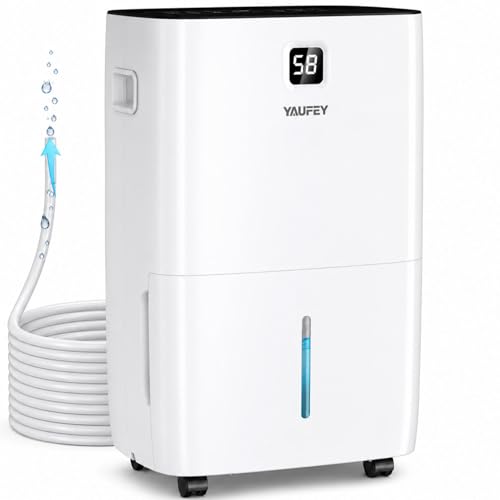
Dehumidifier for Basement: This dehumidifier for home removes up to 150 pints (95℉, 90% RH) of moisture per day and with a maximum dehumidification area of 8500 square feet. This dehumidifier with drain hose has a dehumidification range of 30% to 80%, increasing or decreasing by 5% at a time, which you can adjust to your preferred humidity level. In addition, this basement dehumidifier has 3 modes for you to choose from - Living Area (50% RH), Basement (45% RH) and Continuous (CO).

HIGH CAPACITY PERFORMANCE: Removes up to 90 pints of moisture per day with a high-efficiency compressor, covering large spaces up to 5000 sq. ft., including basements, garages, and living rooms.
Related Guides
Frequently Asked Questions
How often should you replace a dehumidifier?
There is no fixed replacement interval. Many household units provide about 5 to 10 years of service, with eight years serving as a useful general benchmark. Replace yours when it becomes unsafe, repeatedly fails, cannot control humidity after proper troubleshooting, or costs too much to repair.
Why do most dehumidifiers stop working?
Common causes include restricted airflow, dirty filters, blocked or incorrectly installed drains, bucket-switch problems, low-temperature frosting, sensor failures, fan faults, control-board faults, compressor wear, and sealed-system problems. An active leak or an undersized unit can also make a working dehumidifier appear ineffective.
Should you use a dehumidifier if you have COPD?
A dehumidifier may help control excessive moisture and reduce conditions that support mold, which can be especially concerning for people with chronic lung disease. It does not treat COPD. Measure the humidity, avoid over-drying the room, follow your COPD care plan, and speak with your healthcare professional if indoor conditions appear to trigger symptoms. The CDC advises that people with COPD can have difficulty breathing around mold and should avoid mold-cleanup exposure.
Can I throw out an old dehumidifier?
Do not place a refrigerant-containing dehumidifier in ordinary trash unless your local authority specifically permits and manages it. Contact your municipality, waste facility, retailer, utility program, or qualified appliance recycler. Never cut refrigerant lines or remove the compressor yourself. In the United States, review the EPA appliance-disposal guidance.
Is it normal for a dehumidifier to run all day?
It can be normal during the first few days in a very damp room or during unusually humid weather. It is less normal when the humidity reading does not fall. Check the filter, room closure, setpoint, capacity, airflow, drain, room temperature, and active moisture sources. Confirm the result with a separate hygrometer.
Does frost mean my dehumidifier is broken?
Not always. Frost can form when a standard compressor dehumidifier operates below about 65°F. Turn the unit off and allow it to defrost, clean the filter, confirm airflow, and check the model’s temperature rating. Repeated frost within the approved temperature range can indicate a fan, sensor, defrost, airflow, or refrigerant problem.
Sources
- NAHB Study of Life Expectancy of Home Components — general eight-year dehumidifier planning benchmark and factors affecting component life
- ENERGY STAR Dehumidifiers — efficiency, placement, capacity, operating temperature, and frost guidance
- U.S. EPA Guide to Mold, Moisture, and Your Home — indoor humidity targets and moisture-source control
- GE Appliances Dehumidifier Cleaning and Maintenance — filter, tank, grille, and routine cleaning guidance
- U.S. Consumer Product Safety Commission Dehumidifier Warning — overheating, fire hazards, and recall action
- U.S. EPA Appliance Disposal — responsible disposal of dehumidifiers containing refrigerants
Conclusion
Most dehumidifiers provide about 5 to 10 years of service, with eight years serving as a useful planning benchmark rather than a guaranteed expiration date. Clean the filter frequently, keep the intake and outlet open, maintain reliable drainage, use a reasonable humidity setting, and correct leaks or ground moisture that force the unit to work continuously.
Do not replace a machine only because it is old, and do not keep using one that is unsafe. Check its actual humidity performance, room temperature, recall status, warranty, error codes, repair history, and parts availability. When a correctly installed unit can no longer control moisture reliably, or when electrical, compressor, or sealed-system repairs are no longer sensible, replacement is usually the safer long-term choice.