Affiliate disclosure: As an Amazon Associate I earn from qualifying purchases. This article contains affiliate links to Amazon, so we may earn a commission if you buy through them, at no extra cost to you.
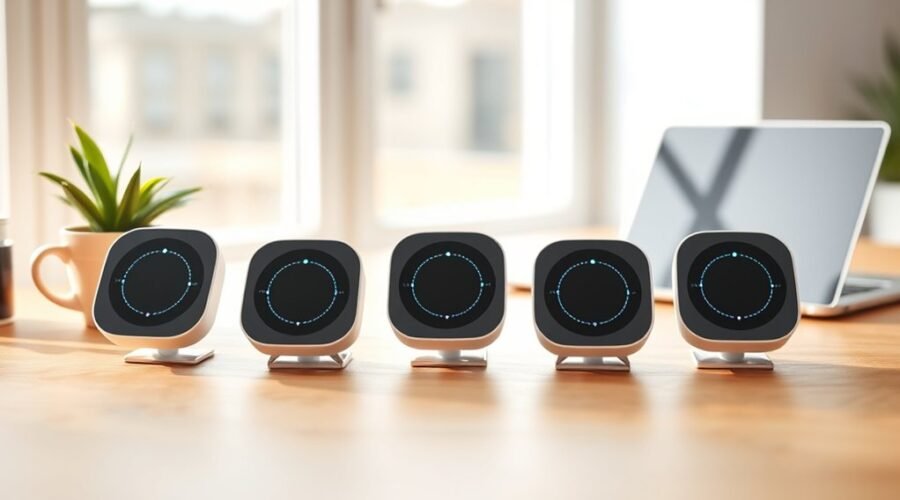
The 5 best indoor air quality monitors for 2026 include the Airthings View Plus, Amazon Smart Air Quality Monitor, IQAir Indoor Air Quality Monitor, Awair Element, and Temtop M10i. These models track key pollutants such as PM2.5, VOCs, CO2, humidity, and temperature with accurate sensors and smart app support. Some add Alexa integration, cloud history, or radon detection. Each offers a different mix of portability, alerts, and convenience, with more useful details coming next.
Airthings View Plus Radon & Air Quality Monitor
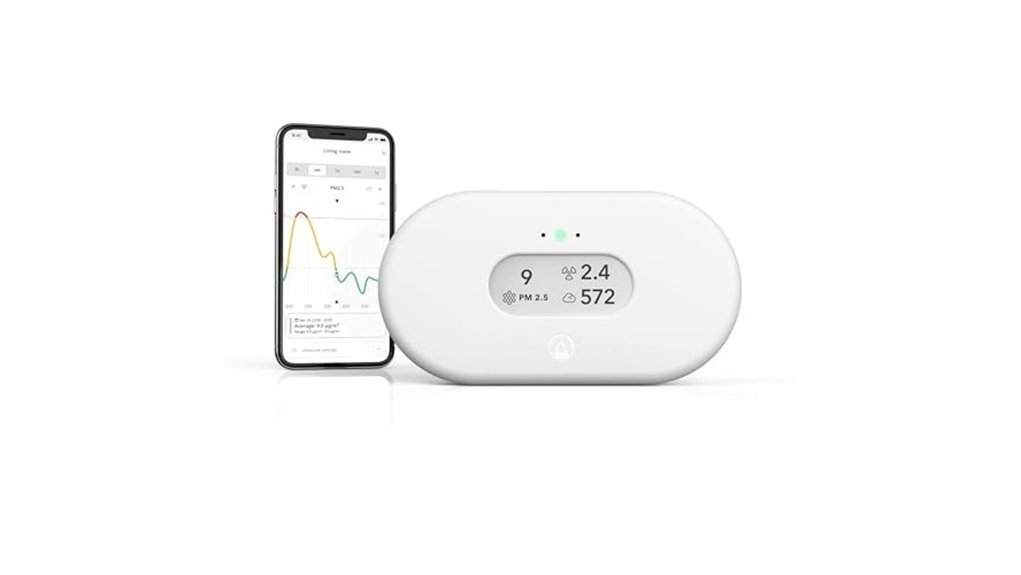
For households concerned about both radon and everyday indoor pollutants, the Airthings View Plus 2960 stands out as a practical choice because it continuously tracks radon, PM2.5, CO2, VOCs, humidity, temperature, and air pressure in one battery-powered, WiFi-connected monitor. Its always-on sensors support real-time awareness, while the Airthings app adds live data, alerts, and guidance for improving conditions. The customizable eInk display improves readability, and cloud storage helps preserve trends for later review. Backed by extensive user trust and a straightforward setup, it suits cable-free placement. Registration can extend warranty coverage to five years.
Best For: Households that want a cable-free, battery-powered monitor to continuously track radon and a wide range of indoor air quality factors with app-based alerts and guidance.
Pros:
- Measures radon, PM2.5, CO2, VOCs, humidity, temperature, and air pressure in one device.
- Always-on sensors, WiFi connectivity, and the Airthings app provide real-time data, notifications, and tips.
- Customizable eInk display and cloud storage make readings easy to view and trends easy to review.
Cons:
- Requires the Airthings app and WiFi connection to use fully.
- Battery-powered operation may mean periodic battery management.
- Best value depends on whether you need multi-sensor air monitoring rather than just radon detection.
Amazon Smart Air Quality Monitor – Know your air, Works with Alexa
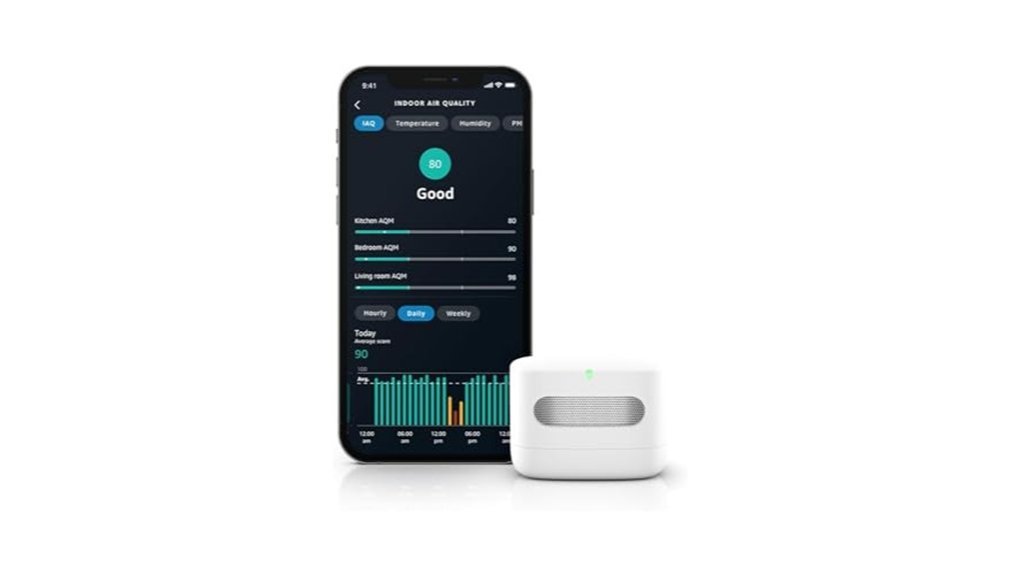
The Amazon Smart Air Quality Monitor suits Alexa users wanting simple, real-time indoor air tracking. It measures PM2.5, VOCs, carbon monoxide, humidity, and temperature, then shows a color-coded status light for quick reading. More detailed air scores appear in the Alexa app. When air quality worsens, it sends phone alerts or Echo announcements. It also supports automations with compatible Alexa devices, including air purifiers, dehumidifiers, and fans. Its temperature and humidity sensing can help coordinate with Amazon Smart Thermostat. Setup is straightforward through the Alexa app, with voice control for routines and updates.
Best For: Alexa users who want an easy-to-set-up indoor air quality monitor with real-time alerts, basic automation, and voice control.
Pros:
- Tracks five important air factors: PM2.5, VOCs, carbon monoxide, humidity, and temperature.
- Works with Alexa for app-based scores, notifications, and Echo announcements.
- Supports routines and smart-home automations with compatible devices.
Cons:
- Requires Alexa ecosystem compatibility, so it’s not ideal for non-Alexa users.
- Provides monitoring and alerts, but does not actively clean the air itself.
- Best features depend on compatible smart devices and Alexa app use.
IQAir Indoor Air Quality Monitor with CO2 PM2.5 Tracking
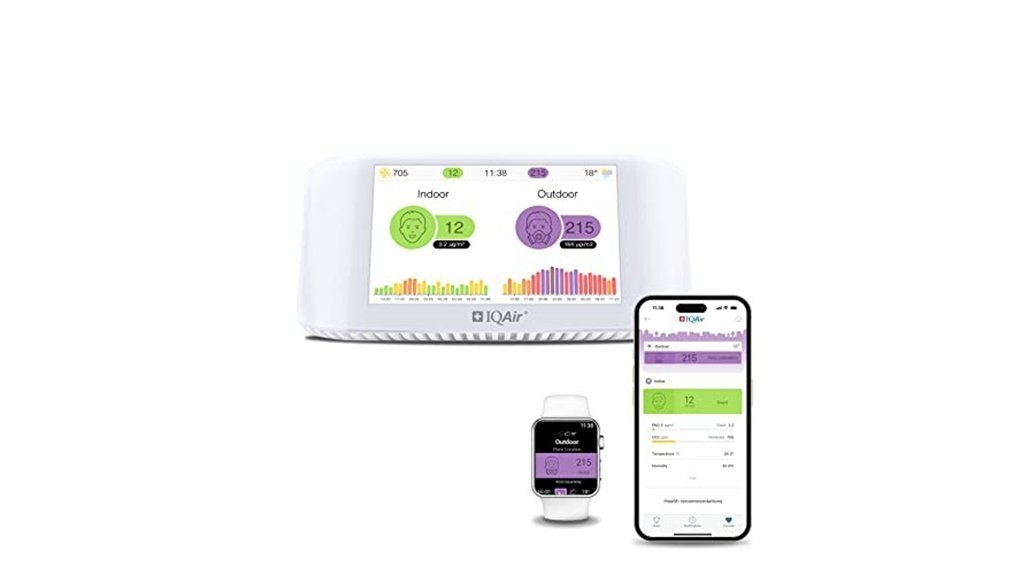
IQAir’s Swiss-built monitor suits households wanting professional-grade indoor air tracking. It measures PM2.5, CO2, AQI, temperature, and humidity in real time, using high-precision laser sensors for detailed readings of smoke, dust, and other indoor contaminants. The device stores historical air quality, temperature, and humidity data, while forecasting trends for added context. Wi-Fi support enables remote viewing through smartphone, tablet, or desktop apps, and setup is quick. Rechargeable by outlet or USB, it also offers customizable alerts and health recommendations, helping users respond to cooking, cleaning, smoking, or wood-burning pollution promptly.
Best For: Households and individuals who want professional-grade, real-time indoor air quality monitoring with detailed tracking of PM2.5, CO2, temperature, humidity, and alerts.
Pros:
- Measures PM2.5, CO2, AQI, temperature, and humidity in real time with high-precision sensors
- Wi‑Fi connectivity and app support make remote viewing and setup easy
- Stores historical data and provides forecasting, alerts, and health recommendations
Cons:
- Primarily focused on indoor air quality, so it may not replace a full outdoor monitoring setup
- Professional-grade features may come with a higher price point than basic monitors
- Rechargeability and app dependence may be inconvenient for users who prefer simpler, standalone devices
Awair Element Indoor Air Quality Monitor – AQM8002A
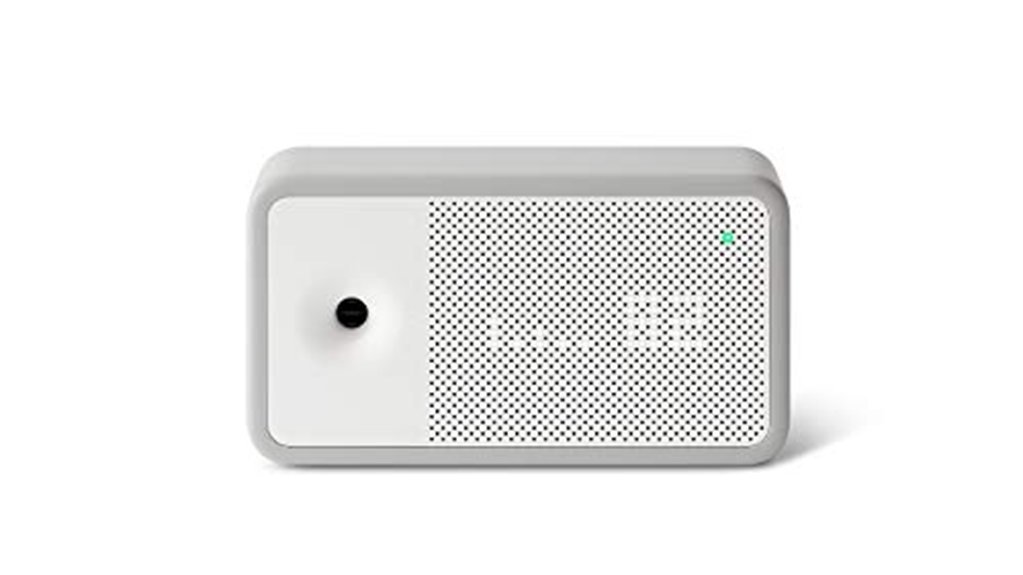
Awair Element tracks temperature, humidity, CO2, VOCs, and PM2.5 in real time. The AQM8002A model from Awair presents indoor air quality data with immediate readings and trend tracking over time. It pairs with the Awair Home app, which supplies feedback and practical tips for improving conditions. Setup requires Bluetooth, and full operation depends on a 2.4 GHz Wi-Fi network. Designed to educate users, it emphasizes simple, cost-effective ways to improve the home environment. Its white and grey trim finish suits common household settings, while its monitoring scope supports informed daily decisions.
Best For: Homeowners or renters who want a straightforward indoor air quality monitor with real-time tracking and app-based tips for improving their environment.
Pros:
- Monitors temperature, humidity, CO2, VOCs, and PM2.5 in real time.
- Pairs with the Awair Home app for feedback, trends, and practical improvement tips.
- Easy to integrate into a home setting with a compact white/grey design.
Cons:
- Requires Bluetooth for setup and a 2.4 GHz Wi-Fi network for full functionality.
- Focuses on monitoring and guidance rather than actively improving air quality itself.
- Limited to indoor air quality features, so it may not suit users wanting broader smart-home capabilities.
Temtop Smart Air Quality Monitor (M10i)
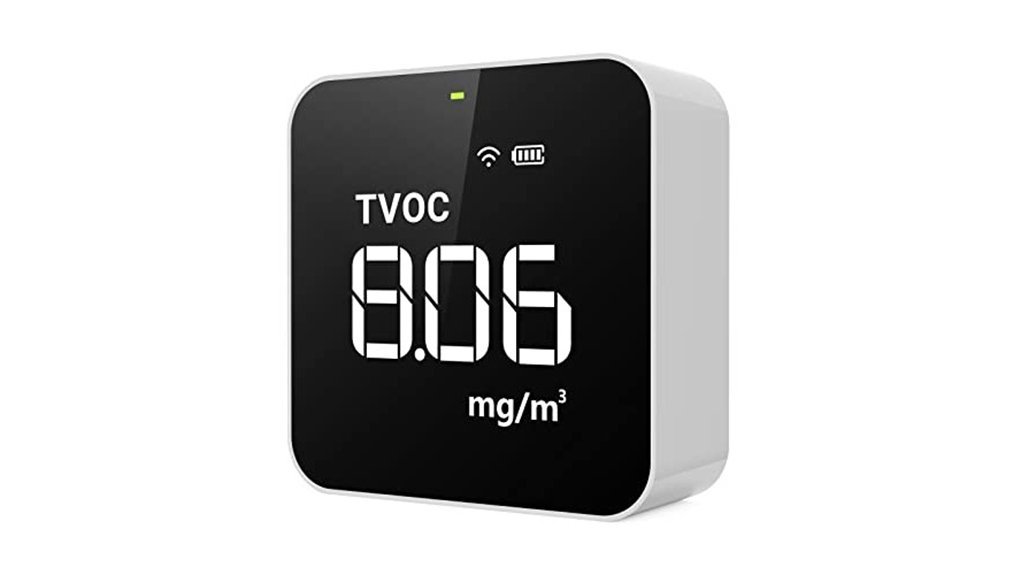
For users who want remote, app-based air monitoring, the Temtop Smart Air Quality Monitor M10i stands out. It measures AQI, PM2.5, formaldehyde, and VOCs, providing a broad snapshot of indoor air conditions. A pre-calibrated, professional-grade particle sensor and industrial laser technology support accurate PM2.5 readings, while British Dart formaldehyde sensing adds chemical detection. The 4-in-1 design helps identify problems early, and a three-color LED quickly signals air quality. Simple one-button controls make operation straightforward. WiFi connectivity and app access enable remote checks, and keeping it plugged in is recommended for best performance.
Best For: Users who want a WiFi-enabled indoor air quality monitor with app-based remote tracking and easy, at-a-glance readings of PM2.5, formaldehyde, and VOCs.
Pros:
- Accurate PM2.5 monitoring with a pre-calibrated, professional-grade particle sensor and laser technology
- 4-in-1 air quality detection covers AQI, PM2.5, formaldehyde, and VOCs for broader insight
- Simple one-button operation, three-color LED indicator, and app connectivity for convenient use
Cons:
- Best performance is recommended while plugged in, so it is less ideal for fully portable use
- Formaldehyde and VOC readings may be less useful without proper calibration and context
- Noisy or complex air quality changes may require app checking rather than relying only on the LED indicator
Factors to Consider When Choosing Indoor Air Quality Monitors 2026: Top Picks and Buying Guide
Choosing an indoor air quality monitor in 2026 starts with the pollutants it tracks, since PM2.5, VOCs, carbon dioxide, humidity, and temperature each reveal different air conditions. Sensor accuracy, reliable connectivity, and useful app features such as alerts and trend histories help determine how practical the device will be day to day. Power source and placement also matter, because a monitor performs best when it can stay powered consistently and sit where it measures air accurately.
Key Pollutants Monitored
Key pollutants form the core of indoor air quality monitoring, with most devices tracking PM2.5, VOCs, CO2, and humidity to gauge different risks inside a home or workspace. PM2.5 refers to fine particles that can penetrate deep into the lungs and are associated with respiratory and cardiovascular concerns. VOCs capture emissions from cleaners, paints, furnishings, and other materials that affect indoor air. CO2 readings help indicate whether ventilation is adequate, since rising levels often signal stagnant air and possible cognitive strain. Humidity monitoring matters too, because excess moisture encourages mold and dust mites, while very dry air can irritate skin and airways. Continuous tracking of these factors supports timely alerts and practical responses, improving indoor health and safety.
Sensor Accuracy
Sensor accuracy is a critical factor in indoor air quality monitors, since high-precision sensors provide more reliable and consistent readings of pollutants such as PM2.5 and VOCs. Advanced monitors often use professional-grade laser sensors to measure particles and gases in real time with greater precision. This capability helps distinguish meaningful air quality changes from minor fluctuations, improving confidence in the data. Calibration also matters, because even strong sensors can drift over time; devices that support user calibration can maintain measurement accuracy longer. Accurate historical and live readings allow trends to be tracked and indoor conditions to be assessed more effectively. By identifying harmful pollutants promptly, precise sensors support earlier intervention and may contribute to better health outcomes in homes and workspaces.
Connectivity Options
Beyond measurement quality, connectivity shapes how useful indoor air quality monitors are day to day. Wi-Fi is often the most practical option because it supports real-time readings and remote access through smartphones. Some monitors depend on a dedicated app for full operation, so compatibility with the required software matters before purchase. Bluetooth can make setup easier, yet steady performance usually depends on a reliable Wi-Fi network. Smart home integration adds value by linking monitors with voice-controlled assistants and automating fans, purifiers, or thermostats. Models that pair with multiple devices or external sensors can present a broader picture of indoor and outdoor conditions. In practice, the best choice balances easy setup, dependable communication, and enough ecosystem support to fit the home.
App Features
App features often determine how useful an indoor air quality monitor is once it is set up. Real-time air quality data lets users track conditions continuously and respond quickly to changes, while instant alerts add another layer of protection. Strong apps also provide personalized tips based on collected readings, helping users address specific indoor issues with practical guidance. Integration with local weather services can expand context by adding pollen forecasts and outdoor air quality reports alongside indoor measurements. Remote monitoring and control are valuable for checking conditions and managing connected devices from any location. Educational insights can further improve the experience by explaining trends and suggesting ways to maintain healthier air. Together, these features make an app more informative, responsive, and effective overall.
Power And Placement
Power and placement directly affect how well an indoor air quality monitor performs in daily use. Battery-powered models support flexible positioning, while plug-in units suit locations where constant operation matters. Cable-free designs are especially useful when a monitor must move between rooms or sit on a shelf without clutter. Placement should favor open air rather than corners, closets, or blocked surfaces, since restricted airflow can distort sensor readings. Wi-Fi or Bluetooth connectivity can also support convenient access to data from a home network, though connection quality depends on the setup. A clear display with adjustable viewing angles improves readability in bedrooms, offices, and shared spaces. Together, these details help a monitor fit the room while preserving accuracy and practical use.
Alerts And Automation
Alerts and automation can make an indoor air quality monitor more useful by turning sensor data into timely action. Real-time smartphone notifications and smart home alerts help users respond quickly when pollution rises, while color-coded LED indicators provide an immediate visual check of air quality. Customizable thresholds add precision, allowing alerts for specific pollutants before conditions become unhealthy. Some monitors connect with home automation systems, triggering air purifiers, dehumidifiers, or HVAC adjustments without manual input. Voice assistants can further streamline use by delivering updates and enabling routines through simple commands. Together, these features reduce delay between detection and response, making monitoring more proactive. For households seeking convenience and faster intervention, strong alerting and automation support is an important selection criterion.
Frequently Asked Questions
How Often Should Indoor Air Quality Monitors Be Calibrated?
They should be calibrated about once a year, though high-use or critical environments may require every six months. Manufacturer guidance matters, and periodic validation against a known reference helps guarantee readings remain reliable.
Can One Monitor Measure All Major Indoor Air Pollutants Accurately?
A homeowner checking a smoke-prone kitchen may find one device helpful, but no single monitor measures all major indoor pollutants accurately; gases, particles, humidity, and radon usually require different sensors and calibration limits.
Do Air Quality Monitors Work Without Wi-Fi?
Yes, many air quality monitors work without Wi‑Fi, using onboard displays and local sensors. Wi‑Fi mainly enables app syncing, alerts, and historical data; basic measurements still function independently, though features may be reduced.
Where Should I Place a Monitor for the Most Accurate Readings?
Place the monitor at breathing height in a central room, away from windows, vents, kitchens, and doors. It should avoid direct sunlight, drafts, and walls. Consistent placement yields the most accurate readings.
How Long Do Indoor Air Quality Monitor Sensors Usually Last?
Indoor air quality monitor sensors usually last two to five years, though some last longer with proper care. Their accuracy gradually declines, so periodic calibration or replacement is often needed for reliable readings.
Conclusion
Choosing the right indoor air quality monitor is less about chasing every feature and more about finding the clearest window into a home’s hidden atmosphere. As with the old warning that “the air you breathe” is the truest measure of a place, these five picks show how much rests on data you can trust. Whether tracking radon, CO2, or fine particles, each monitor helps turn unseen risks into informed action.