Disclosure: As an Amazon Associate, we earn from qualifying purchases. If you click a link on this page and make a purchase, we may receive a small commission at no extra cost to you.
A small bedroom or office does not always need a large, feature-heavy air purifier. The Clorox Tabletop True HEPA Air Purifier, Model 11020, uses a compact 360-degree design to filter airborne particles in rooms up to 200 square feet. It offers strong particle filtration, simple controls, and quiet low-speed operation, but it lacks the activated-carbon filter and automatic air-quality controls found in some alternatives. This review explains where it performs best and what you should know before buying.
Quick Verdict
Rating: 8/10, Recommended with caveats
Best For: Bedrooms, nurseries, home offices, dorm rooms, and other small enclosed spaces
Bottom Line: Model 11020 delivers verified True HEPA particle filtration in a light, compact unit with three fan speeds and a timer. Its main tradeoffs are slower cleaning in rooms near 200 square feet and no verified activated-carbon layer for targeted odor or gas reduction.
Key Specifications
| Specification | Detail |
|---|---|
| Brand | Clorox |
| Model | 11020 |
| Product type | Tabletop True HEPA air purifier |
| Filtration | Two-stage 360-degree filter with pre-filter and True HEPA filter |
| Particle claim | Captures 99.97% of airborne particles 0.1 microns and larger that pass through the filter |
| Recommended coverage | Five air changes per hour in 80 sq. ft.; two per hour in rooms up to 200 sq. ft. |
| CADR | Smoke: 53 CFM; dust: 59 CFM; pollen: 55 CFM |
| Dimensions | Approximately 7.4 in. wide × 7.4 in. deep × 9.29 in. high |
| Weight | Approximately 3.15 lb. |
| Fan speeds | Three |
| Timer | 2, 4, or 8 hours |
| Additional feature | Adjustable night-light |
| Certification | ENERGY STAR certified |
| Replacement filter | Clorox Model 12020, normally replaced every 6 to 12 months |
What Is the Clorox Tabletop Air Purifier?
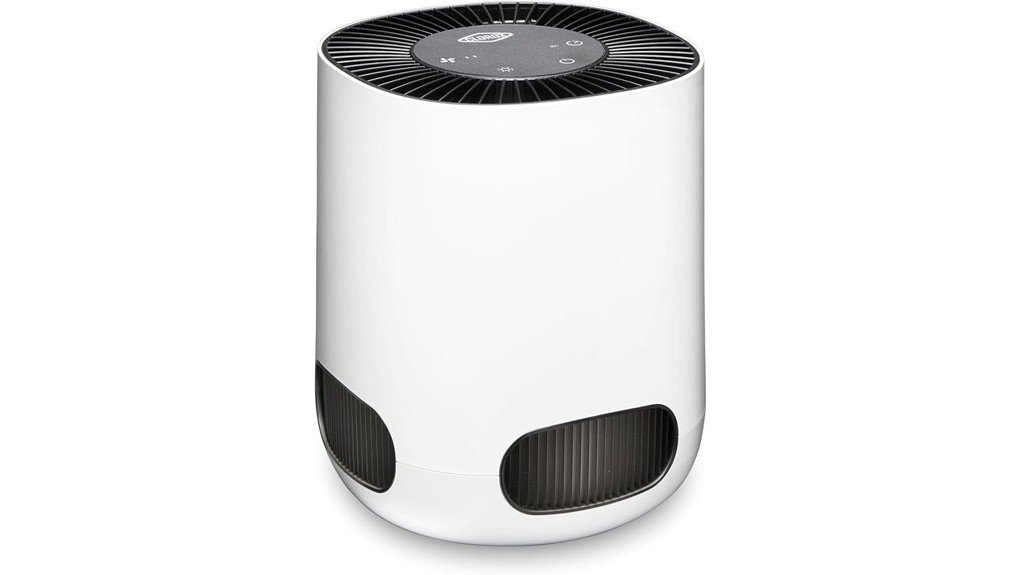
The Clorox 11020 is a compact electric air cleaner made for a tabletop, desk, shelf, or other stable surface in a small room. Its cylindrical intake pulls air from around the unit and passes it through an outer pre-filter and an inner True HEPA filter.
The pre-filter catches larger debris such as pet hair and visible dust. The True HEPA layer targets smaller airborne particles, including pollen, dust-mite debris, and smoke particles. The purifier filters particles suspended in the air, but it does not replace surface cleaning, ventilation, or control of the pollution source.
Who Should Buy It?
Best For
- You need particle filtration in a bedroom, nursery, dorm, or office of about 80 square feet.
- You prefer physical controls instead of an app, Wi-Fi connection, or air-quality sensor.
- You want a compact purifier that weighs just over three pounds and is easy to move.
Skip If
- You need fast cleaning in a large or open-plan room.
- Your main concern is reducing gases or persistent odors with an activated-carbon filter.
- You want automatic fan adjustment, live air-quality readings, or smart controls.
Before You Buy: The 200-square-foot figure does not mean five complete air changes per hour at that room size. Expect about five changes per hour in 80 square feet and two per hour in a room up to 200 square feet.
Filtration and Particle Capture
The two-stage filter is the central feature. Clorox states that its True HEPA layer captures 99.97% of airborne particles measuring 0.1 microns and larger that pass through the filter. That wording matters because no portable purifier can capture every particle in a room at once.
The outer pre-filter helps keep pet hair and larger dust particles away from the HEPA layer. This can support airflow and filter life, although you must still inspect and replace the complete filter when needed.
Unlike Clorox models with three-stage filtration, the 11020 does not list a separate activated-carbon stage. It can capture airborne smoke particles, but buyers focused on cooking smells, tobacco odors, or chemical gases should compare models with a substantial carbon filter.
Room Size and Air-Cleaning Speed
Room size has the greatest effect on this purifier’s performance. In an 80-square-foot room, it can cycle the room’s air about five times per hour under the manufacturer’s test conditions. This makes it a practical size for a small bedroom, nursery, or closed office.
It can serve a room up to 200 square feet, but the rate falls to about two air changes per hour. A purifier with a higher CADR is a better choice when you need faster particle removal, have high ceilings, or plan to use it in an open area.
Pro Tip: Place the purifier several inches away from walls, curtains, furniture, and bedding. Keeping the 360-degree intake and outlet clear helps it move air more effectively.
Noise, Controls, and Nighttime Use
You get three fan speeds, so you can use a higher setting when you first enter the room and switch to the Whisper Quiet setting when you need less noise. The lowest setting is the most suitable for sleep or focused work, while higher speeds move more air and sound more noticeable.
The 2, 4, and 8-hour timer lets you choose a limited operating period without returning to switch the unit off. An adjustable night-light also makes the purifier suitable for a nursery or bedside table, provided you place the cord and unit safely.
Controls are straightforward, but they are basic. Model 11020 does not offer the automatic air-quality response or connected features available on the related smart tabletop model.
How It Performs in Real Use
In a Small Bedroom
An 80-square-foot bedroom is close to the purifier’s strongest use case. Continuous operation can provide about five air changes per hour, while the low fan setting and adjustable light reduce nighttime distraction.
In a Home Office
Its 7.4-inch footprint fits more easily on a shelf or side table than a full-size floor purifier. Keep paper, curtains, and equipment away from the intake so they do not restrict airflow.
In a Nursery
The compact body, night-light, and quiet setting are useful in a nursery. Place the unit and cord where a child cannot reach them, keep the outlet clear, and follow the manual’s electrical-safety instructions.
For Moving and Storage
At approximately 3.15 pounds, the purifier is easy to move between rooms. It still requires a power outlet and is not a battery-powered travel purifier. For long-term storage, protect the unit and filter from moisture and keep them in a cool, dry location.
Setup and Placement Tips
- Remove all packaging from the filter before switching on the purifier.
- Set the unit on a dry, stable, level surface where it cannot be knocked over.
- Keep the air intake and outlet unobstructed on every side.
- Close windows when you want the stated room-cleaning rate, since outside air reduces efficiency.
- Use a higher fan speed when particle levels are elevated, then lower it when the room is more comfortable.
- Do not apply essential oils, fragrance spray, water, or cleaning chemicals to the filter.
Maintenance and Filter Replacement
Clorox recommends replacing the filter every 6 to 12 months, depending on use and room conditions. Model 12020 is the designated replacement filter for the 11020 purifier. Homes with pets, frequent smoke exposure, or heavier dust may need earlier inspection.
Unplug the unit before cleaning or opening the filter compartment. Wipe the exterior with a soft, dry cloth and follow the manual when replacing the filter or resetting the filter indicator. Never wash the True HEPA filter unless the manufacturer specifically labels a replacement as washable.
Safety and Important Limitations
This purifier is intended for indoor household use. Do not operate it outdoors, near open flames, in wet areas, or in greasy environments such as directly beside a cooking surface. Route the power cord away from walkways, heat, and sharp edges.
An air purifier can reduce airborne particles that reach its filter, but it cannot remove settled dust from surfaces or eliminate the source of smoke, mold, or other contamination. Address moisture problems and significant mold growth directly, and seek qualified professional guidance when an indoor-air problem may affect your health.
Pros and Cons
Pros
- True HEPA filter captures 99.97% of particles 0.1 microns and larger that pass through it.
- Five air changes per hour in an 80-square-foot room.
- Compact 7.4-inch footprint and light 3.15-pound body.
- Three fan speeds plus 2, 4, and 8-hour timer choices.
- ENERGY STAR certified and suitable for regular small-room use.
Cons
- Only two air changes per hour at the maximum 200-square-foot room size.
- No verified activated-carbon stage for focused odor or gas reduction.
- No air-quality sensor, automatic mode, app, or smart-home control.
Is It Worth the Price?
The Clorox 11020 offers strong value when you need straightforward True HEPA filtration for one small enclosed room. You receive verified CADR performance, three speeds, a timer, a night-light, and a widely available replacement-filter model without paying for connected features.
Its value becomes weaker if you plan to use it near the 200-square-foot limit or need odor control. In those cases, paying more for higher CADR, activated carbon, or automatic air-quality monitoring may give you better results.
How It Compares to Alternatives
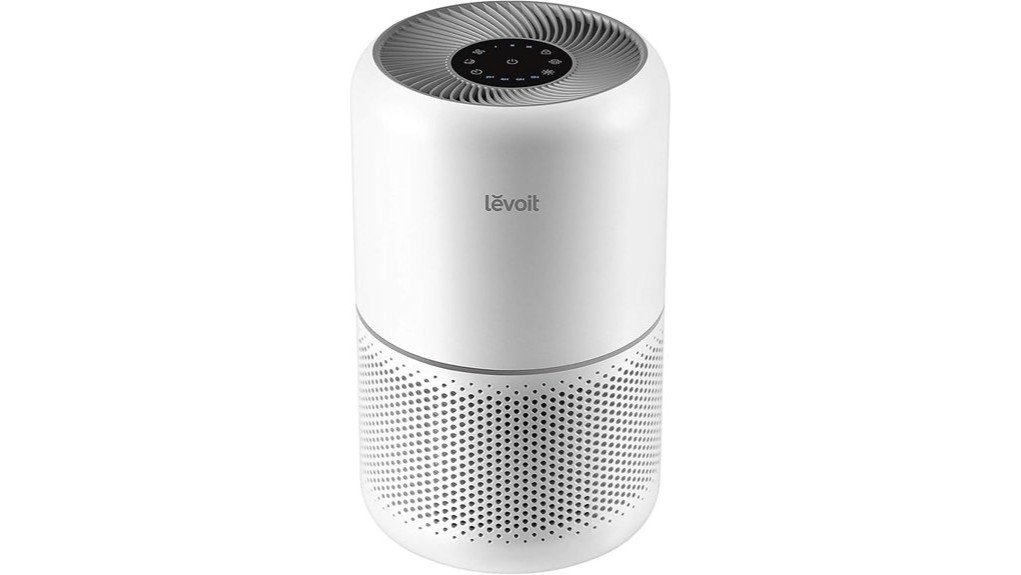
The Levoit Core 200S is worth comparing if you want app control and scheduling. The Clorox Smart Tabletop 11021 offers a similar compact format with connected features, while a larger Clorox room purifier is better when you need higher airflow or broader coverage.
The 11020 makes the most sense when you prefer simple manual controls, a small footprint, and dependable particle filtration without smart features.
Frequently Asked Questions
What room size is best for the Clorox 11020?
It performs best in a room of about 80 square feet, where it can provide five air changes per hour. It can cover up to 200 square feet at a slower rate of about two changes per hour.
Does it have a True HEPA filter?
Yes. Its two-stage filter includes a pre-filter and a True HEPA layer rated to capture 99.97% of airborne particles 0.1 microns and larger that pass through the filter.
Can it remove smoke odors?
The HEPA filter can capture airborne smoke particles that reach it. Model 11020 does not list a separate activated-carbon layer, so it is not the strongest option for persistent odors or gaseous pollutants.
How often should you replace the filter?
The recommended interval is generally 6 to 12 months. Check it sooner if airflow drops, the filter looks clogged, or the unit operates in a dusty or smoky room.
Which replacement filter does it use?
Clorox identifies Model 12020 as the replacement filter for the 11020 tabletop purifier. Confirm the model number before ordering because filters for larger Clorox units have different sizes.
Is it suitable for nighttime use?
Yes. It includes a Whisper Quiet low setting, three fan speeds, a timer, and an adjustable night-light. Noise increases when you select a higher fan speed.
Can you add essential oils to the filter?
No. The manual warns against applying essential oils, fragrance sprays, or cleaners to the filter because they can damage it and reduce its effectiveness.
The Bottom Line
The Clorox Tabletop True HEPA Air Purifier 11020 is recommended for buyers who need compact particle filtration in a small bedroom, nursery, dorm, or office. Choose a higher-capacity or carbon-equipped model if you need faster large-room cleaning, smart controls, or stronger odor reduction.
Ready to Buy?
Check the latest price, filter details, and product information before you decide.