Disclosure: As an Amazon Associate, we earn from qualifying purchases. If you click a link on this page and make a purchase, we may receive a small commission at no extra cost to you.
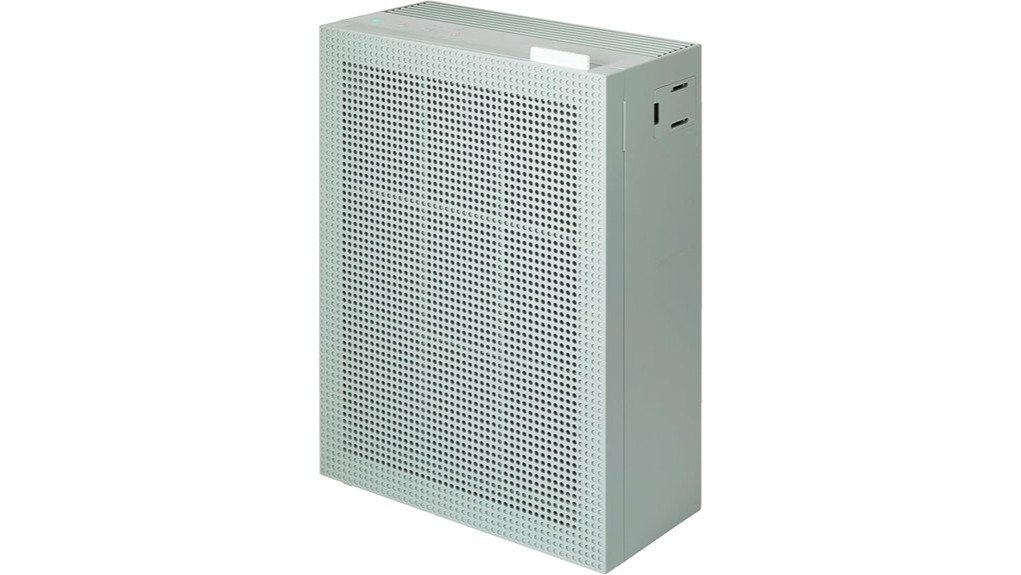
Indoor dust, pollen, odors, and changing air quality can make it hard to know when an air purifier is actually doing useful work. The Coway Airmega 150 combines three-stage filtration, a real-time air quality indicator, and automatic fan control in a compact unit designed for bedrooms, offices, and similar rooms. Its strongest points are quiet operation, simple filter access, and verified coverage up to 1,035 sq. ft. at one air change per hour. The main tradeoff is that this is a straightforward purifier rather than a connected smart-home model, so buyers who want app control may prefer another option.
Quick Verdict
Rating: 8.5/10, Recommended with caveats
Best For: Bedrooms, home offices, and mid-size rooms where you want automatic air-quality response without app setup.
Bottom Line: The Airmega 150 gives you verified three-stage filtration, useful Auto Mode, and a low 19.98 dB minimum noise level. It is less appealing if you need Wi-Fi controls, a dedicated U.S. sleep mode, or higher clean-air delivery for a large open floor plan.
Coway Airmega 150 Key Specifications
| Specification | Detail |
|---|---|
| Brand | Coway |
| Model | Airmega 150 |
| Product type | Corded room air purifier |
| Reviewed Amazon variant | Sage Green |
| Room coverage | 1,035 sq. ft. at 1 air change/hour; 518 sq. ft. at 2 air changes/hour; 214 sq. ft. at 4.8 air changes/hour |
| CADR | 153 smoke, 161 dust, 220 pollen |
| Filtration | Washable pre-filter, deodorization/carbon filter, HEPA filter |
| Particle claim | Reduces 99.97% of 0.3-micron particles according to the Amazon listing |
| Airflow control | Auto, 1, 2, 3 |
| Noise level | 19.98 to 48.3 dB(A) |
| Dimensions | 13.4 x 18.5 x 6.5 in |
| Weight | 12.1 lb |
| Power consumption | 35 W |
| Filter life expectancy | Deodorization filter about 6 months; HEPA filter about 1 year |
| Warranty note | Current U.S. Coway terms list 1 year for internal/functional air-purifier parts and 3 years for motor/electronic parts on Airmega models in this group |
Key Takeaways
- The Airmega 150 is rated for up to 1,035 sq. ft. at one air change per hour, but smaller rooms get more frequent air cleaning.
- Its three-stage system combines a washable pre-filter, deodorization filter, and HEPA filter.
- Auto Mode uses real-time air-quality sensing to raise or lower fan speed without constant manual adjustment.
- Noise ranges from 19.98 to 48.3 dB(A), making the lowest setting practical for quiet rooms.
- Filter care is simple, but the deodorization and HEPA filters remain recurring replacement costs.
What Is the Coway Airmega 150?
The Coway Airmega 150 is a compact, corded air purifier built around a three-stage filter stack. Air first passes through a washable pre-filter for larger debris, then through a deodorization filter for odors and gases, and finally through the HEPA filter for fine airborne particles.
Coway rates the purifier for 1,035 sq. ft. when you only need one full room-air turnover each hour. For more frequent cleaning, the rated area drops to 518 sq. ft. at two air changes per hour and 214 sq. ft. at 4.8 air changes per hour. That distinction matters because a large coverage number does not mean the purifier cleans a large space quickly.
The Airmega 150 is made for buyers who prefer simple controls. You get on-device fan settings, filter-reset controls, a light on/off control, real-time air-quality feedback, and Auto Mode without needing a phone app.
Before You Buy: Match the purifier to the air-change rate you actually want, not only the 1,035 sq. ft. headline. In a 1,035 sq. ft. space, Coway rates the unit for one air change per hour, while a 214 sq. ft. room gets 4.8 air changes per hour.
Who Should Buy It?
Best For
- You want automatic fan adjustment based on current air quality.
- You need a quiet purifier for a bedroom, office, or mid-size room.
- You prefer washable pre-filter access and clear filter-change indicators.
Skip If
- You need Wi-Fi, app control, or smart-home integration.
- You want a dedicated sleep mode on the current U.S. control layout.
- You need faster cleaning for a very large open space.
Filtration Performance and Allergen Control
The Airmega 150’s HyperCaptive filtration setup is the main reason to consider it. The Amazon listing states that its HEPA, carbon, and washable filters reduce 99.97% of 0.3-micron particles, including pollen and other airborne pollutants. The same listing says the filter system reduces 99% of volatile organic compounds and odor.
Those numbers describe filter performance under stated conditions, not a guarantee that every room will reach a specific health outcome. Real results depend on room size, airflow, how often the purifier runs, where you place it, and how much pollution is entering the space.
The CADR ratings give you a more useful performance reference for daily use: 153 for smoke, 161 for dust, and 220 for pollen. The higher pollen CADR makes this model especially relevant when larger airborne particles are a concern, while smoke removal is more modest than the pollen figure.
Auto Mode and Real-Time Air Quality Monitoring
The Airmega 150 continuously monitors particle conditions and can change fan speed automatically in Auto Mode. That means you can leave it running without constantly choosing a speed yourself. When air quality worsens, the unit can increase airflow, then reduce it again as conditions improve.
The air-quality indicator provides a visible status cue, and Coway lets you turn the indicator light off when you do not want the glow in a dark room. This is useful at night even though the U.S. model’s listed airflow controls are Auto, 1, 2, and 3 rather than a separately labeled sleep mode.
Noise Level and Daily Comfort
Coway lists a noise range of 19.98 to 48.3 dB(A). At the low end, the purifier is quiet enough for many bedrooms or workspaces. At the high end, you will hear the fan more clearly, especially in a quiet room.
Auto Mode helps balance those two needs because the purifier can stay at a lower speed when the sensor reads cleaner air and increase output only when needed. If you are noise-sensitive, you can also use a lower manual speed, though that reduces how quickly the unit moves air.
Design, Controls, and Filter Access
At 13.4 x 18.5 x 6.5 inches and 12.1 pounds, the Airmega 150 has a slim rectangular footprint that is easier to place than many wider purifiers. The reviewed Amazon ASIN is listed in Sage Green, while Coway also sells the model in other finishes depending on market and stock.
The touch controls cover power, fan speed, light on/off, and filter reset. Coway’s cartridge-style filter design keeps the main filters together, which makes removal and replacement cleaner than handling several loose filter pieces.
Pro Tip: Give the air intake and outlet open space instead of pushing the purifier tightly against furniture or curtains. Better airflow helps the unit move room air more effectively, and you should still follow the placement clearances in the Coway manual.
What to Expect in Everyday Use
For Bedrooms
The low 19.98 dB minimum noise level and light-off control are the main benefits in a bedroom. Auto Mode can also reduce the need to change fan speeds manually during the night. If you specifically want a true sleep-mode button, however, this U.S. version does not list one.
For Home Offices
In an office, the compact depth and quiet low setting help the purifier stay out of the way while you work. The air-quality indicator gives you quick feedback without opening an app or checking a separate sensor.
For Cooking Odors and Everyday Smells
The deodorization filter is designed to reduce odors and VOCs, so the Airmega 150 can help with lingering smells after cooking or other everyday indoor sources. It is still not a substitute for a kitchen exhaust fan or ventilation when you are producing smoke, moisture, or combustion gases.
For Larger Rooms
The purifier can cover up to 1,035 sq. ft. at one air change per hour, but buyers who want more frequent cleaning should size it for a smaller area. For example, Coway’s own specification is 518 sq. ft. at two air changes per hour and 214 sq. ft. at 4.8 air changes per hour.
Easy Ways to Maintain Your Filters
Routine maintenance is simple because the pre-filter slides out for washing. Coway says you can rinse the pre-filter and hang it to dry before reinstalling it. Make sure it is fully dry before it goes back into the purifier.
The deodorization filter has an expected life of about six months, while the HEPA filter is expected to last about one year. Actual life can vary with use and indoor pollution, so the built-in filter alerts are more useful than relying only on a calendar.
| Maintenance Task | When to Do It | Practical Note |
|---|---|---|
| Wash pre-filter | As needed when dust builds up | Rinse, then hang dry completely before reinstalling. |
| Replace deodorization filter | About every 6 months | Filter life varies with odor and pollutant load. |
| Replace HEPA filter | About every 1 year | Use the filter indicator and operating conditions as guides. |
| Check filter alerts | During normal use | The unit has separate replacement alerts for key filters. |
Placement and Electrical Safety
Place the Airmega 150 where air can reach the intake and leave the outlet without obstruction. Avoid blocking it with curtains, bedding, boxes, or furniture, and follow the spacing and electrical instructions in the product manual.
This purifier can reduce airborne particles and odors, but it does not replace source control, cleaning, ventilation, smoke alarms, or carbon-monoxide alarms. If indoor air quality is causing persistent symptoms or you suspect a hazardous exposure, seek guidance from an appropriate health, HVAC, or environmental professional.
Pros and Cons
Pros
- Three-stage filtration with washable pre-filter, deodorization filter, and HEPA filter.
- Auto Mode responds to changing particle levels without app setup.
- Low 19.98 dB minimum noise rating suits quiet rooms.
- Filter alerts and slide-out pre-filter simplify maintenance.
- Strong pollen CADR of 220 for a compact unit.
Cons
- No advertised Wi-Fi or app control on this model.
- Large-room coverage drops sharply when you want more air changes per hour.
- Deodorization and HEPA filters are recurring replacement costs.
Is It Worth the Price?
The Airmega 150 sits in the mid-range part of the compact air-purifier market. Its value comes from the combination of verified CADR figures, automatic air-quality response, low minimum noise, filter-change indicators, and a washable pre-filter rather than from smart-home extras.
It is worth considering if you care more about simple operation and quiet daily use than app features. It is not the best fit if your priority is maximum CADR for a very large room or connected controls.
How It Compares to Alternatives
The Coway Airmega 100 is smaller and lighter, with a lower smoke, dust, and pollen CADR and coverage of 810 sq. ft. at one air change per hour. It is a better comparison if you want a compact cylindrical design and a model with a dedicated sleep mode.
The Coway Airmega Mighty AP-1512HH is the stronger choice when you need more airflow. Coway lists higher CADR figures and 1,680 sq. ft. of coverage at one air change per hour, plus an Eco mode and timer, but it uses more power and has a higher maximum noise rating. The Airmega 150 makes more sense when compact size, low minimum noise, and simple controls matter more than maximum output.
Frequently Asked Questions
How large a room can the Coway Airmega 150 handle?
Coway rates it for 1,035 sq. ft. at one air change per hour, 518 sq. ft. at two air changes per hour, and 214 sq. ft. at 4.8 air changes per hour. Choose the smaller coverage figure when you want faster, more frequent air cleaning.
Does the Airmega 150 use a HEPA filter?
Yes. The filter system includes a washable pre-filter, deodorization filter, and HEPA filter. The Amazon listing states that the system reduces 99.97% of 0.3-micron particles.
How often do the Airmega 150 filters need replacement?
Coway lists about six months for the deodorization filter and about one year for the HEPA filter. Use the built-in filter indicators and your actual air conditions as guides because heavy pollution can change real filter life.
Is the pre-filter washable?
Yes. Coway describes the pre-filter as washable and designed to slide out for cleaning. Rinse it as directed and allow it to dry fully before placing it back in the purifier.
Does the Coway Airmega 150 have a sleep mode?
The current U.S. specification lists four airflow controls: Auto, 1, 2, and 3, so there is no separately labeled sleep mode. You can turn off the air-quality indicator light and use a lower fan speed for quieter nighttime operation.
Does the Airmega 150 have app or Wi-Fi control?
This model is built around on-device controls and automatic sensing, and the current U.S. product listing does not advertise Wi-Fi or app control. If connected control is essential, compare a smart-enabled purifier before buying.
What warranty does the Coway Airmega 150 include?
Coway’s current U.S. warranty table lists one year for internal and functional parts on Airmega purifiers and three years for motor and electronic parts on Airmega models in the Airmega 150’s group. Warranty eligibility and exclusions depend on Coway’s current terms, purchase channel, and proof of purchase.
Who should skip the Airmega 150?
Skip it if you need app control, a dedicated sleep mode, or much higher airflow for a large open area. You should also compare long-term filter costs if you plan to run the purifier continuously in a high-pollution environment.
The Bottom Line
The Coway Airmega 150 is a strong fit for bedrooms, home offices, and mid-size rooms where you want quiet operation, automatic air-quality response, and easy filter maintenance. Its main strengths are its verified three-stage filtration, useful CADR figures, and simple controls, while its main limitations are the lack of app connectivity and lower air-change frequency in very large spaces. For buyers who value straightforward air purification over smart features, the 8.5/10 recommendation is reasonable.