Running a portable air cleaner in a muggy basement or waking up with a dry throat next to one makes many homeowners ask: does an air purifier dehumidify? While both appliances pull room air through an intake grille, particle filtration and moisture extraction rely on completely different mechanics. Understanding how each machine treats the air helps you stop mold, static, and allergies without buying the wrong device.
Quick Answer
No, an air purifier does not dehumidify or lower room humidity. It pulls air through dry mechanical and carbon filters to trap solid particles and odors, leaving water vapor untouched. To remove moisture and keep indoor relative humidity between 30% and 50%, use a dehumidifier, air conditioner, or exhaust ventilation.
Key Takeaways
- Solid particles vs. gas vapor: True HEPA filters capture at least 99.97% of particles at 0.3 microns, whereas water vapor molecules pass straight through dry filter fibers.
- Why purifiers feel dry: Exhaust fans speed up moisture evaporation from your skin, eyes, and nasal passages without lowering the room’s actual relative humidity.
- Target humidity thresholds: Keeping indoor relative humidity between 30% and 50% suppresses dust mites (which thrive above 50%) and prevents mold growth (which accelerates above 60%).
- High humidity hurts filtration: Relative humidity above 60% saturates activated carbon pores with water molecules and causes damp dust to cake onto HEPA pleats.
- Ultrasonic humidifier conflict: Filling an ultrasonic humidifier with tap water releases mineral “white dust” that spikes purifier PM2.5 sensors and clogs filters early.
Does an Air Purifier Dehumidify?
No, an air purifier does not dehumidify your room because it lacks cooling coils, a water tank, or moisture-absorbing desiccant material. Its sole job is to pull room air through dry filters that trap suspended pollutants and push cleaner air back out. According to the U.S. Environmental Protection Agency’s guide to air cleaners, portable air cleaners filter air in a single room to reduce indoor air pollution, but they cannot remove every pollutant or control moisture.
Water vapor exists in the air as an individual gas molecule roughly 0.0004 microns in diameter. Even the densest residential particle filters have microscopic gaps thousands of times wider than a water molecule, so humidity passes right through the unit unchanged.
For true moisture control, match the appliance to the problem: use a dehumidifier to reduce humidity, a humidifier to add moisture in winter, and an air purifier to capture airborne allergens, dust, and smoke.
How Air Purifiers Actually Work
Most portable air purifiers use an internal fan to pull air through a series of dry filtration stages before exhausting it back into the room. Because no condensation or chemical drying occurs inside the housing, the air exiting the grille holds the exact same amount of water vapor as the air entering it.
- Pre-filter: A fine mesh or foam screen that catches coarse lint, human hair, pet fur, and carpet fibers so they do not clog the finer filters behind it.
- HEPA or HEPA-type particle filter: A pleated mat of dense glass or synthetic fibers. Under federal standards, True HEPA filters capture at least 99.97% of airborne particles measuring 0.3 microns—including fine wildfire smoke (PM2.5), pollen, pet dander, dust mite waste, and airborne mold spores.
- Activated carbon or gas-phase filter: A layer of porous charcoal pellets or treated carbon cloth that adsorbs household odors, cooking smells, and volatile organic compounds (VOCs).
By contrast, a compressor dehumidifier pulls humid air across cold evaporator coils chilled below the room’s dew point. Water vapor condenses into liquid droplets that drip into a collection bucket or drain hose, lowering the room’s relative humidity.
Warning: Avoid air cleaners that intentionally generate ozone or use uncertified ionizers that emit ozone as a byproduct. The EPA classifies ozone as a lung irritant that can trigger asthma, chest pain, and throat irritation without removing moisture or safely cleaning indoor air.
Why Air Purifiers Can Feel Dry
An air purifier can make your skin, eyes, and throat feel noticeably drier within an hour of turning it on, even though the room’s humidity has not dropped by a single percentage point. This sensation comes from continuous air circulation rather than moisture removal.
Airflow Evaporation Effect
Every portable air purifier runs a blower fan that cycles room air multiple times per hour. When that moving air passes across your skin, lips, tear film, or nasal passages, it strips away the thin boundary layer of moisture sitting on your body and speeds up evaporation—the same wind-chill mechanism that makes a ceiling fan feel cooling in summer.
| Condition | What You Notice | Quick Fix |
|---|---|---|
| High fan speed in a small room | Skin, lips, or contact lenses dry out faster | Switch the purifier to low, sleep, or auto mode |
| Exhaust grille aimed at your bed or desk | Scratchy morning throat or cool draft | Move the unit 6 feet away and angle the outlet toward the ceiling |
| Winter forced-air heating running | Static shocks, dry nasal passages, and chapped skin | Verify humidity with a hygrometer; run a humidifier if below 30% |
| Hygrometer stays steady at 35%–50% | Room feels dry only when sitting near the purifier | Redirect airflow rather than adding excess moisture |
Dryness Perception Explained
Perceived dryness and low relative humidity are two separate issues. In winter, central heating warms cold outdoor air and causes indoor relative humidity to plummet below 25%, and a purifier’s breeze makes that already-parched air feel harsher. Before plugging in a humidifier, check a digital hygrometer: if your room already sits between 30% and 50%, simply lowering the purifier’s fan speed or turning the exhaust away from your face solves the discomfort.
Pro Tip: Give your air purifier at least 12 to 18 inches of clearance from walls and curtains so air circulates freely, but position it at least 6 feet away from your pillow, desk chair, baby crib, or pet bed to prevent draft irritation.
Air Purifier vs. Dehumidifier
Comparing an air purifier and a dehumidifier comes down to whether you are fighting solid particulates or water vapor. While both improve indoor comfort, they use different internal hardware, energy loads, and performance ratings.
| Feature | Air Purifier | Dehumidifier | Humidifier |
|---|---|---|---|
| Primary Job | Traps airborne particles (and odors/VOCs with carbon) | Extracts water vapor from humid air | Releases water vapor or mist into dry air |
| Effect on Humidity | None (0% change) | Lowers relative humidity | Raises relative humidity |
| Effect on Room Temp | No temperature change (breeze feels cool) | Slightly warms the surrounding air | Cool mist slightly cools; steam slightly warms |
| Sizing Metric | CADR in cubic feet per minute (CFM) | Pints of water removed per 24 hours | Gallons of moisture output per 24 hours |
| Use It When You Notice | Dust, pollen, pet dander, wildfire smoke, cooking odors | Window condensation, musty basement smells, RH above 50%–60% | Dry nose, static electricity, cracking wood, RH below 30% |
ENERGY STAR notes that a dehumidifier removes moisture from the air using refrigeration coils and a compressor, which slightly warms the space around the unit while operating. Standard dehumidifiers include a washable plastic mesh screen only to keep heavy lint off their wet coils—not to purify breathing air. Also keep room temperature in mind: standard compressor dehumidifiers can ice over below 65°F, so unheated basements and crawlspaces below 65°F require either a low-temperature compressor model or a desiccant dehumidifier.
Recommended Products

𝐖𝐇𝐘 𝐂𝐇𝐎𝐎𝐒𝐄 𝐀𝐇𝐀𝐌 𝐕𝐄𝐑𝐈𝐅𝐈𝐃𝐄 𝐀𝐈𝐑 𝐏𝐔𝐑𝐈𝐅𝐈𝐄𝐑𝐒: AHAM (Association of Home Appliance Manufacturers) is an ANSI-accredited organization that sets strict standards for appliance performance. Air purifiers with the AHAM VERIFIDE seal have been independently tested for air cleaning performance and energy efficiency. When you choose an AHAM certified air purifier, you're choosing a product trusted for reliable and effective indoor air quality improvement

Effortless Operation: Simplified control panel with intuitive design makes it easy to operate. No complicated setup—just one tap, and you're on your way to cleaner air, saving time and letting you relax with ease

𝗪𝗛𝗬 𝗖𝗛𝗢𝗢𝗦𝗘 𝗔𝗛𝗔𝗠 𝗩𝗘𝗥𝗜𝗙𝗜𝗗𝗘 𝗔𝗜𝗥 𝗣𝗨𝗥𝗜𝗙𝗜𝗘𝗥𝗦: AHAM (Association of Home Appliance Manufacturers) is an ANSI-accredited organization that sets strict standards for appliance performance. Air purifiers with the AHAM VERIFIDE seal have been independently tested for air cleaning performance, safety, and energy efficiency. When you choose an AHAM certified air purifier, you're choosing a product trusted for reliable and effective indoor air quality improvement
When You Need a Dehumidifier Instead
You need a dehumidifier, exhaust ventilation, or leak repair whenever excess moisture stays trapped indoors. Watch for these specific warning signs:
- Window condensation: Water droplets, fogging, or damp sills along interior glass panes.
- Musty odors: Earthy, damp smells in basements, crawlspaces, closets, laundry rooms, or bathrooms.
- Visible fungal growth: Black, green, or white speckled mold or mildew on bathroom grout, drywall, or baseboards.
- Moisture damage: Peeling paint, soft drywall, clammy bedding, or warped hardwood flooring and doors that stick.
- High hygrometer readings: Indoor relative humidity staying above 50% to 60% for more than 24 hours.
- Worsening indoor allergies: Congestion or sneezing that flares up in damp rooms, driven by dust mites (which thrive at 70%–80% relative humidity and struggle to survive below 50%) or mold spores.
The EPA mold and moisture guide recommends keeping indoor humidity below 60%—and ideally between 30% and 50%—by running dehumidifiers or air conditioners, venting bathroom fans outdoors during showers, using kitchen exhaust hoods while cooking, and drying any water leaks or spills within 24 to 48 hours before mold can colonize.
Recommended Products

【𝐄𝐍𝐄𝐑𝐆𝐘 𝐒𝐓𝐀𝐑 𝐂𝐞𝐫𝐭𝐢𝐟𝐢𝐞𝐝 𝐟𝐨𝐫 𝐄𝐟𝐟𝐢𝐜𝐢𝐞𝐧𝐭 𝐏𝐞𝐫𝐟𝐨𝐫𝐦𝐚𝐧𝐜𝐞】Delivers consistent dehumidification across a variety of real-life conditions. Designed for energy-efficient operation, helping reduce excess power consumption and lower long-term energy costs without sacrificing performance

1600 Sq.Ft High Capacity Dehumidifier- The GoGuess basement dehumidifier is equipped with a quiet yet powerful compressor that efficiently extracts up to 21 pints of moisture per day (tested at 95°F and 90% RH). Perfect for use in basements, offices, bathrooms, bedrooms, kitchens, storage areas, living rooms, laundry spaces, garages, crawl spaces, and RVs. It helps maintain a healthy humidity level between 30% and 70%, promoting a more comfortable and healthier indoor environment

REAL COMPRESSOR DEHUMIDIFIER FOR UP TO 1,600 SQ. FT -Removes up to 21 pints of moisture daily (tested at 95°F/90% RH) and maintains 30%–50% humidity to help reduce dampness and protect furniture from moisture damage. Auto-Defrost prevents coil icing for reliable performance in cooler spaces—ideal as a dehumidifier for basement, bedroom, bathroom, laundry, kitchen, living room, storage spaces, garage, apartment, office, or RV. For best results, close doors and windows
When High Humidity Hurts Air Quality
High relative humidity degrades indoor air quality by fueling biological pollutants and chemical off-gassing. While an air purifier can trap airborne mold spores and dust mite debris after they become suspended in the air, it cannot dry out the damp carpet, drywall, or mattress where those organisms multiply.
The sweet spot for most homes is about 30% to 50% relative humidity: dry enough to discourage mold and dust mites, but not so dry that the air irritates your airways.
If your home is humid, start with moisture source control before relying on filtration. Repair plumbing or roof leaks, vent clothes dryers directly outdoors, clear roof gutters, and slope soil away from your foundation. Once a dehumidifier brings relative humidity back under 50%, an air purifier can efficiently clear the remaining airborne spores and allergens.
How Humidity Affects Air Purifier Performance
Although an air purifier never absorbs water to dehumidify a room, running one in a persistently damp space (above 60% relative humidity) directly reduces filter efficiency and lifespan. High moisture alters how both mechanical HEPA fibers and activated carbon beds behave.
Humidity and Filter Load
In a humid room, microscopic water molecules compete with volatile organic compounds (VOCs) and odor gases for the same microscopic pores inside an activated carbon filter. Above 60% relative humidity, water vapor occupies those adsorption sites first, causing cooking, pet, and musty smells to pass right through the carbon layer. Meanwhile, moisture causes fine dust and lint on the pre-filter and HEPA pleats to clump together into a dense, sticky mat that restricts airflow and forces the fan motor to work harder.
Moisture’s Impact on Efficiency
The EPA emphasizes that dirty, overloaded filters lose filtration efficiency and require scheduled replacement (typically every 60 to 90 days for standard filters, or 6 to 12 months for deep-pleated HEPA drums). If a HEPA filter stays damp in a humid basement or bathroom, bacteria and mold can feed on the organic dust trapped inside the pleats, turning the purifier itself into a source of sour, musty odors. Keep your purifier away from showers, wet basement walls, and sink splashes, and replace any filter that gets wet, warps, or smells musty.
Best Humidity Levels for Comfort
For year-round comfort and respiratory health, maintain indoor relative humidity between 30% and 50%. Official EPA indoor air quality guidelines point to this 30% to 50% window as the safest range to prevent moisture-driven pollutants while keeping mucous membranes comfortable.
- Below 30% relative humidity: Air feels crisp or scratchy; nasal passages, throat, eyes, and skin dry out quickly, static electricity increases, and wood furniture or floors can shrink and crack.
- 30% to 50% relative humidity: Optimal balance for human airways, electronics, wood furnishings, and air purifier filter longevity.
- Above 50% to 60% relative humidity: Dust mite populations multiply rapidly above 50%, and mold spores, mildew, condensation, and musty odors take hold once humidity stays above 60%.
Note: Measure your room with a digital thermo-hygrometer rather than guessing. Place the sensor at breathing height away from exterior windows, heating vents, humidifier mist plumes, and direct purifier exhaust so you get a true room average.
How to Use Air Purifiers With Humidifiers
You can run an air purifier and a humidifier in the same room during dry winter months, provided you separate them and use the right water. Placing them side by side can soak the purifier’s paper-like HEPA media and trigger false air-quality alarms.
If you use an ultrasonic or impeller (“cool mist”) humidifier filled with tap water, it breaks dissolved calcium and magnesium minerals into airborne micro-droplets (“white dust”). Smart air purifiers with optical laser sensors detect this mineral mist as heavy PM2.5 smoke pollution, causing the purifier fan to rev to maximum speed and coating the HEPA filter in white mineral crust.
- Keep at least 6 to 10 feet of distance between the humidifier nozzle and the air purifier intake.
- Use distilled or demineralized water in ultrasonic humidifiers, or switch to an evaporative wick humidifier that traps minerals inside its wick.
- Cap indoor humidity at 50% using a built-in humidistat or standalone hygrometer.
- Empty, wipe dry, and refill portable humidifier tanks daily so standing water does not breed bacteria or mold.
- Scrub and descale portable humidifiers every third day while in use.
The EPA’s home humidifier care guidance specifically warns against humidifying above 50% relative humidity and advises using distilled water and cleaning portable tanks every third day to limit airborne microorganisms and mineral dust.
How to Use Air Purifiers With Dehumidifiers
Pairing a standalone air purifier with a standalone dehumidifier is the most effective way to manage damp basements, laundry rooms, and humid bedrooms. As the dehumidifier pulls relative humidity down below 50%, it stops mold growth and protects the purifier’s activated carbon and HEPA filters from moisture saturation.
- Set your dehumidifier humidistat to maintain 45% to 50% relative humidity so the room stays dry enough to curb dust mites without overworking the compressor.
- Space the units 4 to 6 feet apart on opposite sides of the room so the dehumidifier’s warm exhaust does not blow directly into the purifier’s intake sensor.
- Route continuous drain hoses safely to a floor drain or condensate pump, keeping water buckets and hoses completely clear of the purifier’s power cord.
- Wash the dehumidifier’s intake screen monthly and replace the air purifier’s HEPA and carbon filters on schedule.
What about 2-in-1 air purifier and dehumidifier combo units? While combo machines save floor space in tight apartments, squeezing a refrigerant compressor, water tank, and True HEPA filter into one cabinet usually forces a smaller fan and lower Clean Air Delivery Rate (CADR) than buying two dedicated machines. Separate units also let you run the air purifier year-round while turning off the energy-heavy dehumidifier during dry winter months.
How to Choose the Right Setup for Your Room
Before buying a new appliance, check your room’s relative humidity with a hygrometer and match your symptoms to the right setup below.
| Room Problem | Hygrometer Reading | Best Appliance Setup | Sizing Target to Look For |
|---|---|---|---|
| Dust, pollen, pet dander, wildfire smoke | 30% to 50% RH | True HEPA air purifier (plus carbon for odors) | Smoke CADR at least 2/3 of room sq. ft. |
| Window condensation, clammy air, musty smell | Above 50%–60% RH | Dehumidifier + leak/ventilation fixes | 20–30 pints/day (moderately damp under 2,000 sq. ft.) or 30–50 pints/day (wet) |
| Dry skin, static shocks, winter sinus irritation | Below 30% RH | Evaporative humidifier (or ultrasonic with distilled water) | Humidistat set to shut off at 40%–45% RH |
| Damp basement with mold spores and allergies | Above 55% RH | Separate dehumidifier + True HEPA air purifier | 25–40+ pint dehumidifier + room-matched CADR purifier |
| Dry winter bedroom with pet dander or dust | Below 30% RH | Air purifier + humidifier placed 6–10 feet apart | Quiet bedroom purifier + daily-cleaned humidifier |
When sizing an air purifier, check the Association of Home Appliance Manufacturers (AHAM) directory for its verified Clean Air Delivery Rate (CADR). AHAM’s two-thirds rule states that a purifier’s tobacco smoke CADR should equal at least two-thirds of your room’s floor area (for example, a 300-square-foot bedroom with 8-foot ceilings needs a smoke CADR of at least 200 CFM; rooms with taller ceilings require a higher rating). For dehumidifiers in spaces under 2,000 square feet, ENERGY STAR recommends a capacity of 20 to 30 pints per day for moderately damp rooms (50%–75% RH), 25 to 40 pints per day for very damp spaces (75%–90% RH), and 30 to 50 pints per day for wet conditions (90%–100% RH).
Recommended Products

WHY CHOOSE AHAM VERIFIDE AIR PURIFIERS: AHAM (Association of Home Appliance Manufacturers) is an ANSI-accredited organization that sets strict standards for appliance performance. Air purifiers with the AHAM VERIFIDE seal have been independently tested for air cleaning performance and energy efficiency. When you choose an AHAM certified air purifier, you're choosing a product trusted for reliable and effective indoor air quality improvement
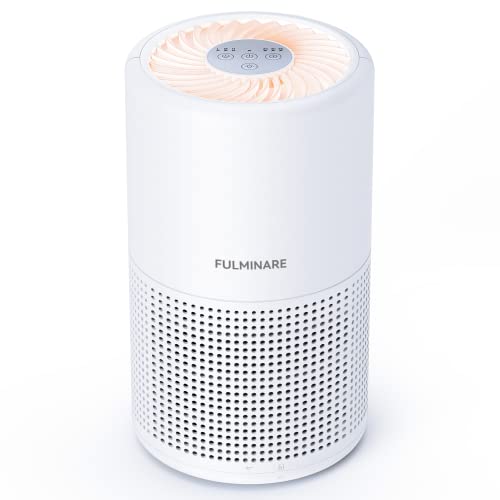
Efficient Particle Filtration: FULMINARE air purifier uses an H13 HEPA filter. Simply turn it on and maintain a clean and peaceful environment and give families health.
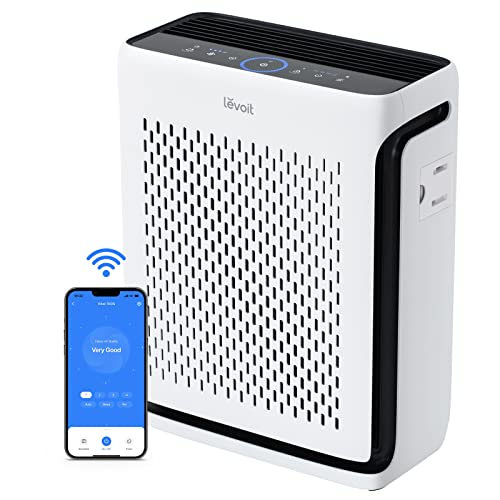
𝐖𝐇𝐘 𝐂𝐇𝐎𝐎𝐒𝐄 𝐀𝐇𝐀𝐌 𝐕𝐄𝐑𝐈𝐅𝐈𝐃𝐄 𝐀𝐈𝐑 𝐏𝐔𝐑𝐈𝐅𝐈𝐄𝐑𝐒: AHAM (Association of Home Appliance Manufacturers) is an ANSI-accredited organization that sets strict standards for appliance performance. Air purifiers with the AHAM VERIFIDE seal have been independently tested for air cleaning performance and energy efficiency. When you choose an AHAM certified air purifier, you're choosing a product trusted for reliable and effective indoor air quality improvement
Frequently Asked Questions
Do air purifiers reduce humidity?
No, air purifiers do not reduce humidity. They trap solid airborne particles and household odors in dry filters, allowing water vapor to pass straight through. To lower room humidity, use a dehumidifier, air conditioner, or exhaust fan and repair any water leaks.
Do air purifiers dry indoor air?
No, air purifiers never remove moisture from indoor air. They can make your skin, eyes, and throat feel drier because the exhaust fan creates a breeze that speeds up surface evaporation. Check a hygrometer first, and angle the purifier away from your bed or desk.
Do I need a dehumidifier if I have an air purifier?
Yes, you still need a dehumidifier if your room’s relative humidity stays above 50% to 60%. An air purifier captures airborne mold spores and dust, but only a dehumidifier extracts the excess water vapor that causes window condensation, dust mites, and surface mold growth.
Can I run an air purifier and dehumidifier at the same time?
Yes, running an air purifier and a dehumidifier together in the same room works very well. The dehumidifier keeps relative humidity around 45% to 50%, which prevents mold and protects the purifier’s filters from dampness, while the purifier removes airborne allergens. Place them 4 to 6 feet apart for unobstructed airflow.
Should I use a humidifier with an air purifier?
Yes, if your indoor relative humidity drops below 30% in winter. Place the humidifier at least 6 to 10 feet away from the air purifier so damp mist does not wet the HEPA filter, and use distilled water in ultrasonic humidifiers so mineral dust does not clog the purifier.
What indoor humidity level should I aim for?
Aim for 30% to 50% relative humidity year-round, and always keep indoor humidity below 60%. This range prevents dry skin and static in winter while stopping dust mites and mold growth in summer.
Are 2-in-1 air purifier and dehumidifier combo units worth it?
Separate appliances usually outperform 2-in-1 combo units for the price. Fitting a compressor, water bucket, and HEPA filter into one housing typically reduces the purifier’s Clean Air Delivery Rate (CADR) and prevents you from moving the purifier and dehumidifier to different rooms seasonally.
Conclusion
So, does an air purifier dehumidify? No—an air purifier traps solid airborne pollutants and odors in dry filters, while a dehumidifier condenses and removes excess water vapor. Start by placing an inexpensive digital hygrometer in your room today: if your relative humidity sits between 30% and 50%, a properly sized True HEPA purifier is all you need for cleaner air, whereas readings above 50% to 60% call for a dehumidifier and better ventilation first.
Sources
- U.S. EPA — Guide to Air Cleaners in the Home: Supports how portable air cleaners filter particles and gases, filter replacement intervals, mold limitations, and ozone generator warnings.
- U.S. EPA — What is a HEPA Filter?: Supports the True HEPA efficiency standard of capturing at least 99.97% of airborne particles at 0.3 microns.
- U.S. EPA — Care for Your Air: A Guide to Indoor Air Quality: Supports maintaining indoor relative humidity between 30% and 50%.
- U.S. EPA — A Brief Guide to Mold, Moisture and Your Home: Supports keeping relative humidity below 60% (ideally 30% to 50%) and drying wet areas within 24 to 48 hours.
- ENERGY STAR — Dehumidifiers: Supports how dehumidifiers extract moisture, warm surrounding air, operate above 65°F, and scale by pint-per-day capacity.
- AHAM Verifide — Directory of Certified Room Air Cleaners: Supports Clean Air Delivery Rate (CADR) testing and the two-thirds room-area sizing rule.
- U.S. EPA — Use and Care of Home Humidifiers: Supports capping humidification at 50% relative humidity, emptying tanks daily, cleaning every third day, and using distilled water to prevent mineral dust.