Last updated: July 7, 2026
If you are searching for a battery powered tent dehumidifier camping option, the most practical choices are usually small cordless and rechargeable desiccant dehumidifiers. They absorb moisture without running a cord through your tent, then recharge later through a heating base or wall plug.
These compact units can help reduce light dampness around sleeping gear, small storage bins, RV compartments, car cargo areas, closets, safes, and other enclosed spaces. They are best for mild moisture control, not for drying soaked clothing, fixing rain leaks, or replacing proper tent ventilation.
For most small camping setups, start with the Afloia Rechargeable Cordless Mini Dehumidifier if you want compact coverage and fast 2-hour renewal. Choose the Eva-Dry Wireless Mini Dehumidifier for long, silent use in small enclosed spaces. Pick the Wisedry Mini Dehumidifier 2-pack if you want two reusable units for flexible placement in a tent, car, closet, gear bin, or storage box.
Quick Answer
The best tent dehumidifier for most small camping spaces is a cordless rechargeable silica gel unit. Choose Afloia for compact rechargeable convenience, Eva-Dry for long passive moisture control, or Wisedry if you want two small units for separate damp areas. Use any of them with ventilation, not instead of it.
Quick Picks
- Best compact pick: Afloia Rechargeable Cordless Mini Dehumidifier with Heating Base
- Best long cordless pick: Eva-Dry Wireless Mini Dehumidifier, White (E-333)
- Best two-pack: Wisedry Mini Dehumidifier, Fast Rechargeable, 2 Pack
Battery Powered Tent Dehumidifier Comparison
| Product | Best For | Moisture Capacity | Coverage | Recharge or Renewal | Amazon |
|---|---|---|---|---|---|
| Afloia Rechargeable Cordless Mini Dehumidifier | Very small tents, closets, cars, RVs, boats, safes, and compact storage spaces | Up to 4 oz of water | Up to 54 sq. ft. | About 2 hours on the 50W heating base | Check Price on Amazon |
| Eva-Dry Wireless Mini Dehumidifier | Small tents, gear bins, cabinets, closets, and enclosed storage areas | About 4-6 oz | Up to 333 cubic feet | Plug in when the beads change from orange to green | Check Product Details on Amazon |
| Wisedry Mini Dehumidifier 2-pack | Campers who want two cord-free units for separate damp spots | Up to 200 ml per unit | Up to 108 ft² per unit | About 2 hours on the heating base | View Latest Deal on Amazon |
How These Picks Were Chosen
This roundup focuses on compact, cordless, rechargeable moisture absorbers that make sense for small camping spaces and gear storage. Priority went to reusable designs, clear moisture indicators, simple renewal methods, small-space coverage, and safe placement in tents, cars, RV compartments, closets, and storage bins.
These are not high-output electric dehumidifiers. They are better for light moisture control in enclosed spaces. If your tent has leaks, wet clothing, poor airflow, or heavy condensation, fix those issues first and use a mini dehumidifier as extra support.
Afloia Rechargeable Cordless Mini Dehumidifier with Heating Base
Best Compact Pick
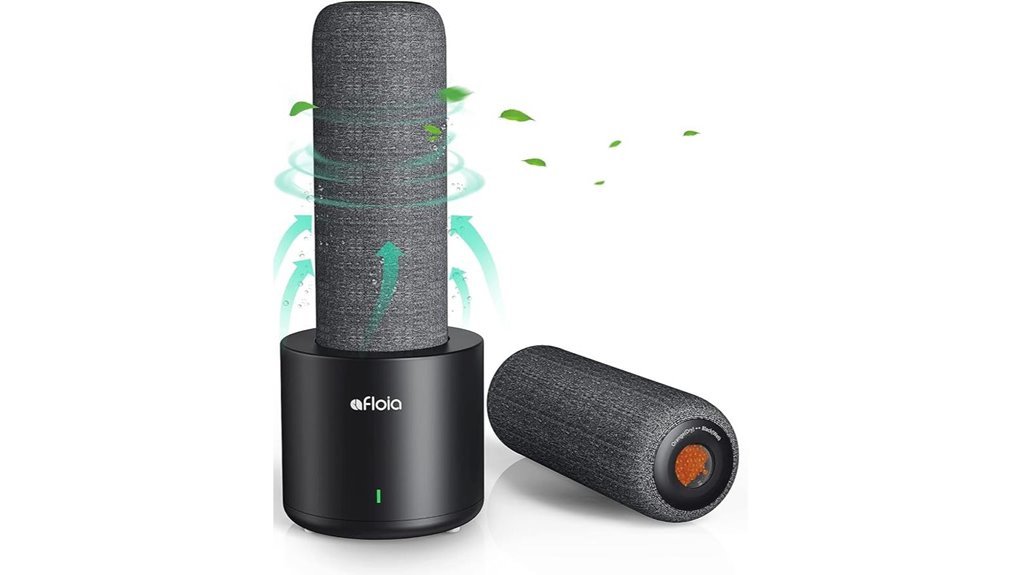
The Afloia Mini Dehumidifier is a strong choice when you need a small, cordless unit for a compact tent corner or tight storage area. It also fits RVs, boats, closets, cars, cabinets, and safes, so it suits campers who want one moisture-control tool they can move between uses.
Its cylinder design and 360° air inlet help expose more of the unit to surrounding air. The listed coverage is up to 54 sq. ft., and it can remove up to 4 oz of water before renewal. When the silica beads turn dark green, you place the unit on the 50W heating base for about two hours to renew it.
You also get automatic shutoff, a viewing window, and a listed 24-month warranty. That combination makes it easy to check the moisture status without opening the unit or guessing when it needs attention.
Why You’ll Like It: The Afloia is easy to place in a tent corner, car storage area, gear locker, or RV cabinet because it does not need a cord while absorbing moisture. The heating base is useful after a trip because you can renew the unit and use it again instead of throwing away moisture packs.
Best For: Campers who need a compact, rechargeable dehumidifier for a very small tent, gear corner, closet, car, RV, boat, cabinet, or safe.
Who Should Buy This: Buy it if you want one reusable moisture absorber that is small, simple to monitor, and easy to move between camping gear and home storage areas.
Who Should Skip It: Skip it if you need active moisture removal for a large family tent, a wet basecamp, or a space with heavy daily condensation. Its capacity is modest, so it works better as a small-space helper than a high-output dehumidifier.
Pros:
- Cordless and rechargeable, making it easy to use in places without convenient power access.
- Efficient 360° air inlet and compact cylinder design help absorb moisture in tight spaces.
- Includes automatic shutoff and a viewing window for easy monitoring.
Cons:
- Best suited only for small areas, with coverage limited to about 54 sq. ft.
- Requires a 2-hour renewal on the heating base once the silica beads change color.
- Dehumidification capacity is modest compared with larger electric dehumidifiers.
Eva-Dry Wireless Mini Dehumidifier, White (E-333)
Best Long Cordless Pick
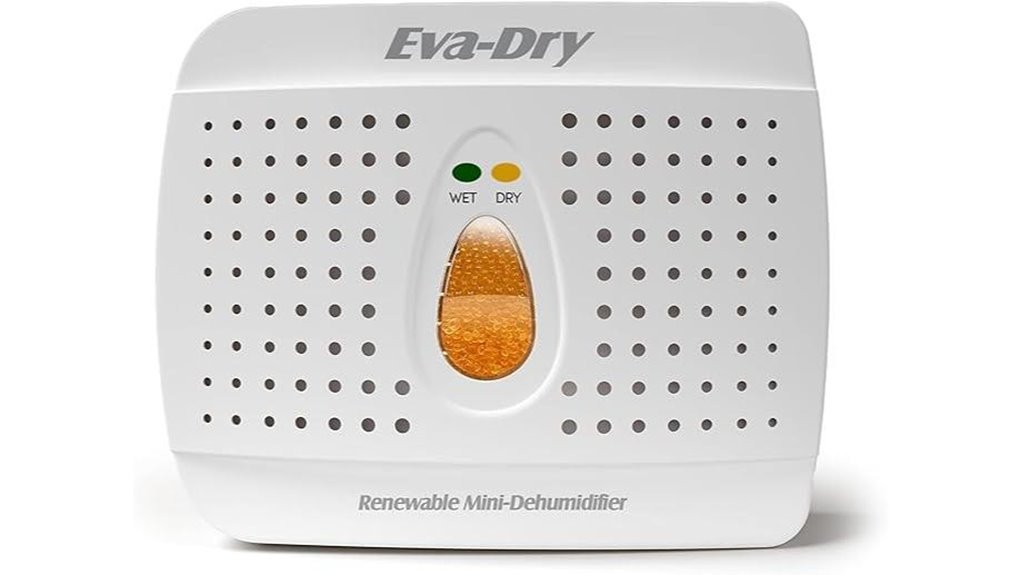
The Eva-Dry Wireless Mini Dehumidifier is a practical pick for campers who want a small moisture absorber that can work without cords or batteries during normal use. You can place it in a small tent area, gear bin, cabinet, closet, or storage compartment where damp air tends to collect.
It absorbs about 4-6 ounces of moisture and works in spaces up to 333 cubic feet. That makes it a better fit for compact enclosed spaces than open or oversized tents. Because it is 100% cordless and needs no batteries while absorbing moisture, you do not need to manage cables inside your sleeping area.
The beads change from orange to green when it is time to recharge, which gives you a clear visual cue. A renewal cycle can last around 20-30 days depending on humidity, temperature, and the size of the enclosed space.
Why You’ll Like It: The Eva-Dry is the most set-and-check style option here. It suits campers who want silent, low-maintenance moisture control for light dampness rather than a device that needs frequent attention during the trip.
Best For: Campers and anyone needing a compact, cordless dehumidifier for small enclosed spaces like tents, closets, gear bins, cabinets, or storage compartments.
Who Should Buy This: Buy it if you want a simple reusable moisture absorber for a small tent, cabinet, vehicle compartment, or packed gear area where dampness builds slowly.
Who Should Skip It: Skip it if you need fast moisture removal after heavy rain, wet clothing, or repeated condensation buildup. This is a small passive option, so it is better for ongoing light moisture control than emergency drying.
Pros:
- 100% cordless and requires no batteries while absorbing moisture.
- Compact, portable design works well in enclosed spaces up to 333 cubic feet.
- Renewable design can last 20-30 days before recharging in many light-moisture settings.
Cons:
- Best only for small enclosed spaces, so it won’t work well for larger tents or rooms.
- Absorbs about 4-6 ounces, which may be limited for heavy moisture issues.
- Needs periodic recharging, so it is not a permanent set-it-and-forget-it solution.
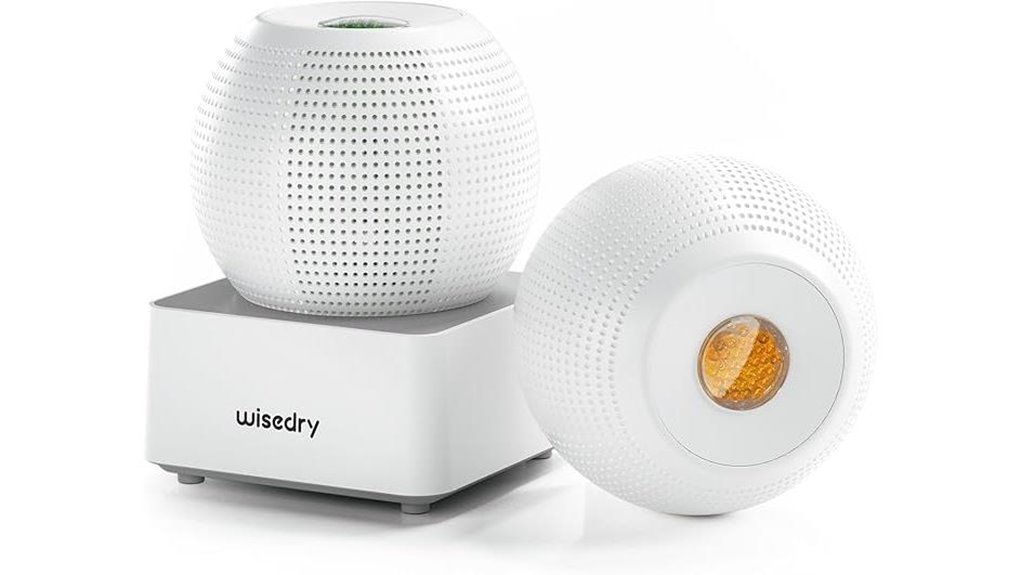
Wisedry Mini Dehumidifier, Fast Rechargeable, 2 Pack
Best Two-Pack
Wisedry’s two-pack mini dehumidifiers suit campers who want compact, cord-free moisture control in more than one spot. You can place one unit near your sleeping area and the other near a gear pile, storage box, car, closet, or safe.
Each white unit has listed coverage up to 108 ft². After use, you can recharge both in about 2 hours. The tiered air duct helps distribute heat evenly during renewal, and auto shutoff helps reduce overheating risk. Each unit absorbs up to 200 ml of moisture, which gives you more placement flexibility than a single unit.
The clear window lets you check the beads quickly. Orange means dry, and green means you need to recharge. That simple indicator helps you avoid using a saturated unit during a humid trip.
Why You’ll Like It: The two-pack format makes it easier to control moisture where it actually gathers. Instead of placing one absorber in the middle of the tent, you can put one near sleeping bags and another near shoes, bags, storage bins, or a vehicle cargo area.
Best For: Campers, drivers, and anyone needing a compact, cord-free dehumidifier set for small spaces like tents, cars, closets, storage boxes, bags, and safes.
Who Should Buy This: Buy it if you want flexible placement and prefer two small rechargeable units over one larger device.
Who Should Skip It: Skip it if you prefer one larger electric dehumidifier for a bigger room or a high-moisture area. This set is more useful when you want two small units spread across separate damp spots.
Pros:
- Fast 2-hour recharge makes it convenient to reuse quickly.
- Cord-free, portable design is easy to place in tents, cars, closets, and bags.
- Clear moisture indicator window helps you see when it’s dry or needs recharging.
Cons:
- Best suited for small areas only, with listed coverage up to 108 ft² per unit.
- Requires periodic recharging rather than continuous operation.
- Moisture capacity is limited compared with larger electric dehumidifiers.
How to Choose Between These Tent Dehumidifiers
Pick the Afloia when you want a compact rechargeable unit with a heating base and simple status window. Pick the Eva-Dry when you want the easiest cordless option for small enclosed spaces over longer periods. Pick the Wisedry 2-pack when you want to split moisture control between two places, such as a sleeping corner and a gear bin.
For a small tent, one compact unit may help reduce mild moisture. For a larger tent or a very humid campsite, use more airflow, keep wet gear outside the sleeping area, and consider using more than one small dehumidifier. A dehumidifier helps most when it supports good camp habits, not when it replaces them.
Before You Buy Checklist
- Check your tent size: Small absorbers work best in small enclosed areas, not large open tent layouts.
- Check how it works: Most mini tent dehumidifiers are passive desiccant units, not battery-powered compressor machines.
- Check your recharge access: Make sure the renewal method works with your home outlet, RV outlet, power station, or campground setup.
- Check the indicator: Color-changing beads make it easier to know when the unit needs renewal.
- Check your moisture level: For wet clothes, rain leaks, or heavy condensation, ventilation and drying habits matter more than any mini dehumidifier.
Factors to Consider When Choosing a Tent Dehumidifier Camping Battery Powered
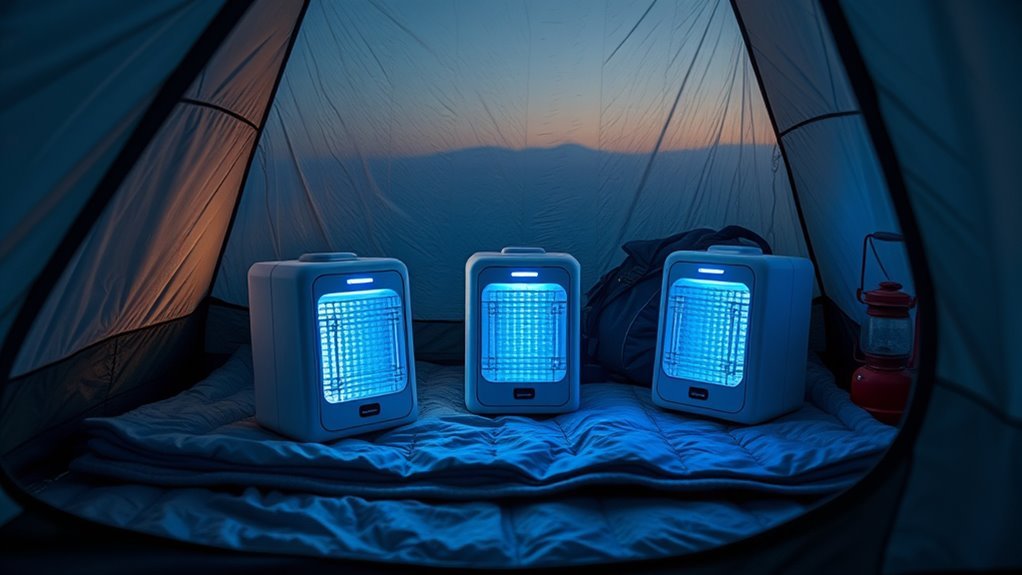
When you choose a battery powered tent dehumidifier, check the power source options first so the unit fits your camping setup. You should also match moisture capacity and coverage to the space you are drying, since a compact unit may not handle a large tent well. Finally, compare recharge time, portability, and weight so you can keep moisture under control without adding extra hassle to your pack.
Power Source Options
Power source matters because camping limits how often you can recharge gear. Many compact tent dehumidifiers use rechargeable silica gel beads instead of a battery-powered fan. That can be useful because the unit absorbs moisture without draining a battery during normal use.
You should still check how the unit renews. Some models need a heating base, while others plug directly into a wall outlet. If you camp often, make sure the recharge method works with your power station, RV outlet, campground hookup, or home reset routine after the trip.
Moisture Capacity
Moisture capacity tells you how much water a tent dehumidifier can pull from the air before it needs renewal. This is usually shown in ounces, milliliters, or daily moisture removal. A higher capacity gives you more margin in humid weather, but it can also mean a larger unit.
For light overnight condensation, a compact unit may help. For wet clothing, muddy boots, heavy rain, or a crowded tent, you need more than a small absorber. Vent the tent, separate wet gear, and use the dehumidifier as part of a broader moisture-control setup.
Tent Size Coverage
Tent size plays a big role in how well a battery-powered dehumidifier works. In a small tent, a compact model rated for small enclosed spaces may reduce dampness around sleeping bags and gear. In a larger tent, one small unit may leave damp pockets behind.
Check the listed coverage in square feet or cubic feet before you buy. Then compare that number with your actual tent layout. A low-profile backpacking tent, a car-camping tent, and an RV sleeping space all trap moisture in different ways.
Recharge Time
Recharge time affects how well the unit keeps up on longer trips. A model that renews in about 2 hours can return to service faster than one that needs a longer plug-in cycle. That matters when humidity builds overnight and you want the unit ready again by the next evening.
Look for status indicators, such as color-changing beads, so you know when it is time to recharge. Without a clear indicator, you may keep using a saturated unit that is no longer absorbing much moisture.
Portability And Weight
When you are choosing a battery-powered tent dehumidifier, start with portability and weight. A lighter unit is easier to carry, move, and tuck into a small corner of the tent. A compact body also matters because floor space is limited when sleeping bags, pads, packs, and shoes are inside.
Cordless operation helps because you can place the unit where humidity builds without running a cord through the tent. That is especially useful near gear bins, inside storage compartments, or near the foot area where condensation may collect.
Safe Materials
Safety should be high on your list, especially if children or pets are around camp. Choose a tent dehumidifier made from sealed, non-toxic materials and keep it closed during use. Do not let children open the unit, handle moisture beads, or touch a warm recharge base.
Renewable silica gel beads can be a practical choice because you can recharge them without buying disposable moisture packs again and again. Also check for automatic shutoff on units that use heat during renewal, since that can reduce overheating risk.
Indicator Visibility
A clear moisture indicator helps you know when the unit needs attention. Color-changing beads, such as orange shifting to green, give you a simple visual cue without opening the unit or guessing.
Place the indicator where you can see it without moving your whole setup. A quick glance before bed or after a damp morning can help you avoid over-saturation and keep the dehumidifier working efficiently.
Camping Tips for Reducing Tent Condensation
A tent dehumidifier works better when your full setup supports dry airflow. Keep vents open when weather allows, avoid pressing sleeping bags against tent walls, and store wet clothing outside the sleeping area. Use a groundsheet correctly, wipe down heavy condensation in the morning, and let gear air out before packing it away.
You should also match expectations to the campsite. Near lakes, in cold weather, in low ground, or after rain, condensation can build even with a dehumidifier inside the tent. In those cases, the unit may reduce dampness, but it will not make the tent feel like a climate-controlled room.
Frequently Asked Questions
Are These Actually Battery Powered Tent Dehumidifiers?
Not in the same way as a battery-powered fan or compressor. These are cordless rechargeable desiccant dehumidifiers. They absorb moisture passively during use, then need power later for renewal through a plug-in body or heating base.
Can Tent Dehumidifiers Also Reduce Condensation on Sleeping Bags?
Yes, they can help reduce damp air inside a small tent, which may lessen moisture on sleeping bags and gear. They work best when you also vent the tent, avoid bringing wet clothing inside, and keep sleeping bags away from tent walls.
How Noisy Are Battery-Powered Dehumidifiers Inside a Small Tent?
Many compact silica gel tent dehumidifiers are silent while absorbing moisture because they do not use a fan during normal use. You may hear mild noise only during the recharge cycle if the unit uses a heated base or plug-in renewal system.
Do Tent Dehumidifiers Work in Freezing Overnight Temperatures?
Not well. Moisture removal drops in freezing temperatures, and some units should not be used below 32°F. In cold weather, focus on ventilation, dry layers, ground insulation, and safe heat management before relying on a small dehumidifier.
How Long Does a Full Recharge Usually Take While Camping?
Recharge time depends on the model. In this roundup, the Afloia and Wisedry units list about a 2-hour renewal cycle, while the Eva-Dry unit needs to be plugged in when its beads change color.
Are Tent Dehumidifiers Safe to Use Around Children and Pets?
They can be safe when you choose sealed models and follow the instructions. Keep recharge bases, warm parts, and cords away from children and pets, and do not let anyone open or chew the moisture beads.
Conclusion
The right tent dehumidifier can make a small camping space feel drier, cleaner, and easier to manage. Choose the Afloia if you want a compact rechargeable unit with a heating base, the Eva-Dry if you want simple cordless moisture control, or the Wisedry 2-pack if you want two small units for flexible placement.
For the best results, match the unit to your tent size, recharge access, and expected humidity. Pair it with ventilation and smart gear storage, and you will give your sleeping bags, clothes, and camping gear a better chance of staying dry overnight.