Affiliate disclosure: This article contains Amazon affiliate links. We may earn a commission from qualifying purchases at no extra cost to you.
Last updated: August 2026. Product specifications and recommended use cases were reviewed for sailboat moisture control, power compatibility, spill risk, and cold-weather practicality.
The best dehumidifier for a sailboat in the Pacific Northwest depends on whether you need to prevent surface condensation, actively collect water, or protect a small locker without continuous power. A docked boat with reliable shore power has different requirements from a sailboat on a mooring, in dry storage, or underway.
For most dockside storage situations, the Davis Air-Dryr 500 is the strongest marine-focused choice because it is designed for boat use, operates silently, and has no reservoir that can overflow. However, it is an anti-condensation air circulator rather than a water-collecting dehumidifier. The Eva-Dry E-333 is the best cordless choice for lockers and small compartments, while the Eva-Dry EDV-1200 is the best option here when active water collection matters.
Quick Verdict
- Best overall for dockside condensation control: Davis Air-Dryr 500
- Best cordless option for lockers and use in motion: Eva-Dry E-333
- Best active water-collecting model: Eva-Dry EDV-1200
- Best simple plug-in option: TABYIK 35 OZ
- Best no-power refillable absorber: Camco Moisture Absorber
Marine electrical and spill-safety note
Follow the appliance manual, your boat manufacturer’s guidance, and marina or storage-facility rules before operating equipment unattended. Use powered models only with a dry, protected, properly installed electrical connection. Inspect shore-power cords, plugs, and receptacles for wear, corrosion, heat damage, or loose connections. Do not use a household appliance in a fuel- or LPG-vapor space unless it is specifically approved and ignition-protected for that location. Empty water tanks before the boat moves, and keep liquid-producing absorbers secured upright in a secondary spill tray.
How These Picks Were Evaluated
The products were compared by marine suitability, power requirements, tank or brine spill risk, usefulness in cool Pacific Northwest conditions, maintenance needs, and whether they prevent condensation or physically remove water from the air. Coverage claims are manufacturer ratings, not guaranteed performance in every boat cabin.
Quick Comparison
| Product | Best For | Power / Type | Useful Detail | Main Limitation | Amazon |
|---|---|---|---|---|---|
| Davis Air-Dryr 500 | Dockside and winter condensation control | 110–120V AC, 70W anti-condensation heater | Designed for about 500 cu. ft.; silent and tank-free | Does not collect water or remove the cabin’s total moisture load | Check Price |
| Eva-Dry E-333 | Lockers, cabinets, heads, and use in motion | Cordless renewable desiccant | Rated for spaces up to 333 cu. ft.; absorbs about 4–6 oz per cycle | Slow, targeted moisture control rather than rapid cabin drying | Check Price |
| Eva-Dry EDV-1200 | Active water collection in small powered cabins | 22.5W electric unit; optional 12V cord available separately | Rated for up to 1,200 cu. ft. with full-tank shutoff | Internal reservoir must be checked and emptied before movement | Check Price |
| TABYIK 35 OZ | Simple dockside moisture collection | 40W thermoelectric unit | 35 oz tank, auto shutoff, visible water level, and quiet operation | Maximum output is measured at 86°F and 80% relative humidity | Check Price |
| Camco Refillable Absorber | Stationary no-power storage | Passive refillable moisture absorber | Marketed for boats and RVs; lavender-scented media | Collected liquid can spill and damage nearby materials | Check Price |
Davis Air-Dryr 500 Marine Air Circulator for Boats
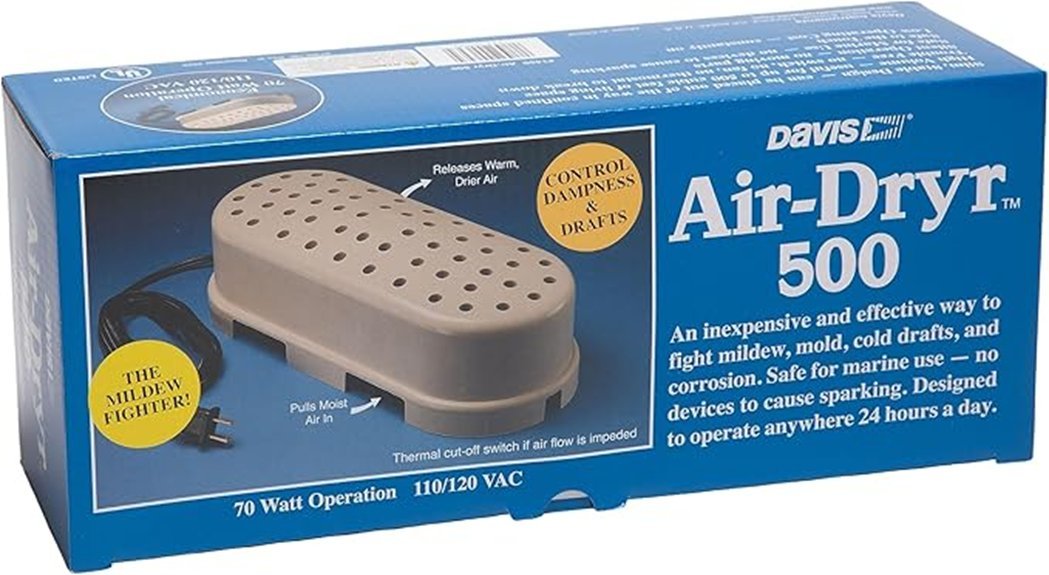
Best Overall for Dockside Condensation Control
The Davis Air-Dryr 500 is the most marine-focused product in this comparison. It is important, however, to understand what it does. This is not a conventional compressor or thermoelectric dehumidifier, and it does not collect water. Its 70-watt heating element warms nearby air above the dew point while natural convection circulates that air through the cabin. This helps reduce condensation on surfaces where moisture would otherwise settle.
Davis rates the unit for enclosed spaces of approximately 500 cubic feet and identifies it as suitable for marine use. Its tank-free design makes it appealing for a docked sailboat that remains connected to dependable shore power during wet Pacific Northwest weather. There is no fan, switch, thermostat, drain hose, or collection reservoir to maintain.
The main limitation is that the Air-Dryr does not remove the boat’s total moisture load. It works best as part of a broader plan that includes controlled ventilation, dry bilges, open locker doors, leak repair, and removal of wet fabrics.
Why You’ll Like It: It provides silent, low-maintenance condensation control without creating an unattended tank-overflow risk.
Best For: Docked sailboats, winter storage, and owners who want continuous marine-focused condensation control.
Who Should Avoid It: Boats without suitable shore power or owners who need an appliance that physically collects water and lowers the cabin’s moisture load.
Key Buying Consideration: Confirm that the unit can sit on a hard, level surface with clear airflow and that powered unattended use is allowed by the marina or storage facility.
Pros:
- Specifically intended for boats and marine environments.
- Silent natural-convection operation with no fan or moving parts.
- No reservoir, drain hose, or routine water emptying.
- Designed for continuous operation in an appropriately sized enclosed space.
Cons:
- Reduces condensation rather than collecting water.
- Requires a suitable 110–120V AC connection and uses about 70 watts.
- Cannot compensate for leaks, wet bilges, soaked cushions, or poor ventilation.
- Must be kept on a hard, stable surface with unrestricted airflow.
Eva-Dry Wireless Mini Dehumidifier, White (E-333)
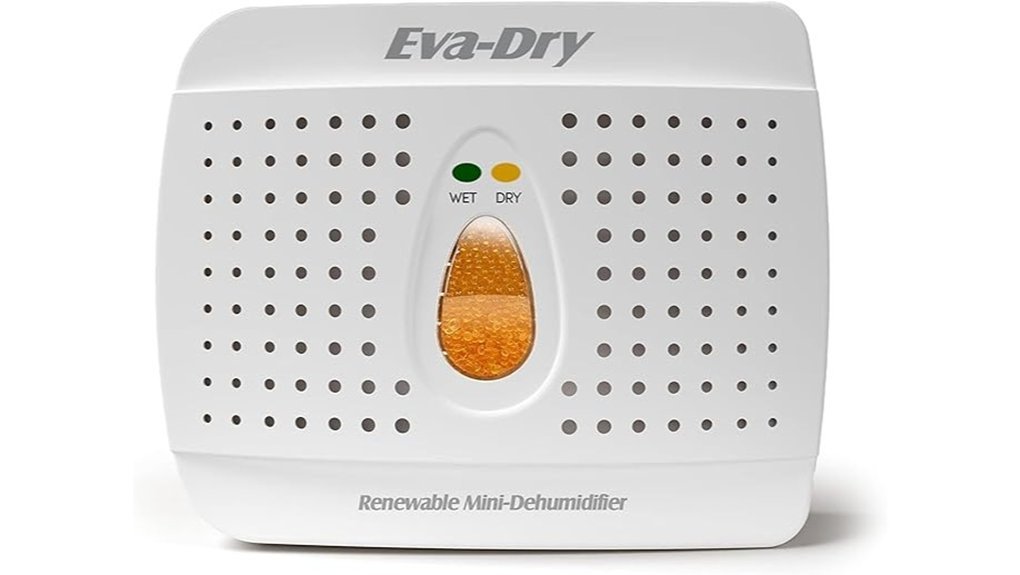
Best Cordless Option
The Eva-Dry E-333 is a practical choice for sailboat lockers, cabinets, heads, hanging lockers, and smaller sleeping areas. It uses renewable desiccant beads and requires no cord or battery while absorbing moisture. Eva-Dry lists boat cabins among its intended uses and identifies the unit as suitable for use in motion.
The manufacturer rates the E-333 for enclosed spaces up to 333 cubic feet and states that it can absorb approximately 4 to 6 ounces of moisture before renewal. Indicator beads change color when the unit is saturated. It can then be plugged into a suitable outlet in a well-ventilated location for approximately 10 to 12 hours.
The E-333 is best viewed as targeted compartment protection rather than a fast whole-cabin solution. One unit may help inside a closed locker, but several separated compartments may require separate units because boat cabinetry restricts airflow.
Why You’ll Like It: It is reusable, silent, compact, and does not need electricity while it is protecting the compartment.
Best For: Boats without continuous shore power, lockers containing gear, and targeted moisture control while the boat is underway.
Who Should Avoid It: Owners expecting rapid drying after wet sails, cooking, bathing, leaks, or heavy overnight condensation.
Key Buying Consideration: Plan where the unit will be renewed because it releases heat and moisture vapor during the plug-in renewal cycle.
Pros:
- Cordless and silent during normal moisture absorption.
- Manufacturer lists boats and use in motion among its applications.
- No loose liquid reservoir during normal use.
- Renewable design avoids routine disposable refill bags.
Cons:
- Designed for gradual moisture absorption in small enclosed areas.
- Requires periodic access to an electrical outlet for renewal.
- Coverage can be reduced by closed doors, lockers, and poor air circulation.
- Cannot match the extraction rate of a larger active dehumidifier.
Eva-Dry EDV-1200 Portable Dehumidifier for Small Spaces
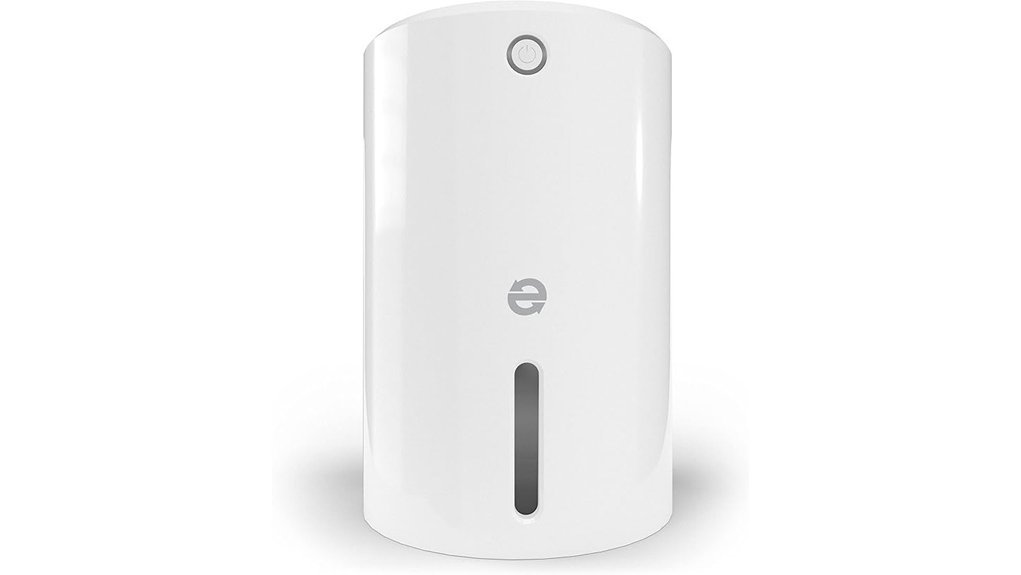
Best Active Water Collection
The Eva-Dry EDV-1200 is the strongest option here for owners who want a compact appliance that physically removes moisture and collects it in a reservoir. Eva-Dry lists a 22.5-watt power draw, automatic shutoff when the tank is full, and coverage of up to 1,200 cubic feet.
The standard power specification is 110–120V AC. Eva-Dry also offers an optional EDV-12V power cord separately, allowing the unit to operate from a compatible 12V DC accessory outlet. Do not assume that the optional cord is included with the Amazon product, and calculate the effect on the boat’s battery bank before using any powered appliance away from shore power.
Like other compact electric dehumidifiers, the EDV-1200 is best used in a closed cabin with enough warmth for steady condensation. The coverage figure describes maximum intended space, not guaranteed output in a cold, leaky, or frequently opened sailboat cabin.
Why You’ll Like It: It actively collects water while using relatively little power and automatically stops when its reservoir is full.
Best For: Small docked boats, enclosed cabins, and owners who want visible evidence of water removal.
Who Should Avoid It: Owners who cannot inspect the tank regularly or who expect to leave the appliance running unsecured while sailing.
Key Buying Consideration: The tank-full shutoff prevents continued collection, but it does not eliminate the need to inspect and empty the reservoir.
Pros:
- Actively removes water from the air.
- Low 22.5-watt manufacturer-listed power consumption.
- Automatic shutoff when the internal reservoir is full.
- Optional manufacturer-listed 12V power cord is available separately.
Cons:
- The standard configuration requires 110–120V AC power.
- The internal reservoir must be checked and emptied.
- The tank creates a spill risk if the unit is left full while the boat moves.
- It is not described as an ignition-protected appliance for fuel-vapor spaces.
TABYIK 35 OZ Dehumidifier
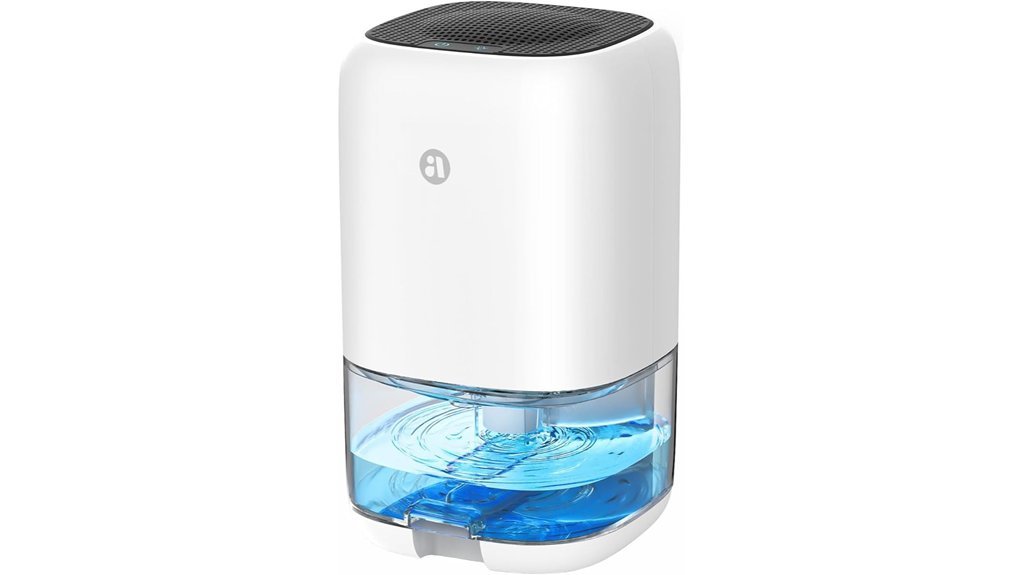
Best Simple Plug-In Option
The TABYIK 35 OZ is a compact thermoelectric dehumidifier with a transparent 35-ounce tank, automatic full-tank shutoff, a carrying handle, and manufacturer-listed operation around 28 dB. Its visible reservoir makes it easy to see whether the unit is collecting water in a small cabin, head, or dockside storage area.
TABYIK advertises maximum collection of up to 16 ounces in 24 hours, but that figure is measured in a confined space at 86°F and 80% relative humidity. A cool Pacific Northwest sailboat cabin may produce substantially less water. This model should therefore be treated as a small background moisture-control appliance, not a replacement for ventilation, heat, leak repair, or a higher-capacity dehumidifier.
This is a household and RV-style product rather than a marine-rated appliance. Keep it away from spray, bilge water, fuel-vapor areas, and unstable surfaces. Empty and dry the tank before the sailboat leaves the dock.
Why You’ll Like It: It has simple controls, a visible tank, quiet operation, and automatic shutoff without a complicated setup.
Best For: Owners with suitable AC power who want basic active water collection in a small docked cabin.
Who Should Avoid It: Owners needing dependable cold-weather extraction, marine-certified equipment, or operation while the boat is moving.
Key Buying Consideration: Do not use the advertised 280-square-foot room figure as a direct boat-cabin sizing guarantee because household coverage assumptions may not reflect cabin temperature or compartment layout.
Pros:
- Transparent 35-ounce tank is easy to monitor.
- Automatic shutoff helps prevent continued operation when the tank is full.
- Quiet enough for many sleeping-cabin situations.
- Built-in handle makes it easy to move between dry dockside locations.
Cons:
- Maximum extraction is based on warm, very humid laboratory-style conditions.
- Not marketed as a marine-rated or ignition-protected appliance.
- The reservoir must be emptied before the boat moves.
- Performance may be modest in a cold PNW winter cabin.
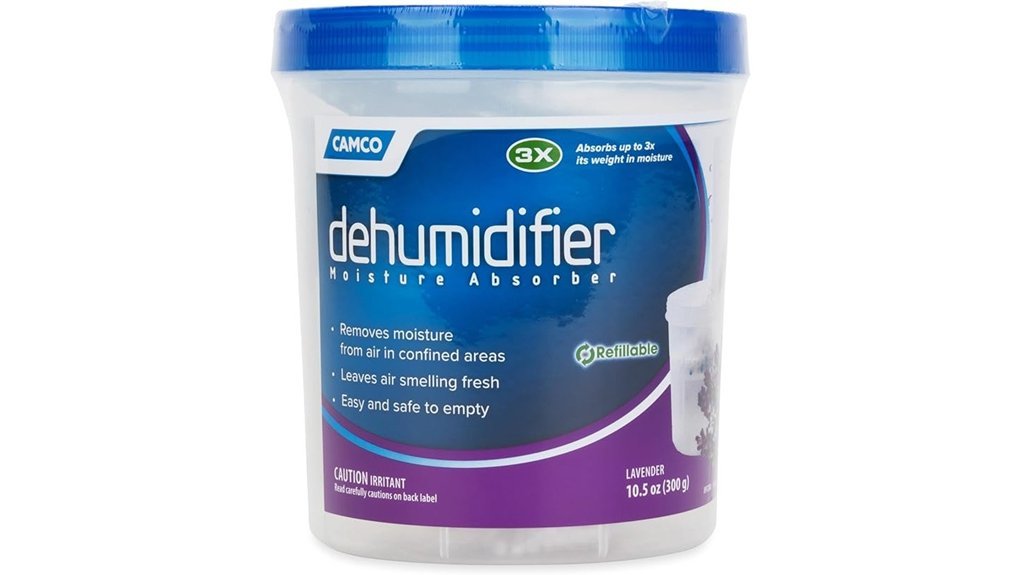
Camco Dehumidifier Moisture Absorber (Refillable)
Best No-Power Refillable Absorber
The Camco Moisture Absorber is a passive option for a stationary sailboat stored without electricity. Camco markets model 44280 for boats, RVs, closets, bathrooms, and other confined spaces. Its container can be emptied and refilled, and the manufacturer states that the moisture-absorbing media can absorb up to three times its weight in water.
The included media is lavender scented, which may help with musty storage odors but will not appeal to every owner. More importantly, the product eventually collects liquid. Place it upright inside a stable secondary tray, secure it against movement, and keep it away from wiring, electronics, metal hardware, leather, cushions, clothing, and other materials that could be damaged by a spill.
This is a compartment and storage aid rather than a whole-cabin drying system. It is appropriate for a stationary boat that can be inspected regularly, but it should not be left unsecured while sailing or transporting the boat.
Why You’ll Like It: It works continuously without electricity, batteries, a fan, or a charging cycle.
Best For: Stationary winter storage, lockers, and small compartments without a power source.
Who Should Avoid It: Owners who dislike scented media, need rapid humidity reduction, or expect the boat to move while the container is installed.
Key Buying Consideration: The refillable design reduces container waste, but the collected liquid creates more spill and corrosion risk than a sealed renewable desiccant unit.
Pros:
- No electricity, battery, or recharging required.
- Refillable container can be used repeatedly.
- Specifically marketed for boats and confined storage spaces.
- Useful for closed lockers that receive little airflow.
Cons:
- Collected liquid can spill and damage nearby materials.
- Lavender scent may be undesirable in a small cabin.
- Slower and less controllable than an active electric dehumidifier.
- Requires regular inspection, emptying, cleaning, and refilling.
Factors to Consider When Choosing a Dehumidifier for a Sailboat in the PNW

A sailboat dehumidifier should match the boat’s power source, cabin volume, temperature, storage plan, and likelihood of movement. The model with the largest tank or coverage claim is not automatically the best option for a damp Pacific Northwest marina.
Choose by Use Case First
For a docked boat with dependable shore power, an active electric unit or marine anti-condensation heater may operate for extended periods when permitted by the product instructions and marina. For a boat on a mooring or stored without electricity, a renewable silica-gel unit is easier to manage. A passive liquid-producing absorber is best reserved for stationary storage.
Decide Between Condensation Control and Water Removal
The Davis Air-Dryr warms and circulates air to reduce surface condensation, but it does not collect water. The EDV-1200 and TABYIK physically collect condensed water in reservoirs. The E-333 absorbs a limited amount of moisture inside a sealed desiccant unit, while the Camco product turns absorbed moisture into liquid inside an openable container.
Choose an anti-condensation heater when tank-free continuous operation is the priority. Choose an active dehumidifier when you want water physically removed and can inspect the reservoir regularly.
Measure Cabin Volume, Not Just Floor Area
Boat cabins have low ceilings, narrow berths, lockers, bulkheads, and separated compartments. Measure length, width, and average height to estimate cubic feet, then compare the result with the manufacturer’s enclosed-space rating. Treat household square-foot claims cautiously because they may assume standard room heights, warmer temperatures, and unrestricted air circulation.
Check the Power Source and Energy Budget
The Davis Air-Dryr 500, TABYIK 35 OZ, and standard EDV-1200 configuration use household-style AC power. The EDV-1200 can also use a manufacturer-listed optional 12V cord sold separately. The E-333 requires an outlet only during renewal, while the Camco absorber requires no electricity.
Do not run a dehumidifier from an inverter or battery bank for extended periods without calculating continuous wattage, inverter losses, battery capacity, charging input, and the effect on essential onboard systems. An appliance’s low wattage does not automatically make unattended battery operation appropriate.
Check Shore Power and Ignition Protection
Use a powered appliance only with a properly installed, dry, protected electrical system. Inspect cords, plugs, adapters, and receptacles for corrosion, looseness, discoloration, cracking, or heat damage. Avoid makeshift extension-cord arrangements.
Do not place an ordinary household dehumidifier in an engine, fuel, battery, or LPG-vapor space unless the product is specifically approved and ignition-protected for that location. When uncertain, ask a qualified marine electrician to review the proposed installation.
Expect Lower Output in Cool PNW Weather
Compact thermoelectric dehumidifiers are commonly rated under warm and highly humid conditions. A cold cabin can produce substantially less water because the appliance has less temperature difference available for condensation. A large coverage claim should not be interpreted as a promise of high extraction during a cold Pacific Northwest winter.
Better results generally come from combining controlled ventilation, gentle heat, dry bilges, leak repair, open locker doors, raised cushions, and targeted dehumidification.
Plan for Spill and Corrosion Risk
Empty electric reservoirs before moving the boat. Secure passive absorber containers upright in a secondary tray and keep them away from metal fittings, wiring, electronics, leather, upholstery, sails, and stored clothing. A product that is stable in a household closet may spill when a sailboat heels, rocks at the dock, or is transported.
Do Not Ignore Ventilation and Leaks
A dehumidifier cannot overcome an active deck leak, wet bilge, leaking portlight, blocked vent, soaked cushion, or recurring water intrusion. Find and correct the moisture source first. Leave locker doors open where practical, lift berth cushions for airflow, and remove wet sails, clothing, and towels before storage.
Consider Noise and Sleeping Comfort
Fanless desiccant units and the Davis natural-convection heater are silent during normal use. Compact electric dehumidifiers produce a low fan sound and may transmit vibration through cabinetry or a berth platform. Place powered units where airflow remains clear and vibration will not transfer directly into the sleeping area.
Maintenance and Monitoring
Use a separate hygrometer to monitor cabin conditions rather than judging performance only by the amount of water in a tank. Empty and clean reservoirs, keep intake and exhaust openings clear, inspect electrical connections for corrosion, renew desiccant units when their indicators change, and check passive absorbers before liquid reaches the top of the container.
Before You Buy
- Will the boat be docked, stored ashore, on a mooring, or underway?
- Do you need condensation prevention or actual water collection?
- Do you have a properly installed and protected power source?
- What is the approximate cabin or compartment volume?
- Will the unit operate in a cool winter cabin?
- Can every reservoir or absorber be secured against movement?
- How often can you inspect, empty, recharge, or refill it?
- Does your marina or storage facility allow unattended powered appliances?
Frequently Asked Questions
How Do I Determine the Right Capacity for My Sailboat Dehumidifier?
Estimate the volume of the enclosed cabin or compartment in cubic feet by multiplying its approximate length, width, and average height. Compare that result with the manufacturer’s coverage guidance, but also account for temperature, leaks, wet materials, ventilation, and separated lockers. Coverage ratings are useful comparison tools, not guaranteed extraction results.
Can I Use a Household Dehumidifier on My Sailboat?
A household-style dehumidifier may be used cautiously while the boat is stationary if the manufacturer permits the operating conditions. Keep it protected from spray and bilge water, place it on a stable surface, maintain clear airflow, and use an appropriate electrical connection. Do not place it in a fuel- or LPG-vapor area unless it is approved and ignition-protected for that location. Empty the tank before the boat moves.
Are Dehumidifiers Safe to Use While Sailing?
Water-tank dehumidifiers, heated AC appliances, and liquid-producing absorbers are generally better suited to docked or stored boats. The Eva-Dry E-333 is a more practical underway option because it is cordless during normal use, contains no loose collection tank, and is listed by its manufacturer for use in motion. Every device should still be secured so it cannot fall or become a projectile.
Can the Eva-Dry EDV-1200 Run on 12V?
Eva-Dry lists an optional EDV-12V power cord that allows the EDV-1200 to operate from a compatible 12V DC accessory outlet. The cord is an optional accessory and should not be assumed to be included with the Amazon product. Confirm outlet compatibility and calculate the effect on the boat’s battery capacity before use.
Which Option Is Best for Winter Boat Storage?
For a docked boat with reliable shore power and controlled ventilation, the Davis Air-Dryr 500 is a low-maintenance option for reducing surface condensation. If active water collection is required, the EDV-1200 is the better match, provided the tank can be checked regularly. Without continuous power, use one or more Eva-Dry E-333 units in targeted compartments. The Camco absorber can help in stationary storage when secured upright in a secondary spill tray.
Will a Mini Dehumidifier Work in a Cold PNW Cabin?
It may collect some water, but a compact thermoelectric unit will usually remove less moisture in a cold cabin than it does under warm test conditions. Improve the result by repairing leaks, drying the bilge, opening interior compartments for airflow, lifting cushions, removing wet gear, and using safe controlled heat or ventilation where appropriate.
Do Passive Moisture Absorbers Replace an Electric Dehumidifier?
No. Passive absorbers are useful inside lockers, cabinets, and other small closed areas, but they work gradually and have limited capacity. They are not substitutes for active dehumidification, ventilation, safe heating, or correcting the source of persistent water intrusion.
What Maintenance Is Required for Marine Dehumidifiers?
Keep air inlets and outlets clear, clean and dry water reservoirs, inspect cords and plugs for corrosion or heat damage, and verify that full-tank shutoff mechanisms work correctly. Recharge renewable desiccant products when their indicators change. Inspect passive absorbers frequently and empty collected liquid according to the manufacturer’s instructions.
How Do I Prevent Mold Growth on My Sailboat?
Repair leaks, dry the bilge, ventilate enclosed spaces, open lockers, lift cushions for airflow, remove wet gear, clean existing growth properly, and monitor cabin humidity with a hygrometer. A dehumidifier or anti-condensation heater works best as one part of this broader moisture-control plan.
Conclusion
The Davis Air-Dryr 500 is the best overall choice for dockside condensation control because it is intended for marine use, operates silently, and has no collection tank. Remember that it warms and circulates air rather than physically extracting water.
The Eva-Dry E-333 is the better choice for lockers, compartments, boats without continuous power, and moisture control while underway. For active water collection in a small powered cabin, the Eva-Dry EDV-1200 offers low power consumption, automatic tank-full shutoff, and the option of a separately sold 12V cord. The TABYIK 35 OZ is a straightforward household-style choice for a stationary powered cabin, while the Camco refillable absorber is best limited to secured, stationary no-power storage.
Final Recommendation
Choose by operating condition rather than tank size alone: use the Davis Air-Dryr for dockside condensation control, the Eva-Dry E-333 for cordless compartment protection, or the Eva-Dry EDV-1200 when active water collection is the priority. Whichever option you select, keep the bilge dry, repair leaks, maintain airflow, follow marine electrical precautions, and secure or remove every device before the sailboat moves.