By Editorial Team · Reviewed for accuracy · Last updated August 19, 2026
The right RV dehumidifier size depends more on measured interior area and how damp the RV actually gets than on the length printed in the model name. For a whole-RV moisture problem, a practical starting range is usually 20 to 30 pints/day when conditions are only slightly to moderately damp, moving toward 30 to 50 pints/day when condensation is frequent, the RV is stored in a humid climate, or the moisture load is heavy. Use a hygrometer and size upward only when the RV cannot stay near 45% to 50% relative humidity with normal ventilation and source control.
Quick Answer
Do not size an RV dehumidifier by RV length alone. Measure the usable interior area, then check actual relative humidity. For a whole-RV problem, 20 to 30 pints/day is a sensible starting range for slightly to moderately damp conditions; 30 to 50 pints/day is more appropriate when the RV is repeatedly wet, heavily moisture-loaded, or stored in a humid climate. Choose a humidistat and continuous drainage for unattended or long-term use.
Key Takeaways
- Use measured living-area square footage plus actual humidity severity; exterior RV length is only a rough clue.
- Aim for about 45% to 50% relative humidity during normal RV use, while staying within the broader 30% to 50% indoor range when practical.
- For whole-RV moisture control, start around 20 to 30 pints/day for moderate dampness and move toward 30 to 50 pints/day for repeated wet conditions or heavy moisture loads.
- Use a compressor dehumidifier in warmer conditions; check low-temperature ratings or consider desiccant technology in colder, unheated spaces.
- Drainage, humidistat control, power draw, and airflow can matter as much as pint capacity in a small RV.
At a Glance
| Target RH | About 45% to 50% for routine moisture control |
| Size Basis | Measured interior area + actual dampness level, not RV length alone |
| Whole-RV Starting Range | 20 to 30 pints/day for moderate dampness; 30 to 50 pints/day for repeated wet conditions or heavy moisture loads |
| Best Long-Term Feature | Humidistat plus continuous drainage or a pump, when the installation is safe |
What Size Dehumidifier Does Your RV Need?
For an RV, start with this rule: measure the usable living area, then let the actual dampness level determine where you land within the portable-dehumidifier range. ENERGY STAR’s current buying guidance recommends 20 to 30 pints/day for a small-to-medium space that is slightly to moderately damp, 25 to 40 pints/day when it is very damp, and 30 to 50 pints/day when it is wet. Those are building-space estimates, not RV-specific standards, but they are a stronger baseline than exterior RV length or marketing coverage claims.
Dehumidifier capacity is measured in pints per day, which means how much water the unit can remove from the air in 24 hours under test conditions. ENERGY STAR explains that the U.S. Department of Energy changed dehumidifier testing in 2019, so many newer units show lower pint numbers than older models with similar real-world performance. Compare current labels with current labels, not old “70-pint” charts with today’s “50-pint” models.
Note: A manufacturer’s “up to 1,500 sq ft” or “up to 4,000 sq ft” claim is a room-coverage estimate, not an RV-specific sizing standard. RVs are smaller than houses, but they can collect moisture quickly because they are tightly enclosed and have high moisture sources in a small volume.
How Do You Measure Your RV’s Interior Square Footage?
Grab a tape measure and measure the usable interior length and width of the living space. Do not use the exterior shell length from the model name if the front cap, hitch area, storage bay, or cab is not part of the living area.
Use this formula:
Interior length × interior width = approximate RV living-area square footage.
For example, if your measured living area is 30 feet long by 8 feet wide, the simple footprint estimate is 240 square feet before you account for cabinets, beds, furniture, and slide geometry. That does not mean every RV sold as a “30-foot” model has 240 square feet of usable interior space. Measure the space you actually want to dehumidify.
How Damp Is Your RV?
Square footage tells you how much space must be treated. Humidity severity tells you how hard the dehumidifier must work. Check the RV with a hygrometer in the bedroom, kitchen, bathroom, and any closed bunk or slide-out area, especially at the times when condensation or musty odor is worst.
| Moisture level | What you see | Sizing move |
|---|---|---|
| Mild | Humidity usually stays below 50%, with only occasional window fog after showers or cooking. | Start at the lower end of the size range and improve ventilation first. |
| Moderate | Humidity often sits above 50%, bedding feels damp, or cabinets smell musty after the RV is closed. | Choose the middle or upper end of the size range, preferably with a hose drain. |
| Severe | Windows fog repeatedly, walls or closets feel damp, the tank fills fast, or the RV sits stored in a humid climate. | Move up one capacity class and prioritize continuous drainage, leak checks, and airflow. |
How Many Pints Per Day Does an RV Need?
Use the chart below as a practical RV decision guide. It deliberately follows the current ENERGY STAR dampness bands instead of pretending that a 25-foot or 35-foot RV automatically needs a specific pint rating. If the RV has recurring leaks or wet materials, repair and dry the source before treating dehumidifier capacity as the solution.
| RV condition | What the hygrometer / RV shows | Practical starting capacity |
|---|---|---|
| Localized moisture only | Whole-RV RH generally stays under 50%; only a closet, cabinet, or under-bed space feels damp | Improve airflow or use a localized absorber; a whole-RV compressor unit may be unnecessary |
| Slightly to moderately damp | RH commonly reaches about 50% to 75%, or the RV has intermittent musty odor / condensation | 20 to 30 pints/day |
| Very damp | RH often sits around 75% to 90%, damp spots recur, or fabrics and cabinets stay clammy | 25 to 40 pints/day |
| Wet / heavy moisture load | Repeated window runoff, wet surfaces, laundry drying, heavy shower/cooking load, or humid storage conditions | 30 to 50 pints/day, plus source control and preferably continuous drainage |
Move toward the higher end of a band when several moisture sources happen at once, such as frequent indoor showers, cooking, wet clothing, multiple occupants, rainy gear, or long closed-up storage. If the RV stays below 50% with ventilation and normal HVAC use, do not buy a larger dehumidifier just because the RV itself is large.
Which RV Dehumidifier Type Is Best?
The right type depends on temperature, power source, noise tolerance, and how much moisture you need to remove.
Recommended Products
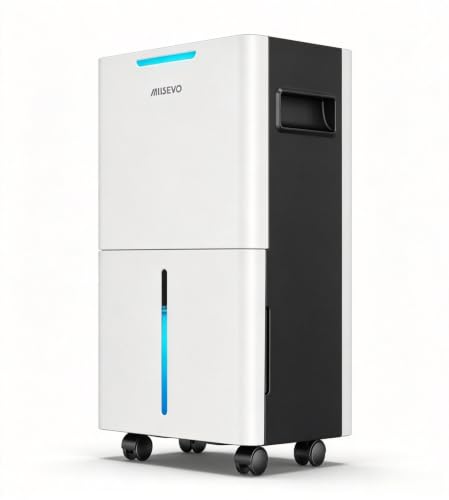
High Efficient Dehumidifier — Equipped with a high-performance compressor, Whether it’s your basement, bedroom, bathroom, living room, bathroom, crawlspace, or even an RV, this dehumidifier effectively keeps your environment dry, comfortable, and healthy.
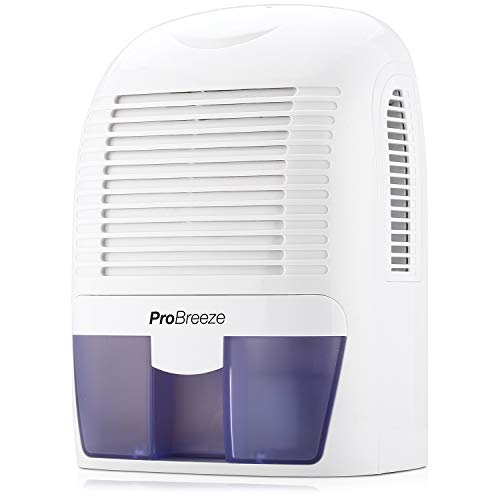
COMPACT & SMALL DEHUMIDIFIER: Lightweight, compact, and portable, this mini dehumidifier removes up to 18 oz of water per day with a 52 oz water tank capacity. They can cover up to 3000 cubic feet (250 sq.ft), leaving ample space for the appliances to function as dehumidifiers for bathroom and moisture absorbers for closet.
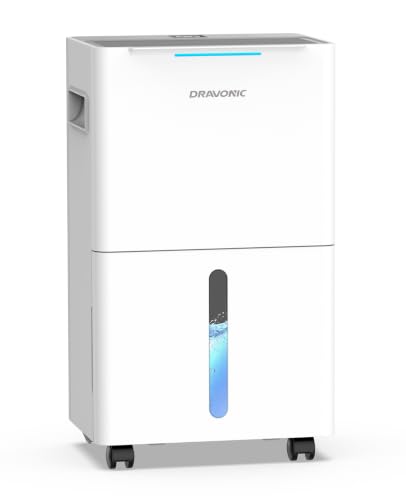
REAL COMPRESSOR POWER — 21 PINTS A DAY FOR SPACES UP TO 1,500 SQ.FT: A genuine refrigerant compressor pulls up to 21 pints of moisture from the air daily (tested at 95°F/90% RH), far beyond what small thermoelectric units manage, keeping basements, living rooms, bedrooms, bathrooms, and connected spaces up to 1,500 sq.ft dry and comfortable. Auto-Defrost clears coil icing as rooms cool, so it keeps working where lesser units stall. For the rated output, run it in an enclosed space with doors and windows closed
Compressor Vs. Desiccant
A compressor dehumidifier is the best fit for most warm-weather RV use. It pulls humid air over cold coils, condenses moisture, and collects water in a tank or sends it through a drain hose. These units usually remove more water per day and are easier to find in 20-, 30-, 35-, and 50-pint/day sizes.
A desiccant dehumidifier uses a moisture-absorbing material instead of relying on cold condensing coils. ENERGY STAR notes that frost can reduce compressor performance as room temperatures fall and advises checking for low-temperature capability below 65°F. For consistently cold, unheated spaces, desiccant models can be more reliable, but the dehumidifier manufacturer’s minimum operating temperature and defrost specification should control your choice.
Pro Tip: If your RV is warm and damp, choose a compressor model. If your RV is cool and damp, look for a desiccant model or a compressor unit specifically rated for low-temperature operation.
Pint-Rated Electric Units Vs. Moisture Absorbers
An electric dehumidifier is the right choice when you need real moisture removal. It is best for shore power, long-term parking, full-time RV living, and storage where you can safely leave the unit draining.
A rechargeable moisture absorber or silica-gel unit is better for small enclosed spaces, such as closets, cabinets, under-bed storage, and bathrooms between trips. These products can help reduce trapped moisture, but they are not a substitute for a pint-rated electric dehumidifier when the whole RV is humid.
Small thermoelectric (Peltier) dehumidifiers are another compact option for localized dampness. Their small tanks and low extraction rates can suit a cabinet-sized or small sleeping area, but compare the model’s actual water-removal rating with a pint-rated compressor unit before assuming a “small RV” label means whole-RV performance.
For off-grid camping, check the wattage before you buy. A larger compressor unit may be too much for a small inverter, battery bank, or generator routine. If you boondock often, use roof vents, exhaust fans, and moisture absorbers first, then run the electric dehumidifier when power is available.
How Much Power Can Your RV Spare?
Check the dehumidifier’s rated watts or amps before purchase and compare that load with the circuit, inverter, battery bank, or generator you actually use. On 120-volt AC power, a rough running-current check is watts ÷ 120 = amps, but compressor startup demand can be higher than the steady running load. Use the manufacturer’s electrical label and inverter guidance for the final decision.
Do You Need Continuous Drainage?
Tank size affects how much attention the unit needs. A small tank may fill quickly in a damp RV, especially after showers, cooking, rainy travel days, or storage in a humid region. For weekend use, a tank with automatic shut-off may be enough. For storage or full-time parking, choose continuous drainage if possible.
Look for these features:
- Automatic shut-off: stops the unit when the bucket is full.
- Continuous gravity drain: sends water through a hose to an approved drain or container with enough capacity for the expected condensate; prevent backflow, overflow, freezing, and campground-rule problems.
- Built-in pump: moves water to a permitted drain point when gravity drainage is not practical; follow the pump’s lift-height and hose-routing limits.
- Auto-restart: helps the unit resume after a power outage.
- Washable filter: keeps airflow steady and helps the unit work efficiently.
Warning: Do not route a drain hose where it can freeze, leak into the RV, drain near electrical gear, or create a trip hazard. If you see active leaks, wet walls, soft flooring, or visible mold, fix the moisture source first; a dehumidifier is not a mold-remediation plan.
Recommended Products

(Powerful Dehumidifier with drain hose) Dehumidifier for home could removes moisture quickly and quietly with advanced semiconductor technology, this dehumidifiers for home come with detachable removable tank. the dehumidifiers for room Maximum dehumidification area up to 850sq ft. This portable dehumidifier effectively absorb up to 60oz excess moisture per day (Tested in 86°F, 80% RH), quickly reduce the humudify
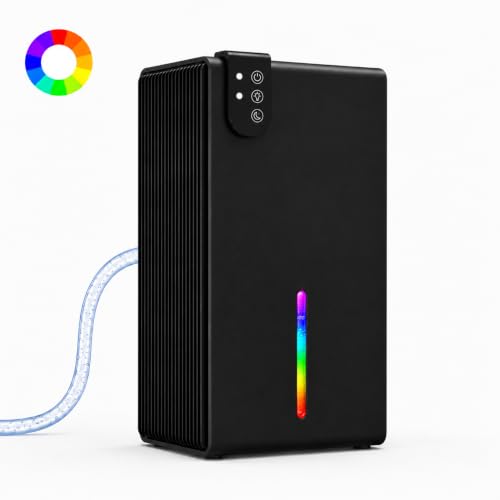
【Upgraded Dual-Core Dehumidifier】Features advanced dual-core semiconductor technology for efficient moisture removal. Best used in closed rooms to maintain performance. Keeps indoor air dry and comfortable—ideal for small spaces up to 1,000 sq. ft., including bedrooms, bathrooms, closets, basements, home and RVs.

➤【 Dehumidifier for Home】Small dehumidifier with 27oz(800ml) water tank extracts up to 350ml/12ounces (at 86℉,80%RH) of moisture daily in enclosed and small rooms and spaces.. The home dehumidifier without air purifier helps you to create a comfortable living environment for you.
When to Use a Dehumidifier in Your RV
Use a dehumidifier when your hygrometer shows indoor humidity staying above 50%, when windows fog repeatedly, or when the RV smells musty after being closed. Cooking, showering, breathing, wet towels, multiple occupants, and rainy gear can all add moisture to a small RV interior. Unvented fuel-burning heaters or open-flame cooking also release combustion moisture indoors; a properly sealed, vented RV furnace sends combustion exhaust outside.
A good target is usually 45% to 50% relative humidity for RV moisture control. The EPA recommends keeping indoor humidity below 60% and ideally between 30% and 50% when possible, while CDC mold guidance advises keeping home humidity no higher than 50% throughout the day. RVs are not houses, but the same moisture-control target is useful because mold and condensation can develop wherever moisture stays high.
Run the dehumidifier after showers, during rainy weather, while cooking moisture-heavy meals, overnight when windows fog, and during storage if the RV is parked in a humid area. Use the hygrometer to confirm results instead of guessing by feel.
When You Don’t Need an RV Dehumidifier
You usually do not need to run a dehumidifier when indoor humidity is already below 30% or when natural ventilation keeps the RV comfortably in range. Over-drying the air can irritate skin, eyes, and sinuses, and it wastes electricity.
Dry Air Conditions
In desert climates, high-altitude dry air, or winter conditions where heated indoor air is already dry, leave the dehumidifier off unless your hygrometer shows a real moisture problem. If your windows are clear, bedding feels dry, and humidity stays below 50%, ventilation may be enough.
Good Natural Ventilation
Good airflow can control moisture before it becomes a problem. Use roof vents when cooking, run the bathroom fan during and after showers, crack windows when outdoor air is drier, and avoid storing wet towels or damp gear in closed compartments.
Ventilation works best when outside air is less humid than inside air. In hot, muggy weather, open windows may bring more moisture in, so a dehumidifier or air conditioner may work better.
What Size Dehumidifier Is Best for RV Storage?
For RV storage, reliability matters more than choosing the smallest unit. If the stored RV repeatedly sits above 50% RH or develops condensation, choose within the same dampness-based ranges above and favor a humidistat plus secure continuous drainage. In a dry climate or a well-ventilated indoor storage space where RH already stays in range, localized moisture absorbers may be enough.
For storage, set the humidistat near 45% to 50% if your unit allows it. Make sure the drain is secure, the hose slopes correctly, the filter is clean, and the unit has safe clearance around the air intake and exhaust. Check the RV regularly, especially after storms, power outages, freezing weather, or long periods of rain.
Recommended Products

Powerful Moistue Absorption: Camco’s RV Moisture Absorber Bucket effortlessly absorbs 3x its weight in moisture, making it perfect for tackling humidity and creating a comfortable environment.

The air dryer warms and dries gently the surrounding air to reduces the relative humidity and prevent condensation and dampness from occurring in Boats, RVs, Cabins etc enclosed spaces

Where Should You Put a Dehumidifier in an RV?
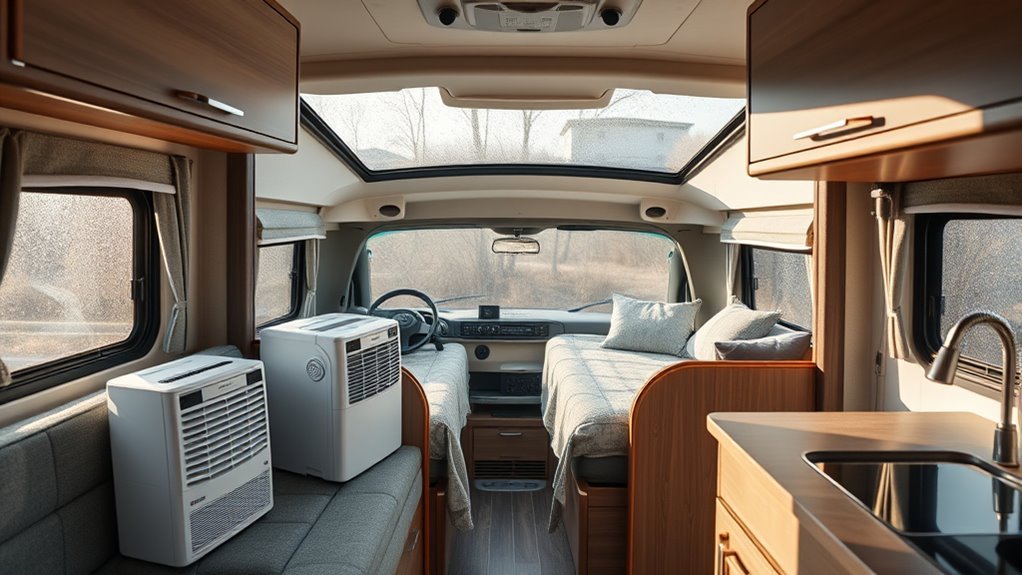
Place the dehumidifier where air can move freely. The best spot is often near the kitchen, bathroom, hallway, or central living area, not wedged tightly inside a cabinet. Keep it away from bedding, curtains, walls, and furniture that block airflow.
If the RV has slide-outs, bunks, or closed rooms, leave doors open so damp air can reach the unit. For storage, open interior cabinet doors and closet doors slightly so trapped moisture can escape. If you use a drain hose, place the unit high enough or level enough for the hose to drain without kinks.
Troubleshooting RV Dehumidifier Problems
If the RV still feels damp after adding a dehumidifier, use this checklist before buying a larger unit:
- Humidity will not drop: close windows and vents when outdoor air is humid, check the filter, and make sure the unit is not blocked.
- Tank fills too fast: switch to continuous drainage or move up to a larger pint/day size.
- Unit runs nonstop: check for roof leaks, plumbing leaks, wet carpet, damp underbelly insulation, or open windows.
- Coils freeze: the RV may be too cold for that compressor model; use a low-temperature model or desiccant unit.
- Musty smell remains: inspect soft goods, cabinets, mattresses, vents, and hidden corners. A dehumidifier can reduce moisture, but it will not remove existing mold or mildew residue.
Frequently Asked Questions
What size dehumidifier do I need for a 30-foot RV?
Do not size it from the “30-foot” label alone. Measure the usable interior length and width, then check actual RH. If the whole RV is only slightly to moderately damp, 20 to 30 pints/day is a practical starting range. Move higher only when the RV remains very damp or wet despite ventilation and source control.
Can I use a household dehumidifier in an RV?
Yes, if the unit fits safely, the RV can supply the required power, and the operating-temperature and drainage instructions are met. A portable household compressor dehumidifier is often more effective for whole-RV humidity than a tiny thermoelectric model marketed specifically for campers.
Is a 50-pint dehumidifier too big for an RV?
Not necessarily, but it should solve a real moisture load rather than compensate for a leak. A 50-pint model can make sense in repeatedly wet conditions, heavy full-time use, or humid storage. Choose a humidistat so the unit cycles off at the target RH instead of running continuously.
What humidity should I set my RV dehumidifier to?
Start around 45% to 50% relative humidity. EPA guidance places the ideal indoor range at 30% to 50% when possible, and CDC mold guidance says to keep home humidity no higher than 50%. Use a separate hygrometer to verify the reading inside the RV.
Should I run a dehumidifier while my RV is in storage?
Run one when stored-RV humidity repeatedly stays above 50% and safe power and drainage are available. If the storage environment is already dry, monitor with a hygrometer first. Continuous drainage, auto-restart, and regular checks are more important than buying the largest unit available.
Will an RV air conditioner remove humidity?
Yes. An air conditioner removes moisture as it cools air across the evaporator coil, so normal A/C use can reduce indoor humidity in warm weather. A separate dehumidifier is more useful when the RV is damp but does not need much cooling, or when humidity remains high after normal A/C operation.
Can a small thermoelectric dehumidifier handle a whole RV?
Usually not when the whole RV has recurring condensation or high RH. Thermoelectric units can be useful for localized dampness, but compare the model’s stated water-removal rate with a pint-rated compressor dehumidifier. For a persistent whole-RV problem, capacity, drainage, and humidistat control matter more than compact size.
Conclusion
The best RV dehumidifier size is the smallest practical capacity that can keep your measured living area near 45% to 50% RH under the conditions you actually use or store it in. Start with dampness, not RV length: 20 to 30 pints/day is a sensible whole-RV starting range for slightly to moderately damp conditions, while 30 to 50 pints/day fits repeated wet conditions or heavier moisture loads. Then confirm power, drainage, operating temperature, and airflow before you buy.
Sources
- U.S. Environmental Protection Agency: Mold Course Chapter 2 — supports the 30% to 50% ideal indoor humidity range and condensation guidance.
- Centers for Disease Control and Prevention: Mold — supports keeping humidity no higher than 50% and fixing moisture sources.
- ENERGY STAR: Dehumidifier Buying Guidance — supports current capacity ranges by dampness level, humidistat guidance, drainage options, and low-temperature cautions.
- ENERGY STAR: Dehumidifier Testing and Capacity — explains pint/day capacity and the DOE 2019 test-procedure change.
- Consumer Reports: Best Dehumidifiers of 2026 — supports current portable dehumidifier capacity categories and current model availability.
- Meaco: Desiccant or Compressor Dehumidifier? — supports the temperature-based choice between compressor and desiccant technology.
- Camping World: Best Dehumidifier for Your Camper — supports measuring the RV interior, considering tank size, drainage, and power source.
- Winnebago: Keeping Humidity Out of Your RV — supports using humidity monitors and reducing moisture from cooking, showering, and breathing.