Disclosure: As an Amazon Associate, we earn from qualifying purchases. If you click a link on this page and make a purchase, we may receive a small commission at no extra cost to you.
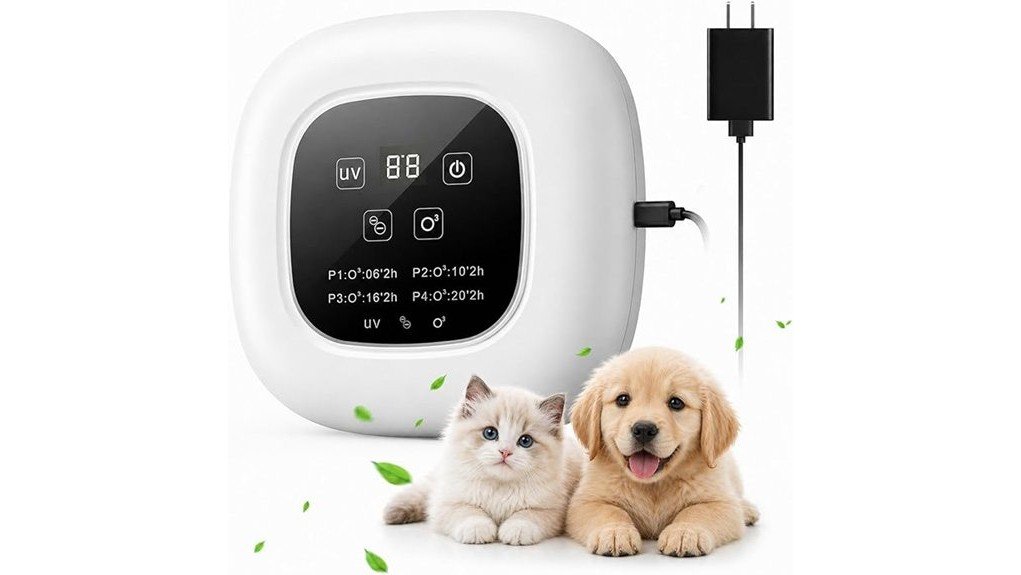
Strong litter-box, smoke, cooking, and musty odors can make a small room unpleasant, but an ozone-producing device requires more caution than a standard filtered air purifier. The Piuerds K06 Cat Litter Deodorizer & Air Purifier combines ozone and negative-ion modes in a compact 6 W unit designed for odor-focused use. Its small size, four ozone-cycle settings, touch controls, and filterless design are useful features, but ozone exposure is the major tradeoff you need to understand before buying. This review explains what the K06 does well, where its limits are, and when a conventional filtered purifier may be the safer choice.
Quick Verdict
Rating: Recommended with caveats
Best For: Buyers who want a compact, filterless odor-control device for occasional use in spaces that can be fully vacated during ozone operation.
Bottom Line: The Piuerds K06 is compact, low-power, and flexible enough for litter-box areas, bathrooms, kitchens, and other small spaces. Its main limitation is significant: it intentionally produces ozone, so it should not be treated like an ordinary purifier that you can simply run around people or pets.
Key Specifications
| Specification | Detail |
|---|---|
| Brand | Piuerds |
| Model | K06 |
| Product type | Filterless ozone and negative-ion deodorizer / air cleaner |
| Dimensions | 5.71 × 5.71 × 1.46 inches |
| Weight | About 8 oz / 0.5 lb |
| Power | 6 W |
| Controls | Touch controls |
| Listed noise level | 35 dB |
| Ozone settings | Four cycle levels, P1-P4 |
| Ozone cycle | Listed as 6-20 minutes depending on level, followed by a 2-hour rest cycle |
| Claimed room range | 50-430 sq. ft. for selectable ozone-cycle settings |
| Timer | 1-9 hours listed for operating control |
| Installation | Can sit flat or use the included adhesive mounting hardware |
| Included items | Main unit, adapter, USB cable, adhesive hook, instruction manual |
| Replacement filter | None listed, the unit is marketed as filterless |
What Is the Piuerds K06?
The Piuerds K06 is a compact electronic deodorizer designed around two technologies: intentional ozone generation and negative ions. It is marketed mainly for odor-prone spaces such as litter-box rooms, bathrooms, kitchens, bedrooms, vehicles, and other small areas.
Unlike a conventional HEPA purifier, the K06 does not rely on a replaceable particle filter. Its main appeal is therefore its small footprint, low 6 W power draw, portable design, and lack of ongoing filter replacements. The tradeoff is that ozone-generating equipment requires much stricter use precautions than a mechanical air purifier.
The four P1-P4 ozone settings are intended to let you adjust the operating cycle according to room size. Seller information lists ozone-production periods from about 6 to 20 minutes, followed by a two-hour rest period. That makes the K06 more of a periodic odor-treatment device than a continuous whole-room filtration system.
Who Should Buy It?
Best For
- Odor-prone rooms that can be completely vacated during ozone operation.
- Buyers who want a small 6 W unit without replacement filters.
- Spaces where compact size and wall or flat placement matter.
Skip If
- You need a HEPA purifier for continuous particle filtration.
- You cannot reliably keep people, pets, and other occupants away from ozone-treated spaces.
- You live in California and cannot confirm that the exact model meets current CARB requirements.
Before You Buy: Do not treat ozone mode like an ordinary fan or HEPA purifier. Ozone can irritate the lungs, and safe re-entry cannot be reduced to one universal waiting period because concentration and decay depend on the room, ventilation, output, and operating time. Follow the product manual, keep the area unoccupied during ozone use, and ventilate appropriately before normal occupancy.
Ozone Modes and Odor Control
The K06 offers four ozone-cycle levels, labeled P1 through P4. Seller information associates these settings with spaces from roughly 50 to 430 square feet, with ozone-generation periods ranging from 6 to 20 minutes before the unit enters a two-hour rest cycle.
This adjustable design is more practical than a single fixed-output setting because a small bathroom and a larger utility room do not present the same operating conditions. You still should not interpret the square-foot figures as a conventional Clean Air Delivery Rate, or CADR. The K06 is not marketed as a mechanical HEPA purifier, and its room-size claim relates to its operating modes rather than verified particle-filtration performance.
Ozone can react with certain odor-causing compounds, which is why ozone equipment is sometimes used for controlled odor treatment. However, the U.S. EPA cautions that ozone concentrations low enough to meet public-health limits generally have limited ability to remove indoor contaminants. That means you should not assume that stronger ozone exposure automatically equals better or safer purification.
Negative-Ion Mode
The second operating approach is negative-ion generation. Ionizers charge airborne particles, which may cause some particles to settle onto nearby surfaces or be attracted to a collection surface when one is present.
This is different from trapping particles in a replaceable HEPA filter. Settled dust can return to the air when surfaces are disturbed, so regular cleaning still matters. EPA guidance also notes that some ion-generating devices can produce ozone as a by-product. For that reason, do not assume that an electronic ion mode is automatically equivalent to an ozone-free mechanical purifier.
Compact Design and Portability
At approximately 5.71 inches square, 1.46 inches thick, and about half a pound, the K06 takes up very little space. This is one of its clearest strengths compared with full-size room purifiers.
The included USB cable and adapter also make placement flexible. Seller information indicates that the unit can be powered from compatible USB sources, and the package includes adhesive mounting hardware if you would rather position it on a wall than leave it on a counter or shelf.
That compact format is useful near a litter-box area, in a small bathroom, or in another location where a large floor-standing purifier would be inconvenient. Keep the device away from places where it could be covered, splashed, damaged, or accidentally handled during operation.
Noise Level and Controls
The listed noise level is 35 dB, which places the K06 in the quiet-device range on paper. Its low-power electronic design avoids the large high-speed fan found in many conventional filtered purifiers.
Touch controls provide access to the operating modes and timer. The simple control layout is useful if you want to set an operating period without relying on a phone app or wireless connection.
Quiet operation is convenient, but it should never encourage you to forget that ozone mode is running. Use the timer and operating indicators as reminders, and make sure anyone else in the household understands when an area should remain vacant.
How It Performs in Real Use
Near a Cat Litter Box
The compact wall-mountable design makes the K06 easy to position in a room where litter odor builds up. Ozone mode may be useful for periodic treatment when the space can be isolated, but you should never expose cats or other pets to the room simply because the unit is small or quiet.
In Bathrooms or Musty Utility Areas
A small bathroom, laundry room, or utility space fits the K06’s compact design well. Its selectable P1-P4 cycles give you more control than a single fixed operating period. Persistent damp or musty odor, however, can indicate a moisture or mold problem that an electronic deodorizer does not repair.
For Cooking Odors
The unit is marketed for kitchen odors, but ventilation and source control should come first. Range hoods, open ventilation when appropriate, and cleaning grease or food residue address the odor source directly. Ozone mode should not be operated around people who are actively cooking or eating.
For Occasional Portable Use
At about 8 ounces, the K06 is easier to move than a full-size purifier. That can be useful when you want one compact device for several small spaces. Each location still needs the same safety planning, including appropriate power, clear placement, vacancy during ozone use, and ventilation afterward.
How to Use It More Carefully
- Read the manual first: Confirm the meaning of P1-P4 and the recommended operating procedure for your exact unit.
- Start with the lowest suitable setting: Do not use a stronger ozone cycle simply because an odor is noticeable.
- Remove occupants: Keep people and pets out of the treated area during intentional ozone generation.
- Use adequate ventilation afterward: Do not rely on a universal 20-minute or 30-minute re-entry rule.
- Address the odor source: Clean litter boxes, remove smoke residue, fix moisture problems, and ventilate cooking fumes instead of using the device as the only solution.
- Keep it unobstructed: Do not cover the unit or place it where liquids, fabric, or clutter could interfere with operation.
Pro Tip: Treat the K06 as an occasional odor-control tool rather than a substitute for ventilation, cleaning, or a properly sized filtered air purifier. Fixing the odor source usually gives you better long-term results than repeatedly treating the air.
Ozone Safety and Important Limitations
Safety is the deciding factor in this review. Ozone is not simply another form of fresh oxygen. The U.S. EPA identifies ozone as a lung irritant and warns that inhalation can cause effects such as coughing, throat irritation, chest discomfort, and breathing difficulty. People with respiratory conditions may be particularly vulnerable.
The EPA also states that no federal agency has approved ozone-generating air cleaners for use in occupied spaces. This matters because some marketing language around ozone products can sound more reassuring than the underlying health guidance.
Do not assume that a fixed waiting period guarantees safe re-entry. Indoor ozone concentration depends on output, room size, ventilation, furnishings, operating duration, and other conditions. Follow the manufacturer’s current instructions and applicable local guidance, and allow adequate ventilation before people or pets return.
California has additional rules for indoor air-cleaning devices. CARB requires qualifying devices sold in California to meet its certification requirements and ozone-emission limits. Because certification for this exact K06 model was not confirmed during this review, California buyers should verify its current legal sale and certification status before purchasing.
Pros and Cons
Pros
- Compact 5.71 × 5.71 × 1.46-inch body.
- Lightweight at about 8 ounces.
- Low 6 W listed power consumption.
- Four adjustable ozone-cycle settings.
- Filterless design avoids routine replacement-filter purchases.
Cons
- Intentional ozone generation creates an important exposure concern.
- It does not provide conventional HEPA particle filtration.
- You must manage room vacancy and ventilation carefully when using ozone mode.
Cleaning and Maintenance
The filterless design simplifies routine ownership because there is no HEPA or carbon cartridge listed for periodic replacement. That corrects a common misunderstanding with this type of product: the K06 should not need a new filter every three to six months because it is not built around a conventional replaceable filtration system.
You should still keep the exterior and surrounding area free from dust and debris. Disconnect power before routine cleaning, keep liquids away from the unit, and follow the instruction manual rather than opening or modifying internal ozone-generating components yourself.
Is It Worth the Price?
The K06 makes the most sense when you value compact size, low power consumption, portability, and a filterless design more than mechanical particle filtration. Because online pricing can change, value is better judged by what you need the product to do rather than by a temporary sale price.
It can be worth considering as a specialty odor-control device for spaces that can be vacated during ozone treatment. It provides much less value if your main goal is continuous removal of pollen, pet dander, fine dust, wildfire smoke particles, or other airborne particles that are better addressed with a properly sized mechanical filtration system.
The safety burden is also part of the cost. A product that requires you to control occupancy and ventilation may be less convenient than an ozone-free filtered purifier, even if the K06 itself is smaller and does not require replacement filters.
How It Compares to Alternatives
The Levoit Core 300-P takes a very different approach. It uses three-stage mechanical filtration with an activated-carbon filter, has a published CADR, and is marketed as ozone-free. It is physically larger and requires replacement filters, but it is a more conventional option when your priority is continuous particle filtration along with some odor control.
The Coway Airmega Mighty AP-1512HH is another larger room purifier built around a pre-filter, deodorization filter, and HEPA filtration system. Compared with either of these filtered models, the Piuerds K06 is much smaller and simpler, but it should be viewed mainly as a compact electronic deodorizing device rather than a direct substitute for a full-size filtered air purifier.
Frequently Asked Questions
Is the Piuerds K06 a HEPA air purifier?
No. The K06 is marketed as a filterless ozone and negative-ion device. It does not use the replaceable HEPA filtration system found in conventional particle-focused air purifiers.
Can I stay in the room while ozone mode is running?
You should avoid occupying a room during intentional ozone treatment. EPA guidance warns that ozone is a lung irritant and that ozone-generating air cleaners have not been federally approved for occupied-space use.
Is it safe to use around cats or other pets?
Do not leave pets in a room during intentional ozone generation. Follow the manual carefully, ventilate the area appropriately afterward, and remember that a litter-box deodorizer does not replace routine litter cleaning.
How large a room can the K06 handle?
Seller information associates the four P1-P4 ozone settings with spaces from about 50 to 430 square feet. Treat that as a mode-selection claim, not as a HEPA-style CADR or verified particle-filtration rating.
How long do the ozone cycles run?
The listed P1-P4 modes use ozone-generation periods of roughly 6 to 20 minutes depending on the selected level, followed by a two-hour rest cycle. Check the included manual before using your unit because operating instructions can change.
How often do I need to replace the filter?
There is no routine replacement filter listed for the K06. It is marketed as a filterless device, so maintenance mainly involves keeping the unit clean, dry, unobstructed, and used according to the manual.
Can the K06 replace a regular air purifier?
Not if your main goal is continuous removal of dust, pollen, pet dander, or smoke particles. For those jobs, a properly sized mechanical purifier with verified filtration performance and CADR data is usually the more appropriate comparison.
Who should skip the Piuerds K06?
Skip it if you need continuous occupied-room filtration, cannot reliably isolate the treatment area, or prefer to avoid intentionally ozone-producing equipment. California buyers should also verify current CARB compliance for the exact model before ordering.
The Bottom Line
The Piuerds K06 is best suited to buyers who specifically want a small, filterless electronic odor-control device and can use its ozone mode only under carefully controlled, unoccupied conditions. Its compact 6 W design, four ozone-cycle settings, touch controls, and flexible placement are useful, but the lack of HEPA filtration and the health concerns associated with ozone make it a poor fit for anyone seeking a conventional always-on household air purifier.
Ready to Buy?
Check the latest price, current product instructions, and seller details before you decide.