Disclosure: As an Amazon Associate, we may earn from qualifying purchases at no extra cost to you.
For 2026, three strong space-heater options stand out for different needs: the DeLonghi Mica Panel Heater for quiet, slim heating, the Honeywell HeatGenius Ceramic Heater for customizable controls, and the De’Longhi Oil Filled Radiator Heater for steady, fanless radiant warmth. All three are designed for supplemental indoor heating, but they differ in heat delivery, controls, noise level, portability, and warm-up speed. Before choosing, consider your room size, preferred heating style, safety features, thermostat controls, and how often you plan to move the heater.
Quick Verdict
- Best Overall: DeLonghi Mica Panel Heater — a good fit for buyers who want quiet, fanless heat with a slim freestanding or wall-mounted design.
- Best for Custom Controls: Honeywell HeatGenius HCE840B — best for buyers who want multiple heating modes, a thermostat, timer, and digital controls.
- Best for Quiet Radiant Heat: De’Longhi EW7707CM Oil Filled Radiator — ideal when gradual, steady heat and minimal operating noise matter more than instant warmth.
Quick Comparison
| Space Heater | Best For | Heating Style | Key Controls | Main Limitation | Amazon |
|---|---|---|---|---|---|
| DeLonghi Mica Panel Heater | Best Overall | Micathermic, fanless | Adjustable thermostat, 2 heat settings | Dial controls are less precise than digital controls | Check Price |
| Honeywell HeatGenius HCE840B | Best for Custom Controls | Fan-forced ceramic | 6 heat settings, thermostat, HeatPhase timer | Fan operation is more noticeable than fanless heaters | Check Price |
| De’Longhi EW7707CM Oil Filled Radiator | Best for Quiet Radiant Heat | Oil-filled radiant | Adjustable thermostat, 3 heat settings, ComfortTemp | Slower warm-up than ceramic fan heaters | Check Price |
DeLonghi Mica Panel Space Heater (1500W, Black)
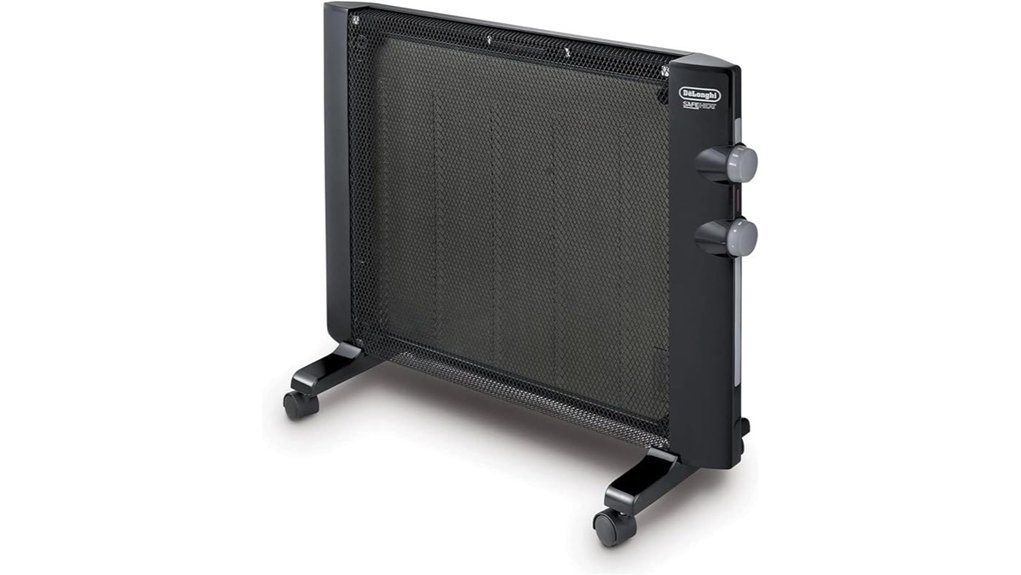
The DeLonghi Mica Panel Space Heater is a strong choice for anyone who wants quiet, fanless supplemental heat without the bulky shape of a traditional radiator. Its 1,500W maximum output, adjustable thermostat, and two heat settings let you balance warmth and power use, while its micathermic design provides gentle heat without a forced-air fan.
Safety features include a thermal shutoff and an internal tip-over switch. The heater can be used freestanding or mounted on a wall, and its slim shape and carry handle make it easier to reposition when needed.
Why You’ll Like It: It combines quiet operation, a slim profile, two installation options, and straightforward controls without relying on a fan.
Best For: Buyers who want quiet supplemental heating in a medium or larger room and prefer a panel-style heater that can sit on the floor or mount to a wall.
Who Should Avoid It: Buyers who specifically want a digital temperature display, remote control, or highly precise thermostat adjustments may prefer a digitally controlled ceramic heater.
Pros:
- Quiet, fanless heating: A good choice for bedrooms, offices, reading areas, and other spaces where fan noise may be distracting.
- Two heat levels: Offers 750W and 1,500W power settings along with an adjustable thermostat.
- Built-in safety features: Includes thermal shutoff and automatic tip-over protection.
- Flexible placement: Can be used freestanding or wall-mounted with the included mounting hardware.
- Easy to move: Slim construction and an integrated carry handle improve portability.
Cons:
- Dial-based temperature controls are less precise than a digital thermostat with exact temperature selection.
- It does not provide the immediate fan-driven blast of warm air produced by many ceramic heaters.
- Actual room-heating performance will vary with insulation, ceiling height, outdoor temperature, and room layout.
Honeywell Genius HeatGenius Ceramic Heater, Black, HCE840B
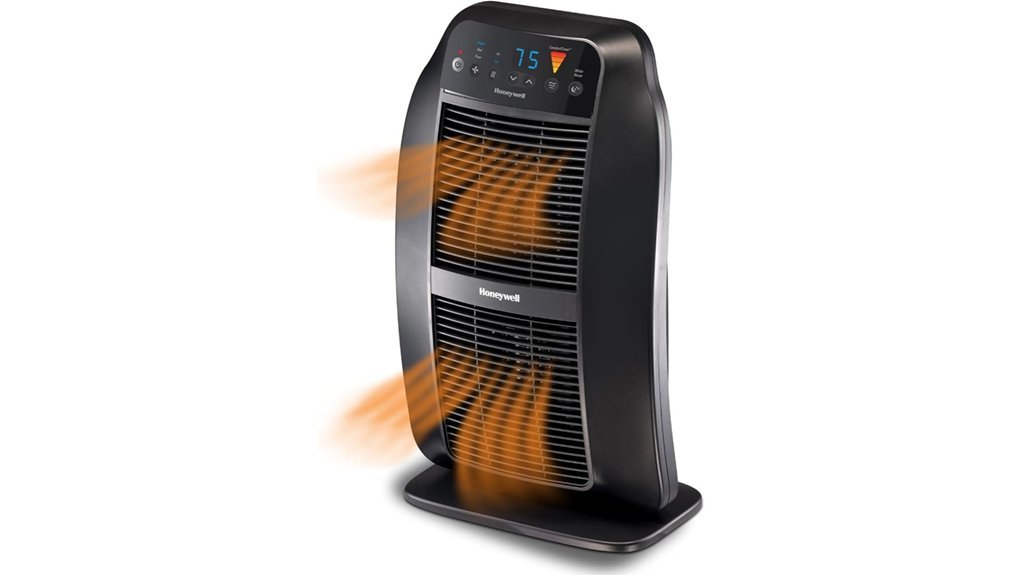
The Honeywell HeatGenius HCE840B is the most control-focused heater in this lineup. It offers six customized heat settings, a programmable thermostat, Quiet Mode, and a HeatPhase timer that gradually reduces the heat level before turning the heater off. Its ceramic fan-forced design is useful when you want more immediate warmth and greater control over how heat is directed around your space.
The HCE840B is rated for up to 1,575W. Its safety system includes a four-way tip-over switch, high-temperature safety control, thermal cut-off fuse, heat-resistant construction, and a cool-touch handle.
Why You’ll Like It: It gives you more ways to customize comfort than the two fanless De’Longhi models, including dedicated floor, personal, room, thermostat, timer, and quieter-use options.
Best For: Buyers who want fast ceramic heating, digital controls, multiple operating modes, and more temperature customization in a personal or medium-sized room.
Who Should Avoid It: Light sleepers or anyone wanting virtually silent operation may prefer a fanless micathermic or oil-filled radiator heater.
Pros:
- Six heat-setting options provide more control over personal, floor, and room heating.
- Programmable thermostat allows the heater to cycle as needed rather than running continuously.
- HeatPhase timer gradually steps heat down before automatic shutoff.
- Multiple built-in protection systems include tip-over and overheat safeguards.
- Digital controls make temperature and mode selection easier to understand at a glance.
Cons:
- The fan produces airflow and audible sound, even though a quieter operating mode is available.
- The HeatPhase timer is designed to step heat down over a two-hour period, which may not suit buyers wanting longer unattended timed operation.
- Like other high-wattage electric heaters, operating cost depends heavily on electricity rates and how long the heater runs.
De’Longhi 1500W Oil Filled Radiator Heater
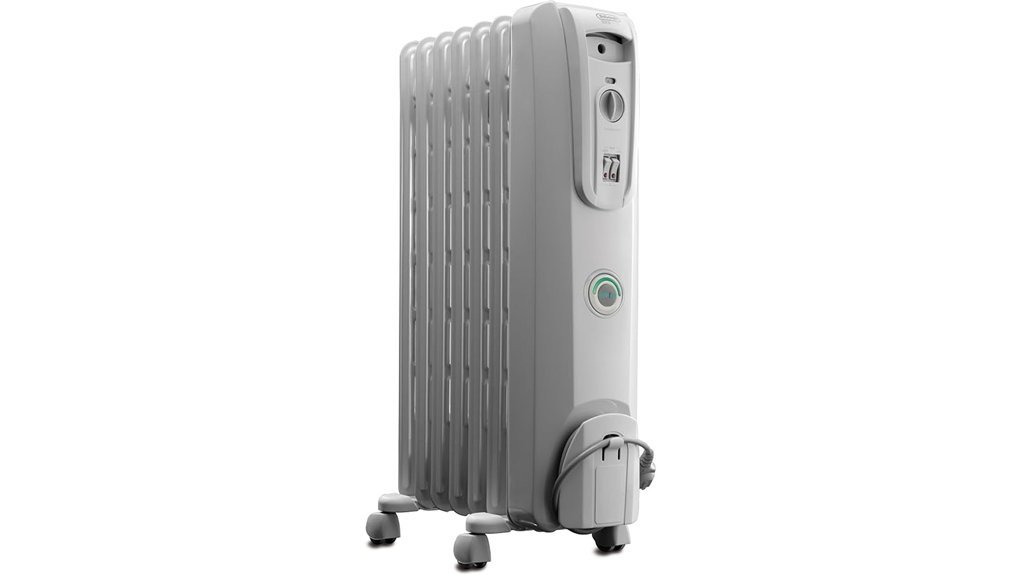
The De’Longhi EW7707CM Oil Filled Radiator Heater is designed for buyers who prefer steady, quiet radiant warmth rather than an immediate blast of hot air. It delivers up to 1,500W, provides three heat settings and an adjustable thermostat, and uses a permanently sealed oil reservoir that does not require routine refilling.
Its ComfortTemp function automatically manages temperature and power settings. De’Longhi states that this mode can provide up to 20% greater efficiency compared with operating the same unit with its thermostat at the maximum setting without ComfortTemp. The heater also includes thermal shutoff protection, an anti-freeze setting, and pre-assembled wheels for easier movement between rooms.
Why You’ll Like It: It provides gradual, fanless warmth with simple controls and continues releasing stored heat from the radiator body after the heating element cycles.
Best For: Bedrooms, offices, and living areas where quiet operation and steady radiant heat are more important than rapid warm-up.
Who Should Avoid It: Buyers who want noticeable warmth immediately after switching the heater on may be happier with a ceramic fan heater.
Pros:
- Quiet, fanless radiant heating is well suited to work, reading, and relaxation areas.
- Adjustable thermostat and three heat settings provide flexible operation.
- ComfortTemp helps regulate temperature and power automatically.
- Thermal shutoff and anti-freeze settings add useful protection and cold-weather functionality.
- Pre-assembled wheels make the radiator easier to reposition despite its heavier construction.
- Its permanently sealed oil system requires no oil refilling.
Cons:
- Oil-filled radiators generally need more time to produce noticeable room warmth than fan-forced ceramic heaters.
- The larger radiator-style body takes up more floor space than a slim panel heater.
- Its heavier construction makes it less convenient to carry between floors than a lightweight ceramic heater.
Space Heater Safety Note
Keep portable heaters at least 3 feet (0.9 m) away from curtains, bedding, furniture, paper, clothing, and other combustible materials. Place the heater on a stable surface and plug it directly into a suitable wall outlet rather than an extension cord or power strip. Follow the manufacturer’s instructions and turn the heater off when sleeping or whenever safe supervision cannot be maintained.
Factors to Consider When Choosing Space Heaters 2026: Top Picks and Buying Guide
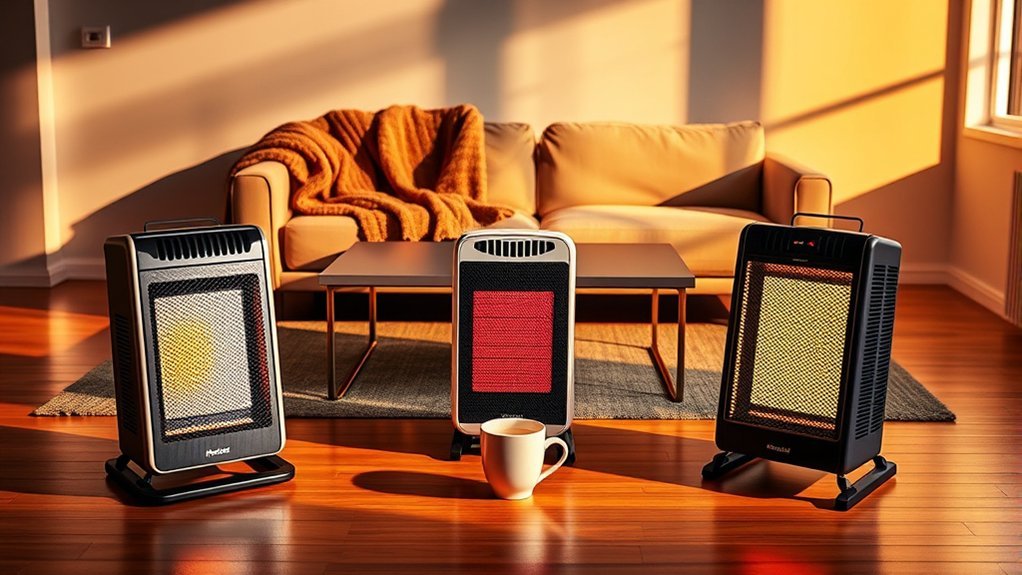
When choosing a space heater, focus on the factors that affect real-world comfort and safe everyday use: heater type, wattage, thermostat control, room size, safety features, noise, portability, and operating habits. A heater that works well in a quiet bedroom may not be the best choice for someone who wants rapid heat in a home office or living room.
Heating Efficiency and Heater Type
Portable electric resistance heaters convert the electricity they use into heat at the point of use, so a “100% electricity-to-heat” claim does not automatically mean one 1,500W model will cost dramatically less to run than another 1,500W heater operating continuously. The bigger differences come from thermostat cycling, lower heat settings, room insulation, heating speed, and whether you are heating only the occupied room instead of a larger area.
Heating style also matters. A ceramic fan heater can deliver noticeable warmth quickly. A micathermic panel provides quieter fanless heating in a slim shape. An oil-filled radiator generally warms more gradually but provides steady radiant heat with very little operating noise.
Safety Features Overview
Look for clearly documented safety features such as overheat protection, thermal shutoff, and tip-over protection where available. These features reduce specific risks but do not replace safe placement and supervision. Keep combustible materials at least 3 feet away, make sure air inlets and outlets remain unobstructed, and follow the product manual for placement and operating restrictions.
High-wattage electric heaters should normally be connected directly to a suitable wall outlet rather than an extension cord or power strip. Stop using a heater if its cord, plug, housing, controls, or outlet connection shows signs of damage or unusual overheating.
Size and Portability
The best heater size depends on more than advertised room labels. Ceiling height, insulation, windows, drafts, outdoor temperature, and room layout all influence how effectively a portable heater can maintain comfort.
For frequent room-to-room movement, consider weight, handles, wheels, and overall dimensions. A lightweight ceramic heater is generally easier to carry between floors, while wheeled oil-filled radiators are convenient to roll across a single level. Wall-mountable panel heaters can be useful where preserving floor space is a priority.
Energy Use and Savings Potential
Wattage gives you a simple way to estimate electricity use. A 1,500W heater running continuously at full output uses about 1.5 kilowatt-hours of electricity per hour. Actual consumption can be lower when a thermostat cycles the heating element off or when a lower power setting is used.
Potential savings usually come from targeted heating. Heating the occupied room while allowing unused areas to remain cooler may reduce the need to run a whole-home system as aggressively. However, actual savings depend on local electricity prices, your primary heating system, insulation, thermostat settings, climate, and usage time.
Design and Aesthetics
A space heater often remains visible throughout the colder months, so its shape and placement can matter. Slim panel heaters fit closer to walls, compact ceramic heaters occupy less floor space, and traditional oil-filled radiators have a larger footprint but provide a familiar radiant-heater design.
Choose appearance only after confirming that the heater can be placed with the clearances required by its manufacturer. Never compromise safe spacing simply to position a heater more neatly within a room.
Noise Level Considerations
If you are buying for a bedroom, study, office, or reading area, consider how the heater produces warmth. Fanless micathermic and oil-filled heaters are generally the better fit when minimal operating noise is a priority. Ceramic fan heaters move warm air more quickly but create airflow and fan noise.
Some ceramic heaters provide reduced-fan or white-noise modes, which can be comfortable for some users but will not be as quiet as a truly fanless design.
Controls and Usability
Simple dial controls are easy to operate, while digital controls can offer more precise temperature selection and clearer feedback. Useful features may include multiple heat settings, an adjustable or programmable thermostat, timers, automatic cycling, and clearly labeled safety indicators.
Choose controls based on how you actually plan to use the heater. A basic two-setting panel heater may be enough for occasional supplemental warmth, while frequent users may appreciate a digital thermostat and additional operating modes.
Brand Reputation and Support
Brand reputation is useful, but it should not replace evaluation of the specific model. Look for accessible instruction manuals, clearly documented safety features, warranty information, replacement or service support, and transparent product specifications.
For older models, check the manufacturer’s current support information and product documentation before buying. Product listings, packaging, and features can change over time, so always confirm the exact model number before making a final purchase decision.
Before You Buy: Quick Checklist
- Confirm the heater’s maximum wattage and electrical requirements.
- Choose ceramic heating for faster airflow-based warmth or fanless heating for quieter operation.
- Check whether the thermostat is digital, programmable, or dial-based.
- Look for appropriate overheat and tip-over protection.
- Measure the intended placement area and maintain required safety clearance.
- Consider weight, wheels, handles, or wall-mount capability if portability matters.
- Check the manufacturer’s manual for operating, cleaning, storage, and safety instructions.
- Compare current Amazon product details before purchasing because listings and included features can change.
Frequently Asked Questions
How Much Electricity Do Space Heaters Typically Use?
Many full-size portable electric space heaters operate at around 1,500 watts on their highest setting, although exact ratings vary. For example, the Honeywell HCE840B is rated for up to 1,575W. A 1,500W heater running continuously at full output uses about 1.5 kilowatt-hours of electricity per hour. A thermostat or lower heat setting can reduce actual consumption by limiting how long the heating element runs.
Can Space Heaters Cause Fire Hazards?
Yes. Portable heaters can create a fire risk when placed too close to combustible materials or used with unsuitable electrical connections. Keep the heater at least 3 feet from curtains, bedding, furniture, clothing, paper, and similar materials. Plug an electric space heater directly into an appropriate wall outlet rather than an extension cord or power strip, and follow the manufacturer’s operating instructions.
Are Space Heaters Safe for Children and Pets?
Safety features such as tip-over protection and overheat shutoff can reduce certain risks, but they do not make a heater inherently safe around children or pets. Position the heater where it cannot easily be touched, blocked, knocked over, or tripped over, maintain the required clearance from combustible materials, and supervise its use carefully.
Can I Leave a Space Heater On While Sleeping?
Portable-heater safety guidance recommends turning space heaters off while sleeping. An automatic timer or shutoff feature is useful as an additional safeguard, but it should not be treated as a substitute for the manufacturer’s safety instructions and proper supervision.
Can I Plug a Space Heater Into a Power Strip or Extension Cord?
High-wattage portable electric heaters should be plugged directly into a suitable wall outlet rather than a power strip or extension cord. If the plug, cord, outlet, or wall plate becomes unusually hot, stop using the heater and have the electrical connection inspected.
How Do I Maintain My Space Heater?
Turn the heater off, unplug it, and let it cool before cleaning. Keep vents and exterior surfaces free of dust according to the manufacturer’s instructions, inspect the cord and plug for damage, and store the heater in a clean, dry location when not in use. Oil-filled radiators with permanently sealed reservoirs normally do not require oil refilling. Always follow the manual for your exact model.
What Is the Average Lifespan of a Space Heater?
There is no reliable single lifespan that applies to every space heater. Longevity depends on heater type, construction, frequency of use, storage conditions, electrical condition, and maintenance. Replace or professionally evaluate a heater if its cord, plug, housing, controls, heating elements, or safety systems show damage or abnormal operation.
Conclusion
The best space heater in this group depends on how you want your room to feel. Choose the DeLonghi Mica Panel Heater if quiet operation, a slim profile, and wall-mount flexibility are priorities. Pick the Honeywell HeatGenius HCE840B if you value faster ceramic heating, digital temperature control, six heat settings, and a timer. The De’Longhi EW7707CM Oil Filled Radiator is the better fit when you prefer gradual, steady, fanless radiant warmth.
Whichever model you choose, match the heater to your room and usage pattern rather than relying on wattage alone. Safe placement, direct wall-outlet use, thermostat control, and realistic expectations about room size and warm-up speed will matter just as much as the heater’s feature list.