Robot vacuums often get caught on cords because the floor is not set up for easy movement. Loose cables, clutter, and tight furniture layouts can all create problems. Small changes in placement and cord management can make a noticeable difference. The best fixes are usually simple, but not always obvious at first. A few adjustments can turn repeated snags into a cleaner, more reliable run.
Common Reasons Robot Vacuums Snag on Cords
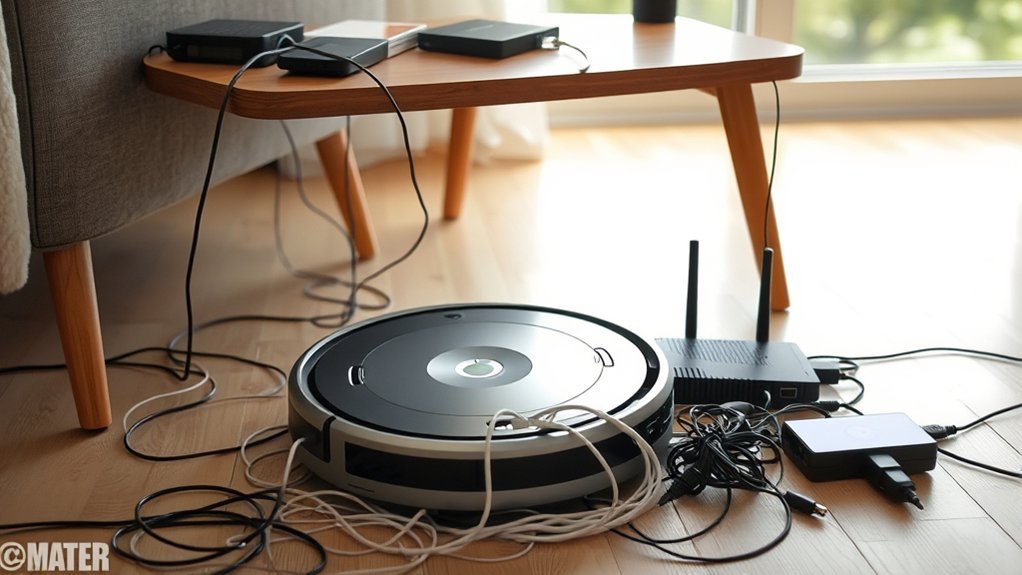
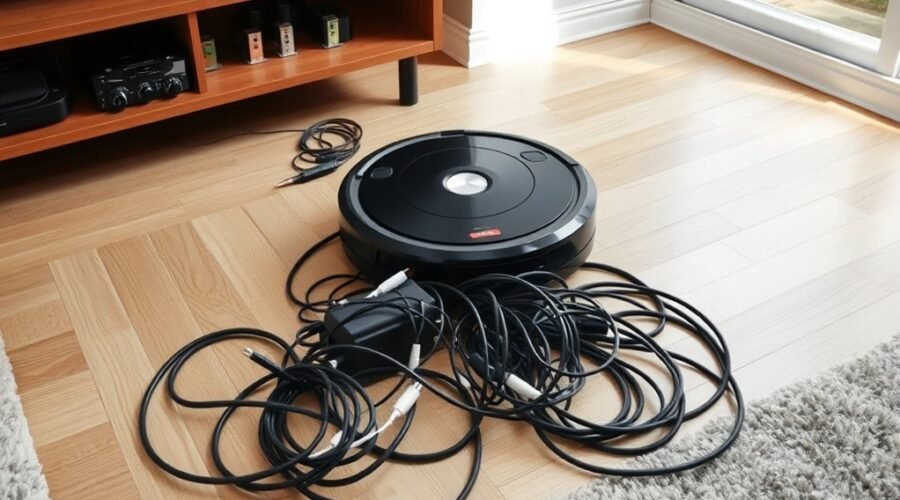
Cords on the floor are a frequent cause of robot vacuum trouble because the machines’ sensors can misread cable height or placement and mistake them for safe, passable space. Loose cords from chargers, appliances, and electronics often trigger navigation errors, especially when obstacle detection is limited to low-profile objects.
A robot vacuum getting stuck on cords may stop, drag a cable, or wrap it around brushes and wheels, creating jams that interrupt the cleaning routine. Unsecured wires also act as physical barriers that block the vacuum’s path and confuse its route planning.
In many homes, the issue is not the vacuum alone but the environment it must cross. Cord management matters because even small cable loops can prevent the vacuum from moving freely. When cords remain exposed, they reduce efficient movement and undermine household independence.
Simple preventive steps, including physical barriers or virtual boundaries, can help prevent the vacuum from reaching trouble zones.
Hide Robot Vacuum Cords Before Cleaning
A tidy dock cord area helps reduce tangles by keeping cables gathered and out of the robot vacuum’s path.
Loose floor cords should be secured with clips or sleeves so they do not become obstacles during cleaning.
Cord covers can add another layer of protection by keeping exposed wires flat and easier for the vacuum to avoid.
Tidy Dock Cord Area
Tidy dock cord areas help keep a robot vacuum moving smoothly and reduce the risk of tangles around its brushes and wheels.
Robot vacuum owners benefit from simple cord management at the docking station, where a tidy dock area supports better obstacle avoidance. Cable clips, sleeves, or adhesive raceways can hide cords and reduce clutter without blocking access.
A clear zone of 1.5 to 3 feet around the dock gives the machine room to return and depart freely. During regular maintenance, it helps to clean the sensors and inspect for loose cords or small hazards that could interrupt cleaning.
Secure Loose Floor Cords
Loose floor cords can easily catch on a robot vacuum’s brushes or wheels, so they should be secured before cleaning begins.
To secure loose floor cords, simple cable management tools such as clips, sleeves, adhesive hooks, and cable ties can keep lines gathered and out of reach. This helps prevent tangling with the vacuum’s brushes and preserves cleaning efficiency.
In high-traffic areas like living rooms and home offices, cords should be checked often and kept organized. Anchoring cords along walls or furniture edges creates a clear path for the robot vacuum.
When possible, position cords at least 4 inches above the floor to reduce entanglement. Good cable management gives the machine room to move freely and supports a more independent, hassle-free cleaning routine.
Use Cord Covers
Cord covers offer a simple way to hide robot vacuum cords and reduce the chance of tangling during cleaning. By enclosing cables, cord covers help the robot vacuum move with fewer obstacles and a clearer path, lowering the odds of getting stuck.
Many options include a non-slip surface, which keeps them in place and prevents them from shifting into new hazards. When chosen to match flooring or decor, they can preserve a clean, open look without sacrificing function.
To keep results reliable, regularly inspect each cover for wear, looseness, or trapped debris. Replacing damaged sections quickly helps reduce the chances of interruptions and supports smoother, more independent cleaning.
Use Cable Clips, Ties, and Cord Covers
A few simple cable-management tools can make a robot vacuum far less likely to snag on wires. Cable clips can fasten cords along walls or furniture edges, keeping them tidy and out of the vacuum’s path.
Cord ties, whether Velcro or plastic, bundle multiple leads together so stray wires do not spread across the floor. Cord covers add another layer of control by shielding cables and holding them flat, helping the vacuum navigate with less interruption.
Placed well, these tools reduce clutter without limiting access to power. They support cleaner routes, better cleaning efficiency, and less need for repeated stops.
Regular maintenance matters too: clips may loosen, ties may shift, and covers may move over time. A quick check keeps everything aligned and prevents new tangles from forming.
A quick check keeps clips, ties, and covers aligned, preventing new tangles from forming.
With steady upkeep, the robot can move freely, and the space remains orderly.
Set Up No-Go Zones for Problem Areas
Cord hotspots should be marked first, especially near entertainment centers and home offices where loose cords often create trouble.
The vacuum’s app can then be used to set boundary zones that keep it away from these problem areas.
Regular updates to the map help the system stay accurate as new obstacles appear.
Mark Cord Hotspots
Identifying cord-heavy areas such as entertainment centers and home offices helps prevent robot vacuum tangles before they happen. Mark these cord hotspots in the mapping system so robot vacuums can avoid them during cleaning cycles.
Clear no-go zones reduce friction with furniture edges, loose chargers, and cables that invite entanglements. Where the app allows, virtual barriers add another layer of protection around problem spots.
Physical guides such as cord organizers, shelves, or repositioned furniture can further limit access without trapping movement. Household members should keep wires bundled and visible, so the setup remains easy to maintain.
As rooms change, review and update the no-go zones regularly. This small discipline gives the home more freedom from interruptions and keeps cleaning predictable.
Use App Boundary Zones
App boundary zones give robot vacuums a simple way to stay clear of problem areas once cords and other hazards have been identified. In the app, a user draws virtual walls or no-go zones on the home map, and the Robot adjusts navigation before the cleaning cycle begins.
| Area | Result |
|---|---|
| Cords near desk | Relief |
| Tangled wires | Fewer stops |
| Pet charging corner | Less worry |
| New obstacles | Better control |
This setup helps the vacuum avoid obstacles without constant supervision. Many app systems support multiple maps, so different rooms or floors can have separate limits. Updating zones regularly keeps navigation accurate when furniture moves or new cords appear. The result is cleaner floors, fewer interruptions, and more freedom from babysitting the machine.
Clear Floor Clutter Around Cords
A clear floor path helps a robot vacuum move without snagging on cords or scattered debris. To clear floor clutter, a regular check should remove small objects before each run. Loose cords can be clipped to walls or bundled with organizers so the robot vacuum will avoid getting trapped.
During a mapping session, cords should stay out of the open area the machine covers, and virtual barriers can steer it away from dense cable zones. This setup gives the vacuum room to work with less interruption and more freedom.
- Keep charging leads and extensions in a designated cord zone.
- Use cable clips to secure wires along edges and prevent drift.
- Place non-slip rugs where needed so they do not shift into the path.
A quick inspection before cleaning preserves access and reduces emergency stops. The result is a calmer, cleaner route that lets the machine travel with fewer constraints and less waste.
Arrange Furniture to Reduce Snags
Furniture should be arranged to leave clear, open pathways that reduce the chance of a robot vacuum catching on cords or other obstacles during its cleaning cycle. To arrange furniture well, keep pieces out of high-traffic routes and preserve at least 3 feet of space where the machine needs to pass. This helps create clear pathways and minimize obstacles in the cleaning area.
| Action | Benefit | Space |
|---|---|---|
| Arrange furniture away from routes | Reduce snags | 3 feet |
| Use furniture risers | Lift low items | 4 inches |
| Secure cords with clips or sleeves | Control loose cords | Along walls |
Loose cords should be bundled and secured behind furniture or along walls so they stay out of reach. Furniture risers can also free low-profile items from the vacuum’s path. With these setup changes, the home becomes easier to traverse, and the robot can work with greater freedom and fewer interruptions.
Check Sensors, Wheels, and Brushes
After the layout is cleared, the robot vacuum should also be checked for mechanical and sensor issues that can lead to snagging on cords. Regular maintenance should include a careful effort to check sensors, wheels and brushes, since dirty sensors can misread cord obstacles and cause the unit to get stuck. Dust and debris on the sensors should be removed so navigation remains accurate and the path is more open.
- Inspect wheel wells for hair, thread, or other tangles that limit movement.
- Clean brushes often, because packed dirt reduces their ability to lift over cords.
- Replace worn wheels if they no longer roll smoothly or track evenly.
When these parts stay clean and functional, the vacuum can improve navigation and move with greater freedom through cluttered rooms.
That steadier motion lowers the chance of a jam and supports reliable cleaning without constant interruption.
Troubleshoot Persistent Cord Snags
When cord snags keep happening, the problem often lies in a few repeat trouble spots that need tighter control.
First, Identify High-Risk Areas around desks, media consoles, and charging stations, where loose leads are common causes.
Next, apply Cord Management Solutions such as clips, sleeves, or cable boxes to lift wires clear of the floor and keep them bundled.
A Regular Inspection routine helps spot new slack before it can catch brushes or wheels.
It also helps to Implement Virtual Boundaries so the robot avoids cord-heavy zones altogether, giving the floor more freedom.
Where replacements are needed, choose Tangle-Free Cords or flat cables, which are less likely to wrap and drag.
If a snag starts, stop your robot vacuum immediately, clear the line, and reset the route.
These steps work together to vacuum from Getting Stuck and keep movement smooth.
Frequently Asked Questions
Why Is My Robot Vacuum Getting Stuck?
It usually gets stuck because robot behavior collides with poor cord management, awkward home layout, weak vacuum sensors, certain carpet types, pet interference, or disrupted cleaning patterns; practical maintenance tips and boundary changes help prevent repeats.
Which Robot Vacuums Are Known to Avoid Cords?
Roomba i7+, Roborock S7, Ecovacs Deebot T8 AIVI, Narwal Flow, and Neato D8 use cord detection technology, navigation algorithms, and obstacle avoidance features; some doubt remains, but smart mapping capabilities, floor type compatibility, user reviews analysis, brand comparisons, maintenance tips help.
How to Factory Reset a Robot Vacuum?
He should use factory reset methods in the user manuals: press the reset button about 10 seconds, or hold home and spot clean. Afterward, reconfigure cleaning schedules, software updates, sensor calibration, battery health, and troubleshooting tips.
What Are the Most Common Problems With Robot Vacuums?
Common robot vacuum problems include weak suction power, navigation issues, short battery life, app connectivity failures, poor brush maintenance, sensitivity to floor types, unreliable obstacle detection, and high noise levels, frustrating users seeking effortless cleaning.
Conclusion
In the quiet choreography of a home, cords can become unseen tripwires for a robot vacuum. With tucked-away cables, clipped bundles, no-go zones, and open pathways, the floor becomes a clearer map to follow. Simple setup changes do more than prevent snagging; they turn a tangled space into one that moves smoothly. When obstacles are managed before cleaning begins, the machine can work with steady purpose, and the room feels less like a maze.