Robot vacuum docks need enough open space to work reliably. A common guideline is at least 2 feet on each side and 5 feet in front of the dock. That clearance helps the vacuum align, approach, and charge without error. Tight placement near walls, corners, or clutter can disrupt navigation and cause docking failures. The exact setup can vary by model, and the details matter more than they first appear.
How Much Clearance Does the Shark Matrix Plus Need?
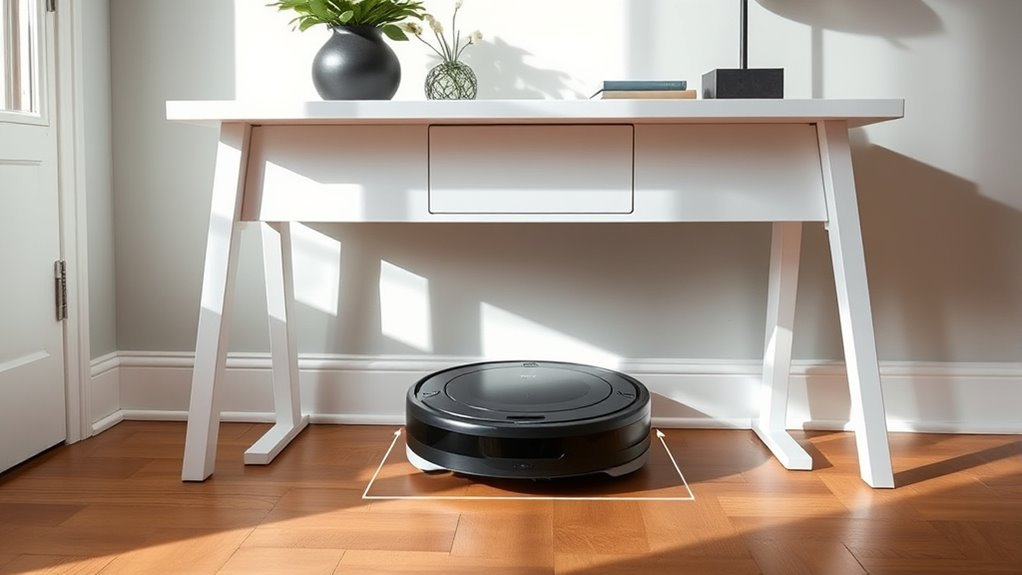
The Shark Matrix Plus performs best with about 2 feet of clearance on each side of the dock and at least 5 feet of open space in front of it. This clearance for docking gives the robot vacuums enough room to approach, align, and return to the charging dock without unnecessary correction.
For ideal performance, the recommended spacing should be treated as the operational baseline, not an optional convenience. In confined placements, initial mapping may be less reliable, and navigation can become less consistent.
Reduced side space may still permit basic cleaning, but it often increases the chance of docking errors and degraded workflow. A practical setup consequently supports free movement, stable recharging, and fewer interruptions.
Following the suggested dimensions helps preserve efficiency and gives users a cleaner, more autonomous experience with less manual intervention.
Why Dock Clearance Matters
Adequate dock clearance is essential because robot vacuums rely on open space to approach, align with, and enter the charging dock reliably. Without sufficient space, docking becomes inconsistent, and the machine wastes time correcting position instead of returning to charge. That reduces autonomy and limits the freedom a hands-off system should provide.
| Factor | Effect | Result |
|---|---|---|
| Front clearance | Supports straight approach | Reliable docking |
| Side space | Reduces obstruction risk | Fewer navigation errors |
| Ventilated placement | Lowers heat buildup | Stable operation |
A dock placed in clear, ventilated space also improves environment mapping, since the vacuum encounters fewer boundary errors near the station. Insufficient clearance can trigger failed returns, slower charging cycles, and weaker cleaning coverage. Precise dock placement consequently protects efficiency, preserves battery health, and keeps the vacuum available for uninterrupted service.
How Much Space Should You Leave Around the Dock?
For reliable docking, the station should have at least 1 meter (3 feet) of clear space in front and about 0.5 meters (1.6 feet) on each side. This dock clearance gives the robot a predictable approach corridor and supports ideal alignment during return cycles.
The space should remain free of thick rugs, chair legs, and furniture edges, since nearby obstacles can interrupt navigation and reduce docking efficiency. In practice, some users report acceptable operation with only 20 centimeters (8 inches) on either side, but that margin is less robust and may demand more retries.
A more generous layout preserves maneuverability, lets sensors read the area cleanly, and lowers the chance that the robot fails to find its dock. For practical freedom from avoidable intervention, the goal is simple: keep the dock area open, level, and unobstructed, with clearance that matches the machine’s guidance rather than the bare minimum.
What Happens in Tight Docking Spaces?
Tight dock placements can make a robot vacuum’s return path less reliable, especially when nearby furniture, walls, or rugs interrupt its approach corridor.
In tight corners, the machine may struggle to identify the docking station quickly, and that delay can trigger operational issues during recharge cycles. A minimum of 1 foot of side clearance may still permit basic function, but it does not guarantee stable alignment or repeatable returns.
If enough clearance is absent, the robot can overshoot, stall, or approach at an angle that prevents contact with the charging pins.
Initial mapping is often the most vulnerable stage in confined areas, because the vacuum may miss ideal navigation paths and learn an inefficient route.
After mapping, performance may improve if the unit is repositioned, yet setup conditions remain decisive.
In practice, restricted space reduces autonomy, increases docking failures, and weakens overall efficiency.
Where Should You Put the Dock in a Small Room?
In a small room, the dock should be positioned with at least 1 meter of clearance from walls and nearby furniture to support reliable docking and charging.
Corner placement can work if it preserves 1.5 meters of open space in front of the dock and avoids rugs, thresholds, or other obstructions.
A nearby power outlet is necessary so the dock can remain connected without cords crossing the room and interfering with access.
Wall Clearance Basics
A minimum of 0.5 meters of clear space on each side of the dock and about 1.5 meters in front helps a robot vacuum locate and enter the station reliably in a small room. This wall clearance reduces interference from nearby walls, furniture, and other obstacles that can confuse navigation.
The docking station should remain unobstructed, with no clutter in the approach path, to limit operational issues and preserve consistent return behavior. Placement near a nearby outlet supports continuous charging, while adequate ventilation helps prevent overheating during long duty cycles.
In compact layouts, the most effective setup is one that keeps the dock accessible, electrically stable, and physically open. That arrangement gives the machine freer movement and lowers dependence on repeated manual intervention.
Corner Placement Options
Corner placements can work well in a small room when the dock still has enough open approach space for reliable navigation. A practical corner placement keeps at least 1 meter of open space in front and 0.5 meters on each side, reducing collision risk and improving alignment.
In compact layouts, alcoves and areas behind doors can Hide Your Robot without wasting usable floor area. Minimal side clearance may still function, but performance is more consistent when the dock is not boxed in by thick rugs or tight furnishings.
The dock should also remain aligned with a stable Power Source so the robot receives uninterrupted access and returns cleanly. This setup supports efficient automation while preserving room freedom and visual simplicity.
Outlet And Access
For a small room, the dock should sit within 1 meter of a stable power outlet so charging remains uninterrupted and the vacuum stays ready for use. An outlet nearby reduces cable strain and preserves consistent power delivery.
The docking station needs at least 1.5 meters of clearance in front to support easy access and accurate approach paths. Surrounding space should remain free of chairs, cords, and other obstacles that can block navigation or trap the unit.
Positioning in a well-ventilated area helps limit heat buildup and sustain efficiency. Corners and positions behind furniture should be avoided because they weaken signal acquisition and return accuracy.
Careful placement grants practical freedom: the robot can leave, return, and recharge without friction, interruption, or unnecessary supervision.
How Can You Check Your Dock Setup at Home?
To verify a robot vacuum dock setup at home, the installation should be measured against the recommended clearances before use. A meter tape or ruler can confirm that the dock has at least 1.5 meters of clear space in front and 0.5 meters on each side.
This setup should also be inspected for obstacles that interrupt approach paths or block sensor coverage. The docking area must remain open, stable, and free of clutter so the vacuum can return without constraint.
Regular checks should confirm that infrared sensors and LiDAR components are not shaded, covered, or misaligned. A disciplined review of distances and visibility supports reliable operation and preserves user autonomy.
- Measure front clearance first.
- Measure both side clearances.
- Remove nearby obstacles and clutter.
- Inspect sensor paths before final placement.
How Do You Fix Common Docking Problems?
Common docking problems are often resolved by revisiting the dock’s placement and surrounding clearance. A robot vacuum performs best when the dock has at least 1 meter, or 3 feet, of open space in front of it, allowing reliable navigation into the charging base.
If docking issues persist, the dock should be moved away from walls, corners, and other obstructions that can disrupt approach paths. Thick rugs and thresholds near the dock can alter wheel traction and sensor response, so those surfaces should be removed from the route or the station relocated.
The surrounding area should be checked regularly for clutter, cords, and furniture legs, since even small obstructions can prevent accurate alignment. A more open location usually improves access, reduces search time, and supports more dependable docking.
This practical adjustment gives the vacuum a clearer path and restores orderly, autonomous operation.
Frequently Asked Questions
How Much Clearance Does a Robot Vacuum Need?
A robot vacuum needs about 1 meter in front and 0.5 meters per side for reliable docking. Robot vacuum features, maintenance tips, floor types, and pet hair management improve performance when access stays unobstructed.
Where to Place a Robot Vacuum Dock?
Place the dock near a power outlet, with 0.5 meters aside and 1.5 meters ahead. Dock location tips, wall proximity guidelines, furniture arrangement advice, floor surface considerations each improve 95% docking reliability and freedom.
What Are the Recommended Dimensions for a Roborock Docking Station?
Roborock dock dimensions favor 0.5 meters clearance on each side and 1.5 meters in front; these space requirements support ideal placement. Installation tips emphasize a stable outlet, unobstructed floor, and ample navigation freedom.
What Is the Recommended Clearance Height for a Robot Vacuum?
About 1 meter, generally, is recommended above the docking area; coincidence of clearance and guidance improves obstacle detection, protects battery life, sustains suction power, and simplifies maintenance tips, ensuring practical, liberated operation.
Conclusion
In practice, the recommended dock clearance appears well founded: leaving at least 2 feet on each side and 5 feet in front gives a robot vacuum the maneuvering room needed for accurate alignment, stable approach angles, and fewer docking retries. In tighter spaces, performance often declines because walls and nearby objects disrupt sensor guidance and turning radius. A clutter-free, open dock area consequently remains the most reliable setup for consistent charging and navigation.