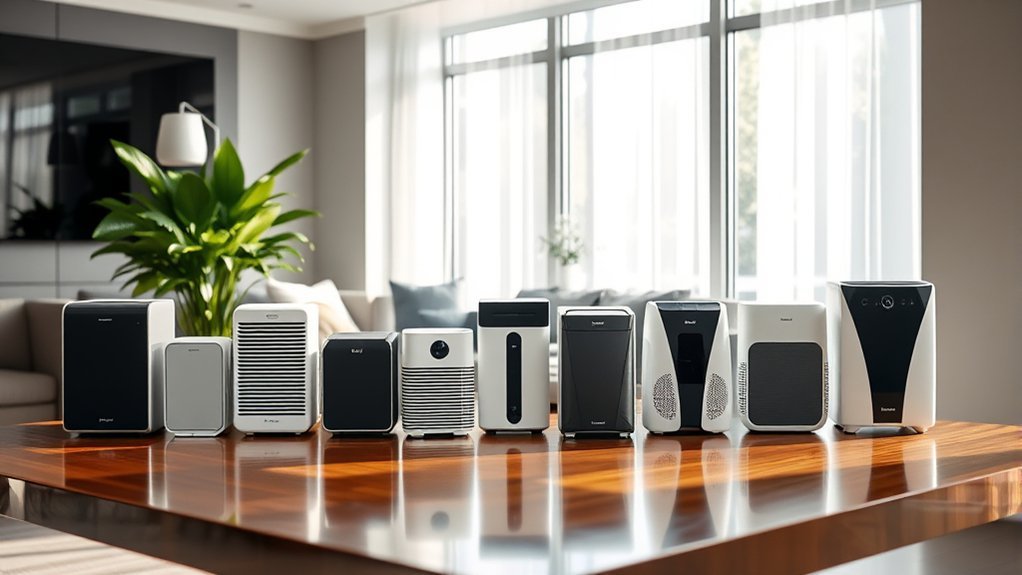
If you’re comparing the best basement dehumidifiers with pumps for damp basements, crawl spaces, garages, restoration work, or occasional standing-water cleanup, the right choice depends on your room size, drainage setup, humidity level, and how often the space gets wet. A built-in pump is especially helpful when your drain is higher than the unit or when you want continuous drainage into a sink, utility drain, sump area, or out a window. This updated guide keeps the focus on high-capacity models, energy-efficient home units, crawl-space options, and commercial dehumidifiers that can handle serious moisture problems.
Affiliate Disclosure: This article contains Amazon affiliate links. If you buy through these links, we may earn a commission at no extra cost to you.
Quick Verdict: For heavy basement moisture or restoration work, start with the larger commercial models. For regular home basement humidity, the 50 to 80-pint Energy Star-style units are easier to live with. For crawl spaces, choose compact low-clearance models with corrosion-resistant construction and reliable drainage.
Quick Comparison: Basement Dehumidifiers With Pumps
| Product | Best For | Listed Capacity | Main Advantage | Amazon |
|---|---|---|---|---|
| 200 Pints Commercial Dehumidifier with Pump | Large basements, garages, warehouses | Up to 200 pints/day | Heavy-duty drying power | Check Price |
| AEOCKY 4500 Sq.Ft Energy Star Dehumidifier with Pump | Large home basements | Up to 80 pints/day | Energy-focused operation | Check Price |
| 170 Pints Commercial Dehumidifier with Pump | Basements, garages, warehouses | Up to 170 pints/day | Strong airflow and pump drainage | Check Price |
| 75 Pints Crawl Space Dehumidifier with Pump | Crawl spaces and low-clearance areas | Up to 75 pints/day | Compact crawl-space design | Check Price |
| Waykar 80 Pints Energy Star Dehumidifier for Home | Everyday basement humidity | Up to 80 pints/day | Home-friendly controls | Check Price |
| ALORAIR 70 Pints Crawl Space Dehumidifier with Pump | Crawl spaces, basements, garages | Up to 70 pints/day | Durable crawl-space build | Check Price |
| Sijipt 80 Pints Dehumidifier with Pump | Large damp living areas and basements | Up to 80 pints/day | Quiet, pump-assisted drainage | Check Price |
| GE Portable Dehumidifier with Built-in Pump | Large home basements and garages | Up to 50 pints/day | Portable brand-name option | Check Price |
| 155 Pints Commercial Dehumidifier with Pump and Hose | Commercial spaces and large basements | Up to 155 pints/day | Compact commercial power | Check Price |
| 305 Pints Commercial Dehumidifier with Pump | Restoration projects and very large areas | Up to 305 pints/day | Maximum drying capacity | Check Price |
Important standing-water note: A dehumidifier helps remove moisture from the air after leaks, seepage, or flooding, but it is not a replacement for a sump pump, wet/dry vacuum, plumbing repair, waterproofing work, or professional water-damage cleanup. Remove standing water first, fix the source of water intrusion, and then use a pump-equipped dehumidifier to dry the space and control humidity.
Pro Tip: If your basement drain is above floor level, prioritize a built-in pump. If your drain is lower than the unit, gravity drainage may be enough and can be simpler long term.
200 Pints Commercial Dehumidifier with Pump
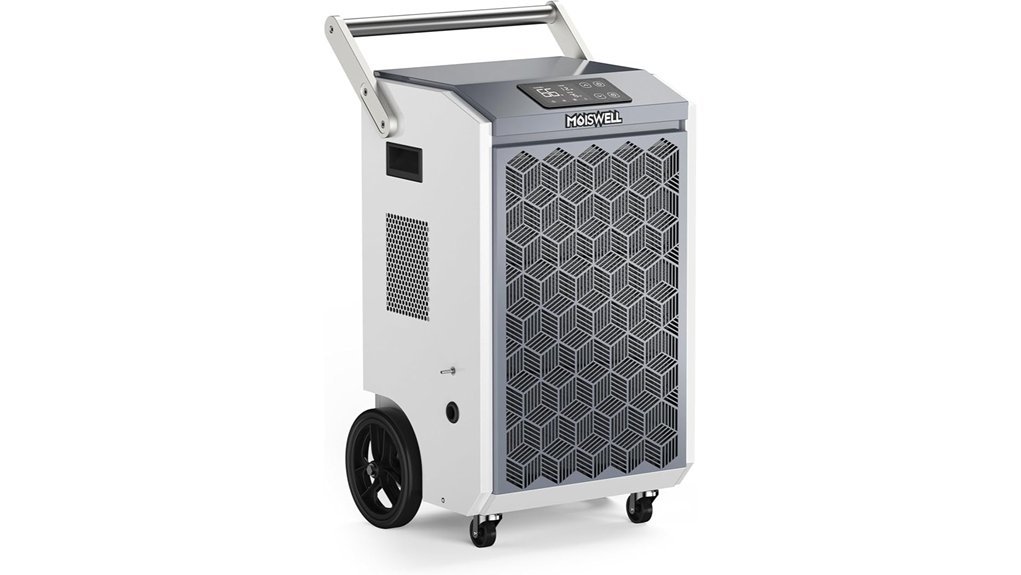
If you’re tackling moisture issues in large spaces like basements, garages, or warehouses, the Moiswell 200 Pints Commercial Dehumidifier with Pump is a top choice. This powerhouse removes up to 200 pints of moisture daily, making it perfect for construction sites or water damage restoration. With a built-in pump, it effortlessly drains condensation up to 16.4 feet, ensuring hassle-free maintenance. Its intuitive control panel lets you adjust humidity levels easily, while the durable metal construction withstands demanding environments. Plus, the large wheels and detachable handles mean you can move it wherever you need it most. Say goodbye to dampness!
Why You’ll Like It: This model makes sense when a normal home dehumidifier feels too small for the job. It is especially useful after leaks, heavy basement humidity, or ongoing moisture problems in large utility spaces where continuous drainage matters.
Best For: Those needing effective moisture control in large spaces like basements, garages, or warehouses.
Who Should Avoid This: Skip this one if you only need light humidity control in a small finished basement, because its size, weight, and power draw may be more than you need.
Pros:
- High Capacity: Removes up to 200 pints of moisture daily, ideal for large areas.
- Built-in Pump: Automatically drains condensation up to 16.4 feet, reducing maintenance.
- Portability: Equipped with large wheels and detachable handles for easy movement.
Cons:
- Weight: At 78 pounds, it may be challenging to move without assistance.
- Power Consumption: Operates at 1200 watts, which could increase energy costs.
- Size: Its dimensions (14D x 16.6W x 29H inches) may require ample space for installation.
AEOCKY 4500 Sq.Ft Energy Star Dehumidifier with Pump
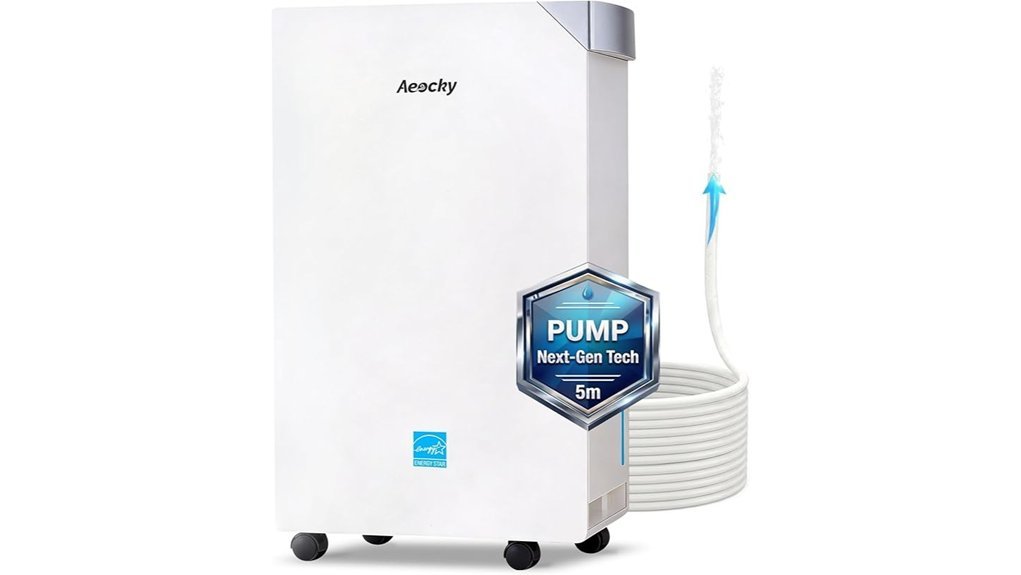
The AEOCKY 4500 Sq.Ft Energy Star Dehumidifier with Pump is perfect for homeowners tackling humidity in large spaces. With a capacity to remove up to 80 pints of moisture daily, it efficiently covers areas up to 4,500 sq. ft. Its smart compressor and intelligent humidistat guarantee peak performance, while the 5m upward drainage capability allows for flexible installation. Enjoy quiet operation thanks to its low-vibration pump, and don’t worry about maintenance with the easily removable nozzle. Plus, its ENERGY STAR certification assures energy efficiency, helping you save on electricity costs while keeping your home comfortable.
Why You’ll Like It: This is a strong fit for homeowners who want pump drainage without moving into oversized commercial equipment. It balances moisture removal, smart controls, and a more home-friendly design.
Best For: Homeowners seeking an efficient solution to manage humidity in large spaces up to 4,500 sq. ft.
Who Should Avoid This: It may not be the best match for restoration jobs, warehouses, or severe post-flood drying where a commercial-capacity unit is more appropriate.
Pros:
- High dehumidification capacity of up to 80 pints per day, ensuring effective moisture removal.
- ENERGY STAR certification guarantees energy efficiency, reducing electricity costs.
- Quiet operation with a low-vibration pump, making it suitable for bedrooms and living areas.
Cons:
- Initial cost may be higher compared to basic dehumidifiers.
- Requires some setup for the drainage system, which may not be ideal for all users.
- Limited portability due to its size and weight, making it less convenient to move around.
170 Pints Commercial Dehumidifier with Pump
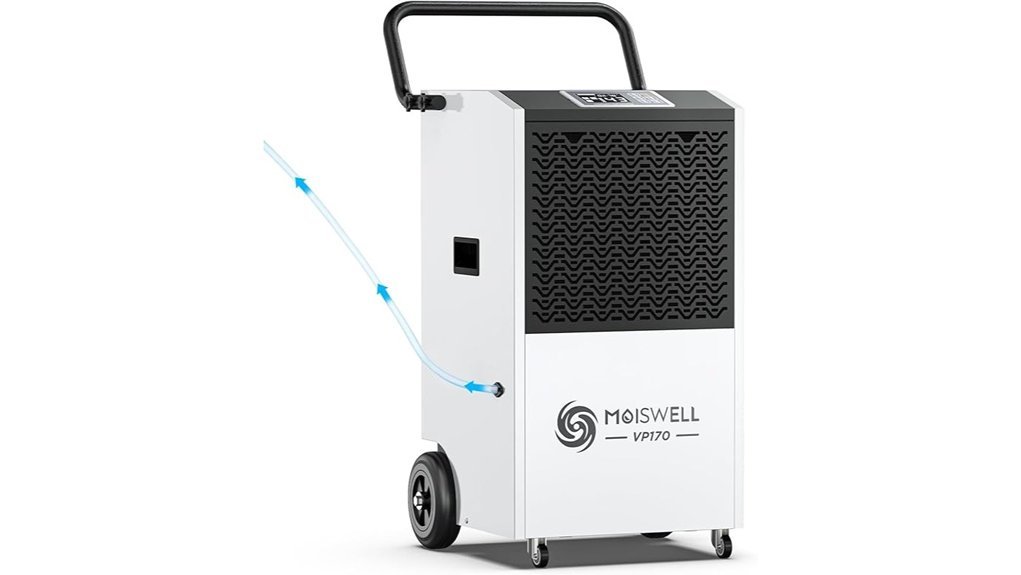
For large spaces needing moisture control, the Moiswell VP170 Commercial Dehumidifier excels. With a remarkable capacity to remove up to 170 pints of water daily, it effectively covers areas up to 7,500 sq. ft. Its powerful 265 CFM airflow guarantees rapid humidity reduction, making it ideal for basements, garages, and warehouses. The built-in pump automatically drains water via a 16-foot hose, allowing for continuous operation without hassle. Plus, its portable design features 6-inch wheels and detachable handles, making transport a breeze. With adjustable settings and automatic functions, managing humidity has never been easier.
Why You’ll Like It: The higher airflow is useful when you need to dry a large open area more quickly. It is a practical middle ground between standard basement units and the largest restoration-style models.
Best For: Those needing effective moisture control in large commercial spaces like basements, garages, and warehouses.
Who Should Avoid This: If noise is your top concern or the unit will sit close to a living area, a quieter home-focused model may be easier to tolerate.
Pros:
- High Capacity: Removes up to 170 pints of water daily, suitable for extensive coverage.
- Built-In Pump: Features a 16-foot hose for automatic drainage, allowing for uninterrupted operation.
- Portable Design: Equipped with wheels and detachable handles for easy transport between locations.
Cons:
- Power Consumption: Uses 1220 watts, which may increase energy costs.
- Size: Its larger size may not be suitable for smaller or cramped spaces.
- Noise Level: The high airflow may generate noticeable noise during operation.
75 Pints Crawl Space Dehumidifier with Pump
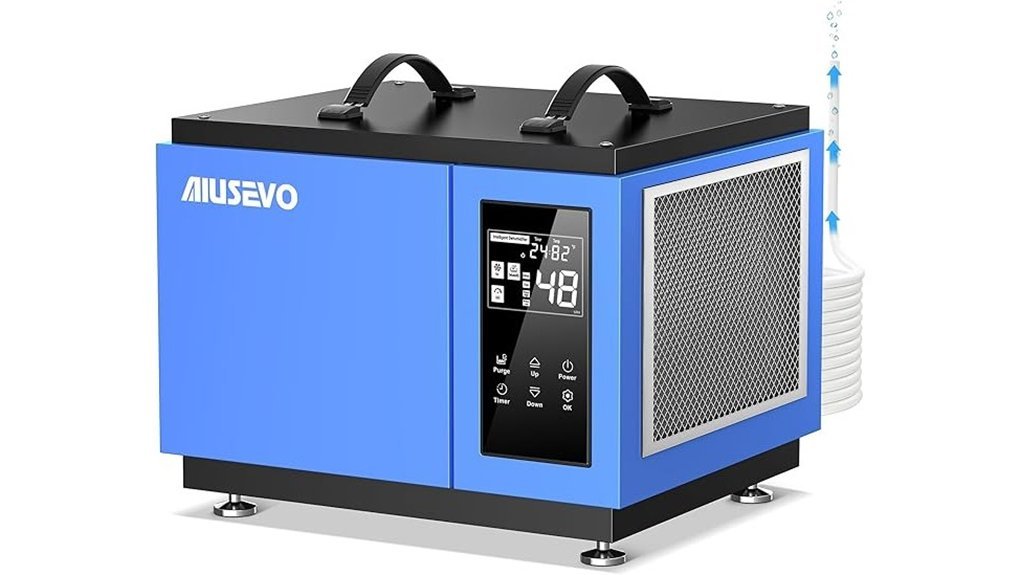
Looking for a reliable dehumidifier for large spaces? The Aiusevo AS600 Crawl Space Dehumidifier with Pump is an excellent choice. It removes up to 75 pints of moisture daily, covering areas up to 5,200 sq. ft. Its compact design fits easily between floor joists, making it perfect for crawl spaces and basements. With a powerful 200 CFM airflow, it guarantees efficient moisture removal. You can choose between a built-in pump for long-distance drainage or a gravity option. Plus, its intuitive touchscreen lets you set humidity levels and monitor conditions, assuring peak performance in your space.
Why You’ll Like It: This model is built for areas where a tall upright unit may not fit. The pump and gravity-drain options give you more flexibility when installing it in a crawl space, utility area, or low-ceiling basement.
Best For: Those seeking an efficient and compact dehumidifier for large, moisture-prone areas like crawl spaces, basements, or industrial settings.
Who Should Avoid This: It may not be the easiest choice if you need a simple roll-around dehumidifier for a finished basement room.
Pros:
- High Capacity: Removes up to 75 pints of moisture daily, suitable for large spaces.
- Versatile Drainage Options: Features both a built-in pump and gravity drainage for flexible installation.
- Smart Control System: Intuitive touchscreen for easy humidity management and monitoring.
Cons:
- Weight: At 39 pounds, it may be cumbersome to move for some users.
- Price Point: Higher initial investment compared to basic dehumidifiers.
- Noise Level: Some users may find the operational noise noticeable in quiet environments.
Waykar 80 Pints Energy Star Dehumidifier for Home
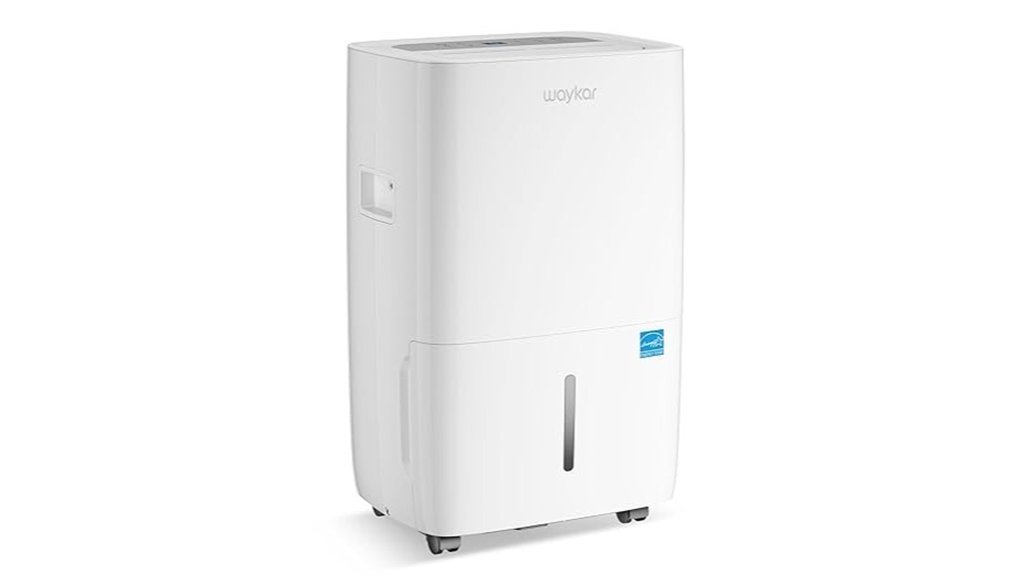
With its impressive 80-pint capacity, the Waykar Energy Star Dehumidifier is perfect for large spaces like basements. It efficiently removes excess moisture from areas up to 5,000 sq. ft., ensuring a comfortable environment even during humid seasons. The 90° auto swing airflow evenly distributes dry air, helping you avoid uneven humidity levels. Plus, its Energy Star certification means it operates efficiently and quietly, making it ideal for any setting. With a 1.14-gallon water tank and included drain hose, maintenance is a breeze. Trust Waykar’s reliable brand support and enjoy a dry, healthy living space year-round.
Why You’ll Like It: This is a practical pick for routine basement humidity control, especially if you want a home-style unit with a tank and drain hose instead of a heavy commercial machine.
Best For: Those seeking an efficient solution for dehumidifying large spaces, such as basements, bathrooms, and large rooms up to 5,000 sq. ft.
Who Should Avoid This: If you specifically need upward pump drainage, check the drainage details carefully before buying, because tank and hose drainage may not solve every basement layout.
Pros:
- Energy Star Certified: Ensures efficient operation and reduced energy costs.
- Quiet Operation: Runs at approximately 42 dB, making it suitable for use during sleep or work.
- Flexible Humidity Control: Offers a smart humidity control range of 30%–80% for stable indoor conditions.
Cons:
- Manual Drainage Option: The 1.14-gallon water tank requires regular emptying unless using the drain hose.
- Initial Cost: Higher upfront investment compared to smaller dehumidifiers.
- Size and Weight: May be bulky for smaller spaces or apartments.
ALORAIR 70 Pints Crawl Space Dehumidifier with Pump
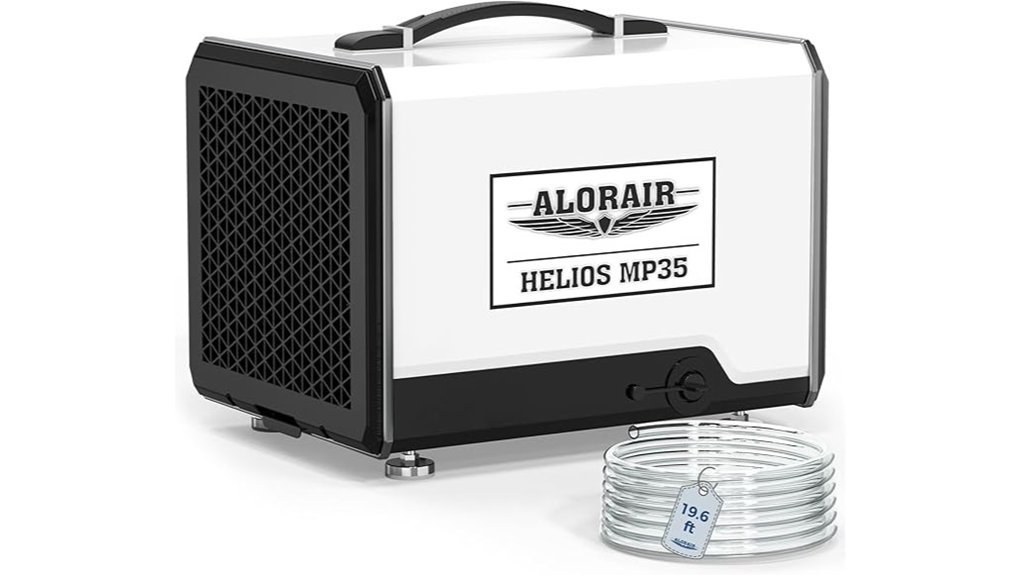
The ALORAIR 70 Pints Crawl Space Dehumidifier with Pump excels in maintaining ideal humidity levels in challenging environments. Covering up to 1,000 sq. ft., it efficiently removes up to 70 pints per day under saturated conditions. Its corrosion-resistant construction guarantees durability, making it perfect for crawl spaces and basements. The built-in pump allows for vertical water discharge up to 19.6 ft., while the included gravity drain hose guarantees continuous drainage. With smart operation features like automatic defrost and power restart, you can set it and forget it. Plus, it comes with a 6-year warranty for peace of mind.
Why You’ll Like It: Crawl spaces can be rough on appliances, so the corrosion-resistant design and auto-restart features help reduce babysitting. The vertical pump lift is also useful when the drain point is above the unit.
Best For: Homeowners and businesses seeking an efficient solution to control humidity in crawl spaces, basements, or garages.
Who Should Avoid This: If your basement is much larger than the listed coverage area, consider a higher-coverage model instead.
Pros:
- High Capacity: Removes up to 70 pints of moisture per day under saturated conditions, ideal for humid environments.
- Durable Design: Corrosion-resistant casing ensures reliability in challenging conditions.
- Smart Features: Automatic defrost and power restart capabilities allow for minimal oversight.
Cons:
- Limited Coverage: Effective only for areas up to 1,000 sq. ft., which may not suffice for larger spaces.
- Noise Level: The built-in pump may produce noticeable noise during operation.
- Initial Cost: Higher upfront investment compared to some basic dehumidifiers.
Sijipt 80 Pints Dehumidifier with Pump
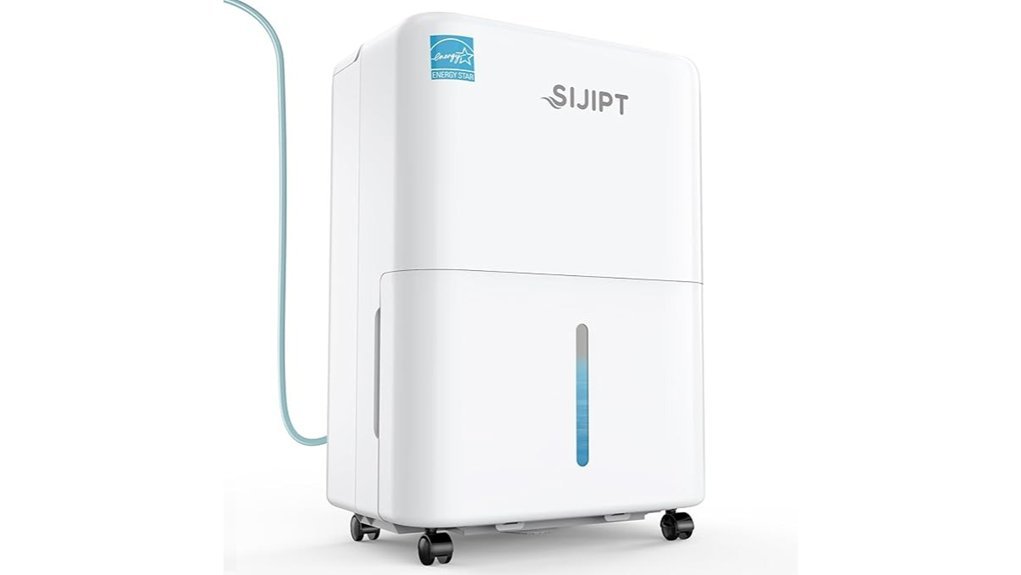
If you need a powerful solution for damp basements, the Sijipt 80 Pints Dehumidifier with Pump is ideal. It processes up to 80 pints of water daily, covering areas up to 5,000 square feet. With adjustable humidity levels from 30% to 80%, you can easily manage moisture. The built-in pump allows for hands-free drainage, pumping condensate up to 16.4 feet. Plus, it’s ENERGY STAR certified, using 30% less energy. Operating at just 45 decibels, it’s quiet enough for family rooms. Enjoy smart modes and safety features, ensuring a reliable and user-friendly experience in your home.
Why You’ll Like It: This is a better match for people who need pump drainage but still care about comfort. The lower listed sound level makes it more suitable for basements used as family rooms, offices, or hobby spaces.
Best For: Those seeking an efficient and powerful dehumidification solution for large spaces, such as basements or family rooms.
Who Should Avoid This: If you need a rugged jobsite-style unit for restoration work, a commercial model may be more appropriate.
Pros:
- ENERGY STAR certified, reducing energy consumption by up to 30%.
- Built-in pump enables hands-free drainage, making maintenance easier.
- Quiet operation at 45 decibels, suitable for living areas without disturbing noise.
Cons:
- May be overkill for smaller spaces, making it less cost-effective.
- Initial cost might be higher compared to less powerful models.
- Pump reliance could lead to issues if there are power outages affecting drainage.
GE Portable Dehumidifier with Built-in Pump
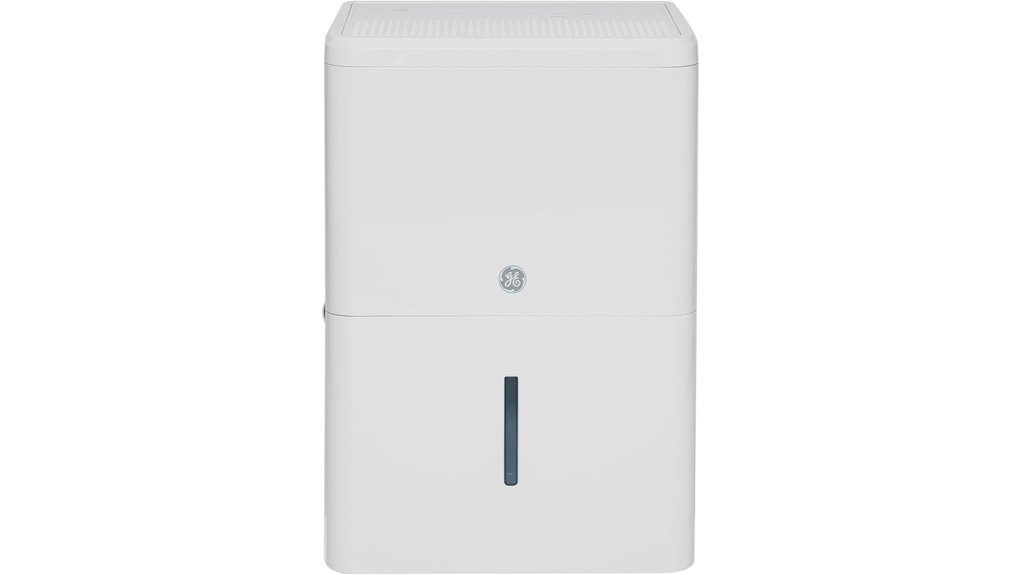
Looking for a powerful solution to combat humidity in your basement? The GE Portable Dehumidifier with Built-in Pump is designed for spaces up to 5,000 square feet, efficiently removing 50 pints of moisture daily. With its built-in pump and 16 ft hose, you can enjoy continuous drainage without the hassle of emptying a bucket. The ultra-quiet operation and smart technology automatically adjust fan speed based on humidity levels, ensuring peak performance. Plus, its portable design, complete with easy-roll wheels and a remote control, makes it a convenient choice for any high-humidity area. Stay dry with GE’s reliable solution!
Why You’ll Like It: This unit is a good fit when you want pump drainage in a more familiar portable format. It is easier to position than many heavy-duty commercial dehumidifiers and works well for typical basement humidity control.
Best For: Those looking to effectively manage humidity in large spaces like basements and garages.
Who Should Avoid This: If your basement has severe water intrusion or requires aggressive drying after a flood, consider a higher-capacity commercial unit.
Pros:
- Efficient Performance: Removes up to 50 pints of moisture daily, suitable for areas up to 5,000 square feet.
- Convenient Drainage: Features a built-in pump with a 16 ft hose for continuous drainage, eliminating the need for frequent bucket emptying.
- Smart Technology: Automatically adjusts fan speed based on humidity levels, ensuring optimal operation with ultra-quiet performance.
Cons:
- Initial Cost: Higher upfront investment compared to basic dehumidifiers without pumps.
- Size: May be bulky for smaller spaces or apartments, making it less portable.
- Maintenance Alerts: Requires regular filter cleaning, which may be a hassle for some users.
155 Pints Commercial Dehumidifier with Pump and Hose
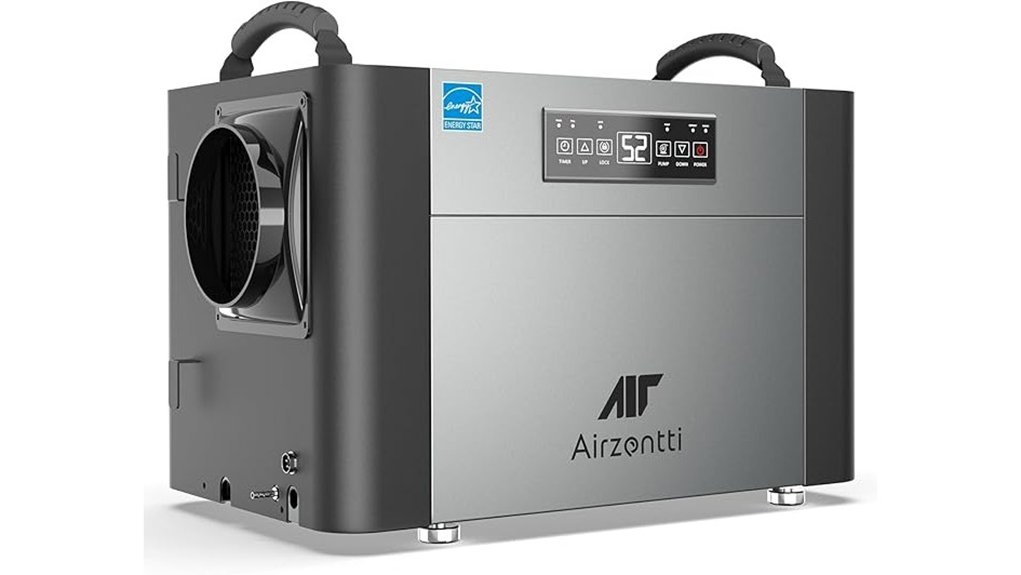
For large spaces like commercial offices or warehouses, the Airzentti 155 Pints Commercial Dehumidifier is an excellent choice. It removes up to 155 pints of moisture daily, effectively covering areas up to 7,500 square feet. Weighing 60 lbs and measuring 24.3 x 14.2 x 15 inches, it’s both powerful and compact. The built-in pump can drain water up to 16.4 feet, ensuring hassle-free operation. With a user-friendly control panel, you can easily set humidity levels and timers. Plus, it’s Energy Star certified, making it a sustainable option for your dehumidification needs. Keep your space dry and comfortable effortlessly!
Why You’ll Like It: This model gives you commercial-style capacity without jumping to the heaviest option in the list. It is useful for basements, offices, workshops, and moisture-prone storage areas where you need more power than a normal portable unit.
Best For: The Airzentti 155 Pints Commercial Dehumidifier is best for commercial spaces, industrial warehouses, and areas prone to moisture issues, such as basements and crawl spaces.
Who Should Avoid This: It may be more than necessary for small rooms, apartments, or mild seasonal humidity.
Pros:
- High Capacity: Removes up to 155 pints of moisture per day, ideal for large spaces.
- Built-in Pump: Allows for easy drainage up to 16.4 feet, reducing manual effort.
- Energy Efficient: Energy Star certified, promoting sustainable use and lower energy bills.
Cons:
- Weight: At 60 lbs, it may be cumbersome to move or relocate.
- Size: Its dimensions may make it challenging to fit in smaller spaces.
- Initial Cost: Higher upfront investment compared to smaller dehumidifiers.
305 Pints Commercial Dehumidifier with Pump
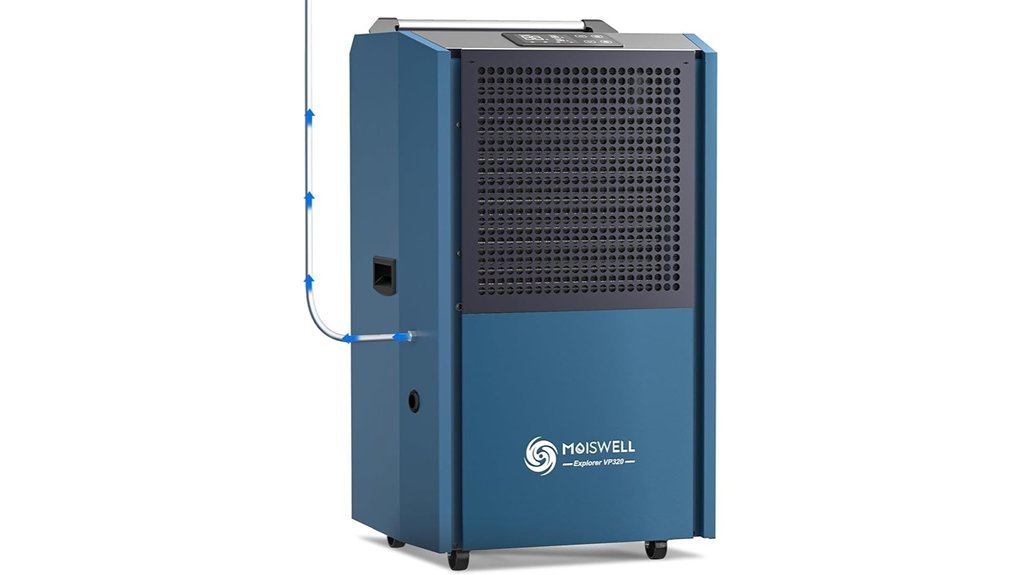
The Moiswell VP320 Commercial Dehumidifier is ideal for large spaces like warehouses and factories. With a remarkable dehumidification capacity of 305 pints per day, it efficiently tackles moisture in areas up to 8,500 square feet. You’ll appreciate the powerful airflow of 412 CFM, ensuring swift moisture removal. The built-in pump allows for reliable drainage up to 16.4 feet, minimizing your manual efforts. Smart controls, including auto ON/OFF and continuous drainage, offer convenience. Plus, its portable design features swivel casters for easy movement. This heavy-duty unit is perfect for restoration projects and managing humidity effectively in demanding environments.
Why You’ll Like It: This is the largest-capacity option in the lineup, making it best for demanding spaces where moisture returns quickly or where a smaller unit would run nonstop. The caster design also helps when moving it between work zones.
Best For: The Moiswell VP320 Commercial Dehumidifier is best for businesses and facilities requiring efficient moisture control in large spaces like warehouses, factories, and restoration projects.
Who Should Avoid This: Avoid this model for normal small-basement use unless you truly need the extra drying capacity and have the required electrical setup.
Pros:
- High capacity for dehumidification at 305 pints per day, making it suitable for extensive areas.
- Built-in pump allows for convenient drainage up to 16.4 feet, reducing manual water removal.
- Smart control features like auto ON/OFF and continuous drainage enhance user convenience.
Cons:
- Heavyweight at 106.37 pounds, which may make it less portable for some users.
- Requires a 20 Amp receptacle, which might not be available in all locations.
- Limited upper temperature rating of 95°F may restrict use in extremely hot environments.
Factors to Consider When Choosing a Basement Dehumidifier with Pump for Standing Water
When choosing a basement dehumidifier with a pump for standing water, you’ll want to take into account several key factors. Think about the unit’s capacity and coverage area, as well as its drainage system efficiency. Don’t forget to check the noise level, energy efficiency, and design features to guarantee it fits your needs.
Before You Buy Checklist
- Measure the basement: Match the listed square-foot coverage to your actual damp area.
- Check drain height: Choose a pump if the drain, sink, or outlet is above the dehumidifier.
- Plan hose routing: Make sure the hose can reach the drain without kinks or trip hazards.
- Confirm electrical needs: Larger commercial models may need more power than a standard household setup.
- Think about noise: Pick a quieter unit for finished basements, offices, bedrooms, or family rooms.
- Fix water sources first: A dehumidifier manages humidity, but leaks, seepage, and drainage problems still need repair.
Capacity and Coverage Area
Choosing the right capacity and coverage area for your basement dehumidifier is crucial for effective moisture control. Look for a unit’s capacity, measured in pints per day; for larger areas experiencing high humidity, consider models with capacities around 200 pints per day. Confirm the coverage area, typically in square feet, matches or exceeds your basement size—units designed for 7,500 square feet are great for spacious basements. Also, evaluate the dehumidification efficiency at various temperature and humidity levels to guarantee peak performance in tough conditions. Features like built-in pumps for vertical drainage can help, too. Finally, a higher airflow rate, measured in CFM, boosts moisture removal, speeding up the drying process in larger spaces.
Drainage System Efficiency
Effective moisture control in your basement doesn’t stop at capacity and coverage area; drainage system efficiency plays an essential role, especially when dealing with standing water. You’ll want a dehumidifier with a built-in pump that can discharge water vertically up to 16.4 feet. This feature provides flexible drainage options tailored to your basement’s layout. Continuous drainage systems eliminate the hassle of manual emptying, allowing for uninterrupted operation. Additionally, using a gravity drain hose can direct water to nearby floor drains or outdoor areas, ensuring reliable moisture management. An efficient drainage system not only lowers humidity levels but also helps prevent mold growth and structural damage caused by persistent moisture. Choose wisely to safeguard your basement’s health.
Noise Level Considerations
How much noise can you tolerate while keeping your basement dry? Noise levels in dehumidifiers can vary greatly, with some operating as quietly as 42 decibels. This makes them ideal for residential areas where you don’t want disruptive sounds. Look for models with low-vibration pump designs; they can greatly reduce noise during operation. Many dehumidifiers also come with noise reduction technologies that optimize airflow, enhancing your comfort. If you’re placing the unit in a quiet space like a bedroom or office, aim for a sound rating below 50 decibels. This way, you can effectively manage humidity without the constant hum interfering with your daily activities or relaxation time. Choose wisely!
Energy Efficiency Ratings
When selecting a basement dehumidifier with a pump for standing water, energy efficiency ratings play an essential role in your decision. Look for models with ENERGY STAR certification, which indicates effective moisture removal while minimizing electricity use. Higher pints-per-day capacity often correlates with better efficiency, allowing you to manage larger spaces without excessive energy costs. Pay attention to the moisture removed in relation to energy consumed; lower wattage with the same capacity signifies superior efficiency. Additionally, consider dehumidifiers with smart technology that adjust operations based on real-time conditions, optimizing energy consumption. Finally, don’t overlook regular maintenance—cleaning filters and ensuring proper drainage can greatly enhance your unit’s energy efficiency.
Portability and Design Features
Energy efficiency is just one aspect to evaluate in your basement dehumidifier selection. Portability is equally important. Look for models with large wheels and detachable handles that make moving the unit around tight spaces easy. A compact design guarantees it can fit into low-clearance areas, such as crawl spaces or under stairs. Weighing less than 80 pounds allows for effortless transport and positioning throughout your basement. Additionally, a built-in pump offers flexible drainage options, letting you discharge condensate vertically or horizontally without hassle. Finally, robust construction materials, like metal casings, enhance durability, ensuring your dehumidifier can withstand the demanding conditions typically found in basements. Choose wisely to maximize efficiency and convenience.
Standing Water vs. Humidity Control
A pump-equipped dehumidifier is useful after standing water has been removed, but it should not be your first tool for deep water on the floor. For puddles, flooding, or active seepage, use the right water-removal equipment first and solve the source of the water. After that, a basement dehumidifier with a pump can help pull moisture from the air, dry damp surfaces, reduce musty smells, and keep humidity from climbing again.
Pump Lift and Hose Length
Pay close attention to pump lift and hose length. A built-in pump is only helpful if it can push condensate to your drain location. If your sink, drain pipe, or window outlet is above the unit, choose a model with enough vertical lift. Also check the hose route before buying. Long runs, sharp bends, and tight corners can reduce drainage reliability and make maintenance harder.
Maintenance and Filter Access
Basement dehumidifiers work best when the filter is clean, the drain hose is clear, and the pump is not blocked by debris. Look for a unit with easy filter access, clear alerts, and a drainage setup you can inspect without moving heavy furniture. In dusty basements, workshops, and crawl spaces, filter cleaning matters even more because airflow affects drying speed and energy use.
Final Recommendation
Choose a commercial model if your basement is large, unfinished, very damp, or part of a restoration project. The 155, 170, 200, and 305-pint options are the strongest choices for demanding moisture removal.
Choose a home-focused 50 to 80-pint model if you need routine humidity control in a basement, family room, garage, or large living area.
Choose a crawl-space dehumidifier if the unit needs to fit in a low-clearance area or run for long periods in a tougher environment.
Frequently Asked Questions
How Do I Maintain My Dehumidifier With a Pump?
To maintain your dehumidifier with a pump, regularly clean the filter, check the water reservoir, and inspect the pump for clogs. Confirm the unit’s vents are unobstructed and keep it in a dry, cool place.
Can These Dehumidifiers Work in Freezing Temperatures?
No, these dehumidifiers typically struggle in freezing temperatures. They can freeze up, which affects performance. If you need to use one in cold conditions, look for models specifically designed for low-temperature environments.
What Size Dehumidifier Do I Need for My Basement?
You’ll need a dehumidifier based on your basement’s square footage. For spaces under 1,500 square feet, a 30-pint model works; for larger areas, consider 50 to 70-pint units to effectively manage humidity. For severe dampness, large unfinished basements, or restoration work, a commercial model with higher pint capacity may be a better fit.
How Loud Are Dehumidifiers With Pumps During Operation?
Dehumidifiers with pumps can be as loud as a gentle rain on a rooftop. Typically, you’ll find them operating between 40 to 60 decibels, so they’re manageable, but you might still notice the hum. Commercial units and high-airflow models may sound louder than home-focused models.
Are There Energy-Efficient Models Available for Large Basements?
Yes, there are energy-efficient models available for large basements. Look for units with Energy Star ratings to guarantee lower energy consumption while effectively managing humidity levels, saving you money on utility bills over time.
Can a Dehumidifier With a Pump Remove Standing Water?
No, not in the same way a sump pump or wet/dry vacuum removes standing water. The built-in pump moves collected condensate from the dehumidifier to a drain. You should remove visible standing water first, then use the dehumidifier to dry the air and reduce moisture left in the room.
Where Should I Place a Basement Dehumidifier With Pump?
Place it where airflow is open, the drain hose can reach the outlet safely, and the unit sits level. Avoid pushing it tightly against walls or boxes because blocked airflow can reduce drying performance. In crawl spaces, follow the manufacturer’s clearance and installation guidance.
Is Continuous Drainage Better Than Emptying a Bucket?
For basements, continuous drainage is usually more convenient because the unit can run without frequent bucket emptying. A pump is especially helpful when the drain is higher than the dehumidifier. Bucket use can still work for lighter humidity, but it requires more attention.
Conclusion
To sum up, investing in a reliable basement dehumidifier with a pump can transform your space and protect your home from moisture damage. With options ranging from commercial to energy-efficient models, you can find the perfect fit for your needs. So, why settle for a damp, musty basement when you can create a dry and comfortable environment? Take the time to choose wisely, and you’ll reap the benefits for years to come.