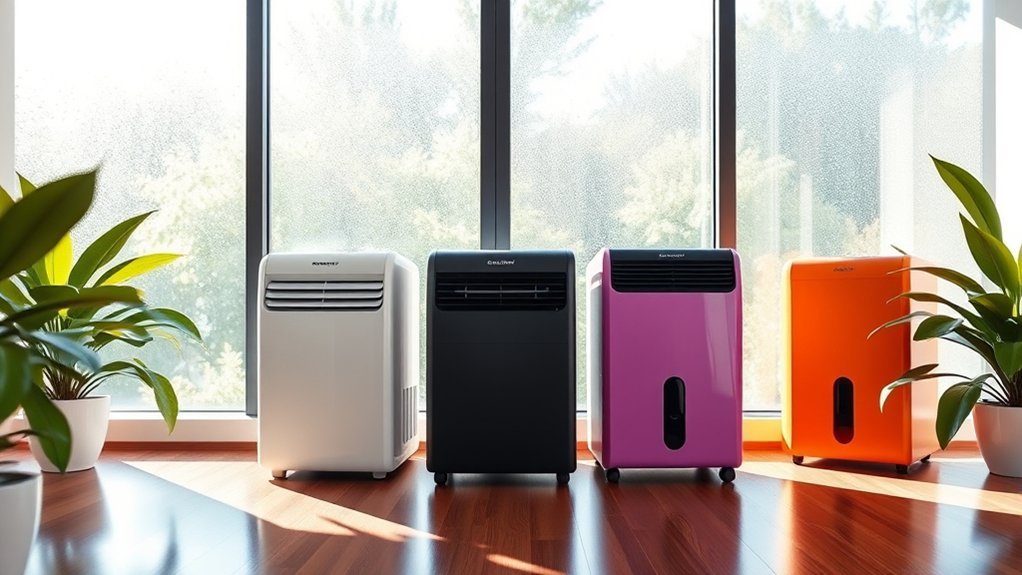
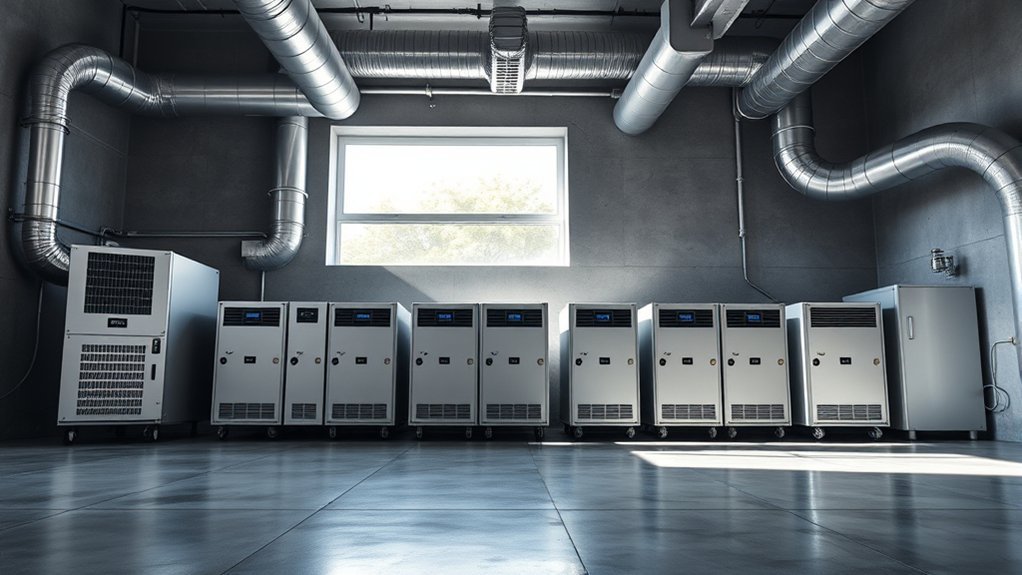
Updated August 2026: The best water restoration dehumidifiers use LGR technology, publish a useful AHAM-rated moisture-removal figure, support continuous pump drainage, and have durable housings for demanding dry-out work. The three models below directly match restoration buyer intent. Choose the MOUNTO 310 Pints LGR for maximum extraction, the ALORAIR Storm 80X for the best balance of portability and pump performance, or the MOUNTO DH80 for a compact, stackable restoration setup.
Quick Verdict
Choose the MOUNTO 310 Pints LGR for severe commercial water losses and the highest AHAM capacity in this guide. Pick the ALORAIR Storm 80X when wheels, a retractable handle, and long pump drainage matter most. The MOUNTO DH80 is the compact, stackable choice for smaller crews, service vans, and tighter work areas.
| Product | Best For | Rated Capacity | Drainage | Amazon |
|---|---|---|---|---|
| MOUNTO 310 Pints LGR | Best Overall / Maximum Capacity | 310 PPD saturation; 165 PPD AHAM | Built-in pump | Check Current Availability |
| ALORAIR Storm 80X | Best Portable Pump Model | 170 PPD saturation; 80 PPD AHAM | Built-in pump | Check Price on Amazon |
| MOUNTO DH80 | Best Compact Value | 150 PPD saturation; 80 PPD AHAM | Built-in pump | Check Product Details |
How These Models Were Compared
The main comparison points are AHAM-rated pints per day, saturation capacity, pump drainage, airflow, weight, transport features, automatic restart, defrost capability, housing durability, and suitability for professional flood and water-damage restoration. Advertised square-foot coverage is treated only as a rough guide.
Water-Damage Safety Note
A dehumidifier removes moisture from the air; it does not replace standing-water extraction, leak repair, air movement, material removal, or professional remediation. Do not energize equipment where electrical conditions are unsafe. For sewage, chemically contaminated water, extensive mold, or major structural damage, use a qualified restoration professional.
MOUNTO 310 Pints Commercial Dehumidifier with Pump
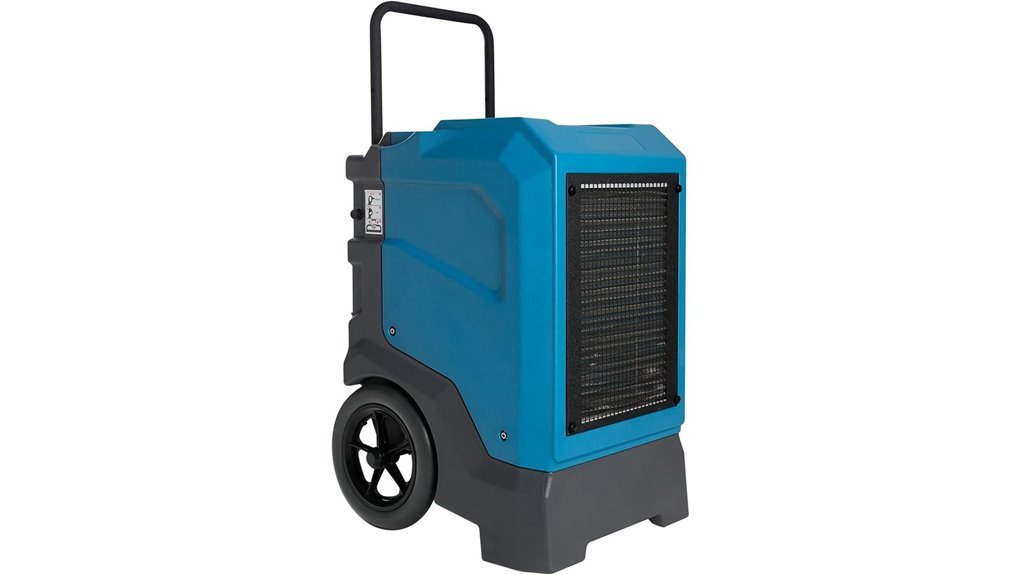
Best Overall / Maximum Capacity: The MOUNTO 310 Pints LGR is designed for severe water-damage jobs where smaller machines may extend the dry-out time. It is rated to remove up to 310 pints per day at saturation and 165 pints under AHAM conditions, with 550 CFM airflow for large restoration zones. The built-in condensate pump is rated for about 15 feet of lift, while the long drain hose supports continuous operation. Digital humidity and temperature readouts, automatic restart, memory settings, wheels, and roto-molded housing make it a strong fit for repeated commercial use.
Why You’ll Like It: It combines the highest AHAM capacity in this guide with high airflow, pump-assisted drainage, and restoration-focused LGR performance.
Who Should Buy This: Restoration contractors, property managers, and crews drying large commercial spaces or major residential water losses.
Who Should Avoid This: Homeowners dealing with one mildly damp room, especially when storage space, circuit capacity, transport weight, or budget is limited.
Pros:
- Very high 310 PPD saturation and 165 PPD AHAM capacity
- Built-in pump with approximately 15-foot lift for below-grade drainage
- High airflow, digital monitoring, memory restart, wheels, and durable housing
Cons:
- Weighs roughly 125 pounds and may require two people or suitable loading equipment
- Large footprint and commercial electrical demand are unnecessary for light household humidity
- Premium capacity increases purchase, transport, and storage requirements
ALORAIR Storm 80X 170 PPD Commercial Dehumidifier with Pump
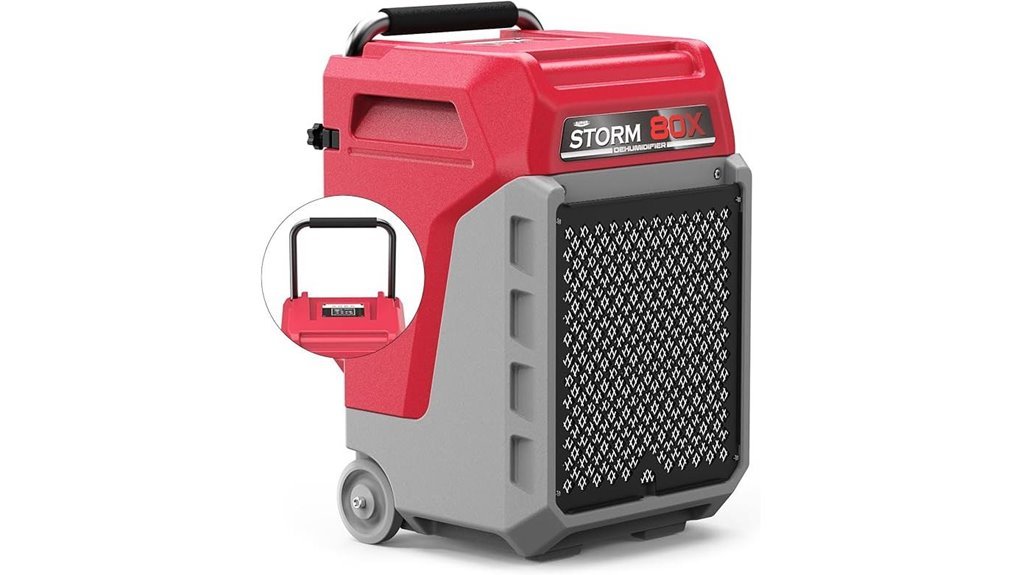
Best Portable Pump Model: The ALORAIR Storm 80X balances commercial restoration capacity with easier movement. It is rated at 170 PPD at saturation and 80 PPD under AHAM conditions, with 200 CFM airflow for spaces marketed up to 2,100 square feet. Its built-in condensate pump includes a 19.6-foot hose and is rated for up to 19.6 feet of vertical drainage. At about 63.9 pounds, the wheeled roto-molded body and retractable handle are more manageable than full-size high-capacity machines.
Why You’ll Like It: It delivers true restoration features, a long pump-drain setup, and an 80 PPD AHAM rating without approaching the weight of the largest unit in this guide.
Who Should Buy This: Small restoration crews, contractors working in basements, and users who move equipment between jobs frequently.
Who Should Avoid This: Buyers who need the highest possible AHAM output for very large or heavily saturated structures.
Pros:
- 170 PPD saturation and 80 PPD AHAM performance
- Built-in pump with long hose and high vertical-lift rating
- Wheels, retractable handle, auto defrost, memory restart, and durable housing
Cons:
- Still heavy enough to make stairs difficult for one person
- Lower AHAM capacity than the MOUNTO 310 Pints LGR
- The pump hose should not be extended beyond manufacturer guidance
MOUNTO DH80 Commercial Dehumidifier with Pump Drain Hose
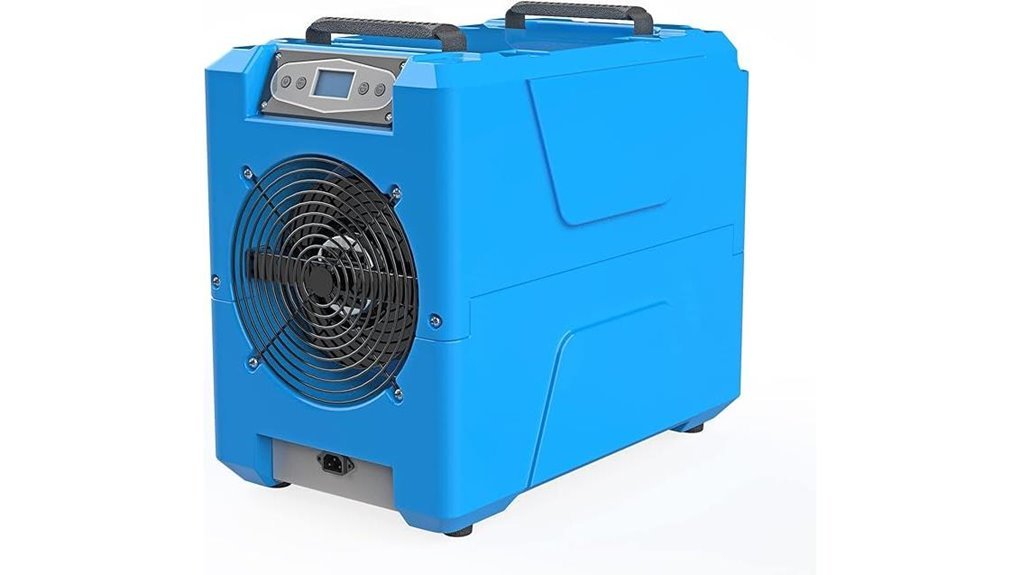
Best Compact Value: The MOUNTO DH80 is a compact LGR restoration dehumidifier rated at 150 PPD at saturation and 80 PPD under AHAM conditions. The manufacturer’s current DH80 page lists 210 CFM airflow, a built-in pump with a 14.7-foot lift, a 25-foot drain hose, automatic defrost, adjustable humidity control, memory restart, a Panasonic compressor, and a stackable roto-molded body. Marketplace descriptions for this ASIN have shown different airflow or lift figures, so confirm the current Amazon listing before ordering.
Why You’ll Like It: It offers the same 80 PPD AHAM rating as the Storm 80X in a compact, stackable format that is easier to store in a service van.
Who Should Buy This: Smaller restoration companies, carpet-cleaning businesses, and property managers who want pump drainage without buying the largest machine.
Who Should Avoid This: Crews that need integrated wheels and a telescoping pull handle for frequent long-distance movement.
Pros:
- 150 PPD saturation and 80 PPD AHAM capacity
- Built-in pump with manufacturer-listed 14.7-foot lift and 25-foot drain hose
- Compact, stackable housing with automatic defrost and memory restart
Cons:
- About 65 pounds, so carrying it through stairs or crawl spaces still takes effort
- Carry-handle format is less convenient than wheels for long moves
- Some marketplace specifications differ from the current manufacturer page and require a listing check
Factors to Consider When Choosing a Water Restoration Dehumidifier
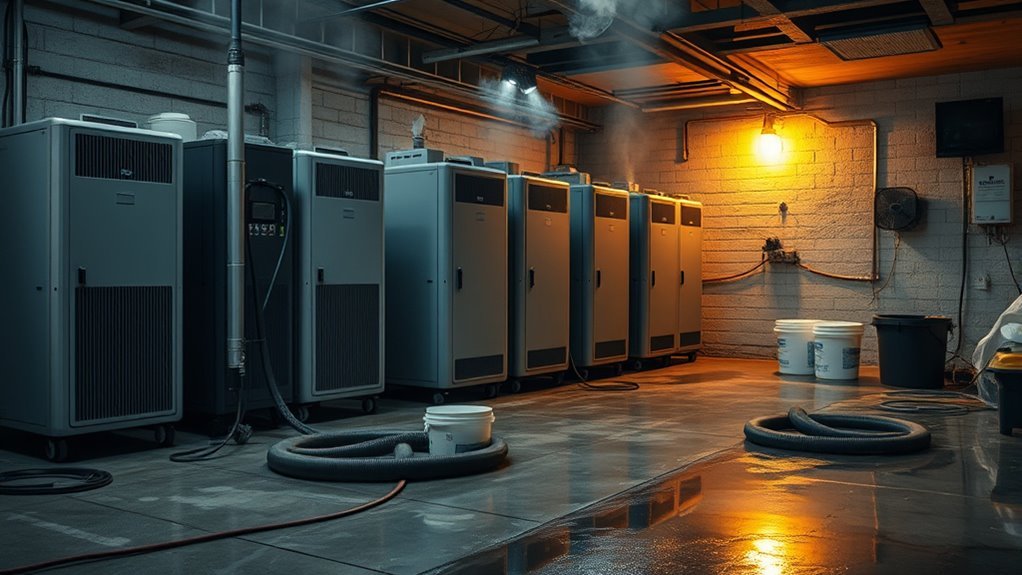
Choose a flood restoration dehumidifier by comparing its AHAM capacity, LGR design, drainage method, airflow, operating temperature, portability, electrical demand, and durability. Square-foot coverage is only a rough marketing guide because actual drying time also depends on room volume, temperature, the amount and type of wet material, the water source, air movement, and how well the affected area is contained.
Compare AHAM Capacity First
Manufacturers often publish both a saturation rating and an AHAM rating. Saturation ratings are measured in unusually hot and humid conditions and show maximum output. AHAM ratings are measured under more standardized conditions and provide the better comparison for typical restoration work. A machine rated at 80 to 100 PPD AHAM can be a serious commercial tool even when its advertised saturation number is much higher. For major losses, size equipment from the actual water load, cubic volume, temperature, and wet materials rather than selecting by square footage alone.
Treat Coverage Area as a Rough Guide
Coverage claims can help separate compact machines from large commercial units, but they do not guarantee a drying time. A 2,000-square-foot dry basement with elevated humidity is a very different job from a 2,000-square-foot structure with saturated drywall, carpet, framing, and concrete. When the loss is extensive, use moisture readings and a restoration drying plan instead of relying only on the advertised floor area.
Check Pump Lift and Hose Limits
All three retained models use built-in condensate pumps, which are valuable when water must travel upward to a sink, window, toilet, or elevated drain. Confirm the pump lift rating, included hose length, hose routing, and manufacturer limits before setup. Avoid extending or sharply bending a pump hose unless the manufacturer permits it, because added resistance can reduce drainage performance or trigger pump problems.
Check Weight, Wheels, Handles, and Stackability
The models in this guide weigh roughly 64 to 125 pounds. Wheels and retractable handles help on level surfaces, while compact carry-handle models fit tighter spaces and stack more easily but can be harder to move over long distances. Check doorways, stair access, vehicle space, and whether one person can safely unload the unit before buying.
Compare Electrical Demand and COP
For restoration equipment, compare amperage, wattage, and coefficient of performance rather than assuming an ENERGY STAR label will be available. Higher COP values indicate more water removed per unit of electricity. Confirm that the circuit can safely support the dehumidifier plus any air movers, air scrubbers, lighting, or extraction equipment operating at the same time.
Use Humidity Controls with Moisture Readings
A digital humidistat, continuous mode, run-time meter, and memory restart make long drying jobs easier to manage. However, room relative humidity alone does not confirm that wood, drywall, carpet, subfloor, or concrete is dry. For restoration work, track material moisture with suitable meters and compare affected materials with dry reference areas before ending the job.
Look for Restoration-Grade Construction
Roto-molded polyethylene housings resist dents and job-site impacts, while accessible filters and serviceable pump components can simplify maintenance. Automatic defrost supports operation in cool spaces, but it does not make a refrigerant dehumidifier suitable for freezing conditions. Check filter access, replacement-part availability, hose fittings, and warranty terms before buying.
Understand Safety Certifications
ETL and CSA marks indicate that a product has been evaluated to applicable safety standards. They do not prove drying speed, durability, or suitability for every water-loss category. ENERGY STAR is an efficiency certification, not a restoration or electrical-safety rating. Always use a grounded outlet, keep cords and hose connections away from standing water, and follow the manufacturer’s electrical and drainage instructions.
Before You Buy Checklist
- Compare AHAM PPD, not only the larger saturation number.
- Confirm the linked ASIN matches the product name and model shown.
- Check pump lift, included hose length, and routing restrictions.
- Check amperage, voltage, plug type, and available circuit capacity.
- Verify unit weight, dimensions, wheels, handles, stackability, and stair access.
- Confirm operating temperature range and automatic defrost.
- Check filter type, replacement parts, warranty terms, and service support.
- Reconfirm current manufacturer specifications before ordering.
Frequently Asked Questions
How Do I Size a Dehumidifier for Basement Flooding?
Start with the unit’s AHAM-rated capacity, then consider basement volume, temperature, standing water, wet materials, ventilation, and how quickly drying must be completed. Remove standing water first. A severely flooded finished basement may require multiple commercial dehumidifiers, air movers, containment, and professional moisture monitoring.
Can I Run a Dehumidifier Continuously After Water Damage?
Yes, when the manufacturer allows continuous operation and the machine has safe power and reliable drainage. Keep doors and windows closed unless the restoration plan requires ventilation, inspect hoses and filters daily, and continue until affected materials reach an appropriate dry standard rather than stopping only because room humidity looks lower.
Do Commercial Dehumidifiers Work in Freezing Temperatures?
Most refrigerant dehumidifiers lose efficiency as temperatures approach freezing, even when they include automatic defrost. Check the exact operating-temperature range. In freezing or near-freezing conditions, warming the space or using restoration equipment designed for low-temperature operation may be necessary.
Do I Need Air Movers with a Restoration Dehumidifier?
Usually, yes. Air movers increase evaporation from wet surfaces, while the dehumidifier removes the released moisture from the air. Their placement should match the materials and contamination conditions. Do not blow air across sewage-contaminated materials or visible mold without an appropriate containment and remediation plan.
What Maintenance Keeps a Restoration Dehumidifier Efficient?
Clean or replace filters, inspect coils, check the drain hose and pump, keep air inlets and outlets clear, wipe the housing, and review error codes or sensor readings. After a contaminated job, follow the manufacturer’s cleaning and decontamination procedure before moving equipment to another site.
Why Do AHAM and Saturation Ratings Differ?
Saturation ratings are measured under hotter and more humid conditions, so they produce a larger pints-per-day number. AHAM ratings use more standardized conditions and are generally more useful when comparing restoration dehumidifiers. Always check which test condition is attached to a capacity claim.
Conclusion
Final Recommendation: The MOUNTO 310 Pints LGR is the strongest choice for maximum-capacity commercial restoration. The ALORAIR Storm 80X is the best balance of pump drainage, transport features, and 80 PPD AHAM performance. The MOUNTO DH80 is a practical compact alternative for smaller crews that value stackability and storage efficiency.
Whichever model you select, remove standing water first, control the water source, pair the unit with appropriate air movement, monitor material moisture, and confirm that the electrical circuit, hose routing, and drainage setup are safe.