Affiliate disclosure: This article contains Amazon affiliate links. We may earn a commission from qualifying purchases at no extra cost to you.
Last updated: August 2026
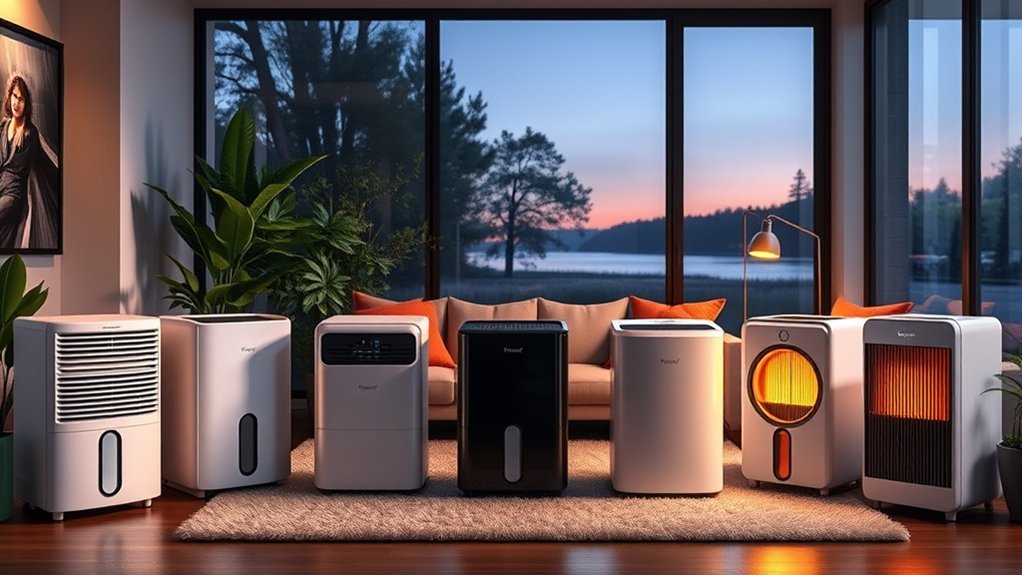
The best dehumidifier for a small house depends on the size of the damp area and how much water must be removed each day. If humidity affects a basement, laundry area, or several connected rooms, a portable compressor dehumidifier such as the AEOCKY 50 Pint is the strongest option in this roundup. If moisture is limited to one warm bedroom, bathroom, closet, office, or RV, a quieter thermoelectric dehumidifier may be sufficient.
The six products below serve different jobs. The AEOCKY is the only high-capacity portable model suitable for persistent household dampness. The TENKER, Levoair, UBBO, Deyagoo, and CLEVAST are compact room-focused units and should not be treated as substitutes for a 20- to 50-pint compressor model when humidity affects an entire house.
Quick Verdict
- Best overall portable option for persistent humidity: AEOCKY 50 Pint Dehumidifier
- Best compact model with continuous drainage: Levoair 68oz Dehumidifier
- Best quiet option with a larger tank: TENKER 77oz Dehumidifier
- Best feature-rich thermoelectric option: UBBO 95oz Dehumidifier
- Best low-power quiet option: CLEVAST Mini Quiet Dehumidifier
- Best for an RV, closet, or very small room: Deyagoo DY501 1500ML Dehumidifier
How these picks were compared: We compared dehumidifier technology, seller-stated daily moisture removal, practical room fit, drainage, controls, noise claims, portability, and important limitations. This is a specification-based comparison and does not claim hands-on testing.
Important sizing note: Tank size is not the same as moisture-removal capacity. A 95oz tank tells you how much water the container can hold, not how much water the machine removes in one day.
For persistent humidity, prioritize a compressor model rated in pints per day. Thermoelectric models are intended for mild, localized moisture and perform best in warm, humid, enclosed rooms.
Portable versus whole-home: The AEOCKY is a portable compressor dehumidifier, not a permanently installed ducted whole-home system. It may serve a basement or connected area in a small house, but walls, closed doors, airflow, moisture sources, and the floor plan will affect how evenly it controls humidity.
Quick Comparison of the Best Dehumidifiers for Small Houses
| Product | Best For | Type | Advertised Coverage | Advertised Daily Removal | Drainage | Main Limitation | Amazon |
|---|---|---|---|---|---|---|---|
| AEOCKY 50 Pint | Basement, laundry area, or persistent dampness in a connected area | Portable compressor | Up to 3,500 sq. ft. seller claim | Up to 50 pints seller-stated maximum | Tank or gravity drain hose | Not a ducted whole-home system | Check Price |
| Levoair 68oz | One room or RV where gravity drainage is available | Thermoelectric | Up to 650 sq. ft. seller claim | Up to 35oz at 86°F and 80% RH | Tank or included hose | Hose must slope downward | Check Price |
| TENKER 77oz | Warm bedroom, bathroom, office, or RV | Thermoelectric | Up to 1,000 sq. ft. seller claim | Up to 35oz at 86°F and 80% RH | Removable tank | No stated continuous-drain connection | Check Price |
| UBBO 95oz | Room use with timers, sleep mode, and hose drainage | Thermoelectric | Up to 1,000 sq. ft. seller claim | Up to 1.2L at 86°F and 80% RH | Tank or drain hose | Performance figures are seller supplied | Check Price |
| CLEVAST Mini 30oz | Quiet tabletop use in a small enclosed room | Thermoelectric | About 270–285 sq. ft. depending on listing | Up to 10oz at 86°F and 85% RH | Removable tank | Very limited capacity for serious dampness | Check Price |
| Deyagoo DY501 1500ML | RV, closet, bathroom, or very small room | Thermoelectric | Up to 300 sq. ft. seller claim | Up to about 300ml under favorable conditions | Removable tank | Modest extraction and no hose drainage | Check Price |
Coverage, sound, and daily-removal figures are manufacturer or seller claims. Real performance varies with temperature, starting humidity, airflow, room sealing, moisture sources, and how often doors or windows are opened.
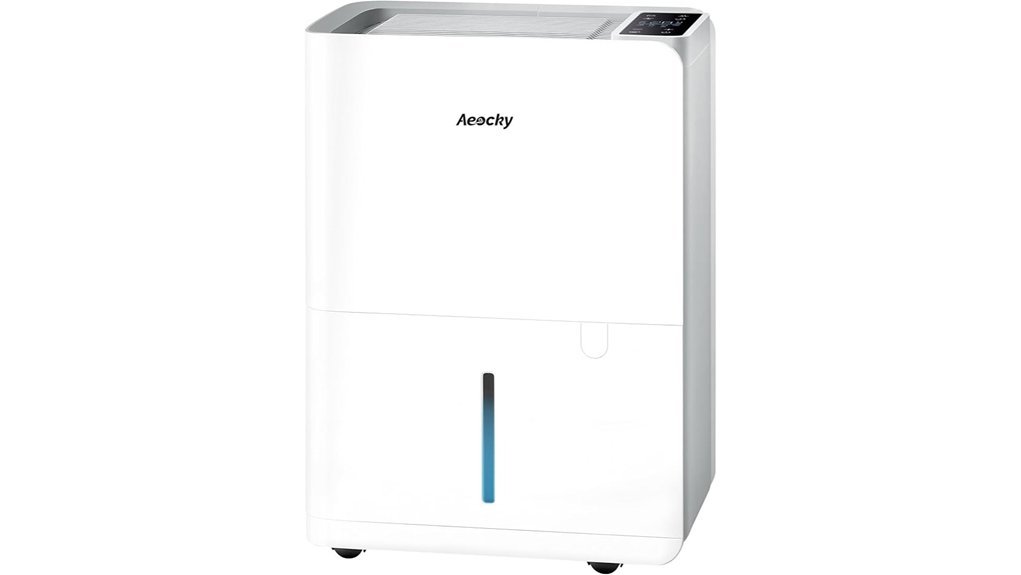
AEOCKY 50 Pint Dehumidifier for Home and Basement
Best Overall Portable Pick for Persistent Humidity
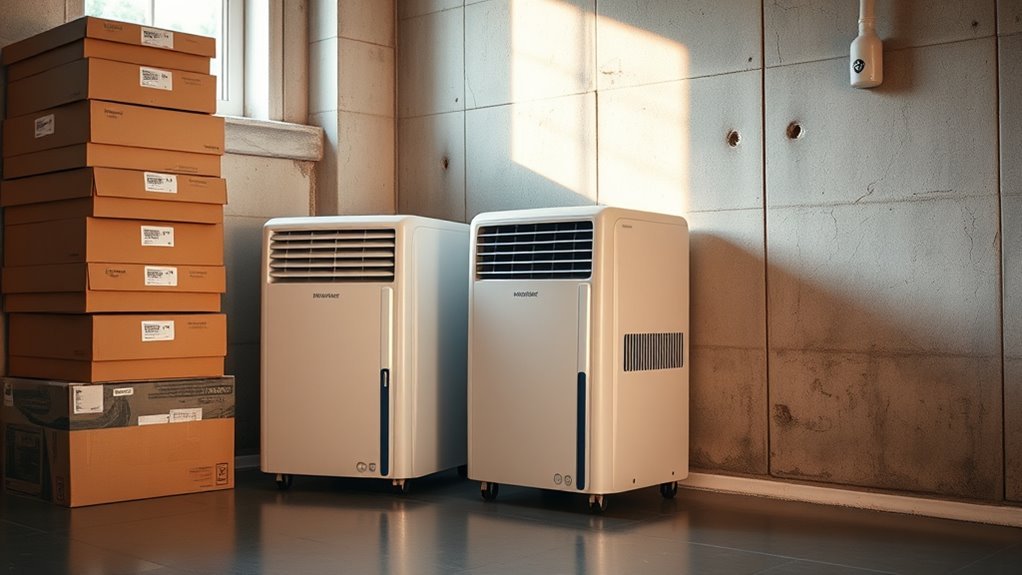
The AEOCKY 50 Pint Dehumidifier is the most suitable product in this roundup when moisture affects more than one tiny room. It uses compressor refrigeration rather than low-capacity thermoelectric plates and is marketed to remove up to 50 pints of water per day under favorable conditions.
The seller advertises coverage up to 3,500 square feet, but buyers should size the unit according to the actual damp area, floor plan, starting relative humidity, and moisture load. It is most sensibly used in a basement, laundry area, open living space, or connected section of a small house. It should not be confused with a permanently installed whole-home dehumidifier connected to HVAC ductwork.
An adjustable humidistat lets the machine cycle around a selected humidity target. Its tank holds about 0.8 gallon, while the drain-hose connection can support longer operation when water can flow continuously downhill to an approved drain. The seller also lists a three-year warranty, but buyers should confirm current coverage and claim procedures before ordering.
Why You’ll Like It: It offers far more practical moisture-removal capacity than the mini semiconductor products and provides automatic humidity control.
Best For: Persistent dampness in a basement, laundry room, open floor plan, or connected area of a small house.
Who Should Avoid It: Buyers who need only a tiny bedside unit for occasional closet, RV, or bathroom moisture.
Pros:
- Compressor design is better suited to persistent humidity.
- Seller-stated maximum of up to 50 pints per day.
- Adjustable humidistat supports target-humidity control.
- Tank and gravity-drain options provide flexible water handling.
Cons:
- Larger, heavier, and more noticeable than a tabletop unit.
- Advertised square-foot coverage does not guarantee even control through closed rooms.
- The tank may fill quickly when humidity is high.
- The exact model’s ENERGY STAR status should be checked in the current Product Finder rather than assumed.
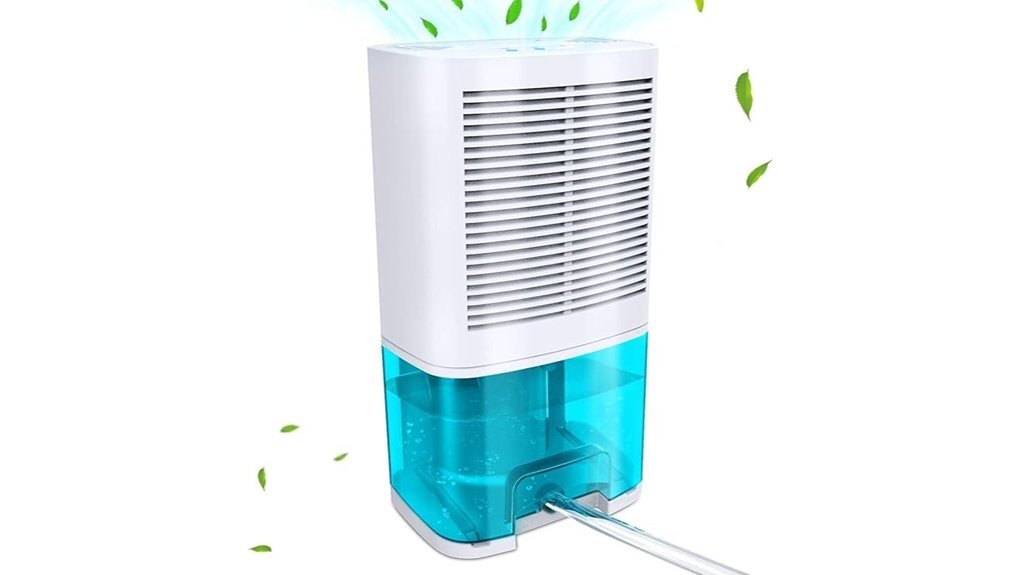
Levoair 68oz Dehumidifier for Home and RV
Best Compact Pick with Continuous Drainage
The Levoair 68oz dehumidifier is a practical middle ground for buyers who want a portable thermoelectric unit but do not want to rely only on manual tank emptying. Its 2-liter tank can collect water normally, or the included five-foot hose can direct condensate to a suitable lower drain or container.
The drainage system is gravity-fed, so the hose must slope continuously downward without loops, kinks, or raised sections. It cannot pump water upward to a sink or window.
The manufacturer advertises up to 35oz of moisture removal per day at 86°F and 80% relative humidity, with coverage up to 650 square feet. Those are favorable test conditions. In a normal home, it is better treated as a one-room, bathroom, utility-area, or RV appliance rather than a solution for an entire small house.
Its five-pound weight, lift-up handle, auto shut-off, and memory function add convenience. The seller also promotes sound below 40dB, although the perceived noise will depend on the mode, surface, room, and condition of the fan.
Why You’ll Like It: The included hose makes it easier to run continuously in a suitable room or RV setup.
Best For: A warm enclosed room, bathroom, utility area, or RV with a safe downhill drainage route.
Who Should Avoid It: Homes with a wet basement, cold conditions, water intrusion, or humidity affecting several closed rooms.
Pros:
- Includes a five-foot continuous drain hose.
- Portable five-pound design with a built-in handle.
- Tank mode remains available when no drain is nearby.
- Auto shut-off helps reduce overflow risk.
Cons:
- The hose cannot lift water upward.
- Peak extraction depends on warm, very humid conditions.
- The 650-square-foot claim may overstate practical performance in an open or cool area.
- It does not provide the capacity of a compressor dehumidifier.
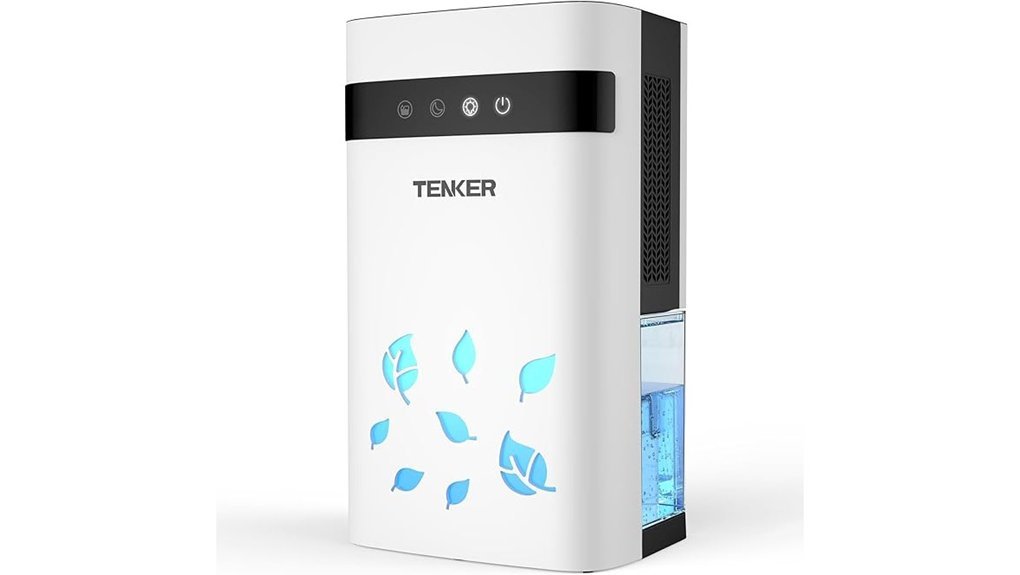
TENKER Quiet Dehumidifier for Home (77oz Water Tank)
Best Quiet Pick with a Larger Tank
The TENKER dehumidifier combines a 77oz removable tank with dual-semiconductor condensation. Under test conditions of 86°F and 80% relative humidity, the seller states that it can collect up to 35oz of water per day.
The listing also advertises coverage up to 1,000 square feet, but extraction capacity matters more than the square-foot number. At a maximum of approximately 1.8 pints per day, the TENKER is a room-focused appliance and not a replacement for a 20- to 50-pint compressor dehumidifier.
High-speed and sleep modes allow buyers to choose between stronger airflow and quieter use. A full-tank sensor stops operation to reduce overflow risk, while the recessed handle makes it easier to move between a bedroom, bathroom, office, closet, or RV. Its seven-color light is decorative and should remain secondary to the moisture-removal performance.
Why You’ll Like It: It provides a larger tank and stronger seller-stated extraction than many basic mini dehumidifiers while remaining portable.
Best For: A warm bedroom, bathroom, office, RV, or other enclosed room with mild to moderate humidity.
Who Should Avoid It: Anyone attempting to dry a wet basement, manage water intrusion, or control humidity across several closed rooms.
Pros:
- 77oz tank reduces emptying frequency compared with tiny tabletop units.
- High-speed and sleep modes support different times of day.
- Auto shut-off helps protect against tank overflow.
- Recessed handle supports room-to-room use.
Cons:
- The highest extraction figure is based on warm, very humid test conditions.
- No continuous-drain connection is stated.
- The 1,000-square-foot claim should not be treated as a whole-house rating.
- Manual tank emptying stops unattended operation when the tank becomes full.
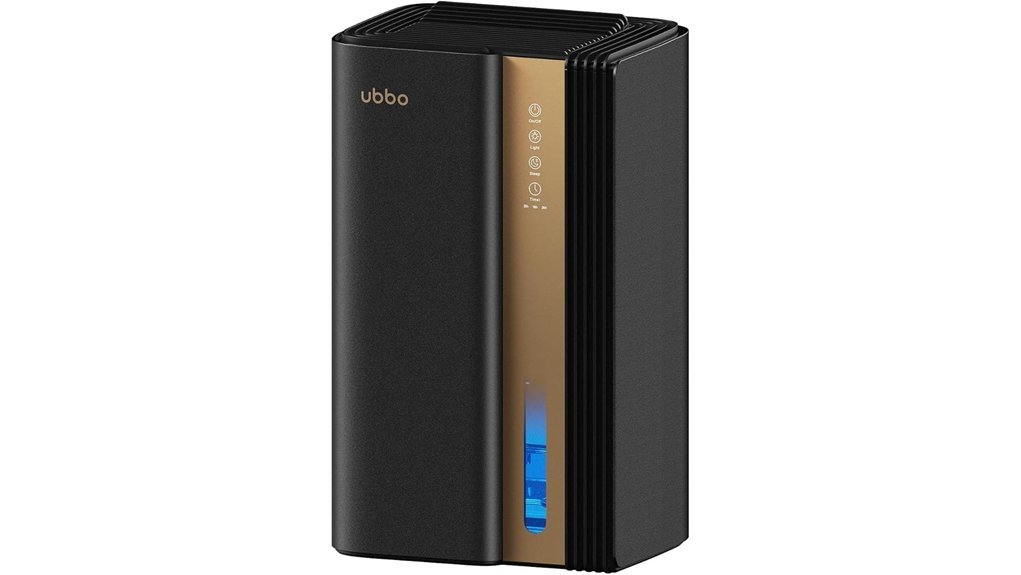
UBBO 95oz Dehumidifier for Home with Drain Hose
Best Feature-Rich Thermoelectric Pick
The UBBO 95oz dehumidifier combines dual-semiconductor condensation with a larger tank and several convenience controls. The seller states that it can remove up to 1.2 liters of moisture per day at 86°F and 80% relative humidity and advertises use in spaces up to 1,000 square feet.
Those figures should be treated as seller claims under favorable conditions. In practical household use, the UBBO is best viewed as a room-focused appliance for mild or moderate localized humidity rather than a compressor-class solution for a basement or whole house.
A drain-hose connection supports continuous gravity drainage. Timer settings and sleep mode help tailor operation, while seven-color lighting and an aromatherapy compartment add decorative features. Anyone sensitive to fragrances can leave the aromatherapy compartment unused.
Why You’ll Like It: It combines a 95oz tank, hose drainage, timer controls, and a sleep mode in one portable design.
Best For: A warm bedroom, bathroom, office, RV, or other enclosed room where drainage and convenience controls matter.
Who Should Avoid It: Buyers who need independently standardized capacity data, compressor-level extraction, or strong performance in a cool basement.
Pros:
- Tank and drain-hose options support flexible water disposal.
- Timer and sleep modes provide more control than basic mini units.
- Large 95oz tank can reduce emptying frequency.
- Auto shut-off helps reduce overflow risk in tank mode.
Cons:
- The 1,000-square-foot figure is a seller claim rather than proof of whole-area control.
- Extraction will decrease in cooler or less humid rooms.
- Decorative lighting and aromatherapy do not improve dehumidification.
- The drain hose still needs a safe downward route.
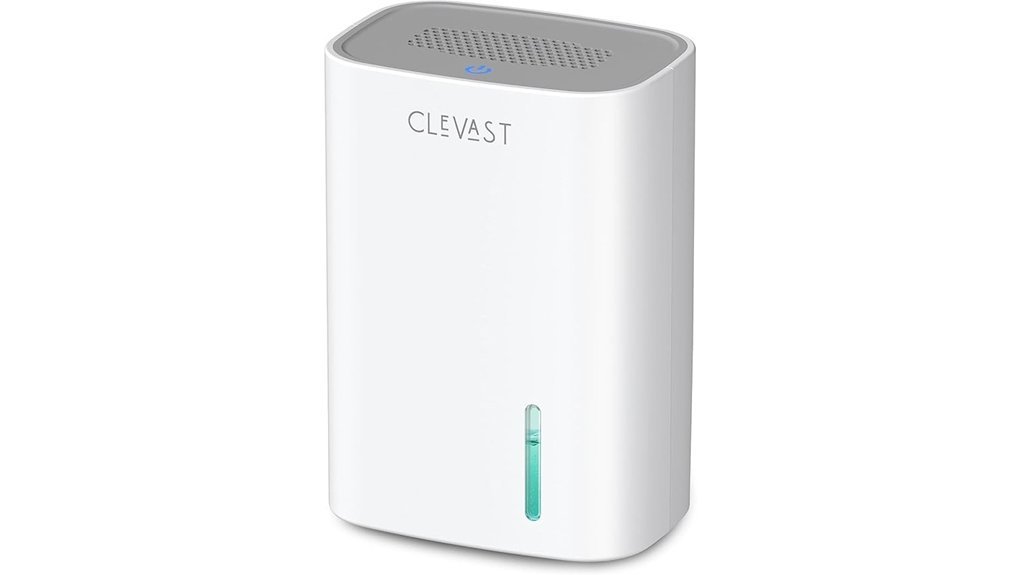
CLEVAST Mini Quiet Dehumidifier for Home
Best Low-Power Quiet Pick
The CLEVAST Mini is a 30oz thermoelectric dehumidifier intended for small enclosed spaces. Depending on the current retailer listing, advertised coverage is approximately 270 to 285 square feet. At 86°F and 85% relative humidity, the seller states that it can collect up to 10oz, or approximately 295ml, of water in 24 hours.
Quiet mode is advertised at around 24dB, making the CLEVAST suitable for a bedside table, nursery, closet, RV, or compact bathroom where low noise matters more than fast extraction. It uses approximately 27 watts and is promoted as consuming less than 0.55 kWh per day.
Its recommended operating range of about 68°F to 86°F is important. Like other thermoelectric models, its performance can decrease substantially in a cool room. A built-in handle makes the unit easy to move, and auto shut-off stops operation when the tank reaches its limit.
Why You’ll Like It: It is simple, compact, low-power, and quieter than the compressor option.
Best For: A closet, nursery, small bedroom, bathroom, RV, camper, or office with light localized moisture.
Who Should Avoid It: Buyers who need rapid drying or humidity control across a basement or entire small house.
Pros:
- Quiet mode is advertised at approximately 24dB.
- Compact 30oz tank and carry handle suit small spaces.
- Low power draw supports regular localized use.
- Auto shut-off helps prevent tank overflow.
Cons:
- Up to 10oz per day is not enough for severe dampness.
- Performance is highly dependent on warm room conditions.
- No continuous-drain hose or adjustable humidistat.
- Retailer coverage figures are not fully consistent.
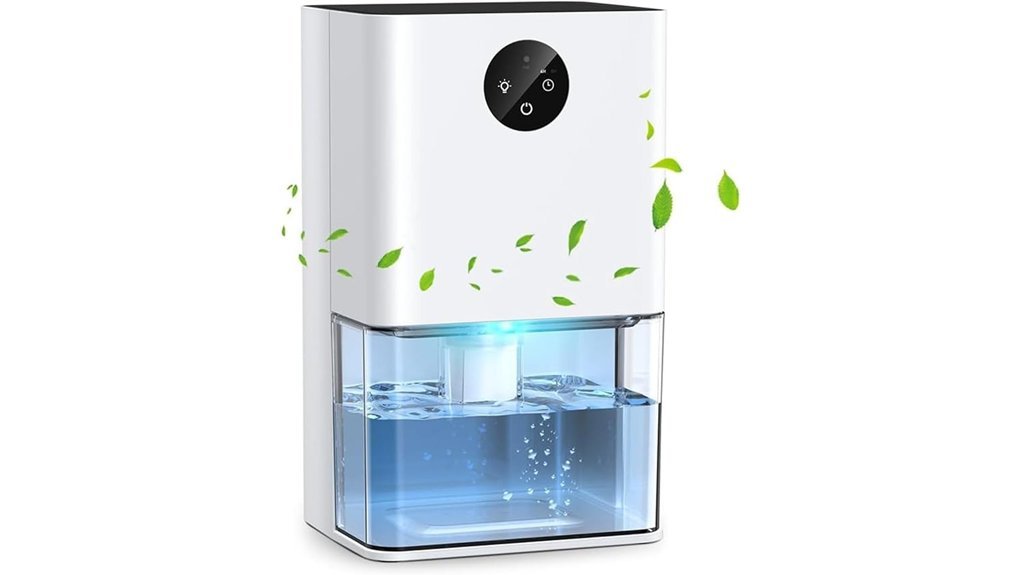
Deyagoo DY501 1500ML Dehumidifier for Home and RV
Best for an RV, Closet, or Very Small Room
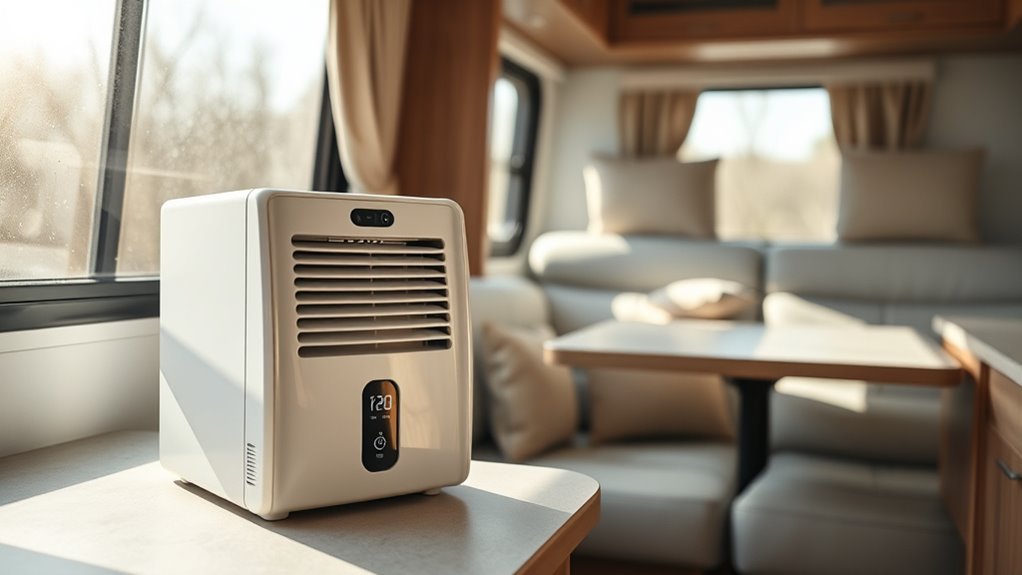
The Deyagoo DY501 is a lightweight thermoelectric dehumidifier with a 1500ml tank. It is marketed for enclosed spaces up to 300 square feet and is seller-rated to collect up to about 300ml of moisture per day under warm, highly humid conditions.
Its compact 5.91 x 4.72 x 9.84-inch body and approximate three-pound weight make it easier to place on a stable counter or shelf in an RV, closet, bathroom, or small bedroom. The transparent tank also makes the water level easy to monitor.
A full-tank sensor stops the unit before overflow. The seller promotes operation around 30dB and includes a seven-color light, although actual sound will depend on the fan, operating conditions, surface, and room acoustics.
Why You’ll Like It: It has a compact footprint, a relatively large tank for its body size, and simple automatic overflow protection.
Best For: RVs, closets, compact bathrooms, cabinets, and very small bedrooms with mild humidity.
Who Should Avoid It: Buyers who need rapid structural drying, adjustable target humidity, hose drainage, or control across a full house.
Pros:
- Compact dimensions support placement in tight areas.
- Transparent 1500ml tank is easy to monitor.
- Low power draw suits small localized applications.
- Auto shut-off helps reduce overflow risk.
Cons:
- Approximately 300ml-per-day maximum extraction is modest.
- No adjustable humidistat or continuous-drain hose.
- Requires manual emptying and regular tank cleaning.
- Not suitable for serious dampness or several connected rooms.
Factors to Consider When Choosing a Dehumidifier for a Small House
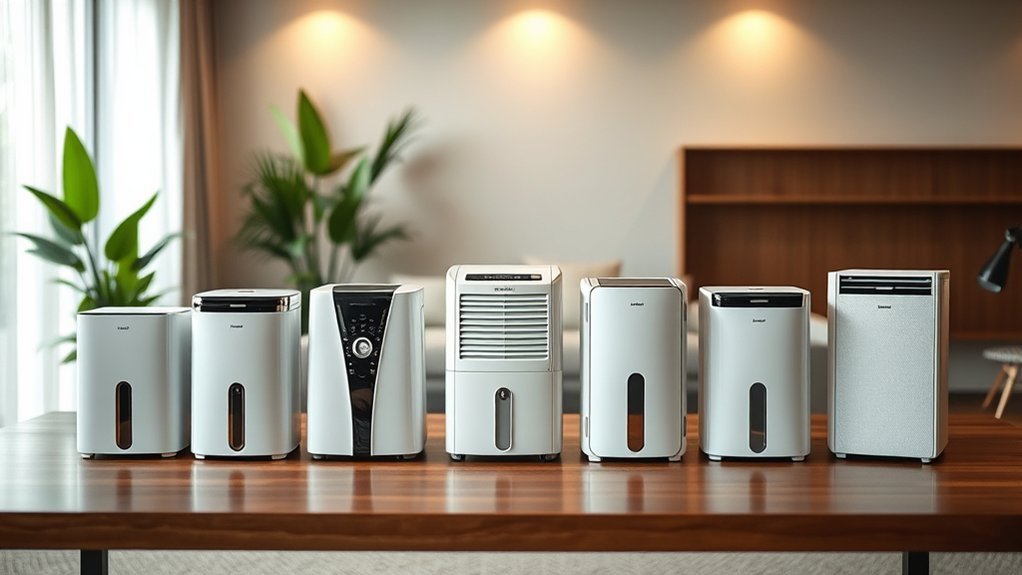
The most important buying decision is not the tank size, decorative lighting, or largest advertised square-foot number. Start by deciding whether you need persistent household moisture control or a small-room appliance. Then compare water-removal capacity, room temperature, drainage, humidity controls, sound, maintenance, and power use.
Compressor vs. Thermoelectric Dehumidifiers
Portable compressor dehumidifiers are the stronger option for basements, laundry rooms, open living areas, and homes that remain damp for long periods. They are commonly rated in pints per day and often include an adjustable humidistat.
Thermoelectric, or Peltier, models are smaller and quieter but remove far less water. They work best in warm enclosed spaces with mild localized moisture. Their output can fall sharply in a cool basement, garage, or winter room.
A portable compressor unit is also different from a ducted whole-home dehumidifier. According to ENERGY STAR dehumidifier guidance, portable models generally serve a room or space, while whole-home systems are normally installed to work with a home’s air ducts.
Dehumidifier Capacity Requirements
Match capacity to both the square footage and the severity of the moisture problem. Current ENERGY STAR guidance provides the following approximate ranges for a small-to-medium space under 2,000 square feet:
- Slightly to moderately damp: approximately 20 to 30 pints per day.
- Very damp: approximately 25 to 40 pints per day.
- Wet or affected by seepage: approximately 30 to 50 pints per day.
These ranges show why a mini unit collecting 10oz, 300ml, or even 35oz per day should not be expected to control persistent humidity throughout a small house. Mini models may still be useful when the moisture problem is confined to one warm bathroom, closet, RV, or bedroom.
Do not confuse tank volume with water-removal capacity. A larger tank reduces how often it must be emptied. Pints, liters, milliliters, or ounces removed per day describe the unit’s actual extraction ability.
Check the Advertised Test Conditions
Many thermoelectric products publish their highest extraction at approximately 86°F and 80% to 85% relative humidity. A typical bedroom or basement may be cooler and less humid, so actual collection can be much lower.
When comparing products, convert the stated extraction into the same unit where possible. For context, 35oz is only about 1.8 pints, while 10oz is roughly 0.5 pint. That is far below the output of a 20- to 50-pint portable compressor model.
Humidistat and Target Humidity
An adjustable humidistat is valuable for persistent household humidity because it allows the machine to cycle around a selected target. Most mini thermoelectric products provide only high, sleep, or timer modes and do not measure or maintain a precise room humidity.
A separate hygrometer can help confirm whether the appliance is making a useful difference. The U.S. Environmental Protection Agency generally recommends keeping indoor humidity below 60% and ideally around 30% to 50%. See the EPA indoor air quality guidance for more information.
Energy Efficiency Ratings
For compressor models, look for a current ENERGY STAR certification and compare integrated energy factor when available. Check the exact model number in the ENERGY STAR Product Finder because certification for one model from a brand does not automatically apply to every product the brand sells.
Do not assume that low wattage means better dehumidification efficiency. A 27-watt mini unit may use little electricity, but it also removes much less water. Compare power consumption with the amount of moisture removed.
Noise Level Considerations
Noise matters most in bedrooms, nurseries, offices, and RVs. Thermoelectric units are usually quieter because they do not have a compressor. However, the quietest sound figure may apply only to sleep mode.
Placement also affects perceived noise. Use a stable, level surface and keep the unit from touching a wall, loose shelf, or other object that can amplify vibration.
Drainage Options Available
Manual tank drainage is acceptable for occasional use, but a hose connection is more convenient in a consistently humid area. A gravity-drain hose must travel downhill from the dehumidifier to the drain without kinks or raised sections.
A standard gravity hose cannot move water upward. If the only discharge point is above the unit, you need a compatible condensate pump or a dehumidifier with a built-in pump.
Auto shut-off protects against overflow, but it also stops dehumidification whenever the tank is full. Consider tank size and how often someone will be available to empty it.
Automatic Restart and Memory
Check what happens after a power interruption. Some dehumidifiers resume their previous mode, while others remain off until someone presses the power button. Automatic restart can be useful in basements, second homes, RV storage areas, and other locations that are not checked every day.
Safety and Placement
Place the unit upright on a stable, level surface with the manufacturer’s required clearance around the air inlet and outlet. Keep power cords and adapters away from standing water, tubs, sinks, and shower spray.
Do not use a household dehumidifier as a substitute for repairing plumbing leaks, roof leaks, rain intrusion, foundation seepage, or flooding. EPA guidance recommends correcting the water source and drying wet materials promptly. Unplug the machine before cleaning and follow the manual for tank, filter, and hose maintenance.
Design and Portability
A handle, manageable weight, and compact footprint matter when the same unit will move between rooms. Transparent tanks make the water level easier to check, while washable filters can reduce dust buildup around the intake.
Ambient lighting can be pleasant, but confirm that it can be switched off for sleep. Decorative lights, aromatherapy compartments, and extra colors should come after correct sizing, extraction capacity, drainage, and safety.
Before You Buy
- Measure the damp room or connected area.
- Check actual relative humidity with a hygrometer.
- Identify whether the problem is occasional, persistent, very damp, or wet.
- Choose compressor capacity for persistent household dampness.
- Use a thermoelectric model only for mild localized moisture.
- Check the temperature and humidity used for the advertised extraction rate.
- Plan where the tank will be emptied or the drain hose will run.
- Confirm whether a drain hose, adapter, and filter are included.
- Check automatic restart behavior after a power outage.
- Make sure lights can be disabled if the unit will run in a bedroom.
- Confirm the current warranty and seller support before ordering.
Frequently Asked Questions
How Do I Know the Right Size Dehumidifier for My Small House?
Measure the damp area, check the relative humidity, and note whether the space feels slightly damp, very damp, or wet. For persistent humidity, ENERGY STAR recommends roughly 20 to 30 pints per day for a slightly to moderately damp small-to-medium space, 25 to 40 pints for a very damp space, and 30 to 50 pints for wet conditions.
A mini thermoelectric model may be sufficient only when the moisture is limited to one warm enclosed room.
Can a Mini Dehumidifier Handle an Entire Small House?
Usually not. Mini thermoelectric dehumidifiers are intended for localized use in closets, bathrooms, bedrooms, RVs, and similar enclosed areas. Even if a listing advertises several hundred or 1,000 square feet, a low daily water-removal rate limits its ability to manage several rooms.
Can One Portable Dehumidifier Serve Several Rooms?
It may help connected rooms when doors are open and air circulates freely, but the results are rarely even. Closed doors, hallways, walls, HVAC operation, and separate moisture sources can prevent one unit from controlling every room. Measure humidity in the problem areas rather than assuming one reading represents the whole house.
Is a 50-Pint Dehumidifier Too Large for a Small House?
Not necessarily. Dampness matters as much as floor area. A high-capacity unit with an adjustable humidistat can cycle off after reaching its target, while an undersized unit may run continuously without reducing humidity enough. However, a 50-pint model may be unnecessary when the problem is limited to one small closet or bathroom.
What Is the Difference Between a Portable and Whole-Home Dehumidifier?
A portable model is a self-contained appliance placed in a room, basement, or other area. A true whole-home dehumidifier is normally installed permanently and connected to ductwork so it can treat air from multiple parts of the house. The AEOCKY in this roundup is portable rather than ducted.
What Is the Average Lifespan of a Dehumidifier?
Lifespan varies according to the technology, operating hours, humidity load, maintenance, ambient temperature, and build quality. No universal lifespan is guaranteed. Cleaning the tank and filter, maintaining airflow, and using the appliance within its recommended temperature range can reduce avoidable wear.
Can a Dehumidifier Help With Allergies?
A dehumidifier can reduce excess moisture that supports mold growth and dust-mite activity, but it is not a medical treatment and does not remove existing mold or every airborne allergen. Fix leaks, address contaminated materials safely, ventilate moisture-producing rooms, and seek medical advice for persistent symptoms.
How Often Should I Clean My Dehumidifier?
Check the tank and air intake weekly during frequent use. Rinse and dry the tank regularly, clean or wash the filter according to the manual, and inspect drain hoses for buildup, algae, kinks, or loose connections. Always unplug the unit before maintenance.
Are There Energy-Efficient Options Available?
Yes. For compressor models, current ENERGY STAR certification is the clearest efficiency signal. For thermoelectric units, compare wattage with the seller-stated water removal rather than choosing the lowest-watt appliance automatically. Humidistats, timers, correct sizing, and clean airflow paths can also prevent unnecessary runtime.
What Humidity Level Should I Use?
A common indoor target is approximately 30% to 50% relative humidity, with levels kept below 60% when possible. Use a hygrometer to confirm the actual reading and adjust for seasonal conditions, comfort, condensation, and the needs of the building.
Why Is My Mini Dehumidifier Collecting Very Little Water?
Thermoelectric models collect less water when the room is cool, the humidity is moderate, doors are left open, or airflow around the intake is blocked. Their advertised maximums are commonly measured in warm conditions near 86°F and 80% to 85% relative humidity. Low collection does not always indicate a fault, but it may mean the unit is too small for the moisture load.
Final Recommendation
For persistent humidity in a basement, laundry area, open floor plan, or connected section of a small house, choose the AEOCKY 50 Pint Dehumidifier. Its compressor design, adjustable humidistat, and seller-stated pint-per-day capacity make it substantially more suitable than the compact thermoelectric models for ongoing moisture control.
Choose the Levoair 68oz when you need a small room-focused unit with an included gravity-drain hose. The TENKER 77oz is a stronger match when a larger tank and quieter sleep operation matter, while the UBBO 95oz provides more timers and controls.
For a bedside table, nursery, closet, or small bathroom, the CLEVAST Mini offers low-power and quiet operation. The Deyagoo DY501 is the most compact choice for an RV, closet, or very small room.
Match the appliance’s daily moisture-removal capacity to the actual dampness of the space. Do not rely on tank volume, decorative lighting, or advertised square footage alone, and repair leaks or water intrusion before expecting any portable dehumidifier to solve the underlying problem.