A damp garage can cause condensation, musty odours, mould growth and corrosion on tools, bicycles or stored equipment. The right garage dehumidifier depends on the garage temperature, daily moisture-removal capacity, drainage setup, air leakage and severity of the moisture problem—not only the advertised coverage area.
Affiliate disclosure: This article contains Amazon affiliate links. We may earn a commission from qualifying purchases at no additional cost to you.
Last updated: August 1, 2026. This is an editorial comparison based on listed product specifications, drainage options and practical garage use cases. It is not a claim of hands-on testing.
Important buying note: The Amazon links below are US-market listings. Before ordering, confirm the appliance voltage, plug type, exact model number, warranty coverage and suitability for your local electrical supply. Never assume that a plug adapter makes a 120V-only appliance safe to use on a 220–240V supply.
Capacity note: Pint-per-day figures are only comparable when products are tested at the same temperature and relative humidity. Hotter, more humid test conditions produce larger extraction numbers, so do not rank products by the biggest maximum claim alone.
Quick Verdict
Best Overall for a Large Garage: Gasbye DryPrime 50 Dehumidifier
Best Wi-Fi Option: hOmeLabs 50 Pint Wi-Fi Dehumidifier
Best for Moderate Garage Dampness: Tehanld 3000 Sq.Ft. Dehumidifier
Choose the Gasbye when you want a full-size compressor model with substantial listed capacity, a large tank and several included drainage options. The hOmeLabs Wi-Fi model is the better choice when remote monitoring and app-based adjustment matter most. The Tehanld offers lower 30-pint-class capacity for a mid-size, enclosed garage with moderate seasonal dampness.
Cold-garage warning: These are portable indoor compressor dehumidifiers, not confirmed cold-weather garage models. Before buying, check the current manual for the exact model’s minimum operating temperature. Consider a specifically rated low-temperature or desiccant dehumidifier if your garage remains cold for long periods.
| Product | Best For | Listed Extraction | Drainage | Key Consideration | Amazon |
|---|---|---|---|---|---|
| Gasbye DryPrime 50 | Large or persistently damp enclosed garages | 50 pints/day at 65°F and 60% RH; up to 115 pints/day at 86°F and 80% RH | Tank, included drain hose or garden-hose adapter | Heavy full-size unit; verify minimum operating temperature | Check Details |
| hOmeLabs 50 Pint Wi-Fi | Remote monitoring and large heated garages | 50 pints/day at the listing’s 80°F and 60% RH condition; up to 120 pints/day at 95°F and 90% RH | Tank or continuous drain connection | Confirm whether the current package includes a drain hose | Check Details |
| Tehanld 3000 Sq.Ft. | Mid-size garages with moderate dampness | Up to 30 pints/day according to the listing; test conditions are not clearly stated | Removable tank or drain-hose connection | Verify the current manual, warranty and included hose before ordering | Check Details |
Gasbye DryPrime 50 Dehumidifier
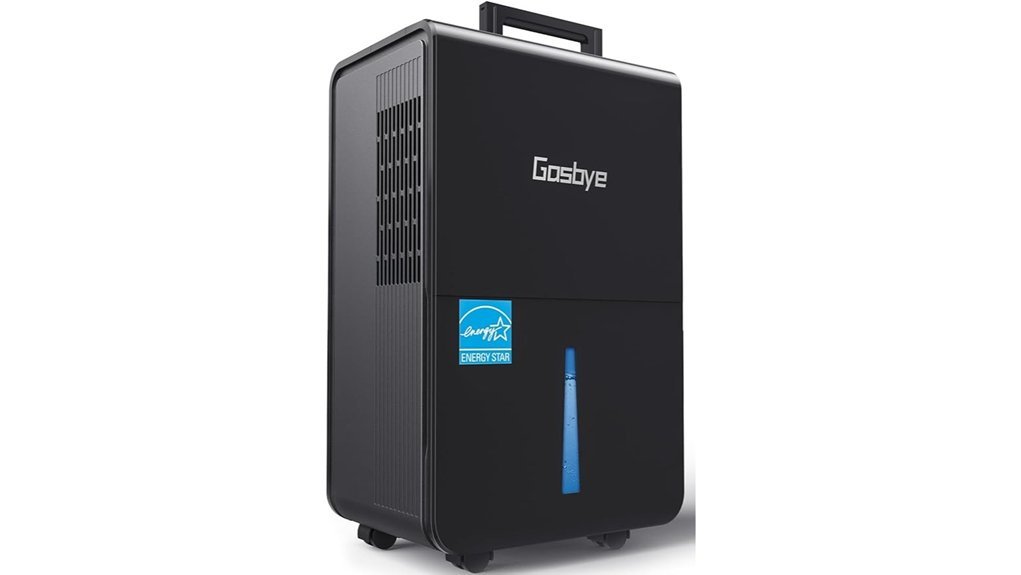
The Gasbye DryPrime 50 Dehumidifier offers the best overall balance in this comparison for a large, enclosed garage, workshop or storage area with a substantial moisture load. The listing identifies a 50-pint-per-day output at 65°F and 60% relative humidity, with higher extraction figures only under warmer and more humid test conditions.
This distinction matters because the advertised maximum of 115 pints per day applies at 86°F and 80% relative humidity. A normal garage will often be cooler or less humid, so actual water collection can be considerably lower.
The approximately 43-pound construction makes this a stationary garage appliance rather than a lightweight portable unit. Its 1.7-gallon tank, included drain hose and garden-hose adapter provide useful flexibility for long operating periods. Continuous drainage is especially valuable when the garage cannot be checked every day.
Why You’ll Like It
- Full-size 50-pint-class capacity is better suited to demanding garage moisture than a mini room unit.
- Several drainage options reduce dependence on manual tank emptying.
- Automatic shut-off and restart functions support routine garage operation.
- The manufacturer lists operation at approximately 45 dB.
- The model is listed as ENERGY STAR certified, although buyers should confirm the current certification for the exact model.
Who Should Buy This: Owners of a large, enclosed garage, workshop or storage space that remains within the product’s approved operating-temperature range.
Who Should Avoid This: Anyone who needs to carry the unit up stairs frequently, lacks a suitable electrical supply or has a garage that remains below the approved minimum temperature.
Pros:
- 50-pint listed output at a cooler and more useful comparison condition.
- Includes a drain hose and garden-hose adapter.
- Large 1.7-gallon tank reduces emptying frequency.
- Wheels make repositioning easier despite the unit’s weight.
- Washable filter supports routine maintenance.
Cons:
- The 115-pint headline figure applies only to hot, humid test conditions.
- Its approximately 43-pound weight makes frequent lifting difficult.
- It should not be assumed to work efficiently in a freezing or near-freezing garage.
- The advertised 4,500-square-foot coverage is a manufacturer guideline, not a performance guarantee.
hOmeLabs 50 Pint Wi-Fi Dehumidifier
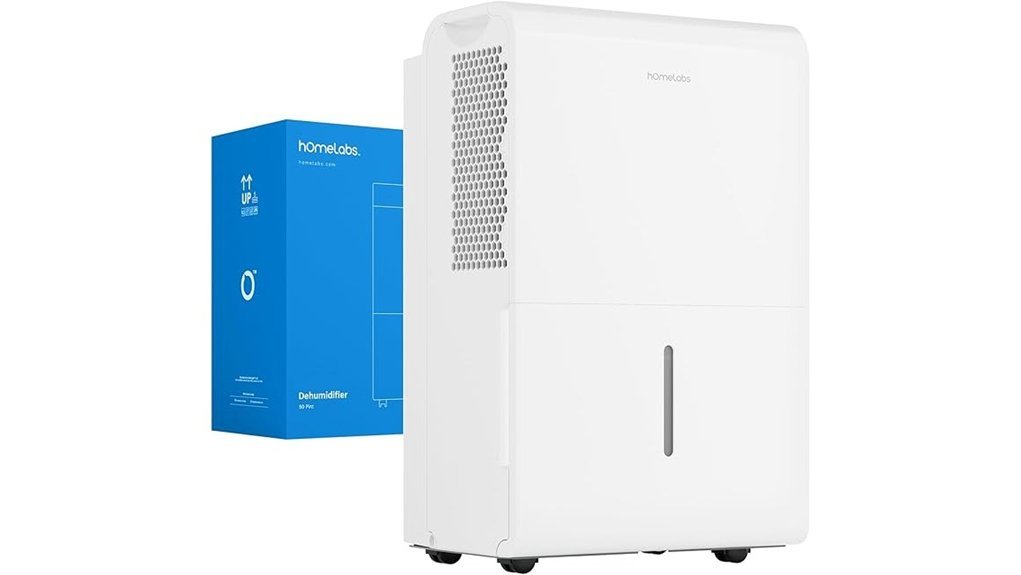
The hOmeLabs 50 Pint Wi-Fi Dehumidifier is the most convenient option when you want to check and adjust garage humidity without visiting the control panel each time. Its app-based controls can be particularly useful when the garage is detached or located on a different level from the main living space.
The manufacturer lists moisture removal of 50 pints per day at 80°F and 60% relative humidity, with a maximum claim of 120 pints per day at 95°F and 90% relative humidity. Because those conditions differ from the Gasbye figures, the two maximum numbers should not be treated as a direct performance ranking.
The adjustable humidistat, washable filter, two fan speeds, wheels and automatic shut-off make it practical for a large heated garage or workshop. Water can be collected in the approximately 1.6-gallon tank or routed through the continuous-drain connection.
Why You’ll Like It
- Wi-Fi control makes remote humidity checks and schedule changes more convenient.
- The adjustable humidistat can cycle the compressor according to the selected humidity level.
- Continuous drainage can reduce routine tank maintenance.
- Wheels and handles make the full-size appliance easier to reposition.
- A turbo setting provides higher airflow when faster drying is required.
Who Should Buy This: Buyers who want full-size compressor capacity, app-based controls and easier humidity monitoring in a large, relatively warm garage.
Who Should Avoid This: Buyers with unreliable Wi-Fi, no suitable gravity-drain route or an unheated garage that falls below the unit’s approved operating range.
Pros:
- Remote adjustment through a compatible app.
- 50-pint listed daily capacity suits more demanding moisture loads.
- Automatic shut-off helps prevent tank overflow.
- Offers tank collection and a continuous-drain connection.
- Washable filter and wheeled design simplify maintenance and movement.
Cons:
- The advertised 7,000-square-foot coverage should not replace proper capacity assessment.
- At approximately 41.2 pounds, it is not ideal for frequent lifting.
- Current product information is inconsistent about whether a drain hose is included, so package contents should be checked before ordering.
- Wi-Fi adds cost and setup steps that may not benefit buyers who prefer manual controls.
- The 120-pint maximum applies only under extreme heat and humidity.
Tehanld 3000 Sq.Ft. Dehumidifier with Digital Humidity Control
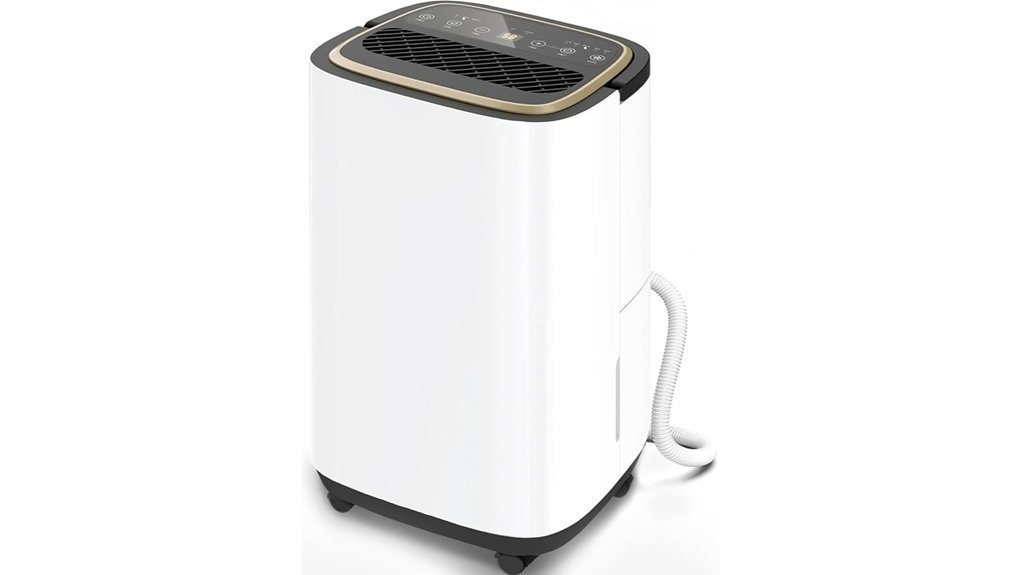
The Tehanld 3000 Sq.Ft. Dehumidifier fills the gap between a low-capacity room appliance and the heavier 50-pint models. Its listing describes extraction of up to 30 pints per day, adjustable digital humidity control, two fan speeds and operating modes for dehumidification, air circulation and laundry drying.
The 30-pint figure may be enough for moderate seasonal dampness in a sealed or reasonably weather-protected garage. However, the available listing does not clearly state the test temperature and relative humidity used for that rating, so it should not be compared directly with differently tested products.
The real-time display helps you monitor current humidity, while the removable 0.7-gallon tank and drain-hose connection offer manual or continuous water removal. Smooth-rolling wheels also make it easier to move between a garage, utility room and workshop.
Why You’ll Like It
- Moderate listed capacity suits garages that need more than a miniature room unit.
- Digital humidity controls make it easier to avoid unnecessary continuous operation.
- The drain connection can support routine moisture management.
- Its wheeled design allows occasional repositioning.
- The display provides an at-a-glance humidity reading.
Who Should Buy This: Owners of a mid-size enclosed garage, workshop or utility space with moderate seasonal dampness and a practical continuous-drain route.
Who Should Avoid This: Buyers dealing with active water ingress, widespread condensation, consistently low winter temperatures or a large garage with a heavy moisture load.
Pros:
- Useful middle-ground capacity for moderate garage moisture.
- Real-time humidity display supports easier adjustment.
- Offers tank collection and a continuous-drain connection.
- Two fan speeds and multiple operating modes improve flexibility.
- Lower capacity may be sufficient where a 50-pint model would be unnecessarily large.
Cons:
- The 0.7-gallon tank may fill quickly during humid weather.
- The extraction test conditions are not clearly stated in available product information.
- Advertised floor-area coverage does not guarantee equal performance in every garage.
- The compressor and fan will be more noticeable than a low-capacity room unit.
- Minimum operating temperature, warranty coverage and included drainage accessories should be verified before purchase.
Factors to Consider When Choosing a Garage Dehumidifier
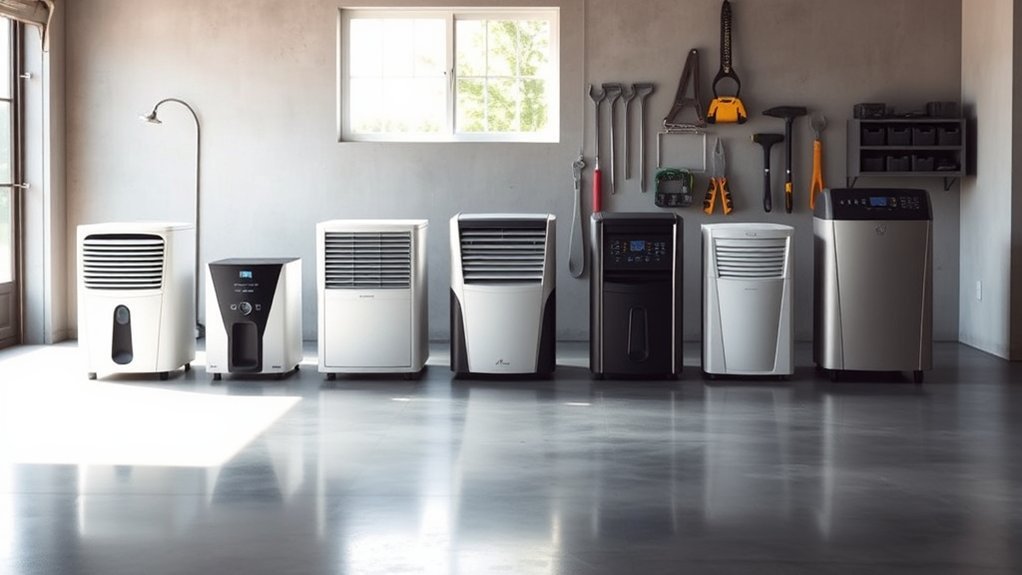
A garage can be harder to dehumidify than a bedroom because it may have an uninsulated door, cold concrete, outside-air leakage and wet vehicles entering the space. Check the following factors before relying on an advertised square-foot figure.
Garage Temperature and Dehumidifier Type
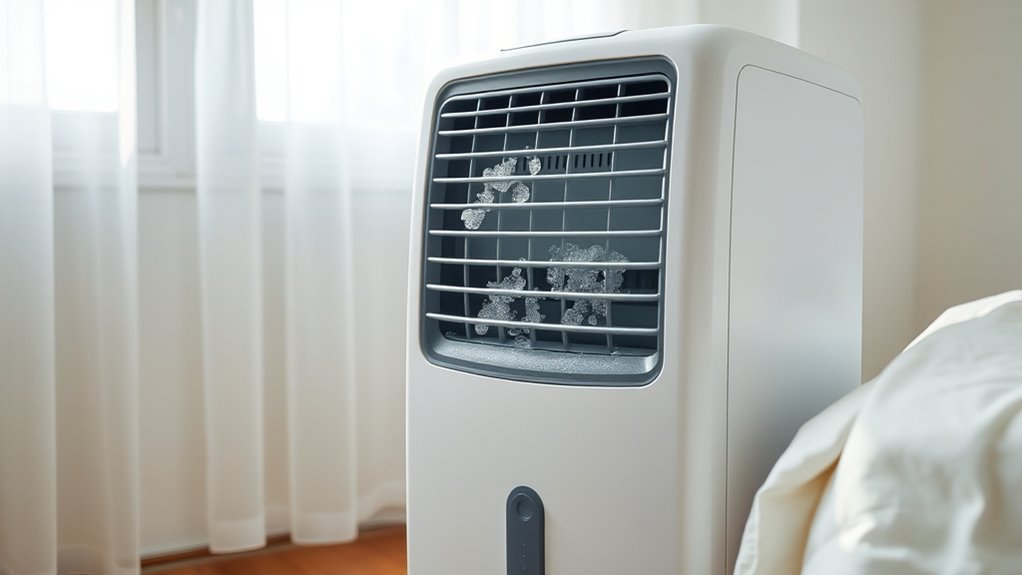
Temperature should be your first check. Compressor dehumidifiers generally remove more water in warm, humid air. As the garage becomes colder, extraction can fall and frost may form on the internal coils unless the model includes suitable defrost protection and is approved for lower-temperature operation.
If the garage regularly falls below 65°F (18°C), check the current manual for a low-temperature rating instead of assuming that an ordinary indoor model will work efficiently. A specifically rated compressor model or a desiccant dehumidifier may be more appropriate for a garage that remains near or below 50°F (10°C) for long periods.
Important: Automatic defrost can help protect a compressor dehumidifier, but it does not mean the appliance is suitable for every cold garage. Never operate a unit below the minimum temperature stated for the exact model.
Daily Moisture-Removal Capacity
Compare moisture-removal capacity before advertised coverage. Also check the temperature and relative humidity used for the rating. A maximum figure measured in very hot, humid air will normally be much higher than the amount collected in a cool garage.
As a broad starting point, a 20-to-30-pint model may suit a smaller garage with light or moderate dampness. A 40-to-50-pint-class unit is more appropriate when the space is larger, regularly contains wet vehicles, has visible condensation or is opened frequently during humid weather.
More capacity will not solve active leaks. Repair water entry first and use the dehumidifier to control remaining airborne moisture.
Garage Size and Air Leakage
Measure the floor area, ceiling height and any connected storage rooms. Also inspect the garage-door seals, windows, wall penetrations and gaps around service doors.
A draughty garage can continuously replace dried air with humid outdoor air. Weather-sealing obvious gaps often improves performance and reduces operating time, provided that required safety ventilation is not blocked.
A dehumidifier is not a substitute for repairing roof leaks, damaged seals, plumbing leaks, rising damp or water entering beneath the garage door.
Humidistat and Target Humidity
An adjustable humidistat allows the dehumidifier to cycle instead of running continuously. A reasonable starting target for general garage storage is around 50% relative humidity.
Try to keep humidity below 60% where practical, then adjust the setting according to condensation, stored materials, outdoor conditions and the manufacturer’s instructions. Do not select an unnecessarily low target because it increases operating time without fixing air leakage or water entry.
A separate hygrometer placed away from the dehumidifier’s outlet can help you compare the built-in reading with conditions in the rest of the garage.
Drainage Options Available
Manual tanks are simple, but they may fill quickly after wet vehicles enter the garage or during humid weather. Automatic shut-off prevents overflow, but moisture removal stops until someone empties and replaces the tank.
Continuous drainage is usually more convenient for regular garage use. Confirm that:
- The hose reaches a suitable drain.
- The hose runs downhill without sharp bends when gravity drainage is used.
- The drain and hose outlet cannot freeze during cold weather.
- The connection is secure and inspected periodically for leaks.
- The hose is included or purchased separately as required.
If the drain is above the dehumidifier, gravity drainage will not work. You may need a model with an approved built-in pump or a separate condensate pump suitable for the installation.
Noise Level Considerations
Noise matters when the garage shares a wall with a bedroom, office or living room. Full-size compressor models produce noticeable fan and compressor noise even when the listing describes them as quiet.
Lower fan settings may reduce noise but can also slow moisture removal. For a detached garage, correct capacity, drainage and low-temperature suitability are generally more important than bedroom-level quietness.
Energy Efficiency and Running Controls
Compare moisture removed per unit of electricity rather than wattage alone. A low-power appliance can run for much longer or fail to control a demanding garage, while a correctly sized compressor unit may remove more moisture during each operating cycle.
Useful efficiency and convenience features include:
- An adjustable humidistat.
- Automatic full-tank shut-off.
- Automatic restart after a power interruption.
- Low-temperature defrost protection.
- A washable, easy-to-access filter.
- A timer, app or operating schedule.
- Continuous-drain capability.
Power Supply and Electrical Safety
Confirm the exact input voltage, frequency and plug type before buying an imported appliance. The rating label and current manual must match your electrical supply. A travel adapter changes the plug shape but does not convert voltage.
Place the dehumidifier on a stable, level surface away from standing water, direct vehicle spray, flammable materials and areas where it could be struck by a car or bicycle. Do not use a damaged cable, overloaded extension lead or improvised electrical connection.
Follow the manufacturer’s clearance requirements around the air inlet and outlet. Do not cover the unit or place stored objects against its airflow openings.
Manufacturer Support and Warranty
Before ordering, check the warranty term, who provides support and whether the exact model has a downloadable manual. This is especially important for newer or less established brands.
Save the order confirmation, model number and serial number. Also check the manufacturer’s current safety and recall information before long-term unattended use.
Before You Buy Checklist
- Measure the garage, including ceiling height and connected storage areas.
- Check how much outside air enters around doors and windows.
- Record the lowest winter temperature inside the garage.
- Fix roof, wall, door, foundation or plumbing leaks first.
- Estimate whether the garage is slightly damp, very damp or visibly wet.
- Compare pint capacity using the stated test conditions.
- Decide whether you can install continuous gravity drainage.
- Verify whether the drain hose or adapter is included.
- Check the exact voltage, plug, warranty and operating-temperature range.
- Confirm the current model number and manufacturer manual.
- Leave the required clearance around the air intake and exhaust.
- Plan how often the filter, tank and drain hose will be inspected.
Frequently Asked Questions
How Often Should I Empty the Dehumidifier Tank?
Empty the tank whenever the full-tank indicator appears. During humid weather or after parking a wet vehicle, a small tank may fill in less than a day. A larger tank may last longer, but the exact time depends on the moisture load and selected humidity setting.
Continuous drainage is more convenient when you cannot check the garage regularly. Inspect the hose periodically to ensure that it remains connected, unobstructed and free from leaks.
Can Dehumidifiers Be Used in Unheated Garages?
Yes, but only when the exact model is approved for the garage’s temperature range. A standard compressor dehumidifier can remove less water, develop frost or spend more time in defrost mode as the temperature falls.
Check the minimum operating temperature in the current manual. A specifically rated low-temperature compressor model or desiccant dehumidifier may be a better choice for a cold winter garage.
What Size Dehumidifier Do I Need for a Garage?
A 20-to-30-pint-class unit may be enough for a smaller, enclosed garage with light or moderate dampness. A larger or persistently damp garage may require a 40-to-50-pint-class model.
These are starting points rather than guarantees. Temperature, ceiling height, air leakage, wet vehicles, visible condensation and active water entry can matter more than floor area alone.
Is a 30-Pint or 50-Pint Dehumidifier Better for a Garage?
A 30-pint model may be adequate for moderate moisture in a sealed single garage. A 50-pint model provides more reserve capacity for larger garages, frequent wet vehicles or persistent condensation.
Compare ratings measured under similar conditions. A promotional maximum measured in hotter air should not be compared directly with a cooler-condition rating.
Should I Run a Garage Dehumidifier Continuously?
Continuous mode can be useful during initial drying or after a wet vehicle enters the space. For routine use, an adjustable humidistat is usually more efficient because the dehumidifier can cycle according to the selected relative-humidity level.
Continuous drainage is different from continuous operation. A drain hose allows water to leave automatically, while the humidistat can still switch the compressor on and off as needed.
What Humidity Should I Set in a Garage?
A starting target around 50% relative humidity is reasonable for general storage. Try to keep the space below 60% where practical, especially when condensation, mould-sensitive materials or corrosion-prone tools are concerns.
Use a separate hygrometer to check conditions away from the dehumidifier and adjust the setting according to the garage construction and stored materials.
Will a Dehumidifier Stop Garage Mould and Rust?
Lower humidity can reduce the conditions that encourage condensation, mould growth and corrosion. However, a dehumidifier cannot repair leaks, remove existing mould, reverse rust or prevent new moisture from entering beneath a door.
Address the water source, dry wet materials promptly and clean affected surfaces using appropriate safety precautions.
Where Should I Place a Dehumidifier in the Garage?
Place it on a stable, level surface with the manufacturer’s required clearance around the air inlet and outlet. A central position can help air circulation, but the unit must remain protected from vehicle impact, standing water and direct spray.
For gravity drainage, place the unit high enough for the hose to run continuously downhill to the drain without loops or upward sections.
Can I Use an Extension Cord?
Follow the appliance manual and local electrical requirements. Many manufacturers recommend connecting a dehumidifier directly to a correctly grounded wall outlet rather than using an extension cord.
Never use a damaged cable, undersized extension lead, overloaded power strip or improvised adapter in a damp garage.
Do I Need Professional Installation?
Most portable dehumidifiers only require correct placement, a suitable electrical outlet and basic setup. Professional help may be appropriate when you need a new electrical circuit, elevated drain, condensate pump, fixed plumbing work or investigation of serious water ingress.
Final Recommendation
For a large, enclosed garage that remains within the approved operating-temperature range, the Gasbye provides the strongest overall combination of 50-pint-class capacity, a large tank and included drainage accessories.
Choose the hOmeLabs 50 Pint Wi-Fi Dehumidifier when remote monitoring, app controls and scheduling are more important than having drainage accessories clearly included in the package.
The Tehanld is the more balanced option for a mid-size garage with moderate seasonal dampness, although its test conditions, warranty and minimum operating temperature should be confirmed before purchase.
Most important: Do not choose by advertised square footage or maximum pint claims alone. Check the garage’s lowest temperature, fix active water entry and compare moisture-removal figures measured under similar conditions. If the garage stays cold through winter, select a properly rated low-temperature or desiccant dehumidifier.