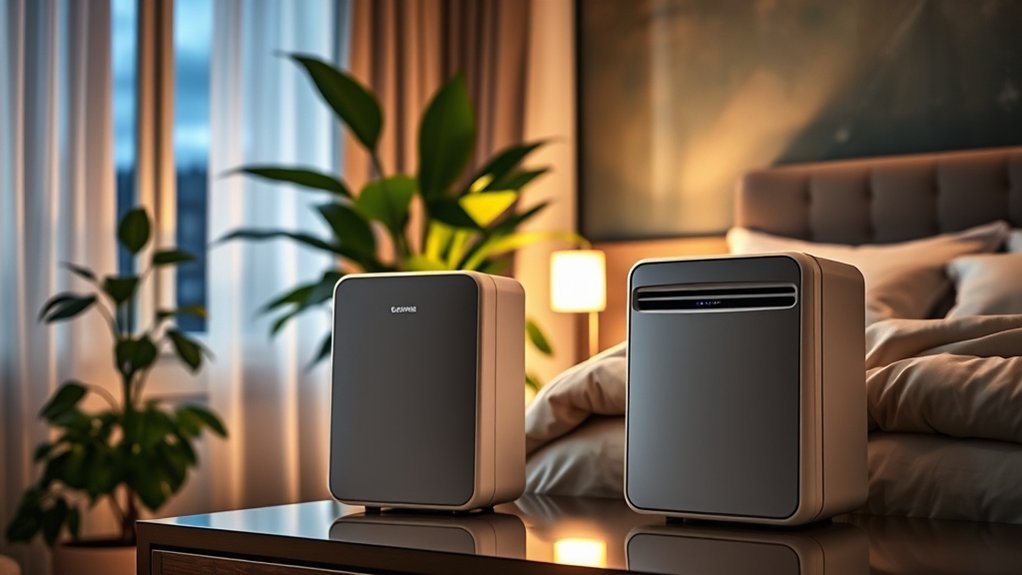
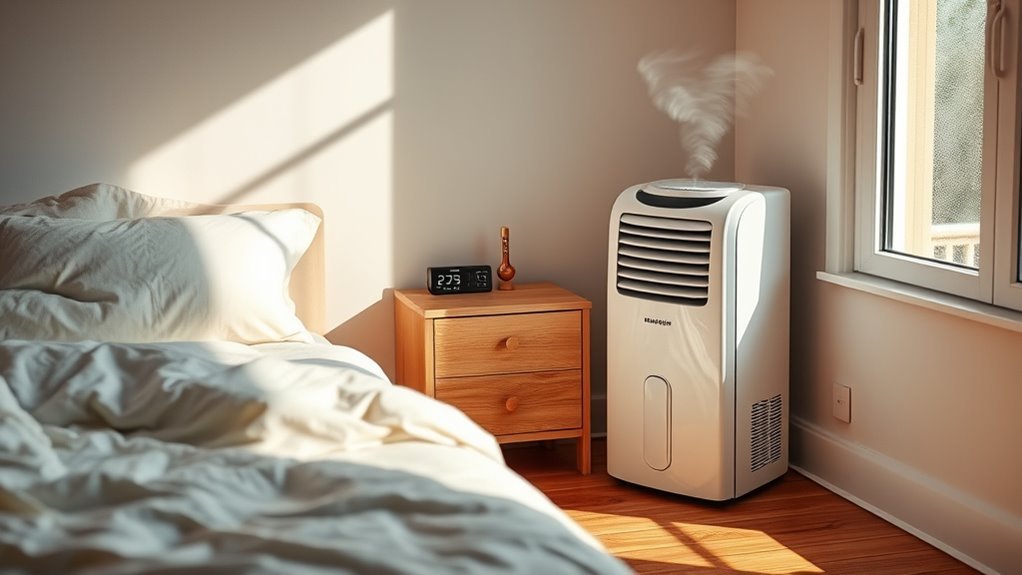
If you need a small portable dehumidifier for a bedroom, bathroom, closet, RV, or another compact space, match the technology to the moisture problem. Powered thermoelectric models can collect water in warm, enclosed rooms, while a renewable desiccant unit is better for cabinets, safes, cars, and other spaces where cords are inconvenient. The four options below cover quiet bedside use, cordless moisture absorption, higher stated daily extraction, and larger-tank convenience.
- Technology: thermoelectric condensation or renewable desiccant.
- Published extraction or absorption capacity and the test conditions behind it.
- Tank size, auto shut-off, noise controls, portability, and maintenance.
- Best-use location, including bedrooms, bathrooms, closets, RVs, and storage spaces.
- Important limits, such as cool-room performance, passive drying speed, and lack of continuous drainage.
Quick Comparison
| Product | Best For | Tank / Capacity | Key Advantage | Main Limitation | Amazon |
|---|---|---|---|---|---|
| CLEVAST Compact Mini | Small bedrooms, bathrooms, closets | 30 oz tank | 24 dB manufacturer-stated noise level | Modest extraction for mild moisture only | Check Availability |
| Eva-Dry E-333 | Closets, cabinets, cars, boats, safes | Up to 13 oz absorption | Silent, cordless use between recharges | Passive; not intended for active room drying | Check Availability |
| BREEZOME 60 OZ | Bathrooms, bedrooms, kitchens, RVs | 60 oz tank | Up to 700 ml/day under stated test conditions | Output falls in cooler or less humid air | Check Availability |
| NineSky 95 OZ | Bedrooms, bathrooms, and RVs needing a large tank | 95 oz tank | High-speed and lights-off night modes | No verified daily extraction figure | Check Availability |
CLEVAST Compact Mini Dehumidifier for Home
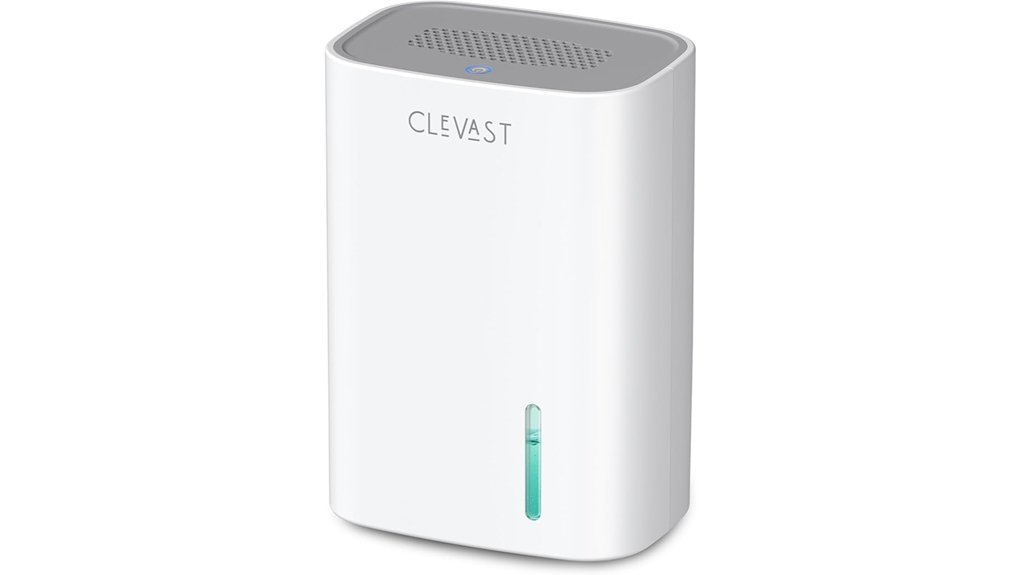
The CLEVAST Compact Mini is designed for small bedrooms, bathrooms, closets, campers, and offices. It uses semiconductor condensation technology and has a 30 oz removable tank, automatic shut-off, a built-in handle, and straightforward one-button operation. The manufacturer states a 24 dB operating noise level, making it a reasonable option for a bedside table or quiet workspace.
Its published extraction claim is up to 10 oz (295 ml) in 24 hours at 86°F and 85% relative humidity. That is a warm, humid test environment, so expect less collection in cooler or drier rooms. This model is intended for mild moisture in a small enclosed space, not a wet basement or large open floor plan.
Best For: Buyers who want a small, quiet powered dehumidifier with simple controls.
Why You’ll Like It:
- 24 dB manufacturer-stated operation for noise-sensitive spaces.
- Compact 4.5 × 6.5 × 9.2-inch footprint.
- 30 oz removable tank with automatic shut-off.
- Built-in handle and one-button control.
Who Should Avoid It: Anyone trying to manage standing water, serious dampness, or persistent whole-basement humidity.
Pros:
- Small and easy to move.
- Low manufacturer-stated noise level.
- Simple operation with no complicated settings.
- Auto shut-off helps prevent tank overflow.
Cons:
- Limited moisture-removal capacity compared with compressor models.
- Performance depends heavily on room temperature and humidity.
- No settable humidistat or continuous-drain connection is listed.
Eva-Dry Wireless Mini Dehumidifier, White (E-333)
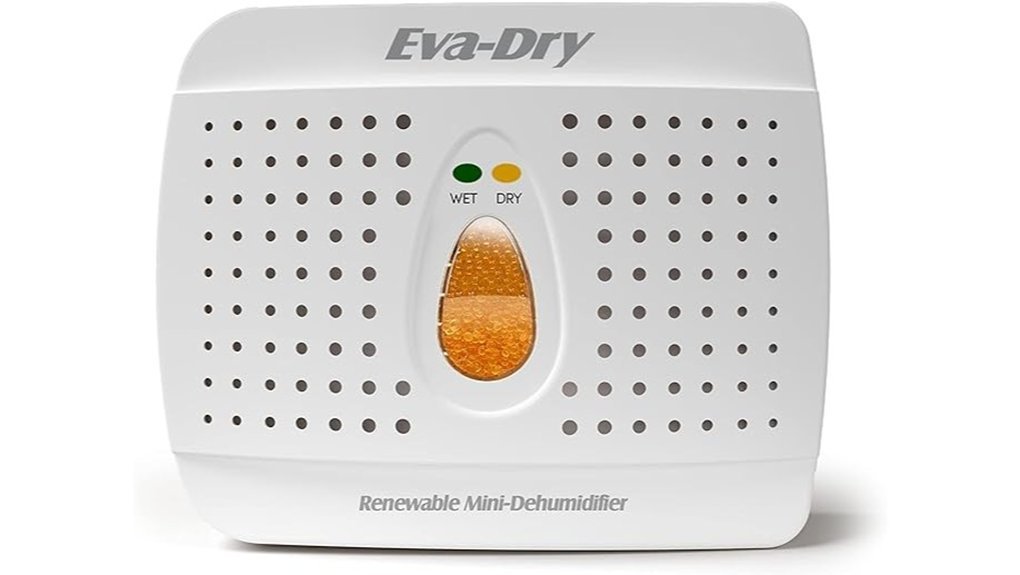
The Eva-Dry E-333 is different from the powered tank models in this roundup. It uses renewable silica gel to absorb moisture without a cord during normal use. That makes it especially useful in closets, cabinets, cars, boats, safes, gym lockers, and seasonal storage where an outlet is unavailable or inconvenient.
The current manufacturer specifications list moisture absorption of up to 13 oz, coverage up to 333 cubic feet, and an approximate 10- to 12-hour recharge time. The indicator beads change color when the unit needs to be plugged into a standard outlet for regeneration. Because this is a passive moisture absorber, it works gradually and is not intended to actively dehumidify an occupied room.
Best For: Small enclosed spaces that need silent, low-maintenance, cordless moisture control.
Why You’ll Like It:
- No liquid tank to empty during normal use.
- Cordless and silent operation between recharge cycles.
- Compact design for closets, cabinets, cars, boats, and safes.
- Manufacturer-listed five-year limited warranty.
Who Should Avoid It: Buyers who need fast, active moisture removal in a bedroom, bathroom, laundry room, or basement.
Pros:
- Portable and easy to place in tight spaces.
- No batteries or disposable refills required.
- No liquid reservoir that can spill during use.
- No fan or compressor noise.
Cons:
- Passive drying is much slower than powered dehumidification.
- Suitable only for small enclosed volumes.
- Must be plugged in periodically for approximately 10 to 12 hours to regenerate.
BREEZOME 60 OZ Dual-Semiconductor Dehumidifier
The BREEZOME 60 OZ has the strongest clearly published daily extraction claim among the powered models in this comparison. It uses dual semiconductor condensers, includes a 1.8-liter tank, and is intended for compact areas such as bedrooms, bathrooms, kitchens, cloakrooms, and RVs. The manufacturer states extraction of up to 700 ml per day at 86°F and 80% relative humidity, so real-world output will be lower in cooler or less humid rooms.
Its 35 dB manufacturer-stated sleep mode, adjustable light, 12/24/36/48-hour timer, automatic defrost, and full-tank shut-off add useful convenience. The larger tank also reduces emptying frequency compared with 30 oz mini models, although tank size does not by itself prove faster moisture removal.
Best For: Buyers who want a higher stated extraction rate and a larger tank in a compact thermoelectric unit.
Why You’ll Like It:
- Dual-semiconductor design with a published 700 ml/day maximum claim.
- 60 oz tank reduces routine emptying.
- Sleep mode, adjustable ambient light, and multi-hour timer.
- Automatic defrost and full-tank shut-off.
Who Should Avoid It: Anyone who needs a built-in pump, a verified pint-per-day compressor rating, or dependable performance in a cold basement.
Pros:
- Strongest clearly stated extraction figure in this group.
- Large removable tank for a mini unit.
- Portable design with a built-in handle.
- Sleep mode, timer, defrost, and auto shut-off.
Cons:
- Peak extraction is based on hot, humid test conditions.
- Not designed for severe dampness or large open spaces.
- No continuous-drain hose connection or built-in pump is listed.
NineSky Dehumidifier for Home (95 OZ Tank)
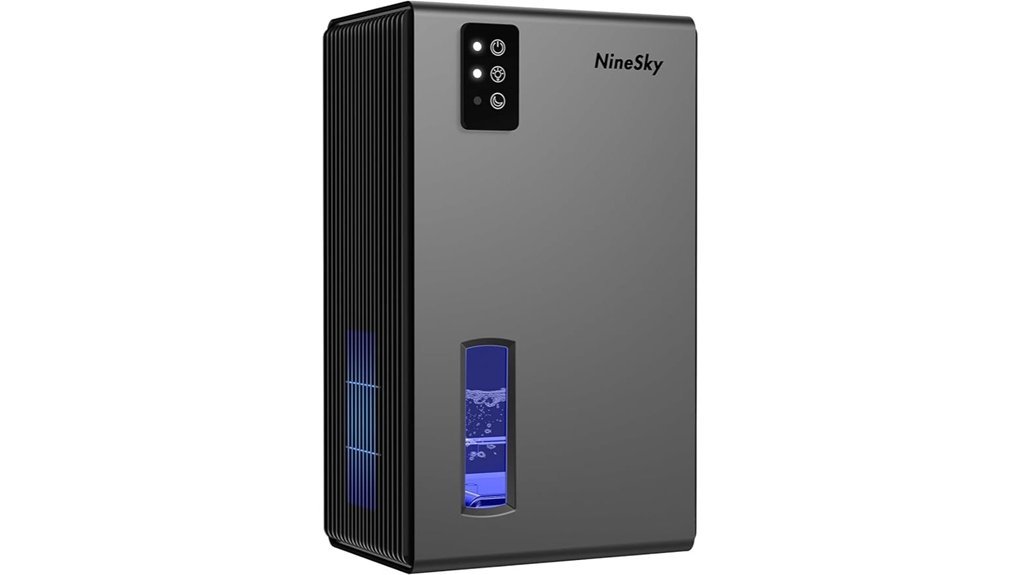
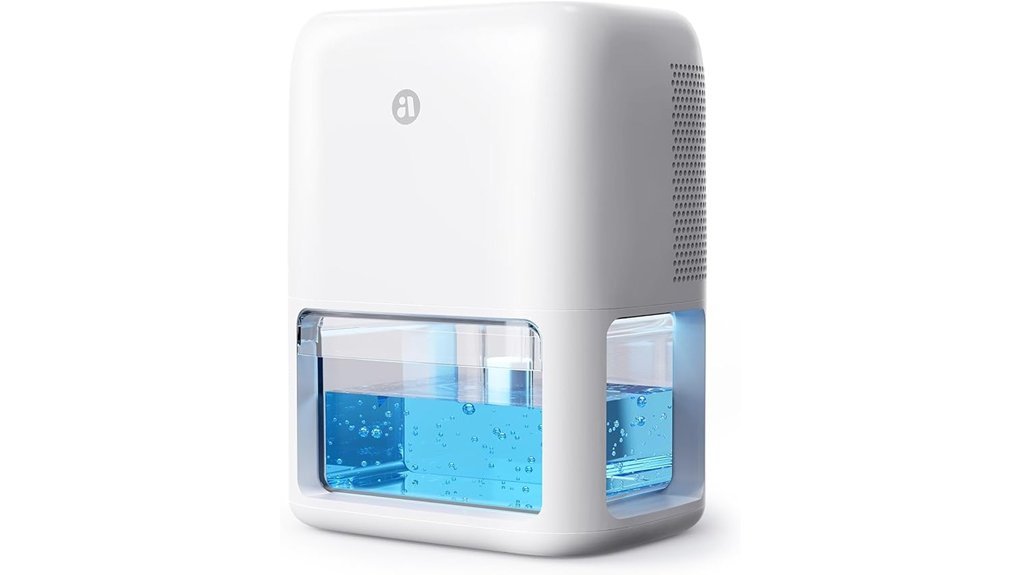
The NineSky model pairs a 95 oz water tank with high-speed and night modes. Its upright footprint can fit beside a bed, on a bathroom counter, or in an RV without taking up much floor space. Auto shut-off helps prevent overflow when the tank fills, while night mode turns off the lights and uses a quieter setting for less distraction during sleep.
Coverage claims for this 95 oz model vary across current product pages, and a large tank does not confirm a high extraction rate. For that reason, it is safer to judge this unit by its semiconductor technology, tank capacity, and intended small-room use rather than treating an advertised square-foot figure as guaranteed whole-room performance.
Best For: Buyers who prioritize tank capacity, two operating modes, and light-free nighttime use.
Why You’ll Like It:
- Large 95 oz tank for less frequent emptying.
- High-speed and lights-off night modes.
- Automatic shut-off when the tank is full or incorrectly positioned.
- Seven optional ambient-light colors.
Who Should Avoid It: Buyers who need a verified daily extraction rating, continuous drainage, or reliable cold-basement performance.
Pros:
- Larger tank than the other powered options in this comparison.
- Separate daytime and nighttime operating modes.
- Compact upright design for bedrooms, bathrooms, and RVs.
- Lights can be turned off for sleeping.
Cons:
- No dependable daily extraction figure was found in the reviewed product information.
- Advertised coverage varies and should not be treated as compressor-level capacity.
- No continuous-drain connection or built-in pump is listed.
Factors to Consider When Choosing a Small Portable Dehumidifier
Choose the Right Technology
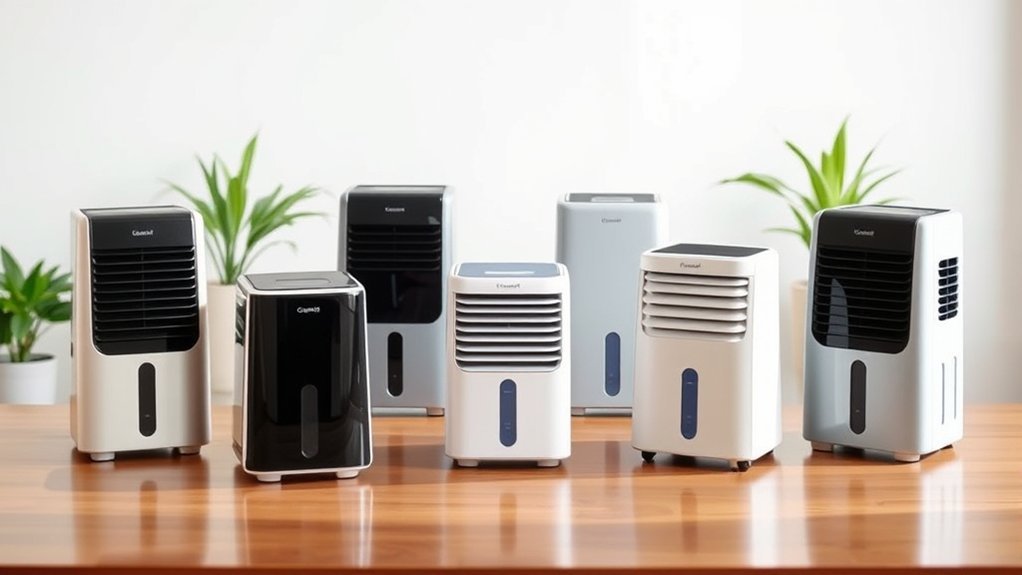
Small portable dehumidifiers generally use thermoelectric condensation, sometimes called Peltier technology, or renewable desiccant. Thermoelectric models collect liquid water in a tank and work best in warm, enclosed spaces with mild moisture. Desiccant units absorb moisture silently and work well in closets, cabinets, cars, boats, and safes, but they act slowly and require periodic regeneration. A compressor dehumidifier is usually the better choice for persistent dampness, large basements, laundry areas, or high daily water removal.
Compare Extraction Rate, Not Just Tank Size
A 95 oz tank can hold more water than a 30 oz tank, but it does not automatically remove moisture faster. Compare the published daily extraction rate, the temperature and relative humidity used for that rating, and whether the brand publishes a standardized pint-per-day capacity. For mini thermoelectric models, large square-foot coverage claims should be treated as rough marketing guidance rather than guaranteed performance.
Consider Room Temperature and Humidity
Thermoelectric dehumidifiers collect the most water when the air is warm and humid. Output can fall sharply in cool rooms. For a cold basement, crawl space, garage, or winter environment, check the minimum operating temperature and consider a compressor model with automatic defrost and a verified capacity rating.
Check Humidity With a Hygrometer
Many mini dehumidifiers do not offer a settable humidistat that cycles the unit at a chosen relative-humidity level. A separate hygrometer makes it easier to see whether the product is lowering humidity in the actual room. If the reading stays high after several days, the unit may be undersized or the moisture source may need repair.
Measure the Available Space
Measure the shelf, counter, or floor area before ordering. A built-in handle helps if you plan to move the unit between rooms. Check the power-cord location and leave open space around the air intake and exhaust so airflow is not restricted.
Look Beyond the Published Noise Number
For a bedroom or office, look for a published noise level and a genuine sleep or night mode. Marketing noise figures may be measured under controlled conditions, and high-speed modes can be louder. Place the unit on a stable, level surface to reduce vibration and rattling.
Review Tank and Drainage Options
A larger tank means less frequent emptying, but it also becomes heavier when full. Auto shut-off is essential for tank-based models. The product information reviewed for the powered models above does not list a built-in pump or continuous-drain connection, so choose a full-size drain-capable model if you need unattended moisture removal.
Use Extra Care in Bathrooms
Keep any powered dehumidifier away from sinks, tubs, showers, wet counters, and splash zones. Follow the product manual and local electrical-safety requirements, keep the plug and cord dry, and avoid extension cords unless the manufacturer specifically permits one.
Compare Energy Use With Water Removal
Mini thermoelectric dehumidifiers often use less electricity than compressor models, but they also remove less water. Compare power consumption with actual moisture removal rather than assuming the lowest-wattage unit is automatically the most efficient choice for your room.
Plan for Regular Cleaning
Choose a model with an accessible removable tank. Empty and rinse the tank regularly, wipe the air intake and outlet, and keep the unit upright. Always unplug a powered model before cleaning it, and allow all parts to dry completely before reassembly.
- Choose active drying for a room or passive absorption for an enclosed storage space.
- Check the minimum operating temperature and published test conditions.
- Compare daily extraction or absorption capacity, not only tank size or square footage.
- Use a separate hygrometer to measure the result in your room.
- Confirm whether you need a sleep mode, timer, humidistat, or continuous drain.
- Use a compressor dehumidifier for severe, persistent, or whole-basement dampness.
Frequently Asked Questions
How Often Should I Empty the Water Tank?
Empty it whenever the full-tank indicator appears or the unit shuts off. In humid conditions, that may be daily; in milder conditions, it may take longer. Rinse and dry the tank regularly to reduce residue and odors.
Can I Use a Dehumidifier in a Bathroom?
Yes, if the manufacturer allows that use, but place it well away from sinks, tubs, showers, wet counters, and splash zones. Follow the electrical-safety instructions, keep the plug dry, and do not use an extension cord unless the manual specifically permits it.
Can a Mini Dehumidifier Handle a Basement?
Usually not if the basement is large, cold, wet, or persistently damp. A mini thermoelectric unit may help a small enclosed corner, but a compressor dehumidifier with a verified pint-per-day rating is the better choice for whole-basement humidity control.
Can a Dehumidifier Remove Mold?
No. A dehumidifier can help reduce excess moisture, but it does not remove existing mold or repair the source of water. Fix leaks or condensation problems, dry wet materials promptly, and clean or remediate mold appropriately.
Do Dehumidifiers Improve Air Quality?
Reducing excess humidity can make a room more comfortable and can support moisture control. However, a dehumidifier does not replace ventilation, source control, cleaning, or a suitable air cleaner. Avoid expecting a mini unit to eliminate allergens, odors, or mold by itself.
Are Portable Dehumidifiers Energy Efficient?
They can use relatively little power, but efficiency depends on how much water they remove for that energy. A low-wattage mini unit may run longer and still remove less moisture than a correctly sized compressor model.
How Loud Are Small Portable Dehumidifiers?
Many thermoelectric models are quieter than compressor dehumidifiers and may include sleep modes intended for bedrooms. Actual sound varies with fan speed, placement, room acoustics, and vibration.
What Humidity Level Should I Target?
A common general target is about 30% to 50% relative humidity, although the best level can vary with climate and season. Use a separate hygrometer to see whether the dehumidifier is making a meaningful difference, and address leaks or other moisture sources if humidity remains high.
Can I Run a Mini Dehumidifier Continuously?
Only operate it as permitted by the manufacturer. Keep the air intake and outlet clear, place the unit on a stable surface, empty the tank when required, and inspect the cord and tank regularly. For long unattended operation, a model with a proper drain connection and humidistat is usually more suitable.
Conclusion
The best small portable dehumidifier depends on the space and the moisture load. The BREEZOME 60 OZ offers the strongest clearly published active extraction claim in this group, while the CLEVAST Compact Mini is a better fit for buyers who want a smaller, quieter, one-button unit. The Eva-Dry E-333 is the practical cordless option for enclosed storage spaces, and the NineSky 95 OZ suits buyers who prioritize a larger tank and separate day and night modes.
Keep expectations realistic: thermoelectric mini dehumidifiers work best for mild moisture in warm, compact, enclosed spaces. For a wet basement, persistent condensation, visible water intrusion, or whole-room humidity that stays above your target, choose a properly sized compressor dehumidifier and fix the moisture source.