Affiliate disclosure: This article contains Amazon affiliate links. We may earn a commission from qualifying purchases at no extra cost to you.
Last updated: August 2026. Specifications are based on published product information; no hands-on testing is claimed.
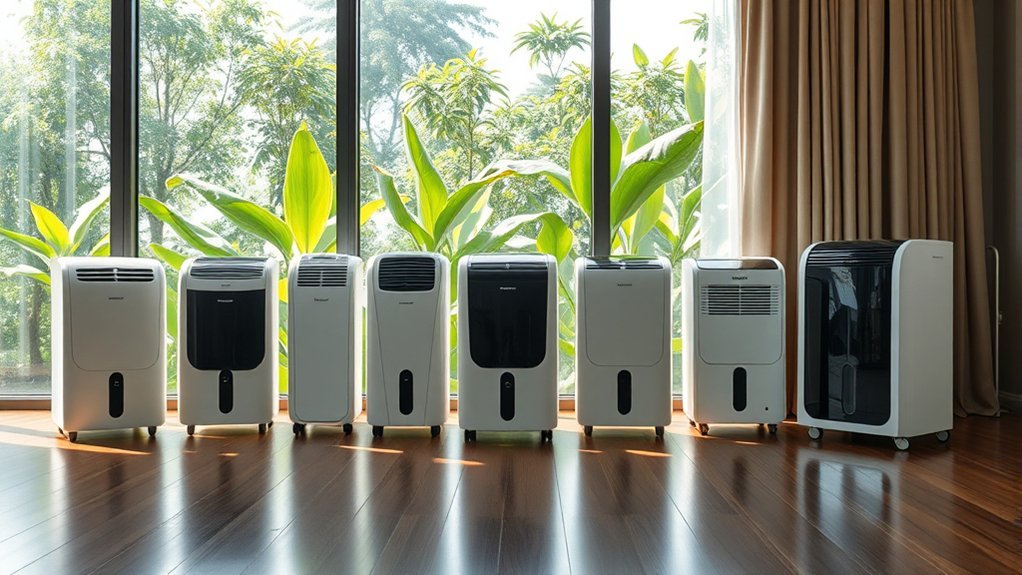
Excess humidity in a fifth wheel can lead to window condensation, damp fabrics, musty odors, and moisture in cabinets or storage bays. The right dehumidifier depends less on a large advertised coverage number and more on your rig’s actual moisture load, available floor space, drainage setup, operating temperature, and power source.
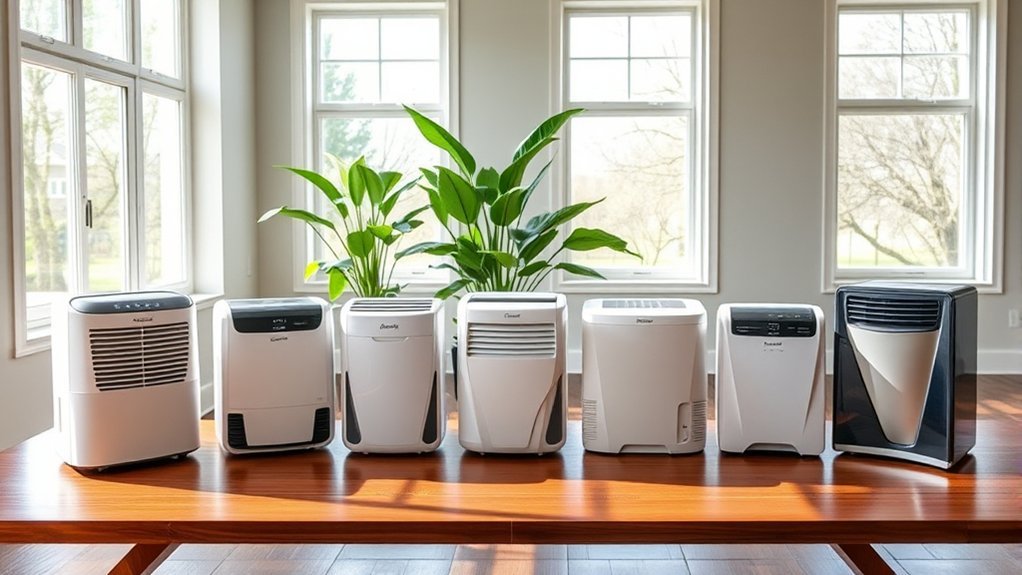
For most parked fifth wheels with shore power, the Aiusevo AS280 offers the best balance of compressor-level moisture removal, manageable size, and automatic humidity control. The TABYIK 35 OZ is the compact choice for mild condensation in a smaller rig. The GoGuess 21 Pint provides a similar mid-capacity alternative, while the larger PLUSCENT and VEAGASO models make more sense when persistent humidity justifies extra size and weight.
Quick Verdict
- Best Overall: Aiusevo AS280 for balanced whole-coach moisture control.
- Best Compact Pick: TABYIK 35 OZ for light humidity in a small fifth wheel.
- Best Heavy-Duty with Auto-Defrost: PLUSCENT 32 Pint for stationary use with continuous drainage.
- Best for Severe Humidity: VEAGASO 34 Pint for larger rigs and humid climates.
- Best Mid-Capacity Alternative: GoGuess 21 Pint for shoppers comparing 20-pint-class compressor models.
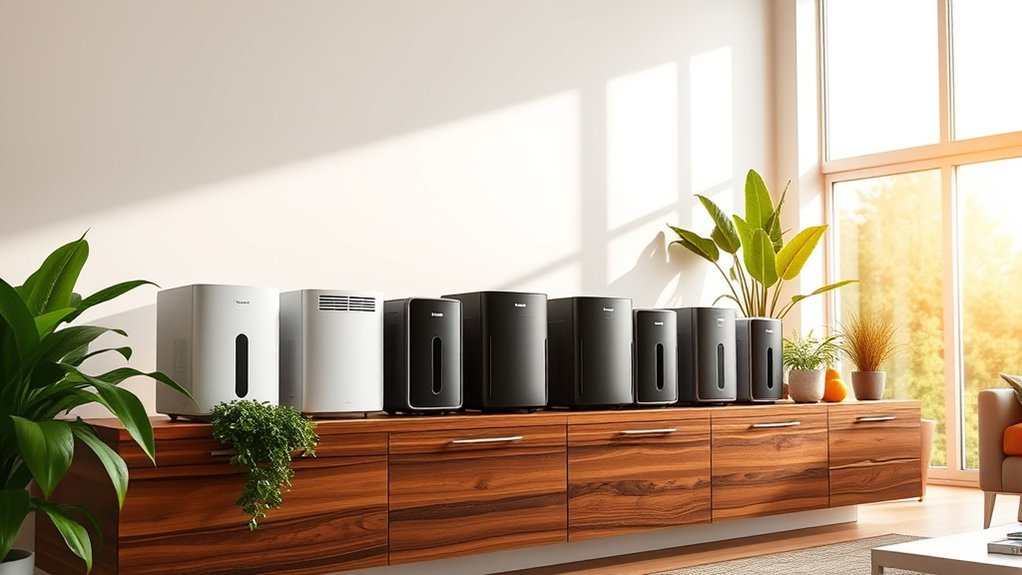
Quick Comparison of the Best Dehumidifiers for Fifth Wheels
| Product | Best For | Type | Listed Capacity | Important RV Consideration | Check Details |
|---|---|---|---|---|---|
| Aiusevo AS280 | Best overall whole-coach option | Compressor | Up to 21 pints/day; up to 1,500 sq. ft. | Use while parked; verify circuit capacity and secure before travel. | Check Details on Amazon |
| TABYIK 35 OZ | Small rigs and light condensation | Thermoelectric | Up to 16 oz/day in warm, humid test conditions | Not a substitute for a compressor unit in severe humidity. | Check Details on Amazon |
| PLUSCENT 32 Pint | Heavy-duty use with auto-defrost | Compressor | Up to 32 pints/day; up to 2,500 sq. ft. | Large for an RV; best with shore power and a drain hose. | Check Details on Amazon |
| VEAGASO 34 Pint | Severe humidity and larger fifth wheels | Compressor | Up to 34 pints/day; up to 2,500 sq. ft. | Oversized for many rigs; measure the installation area first. | Check Details on Amazon |
| GoGuess 21 Pint | Mid-capacity compressor alternative | Compressor | Up to 21 pints/day; up to 1,600 sq. ft. | Use while parked and secure it before towing; compare its footprint with the Aiusevo. | Check Details on Amazon |
Before you buy: Advertised square-foot ratings are not a direct measure of fifth-wheel suitability, and daily pint ratings depend on specified laboratory temperature and humidity conditions. Check the unit’s physical dimensions, nameplate wattage and amperage, operating-temperature range, drain-hose requirements, and whether your RV circuit can run it alongside the air conditioner, microwave, converter, or other high-draw appliances.
Best Overall: Aiusevo AS280 21-Pint Dehumidifier
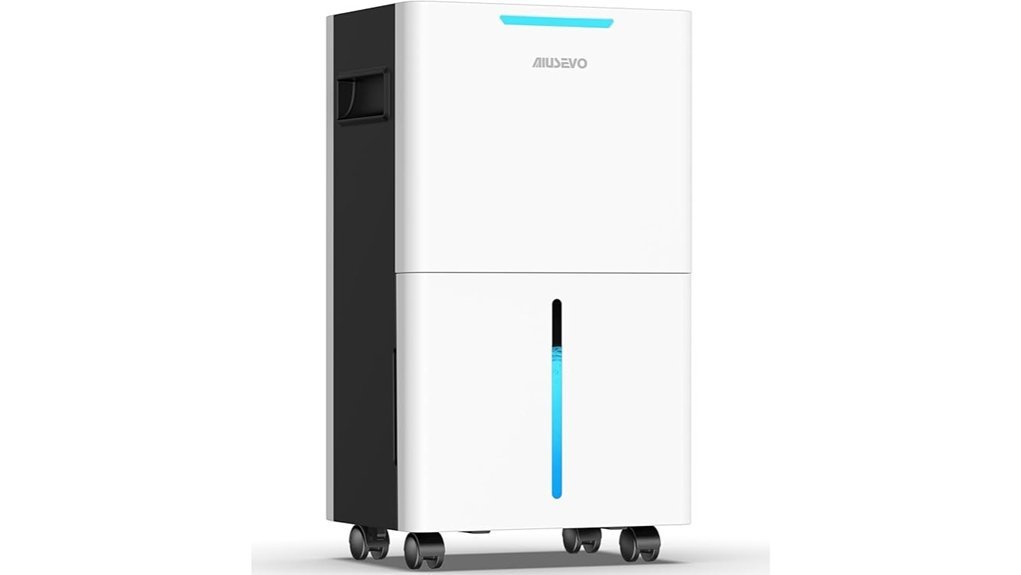
The Aiusevo AS280 is the strongest all-around choice for a fifth wheel that regularly develops condensation or dampness while parked. Its manufacturer-listed capacity is up to 21 pints per day at 95°F and 90% relative humidity, so real collection will be lower in cooler or less humid conditions. It still offers substantially more moisture-removal headroom than a small thermoelectric unit, while the adjustable humidity control can cycle the compressor after the target level is reached.
DEHU, DRY, and CONTINUOUS modes cover normal humidity control, short-term laundry drying, and persistent moisture. A 2-liter tank provides manual collection, while the drain-hose option is the more convenient setup for longer stays. Handles and wheels make it movable inside a larger rig, although it should be secured before towing.
Why You’ll Like It: It offers a practical middle ground between tiny low-output models and bulky 32- or 34-pint machines.
Best For: Fifth-wheel owners who camp with shore power and need regular whole-coach humidity control.
Who Should Avoid It: Boondockers with limited battery capacity or anyone who has no safe, level floor space for a compressor appliance.
Pros:
- Up to 21 pints per day at the manufacturer’s stated 95°F and 90% RH test condition.
- Adjustable humidity settings and three operating modes.
- Manual tank and continuous-drain options.
- More compact than many higher-capacity basement-style units.
Cons:
- Still larger and more power-hungry than a thermoelectric model.
- The 2-liter tank may fill quickly in very damp conditions.
- Needs a stable location and should not be left unsecured during travel.
Best Compact Pick: TABYIK 35 OZ Small Dehumidifier
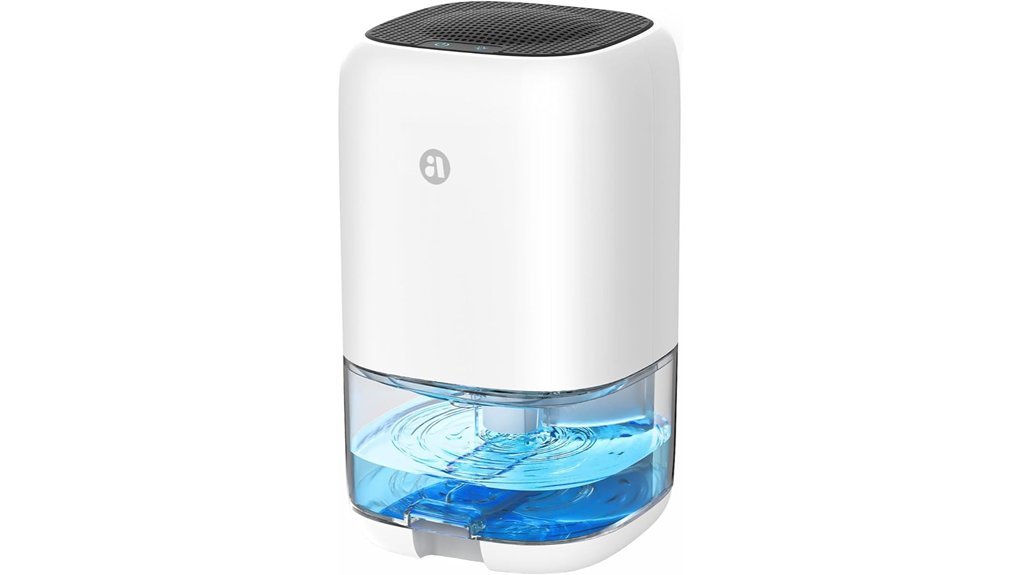
The TABYIK 35 OZ is a better fit when floor space and storage matter more than maximum extraction. At approximately 5.9 x 5.9 x 10.1 inches, it can sit on a stable counter or shelf in a small fifth wheel without taking over the living area. Its thermoelectric design has no compressor, making it suitable for light condensation and everyday humidity in warm conditions.
The manufacturer lists collection of up to 16 ounces per day at 86°F and 80% relative humidity. Real-world removal will be lower in cooler or less humid air, so this is not the right choice for active leaks, soaked materials, or severe whole-coach dampness. A visible 35-ounce tank and automatic full-tank shutoff simplify routine use.
Why You’ll Like It: It is small, simple, and easy to move between the bedroom, bathroom, and closet area.
Best For: Small fifth wheels, occasional trips, and mild seasonal condensation.
Who Should Avoid It: Full-time RVers in very humid climates who need rapid moisture removal.
Pros:
- Compact footprint for tight RV interiors.
- Built-in handle and simple controls.
- Automatic shutoff helps prevent tank overflow.
- Seven-color light can be turned off when not needed.
Cons:
- Much lower extraction than a compressor dehumidifier.
- Performance drops in cooler conditions.
- Requires frequent tank checks during humid weather.
Best Heavy-Duty with Auto-Defrost: PLUSCENT 32 Pint Dehumidifier
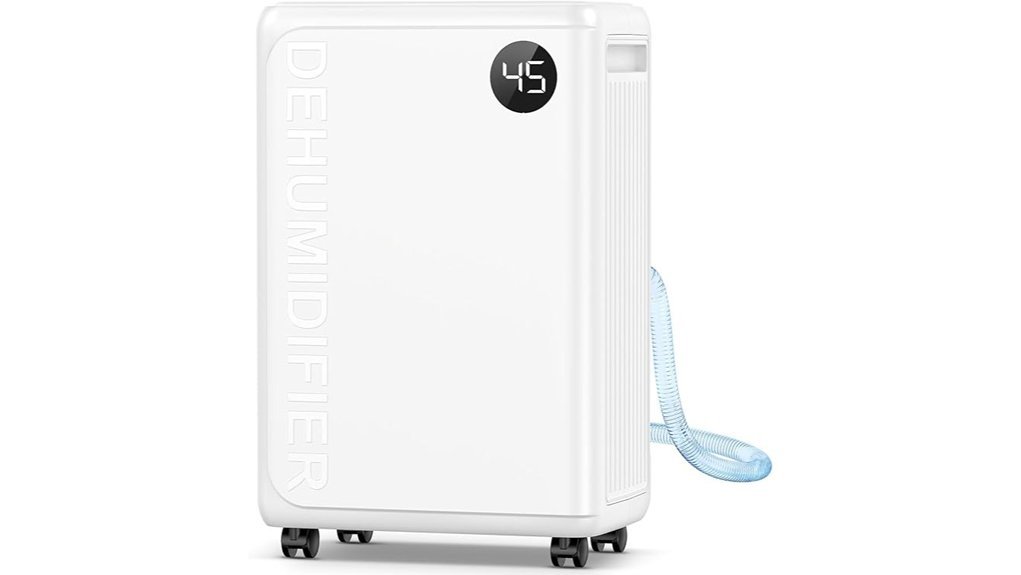
The PLUSCENT 32 Pint is aimed at buyers who need stronger moisture control than a compact RV dehumidifier can provide. It is listed for up to 32 pints per day at 95°F and 90% relative humidity and includes DEHU, CONT, and DRY modes, adjustable humidity control, a 24-hour timer, auto-defrost, and auto-restart.
Its 2-liter tank is useful for short runs, but continuous drainage is the better choice for long stays. Published listings describe it as a quiet model, but a consistent manufacturer sound rating could not be confirmed, so buyers who are sensitive to noise should verify the current listing and return policy before purchase.
Why You’ll Like It: It combines high listed extraction, continuous drainage, and automatic controls for extended stationary use.
Best For: Large fifth wheels parked in humid areas with dependable shore power and a practical drain route.
Who Should Avoid It: Owners of small rigs who cannot spare floor space or who mainly camp off-grid.
Pros:
- Up to 32 pints per day at the manufacturer’s stated high-temperature, high-humidity test condition.
- Continuous drainage and automatic restart.
- Auto-defrost for cooler operating conditions.
- Child lock and washable filter.
Cons:
- Published listings place it in a heavier class than the 21-pint options, so lifting and storage require more planning.
- May be excessive for occasional light condensation.
- Needs careful placement so air intake and exhaust are not blocked.
Best for Severe Humidity: VEAGASO 34-Pint Dehumidifier
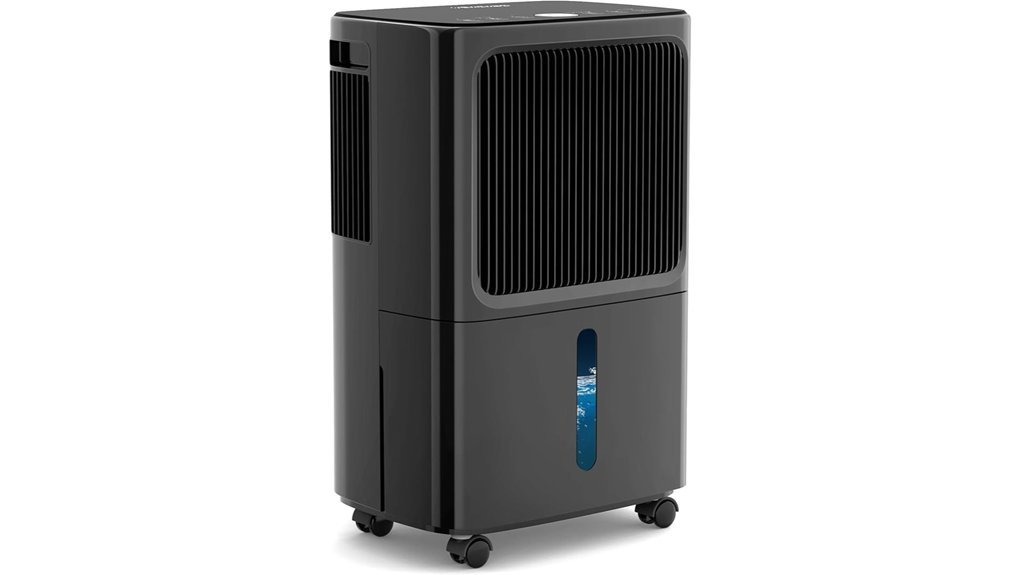
The VEAGASO 34 Pint is the highest-capacity option in this guide. Its manufacturer-listed output of up to 34 pints per day under high-temperature, high-humidity test conditions gives it more headroom for full-time living, humid coastal areas, wet-weather storage, or a large fifth wheel with recurring condensation.
Three modes, an adjustable humidistat, a 24-hour timer, touchscreen controls, and manual or continuous drainage make it easy to configure for longer stationary stays. Wheels and handles help with repositioning, but its basement-style design is still much larger than a compact RV unit.
Why You’ll Like It: It is designed to pull moisture quickly when smaller units cannot keep up.
Best For: Large fifth wheels with persistent humidity, especially when parked for weeks or months.
Who Should Avoid It: Travelers who prioritize minimum weight, low power use, or easy daily storage.
Pros:
- Highest manufacturer-listed daily extraction in this roundup.
- Adjustable humidity control and three operating modes.
- Manual tank or continuous drain-hose operation.
- Wheels and handles improve movement inside a large rig.
Cons:
- Oversized for many fifth-wheel interiors.
- Power consumption was not clearly verified from the available product information.
- Requires measurement and circuit planning before purchase.
Best Mid-Capacity Alternative: GoGuess 21-Pint Dehumidifier
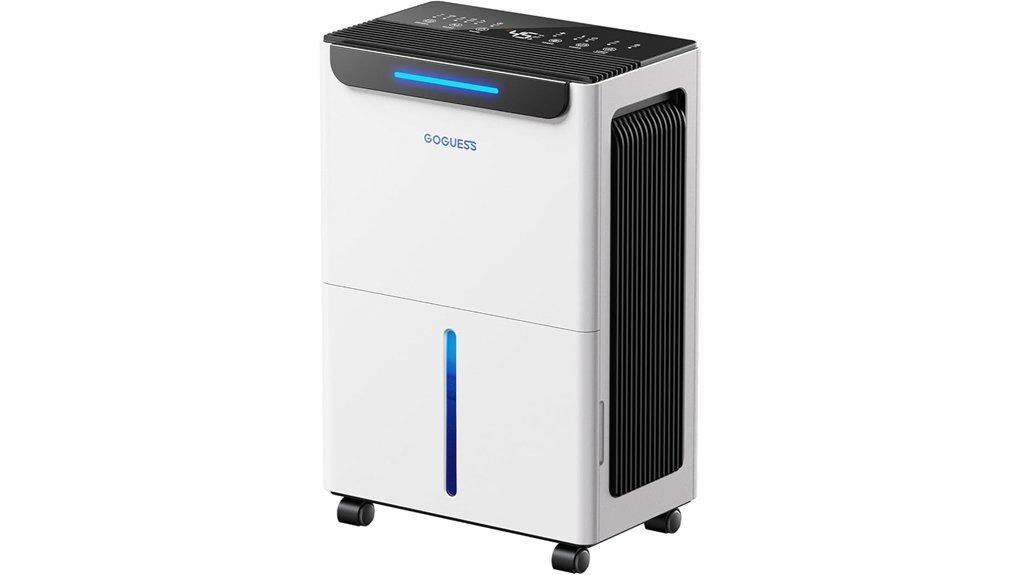
The GoGuess 21 Pint is another whole-coach compressor option for buyers comparing the 20-pint class. It is listed to remove up to 21 pints per day at 95°F and 90% relative humidity and includes three operating modes, adjustable humidity control, a collection tank, and continuous-drain support.
Published listings place its weight at about 17.5 pounds. That puts it closer to the Aiusevo than to the heavier PLUSCENT, although it still needs a level operating position and a secure storage plan before travel.
Why You’ll Like It: It provides compressor-level output without moving up to the heavier 32- or 34-pint class.
Best For: Owners who want a second mid-capacity choice for regular humidity control while parked.
Who Should Avoid It: Buyers who cannot confirm the current dimensions, nameplate power draw, or a suitable drain route for their specific rig.
Pros:
- Up to 21 pints per day under listed test conditions.
- Three operating modes for regular, faster, or lower-noise operation.
- Manual and continuous drainage options.
- Adjustable target humidity.
Cons:
- Current power-draw details were not clearly verified from the available published information.
- Coverage claim is far larger than most RV interiors and should not drive the buying decision.
- Still requires secure storage or tie-down planning before towing.
Factors to Consider When Choosing a Dehumidifier for a Fifth Wheel
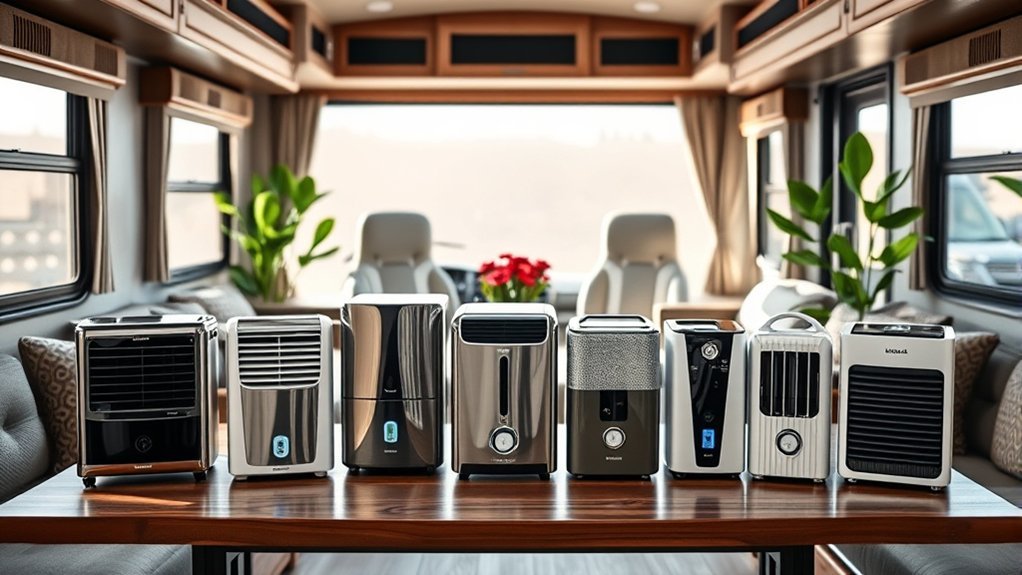
A fifth wheel has different constraints than a basement or bedroom. Before choosing a unit, compare extraction capacity, physical size, drainage, noise, temperature limits, and power demands against your actual camping setup.
Whole-Coach Moisture Load
Decide whether you are addressing mild seasonal condensation or persistent dampness throughout the living area. Thermoelectric units suit light moisture in small, warm spaces. Compressor units remove water faster and are the better fit for recurring condensation, full-time use, or humid climates.
Moisture-Removal Capacity
Pints-per-day ratings are measured under specified temperature and humidity conditions, and different listings may use conditions that are warmer and wetter than normal RV interiors. A unit will usually collect less water in cooler or drier real-world conditions. Compare the stated test condition as well as the headline capacity.
Physical Size and Secure Placement
Measure the intended location, including clearance around the intake and exhaust. Keep the unit on a level, stable surface and away from bedding, curtains, or furniture that could restrict airflow. Secure or store the appliance before towing so it cannot become a projectile.
Power Source and Circuit Load
Do not choose by coverage rating alone. Check the nameplate wattage and amperage, then consider what else shares the RV circuit. A compressor dehumidifier may compete with the air conditioner, microwave, electric water heater, converter, or space heater. Off-grid users should calculate inverter and battery demand before purchase.
RV Power Checklist
- Read the appliance nameplate rather than estimating from the coverage claim.
- Confirm the outlet is grounded and the circuit is not already near its limit.
- Plan for compressor startup load as well as normal running load.
- For inverter use, include conversion losses and the desired runtime in the battery calculation.
Drainage Options
A removable tank works for occasional use, but a drain hose is more convenient during long stays. Gravity drainage requires a continuous downhill path to a safe discharge point. Never route condensate where it can damage the RV, create a slip hazard, or violate campground rules.
Operating Temperature
Compressor dehumidifiers can lose efficiency or frost in cool conditions. Check the manufacturer’s minimum operating temperature and look for auto-defrost if you camp in cold weather. Thermoelectric models also remove less moisture when temperatures drop.
Noise Level
Noise is more noticeable in a fifth wheel than in a large room. Compare listed decibel ratings when available, but also consider placement, fan speed, vibration, and whether the unit will run near the bed. A timer or sleep mode can reduce disruption.
Humidity Target and Moisture Source
A practical indoor target is generally around 30% to 50% relative humidity. Use a separate hygrometer to check conditions instead of relying only on the appliance display. A dehumidifier can manage airborne moisture, but it cannot repair roof leaks, plumbing leaks, wet insulation, failed seals, or existing mold contamination. For general moisture guidance, see the EPA’s mold and moisture recommendations.
Safety Note
- Use the supplied power adapter or cord and follow the manufacturer’s clearance instructions.
- Do not use an extension cord unless the manufacturer explicitly permits it.
- Keep air inlets and outlets clear.
- Do not operate a damaged unit or one that has tipped, leaked, or has a compromised cord.
- Secure the appliance before moving the fifth wheel.
How We Selected These Options
The products were compared using published specifications and fifth-wheel buyer concerns: moisture-removal type, stated test conditions, listed capacity, physical footprint, drainage, automatic humidity control, operating modes, portability, and whether the product has a realistic use inside an RV. No claim of hands-on testing is made. Large square-foot ratings were treated as marketing context rather than proof that a unit is the best fit for a compact RV. Claims that could not be confirmed consistently, including exact sound levels or power draw for some models, were not used as primary ranking factors.
Frequently Asked Questions
What Size Dehumidifier Do I Need for a Fifth Wheel?
For mild condensation in a small, warm rig, a compact thermoelectric model may be enough. For recurring dampness, full-time use, or humid climates, a 20- to 35-pint compressor unit offers more removal capacity. Choose by actual moisture load, physical dimensions, test conditions, power draw, drainage, and operating temperature rather than square-foot coverage alone.
How Often Should I Empty the Water Tank?
Check it at least daily until you learn how quickly it fills in your conditions. During very humid weather, a small tank may fill in hours. Use full-tank auto shutoff as a backup, not as a reason to ignore the unit. Continuous drainage can reduce maintenance during long stationary stays.
Can a Dehumidifier Prevent Mold in My Fifth Wheel?
It can reduce excess humidity and condensation, which helps make conditions less favorable for mold growth. It cannot fix leaks, dry hidden wet insulation instantly, or remove existing mold. Correct the moisture source and clean or remediate affected materials as needed.
Can a Dehumidifier Reduce Allergens in My Fifth Wheel?
A dehumidifier is not an air purifier and does not directly capture pollen, pet dander, or dust. Lower humidity may help limit damp conditions that support mold and dust mites, but filtration, cleaning, ventilation, and moisture-source control are separate steps.
Can I Run a Dehumidifier While Towing?
Do not assume that a portable household dehumidifier is designed for operation in a moving RV. Follow the manufacturer’s instructions, switch it off before travel unless mobile use is explicitly allowed, empty the tank, and secure the unit so it cannot shift.
Are Compressor Dehumidifiers Too Large for a Fifth Wheel?
Not always. They are often the most effective option for severe humidity, but they require more space and power than mini models. Measure carefully and confirm the electrical load before purchasing. A high square-foot rating does not automatically mean the unit is a poor fit, but it often signals a larger cabinet and higher power demand.
Is Continuous Drainage Worth It?
Yes, especially for full-time living, storage, or extended campground stays. It reduces tank-emptying chores, but the hose must slope downward continuously unless the unit includes a pump. Route water to an approved location and inspect the hose regularly for kinks or clogs.
What Maintenance Is Required?
Empty and rinse the tank, clean or wash the filter according to the manual, keep the intake and exhaust free of dust, inspect the drain hose, and check the cord for damage. Before storage or travel, dry the tank and secure the unit upright.
Final Recommendation
Choose the Aiusevo AS280 when you want the best balance of compressor-level moisture removal, automatic humidity control, and manageable size for a parked fifth wheel.
Choose the TABYIK 35 OZ for a smaller rig with light condensation and limited floor space.
Choose the GoGuess 21 Pint when you want another mid-capacity compressor option and its dimensions, controls, and electrical requirements fit your rig.
Choose the PLUSCENT or VEAGASO when persistent humidity justifies a larger, heavier unit and you have dependable shore power plus a safe drainage route.
The most effective setup combines the right dehumidifier with ventilation, leak repair, dry storage habits, and a separate hygrometer. Measure the installation space, verify the electrical load, and match the unit to the actual moisture problem rather than the largest advertised coverage number.