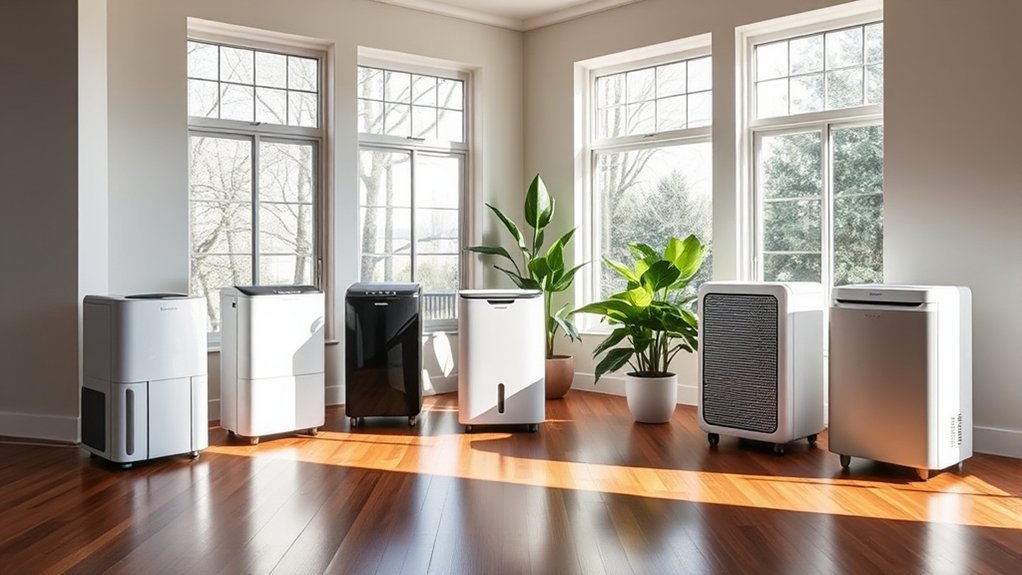
If you need a powerful dehumidifier for a large basement, crawl space, garage, restoration job, or whole-home area, compare standardized moisture-removal capacity, drainage type, energy efficiency, and the conditions behind each advertised pint rating. The models below range from portable residential units to commercial LGR machines, so the best choice depends on whether you need quiet everyday humidity control, upward pump drainage, or faster water-damage drying.
Affiliate disclosure: This article contains Amazon affiliate links. We may earn a commission from qualifying purchases at no extra cost to you.
Quick Verdict
- Best for residential basements: Vellgoo Max 140 Pint for strong large-room features, gravity drainage, and ENERGY STAR Most Efficient 2025 recognition.
- Best residential model with a pump: AEOCKY LEO-001 for its included 5-meter pump hose and hands-off drainage.
- Best for restoration work: ALORAIR 180 PPD for its 85-pint AHAM rating, 210 CFM airflow, and commercial condensate pump.
Important capacity note: Advertised numbers such as 80, 125, 140, 150, or 180 pints may be measured under very hot and humid conditions. AHAM or DOE ratings use different test conditions and are better for comparing models directly. Also, moisture-removal capacity is not the same as water-tank size.
Quick Comparison
| Model | Capacity Reference | Drainage | Best For | Amazon |
|---|---|---|---|---|
| ALORAIR Commercial | 85 PPD AHAM; up to 180 PPD at saturation | Built-in pump; 19.6-ft hose; up to 14.7-ft lift | Flood restoration, crawl spaces, job sites | Check Details |
| Fehom JD025L-80 | Up to 80 PPD advertised; 24.93 PPD ENERGY STAR capacity | 1.06-gal tank or 3.3-ft gravity hose | Simple home use with a tank and hose option | Check Details |
| Vellgoo Max 140 Pint | Up to 140 PPD at 95°F and 95% RH | 1.65-gal tank or gravity drain hose | Large residential basements and garages | Check Details |
| AEOCKY LEO-001 | Up to 80 PPD at 95°F and 95% RH | Built-in pump with included 5-meter hose | Basements without a convenient floor drain | Check Details |
| Waykar 150 Pint | Up to 150 PPD at 95°F and 90% RH | Built-in pump, gravity hose, or 1.85-gal tank | Very large homes, warehouses, and wet basements | Check Details |
| HBN Crawl Space | 60 PPD AHAM; up to 125 PPD at 95°F and 90% RH | 6.6-ft gravity hose or pump with up to 16.4-ft lift | Crawl spaces and hard-to-reach drain locations | Check Details |
| Mounto 150 Pint LGR | 80 PPD AHAM; up to 150 PPD at saturation | Built-in pump with up to 15-ft lift | Commercial drying and stackable transport | Check Details |
ALORAIR Commercial Dehumidifier with Pump — Best for Water-Damage Restoration
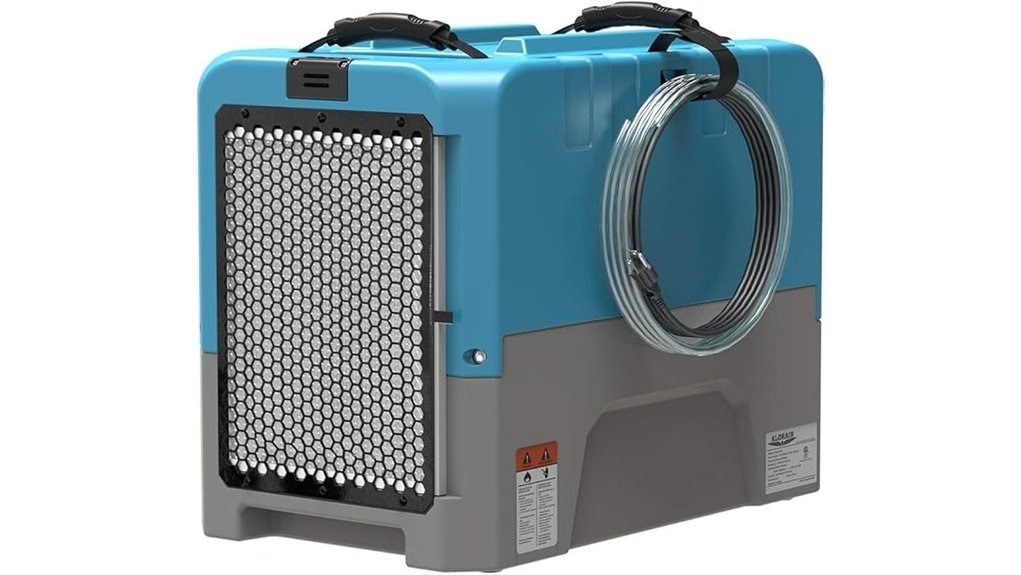
Why You’ll Like It: The ALORAIR is built for situations where fast airflow, continuous pump drainage, and a rugged commercial format matter more than a large collection bucket. It is rated at 85 pints per day under AHAM conditions and up to 180 pints at saturation, with 210 CFM airflow for crawl spaces, basements, and restoration jobs up to the manufacturer’s stated 2,300 sq. ft.
The condensate pump uses a 19.6-foot drain hose and can lift water up to 14.7 feet, which gives you more placement flexibility than gravity drainage. Auto defrost, memory restart, carrying handles, and a compact LGR body support job-site use. At 64.3 pounds, however, it is portable in a commercial sense rather than lightweight. The current manufacturer warranty is described as a 6-year limited warranty, so review the coverage terms before purchase.
Best For: Contractors, restoration crews, and homeowners drying a wet basement or enclosed crawl space.
Who Should Avoid It: Buyers who only need a quiet portable unit for a bedroom or a mildly damp small room.
Pros:
- 85 PPD AHAM rating provides a clearer performance benchmark than saturation capacity alone.
- Built-in pump supports upward drainage with a long included hose.
- Compact LGR form, auto defrost, memory restart, and 210 CFM airflow suit demanding drying work.
Cons:
- Its 64.3-pound weight can be awkward on stairs or during frequent moves.
- Commercial airflow and sound may be excessive for occupied living spaces.
- It relies on continuous drainage rather than a practical household collection tank.
Fehom 80 Pint Energy Star Dehumidifier (JD025L-80) — Best Simple Tank Option
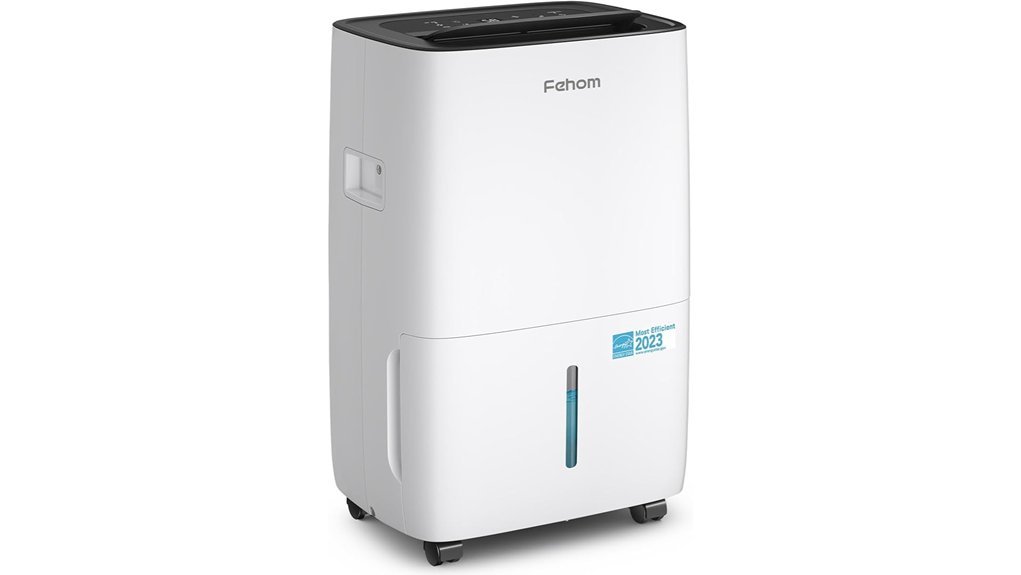
Why You’ll Like It: The Fehom JD025L-80 combines a 1.06-gallon bucket, a 3.3-foot gravity drain hose, wheels, handrails, and a washable filter in a familiar portable design. The Amazon listing advertises up to 80 pints per day in hotter, more humid conditions and coverage up to 5,000 sq. ft.
For an apples-to-apples comparison, note that the EPA ENERGY STAR listing gives this model a standardized water-removal capacity of 24.93 pints per day. It is ENERGY STAR certified, but it is not listed as an ENERGY STAR Most Efficient model. That does not make it a poor choice; it simply means shoppers should not compare its advertised 80-pint figure directly with an AHAM or DOE rating from another machine.
Best For: Homeowners who want a movable unit with both manual bucket collection and simple gravity drainage.
Who Should Avoid It: Buyers who need a built-in pump, commercial drying speed, or a long included drain hose.
Pros:
- ENERGY STAR certified with a published standardized capacity.
- Includes a 1.06-gallon tank, gravity drain hose, wheels, and washable filter.
- Touch controls and portable construction are easier for everyday household use.
Cons:
- The 80-pint marketing figure is not the standardized DOE capacity.
- The included 3.3-foot hose limits placement unless you add a compatible longer hose.
- No built-in pump for upward drainage.
Vellgoo Max 140 Pint Dehumidifier — Best Overall for Large Residential Spaces
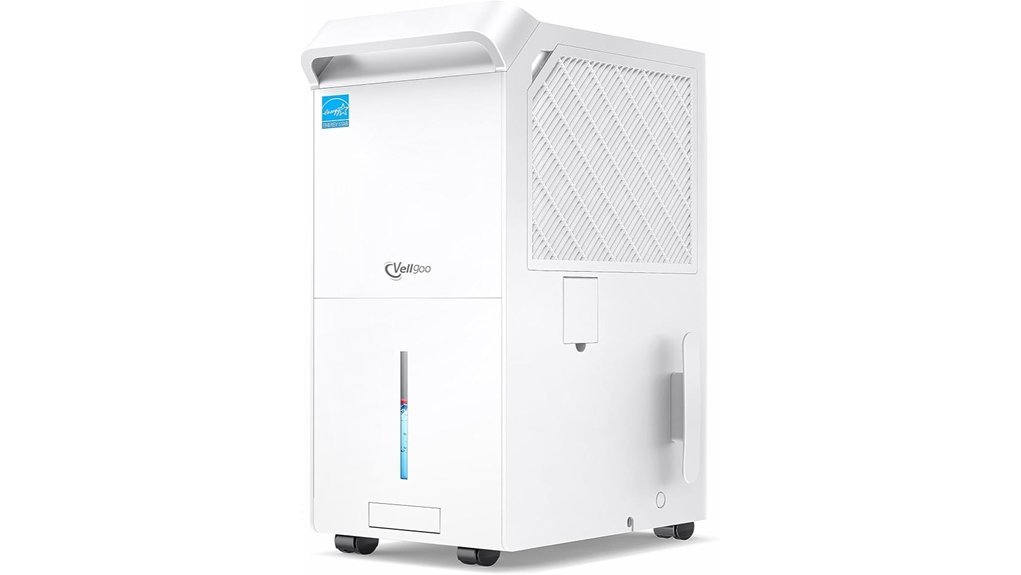
Why You’ll Like It: The Vellgoo Max is a strong residential choice when you want a large bucket, gravity drainage, multiple operating modes, and verified efficiency. The listing advertises up to 140 pints per day at 95°F and 95% RH and coverage up to 6,000 sq. ft. Its 1.65-gallon tank is larger than several competing portable units.
The unit includes custom, continuous, comfort, and sleep-style controls, plus auto defrost, auto restart, auto shutoff, wheels, and a drain hose. ENERGY STAR identifies the related Vellgoo high-capacity platform as a Most Efficient 2025 model. This particular Amazon configuration uses bucket or gravity-hose drainage, so do not assume it includes the pump sold with some other Vellgoo variants.
Best For: Large basements, garages, laundry areas, and open residential spaces with access to a low drain.
Who Should Avoid It: Buyers who must pump water upward to a sink or window.
Pros:
- Large 1.65-gallon tank reduces bucket-emptying frequency.
- ENERGY STAR Most Efficient 2025 positioning supports lower long-run energy use.
- Multiple modes, casters, auto restart, and gravity drainage improve everyday convenience.
Cons:
- The 140-pint figure reflects extreme test conditions rather than a standard basement test.
- This ASIN does not emphasize a built-in pump.
- The larger cabinet needs more floor space than a compact crawl-space unit.
AEOCKY LEO-001 Dehumidifier with Pump — Best Energy-Efficient Pump Pick
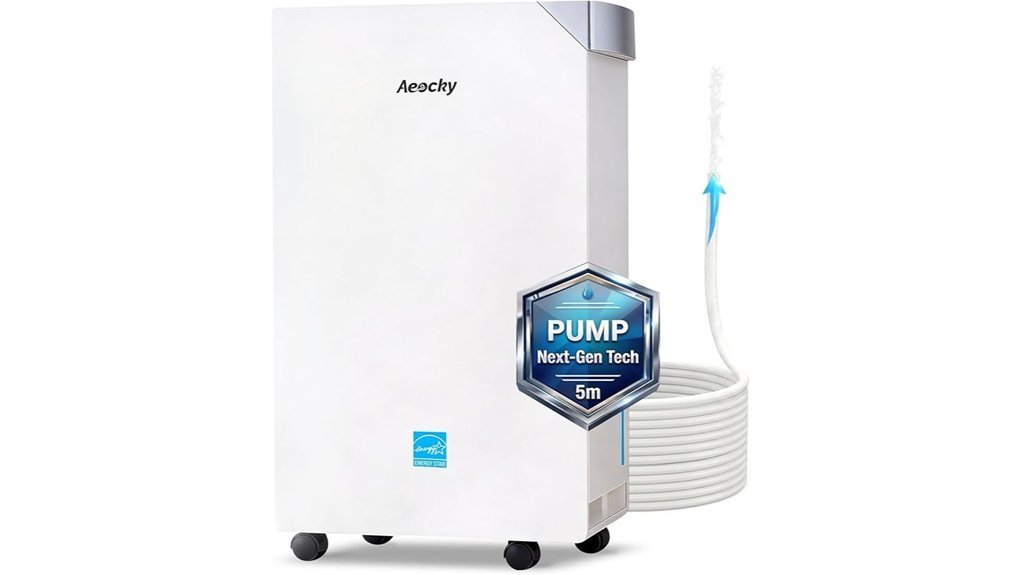
Why You’ll Like It: The AEOCKY LEO-001 solves a common basement problem: the drain is higher or farther away than a gravity hose can reach. Its built-in pump comes with a 5-meter hose, allowing water to be routed upward without repeatedly emptying a bucket.
The listing advertises up to 80 pints per day at 95°F and 95% RH, up to 56 pints at 86°F and 80% RH, and coverage up to 4,500 sq. ft. It is identified as an ENERGY STAR Most Efficient 2025 model and includes an intelligent humidistat, power-off memory, auto drainage, and a removable pump nozzle intended to simplify maintenance. Capacity still varies with room temperature and humidity, so size it for the real conditions in your basement.
Best For: Homeowners who want efficient continuous drainage where a floor drain is unavailable.
Who Should Avoid It: Buyers with a nearby floor drain who can save money with a simpler gravity-drain unit.
Pros:
- Included pump and 5-meter hose provide flexible upward drainage.
- ENERGY STAR Most Efficient 2025 recognition supports an efficiency-focused purchase.
- Humidity control, power-off memory, and low-maintenance drainage suit unattended spaces.
Cons:
- Pump systems add cost and more components to maintain.
- The 80-pint maximum is measured under unusually hot, humid conditions.
- No Wi-Fi or dedicated app control is stated for this model.
Waykar 150 Pint Dehumidifier with Pump — Best for Very Large Areas
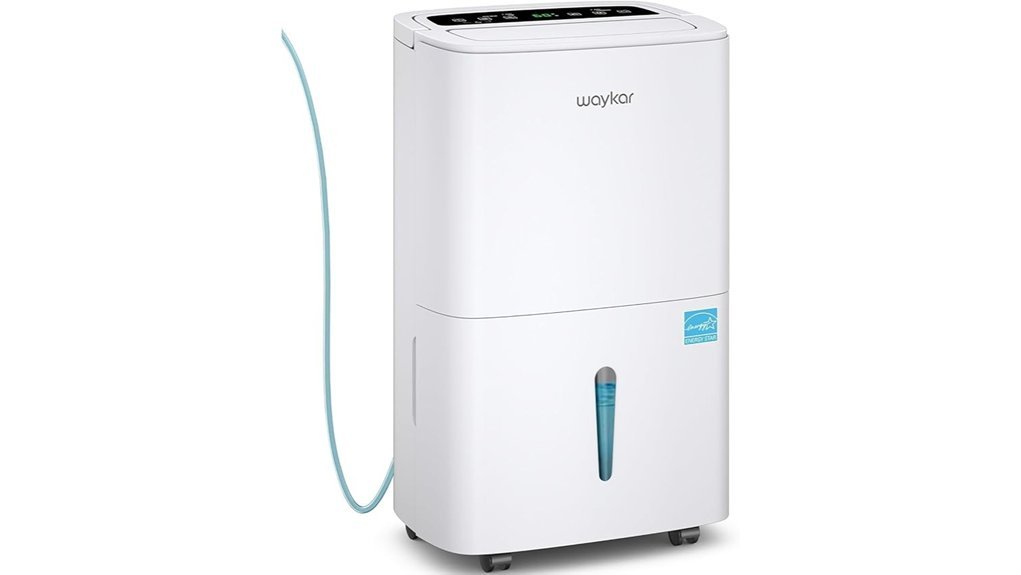
Why You’ll Like It: Waykar’s high-output model offers three practical water-removal choices: a built-in pump, a gravity drain hose, or a 1.85-gallon tank. The manufacturer advertises up to 150 pints per day at 95°F and 90% RH and coverage up to 7,000 sq. ft.
The pump can route water upward through a hose of up to 16.4 feet, while adjustable humidity control, auto defrost, self-drying, a timer, casters, and a handle support long-term basement or commercial use. The listing identifies the unit as ENERGY STAR certified. Because Waykar sells several similar 150-pint versions, confirm the exact model number, tank size, pump hose, and certification shown on the checkout page.
Best For: Large homes, storage spaces, warehouses, and wet basements that need flexible drainage.
Who Should Avoid It: Small-room users who would pay for capacity and pump features they do not need.
Pros:
- Pump, gravity hose, and collection tank provide flexible installation.
- Advertised high-temperature capacity suits severe humidity loads.
- Auto defrost, self-drying, timer, wheels, and adjustable humidistat improve usability.
Cons:
- The 150-pint figure should not be compared directly with AHAM or DOE ratings.
- Multiple similar Waykar variants can make model verification confusing.
- A large-capacity unit takes more floor space and may use more energy than necessary in a small area.
HBN Crawl Space Dehumidifier with Pump — Best for Confined Spaces
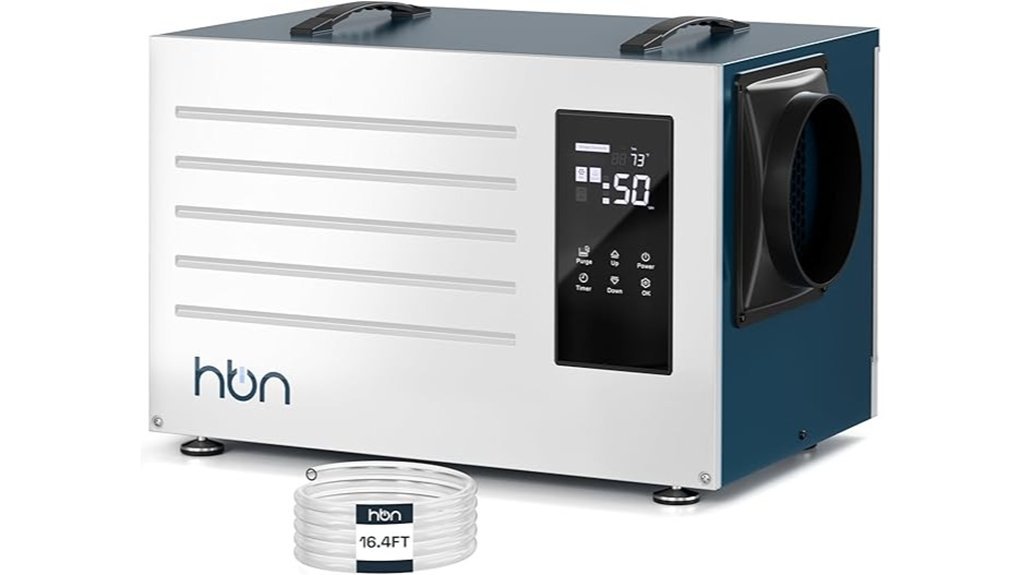
Why You’ll Like It: The HBN is shaped and equipped for crawl spaces, basements, workshops, and other areas where a household upright unit may be inconvenient. It is rated at 60 pints per day under AHAM conditions and up to 125 pints at 95°F and 90% RH, with manufacturer-stated coverage up to 5,900 sq. ft.
You can use the 6.6-foot gravity hose for downward drainage or the built-in pump for a lift of up to 16.4 feet. Automatic defrost, outage memory, adjustable footpads, a metal handle, touchscreen controls, and a timer reduce the amount of daily attention it needs. The model is much better suited to continuous drainage than manual bucket use.
Best For: Encapsulated crawl spaces, utility basements, workshops, and remote drainage points.
Who Should Avoid It: Buyers who want a living-room-friendly design, large removable bucket, or lightweight portability.
Pros:
- 60 PPD AHAM rating offers a useful standardized comparison point.
- Dual drainage supports both gravity flow and substantial upward pump lift.
- Low-profile metal construction, auto defrost, and memory restart fit unattended spaces.
Cons:
- Commercial-style construction may be bulky for a small crawl space opening.
- Remote control is not necessarily included with every configuration.
- Coverage claims depend heavily on temperature, humidity, layout, and airflow.
Mounto 150 Pint Commercial Dehumidifier — Best Stackable LGR Pick
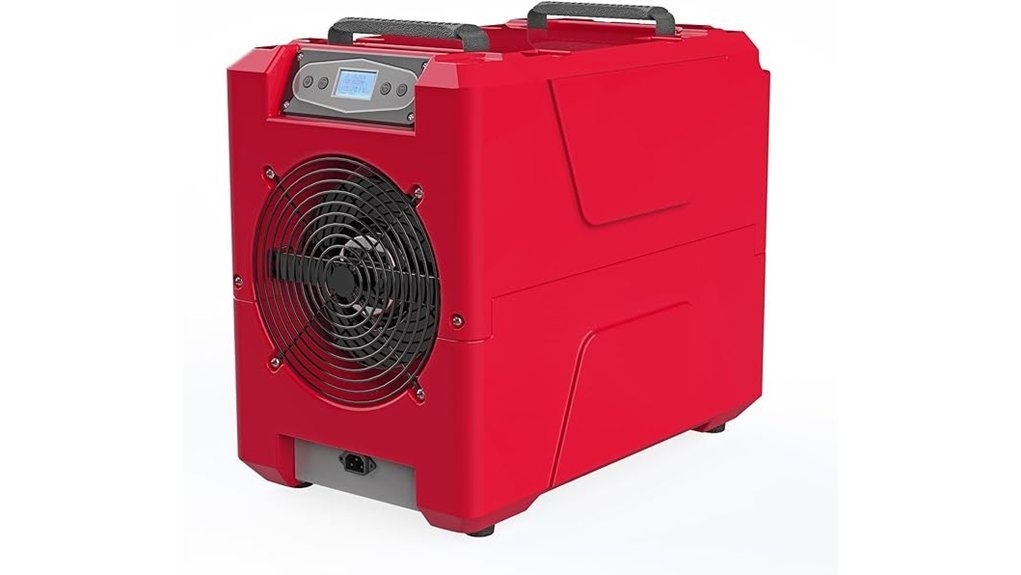
Why You’ll Like It: Mounto’s compact LGR design is intended for water-damage restoration, construction drying, warehouses, and demanding basements. It removes 80 pints per day under AHAM conditions and up to 150 pints at saturation, with 350 CFM airflow and a manufacturer-listed 2,500 sq. ft. coverage area.
The built-in pump can lift condensate up to 15 feet, and the unit supports continuous or target-humidity modes, memory restart, and stackable transport. A 25-foot power cord and included drain hose help on job sites. It weighs 65 pounds and draws a listed 550 watts, so it is more appropriate for serious drying than casual room-to-room use.
Best For: Restoration professionals and property owners who need high airflow in a compact stackable body.
Who Should Avoid It: Apartment, bedroom, and small-room users seeking quiet household operation.
Pros:
- 80 PPD AHAM capacity and 350 CFM airflow suit heavy drying loads.
- Built-in pump, memory restart, and target-humidity mode reduce supervision.
- Stackable construction, long power cord, and compact footprint help transport and setup.
Cons:
- At 65 pounds, it is not easy to carry frequently.
- Commercial airflow and operating sound may be intrusive in occupied rooms.
- The small internal reservoir is for pump operation, not convenient manual collection.
How to Choose a High-Capacity Dehumidifier
Start with the actual moisture load, not the largest number printed in a product title. A damp finished basement, an encapsulated crawl space, and an active flood-restoration job require different airflow, drainage, noise, and portability features.
Compare Capacity Under the Same Test Standard
Dehumidifier capacity is measured in pints removed over 24 hours, but manufacturers may publish results from different temperatures and humidity levels. A model advertised at 150 pints in extreme heat and humidity may have a much lower DOE or AHAM rating under cooler conditions. Use standardized ratings for direct comparisons and treat extreme-condition figures as maximum-load references.
Treat Coverage Area as an Estimate
Square-foot claims are useful starting points, not guarantees. Ceiling height, open doors, air leaks, ground moisture, standing water, room temperature, and airflow all affect performance. For a divided basement or crawl space, air circulation may matter as much as the published coverage number.
Choose the Right Drainage Method
A bucket gives you placement flexibility but needs regular emptying. A gravity hose works continuously only when the drain is lower than the outlet and the hose maintains a downward slope. A built-in pump is worth paying for when water must travel upward to a sink, window, or elevated drain.
Check ENERGY STAR and IEF
ENERGY STAR certification verifies that a model meets efficiency requirements for its category. For closer comparisons, look at the Integrated Energy Factor (IEF), which measures liters of water removed per kilowatt-hour while accounting for operating and standby energy. Confirm that the exact model number—not merely the brand or product family—appears in the certification database.
Consider Portability, Noise, and Maintenance
Residential upright models usually offer wheels, a removable bucket, and easier controls. Commercial LGR units may be compact and stackable but can still weigh 60 pounds or more. Check filter access, hose routing, pump-cleaning instructions, operating temperature, cord length, and sound level before placing a unit near bedrooms or living areas.
Before You Buy Checklist
- Measure the space and identify the main moisture source.
- Compare DOE or AHAM capacity whenever available.
- Confirm whether the exact ASIN includes a pump, gravity hose, or both.
- Measure the required vertical lift and hose distance to the drain.
- Check tank size, dimensions, weight, operating temperature, and filter access.
- Verify current ENERGY STAR status and warranty terms for the exact model.
Frequently Asked Questions
What Do 80-, 125-, 140-, and 150-Pint Ratings Mean?
They describe how much water the machine can remove in 24 hours under specified test conditions. Always check the temperature and relative humidity used for the claim. Do not confuse daily removal capacity with the much smaller collection-bucket size.
How Often Does the Bucket Need to Be Emptied?
It depends on bucket size, room humidity, temperature, and runtime. In a wet basement, a one- to two-gallon tank can fill more than once per day. Continuous gravity or pump drainage is the better choice for unattended operation.
Can a Large Dehumidifier Run Continuously?
Yes, when the manufacturer permits continuous mode and drainage is installed correctly. Keep the air intake clear, clean the filter on schedule, inspect the hose for kinks or clogs, and use a realistic humidity set point so the compressor can cycle when conditions improve.
What Humidity Level Should I Use in a Basement?
A starting target around 45% to 50% relative humidity works for many basements, but the right setting depends on climate, temperature, building materials, and condensation risk. Avoid driving the space unnecessarily dry, which wastes energy.
Will a Dehumidifier Remove Existing Mold?
No. A dehumidifier can reduce the moisture that supports future mold growth and musty odors, but it does not remove existing contamination or repair a leak. Correct the water source and clean or remediate affected materials appropriately.
How Can I Estimate Electricity Use?
Multiply the unit’s wattage by daily operating hours, then divide by 1,000. For example, a 600-watt machine running for eight hours uses about 4.8 kWh. Actual use is lower when the humidistat allows the compressor to cycle off.
Conclusion
Choose the Vellgoo Max 140 Pint for a large residential basement with gravity drainage, the AEOCKY LEO-001 when you need an efficient built-in pump, or the ALORAIR Commercial Dehumidifier for restoration work and high airflow. The Waykar, HBN, and Mounto models make more sense for severe humidity, difficult drain routes, crawl spaces, or commercial drying, while the Fehom offers a simpler tank-and-hose setup.
Before ordering, compare capacity under the same test standard and confirm the exact model’s pump, hose, tank, certification, dimensions, warranty, and current Amazon configuration. That final check prevents an impressive marketing number from hiding a poor fit for your space.