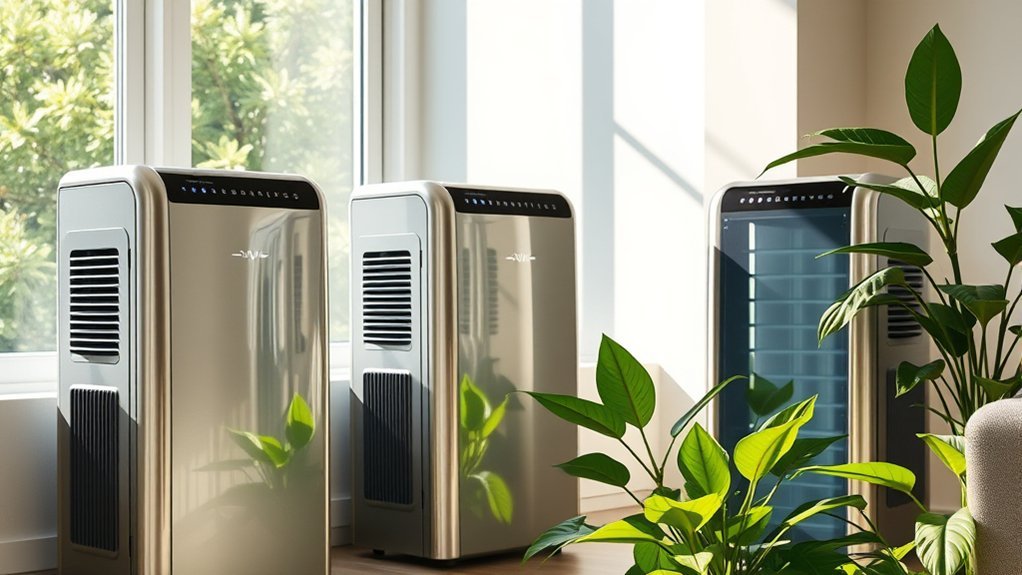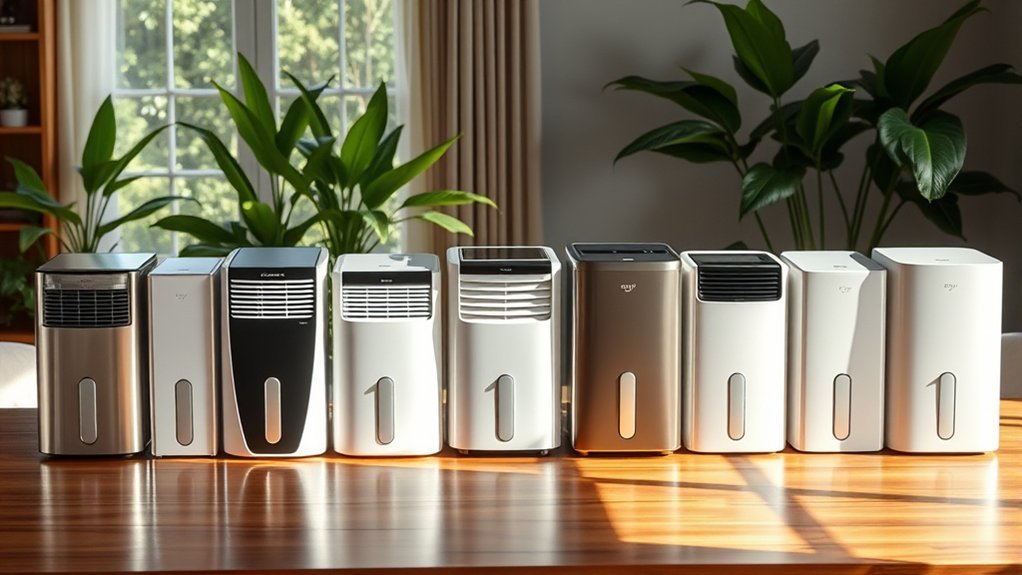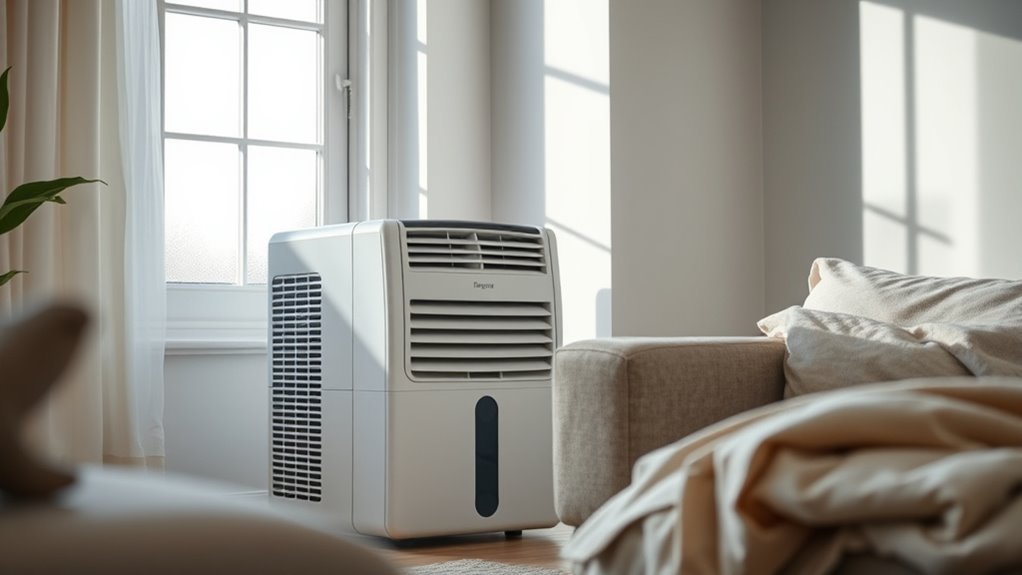
What is a dehumidifier? It is an electrical appliance that removes excess moisture from indoor air so your home feels drier, smells fresher, and stays less friendly to mold and dust mites. Most homes should aim for about 30% to 50% indoor relative humidity, with the lower end often better in cold weather to reduce window condensation. A dehumidifier helps, but it works best when you also fix leaks, improve ventilation, and remove any existing mold safely.
Quick Answer
A dehumidifier pulls damp air into the unit, removes water vapor, collects that water in a tank or drain, and sends drier air back into the room. It is useful for basements, bathrooms, laundry areas, humid climates, and any space with musty odors, condensation, or high humidity readings.
Key Takeaways
- Set most dehumidifiers around 45% to 50% RH; avoid letting indoor humidity stay above 50% to 60% for long periods.
- Choose capacity by room size and dampness level, not by square footage alone.
- Look for an ENERGY STAR certified model, a built-in humidistat, automatic shutoff, and a drain option if you do not want to empty a tank daily.
- A dehumidifier helps control moisture, but it does not repair leaks, remove existing mold, or replace proper ventilation.
At a Glance
| Time Required | 10–20 minutes to choose placement and settings; 5–10 minutes for routine weekly care. |
| Difficulty | Easy for portable units; professional installation recommended for whole-home systems. |
| Tools Needed | Hygrometer, grounded outlet, optional drain hose or condensate pump, soft cloth, vacuum brush, and clean filter. |
| Cost | Unit cost varies by capacity and features; ongoing costs are electricity, optional filters, and optional drainage accessories. |
What Is a Dehumidifier?
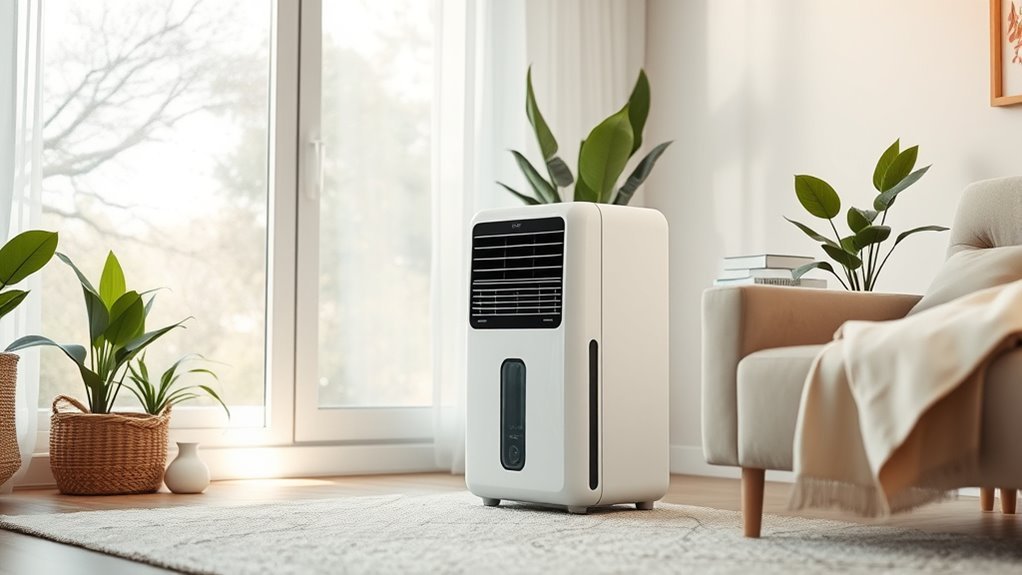
A dehumidifier is an appliance that lowers indoor humidity by removing water vapor from the air. The water collects in a removable bucket, flows through a drain hose, or moves through a pump, depending on the model. The drier air then returns to the room.
The goal is not to make the air bone-dry. The goal is to keep relative humidity in a healthy, comfortable range. The U.S. Environmental Protection Agency recommends keeping indoor humidity below 60% and ideally between 30% and 50% to help control moisture and mold risk. The CDC advises keeping home humidity no higher than 50% all day long to help prevent mold growth.
Use a dehumidifier in spaces that feel damp, smell musty, show condensation, or regularly test above 50% RH on a hygrometer. Common trouble spots include basements, crawl-space-adjacent rooms, bathrooms, laundry rooms, storage rooms, and homes in humid climates.
Moisture control is the real mold-control strategy: a dehumidifier helps lower humidity, but leaks, wet materials, and poor ventilation still need to be fixed.
How Does a Dehumidifier Work?
Most home dehumidifiers are refrigerant dehumidifiers. They work like this:
- Fan pulls warm, humid air into the unit.
- Air passes over cold coils.
- Water vapor condenses into droplets.
- Water drips into a tank or drain line.
- Drier air passes back into the room, usually slightly warmer than before.
This cycle repeats until the room reaches the humidity level you set on the humidistat. For a deeper look at the parts involved, see how a dehumidifier works. Many models shut off automatically when the bucket is full or when the target humidity is reached.
An air conditioner can also remove some moisture while cooling, but it is not always enough. If an AC system cools the room quickly and shuts off before removing much water vapor, the room can still feel clammy. That is when a dedicated dehumidifier can help.
Note: Warm air holds more moisture than cool air. In a cold basement or garage, a standard refrigerant dehumidifier may remove less water or frost up, so check the model’s operating temperature before buying.
Signs You Need a Dehumidifier
You may need a dehumidifier if you notice one or more of these signs:
- Humidity above 50% RH for long periods, especially in basements or bedrooms.
- Musty odors that return after cleaning.
- Condensation on windows, cold pipes, walls, or floors.
- Visible mildew or small mold spots caused by damp conditions.
- Clammy air even when the room temperature feels normal.
- Warped wood, peeling paint, rust, or damp storage boxes.
- Dust mite allergy concerns, since Mayo Clinic recommends keeping relative humidity below 50% to help reduce dust mites.
A hygrometer is the easiest way to confirm the problem. Place it in the damp room for a full day before choosing settings or buying a larger unit.
How Does a Dehumidifier Help Your Home?
Keeping humidity under control can make your home healthier, more comfortable, and easier to maintain. A dehumidifier can help reduce excess dampness, discourage mold-friendly conditions, reduce musty smells, and protect furniture, walls, floors, stored items, and electronics from moisture stress.
| Benefit | Effect | Result |
|---|---|---|
| Moisture control | Lowers excess dampness | Less mildew risk and fewer musty odors |
| Air comfort | Reduces clammy indoor air | Rooms feel cooler and more comfortable |
| Allergen control | Makes conditions less favorable for dust mites and mold | May reduce moisture-related triggers for sensitive people |
| Home protection | Limits condensation and damp storage conditions | Helps protect wood, paint, drywall, boxes, tools, and furniture |
Warning: Do not rely on a dehumidifier to solve active water damage. Fix roof leaks, plumbing leaks, foundation seepage, clogged gutters, and dryer vent problems first. If mold covers more than about 10 square feet, involves sewage, or may be inside HVAC equipment, use professional guidance.
What Types of Dehumidifiers Are There?
Dehumidifiers come in several types. The right choice depends on room temperature, room size, dampness level, noise tolerance, and whether you need portable or whole-home control.
Recommended Products
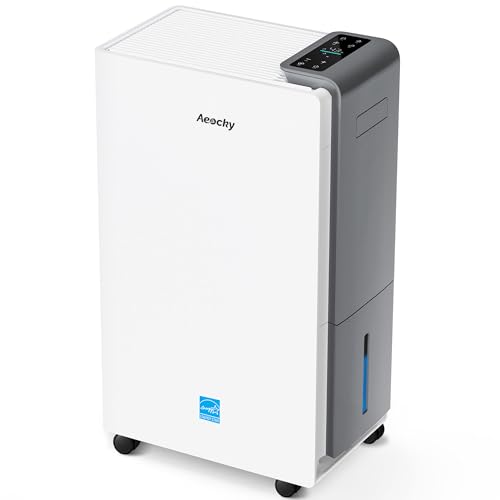
【ENERGY STAR 25 ≠ ENERGY STAR Most Efficient 2025】Don't fall for competitors' word games. With only 2.6% of ENERGY STAR models earning "Most Efficient 2025" title, these options are exceptionally rare on the market. RHEA-001 is one of the few to truly hold this top-tier certification. Many brands use misleading phrases like "Energy Star Efficient 25" or "Energy Star 25" to imply a standard they haven't met. Choosing them is a risk.With AEOCKY, you get verified performance and the peace of mind of authentic, top-tier efficiency.

Quiet & High-Efficiency Dehumidifier: Featuring next-generation semiconductor cooling technology, this quiet dehumidifier delivers efficient moisture removal while running at ultra-low noise (≤40dB). Stable humidity levels are maintained, making your home environment more comfortable and pleasantly dry.

Upgrade High Efficient Dehumidification: Dehumidifier utilize semi conductor condensation technology, ensuring quiet operation while effectively extracting moisture from the air. This advanced feature helps keep humidity levels below 45%
Refrigerant Dehumidifiers
These are the most common portable home models. They use cooled coils to condense water out of the air. They work well in warm, damp rooms, basements, bedrooms, and living areas, but performance can drop in colder spaces.
Desiccant Dehumidifiers
Desiccant models use moisture-absorbing material instead of cold coils. They can work better in cooler spaces and may be quieter, but they often use more energy for the same amount of water removal.
Thermoelectric Dehumidifiers
Thermoelectric models use a Peltier system. They are small and quiet, but they remove much less water than compressor-based units. Use them only for closets, cabinets, small bathrooms, or lightly damp spaces.
Whole-Home Dehumidifiers
A whole-home dehumidifier connects to HVAC ductwork and controls moisture across larger areas. ENERGY STAR notes that whole-home systems can help well-sealed homes with central air systems when humidity stays above 55% throughout the house, but they should be sized and installed by a professional.
Ionic Membrane and Specialty Dehumidifiers
Ionic membrane and other solid-state dehumidifiers exist, but they are usually for small sealed equipment, electronics, instruments, or specialty uses rather than typical household rooms. Most homeowners should compare portable refrigerant, desiccant, or whole-home units first.
How to Choose the Right Dehumidifier
Start with the room, not the appliance (our how to choose a dehumidifier guide goes deeper). Measure the space, check the humidity, and look at how damp the room feels before choosing capacity.
Recommended Products

High Capacity Coverage - This 30-pints dehumidifier effectively collects water from damp spaces up to 2,000 Sq.Ft with doors and windows closed. It extracts up to 30 pints of water vapor per day under high-humidity test conditions (95°F, 90% RH), making it perfect for damp spaces. Engineered to establish a clear operating boundary in localized areas, this dehumidifier for basement handles sticky summers and musty rooms, keeping your fabrics and floors dry while maintaining comfortable air

32-Pint Daily Capacity for Spaces up to 2,500 Sq. Ft. — Designed to manage ambient moisture in large living spaces, finished basements, and storage areas. This unit removes up to 32 pints of water vapor every 24 hours under test conditions of 95°F and 90% RH, helping promote a more balanced indoor air environment across areas up to 2,500 sq. ft

Semiconductor dehumidifiers use thermoelectric cooling to remove moisture from the air. They create a drier, more comfortable environment by reducing humidity and improving air quality.
1. Choose the Right Capacity
Dehumidifier capacity is usually shown in pints per day, meaning how much water the unit can remove in 24 hours under test conditions. ENERGY STAR explains that capacity depends on both room size and the conditions in the space. Slightly damp rooms need less capacity; very damp or wet rooms need more. For a room-by-room breakdown, see what size dehumidifier you need.
- Slightly to moderately damp spaces: intermittent musty odor or 50%–75% RH may need about 20–30 pints per day for small to medium spaces.
- Very damp spaces: consistent damp smell, damp spots, or 75%–90% RH may need about 25–40 pints per day.
- Wet spaces: sweating walls/floors, seepage, laundry drying, or 90%–100% RH may need about 30–50 pints per day or more.
If you are replacing an older unit, do not compare old and new pint ratings blindly. ENERGY STAR explains that DOE testing changes after 2019 made many newer dehumidifiers show lower capacity ratings than older models even when they may meet the same practical need.
2. Look for Energy Efficiency
Choose an ENERGY STAR certified model when possible. ENERGY STAR says certified dehumidifiers use more efficient coils, compressors, and fans and use about 20% less energy than conventional models of similar size. Also compare the Integrated Energy Factor, or IEF. A higher IEF means the unit removes more liters of water per kilowatt-hour.
3. Choose the Right Drainage Setup
Portable dehumidifiers usually give you one or more water-removal options:
- Bucket: simplest option, but you must empty it often.
- Gravity drain hose: drains continuously to a nearby floor drain, but the hose must slope downward.
- Built-in pump: moves water upward or farther away, useful when no floor drain is nearby.
If the room is very damp, choose continuous drainage so the unit does not stop every time the bucket fills.
4. Compare Features That Matter
- Built-in humidistat: lets the unit cycle on and off to hold your target RH.
- Auto shutoff: stops the unit when the bucket is full.
- Low-temperature operation or auto-defrost: important for basements below 65°F.
- Washable filter: lowers maintenance cost and protects airflow.
- Auto restart: useful after power outages.
- Noise rating: important for bedrooms, offices, and living rooms.
- Carry handles and wheels: helpful for portable use.
Pro Tip: If you are unsure between two capacities, choose the slightly larger ENERGY STAR model with a humidistat. An undersized unit may run constantly and still fail to lower humidity.
How to Place and Use a Dehumidifier
Good placement helps the unit remove moisture faster and run more efficiently.
- Place it where air can circulate. Keep the intake and exhaust away from walls, curtains, furniture, and dust sources.
- Close doors and windows. Dehumidifying outdoor air wastes energy and slows results.
- Keep it level. A tilted unit can leak or shut off incorrectly.
- Set the humidistat around 45% to 50% RH. In cold weather, 30% to 40% may help reduce window condensation.
- Use continuous drainage for wet areas. Route the hose safely to a floor drain or sump, and avoid trip hazards.
- Keep drainage away from electrical cords and outlets. Water and electricity should never share the same path.
Warning: Plug the dehumidifier into a properly grounded wall outlet and follow the manufacturer’s electrical instructions. Do not run drain hoses over cords, do not place the unit where water can reach electrical devices, and check older units against current recall notices if you bought them used or have owned them for years.
How to Maintain a Dehumidifier
Maintenance keeps airflow strong, prevents odors, and helps the unit remove moisture efficiently.
- Empty and rinse the bucket as often as needed so standing water does not smell stale.
- Clean the filter according to the manual, often every few weeks during heavy use.
- Vacuum dust from grilles and coils gently so airflow is not blocked.
- Check the drain hose for kinks, clogs, algae, or poor slope.
- Confirm the humidistat with a separate hygrometer if readings seem wrong.
- Let the unit dry before storage at the end of the season.
- Follow the manual for filter replacement, pump cleaning, and service intervals.
With routine care, a dehumidifier can keep working for years, but lifespan varies by build quality, run time, room conditions, and maintenance.
Troubleshooting Common Dehumidifier Problems
| Problem | Likely Cause | What to Do |
|---|---|---|
| Not collecting water | Room is already near target RH, temperature is too low, filter is dirty, or unit is undersized. | Check RH with a hygrometer, clean the filter, warm the space if safe, or use a higher-capacity unit. |
| Coils are frosting | Room temperature may be below the unit’s operating range. | Turn it off, let it defrost, and use a low-temperature model if the room stays cool. |
| Humidity will not drop | Open windows, active leaks, poor drainage, or too-small capacity. | Close the room, fix moisture sources, check the hose, and consider a larger unit. |
| Musty smell from unit | Dirty bucket, filter, grille, or drain hose. | Clean and dry the bucket, filter, and hose according to the manual. |
| Water leaking | Bucket not seated, hose clogged, hose angled upward, or unit not level. | Reseat the bucket, level the unit, clear the hose, and confirm proper drainage slope. |
Recommended Products

Tackle Whole-Home Humidity on Your Terms: Three modes — Auto, Continuous, and Manual — give you precise control over moisture removal to match the exact needs of your space
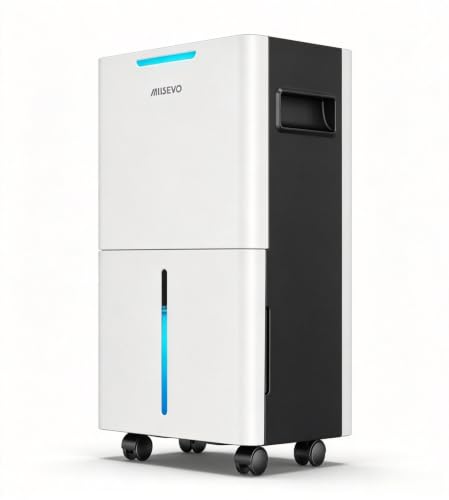
High Efficient Dehumidifier — Equipped with a high-performance compressor, Whether it’s your basement, bedroom, bathroom, living room, bathroom, crawlspace, or even an RV, this dehumidifier effectively keeps your environment dry, comfortable, and healthy.

Upgrade High Efficient Dehumidification: Dehumidifier utilize semi conductor condensation technology, ensuring quiet operation while effectively extracting moisture from the air. This advanced feature helps keep humidity levels below 45%
When a Dehumidifier Is Not Enough
A dehumidifier manages air moisture, but it does not solve every moisture problem. You may need repairs or professional help if:
- Water enters through the foundation, roof, windows, or plumbing.
- Carpet, drywall, or insulation stayed wet after a leak or flood.
- Visible mold covers more than about 10 square feet.
- You smell mold but cannot find the source.
- You suspect mold inside HVAC equipment.
- Water damage involves sewage or contaminated floodwater.
- Anyone in the home has asthma, allergies, immune compromise, COPD, or another chronic lung condition and symptoms seem worse indoors.
In those cases, fix the moisture source first. Then use a dehumidifier to keep humidity controlled after cleanup or repair.
Frequently Asked Questions
What are the benefits of using a dehumidifier?
A dehumidifier lowers excess indoor moisture, reduces musty odors, helps discourage mold and mildew conditions, and makes rooms feel less clammy. It also helps protect wood, paint, drywall, furniture, tools, and electronics from dampness.
What is the difference between a dehumidifier and a humidifier?
A dehumidifier removes moisture from air when a room is too damp. A humidifier adds moisture when indoor air is too dry. Use a hygrometer first, because the right device depends on the actual relative humidity in the room.
Would a dehumidifier help with COPD?
A dehumidifier does not treat COPD, but it may help reduce dampness, mold-friendly conditions, and musty air that can bother some people with chronic lung disease. If you have COPD, asthma, or worsening breathing symptoms indoors, ask a healthcare professional and address mold or water damage promptly.
What are the downsides of a dehumidifier?
The downsides include noise, electricity use, heat output, bucket emptying, filter cleaning, and limited performance if the unit is too small or the room is too cold. Overdrying the air below about 30% RH can also feel uncomfortable.
What humidity should I set my dehumidifier to?
Set it around 45% to 50% RH for most rooms. In cold weather, 30% to 40% may help reduce window condensation. Use a separate hygrometer if the built-in reading seems inaccurate.
Should a dehumidifier run all day?
It can run for long periods in very damp conditions, but a model with a humidistat should cycle off once the room reaches the target humidity. If it never reaches the set point, check for open windows, leaks, a clogged filter, poor placement, or an undersized unit.
Conclusion
A dehumidifier does more than collect water from the air. It helps you keep indoor humidity in a safer, more comfortable range, reduce musty odors, protect household materials, and make damp rooms easier to live in. The best results come from choosing the right capacity, placing the unit where air can move freely, keeping doors and windows closed, cleaning the filter, and fixing the moisture source instead of only treating the symptom.
Use a hygrometer, aim for about 30% to 50% RH, and treat persistent dampness as a home-maintenance warning. When you control humidity well, your home feels better every day and is less likely to develop moisture problems later.
Sources
- U.S. Environmental Protection Agency: A Brief Guide to Mold, Moisture and Your Home — backs up humidity targets, moisture control, mold cleanup limits, and leak prevention.
- Centers for Disease Control and Prevention: Mold — backs up mold prevention, health cautions, and the advice to keep indoor humidity no higher than 50%.
- ENERGY STAR: Dehumidifiers — backs up capacity, ENERGY STAR efficiency, IEF, placement, drainage, operating temperature, humidistats, and safety guidance.
- ENERGY STAR: Dehumidifier Testing and Capacity — backs up DOE testing changes, IEF, and updated pint-capacity comparisons.
- Mayo Clinic: Dust Mite Allergy — backs up keeping relative humidity below 50% to help reduce dust mites.
- U.S. Consumer Product Safety Commission: Dehumidifier Recall — backs up recall and fire-safety awareness for older or secondhand units.